855 résultats
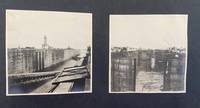
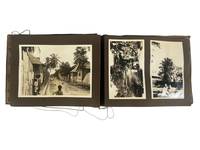
1930réf. 224461930. Caribbean and Panama travel photograph album. circa early 1930s. This album documents interwar travel through the Panama Canal Zone and Jamaica recording maritime transit canal infrastructure and rural Caribbean life as observed by Western travelers. The photographs provide primary visual evidence of the Panama Canal as a site of industrial activity and international movement alongside scenes of Jamaican village life and landscape establishing a contrast between engineered environments and colonial rural settings. The material is particularly strong in its depiction of canal operations and the presence of local populations within these spaces. Album containing 29 silver gelatin photographs mounted on black leaves with individual prints measuring approximately 3.5 x 4.5 to 5 x 7 inches housed in a string-bound album measuring approximately 7 x 9.5 inches. The opening sequence shows passengers aboard a steamship with men and women posed along deck rails and views of ships navigating canal locks and docking areas. Additional images depict cranes drawbridges canal cuts and small boats in the water along with dock workers and uniformed personnel visible among travelers. Architectural and infrastructural views include colonial-style buildings and mechanical equipment associated with canal operation concluding with a monument identified as that of Vasco Núñez de Balboa in Panama City. The Jamaica sequence includes landscape views of hillsides and gardens along with images of Black Jamaican residents posed in village settings. One photograph bears the caption "Kingston Jamaica 10 -- S.S. 'Reliance' West Indies Cruise" showing children and adults gathered along a dirt road lined with wooden and metal-roofed structures. Other images show groups assembled beneath trees and within rural surroundings. Produced during a period when the Panama Canal served as a major conduit for global shipping under U.S. administration and Caribbean travel formed part of organized cruise itineraries the album reflects established routes of interwar tourism. The juxtaposition of canal engineering and Jamaican village scenes situates the photographs within broader patterns of travel that linked industrial infrastructure with colonial landscapes. Minor water rippling to pages and photographs; images remain clear; overall very good. A coherent travel album documenting canal operations and Caribbean life in the early twentieth century. unknown books
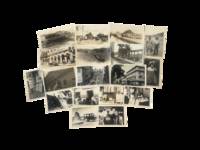
1915réf. 224481915. Unknown photographer Panama Canal Zone and local life photo archive 1915 documents Panama during the first year after the canal's opening to traffic and supports research into U.S. imperial administration Canal Zone settlement travel photography military protection of infrastructure and the visual ordering of colonial space. The Panama Canal opened to traffic on August 15 1914 after U.S. construction created a strategic interoceanic route administered through the Canal Zone and Balboa Heights became a key administrative and residential center for the U.S.-controlled canal system. These photographs capture the built and natural environment through which American authority was made visible: locks river landscapes official buildings hilltop housing city views and naval practice appear together as evidence of a recently completed engineering project becoming an occupied administrative territory. Twenty-four original silver gelatin photographs including two real photo postcards dated 1915 with some undated images several with handwritten inscriptions in English on versos and some with printed captions on rectos. Photographs measure approximately 3½ x 5 inches to 5½ x 7 inches. The archive includes views of the Chagres River the largest river in the Panama Canal drainage basin and a major part of the canal water system together with photographs of the Gatun Locks canal gates aerial views of Panama City the main city plaza a bull ring and Balboa Heights. The Balboa Heights images show American-style bungalows arranged along curving terraced roads with broad verandas raised foundations and landscaped grounds visual evidence of the residential hierarchy attached to U.S. canal administration. Additional images show the Administration Building at Balboa Heights completed in 1914 and positioned above the town as a central administrative landmark while a real photo postcard captioned "Ready to Fire-Division Practice" shows U.S. naval boats in formation off the coast connecting sightseeing views to the military protection of the newly opened canal. The archive's research value lies in its combination of personal travel documentation official-looking captioned views urban and infrastructural scenes and military imagery from the early Canal Zone era. Its views of Balboa Heights are especially significant because U.S. canal society was organized through racialized and occupational distinctions including the "gold roll" and "silver roll" labor categories that separated white American workers from largely Black Caribbean and Latin American workers and shaped housing pay and privilege within the zone. Light edge wear legible inscriptions and preserved image surfaces very good overall. Cohesive Panama Canal Zone photo archive documenting the immediate post-opening landscape of U.S. power in Panama through canal infrastructure river systems segregated administrative space urban views and naval readiness. unknown books
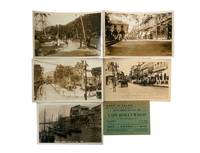
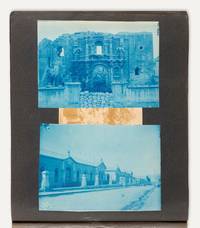
1900réf. 225611900. Panama City and Canal Zone postcard archive early twentieth century documents Panama during the period of canal construction U.S. administration and rapid urban change. The group supports research into Latin American urban history U.S.-Panama relations imperial infrastructure tourism imagery and the visual presentation of Panama as both a modern canal corridor and a city layered with Spanish colonial remains. Its value rests in the combination of engineering views civic streetscapes religious architecture harbor scenes and public entertainment sites. Fifteen sepia-toned real photo postcards each approximately 3.5 x 5.5 inches with many captions printed in the negative. Canal and infrastructure subjects include "Opening Gates Pedro Miguel Locks" "Miraflores Locks Panama Canal" and a Pacific-side vista of the canal works. Urban views include the "American Cabaret" façade with pedestrians the Panama City railway station with carriages at the entrance Cathedral Plaza from street-level and elevated perspectives panoramic views of the city grid ships moored at Balboa harbor and a bullfighting ring. Colonial and religious subjects include the Golden Altar of San José and ruins identified as the Old Spanish Fort tower. The archive captures a specific visual record of Panama at the intersection of Latin American civic life Spanish colonial memory and U.S.-directed global infrastructure. Minor handling wear and faint edge toning to some postcards; images crisp and clean; overall very good condition. A compact and varied photographic record of Panama City and the Canal Zone during a decisive period in the history of urban modernization and interoceanic commerce. unknown books
1825réf. 368803Burdeos Bordeaux: en casa de Lawalle Jóven y Sobrino 1825. 155pp. 12mo. Modern red morocco and cloth front cover off original printed wrappers bound in. 155pp. 12mo. Bolivar propose the Congress which took place in 1826. en casa de Lawalle Jóven y Sobrino unknown books
1967réf. 332687Morocco: Gnaoua Press 1967. First edition. 20 pp. viii. 8vo. Staple bound illustrated wrappers some sunning to spine and stain from price sticker else near fine. First edition. 20 pp. viii. 8vo. Panama Rose was the pen name of Rosalind Schwartz whose partner at the time was poet underground filmmaker publisher and photographer Ira Cohen. From around 1961-1965 they lived together in Tangier Morocco where they spent time with other ex-pats Paul Bowles William S. Burroughs and Brion Gysin and worked on music and publications. Schwartz wrote The Hashish Cookbook at the suggestion of Brion Gysin who years earlier had given Alice B. Toklas the hashish fudge recipe that appears in The Alice B. Toklas Cook Book. Often The Hashish Cookbook is wrongly attributed as being written by Cohen himself though he did publish it when he returned to New York in 1966. 10000 copies were printed and sold within six weeks. Cohen later sold the rights to a British publisher for a percentage of sales and subsequent reprints were made and some bootlegs are known to exist. Gnaoua Press unknown books
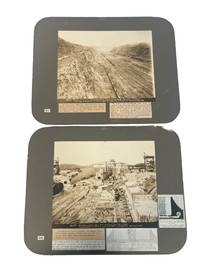
1912réf. 201831912. Panama Canal Early Photography Two large albumen photographs of the construction of the Panama Canal 1912. Photographs are pasted down to grey cardstock with captions and articles describing the imagery below. Photos measure 11" x 14". The building of the Panama Canal was not met with ease as the former French owned project was abandoned due to lack of investment and a high worker mortality rate and the grappling of territory between Panama Columbia and the United States. In 1903 Panama gained it's independence and as the United States recognized this Roosevelt used buying power to his advantage to funnel millions of dollars towards Panama and the funding of this project. These two photographs are early large scale displays of the massive amounts of land and infrastructure that went into this long awaited project. One photograph shows the Culebra Cut in June 1912. The article pasted to the front states that "To remove the 105000000 cubicyards of earth from the backbone of the Americas required about 6000000 pounds of high-grade dynamite each year to break up the material.in which time some 19000000 pounds were exploded in Culebra Cut only eight men were killed." The second photograph dated January 1912 shows the Miraflores Upper Locks with a diagram of what the final construction would look like. The photograph shows a partially built sill multiple tracks for hauling material heavy duty cranes and other industrial equipment. Thousands of local men were hired for this dangerous and underpaying job over the course of a decade. These Caribbean workers endured poor working conditions low wages and unbearable temperatures for a government that was not theirs over 5000 becoming casualties. By it's opening ceremony in 1914 The Panama Canal was the most expensive project in US history estimated at $350000000. These early photographs show only a portion of what went into this costly construction. Minor wear to edges of board upper right corner of one is chipped. Images are crisp and clear overall very good condition. unknown books
1904réf. 182051904. Photograph album circa 1904-1914 documenting maritime activity canal construction and social life in Panama during the period of American engineering control of the Panama Canal project. The images center on a group of American men traveling aboard a small yacht identified in several photographs by the presence of the American yacht ensign indicating a private pleasure vessel rather than a military or commercial ship. Several photographs appear to show large-scale excavation and infrastructure consistent with canal construction situating the album within the decade of intensive labor and engineering that culminated in the canal's completion in 1914. Alongside these scenes are numerous images of local life including Indigenous children and adults along coastal and riverine environments as well as built landscapes featuring plantation-style houses adapted to tropical climates. The album provides visual evidence of the intersection of American presence large-scale infrastructure development and local communities in early twentieth-century Panama. Photograph album containing images mounted on black pages within a black leather-bound volume measuring approximately 10 x 7 inches and comprising 86 pages. The photographs depict shipboard life including crew members steering and managing vessels group portraits of men in bathing attire and social gatherings such as shared meals. Additional images show coastal scenes with canoes swimmers and shoreline activity as well as occasional figures in military dress. The composition of the album reflects both travel documentation and informal social photography capturing a range of maritime domestic and environmental subjects. 86-page album with photographs mounted throughout; one page partially clipped and one page removed with small tears to several pages not affecting images. Light sunning to some photographs; overall very good condition. A cohesive visual record of American maritime travel and canal-era activity in Panama documenting both infrastructure development and everyday life in the region. unknown books
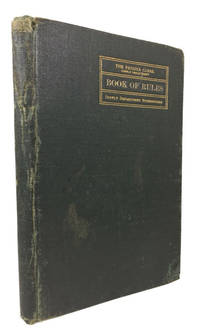
1923réf. 85579Mount Hope C. Z.: Panama Canal Press 1923. Revised 1923. Hardcover. Fair. 185p. Original cloth. 23cm. Pages yellowed. Cover rubbed and rather worn. Numerous short tears and soil marks. Lacks rear free endpaper. A heavily used copy. According to the Preface this was a revision of a book first published in 1921. OCLC locates only a 1949 edition 1 holding at the University of Illinois. Panama Canal Press hardcover books
1931réf. 85580Mount Hope C. Z.: Panama Canal Press 1931. Revised September 1 1931. Paperback. Fair. 20p. Small softcover pamphlet in original wrapper. 23cm. Soiled and well-used. A small pink broadside labeled "Supplement Number 1" and dated 2/27/36 is attached to the back cover with a very rusty paperclip. A typed revision or explanation of the section on turning dynamite boxes twice monthly is pasted inside the front cover. OCLC locates three copies of later editions Stanford Indiana State Library and Wisconsin Historical Society. Panama Canal Press paperback books
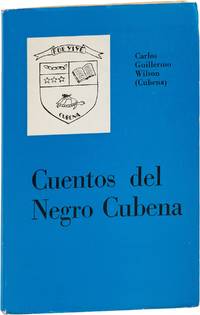
1977réf. 85023Guatemala: Editorial Landívar 1977. First Edition. First Impression. Octavo 21.75cm; pictorial card wrappers; 67-942pp; text is entirely in Spanish. This copy is from the library of to Puerto Rican editor translator and literary critic Roberto Marquez inscribed to him by the author signing off with his pseudonym "Cubena" on the title page: "para la profesora Roberto Marquez / Paz Amor Justicia / Cubena / 77/ Los Angeles." Some wear to extremities a few creases to corners; contents clean; Very Good. Collection of a dozen short stories by the Afro-Panamanian author and scholar Carlos Guillermo Wilson 1941-2016 whose work written chiefly under the pseudonym "Cubena" was centered around the lives and struggles of Afro-Panamanians. Uncommon in commerce especially inscribed. Editorial Landívar unknown books
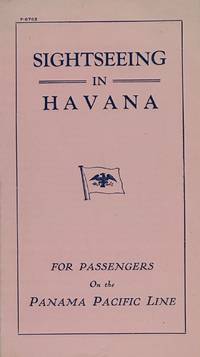
1920réf. 68517Printed in the U. S. A. 1920. Single pink sheet 16 x 18 cm. folded in half. Mention of the monument to sailors who died in the explosion of the Maine which wasn't built till 1925. Panama Pacific Line ended in 1938. unknown books
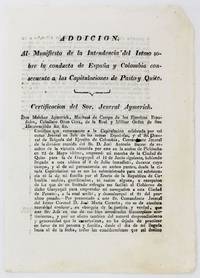
1823réf. 5754Panama: Jose Maria Goytia 1823. Very good plus. Broadsheet handbill 8.5 x 6 inches. Minor creasing. Faint dampstaining at right edge. An extremely rare statement by Spanish general Melchor Aymerich following his final defeat in Ecuador by Antonio José Sucre and subsequent flight to Panama in 1822. Aymerich the "Mariscal de Campo de los Ejercitos Españoles" and "Jeneral en Jefe de las Armas Españolas" states that he and his family traveled lodged and ate at their own expense following his defeat at Pichincha by Sucre and subsequent capitulation. No money or provision of any kind was provided to them by the Republic of Gran Colombia. He continues to declare that they traveled from Quito to Guayaquil and thence to Panama and would soon be departing for Havana. While in Panama he was the guest of the Commandant of the Isthmus Colonel José Maria Carreno and he thanks the Colonel and his family for their generosity and assistance. Although the caption title of this broadsheet states that it is an "Addicion" to a lengthier "Manifiesto" this prior work does not seem to have survived. The present handbill is a very early Panamanian imprint. There is no evidence of there having been printing in Panama during its colonial period and exactly when the first press was introduced there is unclear. OCLC locates a single copy of a call for independence in New Spain published by the present printer José Maria Goytia in 1821 and vanishingly few issues of two newspapers established in 1822. Medina traces an 1822 sermon as printed in Panama and we locate a smattering of other imprints from this period including the present handbill of which OCLC notes a single copy at the John Carter Brown Library; we know of one other at the New York Public Library. Jose Maria Goytia unknown books
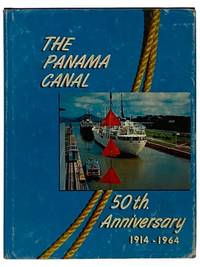
1964réf. 2339643The Panama Canal Information Office 1964. Large Hardcover. Near Fine/Good. 0x0x0. Jacket rubbed. 1964 Large Hardcover. vi 122 pp. Includes black-and-white photographs. Panama Canal lock-type canal owned and administered by the Republic of Panama that connects the Atlantic and Pacific oceans through the narrow Isthmus of Panama. The length of the Panama Canal from shoreline to shoreline is about 40 miles 65 km and from deep water in the Atlantic more specifically the Caribbean Sea to deep water in the Pacific about 50 miles 82 km. The canal which was completed in August 1914 is one of the two most strategic artificial waterways in the world the other being the Suez Canal. Ships sailing between the east and west coasts of the United States which otherwise would be obliged to round Cape Horn in South America shorten their voyage by about 8000 nautical miles 15000 km by using the canal. Savings of up to 3500 nautical miles 6500 km are also made on voyages between one coast of North America and ports on the other side of South America. Ships sailing between Europe and East Asia or Australia can save as much as 2000 nautical miles 3700 km by using the canal. The Panama Canal Information Office hardcover books
réf. 2753ALS. 3pg. 8 x 10. July 20 1913. Balboa. An autograph letter signed James to his mother. James was working on the Panama Canal: We are having real nice weather here in Balboa. I got up rather early this morning and it is now 6:30 A.M. and the thermometer is just 76 so that it is really comfortable as you can imagine. Some of the boys that are new-comers here want me to go across the canal to a native village with them as I talk Spanish and they thought I could guide them a little better as I know the culture and language of the natives. One man is sort of a horticulturist and agriculturist from one of the western states just came here to work on the docks & terminals and he is very much interested in plant and jungle life here. I have told him about none of thethat I have found along rivers and in swamps and he is so much interested in finding some himself but they are a little hard to find that is you usually find them when you least expect to run into themthere is such little duty into Panama really if anywe had a shake up in organization and fortunately I came out with the survivors and have a real nice job. Am still on the permanent town site works and terminals and like that work so much. The letter has the usual mailing folds but is in very fine condition otherwise. unknown books
1962réf. 39567Balboa Heights C.Z.: n.p. 1962. Revised edition. Stapled paper wrappers. Stamped "Complimentary Copy" over the price else fine. 16 pp. Illus. with color drawings and maps and b/w photos. 4to. Nice revised copy of an illustrated booklet first published in 1955 providing information on the Panama Canal. n.p. unknown books
1923réf. 28406Mount Hope CZ: Panama Canal Press 1923. First edition. Stapled paper wrappers. A very good copy some sunning to the wrappers small tear along the fore edge of back wrapper and a few leaves. 12 pp. 8vo. A note states: "This information is provided for a handy reference and style guide for machine operators proof readers and reviewers employed at the Panama Canal Press." Includes ship names dimensions tonage etc. Scarce. OCLC shows no copies. Panama Canal Press unknown books
1918réf. List2982Peru and Panama 1918. Approximately 364 photos; album and unmounted photos silver prints cyanotypes and printing-out-paper prints. Photos measure 3 x 4 to 8 x 10 inches with about half measuring 3 x 5 ½ inches. Some with photographer’s hand-stamp or credit in pencil; others with manuscript notations verso or recto; some captions to album pages. Offered in partnership with Daniel / Oliver. Rich and extensive photographic archive of Walton T. Burres of Stockton California showing his time in Peru c. 1904 as an amateur explorer and doctor for the Inca Mining and Rubber Company and his later work in Panama c. 1918 with the Rockefeller Foundation’s International Health Division.The collection consists of a large number of loose photos acquired by the gallery in 2021 and a recently discovered photo album showing some of the same subjects and containing a few duplicate images some printed in different sizes or formats as well as hundreds of previously unseen prints. Together this material makes up the largest extant archive of Burres’s photographic work. Though his work was published at the time both in Peruvian and American publications much of it was lost when he dropped it in a river that he was attempting to ford. Burres was educated at California’s Cooper Medical College the first school of medicine on the West Coast and was a prominent member of the Stockton community before sojourning to Peru around 1900 to help the Inca Mining and Rubber Company address the deadly diseases endemic to the region such as malaria and yellow fever. To encourage economic infrastructure in remote areas the Peruvian government began granting land concessions to any company that would build roads bridges or river ports. As a result the Inca Mining Company an American outfit based in Tirapata purchased the rights to mine gold along the upper Inambari River in 1896 and soon became the richest gold producer in Peru. A large portion of Burres’s Peruvian images document his 1903–1904 excursion from Arequipa 150 miles into “rubber country.” The journeys were well-recounted in U.S. papers and a number of the anecdotes described in print are seen in the present images. There are many dynamic views of Burres and his party trekking through the dense jungle and summiting the high mountains as well as shots of flora fauna and native Peruvians. Burres’s travel companions for this trip included the famed adventurer Harriet Chalmers Adams later dubbed “America’s greatest woman explorer” by the New York Times. Adams and her husband Frank both fellow Stocktonians joined up with Burres during their own multi-year expedition through South America. There are a number of portraits of a woman who bears a striking resemblance to Adams though it is possibly another person. Other Peruvian material includes numerous views of Cusco Arequipa and the surrounding environs including a beautiful interior of a chapel a Martin Chambi-esque detail shot of a stone wall and portraits of local townspeople some identified as Quechua people. There are a number of lush large-format cyanotypes rich printing-out-paper views and many handsome small-format panoramas. These were printed on Inca Mining Company surplus stationary which speaks to the makeshift nature of photo-development under the circumstances. One particularly striking image shows the top of Misti volcano barely visible above the clouds. This image was reproduced in Burres's account of his travels published in 1909 in Outing magazine. The photographs from Burres’s time in Panama document his more serious work as a virologist and health administrator in the area. One interesting photo shows a pair of recently-shot iguanas with a caption noting that “blood of these reptiles was found infected with Haemogregarina.” Another image is that of a new style of privy built from concrete and wire-mesh designed to better keep out rain water. There are also keenly-shot views of main streets and local culture in Los Santos Chiriquí and elsewhere including a number of humanistic group portraits taken at a girl’s school. unknown books
1913réf. 26706Tegicigalpa: Tipografia Nacional 1913. Wraps. Good. 26 pages. Printed yellow wrappers. 7 3/4 x 11 inches. Browned paper uncut and unopened. Dampstaining near spine in several places throughout. A scarce publication. Wraps. Rough english translation: "Regulation of the Honduras Section at the Panama-Pacific International Exposition San Francisco California 1915: approved by supreme agreement of May 28 1913 . followed by the Regulations and Rules for Reporting and Guidance of Those Who Claim to Participate in she dictated by the President of The Expresada Exposicon And Corrected And Approved By The Same Tipografia Nacional unknown books
1966réf. 46055N.p.: Gnaoua Press 1966. Near Fine. N.p.: Gnaoua Press 1966. First Edition. Octavo 21cm; publisher's pictorial staplebound card wrappers; 620pp.; halftone photographic frontispiece and illus. throughout. A hint of toning to wrapper margins else Fine. Gnaoua Press unknown books
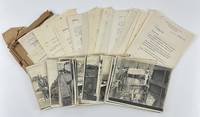
1936réf. 5953Balboa Panama Canal Zone 1936. Very good. Eighty-four black-and-white or sepia-toned photographs each about 8 x 10 inches many with typed or manuscript captions on verso plus thirty-two typed documents some signed. Moderate edge wear occasional minor marginal chipping to photographs. Mostly minor wear to documents. A striking collection of photographs picturing construction of the Panama Canal during the years of the First World War. Many of the photographs are dated between 1914 and 1916 and almost all capture construction of the Panama Canal mainly around Dry Dock #1 at the Balboa and Pacific Terminals. Many of the photographs are captioned either typed or in manuscript on the verso providing valuable information on the settings of these images. Most of the images were taken from an elevated viewpoint from area towers offering unusual detail of the construction sites in the Balboa area "before flooding" of the canal with some images showing the canal "ready to be flooded;" the images taken at ground level also exhibit the sheer size and depth of the project with human figures dwarfed by the canal walls. A healthy number of images feature local workers of African descent engaged in manual labor on the walls and in the flat bottom of the canal. These workers are managed by a coterie of white subjects. In fact one of the more striking images speaks volumes about the literal separation between the managers and laborers in the Canal Zone. The photograph is a group shot featuring seventeen white managers standing in the foreground in front of a group of twenty-two Black workers. A sampling of the settings and activity revealed in the captions for the photographs include "Dy Dock #1 -- Entrance" "Placing granite in the hollow quoin -- Dry Dock No. 1 Balboa" "General view of Dry Dock #1 -- from the boom of Unloader Tower" "Progress of concrete in south wall as of Oct. 20 1914" "Head wall of Dry Dock #1" "Reinforcing around the suction chamber Dry Dock #1" "Dry Dock looking from the head wall west towards the sea" "D.D. excavation looking eastward toward headwall of the dock from the Coffer Dam" "Reinforcement in and around cross culverts at the west and end of Dry Dock #1" "Dry Dock #1 one month after commencing concrete work in the south wall" "Dry Dock No. 1 Pumping Plant -- Erecting 54-inch Check Valves -- Looking west" "General view of construction progress around pump well and discharge culvert -- Dry Dock" "Dry Dock Gate -- South Leaf -- Heel casting after wedges have been placed and rivets driven" "Reinforced concrete pontoons -- Preparing to pour concrete in No. 2 pontoon" and "Placing the last girder on dock gate Dry Dock No. 1 Balboa." The photographs are accompanied by a group of more than thirty military documents relating to the service of Major William C. Foote in the mid-1930s. Most of the documents concern Major Foote's assignment to the Coast Artillery Corps at Fort Amador in the Canal Zone in Balboa. Both the photographs and documents were found in a large envelope marked "Personal File Major William C. Foote." Finding the Panama Canal photographs along with Major Foote's later paperwork indicate that he probably acquired the photographs while serving in the Canal Zone and the material stayed together all these years. unknown books
1911réf. 100851Souvenir pamphlet 8vo colored printed pictorial wrappers illustrated 16 pp. Folded and creased down the middle with a little wear at the fold some minor rubbing to wrappers normal aging; otherwise very good. This is a scarce piece of ephemera commemorating the 1911 groundbreaking ceremony by President William H. Taft for the exhibition in the Golden Gate Park. While the purpose of the exhibition was to celebrate the completion of the Panama Canal it seemed to function more as a worlds fair held in San Francisco. It took over three years to construct and the exhibition ran from February through December 1915. There are a number of black and white photographs in the booklet including a double page panoramic view of the city of San Francisco. The activities of the ceremony are recorded in this pamphlet which feature speakers songs marches and what they had for dinner Blair-Murdock Co., books
1914réf. 38258New York: Wittenberg Coal Company 1914. 8vo. 8 11/16 x 5 15/16 inches. 36pp. Early cloth backed boards original wrappers bound in. Provenance: Marinens Bibliotek old inked stamps; deaccessioned by the Garnisions Bibliotek in 2017 Among the earliest directions for sailing through the Panama Canal. The Panama Canal opened to shipping traffic on August 15 1914. This work issued as a promotional piece by an American coal company prints Wilson's July 9 1914 Executive Order number 1990 which detailed the rules and regulations for ships passing through the canal. Unrecorded in OCLC. Wittenberg Coal Company unknown books
1915réf. 008618NY: John Lane Co 1915. Soft cover. VG. 4to pictorial covers monthly issue of design/arts/architecture monthly this issue's most important features in our opinion illustrated articles on woodcut artist T. Stureg Moore wiith 2 fill page woodcuts and b&w images of more and the sculpture at the Panama Pacific Exposition illustrated w/ b&w photogrtaphs. Covers lightly soiled the rest near fine. John Lane Co unknown books
réf. 10696PA CTY PCIO 1964. FIRST EDITION VERY GOOD-FINE. F. PA CTY, PCIO, 1964 unknown books
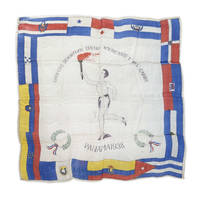
réf. FRE70Printed silk necktie 43 × 43 cm 16⅞ × 16⅞ in. decorated with the flags of the participating nations surrounding a runner carrying a flaming torch inscribed “IV Juegos Deportivos Centro Americanos y del Caribe / Panama 1938.” Good condition. A colorful souvenir from the IV Central American and Caribbean Games held in Panama City from February 5 to 24 1938. The Games represented an important stage in the consolidation of a distinctly Central American and Caribbean regional sporting identity. The 1938 competition was the first edition officially styled the “Central American and Caribbean Games” and the first in which Colombia and Venezuela participated. Ten countries and more than 1200 athletes took part—the largest international sporting gathering yet held in the region and Panama's first international sporting event on such a scale. The necktie's design is particularly expressive of this regional idea: the flags of the participating republics form a continuous border around the athlete and Olympic-style torch visually presenting the countries as members of a common Caribbean and Central American community. The Games had begun in Mexico City in 1926 with only three participating nations; their expansion through Havana and San Salvador and finally to Panama transformed what had begun as a small Central American competition into a broader regional institution. Held in a region whose political and economic life had long been shaped by European colonialism and increasingly United States power the Games also offered the participating countries a highly visible means of representing themselves to one another as sovereign nations rather than through imperial or metropolitan institutions. unknown