[LAO-THAI BORDER SKIRMISHES].Biblio.com
531 results
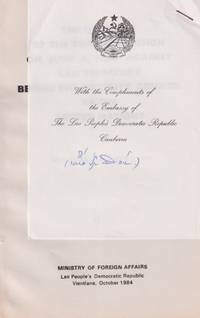
1984ref. 215696Vientiane.: Ministry of Foreign Affairs Lao People's Democratic Republic. October1984. iv 64pp. Signed compliments slip from the Lao Embassy in Canberra stapled to upper wrapper staple little rusted otherwise a very good copy. 21.5 x 14cm. A collection of transcripts from addresses given by Lao and Thai delegates to the UN General Assembly Non-Aligned Movement and UN Security Council regarding a series of armed skirmishes along the Lao-Thai border. . Ministry of Foreign Affairs, Lao People's Democratic Republic. unknown
1961Features: Big Push in Soviet Propaganda - a report by Eugene Burdick and William J. Lederer, authors of The Ugly American; Suicide - why do people kill themselves? do they really want to die? - a new study turns up some surprising answers; "My Island" - Supreme Court Justice William O. Douglas loves an isolated wilderness of lakes and woods on our northern border; The Clubwoman's Best Friend; The Flattering Camera - inside the Bachrach photographic-portrait studios; What Europe Thinks of us Now; The Base that Never Was - the huge Bong Air Force Base in Wisconsin. Somewhat above-average external wear. Upper corner clipped from front cover. A sound copy. Book
192263p. + Plus portrait frontis and full page photographs. Inked ownership of Edna Manson. 12mo. Original full brown cloth binding. Fifth impression. PETS/1
1948xv, 184 pages. Maps. Lists of Honours, Awards, and Mentions in Despatches. "A clear, concise and interesting account of (the Regiment's) achievements during the last great war." - Foreword. Armorial bookplate upon verso of half-title. Moderate wear to silver-decorated pale green cloth-covered boards which are sunned at spine. Binding intact. A sound copy. Enser p.80, White p.88. Book
19488vo., First Edition, with 8 maps in the text; regimental green cloth, badge blocked in silver on upper board, a very good, clean copy. Covers the wartime operations of 1-9 Bns, 70 Bn, 18 Infantry Holding Bn and the Home Guard. Includes ROH, awards, MIDs and the regimental association. The Borders had a distinguished war; notably the 1st fought at Arnhem and the 4th at Kohima. Sutcliffe, p.212; White, p.88
1916ref. 3738N.p. probably Portland 1916. Near fine. 36pp. plus two multi-panel folding panoramic photographic plates. Original tan wrappers printed in brown accompanied by original printed mailing envelope reading "A Souvenir of The Third Oregon Infantry on the Mexican Border." Very light wear. A scarce work featuring the officers staff and soldiers of the Third Oregon Infantry while stationed on the Mexican border near San Diego during the conflict with Mexico just before World War I. The work includes field and staff lists rosters organized by company and a list of "men who have enlisted at Clackamas since the Regiment left" in the summer of 1916. The work is profusely illustrated with photographs of each company within the text usually on the recto facing the roster lists. Each inside cover includes a folding panoramic photographic plate - the first titled "First Battalion at San Diego Exposition July 9 1916" and the second featuring the "Third Battalion on the Border - Mexico in the Background." Both panoramic images were produced from photographs by O.A. Tunnell. unknown books
1970ref. 2082702114607926Futosha 1970. Soft Cover. Fine. Number of books: 1 Futosha paperback
1977pagg. 218, con illustrazioni f/testo.
1946ref. 2082702114609001Yoshida shobo 1946. Soft Cover. Fine. Number of books: 1 Yoshida shobo paperback
ref. LDM0050203We ship worldwide. 100% guarentee. BRAND NEW unknown
1953ref. 2082702114607669Totsupan 1953. Soft Cover. Fine. Number of books: 1 Totsupan paperback
1975ref. 2082702114605540Princess Road SL Club 1975. Soft Cover. Fine. Number of books: 1 Princess Road SL Club paperback
19728vo., First Edition, with coloured frontispiece, numerous plates in monochrome and endpaper maps; green cloth, upper board with regimental crest blocked in silver, gilt back, a near fine copy in price-clipped dustwrapper. A PRESENTATION COPY WITH SIGNED HOLOGRAPH INSCRIPTION BY THE CURATOR OF THE REGIMENTAL MUSEUM. Sutcliffe, p.212.
1916ref. 2445Brownsville 1916. Very good. Panoramic photograph approximately 7.5 x 39.5 inches. Mounted on card manuscript identifications along foot. Light wear minor soiling. A large formal portrait of Troop C of the 1st Virginia Cavalry in camp at Fort Brown Brownsville Texas. National guard units were called up in 1916 to guard the border while General Pershing made his incursions into Mexico against revolutionary and regular military units involved in the Mexican revolution and civil war of the 1910s. The image depicts the entire troop mounted in a single file with the commissioned officers at far left sixty-six men in all. Although the photographer does not identify himself each man in the unit is named in clear manuscript along the foot of the photograph making the present image a valuable record of the Virginia Cavalry's service in Texas during the Border War. unknown
1916ref. 2445Brownsville 1916. Very good. Panoramic photograph approximately 7.5 x 39.5 inches. Mounted on card manuscript identifications along foot. Light wear minor soiling. A large formal portrait of Troop C of the 1st Virginia Cavalry in camp at Fort Brown Brownsville Texas. National guard units were called up in 1916 to guard the border while General Pershing made his incursions into Mexico against revolutionary and regular military units involved in the Mexican revolution and civil war of the 1910s. The image depicts the entire troop mounted in a single file with the commissioned officers at far left sixty-six men in all. Although the photographer does not identify himself each man in the unit is named in clear manuscript along the foot of the photograph making the present image a valuable record of the Virginia Cavalry's service in Texas during the Border War. unknown books
1978Features: Milt Bryan's Adventures on the Santa Fe Trail; Lonely are the Graves - The Bundy Avant Story - Part I - New Mexico in the days when the thin population was intent on bettering itself; Lost Soldiers' Mine - Somewhere in the Coquille Mountains is a very cold trail to a very real gold vein!; Killers' Trail of Thread - the Green DeWitt Colony in the Mexican province of Texas-Coahuila; The "Coffee" Woman - sequel to "Bloodshed in Kansas" in the April issue; Shingle Mill Country - Van Buren County, Arkansas; Infidelity at Old Fort Laramie; Zane Grey's mysterious guide; The Soldier's Farewell - the guerilla war on the Mexican border in 1915; One Man's Rubble is another man's Gold - men with strong backs headed for San Francisco after it burned in 1906; Lost Mines of Mexico. Average wear. Unmarked. Sound copy. Book
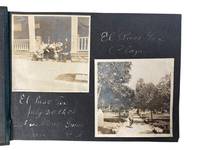
1905ref. 231541905. Texas HistoryBorderlands U.S.-Mexico borderlands photograph album 1905-1906 centered on El Paso and Juárez with additional views in New Mexico Arizona California Oregon and Alaska. The album documents an early twentieth-century traveler's movement through the southern border of the U.S. when El Paso and Ciudad Juárez were being promoted through rail travel tourism and cross-border entertainment and when American visitors regularly treated Mexican religious sites plazas bullrings and street life as part of a border excursion circuit. Its strongest historical value lies in the concentration of images tied to the Texas-Mexico border including Juárez bullfight and cockfight scenes street and church views and domestic group portraits in El Paso alongside a labeled photograph of a Santo Domingo Pueblo corn dance likely Kewa Pueblo north of Albuquerque showing non-Native travelers recording Indigenous life in the Southwest. Photograph album containing 81 original photographs most measuring approximately 2 x 3 to 4 x 5 inches mounted on thick black paper leaves in a cloth-bound album. Contemporary manuscript captions identify numerous locations and subjects including "El Paso Tex" "Juarez Mex" "Bull Fight" "Cock Fight" "Near Albuquerque 1906" "1906 New Mexico" "New Mexico 1905" "Juarez Mex Church over 350 years old" and "Corn Dance. Santo Domingo." Visible subjects include family and social group portraits posed on porches and in front of residences; women in white dresses and men in coats hats and ties; a tree-lined park path in El Paso; religious architecture and church interiors in Juárez; a fountain identified as Robinson Park in Albuquerque; river and landscape views labeled Rio Grande; a saguaro cactus study; a donkey; a seated elderly woman in a doorway; and multiple arena photographs showing matadors horses attendants spectators and ring action in Juárez. Several photographs bear later ink inscriptions including one later image of five men captioned "Alaska" en recto and with names on verso including "Mayor Goldstein" a prominent Jewish businessman and six time Juneau Mayor Isadore Goldstein. The album records border travel encompassing scenes of domestic life in El Paso tourism in Juárez and excursions into New Mexico and the wider West. The Juárez images are especially strong preserving direct vernacular views of public spectacle in the bullring and cockfight pit as well as church architecture and urban settings seen from the perspective of a visiting American observer. Photographs mounted throughout; some images faded or silvered with scattered surface wear corner wear occasional discoloration and a few later annotations or tape remnants visible. Overall very good condition. unknown
1905ref. 231541905. Texas HistoryBorderlands U.S.-Mexico borderlands photograph album 1905-1906 centered on El Paso and Juárez with additional views in New Mexico Arizona California Oregon and Alaska. The album documents an early twentieth-century traveler's movement through the southern border of the U.S. when El Paso and Ciudad Juárez were being promoted through rail travel tourism and cross-border entertainment and when American visitors regularly treated Mexican religious sites plazas bullrings and street life as part of a border excursion circuit. Its strongest historical value lies in the concentration of images tied to the Texas-Mexico border including Juárez bullfight and cockfight scenes street and church views and domestic group portraits in El Paso alongside a labeled photograph of a Santo Domingo Pueblo corn dance likely Kewa Pueblo north of Albuquerque showing non-Native travelers recording Indigenous life in the Southwest. Photograph album containing 81 original photographs most measuring approximately 2 x 3 to 4 x 5 inches mounted on thick black paper leaves in a cloth-bound album. Contemporary manuscript captions identify numerous locations and subjects including "El Paso Tex" "Juarez Mex" "Bull Fight" "Cock Fight" "Near Albuquerque 1906" "1906 New Mexico" "New Mexico 1905" "Juarez Mex Church over 350 years old" and "Corn Dance. Santo Domingo." Visible subjects include family and social group portraits posed on porches and in front of residences; women in white dresses and men in coats hats and ties; a tree-lined park path in El Paso; religious architecture and church interiors in Juárez; a fountain identified as Robinson Park in Albuquerque; river and landscape views labeled Rio Grande; a saguaro cactus study; a donkey; a seated elderly woman in a doorway; and multiple arena photographs showing matadors horses attendants spectators and ring action in Juárez. Several photographs bear later ink inscriptions including one later image of five men captioned "Alaska" en recto and with names on verso including "Mayor Goldstein" a prominent Jewish businessman and six time Juneau Mayor Isadore Goldstein. The album records border travel encompassing scenes of domestic life in El Paso tourism in Juárez and excursions into New Mexico and the wider West. The Juárez images are especially strong preserving direct vernacular views of public spectacle in the bullring and cockfight pit as well as church architecture and urban settings seen from the perspective of a visiting American observer. Photographs mounted throughout; some images faded or silvered with scattered surface wear corner wear occasional discoloration and a few later annotations or tape remnants visible. Overall very good condition. unknown books
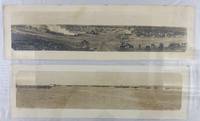
1916ref. 3373McAllen: Photo. by Murff & Robinson 1916. Very good. Two panoramic photographs measuring 8 x 28 and 8 x 26.5 inches. Rolled. A couple of short closed tears and small perforations otherwise minor wear and soiling. Two detailed panoramic photographs that depict the First Cavalry Regiment of the New York National Guard one unit of the 15000 guardsmen from the state that were sent to garrison the Rio Grande in South Texas during the Border War with Mexican revolutionaries and Pershing's Punitive Expedition against Pancho Villa. The New Yorkers were stationed at inadequate parched camps in Mission McAllen and Pharr. The slightly larger of the two images here shows the camp of the First Cavalry at McAllen with field tents and temporary camp buildings on the left and the regiment's allotment of horses tethered together at right. The second images shows the unit on parade being reviewed by General Frederick Funston the commander of the border garrisons. The photos are each captioned in the negative and dated August 28 1916 and October 1 1916 respectively. Scarce images of New York's encampment in Texas during the Border War. Photo. by Murff & Robinson unknown
1916ref. 3373McAllen: Photo. by Murff & Robinson 1916. Very good. Two panoramic photographs measuring 8 x 28 and 8 x 26.5 inches. Rolled. A couple of short closed tears and small perforations otherwise minor wear and soiling. Two detailed panoramic photographs that depict the First Cavalry Regiment of the New York National Guard one unit of the 15000 guardsmen from the state that were sent to garrison the Rio Grande in South Texas during the Border War with Mexican revolutionaries and Pershing's Punitive Expedition against Pancho Villa. The New Yorkers were stationed at inadequate parched camps in Mission McAllen and Pharr. The slightly larger of the two images here shows the camp of the First Cavalry at McAllen with field tents and temporary camp buildings on the left and the regiment's allotment of horses tethered together at right. The second images shows the unit on parade being reviewed by General Frederick Funston the commander of the border garrisons. The photos are each captioned in the negative and dated August 28 1916 and October 1 1916 respectively. Scarce images of New York's encampment in Texas during the Border War. Photo. by Murff & Robinson unknown books
2014New New English Original bdg. Dust wrapper. 4to. (30 x 21 cm). In Turkish. 15 volumes set: (6620 p.). This is an exhaustive study on the administrative division of vilayets (provinces) and kazas (districts of provinces) of the Turkish Republic. Order in alphabetical. a heavy and oversize full set.
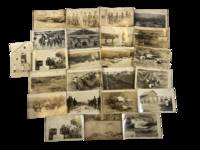
1910ref. 229401910. This compelling photo archive consists of 22 real photo postcards most with white-ink captions in the negative depicting U.S. soldiers Mexican Federal troops executions trench-warfare scenes and cross-border skirmish zones along the Rio Grande during the Mexican Revolution and the U.S.-Mexican Border War of the 1910s. Printed in sepia and black and white each measure 3.5" x 5". The images were taken in and around Ciudad Juárez El Paso and other Chihuahua and Texas borderlands a region where U.S. military units including African American regiments National Guard troops and cavalry detachments were deployed in response to revolutionary activity and cross-border raids. The RPPC range from composed group portraits of armed U.S. soldiers in "Boys in Khaki Guarding the Rio Grande" to stark documentary imagery such as the bodies of executed revolutionaries bearing gunshot wounds. Several cards show rifle pits trench emplacements large military encampments and convoys of mounted troops crossing dry riverbeds or moving toward the border line. One of the most visually significant images documents a crowd of U.S. cavalry passing along a raised river embankment underscoring the scale of the troop buildup. Another captures a large encampment beside the Rio Grande flags raised above a broad sweep of desert landscape. Group portraits of American troops emphasize uniformity weaponry and camaraderie; many subjects appear to be young white or Mexican soldiers with sporadic presence of Mexican civilians at the margins of certain frames sometimes photographed as laborers. A powerful and historically significant archive offering an unflinching visual record of the U.S.-Mexican Border War capturing not only military maneuvers and border fortifications but also the human cost of the conflict. Minor edge wear light toning to some images inscriptions in the negative remain legible throughout. Overall good to very good condition. unknown
1910ref. 229401910. This compelling photo archive consists of 22 real photo postcards most with white-ink captions in the negative depicting U.S. soldiers Mexican Federal troops executions trench-warfare scenes and cross-border skirmish zones along the Rio Grande during the Mexican Revolution and the U.S.-Mexican Border War of the 1910s. Printed in sepia and black and white each measure 3.5" x 5". The images were taken in and around Ciudad Juárez El Paso and other Chihuahua and Texas borderlands a region where U.S. military units including African American regiments National Guard troops and cavalry detachments were deployed in response to revolutionary activity and cross-border raids. The RPPC range from composed group portraits of armed U.S. soldiers in "Boys in Khaki Guarding the Rio Grande" to stark documentary imagery such as the bodies of executed revolutionaries bearing gunshot wounds. Several cards show rifle pits trench emplacements large military encampments and convoys of mounted troops crossing dry riverbeds or moving toward the border line. One of the most visually significant images documents a crowd of U.S. cavalry passing along a raised river embankment underscoring the scale of the troop buildup. Another captures a large encampment beside the Rio Grande flags raised above a broad sweep of desert landscape. Group portraits of American troops emphasize uniformity weaponry and camaraderie; many subjects appear to be young white or Mexican soldiers with sporadic presence of Mexican civilians at the margins of certain frames sometimes photographed as laborers. A powerful and historically significant archive offering an unflinching visual record of the U.S.-Mexican Border War capturing not only military maneuvers and border fortifications but also the human cost of the conflict. Minor edge wear light toning to some images inscriptions in the negative remain legible throughout. Overall good to very good condition. unknown books
1916ref. 221871916. Photographs of United States Army troops along the U.S.-Mexico border circa 1916 document military operations associated with the Pancho Villa Expedition led by John J. Pershing and record the deployment of cavalry and artillery units during a period of heightened border conflict. Produced in field conditions these images capture soldiers equipment and encampments in arid terrain providing direct visual evidence of U.S. military logistics mounted patrols and cross-border mobilization during the Mexican Border War. The archive supports research into early twentieth century warfare U.S.-Mexico relations and the operational structure of pre-World War I American military forces. Archive consists of approximately twenty two original silver gelatin photographs most measuring about 3.25 x 5.5 inches with several larger examples including some printed on postcard stock. The images depict cavalrymen in standard issue M1912 wool field shirts campaign hats riding boots and wrap puttees posed on horseback and alongside artillery equipment. Multiple photographs show tent encampments supply convoys horse and mule trains and field kitchens distributed across desert landscapes. One recurring unidentified soldier appears in several images including a view at a marked "Continental Divide Elevation 6900 ft Tombstone 25 Miles" and another near a roadside marker reading "Road constructed by Prison Labor A.D 1913-1914." Artillery scenes include horse drawn caissons transporting field guns and a close view of a 3 inch M1902 field gun with spoked wooden wheels and riveted barrel. Additional images show soldiers positioned beside artillery pieces and within organized camp environments documenting both operational readiness and daily military life. These photographs were created during a period when the U.S. Army relied heavily on mounted units and animal powered transport prior to widespread mechanization and they record the logistical demands of sustaining military presence across the borderlands. The Punitive Expedition marked a significant moment in U.S. military modernization as lessons learned from these operations informed subsequent participation in World War I. The images also document the physical infrastructure of border militarization including constructed roads and encampments within a contested geopolitical region. Minor edge wear and handling creases consistent with field use; images remain clear and well preserved; overall very good condition. This archive provides concentrated visual documentation of U.S. Army field operations and border conflict during a formative moment in American military history. unknown
1916ref. 221871916. Photographs of United States Army troops along the U.S.-Mexico border circa 1916 document military operations associated with the Pancho Villa Expedition led by John J. Pershing and record the deployment of cavalry and artillery units during a period of heightened border conflict. Produced in field conditions these images capture soldiers equipment and encampments in arid terrain providing direct visual evidence of U.S. military logistics mounted patrols and cross-border mobilization during the Mexican Border War. The archive supports research into early twentieth century warfare U.S.-Mexico relations and the operational structure of pre-World War I American military forces. Archive consists of approximately twenty two original silver gelatin photographs most measuring about 3.25 x 5.5 inches with several larger examples including some printed on postcard stock. The images depict cavalrymen in standard issue M1912 wool field shirts campaign hats riding boots and wrap puttees posed on horseback and alongside artillery equipment. Multiple photographs show tent encampments supply convoys horse and mule trains and field kitchens distributed across desert landscapes. One recurring unidentified soldier appears in several images including a view at a marked "Continental Divide Elevation 6900 ft Tombstone 25 Miles" and another near a roadside marker reading "Road constructed by Prison Labor A.D 1913-1914." Artillery scenes include horse drawn caissons transporting field guns and a close view of a 3 inch M1902 field gun with spoked wooden wheels and riveted barrel. Additional images show soldiers positioned beside artillery pieces and within organized camp environments documenting both operational readiness and daily military life. These photographs were created during a period when the U.S. Army relied heavily on mounted units and animal powered transport prior to widespread mechanization and they record the logistical demands of sustaining military presence across the borderlands. The Punitive Expedition marked a significant moment in U.S. military modernization as lessons learned from these operations informed subsequent participation in World War I. The images also document the physical infrastructure of border militarization including constructed roads and encampments within a contested geopolitical region. Minor edge wear and handling creases consistent with field use; images remain clear and well preserved; overall very good condition. This archive provides concentrated visual documentation of U.S. Army field operations and border conflict during a formative moment in American military history. unknown books