National Guard; US Mexico Border War U SBiblio.com

531 results
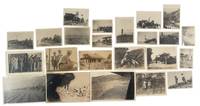
1917ref. 223051917. Wakefield Ben. U.S. field artillery soldier photograph archive documenting National Guard mobilization and artillery training at the United States-Mexico border during the Border War created in El Paso Texas and surrounding areas in 1917. The photographs record the service of Ben Wakefield of Toledo Ohio a member of Battery C 1st Battalion Ohio Field Artillery stationed at Fort Bliss during the period of heightened border militarization following the 1916 raid on Columbus New Mexico led by Francisco "Pancho" Villa and the subsequent U.S. Punitive Expedition under General John J. Pershing. The images provide visual documentation of field artillery operations mounted logistics and daily camp life among National Guard troops deployed to reinforce the border during a moment when the United States was simultaneously confronting instability in northern Mexico and preparing for entry into the First World War. Through portraits training scenes and encampment views the archive records the mobilization of state militia forces into federal service during one of the most significant domestic military deployments of the early twentieth century. Photo archive consisting of 31 silver gelatin photographs produced in El Paso Texas and nearby encampments in 1917. Approximately half bear pencil inscriptions on the verso identifying Wakefield or the location including captions reading "Wakefield" "Ben Center Wakefield" "Wakefield Horse" and "El Paso." One photograph bears a developing stamp from Bohne's Studio of Toledo Ohio. The photographs depict Wakefield and fellow artillerymen posed in regulation campaign hats breeches and puttees along with multiple images of horse-drawn artillery equipment including the standard U.S. Army M1902 3-inch field gun. In one photograph Wakefield and three soldiers pose beside the artillery piece with Wakefield seated before the gun wearing a slouch cap. Additional images show artillery teams maneuvering guns across open desert terrain using horses and mules soldiers marching in formation against the mountainous landscape of the Chihuahuan Desert and a photograph captioned "game Football El Paso" depicting soldiers playing football on a dusty parade ground with rows of canvas tents behind them. Another image shows the field gun positioned behind a brush screen during nighttime operations suggesting artillery drills or simulated combat exercises conducted during the border deployment. Archive of 31 photographs. Silver gelatin prints ranging approximately from 2 x 1 inches to 5 x 3 inches. The photographs collectively document the material culture and operational structure of U.S. National Guard artillery units stationed along the border during the 1916-1917 mobilization period when Fort Bliss served as a major staging ground for forces supporting the Punitive Expedition and guarding against further cross-border conflict. The images illustrate horse-drawn artillery transport tent encampments arranged in orderly rows and the social life of soldiers during extended deployments in the Southwest. Light edge wear and minor silvering visible on several prints with occasional handling marks consistent with age. Images remain clear with strong contrast. Overall very good condition. A cohesive visual record of National Guard field artillery service on the U.S.-Mexico border during the final phase of the Border War and the broader military mobilization preceding American entry into the First World War. unknown
1910ref. 218961910. Large photograph archive circa 1910s-1930s documenting U.S. and Mexican military presence along the Rio Grande border and in Sinaloa during a period of revolution intervention and military modernization. The photographs depict soldiers fortifications and daily military activity across multiple locations providing primary-source visual evidence for the study of U.S.-Mexico border tensions the Mexican Revolution and interwar military development. One photograph identified en verso as taken at the "United States Immigration Station on the Rio Grande River - Border Service - 1916" situates the archive within the period of the Mexican Revolution and the U.S. Punitive Expedition while other images extend into the 1920s and 1930s reflecting continued military presence and surveillance. Archive comprises 22 vernacular silver gelatin photographs ranging from approximately 3.25 x 5.5 inches to 4.5 x 6.5 inches several with manuscript annotations en versos and studio stamps including "Laboratorio Vega Mazatlán Sin." and "La Foto Madero 42." Images include U.S. soldiers positioned atop sandbag fortifications with rifles standing at border outposts and posing beside military vehicles including an early Dodge touring car. Mexican Army scenes depict officers and enlisted men in varied uniforms including kepis and high-collared tunics assembled in formations occupying trenches and constructing earthen defenses. A photograph inscribed "12º Rgto. Mazatlán Sin. Marzo 1929" identifies the 12th Infantry Regiment during a coastal inspection. Additional images show cavalry units riding in formation across fields soldiers resting near agave plants and encampments along beaches with troops engaged in labor or recreation. One aerial photograph taken from a biplane captures a valley settlement while another image shows a rural structure marked "U.S. 19" on its roof suggesting identification or surveillance use. Across the archive soldiers appear in both formal and informal groupings sometimes posed in relaxed settings with visible gestures of camaraderie. These photographs document a period of sustained militarization along the U.S.-Mexico border and within northern Mexico following the upheaval of the Mexican Revolution and subsequent stabilization efforts. The presence of both U.S. Border Service personnel and Mexican Army units illustrates parallel and overlapping military activities including patrol construction and occupation of strategic terrain. The imagery of trenches transport and aerial observation reflects evolving military practices in the early twentieth century while the combination of formal and informal scenes provides insight into daily life within these environments. Surface wear to several prints; overall very good condition. A concentrated visual record of binational military activity and borderland conditions during a formative period of regional conflict and modernization. unknown
1910ref. 218961910. Large photograph archive circa 1910s-1930s documenting U.S. and Mexican military presence along the Rio Grande border and in Sinaloa during a period of revolution intervention and military modernization. The photographs depict soldiers fortifications and daily military activity across multiple locations providing primary-source visual evidence for the study of U.S.-Mexico border tensions the Mexican Revolution and interwar military development. One photograph identified en verso as taken at the "United States Immigration Station on the Rio Grande River - Border Service - 1916" situates the archive within the period of the Mexican Revolution and the U.S. Punitive Expedition while other images extend into the 1920s and 1930s reflecting continued military presence and surveillance. Archive comprises 22 vernacular silver gelatin photographs ranging from approximately 3.25 x 5.5 inches to 4.5 x 6.5 inches several with manuscript annotations en versos and studio stamps including "Laboratorio Vega Mazatlán Sin." and "La Foto Madero 42." Images include U.S. soldiers positioned atop sandbag fortifications with rifles standing at border outposts and posing beside military vehicles including an early Dodge touring car. Mexican Army scenes depict officers and enlisted men in varied uniforms including kepis and high-collared tunics assembled in formations occupying trenches and constructing earthen defenses. A photograph inscribed "12º Rgto. Mazatlán Sin. Marzo 1929" identifies the 12th Infantry Regiment during a coastal inspection. Additional images show cavalry units riding in formation across fields soldiers resting near agave plants and encampments along beaches with troops engaged in labor or recreation. One aerial photograph taken from a biplane captures a valley settlement while another image shows a rural structure marked "U.S. 19" on its roof suggesting identification or surveillance use. Across the archive soldiers appear in both formal and informal groupings sometimes posed in relaxed settings with visible gestures of camaraderie. These photographs document a period of sustained militarization along the U.S.-Mexico border and within northern Mexico following the upheaval of the Mexican Revolution and subsequent stabilization efforts. The presence of both U.S. Border Service personnel and Mexican Army units illustrates parallel and overlapping military activities including patrol construction and occupation of strategic terrain. The imagery of trenches transport and aerial observation reflects evolving military practices in the early twentieth century while the combination of formal and informal scenes provides insight into daily life within these environments. Surface wear to several prints; overall very good condition. A concentrated visual record of binational military activity and borderland conditions during a formative period of regional conflict and modernization. unknown books
1917ref. 223051917. Wakefield Ben. U.S. field artillery soldier photograph archive documenting National Guard mobilization and artillery training at the United States-Mexico border during the Border War created in El Paso Texas and surrounding areas in 1917. The photographs record the service of Ben Wakefield of Toledo Ohio a member of Battery C 1st Battalion Ohio Field Artillery stationed at Fort Bliss during the period of heightened border militarization following the 1916 raid on Columbus New Mexico led by Francisco "Pancho" Villa and the subsequent U.S. Punitive Expedition under General John J. Pershing. The images provide visual documentation of field artillery operations mounted logistics and daily camp life among National Guard troops deployed to reinforce the border during a moment when the United States was simultaneously confronting instability in northern Mexico and preparing for entry into the First World War. Through portraits training scenes and encampment views the archive records the mobilization of state militia forces into federal service during one of the most significant domestic military deployments of the early twentieth century. Photo archive consisting of 31 silver gelatin photographs produced in El Paso Texas and nearby encampments in 1917. Approximately half bear pencil inscriptions on the verso identifying Wakefield or the location including captions reading "Wakefield" "Ben Center Wakefield" "Wakefield Horse" and "El Paso." One photograph bears a developing stamp from Bohne's Studio of Toledo Ohio. The photographs depict Wakefield and fellow artillerymen posed in regulation campaign hats breeches and puttees along with multiple images of horse-drawn artillery equipment including the standard U.S. Army M1902 3-inch field gun. In one photograph Wakefield and three soldiers pose beside the artillery piece with Wakefield seated before the gun wearing a slouch cap. Additional images show artillery teams maneuvering guns across open desert terrain using horses and mules soldiers marching in formation against the mountainous landscape of the Chihuahuan Desert and a photograph captioned "game Football El Paso" depicting soldiers playing football on a dusty parade ground with rows of canvas tents behind them. Another image shows the field gun positioned behind a brush screen during nighttime operations suggesting artillery drills or simulated combat exercises conducted during the border deployment. Archive of 31 photographs. Silver gelatin prints ranging approximately from 2 x 1 inches to 5 x 3 inches. The photographs collectively document the material culture and operational structure of U.S. National Guard artillery units stationed along the border during the 1916-1917 mobilization period when Fort Bliss served as a major staging ground for forces supporting the Punitive Expedition and guarding against further cross-border conflict. The images illustrate horse-drawn artillery transport tent encampments arranged in orderly rows and the social life of soldiers during extended deployments in the Southwest. Light edge wear and minor silvering visible on several prints with occasional handling marks consistent with age. Images remain clear with strong contrast. Overall very good condition. A cohesive visual record of National Guard field artillery service on the U.S.-Mexico border during the final phase of the Border War and the broader military mobilization preceding American entry into the First World War. unknown books
ref. 9948032004.Gpaperback. Good. Access codes and supplements are not guaranteed with used items. May be an ex-library book. paperback
1940ref. 2082702114605345Fuchusha 17 1940. Soft Cover. Fine. Number of books: 1 Fuchusha 17 paperback
ref. E17D-01601McGraw-Hill Humanities/Social Sciences/Languages. Used - Very Good. Very Good condition. A copy that may have a few cosmetic defects. May also contain light spine creasing or a few markings such as an owner’s name short gifter’s inscription or light stamp. McGraw-Hill Humanities/Social Sciences/Languages unknown
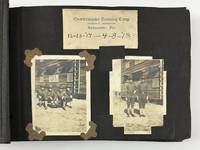
1918ref. 2322Various locations in Texas 1918. Very good. Fifteen leaves illustrated with fifty-five mounted photographs and a few ephemeral clippings identifying locations. Oblong octavo. Contemporary black cloth string-tied. Light soiling to covers. Minor wear to some photographs but overall a handsome selection. A unique collection of vernacular photographs collected by a soldier in the 8th U.S. Cavalry identified simply as D. Watson serving in southwest Texas during the Mexican Border War. The first two pictures emanate from Quartermaster Training Camp in Jacksonville Florida. This is followed by one photo from Barron Field in Everman Texas. The remaining photographs document Watson's time in Ruidosa Texas an unincorporated Texas-Mexico border town in Presidio County about a hundred miles from Terlingua. Here Watson includes photographs of himself and other soldiers and their horses posed in front of old stone structures in orange groves amongst canyons in front of an automobile and more with images of Mexican adobes a wagon advertising an "electric light company" the cavalry preparing their horses scenes of the wilds of southwest Texas and the E.H. Carlton company store. E.H. Carlton was also a principal in the Carlton Van Loan Company an oil speculation firm active in the 1920s. An eclectic and intriguing selection of Texas-Mexico border images from an important period in history. unknown
1918ref. 2322Various locations in Texas 1918. Very good. Fifteen leaves illustrated with fifty-five mounted photographs and a few ephemeral clippings identifying locations. Oblong octavo. Contemporary black cloth string-tied. Light soiling to covers. Minor wear to some photographs but overall a handsome selection. A unique collection of vernacular photographs collected by a soldier in the 8th U.S. Cavalry identified simply as D. Watson serving in southwest Texas during the Mexican Border War. The first two pictures emanate from Quartermaster Training Camp in Jacksonville Florida. This is followed by one photo from Barron Field in Everman Texas. The remaining photographs document Watson's time in Ruidosa Texas an unincorporated Texas-Mexico border town in Presidio County about a hundred miles from Terlingua. Here Watson includes photographs of himself and other soldiers and their horses posed in front of old stone structures in orange groves amongst canyons in front of an automobile and more with images of Mexican adobes a wagon advertising an "electric light company" the cavalry preparing their horses scenes of the wilds of southwest Texas and the E.H. Carlton company store. E.H. Carlton was also a principal in the Carlton Van Loan Company an oil speculation firm active in the 1920s. An eclectic and intriguing selection of Texas-Mexico border images from an important period in history. unknown books
1984Mm 135x210 Collana della Laterza "Storia e Società". Volume di VI - 303 pp. Copertina in tela e sopraccoperta. Libro in buone condizioni.
1976Escritor nacido en Jerez en 1933, fue detenido varias veces por sus ideas politicas contrarias al regimen anterior.
ref. 848359031X.Gpaperback. Good. Access codes and supplements are not guaranteed with used items. May be an ex-library book. paperback
2002ref. URBANISME22220623Paris, Anthropos, 2002, 15,5 x 24, 276 pages cousues sous couverture souple imprimée.
ref. 608188not signed on a 3/4 length scene shot of Buck Jones dressed in costume wearing his large white western hat with his six gun drawn on an unidentified actor in a scene from the 1942 film "Below the Border." Photograph is on single weight stock; 10" x 8"; very good minor signs of handling; 1942. Information slip on the back reads: "A SCENE FROM THE MONOGRAM WESTERN 'BELOW THE BORDER' FEATURING BUCK JONES TIM MCCOY AND RAYMOND HATTON WITH LINDA BRENT AND DENNIS MOORE. DIRECTED BY HOWARD BRETHERTON. RELEASED BY PATHE." Also with rubberstamp on the back: ". . .issued by Pathe Publicity Department. . .". No Binding. Very Good. unknown books
2013Libro in brossura come nuovo; Copertina morbida
2014Book and jacket appear in as new unread condition. 246pp. A complete walk along the Border from Gretna to Lamberton, just north of Berwick on Tweed, filled with information on nature, literature, history and the people who lived there.
2009Roy. 4to., Second Revised Edition, with illustrated title, 4 full-page coloured maps and very numerous monochrome photographs in the text; cloth, gilt back, green endpapers, a fine copy in unclipped dustwrapper. Revised and expanded edition of the splendid pictorial history based on a huge compilation of photographs from public and private records. First published in 1994, this is the book which began the 'new wave' of Arnhem unit photographic documentaries. As one would expect, about half the book is given over to the battalion's role in Operation MARKET. Includes battalion ROH, honours and awards, battalion roll for Arnhem, operation orders for MARKET and much other data. This edition includes more than 135 new photographs, minor corrections, additions to the Battalion ROH and detailed additions to the Battalion roll. Sutcliffe, p.293 (recording the first edition of 1994)
1994Roy. 4to., First Edition, with illustrated title, 4 full-page coloured maps and very numerous photographs in the text, large signature on front free endpaper; green cloth, gilt back, a near fine copy in unclipped dustwrapper. SIGNED BY ALL THREE AUTHORS ON HALF-TITLE. Splendid pictorial history based on a huge compilation of photographs from public and private sources. As one would expect, about half the book is given over the battalion's role in Operation MARKET. Includes battalion ROH, honours and awards, battalion roll for Arnhem, operational orders for MARKET and much other data. Sutcliffe, p.293
1959ref. 2082702114604094Fixed 311 yen Kadokawa Shoten 1959. Soft Cover. Fine. Number of books: 1 Fixed 311 yen Kadokawa Shoten paperback
2003ref. x-1859418600Cavendish Pub Ltd 2003. Paperback. New. 2nd edition. 104 pages. 8.54x5.47x0.31 inches. Cavendish Pub Ltd paperback
ref. 6350123Taylor & Francis Group . Papeback. New. pp. 104 Taylor & Francis Group unknown
ref. 6350125Taylor & Francis Group . Papeback. New. pp. 200 Taylor & Francis Group unknown
1954ref. 2082702114609114Moji Sotokai 1954. Soft Cover. Fine. Number of books: 1 Moji Sotokai paperback
1931ref. k1512101437xbvkAugsburg, Druck und Verlag von J. P. Himmer (Ph. J. Pfeiffer), 1931. 13; 1.152 bandübergreifend nummerierte Seiten, mit fotografischen Abbildungen. - Halbleineneinbände der Zeit mit dekorativem Deckelbezugspapier und Papierrückenschildern 'SV Zeitung 1931 I / II'; 8vo.(ca. 24 x 17 x 4,5 cm; ca. 1,85 kg.).