INDIA - AITCHISON, Charles UmpherstonBiblio.com

4 421 résultats
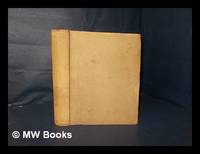
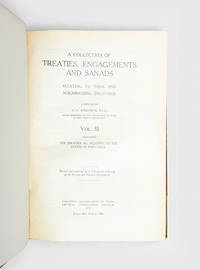
1930réf. 188517Calcutta: Government of India Central Publication Branch 1930. Fifth iteration of this important collection of treaties and deeds sanads granted to the rulers of the provinces of Agra and Oudh Bengal Bihar and Orissa and the central provinces. These confirmed the princes in their roles in return for allegiance to Britain. Only 665 copies were printed and just 7 are held in UK institutions. Aitchison 1832-1896 went out to India as a civil servant in September 1856 narrowly escaping a massacre at Hissar in 1857 before being stationed at Amritsar. In 1865 he took up administrative work in the Punjab where he was "extremely industrious and thorough in his work. He exercised a marked influence on successive governors-general who trusted him for advice" ODNB. He commenced a compilation entitled A Collection of Treaties Engagements and Sanads Relating to India and Neighbouring Countries in 1862 and eleven volumes were issued by 1892. In 1882 he became governor-general of the Punjab where he advocated for the Indianization of the civil service. Copies of this volume in the UK are held by the British Library Oxford Cambridge King's College London LSE National Library of Scotland and SOAS. Large octavo 257 x 180 mm. Tables in text. Contemporary khaki half cloth spine lettered in gilt low bands ruled in gilt brown cloth boards. Purple ink stamp of the Legal Adviser's Department CRO Downing Street on front free endpaper deaccession stamp on title page. Binding a little scuffed and marked spine toned rear board nicked at fore edge title page loose but holding: a very good copy. hardcover
réf. DADAX1851969411New unknown
réf. DADAX0367625563New unknown
réf. DADAX0670812048New unknown
réf. 24731One item from ‘Allen’s Indian Mail’ 28 March 1887. Three items marked as from the periodical ‘India’ 1902 1903 and 1906. Another ‘Reprinted from “INDIA” August 16 1901.’. Five galley-proofs of articles written during the high-point of the Raj by leading Victorian journalist in India W. Martin Wood editor of the Times of India founder and editor of the Bombay Review. Ephemeral items creased and worn but with text clear and entire. ONE: Headed ‘ALLEN’S INDIAN MAIL / THE LATE MR. EDWARD BROOME C.E. / Mr. M. Martin Wood writes to us as follows: -’. Sixty-two lines in small print follow beginning: ‘Some little time back your “Domestic Occurrences” contained the name of Mr. Edward Broome Civil Engineer as having died at Southport something under 60 years of age. It struck me then that a note of Mr. Broome’s quiet work in India ought to be made’. TWO: Annotated at head by Wood ‘India Sep 16th. 1902’. Sixty-eight lines of small print. Three sections concerning drought ‘in Gujerat and the Deccan’. The first begins: ‘An esteemed correspondent writes: Telegrams from India during the last few weeks have told us very little about the suspension and in certain districts what almost threatens failure of the later monsoon rains.’ The second starts: ‘But this passive creed is nto that of their masters from the West’. The third: ‘Meantime what has become of the Scott-Moncrieff comprehensive Water-Supply and Irrigation Report’ THREE: Headed ‘INDIA’S CHRONIC DEFICIT. / FROM AN ANGLO-INDIAN CORRESPONDENT. Annotated by Wood at head: ‘From India Feb. 13th. 03’. Beginning ‘Those few of our official financiers at Simla or in the palace overlooking St. James’s Park who are at all sensitive to Press criticism must have felt happy when in the last Financial Statement they recorded the line - “the entry under Exchange has become of minor importance.”’ Ninety-three lines of text. FOUR: Headed ‘INDIA’S SEABORNE TRADE: / BALANCED ONLY BY DEADWEIGHTS.’ Annotated at head by Wood: ‘From India Jan 15. 06’. Begins: ‘Only within the last fortnight have come to hand detailed returns of India’s trade with the outside world during the first six months of its current financial year - April 1 to September 30.’ Eighty-one lines in small print. FIVE: Headed ‘Reprinted from “INDIA” August 16 1901. / INDIAN LOANS GUARANTEE. / AN EMERGENT ILLUSTRATION. / BY AN ANGLO-INDIAN.’ Beginning ‘The miscarriage of the proposed Indian sterling loan of £3000000 last month must have recalled attention to the often pressed always postponed demand for a British Treasury guarantee in support of the public debt of India.’ Sixty-five lines of small print. One item from ‘Allen’s Indian Mail’, [28 March 1887]. Three items marked as from the periodical ‘India’, [1902], 1903 unknown
réf. 24732One item from ‘Allen’s Indian Mail’ 28 March 1887. The other ‘Reprinted from “INDIA” August 16 1901.’. Two galley-proofs of articles by leading Victorian journalist in India W. Martin Wood editor of the Times of India founder and editor of the Bombay Review. Ephemeral items creased and worn but with text clear and entire. ONE: Headed ‘ALLEN’S INDIAN MAIL / THE LATE MR. EDWARD BROOME C.E. / Mr. M. Martin Wood writes to us as follows: -’. Sixty-two lines in small print follow beginning: ‘Some little time back your “Domestic Occurrences” contained the name of Mr. Edward Broome Civil Engineer as having died at Southport something under 60 years of age. It struck me then that a note of Mr. Broome’s quiet work in India ought to be made’. TWO: Annotated at head by Wood ‘India Sep 16th. 1902’. Sixty-eight lines of small print. Three sections concerning drought ‘in Gujerat and the Deccan’. The first begins: ‘An esteemed correspondent writes: Telegrams from India during the last few weeks have told us very little about the suspension and in certain districts what almost threatens failure of the later monsoon rains.’ The second starts: ‘But this passive creed is nto that of their masters from the West’. The third: ‘Meantime what has become of the Scott-Moncrieff comprehensive Water-Supply and Irrigation Report’ THREE: Headed ‘INDIA’S CHRONIC DEFICIT. / FROM AN ANGLO-INDIAN CORRESPONDENT. Annotated by Wood at head: ‘From India Feb. 13th. 03’. Beginning ‘Those few of our official financiers at Simla or in the palace overlooking St. James’s Park who are at all sensitive to Press criticism must have felt happy when in the last Financial Statement they recorded the line - “the entry under Exchange has become of minor importance.”’ Ninety-three lines of text. FOUR: Headed ‘INDIA’S SEABORNE TRADE: / BALANCED ONLY BY DEADWEIGHTS.’ Annotated at head by Wood: ‘From India Jan 15. 06’. Begins: ‘Only within the last fortnight have come to hand detailed returns of India’s trade with the outside world during the first six months of its current financial year - April 1 to September 30.’ Eighty-one lines in small print. FIVE: Headed ‘Reprinted from “INDIA” August 16 1901. / INDIAN LOANS GUARANTEE. / AN EMERGENT ILLUSTRATION. / BY AN ANGLO-INDIAN.’ Beginning ‘The miscarriage of the proposed Indian sterling loan of £3000000 last month must have recalled attention to the often pressed always postponed demand for a British Treasury guarantee in support of the public debt of India.’ Sixty-five lines of small print. One item from ‘Allen’s Indian Mail’, [28 March 1887]. The other ‘Reprinted from “INDIA,” August 16, 1901.’ unknown
réf. 25035One letter from 1914 the other nine from 1915. Each on his letterhead 42 Frederick Street Victoria Chambers Edinburgh. In one of the present letters Hay signs himself as ‘Retired Behar Indigo planter’ and the material provides an knowledgeable commentry on the colonial textiles industry at the beginning of the First World War. Some of the material was printed in the Journal of the Royal Society of Arts. The recipient George Kenneth Menzies 1869-1954 was Secretary to the Royal Society of Arts between 1917 and 1935. A total of 21pp 4to. Each bears the stamp of the RSA some with manuscript docketting. Three of the letters appear to be incomplete: those of 4 and 9 January 1915 consists of an unsigned first page only and that of 5 January 1915 is paginated to 7 but lacks p.6. Each of the eight letters with a final page is signed ‘Lewis J. E. Hay.’ The condition of the material is good on lightly aged paper some items with pin holes from the attachment of pages. The first two letters 18 December 1914 and 4 and 9 January 1915 concern ‘Dr. F. Mollvo Perkin’s Lecture’ copies of which Hay requests in order to send them ‘to my friends who are interested in the Indian Indigo industry’. In the second letter he writes: ‘As a Planter I well know that many valuable lectures have been given and discussions have taken place at the Royal Society on Indigo and its Competitors which we planters in India never even heard of though we were vitally interested in the matter!’ He would like to ‘guard against this happening on this occasion’ as there seems to him to be ‘some chance of reviving our Industry provided Dr. F. Molvo Perkin’s most sound advice is taken.’ The incomplete letter of 5 January 1915 six pages of seven is headed ‘Natural Indigo’ and consists of ‘some comments on the generally speaking very accurate description given by the Author of the manufacture of the above dye as practised in Behar’. Topics touched on include ‘the colour of the steeped liquor’ indoxyl ‘the Dutch planters process’ ‘known differences in dyeing strength’ ‘vitamines’ ‘the Chinese method of extracting Indigo’. He ends with a warning of the need to ‘hold the fort against a German monopoly’: ‘our home manufacturers . will assuredly suffer should Germany reach her goal a monopoly of the dye-stuffs of the World’. In another letter of the same date he responds positively to Menzies telegram proposal to ‘publish bulk of your letter in Society of Arts Journal’. Incomplete letter of 9 January 1915 first page only contains comments on ‘Chinese Alkaline Extraction Vat’. A three-page letter of 11 January 1915 is signed ‘Lewis J. E. Hay / Retired Behar Indigo planter.’ It discusses the ‘Alkaline method of Extraction’. In the following four-page letter 14 January 1915 Hay seeks to ‘sum up my conclusions on the existing Behar process and give my suggestions briefly for a possible alternative one’. A two-page letter 18 January 1915 discusses the relative merits of ‘Natural Dye’ and ‘Synthetic’. A postscript reads: ‘It would be helpful if Dr. Perkin Professor Armstrong & other scientists could be induced to give their views for alternative processes. If you thought of publishing my letter of 14th. inst. perhaps Dr. Perkins would very kindly write a note for publication at the same time. / L H.’ The final letter 8 February 1915 concerns a completely different subject being a covering letter for a paper ‘Re Possible Origin of Malignant Diseases’: ‘I don’t know if my Article is suitable for publication but it may prove of interest to investigators engaged in Cancer Research - also the causes of some forms of Insanity.’ One letter from 1914, the other nine from 1915. Each on his letterhead, 42 Frederick Street, Victoria Chambers, Edinburgh. unknown
réf. 2660310 November 1855. Document 39 x 25cm part manuscript part-printed folded good condition. Appointment of Beauchamp Colclough Urquhart as a Lieutenant of Infantry "in the Service of the East India Company on the Bengal Establishment". Signed by Lord Canning Governor-General of India later the first Viceroy; George Anson soon to become Commander in Chief in India; J.P. Grant later to become Lieutenant-Governor of Bengal 1859–1862 and as Governor of Jamaica; B. Peacock "credited with authoring the Indian Penal Code." All four feature in Wikipedia. It is counter-signed by R.J.H. Birch Secretary to the Government of India Military Department. Note: "Beauchamp Colclough Urquhart was born in Waterford Ireland. He was the only son of George Urquhart and Bridget Colclough.He fought with the 85th Regiment of Foot which took part in the burning of the White House and Washington in 1814." Wikitree See Image. 10 November 1855 unknown
réf. DADAX0415595444New unknown
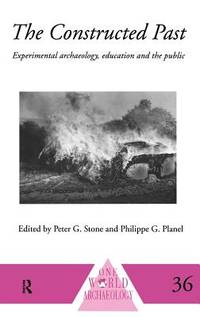
1999réf. x-071464983XFrank Cass & Co 1999. Hardcover. New. 1st edition. 369 pages. 9.00x6.25x1.50 inches. Frank Cass & Co hardcover
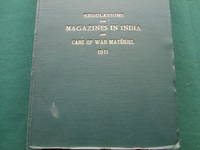
1912réf. 012281Calcutta: Superintendent Government Printing India 1912. Book measures 24.5x16.cm. vi 246pp lxxixpp index interleaved with blank pages occasional illustratuion. Bound in green cloth with gilt lettering. Cloth rubbed a short tear and abrasion mark on spine library label on top board. Binding in good clean firm condition. Internally occasional library stamp cancellation stamp. Pages in good clean condition. A good clean copy. . Cloth. Near Very Good. 8vo. Superintendent Government Printing, India Hardcover
1929réf. 8386Calcutta: Survey of India 1929. Detailed plan of Calcutta 73.5 x 64.5 cms black and white laid on linen as issued folding into printed stiff paper wraps. Old ownership signature J. Mackinnon November 1939. Map Survey of India paperback
1999réf. x-0415117682Routledge 1999. Hardcover. New. 1st edition. 303 pages. 9.75x6.75x0.75 inches. Routledge hardcover
1999réf. Star-9783540653691Springer 1999. Hardcover. New. Springer hardcover
1999réf. Star-9783540653691Springer 1999. Hardcover. New. Springer hardcover
1999réf. x-0415117674Routledge 1999. Hardcover. New. revised edition. 499 pages. 9.50x6.50x1.25 inches. Routledge hardcover
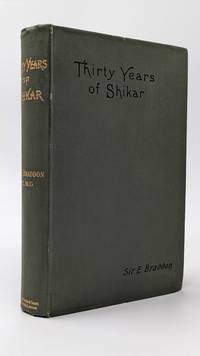
1913réf. 017791London: Horace Cox 1913. Book. Very Good. Hardcover. 1st Edition. First Edition First Printing. Pp. vii.282. Adverts. In original green boards tiger in black to front board titling in gilt to front board and spine. All plates 8 and sketch maps complete. The original owner has added some notes and photos throughout none of which affects text or plates. Rubbing to boards light dulling to pages. Scarce. Horace Cox Hardcover
1915réf. 56328Bangalore: Office of the Director Southern Circle Survey of India P.B. No. 44 1915. 4to. 7.25 x 9.75 in. which holds a 32-panel linen backed colour-printed map which folds out into double atlas folio sized map sized 36.5 x 53 in. Mounted within Navy-blue linen portfolio printed label w/ manuscript annotations on front cover indicating the sheet number minor shelfwear slight rubbing still NF copy. First edition thus of this map of Bangalore prepared under the auspices of the Survey of India Office of the Director in the opening years of World War I. This remarkable topographical map featuring a scale of 1” to 1 mile is based on the surveys first launched by William Lambton in the 19th Century known as the Great Trigonometrical Survey of India led successively by Lambton George Everest Andrew Waugh and James Walker. These fulfilled the premise that geodetic survey was the only option for accurate maps of large areas and much of this work in the survey of India was based upon the base lines in Bangalore originally measured by Warren and the base lines of Kumta by De Penning. These original linen-backed survey maps of India from the early 20th Century have become quite scarce. No copies located in Worldcat; See; Rama Deb Roy The Great Trigonometrical Survey of India in a Historical Perspective Pre-Census Population Studies Unit Indian Journal of History of Science 1986 Vol. 21 1 pp. 22-32. Office of the Director, Southern Circle, Survey of India, P.B. No. 44, unknown
1895réf. 21117Edinburgh And London: William Blackwood and Sons. Very Good. First Edition. Hardcover. Boards with light rubbing to extremities. Bookplate. Light marginal dampstaining.; The story of a hunting adventurer in India. Including a large rear fold-out map in VG condition. Numerous illustrations.; 8vo 8" - 9" tall; x 373 32 pages . 1895. William Blackwood and Sons hardcover
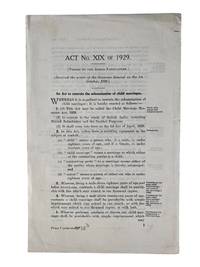
1929réf. 219671929. Government of India An Act to Restrain the Solemnisation of Child Marriages 1929 documents the legal system created to restrict child marriage in British India and supports research into women's rights colonial law childhood and social reform in South Asia. The Act commonly known as the Sarda Act after reformer Har Bilas Sarda reveals how legislation sought to regulate marriage age through statutory definitions penalties and enforcement provisions. It provides primary-source evidence for the study of Indian feminist legal history colonial governance and campaigns against patriarchal marriage customs. Government of India. An Act to Restrain the Solemnisation of Child Marriages. Calcutta: Government of India Central Publication Branch 1929. First edition. Official pamphlet printing of Act No. XIX of 1929 passed by the Indian Legislature and assented to by the Governor General on October 1 1929. The Act defines "child" "child marriage" "contracting party" and "minor" sets age thresholds for boys under eighteen and girls under fourteen and establishes penalties for adult men contracting child marriages as well as for those who solemnize arrange or permit such ceremonies. Its jurisdiction extends across British India including British Baluchistan and the Santhal Parganas with enforcement beginning April 1 1930. The printed price of "1 anna or 1½d" indicates official distribution for public and administrative use. The pamphlet documents a legal enforcement system for marriage reform through statutory age limits criminal penalties and responsibility assigned to adult men parents priests and other facilitators demonstrating the process by which colonial law entered debates over gender childhood and personal status. The timing is significant because Indian social reformers and women's rights advocates used the late colonial legal arena to challenge early marriage and forced domestic subordination. Minor edge creasing; overall very good condition. A concise official printing of a foundational statute in South Asian women's rights law and the legal history of childhood protection. unknown
1842réf. 182100London W. H. Allen & co. 1842. Third Edition. Hardback. Very good copy in the original plain cloth. Professionally re-cased with the original spine laid back; very impressively finished. Remains particularly well-preserved overall; tight bright clean and strong. Scans etc. on request.; 8vo 8"" - 9"" tall; 773 pages; Related names: East India Company. Great Britain. Laws statutes etc. Description: xiv 773 p. 28 x 23 cm. London, W. H. Allen & co. hardcover
réf. 73669Longman Hurst Rees Orme and Brown. London. 1812. 1st Ed. IV 218 PP with 8 tables a lengthy manuscript note at lower margin of pages 70 & 71 and inked correction on page 144. Leaf 91/92 dog-eared. Errata slip tipped in on page 1. Leather binding front and back covers with "tooling in blind" and gilt border lines spine with 5 raised bands gilt decorations and gilt title "Considerations on India Trade". Title page with 2 manuscript notes: name of a previous owner at top and name "by Mr. McCulloch". Slight ageing of paper. Contents near fine. A rare item. 21.6 x 13.5. Longman, Hurst, Rees, Orme, and Brown. London. 1812. hardcover
1932réf. 188518Calcutta: Government of India Central Publication Branch 1932. Fifth iteration of this important collection of treaties and deeds sanads granted to the rulers of Rajputana now Rajasthan. These cover the states of Jaipur Jodhpur and Bikaner including details on various projects such as the construction of the Jodhpur-Bikaner railway. Only 660 copies were printed and 6 are held in UK institutions. Aitchison 1832-1896 went out to India as a civil servant in September 1856 narrowly escaping a massacre at Hissar in 1857 before being stationed at Amritsar. In 1865 he took up administrative work in the Punjab where he was "extremely industrious and thorough in his work. He exercised a marked influence on successive governors-general who trusted him for advice" ODNB. He commenced a compilation entitled A Collection of Treaties Engagements and Sanads Relating to India and Neighbouring Countries in 1862 and eleven volumes were issued by 1892. In 1882 he became governor-general of the Punjab where he advocated for the Indianization of the civil service. Copies of this volume in the UK are held by the British Library Oxford Cambridge King's College London National Library of Scotland and SOAS. Large octavo 256 x 180 mm. Tables in text. Contemporary khaki half cloth spine lettered in gilt low bands ruled in gilt brown cloth boards. Purple ink deaccession stamp on front pastedown. Light scuffs and tidemarks spine a little toned title page sometime stabilized in gutter with cloth tape rear inner hinge starting but sturdy: a very good copy. hardcover
1849réf. 89449Agra: The Secundra Orphan Press 1849-51. First editions. Interesting collection of technical papers relating to the government of the North Western Provinces. Includes the description of a bridge built at Seoni by Major Boileau with plan; detailed plans for the cutting of a canal from the Sutlej at Tihara with excellent maps; an account of the "Oothaeegeeras" or Sunoreahs "professional thieves of Bundelcund" including a glossary of "Bolee" their argot; a important "Report upon the Tea Plantations in the North Western Provinces" by Robert Fortune noted botanist and plant collector for the HEIC; together with some revenue surveys of the region submitted by William Muir as secretary of the revenue board to John Thomason the lieutenant-governor. Attractive group of uncommon Indian imprints. Octavo 200 x 126 mm Twentieth-century blue cloth title gilt to the spine original upper wrappers bound in. pp. ii 66-108 3 folding lithographic maps with colour; pp. ii 213-250 folding lithographic map and 3 folding letter-press table; ii 251-286pp. folding letter-press table and tables to the text. Cloth clean and sound Patent Office Library ink-stamps to the wrappers maps and occasionally to the text light toning overall very good. hardcover
réf. 25637‘Athenaeum London / July 29th 1837’. See his entry and hers in the Oxford DNB. From the papers of Lady Theresa Lewis and written while she was married to her first husband the novelist Thomas Henry Lister 1800-1842. 2pp 12mo. In good condition lightly aged and folded once for postage. Begins: ‘Mr J Baillie Fraser begs to enclose a note for Mrs Lister received today thro’ Sir Gore Ouseley - he believes from the Interpreter of the Persian Princes & probably to announce their safe arrival at Baghdad - At all events Mr Fraser has the pleasure to state that this is really the case - they have arrived safe at Baghdad.’ He would have waited on her himself but he has been unwell and is now ‘forced to go this day to Scotland on the pleasant work of Electioneering’. He does not remember whether he told her when he saw her ‘that he intends probably bringing out a little Volume on the story of the Ruins in England & then going out to Constantinople’. The last paragraph refers to ‘the Three’ ‘Partridge’ and an ‘agreeable remembrance’. See Image of first page ‘Athenaeum [London] / July 29th 1837’. unknown