12.294 risultati
rif. 16-5820Dhrol Kathiawar India: 1937. Oblong folio album 530 x 420 mm depicting the installation festivities for the Thakore of Dhrol held on August 30 1937. Contemporary padded red morocco stamped and titled "Installation Festivities Dhrol Kathiawar" in gilt. Binding heavily rubbed with partial erasure of gilt lettering from upper cover contents somewhat loose boards heavily chipping and separating.Photographs depict all aspects of the society and community: Family notables servants military vernacular and royal architecture vehicles animals residents.Installation Festivities Kathiawar. Dhrol.Photograph album containing 128 black and white photos mounted on board leaves most 220 x 150 mm some 300 x 240 mm.A presentation album with the name of the recipient erased from the cover in celebration of the installation of H.H Thakore Saheb Shri Jorawarsinhji Dipsinhji Jadeja of Dhrol in August 1937. Shri Jorawarsinhji Dipsinhji Jadeja held the title of Thakore of Dhrol State—a British protectorate—for just two years until his death in 1939. His successor would be the last to hold the title which became extinct with the Union of India in February 1948.Before the arrival of Jadejas in Saurashtra the town of Dhrol was known as Dhamalpur. Dhamalpur was ruled by Chavda King founded & named after Dhamal Chavda who then reigned at Dhamalpur Dhrol obstructed the Jam Hardholji in their conquests and in order to remove this obstruction Jam Hardholji marched against Dhamal Chavda. Dhamal Chavda's army was made of different warrior clans such as Chavda Rathod Chauhan Jadav Jhala Gohil Varsur Makwana Dabhi Khimsurya and Solanki. These clans were not as united as Jadejas. Consequently they were defeated and King Dhamal Chavda was killed by Jadejas in 1539.Dhrol State became a British protectorate in 1807. During the British rule of India Dhrol State was a princely state of India ruled by the Jadeja dynasty having an area of 732 sqkm and 71 villages under its rule. It was accorded 9-gun salute status and a privy purse of 110000/-.The last ruler HH Thakore Saheb Shri Chandrasinhji Dipsinhji Jadeja acceded to the Union of India on 15 February 1948. Dhrol, Kathiawar, India: 1937 hardcover
2012rif. 103282Murdoch. New. Hardcover. FREE UPGRADE to Courier/Priority Shipping Upon Request - IN STOCK AND IMMEDIATELY AVAILABLE FOR SHIPMENT - Flawless copy brand new pristine never opened -- 288 pages; many illustrations most in color. -- with a bonus offer-- . 2012. 174196721X . Murdoch hardcover
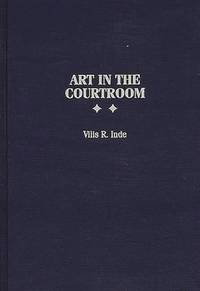
1998rif. 28919Westport Connecticut U.S.A.: Praeger Pub Text. New. Hardcover. FREE UPGRADE to Courier/Priority Shipping Upon Request - IN STOCK AND IMMEDIATELY AVAILABLE FOR SHIPMENT - FLAWLESS COPY BRAND NEW PRISTINE NEVER OPENED - Description: "Providing legal analysis and touching upon social history and art history themes this work offers an objective review of five art trials. Spanning the last 20 years specific areas of law are examined with each trial: First and Fifth Amendments copyright law contract law valuation of art and misrepresentation. Art outside of the legal vacuum has been embroiled in a battle initiated by social conservatives to promote decency. Three trials involving this struggle and the National Endowment of the Arts are analyzed. The valuation of art is examined in the context of Andy Warhol's estate and copyright law is considered because of the appropriation of contemporary images by Jeff Koons. Although each trial is reviewed distinctly all are interwoven to present major issues relating to contemporary art." . offer--; T-Indev-1; Inde Vilis R. Art in the Courtroom COPYRIGHT ART UNITED STATES LAW . 1998. 0275959716 . Praeger Pub Text hardcover
1961rif. 127885New Delhi India: Lalit Kala Gallery. As New. Paperback. FREE UPGRADE to Courier/Priority Shipping Upon Request – – IN STOCK AND IMMEDIATELY AVAILABLE FOR SHIPMENT - Text pristine & unmarked crisp tight to the spine - Text in English. FIVE 5 VOLUME SET 1961-1965 : Vol. I: 32 pp. With 10 ills. Vol. II: 36 pp. With 10 ills. Vol. III: 32 pp. With 10 ills. Vol. IV: 32 pp. With 10 ills. Vol. V: 36 pp. With 10 ills. 18 x 22 cm. -- with a bonus offer-- . 1961. Lalit Kala Gallery paperback
1974xxiv, 315 pp. Complete with all five fold-out maps. VII black and white plates of numismatic coins and their monograms. "I am very glad that yet another Indian scholar has taken up the subject of the Indo-Greeks. Dr. Mohan's analysis brings to bear upon it a fresh approach and new interpretations. I commend his study to all students of the subject." - Foreword. Chapters include: North-West India or the Uttarapatha; The Peoples; Introduction to the Greco-Sunga Period; The Bactrian Greeks; Demetrius; Rise of the Sungas; Eukratides and his Successors; Menander; Menander's Successors. Unmarked with average wear to publisher's brown cloth. New pastedowns appear to have been applied inside each board, extending almost an inch onto free endpapers thus bolstering the hinges. A sound copy of this valuable reference. Book
rif. 119377aafParis, Imprimerie Royale, M DCCCXL, -XLIV, -XLVII. - LXXXIV, -XCVIII , (1840, -44, -47, -84, -98), gr. in-4to, (30x23.5 cm), ens ca. 2200 p., robustes reliures pleine toile vert foncé (rel. Arne Asper, Genève). Bel exemplaire
rif. 22983Camp 4 miles West of 6 October 1799. 1 page 9 x 7 inches left margin a little ragged where integral leaf removed but in clean sound condition. Letters from the Indian Campaigns of Arthur Wellesley first Duke of Wellington 1769-1852 are uncommon. William Harness 1762-1804 an infantry officer had arrived in India in 1796 and was gazetted to a lieutenant-colonelcy with the 74th Regiment in 1799. It was in India that Wellington acquired his phenomenal mastery of the details of regimental duty. His string of successes included the conquests of Mysore Tanjore and Surat. Tippu was killed in the fortress of Seringapatam in April 1799. Colonel Arthur Wellesley remained in command of the military force quartered in Mysore. He was also responsible for the civil administration. Until September 1799 Wellesley was in pursuit of a freebooter called Dhoondiah and his followers who were defeated at Conahgull 10 September. unknown
rif. 1569.1aaffeuille 24 x 28.5 cm / passepartout 35 x 50 cm. peint probablement fin XIXe siècle sur papier ancien.
1730rif. 5023Copperplate engraving 83.5 x 55.5 cm 1 folio. Fold marks minor edge wear otherwise a very good copy in very crisp dark impression. Rare large-format engraved print produced in 1730 as part of the celebrations of the 200th anniversary of the Augsburg Confession 1530 one of the foundational documents of Lutheranism. The subject of the print is the famous Tranquebar Mission in southern India which was established by King Frederick IV of Denmark 1671-1730 and led by the German missionaries Bartholomäus Ziegenbalg 1682-1719 and Heinrich Plütschau 1676-1752 who are noted for having translated the Bible into Tamil and arranged for its printing. The engraving executed by Johann Jacob Kleinschmidt after a design by Elias Riedinger is a splendid example of 18th-century Augsburg printmaking. It takes as its compositional conceit a church altar surmounted by a framed retable. The image above the altar depicts the German missionaries preaching to an audience of natives; in the background of this scene can be glimpsed a statue of 'Biruma oder Brama' Brahma. The elaborately carved frame of the retable is enlivened with vignettes illustrating the successes of the Lutheran mission e.g. an Indian smashing an idol a native being baptized a domesticated elephant symbolizing the people under God's yoke etc. Placed atop the altar are oval portraits of Ziegenbalg and Plütschau their names written in Tamil and the books they translated an Indian bible an Indian catechism and an Indian hymnal. A map of southern India hangs on the front face of the altar. Flanking the altar are two young natives: the boy on the left holds the Danish Royal arms and the boy on the right displays the architectural plan of the New Jerusalem Church in Tranquebar built by the Germans and dedicated in 1719. In front of the altar are fallen symbols of the old dispensation. At the foot of the sheet is a poem in Latin and German celebrating the expansion of the Lutheran faith to all corners of the world. The engraving is one of several quite ambitious broadside prints produced in Augsburg to commemorate the bicentennial of the Augsburg Confession some of which apparently reproduced paintings executed for the occasion. These rather disparate graphic productions were collected by Johann Michael Roth in 1730/31 and released as a small-edition composite volume with an added engraved title page reading Augspurgisches Iubel-Gedächtnüs. The contents of this rather odd production vary greatly from copy to copy. Kleinschmidt's Vorstellung der Evangelisch-Ost-Indischen Kirche engraving apparently was a commercial success because in 1736 citing demand he released a small-format version of the work its composition slightly altered. OCLC locates U.S. examples of the Augspurgisches Iubel-Gedächtnüs at Illinois Duke Getty Stanford Princeton Yale Harvard Emory Concordia Seminary and Cal. State Sutro. The Getty copy includes Kleinschmidt's Vorstellung der Evangelisch-Ost-Indischen Kirch but it is not clear which other examples include this engraving. Drugulin Historischer Bilderatlas 4112; S. Neill A History of Christianity in India. Kleinschmidt
1730rif. 5023Copperplate engraving 83.5 x 55.5 cm 1 folio. Fold marks minor edge wear otherwise a very good copy in very crisp dark impression. Rare large-format engraved print produced in 1730 as part of the celebrations of the 200th anniversary of the Augsburg Confession 1530 one of the foundational documents of Lutheranism. The subject of the print is the famous Tranquebar Mission in southern India which was established by King Frederick IV of Denmark 1671-1730 and led by the German missionaries Bartholomäus Ziegenbalg 1682-1719 and Heinrich Plütschau 1676-1752 who are noted for having translated the Bible into Tamil and arranged for its printing. The engraving executed by Johann Jacob Kleinschmidt after a design by Elias Riedinger is a splendid example of 18th-century Augsburg printmaking. It takes as its compositional conceit a church altar surmounted by a framed retable. The image above the altar depicts the German missionaries preaching to an audience of natives; in the background of this scene can be glimpsed a statue of 'Biruma oder Brama' Brahma. The elaborately carved frame of the retable is enlivened with vignettes illustrating the successes of the Lutheran mission e.g. an Indian smashing an idol a native being baptized a domesticated elephant symbolizing the people under God's yoke etc. Placed atop the altar are oval portraits of Ziegenbalg and Plütschau their names written in Tamil and the books they translated an Indian bible an Indian catechism and an Indian hymnal. A map of southern India hangs on the front face of the altar. Flanking the altar are two young natives: the boy on the left holds the Danish Royal arms and the boy on the right displays the architectural plan of the New Jerusalem Church in Tranquebar built by the Germans and dedicated in 1719. In front of the altar are fallen symbols of the old dispensation. At the foot of the sheet is a poem in Latin and German celebrating the expansion of the Lutheran faith to all corners of the world. The engraving is one of several quite ambitious broadside prints produced in Augsburg to commemorate the bicentennial of the Augsburg Confession some of which apparently reproduced paintings executed for the occasion. These rather disparate graphic productions were collected by Johann Michael Roth in 1730/31 and released as a small-edition composite volume with an added engraved title page reading Augspurgisches Iubel-Gedächtnüs. The contents of this rather odd production vary greatly from copy to copy. Kleinschmidt's Vorstellung der Evangelisch-Ost-Indischen Kirche engraving apparently was a commercial success because in 1736 citing demand he released a small-format version of the work its composition slightly altered. OCLC locates U.S. examples of the Augspurgisches Iubel-Gedächtnüs at Illinois Duke Getty Stanford Princeton Yale Harvard Emory Concordia Seminary and Cal. State Sutro. The Getty copy includes Kleinschmidt's Vorstellung der Evangelisch-Ost-Indischen Kirch but it is not clear which other examples include this engraving. Drugulin Historischer Bilderatlas 4112; S. Neill A History of Christianity in India. Kleinschmidt books
rif. 1222aafS.d., vers 1840, in-8° oblong (29.5 x 22 cm), superbe reliure romantique en maroquin pourpre avec riche décor en or et à froid, mosaïqué en rouge, vert et brun, tranches dorées.
1914Boards with light rubbing to extremities. Former owner's name on title page. Edges a bit tanned; Very rare! "Mit 22 Karten, 33 Plänen und 8 Grundrissen". Map in rear pocket; 16mo; 358 pages
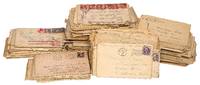
1924rif. 426129Missouri Illinois Maine New Jersey Colorado Washington DC Kansas New York 1924. Unbound. Near Fine. A collection of 209 letters from 1914 through 1924 from a young man sailor writing home to his wife with some later correspondence. Near fine with small tears and some age toning most on the envelopes. The majority of the letters are written from Garnett Blair Martin to his wife India Faye Martin née Gentry with some written from India to Garnett while he was serving in the Navy during World War I. He was stationed in several different base camps and moved around frequently as the letters are from various places in the United States including Missouri Illinois Maine New Jersey Colorado Washington DC Kansas New York among others. A large portion of the letters are holiday and birthday cards along with a few postcards sent to Martin's daughter explaining he will be home soon. However most of the letters are written affectionately to Martin's wife and with her letters replying in kind. Some of the letters discuss Martin's experience at the army bases from packing and moving constantly to having physical ailments such as poor eyesight sores and cuts. He also critiques the living situations while at war "it's cold and cramped here I can't even smoke a cigarette without blowing it in someone's face." Most of the letters somehow find a way back to lovelorn acclamations to his wife about how "a sweet kiss from your dear lips could cure it soon." Accompanied by a few letters and postcards from friends. A collection of romantic correspondence from a wife and husband separated during the World War. unknown
1924rif. 426129Missouri Illinois Maine New Jersey Colorado Washington DC Kansas New York 1924. Unbound. Near Fine. A collection of 209 letters from 1914 through 1924 from a young man sailor writing home to his wife with some later correspondence. Near fine with small tears and some age toning most on the envelopes. The majority of the letters are written from Garnett Blair Martin to his wife India Faye Martin née Gentry with some written from India to Garnett while he was serving in the Navy during World War I. He was stationed in several different base camps and moved around frequently as the letters are from various places in the United States including Missouri Illinois Maine New Jersey Colorado Washington DC Kansas New York among others. A large portion of the letters are holiday and birthday cards along with a few postcards sent to Martin's daughter explaining he will be home soon. However most of the letters are written affectionately to Martin's wife and with her letters replying in kind. Some of the letters discuss Martin's experience at the army bases from packing and moving constantly to having physical ailments such as poor eyesight sores and cuts. He also critiques the living situations while at war "it's cold and cramped here I can't even smoke a cigarette without blowing it in someone's face." Most of the letters somehow find a way back to lovelorn acclamations to his wife about how "a sweet kiss from your dear lips could cure it soon." Accompanied by a few letters and postcards from friends. A collection of romantic correspondence from a wife and husband separated during the World War. unknown books
2017rif. Gyan-9788182052147Isha Books 2017. 26 Vols. Set. Hardcover. New. 22.59 x 14.34 x 119 cm. English Isha Books hardcover
2017rif. Gyan-9788182052147Isha Books 2017. 26 Vols. Set. Hardcover. New. 22.59 x 14.34 x 119 cm. English Isha Books hardcover
1858rif. IE-23125London, The London Printing and Publishing Company, o. J. (um 1858). Vollständiges Werk in 8 Bänden. Original-Ganzleinenbände im Format 29 x 20 cm mit goldgeprägten Rückentiteln sowie reichen Goldprägungen auf Buchrücken und Vorderdeckel; beide Deckel außerdem mit reichen floralen Blindprägungen. Complete work in 8 volumes. Original full-cloth volumes in the format 29 x 20 cm with gold embossed spine titles and rich gold embossing on the spine and front cover; both covers also with rich floral blind embossing. Comprehensive, richly illustrated work by Irish writer, colonial official and explorer Robert Montgomery Martin (1801-1868) on the history of India and the Indian Rebellion of 1857. Includes 3 engraved titel pages, 120 steel-engraved illustrations and two double-page maps. From an early age, Martin joined several expeditions that took him to Ceylon, the Cape of Good Hope, the south-east coast of Africa and Madagascar, among others. Around 1838 he began to deal intensively with questions of the British colonial empire. The result of these studies was his work "Statistics of the Colonies of the British Empire", published in 1839. His special interest was in India, where he had already lived for a year in 1828. His present work "The Indian Empire" contains a complete history of India (volumes 1 - 5, 582 p.), which is divided into 5 chapters: Chapter I: Early history, mythological and traditional - Persian and other invasions - Greek expedition and conquers of Alexander - plundering incursions of Mahmood the Ghuznivede - Mohammedan conquests, dominion and downfall - Rise and progress of British power and supremacy. Chapter II: Topography - mountains and passes - Rivers - Plateaux - Provinces and chief towns - climate and diseases - geology - soil - mineralogy. Chapter III: Population - numbers density to area - proportion of Hindoos to Mohammedans - varieties of race - diverse languages - aborigines - slavery - past and present condition of the people. Chapter IV: Religion - Christian missions - education - the press - and crime. Chapter V: Civil government - judical administration - military power - and protected states and pensionaries. The second large part of the work entitled "History of the Mutiny of the Sepoy Troops" is dedicated to the Indian Rebellion of 1857 (Vol. 5: pp. 1 - 72; vol. 6: pp. 73 - 192; vol. 7 : pp. 193 - 328; vol. 8: pp. 329 - 504). Finally, a third part deals with the description of the illustrations contained in the work ("Description of the Engravings", vol. 5: p. 1 - 64; vol. 6: p. 65 - 136; vol. 7: p. 137 - 192).
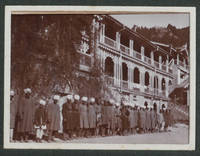
rif. PA98abTwo Oblong Quarto albums each ca. 235x28 cm 9 ¼ x 11 in. Each with 12 card stock leaves. With 192 gelatin silver photos mounted in windows each ca. 8x105 cm 3 ¼ x 4 ¼ in or slightly smaller. About twenty-five photos with period white ink captions on the mounts ca. 46 photos with period ink or pencil captions on verso with over twenty repeating the captions on the mounts. Two period green and brown full cloth albums with gilt-lettered titles “Photographs” on the front covers. Bindings mildly rubbed on extremities and slightly weakened on hinges a few photos mildly faded but overall very good albums with interesting strong photographs. Interesting extensive collection of original photos taken by a high-ranking official in British India who took part in the Delhi Durbar on December 7-16 1911. There are about thirty photos of the Delhi Durbar official events including the ones taken by the compiler “from our pavilion” or from the spectators’ crowd. Five photos show the ceremony in the Coronation Park on December 12 when King George V and Queen Mary received homage from the native princes in the Little Pavilion. The other images depict the official processions featuring “King’s native escort” “Lord & Lady Harding” and “Native Mutiny veterans soldiers” as well as naval and military reviews at Delhi. A series of photos of Nainital hill station include about a dozen general views of the city and the lake in summer and winter Hotel Metropole and gardens the hotel burned down in 2019 a “deputation of office menials for backsheesh at Xmas Day” waiting in front of the hotel “Hindu temple” Naina Devi Temple a street scene during the local “pujah” festival native soldiers marching on the Mall Rd. past the “Trevillion & Clark” shop a scene of a cricket game “a great dane at the N.T. dog show” and “wasp’s nest in tree Naini Tal.” The other photos show Kolkata Jain Temple Cathedral Hooghly River “tablet to commemorate Black Hole of Calcutta” botanical gardens Kanpur Satti Chaura or Massacre Ghat the Memorial Church and the Angel of Peace statue Jabalpur the Mable Rocks and waterfall on the Narmada River yacht club in Mumbai Mutiny memorial in Delhi railway stations in “southern India” and West Bengal railway tracks and cars “ox ploughing in flooded rice fields” portraits of a native bull cart driver “a bridegroom robed for wedding” “a holy man – fakir at Marble Rocks Jubblepore” &c. Several photos portray the album compiler his family friends and servants scenes from picnics and outings hunting games the interior of his house &c. Over thirty photos in the second album show the compiler and his family in Europe as well as views taken on the return trip to England Suez Canal Mount Vesuvius &c. Overall an interesting extensive collection of original photos of Nainital the events of 1911 Delhi Durbar and other locations in British India before WW1. Captions on the mounts: Delhi D. Delhi Camps Durbar; View from our pavilion of Little & Big Pavilion before K. & Q. arrived; View of Big Pavilion with Golden Dome; View of Little Pavilion before K. & Q. arrived; King & Q. receiving homage of Native Princes in Little Pavilion; Native Mutiny veterans soldiers; Queen alighting from carriage at polo grounds; Native Mutiny veterans soldiers at Delhi; Lord & Lady Hardingat Delhi; King’s native escort on way to unveiling of King Edward Memorial – Delhi; Yacht club at Bombay from the landing stage; Native family gathering at Cawnpore; Ox ploughing in flooded rice fields; Massacre ghat Cawnpore; Wild monkeys in field at Jubbulpore; Delhi review of sailors & marines under Royal standard the King’s bodyguard on the voyage; Naval brigade at Delhi; Jain temple Calcutta; Holy man – fakir with long hair at Marble Rocks Jubb.; Hindu temple at N.T.; Rave at N.T. “pujah”; Railway station; River scene at Calcutta. Captions on verso of the photos not repeating the captions on the mounts: Douglas Dale Harvey Weston Mrs. Gill Will; Douglas Dale L. to R. Will Gill Harvey Weston; Metropole Hotel Naini Tal Deputation of office menials for backsheesh at Xmas Day; Railway station Southern India; Bridegroom robed for wedding; “Dick” with bearer; Near starting point for Marble Rocks Jubbulpore; Mutiny Memorial Church Cawnpore; Delhi Review Cavalry marching past King who is on black horse in front of Royal Standard; Mutiny Memorial at Delhi; Calcutta Cathedral; Marble Rocks Jubblepore; Tablet to commemorate Black Hole of Calcutta; Under banyan tree botanical gardens Calcutta; Banyan tree botanical gardens Calcutta; Taken from dining car thro’ observation window at rear of car while train was travelling in the plains; Railway station W.B.; Mr. . & his prize dogs; A great dane at the N.T. dog show; Native Mutiny Veterans at Delhi; Album 2: Waterfall at Jubblepore; Wasp’s nest in tree Naini Tal. hardcover
rif. 77398c.1870. . Albumen print. Very good tonal range and in good condition pasted on original mount two other photos on verso. [c.1870]. unknown
2024rif. Gyan-9789371338899Gyan Publishing House 2024. 24 Books .Set. Hardcover. New. 28.94 x 22.59 x 74.02 cm. English Gyan Publishing House hardcover
2024rif. Gyan-9789371338899Gyan Publishing House 2024. 24 Books .Set. Hardcover. New. 28.94 x 22.59 x 74.02 cm. English Gyan Publishing House hardcover
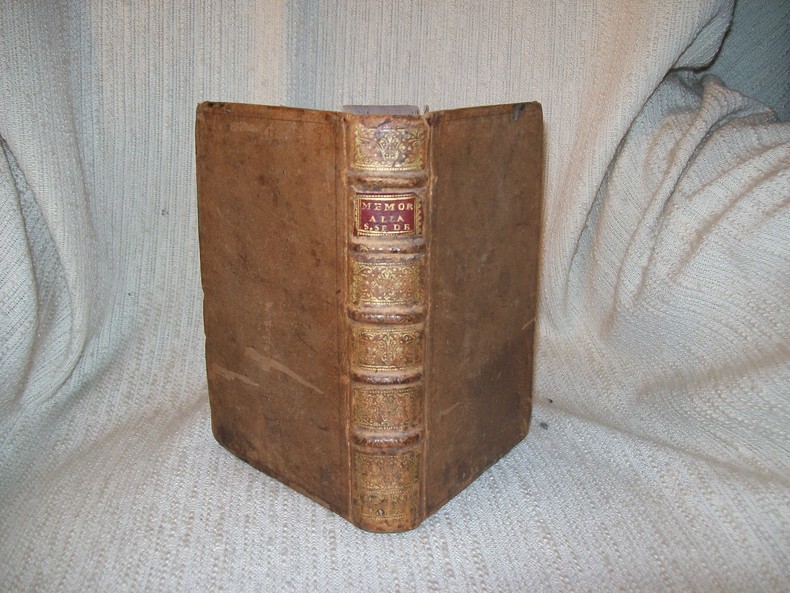
1742rif. GITaz288A Luques de l'Imprimerie d'Antoine Rossi 1742. In-8 (17,5cm x 11cm) imprimé sur 2 colonnes XXXIV 377pp. Pleine basane havane, dos à nerfs orné de compartiments dorés, pièce de titre grenat, tranches rouges, rel époque. Bon état.
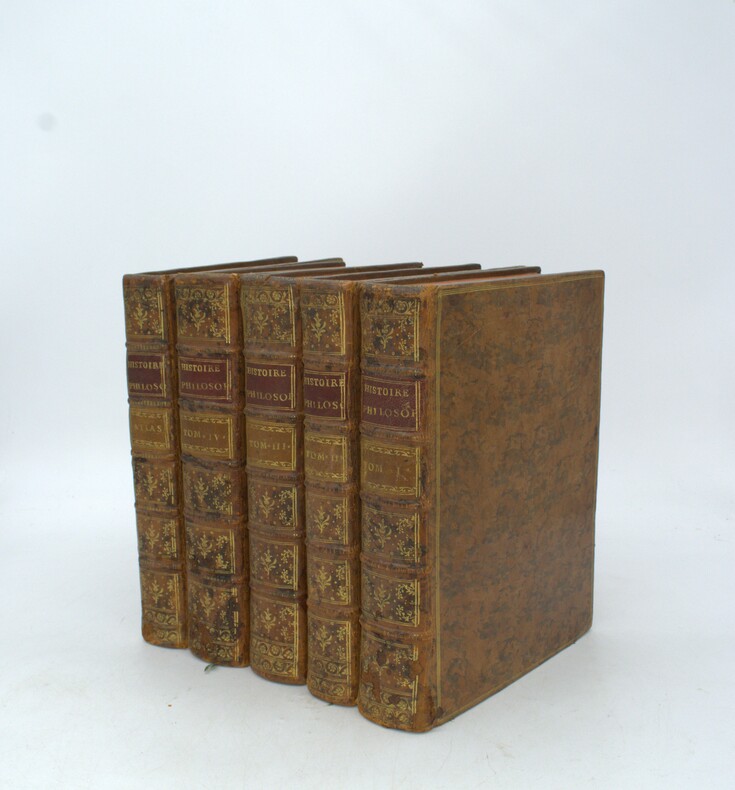
1780rif. PHO-2003Genève, Jean-Léonard Pellet, 1780. 5 volumes in-4, 4 volumes de texte (25,5x20cm) et 1 Atlas (25,5x22cm), portrait, XVI, front.,741 pp., front., (2 ff.), VIII, 485 pp.; front., XV, 629 pp.; front., (2 ff.), VIII, 770 pp., (1 f.); 22 pp., (1 f. bl.), 50 cartes (49+17bis) et 23 tableaux. Relié plein veau marbré époque, dos à nerfs orné avec tomaison et pièce de titre grenat, filets aux plats, tranches rouges, frottements aux charnières, petites épidermures au dos, qlqs feuillets légèrement brunis. Bel exemplaire en reliure uniforme
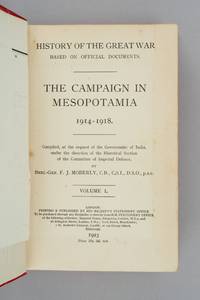
1923rif. BRI-1923-158His Majesty’s Stationery Office HMSO London First published: 1929 1923. SHORT DESCRIPTION Year: 1923 nEdition: Early edition nPublisher: His Majesty’s Stationery Office DESCRIPTION Frederick James Moberly. n nHistory of the Great War Based on Official Documents. The Campaign in Mesopotamia 1914–1918. nVol. I 1923; Vol. II 1924; Vol. III 1925. n nLondon: His Majesty’s Stationery Office. n nThree volumes original publisher’s bindings. nTitle pages present as issued. nTypical light foxing; sound examples. STORY The official British government history of the Mesopotamian theatre of the First World War. Compiled from military archives at the request of the Government of India these volumes document strategy logistics intelligence failures command disputes and the long struggle for control of Baghdad and the surrounding regions. Unlike memoir literature this is the institutional memory of empire: maps orders casualty analysis and political consequences presented with bureaucratic precision. These volumes became foundational references for later military historians and remain crucial to understanding Britain’s eastern war effort. Sets are increasingly difficult to assemble intact. WHY THIS MATTERS Official histories were printed in relatively small numbers for libraries officers and administrators not the trade. Complete runs survive far less often than individual volumes. Interest in imperial campaigns Middle Eastern military history and the documentary basis of state decision-making continues to grow. For collectors building serious WWI shelves this is core material. Duplicat Vol I His Majesty’s Stationery Office (HMSO) London First published: 1929 unknown
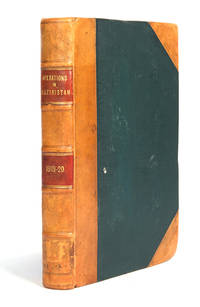
rif. 115601Calcutta Superintendent Government Printing India 1921. . First edition; 8vo 25 x 16.5 cm; complete with 32 photogravure plates including frontispiece 16 of which folding 4 of which large panoramic views 8 folding panoramas sketched on the spot 7 folding maps 3 of which loose in rear pocket 2 of which large coloured 75x92cm & 77x64cm previous ownership inscription to both endpapers with underlining to a few passages wide tear to margin of p97-8 not affecting text; typical contemporary half calf green cloth boards gilt morocco lettering pieces to spine remains of a shelf mark to spine extremities slightly rubbed from use binding tight due to quantity of maps and plates a very good copy; x 187 1pp. The scarce official account of the Waziristan campaign 19191920 and the preceding 1917 conflict with copious views and maps of the scarcely traversed terrain and landscape of Waziristan including Jandola Palosina Kotkai Kaniguram Barari Tangi Ahnai Tangi and Badergoi Valley. Also included are twelve Appendices detailing the units of the British forces in 1917 and 1919 the terms delivered to the Waziris and Mahsuds lists of British casualties and approximate numbers of the different specific tribes of the Mahsuds and Waziris involved in the conflict. In 1919 the short-lived Third Anglo-Afghan War concluded with the British ceding legal control of Afghan foreign affairs in return for the recognition by the Afghans of the Durand Line. Despite this a rumour spread amongst the Waziri and Mahsud tribesmen that the British intended to cede their territory to the British. They quickly conducted a series of raids against neighbouring settlements in the North-West Frontier in late 1919 causing over 400 casualties. Major-General Sir Andrew Skeen led the British response against the Tochi Waziris and Mahsuds in November of 1919. The campaign a took over 12 months due to the inexperience of the British units mainly comprised of light Indian divisions. The decisive eight-day battle of Ahnai Tangi involving the stand of the 2nd/5th Gurkhas immortalised in several paintings broke the Mahsud offensive and quickly resulted in a calming of violence and allowed the British to deliver their terms of control. Despite the apparent British victory the 1919-1920 campaign led to a change of policy in Waziristan. Britain decided to station permanent garrisons and have a much closer relationship with the irregular military units used. A large number of the locally raised troops had defected to the Waziris and Mahsuds during the campaign and it was hoped these measures would prevent further desertion. Britain also attempted a road construction effort in the region but this was seen as invasive and caused further conflict up to 1924. This copy was used by a member of the 1st Battalion of The Royal Scots during the time they were station in Secunderabad Hyderabad between 1922 and 1925. Calcutta, Superintendent Government Printing, India, 1921. hardcover