General Staff Army Headquarters IndiaBiblio.com

11.974 risultati
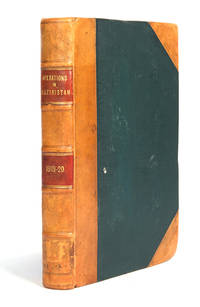
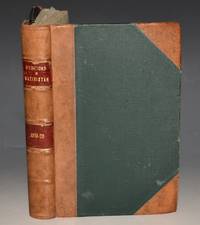
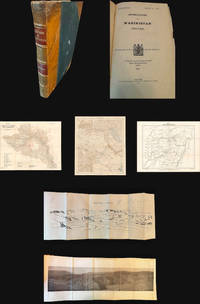
1921rif. 97075Calcutta: Superintendent Government Printing India 1921. Hardcover. Very Good. Half bound calf leather on dark blue cloth. Banded spine with red leather title and date panels. Marked " Confidential Serial No 1830" An extremely scarce copy of this detailed account of the army operation in Waziristan. The book is fully illustrated with monochrome plates and detailed maps and plans see photographs for details. 2 full fold out maps in pocket to rear. Copy belonged to Capt. H. Schofield The Welch Regiment. Copy belonged to Capt. H. Schofield of the Welch Regiment and is dated Razwack Sept. 1923. Superintendent Government Printing India hardcover
rif. 115601Calcutta Superintendent Government Printing India 1921. . First edition; 8vo 25 x 16.5 cm; complete with 32 photogravure plates including frontispiece 16 of which folding 4 of which large panoramic views 8 folding panoramas sketched on the spot 7 folding maps 3 of which loose in rear pocket 2 of which large coloured 75x92cm & 77x64cm previous ownership inscription to both endpapers with underlining to a few passages wide tear to margin of p97-8 not affecting text; typical contemporary half calf green cloth boards gilt morocco lettering pieces to spine remains of a shelf mark to spine extremities slightly rubbed from use binding tight due to quantity of maps and plates a very good copy; x 187 1pp. The scarce official account of the Waziristan campaign 19191920 and the preceding 1917 conflict with copious views and maps of the scarcely traversed terrain and landscape of Waziristan including Jandola Palosina Kotkai Kaniguram Barari Tangi Ahnai Tangi and Badergoi Valley. Also included are twelve Appendices detailing the units of the British forces in 1917 and 1919 the terms delivered to the Waziris and Mahsuds lists of British casualties and approximate numbers of the different specific tribes of the Mahsuds and Waziris involved in the conflict. In 1919 the short-lived Third Anglo-Afghan War concluded with the British ceding legal control of Afghan foreign affairs in return for the recognition by the Afghans of the Durand Line. Despite this a rumour spread amongst the Waziri and Mahsud tribesmen that the British intended to cede their territory to the British. They quickly conducted a series of raids against neighbouring settlements in the North-West Frontier in late 1919 causing over 400 casualties. Major-General Sir Andrew Skeen led the British response against the Tochi Waziris and Mahsuds in November of 1919. The campaign a took over 12 months due to the inexperience of the British units mainly comprised of light Indian divisions. The decisive eight-day battle of Ahnai Tangi involving the stand of the 2nd/5th Gurkhas immortalised in several paintings broke the Mahsud offensive and quickly resulted in a calming of violence and allowed the British to deliver their terms of control. Despite the apparent British victory the 1919-1920 campaign led to a change of policy in Waziristan. Britain decided to station permanent garrisons and have a much closer relationship with the irregular military units used. A large number of the locally raised troops had defected to the Waziris and Mahsuds during the campaign and it was hoped these measures would prevent further desertion. Britain also attempted a road construction effort in the region but this was seen as invasive and caused further conflict up to 1924. This copy was used by a member of the 1st Battalion of The Royal Scots during the time they were station in Secunderabad Hyderabad between 1922 and 1925. Calcutta, Superintendent Government Printing, India, 1921. hardcover
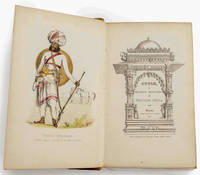
1844rif. 022107London: J. Hatchard and Son 1844. First Edition. Hardcover. Partly unopened; scattered foxing but text and plates mostly clean. Some fraying along spine edges; gilt fairly bright. Easily Very Good in a Fine clamshell box. Two 6-1/2" x 9-3/4" volumes in publisher's gilt-decorated and lettered green cloth: xii 478; vii i 459 1 pages. Housed in a green cloth clamshell box. Illustrated with 32 color chromolithographic plates with tissue guards. Lieutenant-Colonel William Henry Sleeman who spent his entire career in India was best known for his fight to suppress the activities of "thugs" bands of criminals who attacked robbed and often murdered innocent travelers. In these volumes he describes his experiences doing so as well as his thoughts on various aspects of Indian life including Hinduism local festivals and folklore natural history governance military discipline and the justice system. In 1828 Sleeman made the first documented discovery of dinosaur fossils in Asia before the term "dinosaur" was even formally coined. ABBEY TRAVEL 466. J. Hatchard and Son hardcover books
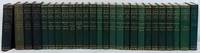
1907rif. 223716Oxford.: Clarendon Press. 1907 19081909 1931. 26 volumes including the Index and Atlas frontispiece map of "The Indian Empire" in vols I-XXV neatly strengthened to the verso in a few volumes 26 other folding maps or plans the Atlas volume with 66 double page coloured maps or plans Vol II with inked name of an early owner “K. Shama Ras…Benares 21st July 1911” and the blind stamp of the bookseller Ram Narain Lal Allahabad Vols III and IV with the inked stamp of the Ruskin Library; endpapers rather age-toned throughout scant foxing; original green cloth gilt lettered on the spines 22 x 14 cm occasional rubbing and wear the cloth to the second volume faded and rubbed at the corners with some loss the hinges of a couple of volumes starting but sound a very good set of the complete third edition. A complete collation is available on application. A magisterial survey of Empire. This "New" edition issued in twenty-six volumes by the Clarendon Press Oxford constitutes the definitive third iteration of this landmark administrative and geographical record. Produced under the editorial guidance of Sir Herbert Hope Risley and James Sutherland Cotton the work expanded upon the foundational work of Sir William Wilson Hunter. The first four volumes "The Indian Empire" offer an exhaustive analysis of the subcontinent’s historical economic and administrative frameworks. The twenty succeeding volumes of alphabetical entries offering close statistical and descriptive accounts of specific regions and localities. The collection is formally concluded by a comprehensive index and a concluding atlas volume the latter featuring maps by J. G. Bartholomew. . Clarendon Press. hardcover
2017rif. Raj-97881820521472017. New. English unknown
2017rif. Raj-97881820521472017. New. English unknown
2017rif. BIBHB0086145652017. Hardcover. New. ABOUT THE BOOK: The Imperial Gazetteer of India 1908 consists of 26 Volumes including the first four4 encyclopedic Volumes entitled Indian Empire : Descriptive Historical Economic and Administrative . The next 20 volumes of the alphabetically arranged gazetteer listing places� names and giving statistics and summary information and one volume each comprising the index and atlas. The first edition of the Imperial Gazetteer of India was published in 9 Volumes in 1881. A Second edition augmented to fourteen volumes was issued in the years 188587 after the death of William Wilson Hunter in 1900; Herbert Hope Risley William Stevenson Meyer Sir Richard Burn and James Sutherland Cotton compiled the twenty Six Volumes. ABOUT THE AUTHOR: Sir William Wilson Hunter KCSI CIE 15July18406 February 1900 was a Scotish historian Statistician a compiler and a member of the Indian Civil Services. He reached Bengal Presidency in November 1862 and was appointed assistant magistrate and collector of Birbhum in the lower provinces of Bengal. He compiled the matter of the then 240 districts and they were condensed into the nine volumes of the Imperial Gazetteer of India which was published in 1881. Sir Herbert Hope Risle KCIE CSI 4 January 185130 September 1911 was a British ethnographer and colonial administrator a member of the Indian Civil Services. He edited some parts of the first edition of The Imperial Gazetteer of India. Sir William Stevenson Meyer GCIE KCSIE 13 February 186019 October 1922 was an Indian Civil Service officer. From 1902 to 1908 he was the editor of the Imperial Gazetteer of India. Sir Richard Burn CSI 1 February 187126 July 1947 was a Civil Servant in British India. He became underSecretary to the Government of the United Provinces in 1897 Superintendent of the census in 19oo and the Imperial Gazetteer in 19o2 editor in 19o5. James Sutherland Cotton 18471918 born at Coonoor Nilgiri Madras. He was fellow and lecturer at Queens College Oxford. In 1880 1910 he published various Work on Indian Subject and was English editor of revised edition of the Imperial Gazetteer of India. He was also an editor of The Academy 1881 1896. The Title 'The Imperial Gazetteer of India : the Indian Empire written/authored/edited by The Authority Of His Majesty'S Secretary Of State For India In Council' published in the year 2017. The ISBN 9788182052147 is assigned to the Hardcover version of this title. This book has total of pp. 11900 Pages. The publisher of this title is Isha Books. This Book is in English. The subject of this book is Reference / History. Size of the book is 14.34 x 22.59 cms Vol: Volume 26 Vols. Set hardcover
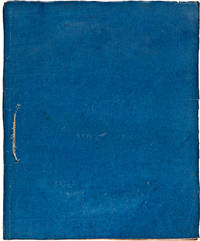
1788rif. 47799Paris. 1788. Memorial of the French East India Company freshly reconstituted in 1785 after its liquidation in 1769. Twenty-four pages of tables provide a detailed accounting of the Compagnie's commercial activities from 1769 through 1777 while the text advocates the importance of the Compagnie and details its further activities to date. Fewer than ten copies are located in OCLC. Quarto. Contemporary blue paper wrappers stitched. Minor wear and soiling. Near fine. unknown
1788rif. 47799Paris. 1788. Memorial of the French East India Company freshly reconstituted in 1785 after its liquidation in 1769. Twenty-four pages of tables provide a detailed accounting of the Compagnie's commercial activities from 1769 through 1777 while the text advocates the importance of the Compagnie and details its further activities to date. Fewer than ten copies are located in OCLC. Quarto. Contemporary blue paper wrappers stitched. Minor wear and soiling. Near fine. unknown books
1839rif. 022098London: Smith Elder and Co. 1839. First Edition. Hardcover. Fairly unobtrusive library blindstamp on frontispiece pictorial title map and several text pages. Still an attractive clean example of a scarce title in a Fine clamshell box. Modern half polished calf with marbled boards and matching calf corners 5-1/2" x 9"; xvii 3 283 1 pages housed in a red buckram clamshell box. Lacking the printed title page but with the lithographed additional pictorial title and illustrated with a hand-colored map 8 engraved plates 7 of which are hand-colored including 1 folding and several text engravings. In 1834 the author's husband was posted to Cutch a western district of present-day Gujarat India and there she gathered the notes and made the drawings that would form the basis for this her first publication. [Smith, Elder and Co.] hardcover
rif. 97688Calcutta Superintendent of Government Printing 1921. Tall 8vo. Contemporary half calf green cloth sides gold-stamped red spine labels. Size 10 x 6.5 inches In good condition. Some minor rubbing on edges two small nicks on spine labels. Corners a little bumped a few minor marks on cloth boards. Military inscription on front endpaper. Inside some foxing else generally clean & tight. X 187 Pages 1 pp. With frontispiece 31 plates 7 maps 3 in pocket on inside of back board and 8 panoramas mostly folding. First edition of the British-Indian army s official account of the 1919-20 Waziristan campaign marked "Confidential" on the title-page. The operations followed unrest that arose in the aftermath of the Third Anglo-Afghan War; they were conducted in the mountainous region of Waziristan now in Pakistan by British and Indian forces against the fiercely independent Waziri and Mahsud tribesmen that inhabited it. Since the 1870s the British government agencies were assiduous in compiling internally published histories of their military frontier operations with the intention of providing a "valuable guide" to such British commanders and policy makers as "might have future dealings with these turbulent neighbours" as the Punjab Government phrased it in 1866. Calcutta Superintendent of Government Printing 1921 hardcover
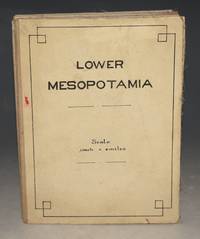
rif. 100094Calcutta Survey of India Offices May 1916 1st. Large folding map. Overall size 39.5 x 30 Inches. 32 cut sections mounted on cloth/linen. In very good condition. Some minor handling marks. A few minor spots to section section top row Baghdad. With colouring as stated. Some red colouring to linen on gaps between some sections. A couple of small splits to linen at centre fold and top fold 3rd section from left. Sections with some minor tanning. Some darkening and handling marks to title label on rear corner. In B&W with River Euphrates coloured blue. With green colouring to smaller rivers and canals and some pencil annotations around Baghdad area. Calcutta, Survey of India Offices, May 1916 1st hardcover
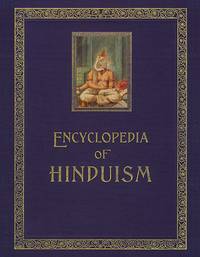
2013rif. SONG1608871754Mandala Publishing 2013-09-03. hardcover. Used: Good. 9.25x21.75x12.00. Buy with confidence. Excellent Customer Service & Return policy. Mandala Publishing hardcover
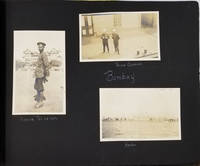
1920rif. 238521920. Photography. Very good condition. A wonderful large album of 127 post card size venacular photographs each captioned depicting the everyday life of people in the streets villages and country side; these are authentic images of real life in India at the time. Also includes images of Bombay and the Palace at Amber. The photographer is unidentified; probably an American couple on an Indian tour. The majority of the photographs concern life in India from people at work in a wide range of trades to women of different castes to wonderful marketplace scenes including children at play holy men wrestlers a carousel captioned "a Merry-Go-Round" and traveling artists. 40 images of rural India include: native houses village streets & centers a potter at work village shops village "bazarrs" sic showing all manner of sidewalk vendors and stalls village wells women walking to market with large baskets carried on their heads holy men sweet and bread sellers selling "pop" soft drinks from a cart burial of a distinguished person "a bride and her maids pay visits to relatives part of the 3 day wedding ceremony". 11 images titled "Women of India" show Hindu Jain and Mohammedan women women spinning women carrying goods stacked on their heads women with children and high caste women. 28 images of Indian men include an image title rather mysteriously "rural native police English Providence" porters young boys high diver gate keeper cook shoe mender snake charmer street musician clown traveler traveling artist traveling school teacher tobacco seller "by the puff" holy men of India "fakirs" wrestlers and a transvestite the image titled "an efeminate sic gentleman Indian man dressed in a sari. 21 images of the stunning Amber Palace and Fort in northwest India the oldest surviving palace in India built of red sandstone and white marble whose architecture shows a blend of Muslim and Hindu influences. Images include walls and grand entrances ceremonial elephants stunning interior views of the palace and its rich alabaster carvings and views of the surrounding landscape taken from the Palace walls. The Jas Mandir is also pictured; this is the most beautiful structure at Amber divided in three parts: the Hall of the Private Audience on the ground floor the Glass Palace and the Hall of Glory on the upper floor. 15 images of Bombay with : a native policeman 2 colonial police officials the harbor Bombay city streets including shots of a large double decker tram the "red light" district Hindu Caves at Garapuri and Elephanta Island interiors of the carved caves and vultures "who devour the Parsi's dead in the Towers of silence". 12 images titled "Travel in India" include an elephant with howdah for carrying passengers ox drawn carts horse drawn carts and carriages railway carriages including one with a train door marked "Servants" a train station and a colonial postal box. A large photograph album 15 x 11 1/2". Black stiff cloth covers cord bound. Hand lettered "No. 5" at upper left corner front cover. Images measure 5 1/2 x 3 1/2" laid down 3 or 4 per page with captions hand lettered in white. The first 2 leaves detached loosely inserted. The photographs in fine condition. An album of evocative images of the life experienced by Indians living in colonial India. Images probably taken by an American traveller as soda is referred to as "pop" harbor is spelled without the "u" and the album itself is made in the USA. unknown
1670rif. 587561 vol. in-12 reliure moderne amateur plein veau brun, Claude Barbin, Paris, 1670, 4 ff., 268 pp., 1 f., 294 pp. et 1 f. n. ch. (privilège) avec une carte dépliante ("L'Empire du Grand Mogol"). Titre complet : Histoire de la dernière Révolution des Etats du Grand Mogol [ Suivi de : ] Evenemens Particuliers, Ou ce qui s'est passé de plus considérable après la guerre pendant cinq ans, ou environ, dans les Etats du grand Mogol. Avec une Lettre de l'étendue de l'Hindoustan, Circulation de l'or & de l'argent pour venir s'y abîmer, Richesses, Forces, Justice & Cause principale de la Decadence des Etats d'Asie [ Edition originale ]
16701 vol. in-12 reliure moderne amateur plein veau brun, Claude Barbin, Paris, 1670, 4 ff., 268 pp., 1 f., 294 pp. et 1 f. n. ch. (privilège) avec une carte dépliante ("L'Empire du Grand Mogol"). Titre complet : Histoire de la dernière Révolution des Etats du Grand Mogol [ Suivi de : ] Evenemens Particuliers, Ou ce qui s'est passé de plus considérable après la guerre pendant cinq ans, ou environ, dans les Etats du grand Mogol. Avec une Lettre de l'étendue de l'Hindoustan, Circulation de l'or & de l'argent pour venir s'y abîmer, Richesses, Forces, Justice & Cause principale de la Decadence des Etats d'Asie [ Edition originale ] Rare exemplaire de l'édition originale, bien complet des 2 tomes (le second tome avec sa page de titre propre), en reliure modeste mais bien solide. Voyageur et philosophe épicurien, François Bernier (1620-1688) propose ici ses observations menées lors de son voyage dans l'empire Moghol, entreprise au lendemain de la mort de son ami Gassendi. Il y évoque notamment la lutte entre les fils de l'empereur Shâh Jahân et la victoire d'Aurengzeb, dans la suite duquel il réussira à se faire admettre. Bernier publiera la suite de ces mémoires l'année suivante 1671. Etat très satisfaisant (reliure amateur, dos muet un peu frotté, accroc à un feuillet sans manque, petit accroc habituel sans manque à la carte, bon état intérieur par ailleurs). Chadenat, 4197 Français
1921rif. NL-02287Frontier warfare and colonial cartography: 1921 Survey of India "Confidential" atlas documenting the British campaign in Waziristan. This highly detailed 1921 confidential British-Indian general staff report produced by the Survey of India documents the Waziristan military operations of 19191920 along the volatile frontier of the Northwest Boundary. The publication includes a frontispiece 31 plates seven maps three of which are pocket-folded and eight folding panoramic illustrations that chronicle both the terrain and troop dispositions. The maps provide tactical clarity on routes native strongholds topographic obstacles and British positions. At the same time the accompanying text analyzes operational strategy lessons learned and the emergent use of air power in tribal warfare. Waziristan now in Pakistan had long been viewed by the British as a strategically critical and persistently unstable frontier region inhabited by fiercely autonomous Waziri and Mahsud tribes. The 19191920 campaign followed the Third Anglo-Afghan War during which boundary tensions and local insurrections compelled renewed military intervention. This report presents not just the operational narrative but also the institutional mindset of early 20th-century colonial warfare combining detailed cartography with doctrinal reflection. Cartographers: The Survey of India established in 1767 under Major James Rennell and expanded during British rule served as the paramount cartographic and geodetic agency in India. By 1921 it had become central to mapping the subcontinent for both civil administration and military planning. In this instance the Survey's maps reflect the dual imperative of geographic precision and strategic control making this report an indispensable source for scholars of South Asian military history cartography and colonial frontier dynamics. Condition Description Good. Some wear on cover. Fold lines and some marginal imperfections on maps views and illustrations. Survey of India
1848In-8°, legatura coeva in mezza pelle con titoli e fregi in oro al dorso, pp. (6)375(1). Con 32 bellissime tavole litografiche che raffigurano usi e costumi (Fete de la Lune à Ceylan, Les bonds du Gange, Chasse aux éléphants dans la foret de Karnigal) e vedute di Delhi, Madras, Ceylon, Calcutta, Lahore, l'Himalaya. Le litografie sono di Cupper, de Rudder, Gerlier, Lehnert, Robineau e Walter. Cinque delle tavole - quelle impresse da Auguste Bry sono brunite; le altre sono stampate da Lemercier. Alla fine una carta geografica a colori con gli itinerarii dei viaggi (1841-1943 e 1845-1846). Rara prima edizione dei 'Voyages dans l'Inde', opera che avrà più edizioni in francese (con 36 tavole) e in russo. Timbretti di vecchia appartenenza privata al frontespizio e al verso di alcune tavole; leggere rare bruniture, a qualche leggero aloncino ai margini di alcune tavole. Buon esemplare.
rif. 74411766. In 4° demi-basane, dos à nerfs.
rif. 97814A Paris, chez Theodore Le Gras, 1736, 2 parties reliées en 1 volume in-12 de 170x100 mm environ, (1) fb., xiv-190-1 page de titre-210 pages, (2) ff. (approbation et privilège), plein veau brun, dos à nerfs portant titres dorés, orné de caissons à motifs dorés, gardes marbrées avec un ex-libris gravé sur le premier contreplat. Petits dessins à l'encre ancienne sur la première gardes blanche et au dos de la garde de couleur, quelques rousseurs, tranche légèrement fendillée sur les premières pages, gardes un peu usées avec galerie de ver sur le mors interne, petite galerie dans la marge interne sur la deuxième partie du volume, reliure avec coins restaurés, cuir frotté. Exemplaire rare, première édition.
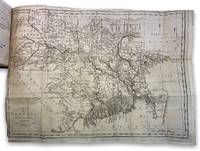
1780rif. 15First Rare edition in Italian of William Bolts Historical political and cultural treatise on Bengal Bolts William. Stato civile politico e commerciante del Regno di Bengala ovvero Storia delle conquiste e dell'amministrazione della compagnia inglese in quelle contrade che vengono a formare i tomi 19. e 20. in seguito della Storia filosofica e politica dell'abate Rainal. Tomo primo -secondo. sl se 1780. 8vo 180 x 120 mm modern quarter calf binding boards enriched by handcoloured paper vol 1: pp. 2 199 1 signature pigreco1 A-L8 M12. M12v blank vol 2: pp. 2 208 2 signature π¹ A-N⸠χ¹; at the end folded map "Carta di Bengala . formata secondo il piano preso su i luoghi da W. Bolts" signed "Bart.o Nerici sc. Lucae" Big folded Map of Bengal Rare First Edition in Italian of William Bolts most important work on denunciation of the activities of the East India Company in the Indian region of Bengal published for the First Time in 1772 under the title "Considerations on India Affairs" and formed by two volumes. Vol 1 is dedicated to an excursus on history and costumes of Bengal while in the second he attacked the administration of the East India Company in Bengal; and in particular he complained of the arbitrary power exercised by the authorities and of his own deportation. The observations and experiences he records still offer a unique resource for scholars inquiring into the nature of Company rule in Bengal. William Bolts 1738–1808 was a Dutch-born British merchant active in India. He began his career as an employee of the East India Company and subsequently became an independent merchant. He is best known today for his 1772 book Considerations on India Affairs translated in French in 1775 and in Italian in 1780 which detailed the administration of the East India Company in Bengal which began shortly after their victory at Plassey in 1757. Throughout his life Bolts continued to propose and execute various trading ventures on his own behalf and in conjunction with various commercial and governmental partners. The ventures of individual traders like Bolts did much to spur governments and large corporations into the expansion of their own interests. Condition: Very good copy printed on strong paper. Provenance: I. Ownership stamp "Colonnello Oro Vincenzo S- Angelo Le Fratte Anno 1923" at title page last page of each volume and on verso of map
rif. 7442A Paris, De l'Imprimerie de Delaguette, 1751 . In 4 de 57 pp.
1791in-4, pp.XII, 364, (12, Index), leg. coeva p. vitello, dorso a nervi, titolo oro. Con due grandi carte geografiche incise del South East part of Asia ripiegate f.testo. Da pag. 253 a fine vi è una Appendice "containing Observations on the Civil Policy - The Laws and Judicial Proceedings - The Arts - The Sciences - and Religious Institutions, of the Indians". Prima edizione di una vasta e importante opera storica sull'antica India, sui suoi rapporti con il mondo, sul commercio e sulle istituzioni sociali indiane, narrate prima della scoperta del Passaggio a Nord-Ovest. Bell'esemplare.. Brunet, IV, 1332..
1736rif. 22908Paris Grégoire-Antoine-Dupuis 1736 2 parties en 1 vol. in-12 veau brun jaspé, dos à nerfs orné, pièce de titre fauve, tranches rouges [Rel. de l'époque], lég. rest., qqs mouill. marg
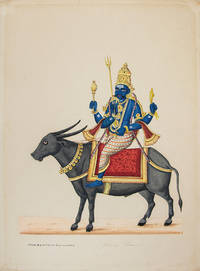
rif. 103336India circa 1840. . Fine watercolour illustration of Yaramaja mounted on his water buffalo company school single leaf 405 by 300 mm.; with contemporary ink inscriptions in Sanskrit and French beneath image a little darkened some very slight surface dusting reverse blank Yamaraja also known as Yama is one of the oldest Hindu deities and the god of death and justice. He is responsible for the punishment of sinners and rightful dispensation of law and justice to his deciples appearing in all the major Hindu texts including the Ramayana Mahabharata and all the Puranas. This depiction includes all the typical elements of iconography relating to Yamaraja: he bears a stern expression and appears in a dark blue complexion whilst riding his water buffalo he holds a noose/lassoo in one hand with which he captures the lives of people approaching death a danda staff in the other as well as a trident most commonly depicted as a mace. India, circa 1840. unknown