13.083 risultati
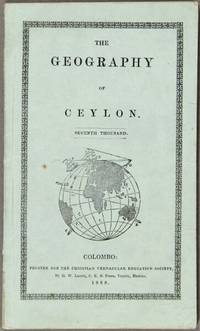
1868rif. 45516Colombo: printed for the Christian Vernacular Education Society 1868. 12mo pp. 30; engraved title page; original stiff blue pictorial wrappers; spined ends cracked else very good. Despite the title this small pamphlet covers not only the geography of the island of what is now the country of Sir Lanka but also the people commerce and government. Only the NYPL copy in OCLC which locates no other editions. printed for the Christian Vernacular Education Society unknown books
2017rif. Raj-97881820504642017. New. English unknown
2017rif. Raj-97881820504642017. New. English unknown
1870rif. 302484London: The London Printing and Publishing Company Limited 1870. 37 plates with 3 prints laid in and a portrait of Dr. Colin Rogers with notation on verso " Superintending Surgeon Madras Med. Dept. who married my Aunt Mary Anne. J.T.C. Ross.". 1 vols. Oblong 8vo. Contemporary green morocco 2 minor tears to the tail of the first leaf not affecting illustration 1-1/2 inch tear to the tail of the second leaf affecting bottom center of image some staining and soiling but overall very good. Various artists including S. Austin Clarkson Stan. 37 plates with 3 prints laid in and a portrait of Dr. Colin Rogers with notation on verso " Superintending Surgeon Madras Med. Dept. who married my Aunt Mary Anne. J.T.C. Ross.". 1 vols. Oblong 8vo. A wonderful album containing images of India drawn during the first two decades of the British Raj signed by "J.T.C. Ross as belonging to Aunt Jini ." J.T.C. Ross 1823-1897 recieved his medical education at St. George's Hospital and was admitted as a member of the Royal College of Surgeons in 1845. He served as Surgeon Major with the British Bengal Army Medical Service and was eventually promoted to Deputy Surgeon General and Surgeon-General. He was also the first editor of the Indian Medical Gazzette. The London Printing and Publishing Company, Limited unknown
1870rif. 302484London: The London Printing and Publishing Company Limited 1870. 37 plates with 3 prints laid in and a portrait of Dr. Colin Rogers with notation on verso " Superintending Surgeon Madras Med. Dept. who married my Aunt Mary Anne. J.T.C. Ross.". 1 vols. Oblong 8vo. Contemporary green morocco 2 minor tears to the tail of the first leaf not affecting illustration 1-1/2 inch tear to the tail of the second leaf affecting bottom center of image some staining and soiling but overall very good. Various artists including S. Austin Clarkson Stan. 37 plates with 3 prints laid in and a portrait of Dr. Colin Rogers with notation on verso " Superintending Surgeon Madras Med. Dept. who married my Aunt Mary Anne. J.T.C. Ross.". 1 vols. Oblong 8vo. A wonderful album containing images of India drawn during the first two decades of the British Raj signed by "J.T.C. Ross as belonging to Aunt Jini ." J.T.C. Ross 1823-1897 recieved his medical education at St. George's Hospital and was admitted as a member of the Royal College of Surgeons in 1845. He served as Surgeon Major with the British Bengal Army Medical Service and was eventually promoted to Deputy Surgeon General and Surgeon-General. He was also the first editor of the Indian Medical Gazzette. The London Printing and Publishing Company, Limited unknown books
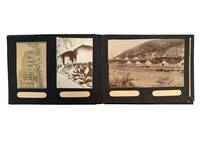
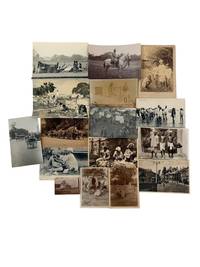
1912rif. 235531912. Missionary education and colonial album depicting India circa 1912 recording Western presence in a British ruled colony through girls' schooling domestic compounds rural labor and major sites of imperial tourism. One of the first images show a group of Indian girls posed with three Western women standing behind them likely a mission school or mission supported classroom during the period when Protestant and Catholic missions made female education one of their central claims to social reform in India. The album also records the wider colonial setting around that work with Western men and women appearing in bungalows on a tennis court and among Indian workers and residents placing missionary possibility inside the everyday social and racial ordering of colonial life. Photo album of 20 silver gelatin photographs each approximately 4 x 3 inches in a 6.5 x 5 inch album India circa 1910s with one image captioned "Holgate 1912." The photos show Indian girls grouped outside a building with three Western women at the rear; children or young laborers crouched in a field; men carrying harvested material along a road; an Indian woman seated at a weaving apparatus; another photo of young Indian girls in seated position in front of grass housing units potentially implying another educational setting; other images show Western figures in colonial settings including a woman holding a tennis racket players on a tennis court with the caption "Holgate 1912" a Western man and children on the veranda of a bungalow a Western woman standing in a brick doorway a Western man with a horse before a house and a large residence set behind a lawn. Architectural and travel views include the Taj Mahal another domed Mughal or Indo Islamic building a street scene with horse drawn vehicles outside commercial buildings a rural village at the base of hills and a settlement or station in a dry mountainous landscape. At the turn of the twentieth century Western women in India came as missionaries teachers medical workers wives of colonial officials tourists and members of expatriate religious and commercial communities. Mission boards used girls' schools orphanages zenana visiting Bible instruction and medical missions to enter spaces that male missionaries could not easily reach while British colonial rule supplied the legal linguistic transport and racial framework that made such work possible and unequal. Light surface wear fading silvering and album wear with some prints unevenly toned. Overall good condition. A compact visual record of Western missionary possibility colonial domestic life Indian labor and tourist seeing in India under the British Raj. unknown
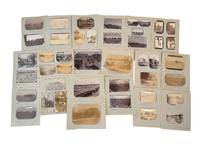
1917rif. 235941917. British frontier military photo archive documenting the administration of Britain's North West Frontier during the final years of the First World War and its immediate aftermath 1917 to 1919 showing how the Indian Army sustained imperial communications cavalry training transport and everyday life across what is now Pakistan. Made at stations including Nowshera Risalpur Sibi Quetta and surrounding cantonments the archive records the military infrastructure supporting British control over one of the Empire's most strategically important frontier regions bordering Afghanistan. Compiled during the years surrounding the Third Anglo Afghan crisis and the closing campaigns of the First World War the photographs preserve both the operational machinery of the frontier and the civilian landscapes through which imperial authority was exercised. Photo archive of approximately 96 sepia and black and white photographs ranging from 2 x 3 to 4 x 5 inches North West Frontier Province and Baluchistan British India 1917 to 1919. Nearly every photograph is mounted on album leaves with careful contemporary manuscript captions identifying places dates and subjects. The photographs depict cavalry exercises mounted reviews riding school instruction the 21st Lancers horse lines transport trains railway stations ferries crossing the Kabul River at Nowshera the boat bridge at Nowshera cantonment buildings military camps and barracks. Other photographs record the "Victory Sports" at Risalpur in December 1918 an aeroplane accident at Risalpur in December 1917 with multiple views of the wreckage and assembled soldiers soldiers posing with local residents officers on horseback rail travel between Nowshera and Sibi and military groups assembled before stores and equipment. Civilian life appears throughout in photographs captioned "Making bricks" "Melons" "Cooks" "Native carts Baluchistan" "The Kabul River Nowshera" "Ferry boat on Kabul River Risalpur" and market scenes at Bagaran. Additional views document Quetta Sibi Baluchistan landscapes bridges forts irrigation works mosques camel caravans washermen working along the Kabul River ox drawn transport and portraits of Punjabi Pashtun and Baluchi residents encountered throughout the frontier. The North West Frontier formed the principal buffer between British India and Afghanistan after the Durand Line agreement of 1893 and by 1917 the region had become one of the Empire's largest concentrations of cavalry transport and logistical forces. Cantonments at Nowshera and Risalpur served as major cavalry and aviation centers while Sibi and Quetta anchored the railway linking the Punjab to Baluchistan and the Bolan Pass a route essential for imperial communications and frontier defense. Rather than concentrating on combat alone this archive records the systems that sustained British rule: transport networks mounted units engineering works indigenous labor military recreation and the daily interactions between colonial personnel and local communities across the frontier. Contemporary manuscript captions throughout provide unusually precise geographical and chronological documentation. Album leaves show edge wear creasing and occasional corner losses; photographs generally remain clean. Overall in very good condition. A concentrated visual record of the military and civilian infrastructure that maintained British authority across the North West Frontier during the closing years of the First World War and the transition to the postwar imperial frontier. unknown
1917rif. 235941917. British frontier military photo archive documenting the administration of Britain's North West Frontier during the final years of the First World War and its immediate aftermath 1917 to 1919 showing how the Indian Army sustained imperial communications cavalry training transport and everyday life across what is now Pakistan. Made at stations including Nowshera Risalpur Sibi Quetta and surrounding cantonments the archive records the military infrastructure supporting British control over one of the Empire's most strategically important frontier regions bordering Afghanistan. Compiled during the years surrounding the Third Anglo Afghan crisis and the closing campaigns of the First World War the photographs preserve both the operational machinery of the frontier and the civilian landscapes through which imperial authority was exercised. Photo archive of approximately 96 sepia and black and white photographs ranging from 2 x 3 to 4 x 5 inches North West Frontier Province and Baluchistan British India 1917 to 1919. Nearly every photograph is mounted on album leaves with careful contemporary manuscript captions identifying places dates and subjects. The photographs depict cavalry exercises mounted reviews riding school instruction the 21st Lancers horse lines transport trains railway stations ferries crossing the Kabul River at Nowshera the boat bridge at Nowshera cantonment buildings military camps and barracks. Other photographs record the "Victory Sports" at Risalpur in December 1918 an aeroplane accident at Risalpur in December 1917 with multiple views of the wreckage and assembled soldiers soldiers posing with local residents officers on horseback rail travel between Nowshera and Sibi and military groups assembled before stores and equipment. Civilian life appears throughout in photographs captioned "Making bricks" "Melons" "Cooks" "Native carts Baluchistan" "The Kabul River Nowshera" "Ferry boat on Kabul River Risalpur" and market scenes at Bagaran. Additional views document Quetta Sibi Baluchistan landscapes bridges forts irrigation works mosques camel caravans washermen working along the Kabul River ox drawn transport and portraits of Punjabi Pashtun and Baluchi residents encountered throughout the frontier. The North West Frontier formed the principal buffer between British India and Afghanistan after the Durand Line agreement of 1893 and by 1917 the region had become one of the Empire's largest concentrations of cavalry transport and logistical forces. Cantonments at Nowshera and Risalpur served as major cavalry and aviation centers while Sibi and Quetta anchored the railway linking the Punjab to Baluchistan and the Bolan Pass a route essential for imperial communications and frontier defense. Rather than concentrating on combat alone this archive records the systems that sustained British rule: transport networks mounted units engineering works indigenous labor military recreation and the daily interactions between colonial personnel and local communities across the frontier. Contemporary manuscript captions throughout provide unusually precise geographical and chronological documentation. Album leaves show edge wear creasing and occasional corner losses; photographs generally remain clean. Overall in very good condition. A concentrated visual record of the military and civilian infrastructure that maintained British authority across the North West Frontier during the closing years of the First World War and the transition to the postwar imperial frontier. unknown books
1912rif. 235531912. Missionary education and colonial album depicting India circa 1912 recording Western presence in a British ruled colony through girls' schooling domestic compounds rural labor and major sites of imperial tourism. One of the first images show a group of Indian girls posed with three Western women standing behind them likely a mission school or mission supported classroom during the period when Protestant and Catholic missions made female education one of their central claims to social reform in India. The album also records the wider colonial setting around that work with Western men and women appearing in bungalows on a tennis court and among Indian workers and residents placing missionary possibility inside the everyday social and racial ordering of colonial life. Photo album of 20 silver gelatin photographs each approximately 4 x 3 inches in a 6.5 x 5 inch album India circa 1910s with one image captioned "Holgate 1912." The photos show Indian girls grouped outside a building with three Western women at the rear; children or young laborers crouched in a field; men carrying harvested material along a road; an Indian woman seated at a weaving apparatus; another photo of young Indian girls in seated position in front of grass housing units potentially implying another educational setting; other images show Western figures in colonial settings including a woman holding a tennis racket players on a tennis court with the caption "Holgate 1912" a Western man and children on the veranda of a bungalow a Western woman standing in a brick doorway a Western man with a horse before a house and a large residence set behind a lawn. Architectural and travel views include the Taj Mahal another domed Mughal or Indo Islamic building a street scene with horse drawn vehicles outside commercial buildings a rural village at the base of hills and a settlement or station in a dry mountainous landscape. At the turn of the twentieth century Western women in India came as missionaries teachers medical workers wives of colonial officials tourists and members of expatriate religious and commercial communities. Mission boards used girls' schools orphanages zenana visiting Bible instruction and medical missions to enter spaces that male missionaries could not easily reach while British colonial rule supplied the legal linguistic transport and racial framework that made such work possible and unequal. Light surface wear fading silvering and album wear with some prints unevenly toned. Overall good condition. A compact visual record of Western missionary possibility colonial domestic life Indian labor and tourist seeing in India under the British Raj. unknown books
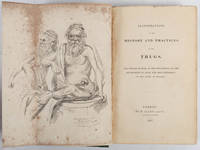
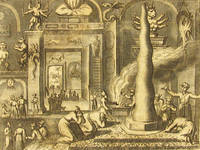
1837rif. 224787London.: Wm. H. Allen and Co. First Edition. 1837. Black and white folding engraved frontispiece and one other folding plate ii blanks iv 475pp 22 x 13.5 cms original green cloth-covered boards re-backed mounting the original paper title label chipped endpapers renewed the plates spotted and darkened concentrated at the margins and folds early inked ownership inscription "John C. Clare/Calcutta Decr. 1851" to the initial blank and one other recent to the front pastedown a little dusty the original boards a trifle scuffed frontispiece starting but firm in the renewed binding a good copy of a scarce work. Scarce. The author Edward Thornton 1799-1875 was on the staff of East India House 1814-57 and his account was a sensational exposé that detailed the secret hereditary network of highway assassins who terrorised travellers across India for centuries. Relying heavily on official court records and testimonies from captured informants Thornton meticulously documented how these gangs disguised themselves as friendly travellers used a sacred cloth scarf rumāl to strangle their victims without shedding blood and buried them in hidden graves to avoid detection. The account deeply fascinated and horrified Western readers by illustrating the religious rituals underpinning the crimes—including devotion to the goddess Kali and the tracking of omens—while ultimately highlighting the aggressive intelligence-led colonial campaign spearheaded by William Sleeman and was hugely popular. With the early ownership inscription of "John C. Clare Calcutta Decr. 1851" possibly the prominent 19th-century British ship master and captain who regularly commanded merchant voyages along trade routes between the UK Australia and Calcutta India. In October 1851 the British Indian Association had been formed in Calcutta marking the exact birth of organised Indian nationalist politics and a shift in how both native elites and Europeans challenged the British East India Company's monopoly. . Wm. H. Allen and Co. hardcover
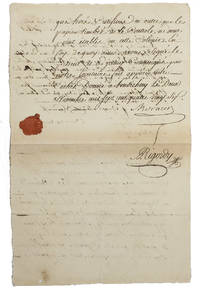
1786rif. ABC_45537Puducherry Pondichéry 1786. Folio. Manuscript death certificate including a red wax seal of a former employee of the French East India Company who is buried in the cemetery of the Église Notre-Dame-des-Anges in Puducherry which was the capital of the Indian district and later also the larger union territory of the same name which was ruled by the French from 1673 to 1954. The certificate is signed by the reverend father Damas who was superior of Puducherry and was authenticated by the authorizing officer of the French East India Company Jean-François de Moracin who was also commissioner general of the ports and naval arsenals in the colonies.In good condition. unknown
1814rif. 29346Paris Le Normant 1814 2 tomes en un fort vol. in-8 basane fauve racinée, dos lisse orné de filets, larges fleurons et semis géométriques dorés, pièce de titre cerise, tranches marbrées [Rel. de l'époque], coins émoussés, coiffes un peu frottées
1720rif. 27913Paris Imprimerie Royale 1720 in-4 en ff., traces de pliure
1768rif. 2939[(Paris) De l'Imprimerie de Louis Cellot 1768] in-4 de 110 pp. et 1 f. blanc br., sans couv., conservé dans une boîte moderne de papier bleu avec pièce de titre rouge, mouill. claires dans les marges ext. de qq. ff
rif. 6579P., Didot le Jeune, 1790. In 4° dérelié de 37 pp. (trace d’humidité sur 1/3 du corps de l’ouvrage).
1766rif. 39176Paris Guillaume Desprez 1766 in-4 basane fauve mouchetée, dos à nerfs orné de fleurons et caissons dorés, pièce de titre de maroquin rouge, roulette dorée intérieure, tête dorée, couverture conservée, sous étui [Rel. mod. à l'imit.], lég. mouill. sur les derniers ff
1728In-8 gr. (mm. 256x183), mz. pergamena, tagli marmorizz., pp. XX,495, tit. in rosso e nero al frontespizio con vignetta alle armi di Benedetto XIII cui è dedicata l’opera, ornato da iniziali e fregi calcografici, con marca tipografica al colophon inc. in rame da Carlo Gregori; il volume è arricchito da 2 tavole f.t. inc. in rame, in coloritura coeva, con più figure: una con “segni portati in fronte dagli Indiani”, l’altra con “segni permessi da’ Missionari”. L’Autore difende il decreto di Tournon nella controversia sui riti malabarici (con questo nome sono designati taluni accomodamenti e concessioni a costumi e idee locali che, per facilitare l’opera missionaria, furono adottati dai Gesuiti). Essendosi infatti riaccesa la controversia in India, a Pondichéry, dove l’opera missionaria tra gli indigeni era stata affidata ai Gesuiti togliendola ai Cappuccini, questi avevano protestato presso la Santa Sede. La quale inviò in India e in Cina il patriarca di Antiochia, Carlo Tommaso Maillard de Tournon, piemontese. Questi il 23 giugno 1704 pubblicava il suo giudizio con il quale condannava 16 pratiche. Poi si recava in Cina. Espulso da Pechino, pubblicava a Nanchino un decreto di condanna dei riti cinesi; fatto cardinale (1707), moriva prigioniero a Macao l'8 giugno 1710. "Prima edizione". Cfr. Cordier “Bibliogr. Sinica”,I, pp.918-19 - Biographie Universelle,XLVI, pp. 382-82. Con qualche lieve arross. o fiorit. ma complessivamente esemplare ben conservato.
1801rif. 116955Paris chez Giguet et Cie 1801 2 vol. relié 2 vol. gr. in-8 (25 x 16 cm), veau miel, dos à nerfs soulignés de filets dorés, pièces de titre et de tomaison havane, date dorée en queue, double filet doré en encadrement des plats, triple filet doré en encadrement des contreplats, têtes dorées, 395 + (1) et 454 + (2) pp., portrait-frontispice, 1 planche dépliante en couleurs, 2 plans dépliants et 2 cartes dépliantes coloriées. Edition originale. Un des quelques exemplaires sur vélin, non rogné. Premier livre de Joseph-François Michaud (1767-1839), cette histoire des guerres des souverains de Mysore avec les Anglais et les différentes puissances de l'Inde comprend également une esquisse de la conquête de l’Egypte, les lettres de Napoléon au chérif de la Mecque et au sultan Tippoo, la relation de la prise de Seringapatam, la situation actuelle des puissances de l'Inde, etc. Ex-libris gravé aux armes du comte Henri de La Bédoyère (1782-1861), grand bibliophile dont on raconte qu'ayant dû se séparer d'une partie de sa bibliothèque en 1837, il passa le reste de sa vie à tenter de la reconstituer... Mors légèrement frottés, et petite brunissure en tête du mors supérieur au tome 2. Rare sur grand papier.
1801rif. 116955Paris chez Giguet et Cie 1801 2 vol. relié 2 vol. gr. in-8 (25 x 16 cm), veau miel, dos à nerfs soulignés de filets dorés, pièces de titre et de tomaison havane, date dorée en queue, double filet doré en encadrement des plats, triple filet doré en encadrement des contreplats, têtes dorées, 395 + (1) et 454 + (2) pp., portrait-frontispice, 1 planche dépliante en couleurs, 2 plans dépliants et 2 cartes dépliantes coloriées. Edition originale. Un des quelques exemplaires sur vélin, non rogné. Premier livre de Joseph-François Michaud (1767-1839), cette histoire des guerres des souverains de Mysore avec les Anglais et les différentes puissances de l'Inde comprend également une esquisse de la conquête de l’Egypte, les lettres de Napoléon au chérif de la Mecque et au sultan Tippoo, la relation de la prise de Seringapatam, la situation actuelle des puissances de l'Inde, etc. Ex-libris gravé aux armes du comte Henri de La Bédoyère (1782-1861), grand bibliophile dont on raconte qu'ayant dû se séparer d'une partie de sa bibliothèque en 1837, il passa le reste de sa vie à tenter de la reconstituer... Mors légèrement frottés, et petite brunissure en tête du mors supérieur au tome 2. Rare sur grand papier.
rif. #[33300]'s Gravenhage Jacobus Scheltus 1743. 4to. Misbound with dog's ears. With woodcut coat of arms on title-page. 47 pp. Compilation of all charters of the Dutch East India Company VOC starting with the original charter of 1602 followed by all prolongations up until 1754. The charter granted by the States General meant that the VOC was the only organization from the Dutch Republic allowed to trade in this region. - Age-browned. Landwehr VOC 19. unknown
1673rif. 33344London: Printed by the Author at his House in White-Friers 1673. First Edition. Illustrated throughout with 30 finely engraved copperplates generally a third of a folio page in size title page printed in red and black. Large Folio bound in contemporary calf. xii 253 15 A Table 1 pp. A well worn copy lacking the 5 map and the double-page or folding plates the text block and textual engravings all well preserved the paper crisp and unpressed some of the usual mellowing and evidence of age or use and old worm track to the bottom blank area of the leaves again not obtrusive the "Directions to the Binder" leaf not present at the end of the volume otherwise collated complete. FIRST EDITION. John Ogilby was a Scottish translator impresario publisher and cartographer. Ogilby established Ireland's first theatre in Werburgh Street Dublin and following the Restoration that country's first Theatre Royal. Ogilby played a significant part in arrangements for the coronation of King Charles II. Following the Great Fire of 1666 Ogilby's large-scale map of the City of London was founded on precise survey work and his Britannia is the first road atlas of England and Wales to be based on surveys and measurements and drawn to scale. During the Great Fire of London in 1666 Ogilby's house in Shoe Lane together with its printing works and most of his stock was destroyed; he estimated he had lost Å3000. After the Great Fire the Corporation of London appointed Ogilby and his wife's grandson William Morgan as "sworn viewers" members of a group of four trustworthy gentlemen directed by Robert Hooke to plot disputed property in the city. Ogilby later made what he called "the most accurate Survey of the City of London and Libertyes therof that has ever been done". By 1668 he had a new house in Whitefriars and was ready to resume his printing and publishing work. Ogilby's next major venture was a series of atlases of China Japan Africa Asia and America. The first of these was An Embassy from the East India Company of the United Provinces to the Grand Tartar Cham Emperor of China which was published in 1689. This book was substantially a translation of Johan Nieuhof's Dutch publication of the same name with English copies of the Dutch engravings. Ogilby's Africa appeared in 1670 and was followed in rapid succession by Atlas Japanennsis 1670 America 1671 Atlas Chinensis 1671 and Asia 1673. In 1671 in response to his proposal to make a detailed survey and atlas of Great Britain the King appointed Ogilby Royal Cosmographer. Thus at about the age of 70 and with the scientific advice of Robert Hooke58 Ogilby began work on Britannia the project for which he is best known among cartographers. Printed by the Author at his House in White-Friers unknown
rif. DADAX0198217889New unknown
1917rif. 235951917. British frontier military photo archive documenting the garrison system of the North West Frontier during the final years of the First World War 1917 to 1918 showing how the British Indian Army organized training logistics aviation medical services and daily military life across what is now Pakistan. Centered on Risalpur with additional views of Nowshera Sibi and other frontier stations the archive records the infrastructure that sustained Britain's defensive frontier against Afghanistan while thousands of Indian Army troops remained committed to imperial service overseas. Contemporary manuscript captions on many versos identify locations dates military units and events preserving an unusually well-documented record of the frontier during one of the British Empire's most militarized periods. Photo archive of 52 silver gelatin photographs most measuring approximately 3 x 5 inches British India principally Risalpur and the North West Frontier 1917 to 1918. The photographs depict cantonments parade grounds barracks military camps mounted troops cavalry exercises soldiers in formation and group portraits of officers and enlisted men. Other photographs show military hospitals and Red Cross personnel aviation facilities transport columns aerial views of cantonments engineering works fortified compounds rail infrastructure and frontier outposts. Civilian scenes appear as part of the military landscape rather than separate subjects including bazaars camel caravans village streets fruit vendors brick makers ox drawn carts river crossings market stalls and local residents interacting with soldiers. Several photographs record strategic infrastructure including the Attock Bridge mosques military compounds and river transport essential to frontier communications. Numerous versos carry contemporary inscriptions identifying subjects with captions such as "Camp of the 22nd Squadron M.G. Corps at Risalpur Dec. 1917-May 1918" "Risalpur 1918" "Mosque at Nowshera 1917" "Aeroplane accident" and "Filling ammunition belts 22nd M.G. Squadron Risalpur" substantially increasing the documentary precision of the archive. By 1917 the North West Frontier had become one of the British Empire's principal military districts supplying cavalry machine gun units aviation personnel transport and logistical support while simultaneously guarding the Afghan frontier. Risalpur developed into one of the subcontinent's major military centers housing cavalry regiments the Machine Gun Corps flying facilities and training establishments that would remain central to frontier defense through the Third Anglo Afghan War of 1919 and beyond. Photos emphasize the construction and occupation of cantonments preparation of ammunition medical organization transportation networks reconnaissance engineering and the constant interaction between British military institutions and the civilian communities surrounding them. Light surface wear with occasional corner bumps and scattered silvering; manuscript captions remain clear and legible. Overall in very good condition. A concentrated record of the British Indian Army's military infrastructure and frontier administration on the North West Frontier during the closing years of the First World War. unknown
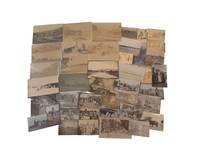
1890rif. 234981890. Colonial Indian labor photo archive depicting street work informal commerce transport labor and social hierarchy under British rule circa 1890s-1920s. British India depended on low-paid manual labor to move people goods food and raw materials through cities ports hill stations and military cantonments. The group contrasts workers seated on the ground with baskets tools tents carts and roadside goods against riders on horseback and passengers carried by rickshaw carriage and bullock cart. Photo archive of 16 silver gelatin photographs and black-and-white real photo postcards various sizes India circa 1890s-1920s. Marketplace sellers sit among baskets cloth tents and on the ground goods; families and workers gather beside tents and rough encampments; men pull or guide rickshaws carriages and ox-drawn carts through colonial streets. A mounted man sits formally on a white horse while views of Simla show pedestrians commercial buildings and hill-station streets associated with British administration and seasonal elite life. Additional scenes show an outdoor "Hindu barber" "Indian coolies" carrying large baskets men seated by stonework near a Gothic-style building children posed in white garments some hand written captions en verso identify locations or tasks. The archive records the everyday labor that supported colonial India before independence when caste landlessness debt and imperial wage economies shaped who carried cleaned hauled shaved sold and served. Ligh toning handling and edge wear; overall in very good condition. A late colonial documentation of Indian labor and social separation grounded in street work transport marketplace survival and the visible privileges of those being carried or served. unknown
1917rif. 235951917. British frontier military photo archive documenting the garrison system of the North West Frontier during the final years of the First World War 1917 to 1918 showing how the British Indian Army organized training logistics aviation medical services and daily military life across what is now Pakistan. Centered on Risalpur with additional views of Nowshera Sibi and other frontier stations the archive records the infrastructure that sustained Britain's defensive frontier against Afghanistan while thousands of Indian Army troops remained committed to imperial service overseas. Contemporary manuscript captions on many versos identify locations dates military units and events preserving an unusually well-documented record of the frontier during one of the British Empire's most militarized periods. Photo archive of 52 silver gelatin photographs most measuring approximately 3 x 5 inches British India principally Risalpur and the North West Frontier 1917 to 1918. The photographs depict cantonments parade grounds barracks military camps mounted troops cavalry exercises soldiers in formation and group portraits of officers and enlisted men. Other photographs show military hospitals and Red Cross personnel aviation facilities transport columns aerial views of cantonments engineering works fortified compounds rail infrastructure and frontier outposts. Civilian scenes appear as part of the military landscape rather than separate subjects including bazaars camel caravans village streets fruit vendors brick makers ox drawn carts river crossings market stalls and local residents interacting with soldiers. Several photographs record strategic infrastructure including the Attock Bridge mosques military compounds and river transport essential to frontier communications. Numerous versos carry contemporary inscriptions identifying subjects with captions such as "Camp of the 22nd Squadron M.G. Corps at Risalpur Dec. 1917-May 1918" "Risalpur 1918" "Mosque at Nowshera 1917" "Aeroplane accident" and "Filling ammunition belts 22nd M.G. Squadron Risalpur" substantially increasing the documentary precision of the archive. By 1917 the North West Frontier had become one of the British Empire's principal military districts supplying cavalry machine gun units aviation personnel transport and logistical support while simultaneously guarding the Afghan frontier. Risalpur developed into one of the subcontinent's major military centers housing cavalry regiments the Machine Gun Corps flying facilities and training establishments that would remain central to frontier defense through the Third Anglo Afghan War of 1919 and beyond. Photos emphasize the construction and occupation of cantonments preparation of ammunition medical organization transportation networks reconnaissance engineering and the constant interaction between British military institutions and the civilian communities surrounding them. Light surface wear with occasional corner bumps and scattered silvering; manuscript captions remain clear and legible. Overall in very good condition. A concentrated record of the British Indian Army's military infrastructure and frontier administration on the North West Frontier during the closing years of the First World War. unknown books