[BRITISH INDIA] (THORNTON, EDWARD)Biblio.com
11.949 risultati
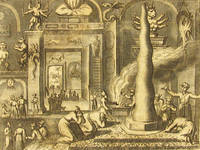
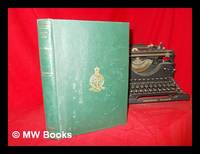
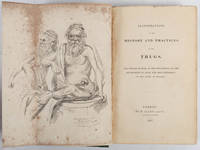
1837rif. 224787London.: Wm. H. Allen and Co. First Edition. 1837. Black and white folding engraved frontispiece and one other folding plate ii blanks iv 475pp 22 x 13.5 cms original green cloth-covered boards re-backed mounting the original paper title label chipped endpapers renewed the plates spotted and darkened concentrated at the margins and folds early inked ownership inscription "John C. Clare/Calcutta Decr. 1851" to the initial blank and one other recent to the front pastedown a little dusty the original boards a trifle scuffed frontispiece starting but firm in the renewed binding a good copy of a scarce work. Scarce. The author Edward Thornton 1799-1875 was on the staff of East India House 1814-57 and his account was a sensational exposé that detailed the secret hereditary network of highway assassins who terrorised travellers across India for centuries. Relying heavily on official court records and testimonies from captured informants Thornton meticulously documented how these gangs disguised themselves as friendly travellers used a sacred cloth scarf rumāl to strangle their victims without shedding blood and buried them in hidden graves to avoid detection. The account deeply fascinated and horrified Western readers by illustrating the religious rituals underpinning the crimes—including devotion to the goddess Kali and the tracking of omens—while ultimately highlighting the aggressive intelligence-led colonial campaign spearheaded by William Sleeman and was hugely popular. With the early ownership inscription of "John C. Clare Calcutta Decr. 1851" possibly the prominent 19th-century British ship master and captain who regularly commanded merchant voyages along trade routes between the UK Australia and Calcutta India. In October 1851 the British Indian Association had been formed in Calcutta marking the exact birth of organised Indian nationalist politics and a shift in how both native elites and Europeans challenged the British East India Company's monopoly. . Wm. H. Allen and Co. hardcover
rif. #[33300]'s Gravenhage Jacobus Scheltus 1743. 4to. Misbound with dog's ears. With woodcut coat of arms on title-page. 47 pp. Compilation of all charters of the Dutch East India Company VOC starting with the original charter of 1602 followed by all prolongations up until 1754. The charter granted by the States General meant that the VOC was the only organization from the Dutch Republic allowed to trade in this region. - Age-browned. Landwehr VOC 19. unknown
1673rif. 33344London: Printed by the Author at his House in White-Friers 1673. First Edition. Illustrated throughout with 30 finely engraved copperplates generally a third of a folio page in size title page printed in red and black. Large Folio bound in contemporary calf. xii 253 15 A Table 1 pp. A well worn copy lacking the 5 map and the double-page or folding plates the text block and textual engravings all well preserved the paper crisp and unpressed some of the usual mellowing and evidence of age or use and old worm track to the bottom blank area of the leaves again not obtrusive the "Directions to the Binder" leaf not present at the end of the volume otherwise collated complete. FIRST EDITION. John Ogilby was a Scottish translator impresario publisher and cartographer. Ogilby established Ireland's first theatre in Werburgh Street Dublin and following the Restoration that country's first Theatre Royal. Ogilby played a significant part in arrangements for the coronation of King Charles II. Following the Great Fire of 1666 Ogilby's large-scale map of the City of London was founded on precise survey work and his Britannia is the first road atlas of England and Wales to be based on surveys and measurements and drawn to scale. During the Great Fire of London in 1666 Ogilby's house in Shoe Lane together with its printing works and most of his stock was destroyed; he estimated he had lost Å3000. After the Great Fire the Corporation of London appointed Ogilby and his wife's grandson William Morgan as "sworn viewers" members of a group of four trustworthy gentlemen directed by Robert Hooke to plot disputed property in the city. Ogilby later made what he called "the most accurate Survey of the City of London and Libertyes therof that has ever been done". By 1668 he had a new house in Whitefriars and was ready to resume his printing and publishing work. Ogilby's next major venture was a series of atlases of China Japan Africa Asia and America. The first of these was An Embassy from the East India Company of the United Provinces to the Grand Tartar Cham Emperor of China which was published in 1689. This book was substantially a translation of Johan Nieuhof's Dutch publication of the same name with English copies of the Dutch engravings. Ogilby's Africa appeared in 1670 and was followed in rapid succession by Atlas Japanennsis 1670 America 1671 Atlas Chinensis 1671 and Asia 1673. In 1671 in response to his proposal to make a detailed survey and atlas of Great Britain the King appointed Ogilby Royal Cosmographer. Thus at about the age of 70 and with the scientific advice of Robert Hooke58 Ogilby began work on Britannia the project for which he is best known among cartographers. Printed by the Author at his House in White-Friers unknown
1744rif. PHO-626Luques, sans nom, 1744 ; 2 forts volumes in-4(225x175), veau brun de l'époque, dos à nerfs ornés de motifs dorés avec pièce de titre et tomaison, tranches rouge , une coiffe réparée,Déchirure angulaire au feuillet de titre du tome II, réparée avec petit manque.
rif. 9802Pondichéry Contrôle de la Marine 2 juillet 1793 1 page in-folio
1781rif. PHIL2089Geneve, Pellet 1781. zus. CVIII, 3332 S., 10 Kupfe-Front. (dav. 1 lose), 23 mehrf. gefalt. Tab.; OLdr. m. Rückengoldprägung, Farbschnitt, beschabt, berieb., Ecken tlw. leicht bestoß., etw. stockfleck., insges. dekorative Ausgabe. Guillaume-Thomas François Raynal auch Abbé Raynal ( 1713-1796 ) Priester und französischer Schriftsteller. Wurde durch seine Geschichte zweier Indien (1770) berühmt, welche eine der meistgelesenen Schriften der Spätaufklärung war.
in-8, pp. X, 457, elegante legatura in mezza pelle nocciola, dorso a nervi con filetti e titolo oro su tassello verdone. Completo del ritratto dell'a. in antiporta e di due 2 grandi carte geografiche incise su rame più volte ripieg. f.t. raffiguranti il sud-est dell'Asia. Prima edizione accresciuta e corretta e recante titolo lievemente modificato: l'opera apparve infatti a Londra nel 1791 e a Parigi l'anno seguente con titolo ''Recherches historiques sur la connoissance que les Anciens avoient de l'Inde''. Importante lavoro, uno tra i migliori sulla conoscenza dell'India a quel tempo. Ottimo esemplare.. .
1670rif. 14709Schipper Amsterdam 1670 1 vol. In-4 de 7 ff.n.ch. 371 pp. 2 ff.n.ch. (table); basane brune de l'époque, dos à nerfs orné, pièce de titre, tranches rouges (coiffes usées, deux mors fendus, coins émoussés).
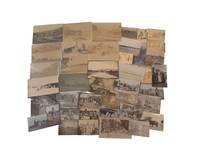
1917rif. 235951917. British frontier military photo archive documenting the garrison system of the North West Frontier during the final years of the First World War 1917 to 1918 showing how the British Indian Army organized training logistics aviation medical services and daily military life across what is now Pakistan. Centered on Risalpur with additional views of Nowshera Sibi and other frontier stations the archive records the infrastructure that sustained Britain's defensive frontier against Afghanistan while thousands of Indian Army troops remained committed to imperial service overseas. Contemporary manuscript captions on many versos identify locations dates military units and events preserving an unusually well-documented record of the frontier during one of the British Empire's most militarized periods. Photo archive of 52 silver gelatin photographs most measuring approximately 3 x 5 inches British India principally Risalpur and the North West Frontier 1917 to 1918. The photographs depict cantonments parade grounds barracks military camps mounted troops cavalry exercises soldiers in formation and group portraits of officers and enlisted men. Other photographs show military hospitals and Red Cross personnel aviation facilities transport columns aerial views of cantonments engineering works fortified compounds rail infrastructure and frontier outposts. Civilian scenes appear as part of the military landscape rather than separate subjects including bazaars camel caravans village streets fruit vendors brick makers ox drawn carts river crossings market stalls and local residents interacting with soldiers. Several photographs record strategic infrastructure including the Attock Bridge mosques military compounds and river transport essential to frontier communications. Numerous versos carry contemporary inscriptions identifying subjects with captions such as "Camp of the 22nd Squadron M.G. Corps at Risalpur Dec. 1917-May 1918" "Risalpur 1918" "Mosque at Nowshera 1917" "Aeroplane accident" and "Filling ammunition belts 22nd M.G. Squadron Risalpur" substantially increasing the documentary precision of the archive. By 1917 the North West Frontier had become one of the British Empire's principal military districts supplying cavalry machine gun units aviation personnel transport and logistical support while simultaneously guarding the Afghan frontier. Risalpur developed into one of the subcontinent's major military centers housing cavalry regiments the Machine Gun Corps flying facilities and training establishments that would remain central to frontier defense through the Third Anglo Afghan War of 1919 and beyond. Photos emphasize the construction and occupation of cantonments preparation of ammunition medical organization transportation networks reconnaissance engineering and the constant interaction between British military institutions and the civilian communities surrounding them. Light surface wear with occasional corner bumps and scattered silvering; manuscript captions remain clear and legible. Overall in very good condition. A concentrated record of the British Indian Army's military infrastructure and frontier administration on the North West Frontier during the closing years of the First World War. unknown
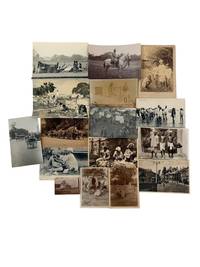
1890rif. 234981890. Colonial Indian labor photo archive depicting street work informal commerce transport labor and social hierarchy under British rule circa 1890s-1920s. British India depended on low-paid manual labor to move people goods food and raw materials through cities ports hill stations and military cantonments. The group contrasts workers seated on the ground with baskets tools tents carts and roadside goods against riders on horseback and passengers carried by rickshaw carriage and bullock cart. Photo archive of 16 silver gelatin photographs and black-and-white real photo postcards various sizes India circa 1890s-1920s. Marketplace sellers sit among baskets cloth tents and on the ground goods; families and workers gather beside tents and rough encampments; men pull or guide rickshaws carriages and ox-drawn carts through colonial streets. A mounted man sits formally on a white horse while views of Simla show pedestrians commercial buildings and hill-station streets associated with British administration and seasonal elite life. Additional scenes show an outdoor "Hindu barber" "Indian coolies" carrying large baskets men seated by stonework near a Gothic-style building children posed in white garments some hand written captions en verso identify locations or tasks. The archive records the everyday labor that supported colonial India before independence when caste landlessness debt and imperial wage economies shaped who carried cleaned hauled shaved sold and served. Ligh toning handling and edge wear; overall in very good condition. A late colonial documentation of Indian labor and social separation grounded in street work transport marketplace survival and the visible privileges of those being carried or served. unknown
1917rif. 235951917. British frontier military photo archive documenting the garrison system of the North West Frontier during the final years of the First World War 1917 to 1918 showing how the British Indian Army organized training logistics aviation medical services and daily military life across what is now Pakistan. Centered on Risalpur with additional views of Nowshera Sibi and other frontier stations the archive records the infrastructure that sustained Britain's defensive frontier against Afghanistan while thousands of Indian Army troops remained committed to imperial service overseas. Contemporary manuscript captions on many versos identify locations dates military units and events preserving an unusually well-documented record of the frontier during one of the British Empire's most militarized periods. Photo archive of 52 silver gelatin photographs most measuring approximately 3 x 5 inches British India principally Risalpur and the North West Frontier 1917 to 1918. The photographs depict cantonments parade grounds barracks military camps mounted troops cavalry exercises soldiers in formation and group portraits of officers and enlisted men. Other photographs show military hospitals and Red Cross personnel aviation facilities transport columns aerial views of cantonments engineering works fortified compounds rail infrastructure and frontier outposts. Civilian scenes appear as part of the military landscape rather than separate subjects including bazaars camel caravans village streets fruit vendors brick makers ox drawn carts river crossings market stalls and local residents interacting with soldiers. Several photographs record strategic infrastructure including the Attock Bridge mosques military compounds and river transport essential to frontier communications. Numerous versos carry contemporary inscriptions identifying subjects with captions such as "Camp of the 22nd Squadron M.G. Corps at Risalpur Dec. 1917-May 1918" "Risalpur 1918" "Mosque at Nowshera 1917" "Aeroplane accident" and "Filling ammunition belts 22nd M.G. Squadron Risalpur" substantially increasing the documentary precision of the archive. By 1917 the North West Frontier had become one of the British Empire's principal military districts supplying cavalry machine gun units aviation personnel transport and logistical support while simultaneously guarding the Afghan frontier. Risalpur developed into one of the subcontinent's major military centers housing cavalry regiments the Machine Gun Corps flying facilities and training establishments that would remain central to frontier defense through the Third Anglo Afghan War of 1919 and beyond. Photos emphasize the construction and occupation of cantonments preparation of ammunition medical organization transportation networks reconnaissance engineering and the constant interaction between British military institutions and the civilian communities surrounding them. Light surface wear with occasional corner bumps and scattered silvering; manuscript captions remain clear and legible. Overall in very good condition. A concentrated record of the British Indian Army's military infrastructure and frontier administration on the North West Frontier during the closing years of the First World War. unknown books
1890rif. 234981890. Colonial Indian labor photo archive depicting street work informal commerce transport labor and social hierarchy under British rule circa 1890s-1920s. British India depended on low-paid manual labor to move people goods food and raw materials through cities ports hill stations and military cantonments. The group contrasts workers seated on the ground with baskets tools tents carts and roadside goods against riders on horseback and passengers carried by rickshaw carriage and bullock cart. Photo archive of 16 silver gelatin photographs and black-and-white real photo postcards various sizes India circa 1890s-1920s. Marketplace sellers sit among baskets cloth tents and on the ground goods; families and workers gather beside tents and rough encampments; men pull or guide rickshaws carriages and ox-drawn carts through colonial streets. A mounted man sits formally on a white horse while views of Simla show pedestrians commercial buildings and hill-station streets associated with British administration and seasonal elite life. Additional scenes show an outdoor "Hindu barber" "Indian coolies" carrying large baskets men seated by stonework near a Gothic-style building children posed in white garments some hand written captions en verso identify locations or tasks. The archive records the everyday labor that supported colonial India before independence when caste landlessness debt and imperial wage economies shaped who carried cleaned hauled shaved sold and served. Ligh toning handling and edge wear; overall in very good condition. A late colonial documentation of Indian labor and social separation grounded in street work transport marketplace survival and the visible privileges of those being carried or served. unknown books
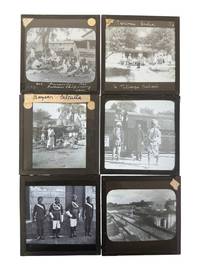
1900rif. 232871900. India glass lantern slide archive documenting class hierarchy dichotomy in British India with scenes of village labor bazaar exchange railway movement industrialization Sikhs and colonial cavalry circa 1900-20. Images clearly depict the class divide and caste system; villagers and laborers are shown seated on bare ground in carpentry work men and goats occupy an unpaved settlement space Sikh men stand beside a railway carriage tied to imperial transport networks a factory scene introduces mechanized industry and a formal portrait of turbaned cavalry soldiers. Photo archive of 8 glass lantern slides 3.25" x 3.25" India circa 1900 to 1920. Several slides retain manuscript captions on the mounts including "Central India" "Village School" "Bazaar Calcutta" and "MV. parannis an Indian carpentry clas." "Parannis" is probably a misspelling or misreading of "Pariahs" a historical caste/community term used in colonial-era descriptions of South Indi The British largely preserved formalized and exploited the Indian caste system rather than dismantling it. Their relationship with caste was pragmatic: caste became a tool for administration taxation labor control military recruitment and social organization across British India. The "Village School" slide shows a line of children and adults posed before a low building under dense tree cover with one figure standing forward in the open yard. The carpentry slide shows a large group of Indian boys outdoors beneath a tree seated or crouched on the ground around planks and hand tools with timber laid across the foreground and simple structures behind. The Calcutta bazaar scene places vendors baskets and goods in an open market setting under palms while the village scene presents men in loose garments in what seems to be a cattle farm setting. One slide shows Sikh men beside a railway carriage one barefoot in the foreground and others gathered near the rail car doors linking Indian bodies to the movement of goods troops and passengers through the colonial rail system. Another slide presents four uniformed soldiers in turbans possibly the Madras cavalry posed formally with boots sashes and weapons before a masonry wall. The factory view shows smoking industrial works with long roofs tracks and an extended production yard further cementing colonial industrialization within the archive. British rule in India relied on linked systems of extraction transport discipline and military force and these slides place those systems beside the people who bore their unequal social effects. Railways expanded under colonial finance and administration to move troops raw materials and commercial goods; industrial sites grew beside older economies of hand labor and bazaar trade; Indian soldiers and cavalry units served within an army organized to secure imperial control; and rural schools workshops and village scenes expose the local social world that existed under those pressures rather than outside them. Light edge wear some mount loss to several slides; no cracks or chips. Overall very good condition. British colonialism widened India's class divide by concentrating wealth transport and military power in imperial systems while leaving many Indians in village labor and low paid market work. unknown
1900rif. 232871900. India glass lantern slide archive documenting class hierarchy dichotomy in British India with scenes of village labor bazaar exchange railway movement industrialization Sikhs and colonial cavalry circa 1900-20. Images clearly depict the class divide and caste system; villagers and laborers are shown seated on bare ground in carpentry work men and goats occupy an unpaved settlement space Sikh men stand beside a railway carriage tied to imperial transport networks a factory scene introduces mechanized industry and a formal portrait of turbaned cavalry soldiers. Photo archive of 8 glass lantern slides 3.25" x 3.25" India circa 1900 to 1920. Several slides retain manuscript captions on the mounts including "Central India" "Village School" "Bazaar Calcutta" and "MV. parannis an Indian carpentry clas." "Parannis" is probably a misspelling or misreading of "Pariahs" a historical caste/community term used in colonial-era descriptions of South Indi The British largely preserved formalized and exploited the Indian caste system rather than dismantling it. Their relationship with caste was pragmatic: caste became a tool for administration taxation labor control military recruitment and social organization across British India. The "Village School" slide shows a line of children and adults posed before a low building under dense tree cover with one figure standing forward in the open yard. The carpentry slide shows a large group of Indian boys outdoors beneath a tree seated or crouched on the ground around planks and hand tools with timber laid across the foreground and simple structures behind. The Calcutta bazaar scene places vendors baskets and goods in an open market setting under palms while the village scene presents men in loose garments in what seems to be a cattle farm setting. One slide shows Sikh men beside a railway carriage one barefoot in the foreground and others gathered near the rail car doors linking Indian bodies to the movement of goods troops and passengers through the colonial rail system. Another slide presents four uniformed soldiers in turbans possibly the Madras cavalry posed formally with boots sashes and weapons before a masonry wall. The factory view shows smoking industrial works with long roofs tracks and an extended production yard further cementing colonial industrialization within the archive. British rule in India relied on linked systems of extraction transport discipline and military force and these slides place those systems beside the people who bore their unequal social effects. Railways expanded under colonial finance and administration to move troops raw materials and commercial goods; industrial sites grew beside older economies of hand labor and bazaar trade; Indian soldiers and cavalry units served within an army organized to secure imperial control; and rural schools workshops and village scenes expose the local social world that existed under those pressures rather than outside them. Light edge wear some mount loss to several slides; no cracks or chips. Overall very good condition. British colonialism widened India's class divide by concentrating wealth transport and military power in imperial systems while leaving many Indians in village labor and low paid market work. unknown books
1954rif. 293238Dehra Dun : Survey of India 1954. First Edition. Hardcover. Near fine copy in the original publisher's gilt-blocked cloth edges very slightly toned. Corners sharp with an overall tight bright and clean impression. Complimentary copy from the Surveyor General of India. Physical description; xii 534 p. : ill. maps ; 30 cm. Notes; Complimentary copy from the Surveyor General of India sent to Arthur Jaffe with the receipts. Includes bibliographical references and index. Subjects; Survey of India. Surveying India History. Genres; Bibliography. Illustrated. Dehra Dun : Survey of India hardcover
Lisboa, Impressao Regia, 1805, 19 x 12 cm., cubiertas provisionales en papel moderno, 50 págs. + 1 hoja. (Obra rara publicada por primera vez en 1778 en Roma por la Propaganda Fide. El autor anónimo era posiblemente un jesuita que vivió en Roma después de su expulsión de Portugal. Marathi es una de las principales lenguas indo-arios que se hablan en la India occidental y central). First published in 1778 in Rome by the Propaganda Fide. The anonymous author was possibly a Jesuit living in Rome after his expulsion from Portugal. Marathi is one of the major Indo-Aryan languages spoken in Western and Central India.
1901Good Turkish, Ottoman (1500-1928) Original red cloth. Heavily faded and slight stains on the boards and spine, otherwise a good copy. Roy. 8vo. (24 x 17 cm). In Ottoman script (Old Turkish with Arabic letters). 208 p., 29 unnumbered woodcut plates of inhabitants, temples, and other mostly religious buildings, panoramic views. The very rare first edition of this richly illustrated travel account of the complete Indian subcontinent, offering invaluable insight and very detailed descriptions of the region, climates, religions, history, languages, and geography. This work in Ottoman script published in book form after it was serialized in "Sabah Newspaper" titled "Sabahin Kis Geceleri Eglencesi" [i.e. The Winter Nights Fun of Sabah] between 1899-1901. (Nadeem). Much of the detailed account of Mumbai is quoted from Coutteau's "Bombay Travelogue". OCLC 49369676.; Özege: 14449.; Ihsanoglu, pp. 410-411.
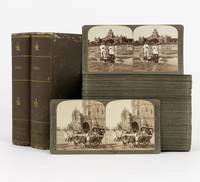
1902rif. 142564New York: Underwood & Underwood Publishers 1902. First Edition. Hardcover. Fine. New York Underwood & Underwood Publishers 'Copyright 1902' to 'Copyright 1907' a date within this range is printed on the recto of each item with the majority 1902 and 1903. Each pair of sepia-toned gelatin silver photographs is mounted on the publisher's dark grey card with an English-language caption underneath the photograph; an abridged version is repeated in six languages on the verso of all but 16 cards which are blank. The size of the arch-topped prints is approximately 80 × 78 mm; the card size is 88 × 178 mm. The condition of all photographs is uniformly fine; four cards have a crease down the centre but the rest are in fine condition. The set comes with the publisher's cloth-covered double bookform box lettered 'India Underwood and Underwood' on both spines cloth a little rubbed and lightly worn at the extremities. The cards are numbered 1-100 on the recto; many also have a four-digit number as well. In addition to the brief captions in six languages on the verso 81 cards also have lengthy captions in English on the verso 79 are printed down the length of the card when it is in portrait format; the other two are printed across the card when it is in landscape format. 100 items. Underwood & Underwood, Publishers hardcover
1911rif. 196420Lahore: Printed at the Punjab Government Press 1911. First edition of this informative collection of papers covering the period from the arrival of the British at Ludhiana in 1808 to the conclusion of the first Gurkha Campaign in June 1815. This work formed Volume II in an eight-volume series of Punjab Government records that was compiled by Arthur Raynor formerly the registrar of the Punjab Civil Secretariat. As here some copies were issued in 1915 with a revised price affixed to the title page and a tipped-in additional "Introductory Note" leaf dated December 1915. Octavo 241 x 159 mm. Photogravure frontispiece portrait of Major-General Sir David Ochterlony after an engraving by Henry Meyer. Near-contemporary green buckram spine lettered in gilt. Publisher's price sticker on title page. Ex-Financial Commissioners Office Library Lahore with shadow from removed label on spine 21 September 1938 ink stamp on half-title and a few numerical markings on front pastedown and first few leaves. Rubbed and bumped text block toned and brittle in margins in places: very good. hardcover
rif. 10626-103657945XPaperback. New. Book Condition is in New Paperback Original Edition. Shipped Same Day. We do not ship APO and FPO. Will be dispatched fast. Please send me an email if you have any questions. 100% Satisfaction. paperback
1864rif. 21686Paris, Benjamin Duplat, 1864 ; in-8, maroquin bleu-marine, dos à nerfs à décor à froid, titre doré, double filet doré sur les coupes, dentelle dorée d’intérieur, tranches dorées (reliure de l’époque) ; XVO, 578 pp.
1781Paris, Dezauche succ. De l'Isle et Buache, 1781. (Parte incisa mm. 630 x 630). Bella carta geografica, in coloritura coeva, proveniente da Atlas géographique des quatre parties du monde par Guillaume De L'Isle et P. Buache.
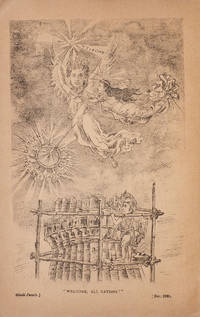
1903rif. 8569First edition of this rather extraordinary survey of Curzon's many appearances in caricature in Hindi Punch and other Indian comic papers where he often appears in Indian dress and frequently as various Hindu deities notably Ganesh. 'This unpretentious little book is offered as a humble souvenir of the Delhi Durbar: in its pages our popular Viceroy as representative in the great Coronation Durbar of the greatest monarch of modern times is the central figure. In a land of her-worship it is not to be marvelled that the energy versatility and strong personality of Lord Curzon added to his many loveable traits should lend themselves easily to the genius of the Indian artist for caricaturing' author's Preface. Despite this warm introduction Curzon was subject to both approval and dissent through these images. The satire of British comic publications like Punch was enthusiastically appropriated by Indian artists - and India itself was frequently represented through the figure of Mr Punch - though their caricatures were also influenced by Indian artists such as Raja Ravi Varma. It is a fascinating fusion. 4to 248 × 158 mm pp. 2 2 48 4 adverts for Hindi Punch etc plus lithograph forntispiece numerous caricatures to text. Original lithographic boards. Slightly rubbed and soiled hinge cracked and backstrip rather crudely but effectively repaired with tape. [Tatva-Vivechaka Press and lithographed at Ajinkya Art P. Works for] Babajee Sakharam & Co,
1900rif. 100865c. 1900. 54 diapositive glass lantern slides 3-1/4 x 4 and 3-1/4 x 3-1/4 inches six hand-colored bound at edges with gummed paper or metal frame some with manufacturer's printed label and manuscript caption; a few with hairline cracks. Housed in contemporary wooden box with lid. A varied collection of ethnographic and architectural scenes largely from Northern India with a few of Ceylon Sri Lanka tea production. Some of the locations include Darjeeling Mumbai Bombay Kakinada Elephanta Caves Mumbai Calcutta including many of the Hooghly River Dehli Sinla Ceylon Kashmir as well as one scene of European tourists scaling pyramids in Egypt. The collection appears to have been gathered from various sources with plates manufactured by T.H. McAllister New York William Garrison Reed Boston J. Moore Birmingham and William H. Rau Philadelphia. unknown
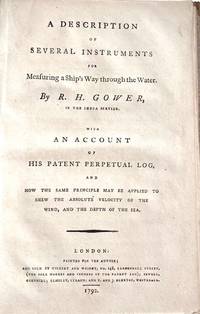
1792rif. 1325NAUTICAL INSTRUMENTS GOWER Richard Hall in the India Service. A Description of several instruments for Measuring a Ship's Way through the Water By.With an Account of his Patent Perpetual Log and how the same principle may be applied to shew the absolute velocity of the Wind and the depths of the Sea. 8vo modern cloth backed marbled boards half-title title 5-32 2 copper engraved plates. London: Printed for the Author 1792. First Edition of author's rare first nautical work with the half-title. ESTC locates two copies in England BL & NMM and two copies in this country BA & NYPL. Gower fl. 1767-1833 a sea captain and naval architect "had been shocked by the low standard of navigation which he found in the convoy which took him to the East Indies.He devised a patent log part of the workmanship being entrusted to Alexander Grant and the sole rights of sale vested in Messrs Gilbert & Wright of 148 Leadenhall Street. He refers to "the indefatigable Mr. Stancliff' as cutting the scale on his optical instrument with his dividing machine. He then tried the instrument out with John Adams a mathematical teacher of Edmonton who has been identified as a reviser of textbooks for Mount and Page the chart-sellers."-Taylor The Mathematical Practitioners of Hanoverian England 1714-1840 #840. "In 1787 he devised an instrument which measured a vessel's way through the water with greater accuracy than had previously been possible."-ODNB. The followng year he wrote A Treatise on the Theory and Practice of Seamanship which long remained a standard work. We trace no copies at auction. 84574 The Author