12.695 risultati
rif. 24731One item from ‘Allen’s Indian Mail’ 28 March 1887. Three items marked as from the periodical ‘India’ 1902 1903 and 1906. Another ‘Reprinted from “INDIA” August 16 1901.’. Five galley-proofs of articles written during the high-point of the Raj by leading Victorian journalist in India W. Martin Wood editor of the Times of India founder and editor of the Bombay Review. Ephemeral items creased and worn but with text clear and entire. ONE: Headed ‘ALLEN’S INDIAN MAIL / THE LATE MR. EDWARD BROOME C.E. / Mr. M. Martin Wood writes to us as follows: -’. Sixty-two lines in small print follow beginning: ‘Some little time back your “Domestic Occurrences” contained the name of Mr. Edward Broome Civil Engineer as having died at Southport something under 60 years of age. It struck me then that a note of Mr. Broome’s quiet work in India ought to be made’. TWO: Annotated at head by Wood ‘India Sep 16th. 1902’. Sixty-eight lines of small print. Three sections concerning drought ‘in Gujerat and the Deccan’. The first begins: ‘An esteemed correspondent writes: Telegrams from India during the last few weeks have told us very little about the suspension and in certain districts what almost threatens failure of the later monsoon rains.’ The second starts: ‘But this passive creed is nto that of their masters from the West’. The third: ‘Meantime what has become of the Scott-Moncrieff comprehensive Water-Supply and Irrigation Report’ THREE: Headed ‘INDIA’S CHRONIC DEFICIT. / FROM AN ANGLO-INDIAN CORRESPONDENT. Annotated by Wood at head: ‘From India Feb. 13th. 03’. Beginning ‘Those few of our official financiers at Simla or in the palace overlooking St. James’s Park who are at all sensitive to Press criticism must have felt happy when in the last Financial Statement they recorded the line - “the entry under Exchange has become of minor importance.”’ Ninety-three lines of text. FOUR: Headed ‘INDIA’S SEABORNE TRADE: / BALANCED ONLY BY DEADWEIGHTS.’ Annotated at head by Wood: ‘From India Jan 15. 06’. Begins: ‘Only within the last fortnight have come to hand detailed returns of India’s trade with the outside world during the first six months of its current financial year - April 1 to September 30.’ Eighty-one lines in small print. FIVE: Headed ‘Reprinted from “INDIA” August 16 1901. / INDIAN LOANS GUARANTEE. / AN EMERGENT ILLUSTRATION. / BY AN ANGLO-INDIAN.’ Beginning ‘The miscarriage of the proposed Indian sterling loan of £3000000 last month must have recalled attention to the often pressed always postponed demand for a British Treasury guarantee in support of the public debt of India.’ Sixty-five lines of small print. One item from ‘Allen’s Indian Mail’, [28 March 1887]. Three items marked as from the periodical ‘India’, [1902], 1903 unknown
rif. 24732One item from ‘Allen’s Indian Mail’ 28 March 1887. The other ‘Reprinted from “INDIA” August 16 1901.’. Two galley-proofs of articles by leading Victorian journalist in India W. Martin Wood editor of the Times of India founder and editor of the Bombay Review. Ephemeral items creased and worn but with text clear and entire. ONE: Headed ‘ALLEN’S INDIAN MAIL / THE LATE MR. EDWARD BROOME C.E. / Mr. M. Martin Wood writes to us as follows: -’. Sixty-two lines in small print follow beginning: ‘Some little time back your “Domestic Occurrences” contained the name of Mr. Edward Broome Civil Engineer as having died at Southport something under 60 years of age. It struck me then that a note of Mr. Broome’s quiet work in India ought to be made’. TWO: Annotated at head by Wood ‘India Sep 16th. 1902’. Sixty-eight lines of small print. Three sections concerning drought ‘in Gujerat and the Deccan’. The first begins: ‘An esteemed correspondent writes: Telegrams from India during the last few weeks have told us very little about the suspension and in certain districts what almost threatens failure of the later monsoon rains.’ The second starts: ‘But this passive creed is nto that of their masters from the West’. The third: ‘Meantime what has become of the Scott-Moncrieff comprehensive Water-Supply and Irrigation Report’ THREE: Headed ‘INDIA’S CHRONIC DEFICIT. / FROM AN ANGLO-INDIAN CORRESPONDENT. Annotated by Wood at head: ‘From India Feb. 13th. 03’. Beginning ‘Those few of our official financiers at Simla or in the palace overlooking St. James’s Park who are at all sensitive to Press criticism must have felt happy when in the last Financial Statement they recorded the line - “the entry under Exchange has become of minor importance.”’ Ninety-three lines of text. FOUR: Headed ‘INDIA’S SEABORNE TRADE: / BALANCED ONLY BY DEADWEIGHTS.’ Annotated at head by Wood: ‘From India Jan 15. 06’. Begins: ‘Only within the last fortnight have come to hand detailed returns of India’s trade with the outside world during the first six months of its current financial year - April 1 to September 30.’ Eighty-one lines in small print. FIVE: Headed ‘Reprinted from “INDIA” August 16 1901. / INDIAN LOANS GUARANTEE. / AN EMERGENT ILLUSTRATION. / BY AN ANGLO-INDIAN.’ Beginning ‘The miscarriage of the proposed Indian sterling loan of £3000000 last month must have recalled attention to the often pressed always postponed demand for a British Treasury guarantee in support of the public debt of India.’ Sixty-five lines of small print. One item from ‘Allen’s Indian Mail’, [28 March 1887]. The other ‘Reprinted from “INDIA,” August 16, 1901.’ unknown
1864rif. 160811864. Wood Charles later 1st Viscount Halifax. Autograph Letter Signed to H. Reckitts 1864 addresses the continuing development of British educational administration in India during Wood's tenure as Secretary of State for India. Wood had earlier set out an extensive program for education in the 1854 document subsequently known as Wood's Despatch recommending provincial education departments universities modeled on British institutions support for public and private schools and the use of Indian languages in provincial curricula. Written a decade later this letter concerns a proposal for a college intended to educate young members of the Indian Civil Service and records Wood's direct consideration of another institution connected with the administration of British India. Wood Charles. Autograph Letter Signed to H. Reckitts. Balmoral September 5 1864. 4 pages. Wood reports that Algernon West had forwarded "the printed letter with numerous signatures of Indian Civil Servants as to the establishment of a College for the education of the young Civilians." He describes the proposal as "a very interesting and important subject" requiring "very careful attention" and assures Reckitts that it "will receive the best attention which the members of the Indian Council and I myself can give to it." The letter documents the route by which a proposal supported by serving Indian Civil Servants reached the Secretary of State and his council showing consultation between colonial administrators and the metropolitan office responsible for Indian government. Wood's 1854 Despatch had recommended the creation of education departments in the provinces and the establishment of universities in major Indian cities; universities at Calcutta Bombay and Madras opened in 1857 with later institutions established in Punjab in 1882 and Allahabad in 1887. This 1864 letter places Wood within the continuing administrative work of developing educational institutions after those initial reforms specifically in relation to the training of British civil servants charged with governing India. Condition was not provided in the supplied description. unknown
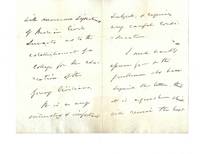
1864rif. 160811864. Wood Charles later 1st Viscount Halifax. Autograph Letter Signed to H. Reckitts 1864 addresses the continuing development of British educational administration in India during Wood's tenure as Secretary of State for India. Wood had earlier set out an extensive program for education in the 1854 document subsequently known as Wood's Despatch recommending provincial education departments universities modeled on British institutions support for public and private schools and the use of Indian languages in provincial curricula. Written a decade later this letter concerns a proposal for a college intended to educate young members of the Indian Civil Service and records Wood's direct consideration of another institution connected with the administration of British India. Wood Charles. Autograph Letter Signed to H. Reckitts. Balmoral September 5 1864. 4 pages. Wood reports that Algernon West had forwarded "the printed letter with numerous signatures of Indian Civil Servants as to the establishment of a College for the education of the young Civilians." He describes the proposal as "a very interesting and important subject" requiring "very careful attention" and assures Reckitts that it "will receive the best attention which the members of the Indian Council and I myself can give to it." The letter documents the route by which a proposal supported by serving Indian Civil Servants reached the Secretary of State and his council showing consultation between colonial administrators and the metropolitan office responsible for Indian government. Wood's 1854 Despatch had recommended the creation of education departments in the provinces and the establishment of universities in major Indian cities; universities at Calcutta Bombay and Madras opened in 1857 with later institutions established in Punjab in 1882 and Allahabad in 1887. This 1864 letter places Wood within the continuing administrative work of developing educational institutions after those initial reforms specifically in relation to the training of British civil servants charged with governing India. Condition was not provided in the supplied description. unknown books
1917In-16 gr., tela editoriale, pp. XVI,399, con alcune ill. in b.n. nel testo e 1 cartina geografica dell'India fuori testo, più volte ripiegata. "Early history of Indian Commerce - Rise of the honourable East India Company - Robert Clive - First Burmese War, etc.". Ben conservato.
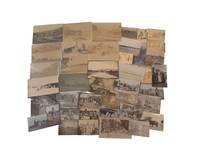
1917rif. 235951917. British frontier military photo archive documenting the garrison system of the North West Frontier during the final years of the First World War 1917 to 1918 showing how the British Indian Army organized training logistics aviation medical services and daily military life across what is now Pakistan. Centered on Risalpur with additional views of Nowshera Sibi and other frontier stations the archive records the infrastructure that sustained Britain's defensive frontier against Afghanistan while thousands of Indian Army troops remained committed to imperial service overseas. Contemporary manuscript captions on many versos identify locations dates military units and events preserving an unusually well-documented record of the frontier during one of the British Empire's most militarized periods. Photo archive of 52 silver gelatin photographs most measuring approximately 3 x 5 inches British India principally Risalpur and the North West Frontier 1917 to 1918. The photographs depict cantonments parade grounds barracks military camps mounted troops cavalry exercises soldiers in formation and group portraits of officers and enlisted men. Other photographs show military hospitals and Red Cross personnel aviation facilities transport columns aerial views of cantonments engineering works fortified compounds rail infrastructure and frontier outposts. Civilian scenes appear as part of the military landscape rather than separate subjects including bazaars camel caravans village streets fruit vendors brick makers ox drawn carts river crossings market stalls and local residents interacting with soldiers. Several photographs record strategic infrastructure including the Attock Bridge mosques military compounds and river transport essential to frontier communications. Numerous versos carry contemporary inscriptions identifying subjects with captions such as "Camp of the 22nd Squadron M.G. Corps at Risalpur Dec. 1917-May 1918" "Risalpur 1918" "Mosque at Nowshera 1917" "Aeroplane accident" and "Filling ammunition belts 22nd M.G. Squadron Risalpur" substantially increasing the documentary precision of the archive. By 1917 the North West Frontier had become one of the British Empire's principal military districts supplying cavalry machine gun units aviation personnel transport and logistical support while simultaneously guarding the Afghan frontier. Risalpur developed into one of the subcontinent's major military centers housing cavalry regiments the Machine Gun Corps flying facilities and training establishments that would remain central to frontier defense through the Third Anglo Afghan War of 1919 and beyond. Photos emphasize the construction and occupation of cantonments preparation of ammunition medical organization transportation networks reconnaissance engineering and the constant interaction between British military institutions and the civilian communities surrounding them. Light surface wear with occasional corner bumps and scattered silvering; manuscript captions remain clear and legible. Overall in very good condition. A concentrated record of the British Indian Army's military infrastructure and frontier administration on the North West Frontier during the closing years of the First World War. unknown
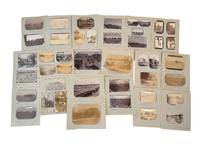
1917rif. 235941917. British frontier military photo archive documenting the administration of Britain's North West Frontier during the final years of the First World War and its immediate aftermath 1917 to 1919 showing how the Indian Army sustained imperial communications cavalry training transport and everyday life across what is now Pakistan. Made at stations including Nowshera Risalpur Sibi Quetta and surrounding cantonments the archive records the military infrastructure supporting British control over one of the Empire's most strategically important frontier regions bordering Afghanistan. Compiled during the years surrounding the Third Anglo Afghan crisis and the closing campaigns of the First World War the photographs preserve both the operational machinery of the frontier and the civilian landscapes through which imperial authority was exercised. Photo archive of approximately 96 sepia and black and white photographs ranging from 2 x 3 to 4 x 5 inches North West Frontier Province and Baluchistan British India 1917 to 1919. Nearly every photograph is mounted on album leaves with careful contemporary manuscript captions identifying places dates and subjects. The photographs depict cavalry exercises mounted reviews riding school instruction the 21st Lancers horse lines transport trains railway stations ferries crossing the Kabul River at Nowshera the boat bridge at Nowshera cantonment buildings military camps and barracks. Other photographs record the "Victory Sports" at Risalpur in December 1918 an aeroplane accident at Risalpur in December 1917 with multiple views of the wreckage and assembled soldiers soldiers posing with local residents officers on horseback rail travel between Nowshera and Sibi and military groups assembled before stores and equipment. Civilian life appears throughout in photographs captioned "Making bricks" "Melons" "Cooks" "Native carts Baluchistan" "The Kabul River Nowshera" "Ferry boat on Kabul River Risalpur" and market scenes at Bagaran. Additional views document Quetta Sibi Baluchistan landscapes bridges forts irrigation works mosques camel caravans washermen working along the Kabul River ox drawn transport and portraits of Punjabi Pashtun and Baluchi residents encountered throughout the frontier. The North West Frontier formed the principal buffer between British India and Afghanistan after the Durand Line agreement of 1893 and by 1917 the region had become one of the Empire's largest concentrations of cavalry transport and logistical forces. Cantonments at Nowshera and Risalpur served as major cavalry and aviation centers while Sibi and Quetta anchored the railway linking the Punjab to Baluchistan and the Bolan Pass a route essential for imperial communications and frontier defense. Rather than concentrating on combat alone this archive records the systems that sustained British rule: transport networks mounted units engineering works indigenous labor military recreation and the daily interactions between colonial personnel and local communities across the frontier. Contemporary manuscript captions throughout provide unusually precise geographical and chronological documentation. Album leaves show edge wear creasing and occasional corner losses; photographs generally remain clean. Overall in very good condition. A concentrated visual record of the military and civilian infrastructure that maintained British authority across the North West Frontier during the closing years of the First World War and the transition to the postwar imperial frontier. unknown
1917rif. 235951917. British frontier military photo archive documenting the garrison system of the North West Frontier during the final years of the First World War 1917 to 1918 showing how the British Indian Army organized training logistics aviation medical services and daily military life across what is now Pakistan. Centered on Risalpur with additional views of Nowshera Sibi and other frontier stations the archive records the infrastructure that sustained Britain's defensive frontier against Afghanistan while thousands of Indian Army troops remained committed to imperial service overseas. Contemporary manuscript captions on many versos identify locations dates military units and events preserving an unusually well-documented record of the frontier during one of the British Empire's most militarized periods. Photo archive of 52 silver gelatin photographs most measuring approximately 3 x 5 inches British India principally Risalpur and the North West Frontier 1917 to 1918. The photographs depict cantonments parade grounds barracks military camps mounted troops cavalry exercises soldiers in formation and group portraits of officers and enlisted men. Other photographs show military hospitals and Red Cross personnel aviation facilities transport columns aerial views of cantonments engineering works fortified compounds rail infrastructure and frontier outposts. Civilian scenes appear as part of the military landscape rather than separate subjects including bazaars camel caravans village streets fruit vendors brick makers ox drawn carts river crossings market stalls and local residents interacting with soldiers. Several photographs record strategic infrastructure including the Attock Bridge mosques military compounds and river transport essential to frontier communications. Numerous versos carry contemporary inscriptions identifying subjects with captions such as "Camp of the 22nd Squadron M.G. Corps at Risalpur Dec. 1917-May 1918" "Risalpur 1918" "Mosque at Nowshera 1917" "Aeroplane accident" and "Filling ammunition belts 22nd M.G. Squadron Risalpur" substantially increasing the documentary precision of the archive. By 1917 the North West Frontier had become one of the British Empire's principal military districts supplying cavalry machine gun units aviation personnel transport and logistical support while simultaneously guarding the Afghan frontier. Risalpur developed into one of the subcontinent's major military centers housing cavalry regiments the Machine Gun Corps flying facilities and training establishments that would remain central to frontier defense through the Third Anglo Afghan War of 1919 and beyond. Photos emphasize the construction and occupation of cantonments preparation of ammunition medical organization transportation networks reconnaissance engineering and the constant interaction between British military institutions and the civilian communities surrounding them. Light surface wear with occasional corner bumps and scattered silvering; manuscript captions remain clear and legible. Overall in very good condition. A concentrated record of the British Indian Army's military infrastructure and frontier administration on the North West Frontier during the closing years of the First World War. unknown books
1917rif. 235941917. British frontier military photo archive documenting the administration of Britain's North West Frontier during the final years of the First World War and its immediate aftermath 1917 to 1919 showing how the Indian Army sustained imperial communications cavalry training transport and everyday life across what is now Pakistan. Made at stations including Nowshera Risalpur Sibi Quetta and surrounding cantonments the archive records the military infrastructure supporting British control over one of the Empire's most strategically important frontier regions bordering Afghanistan. Compiled during the years surrounding the Third Anglo Afghan crisis and the closing campaigns of the First World War the photographs preserve both the operational machinery of the frontier and the civilian landscapes through which imperial authority was exercised. Photo archive of approximately 96 sepia and black and white photographs ranging from 2 x 3 to 4 x 5 inches North West Frontier Province and Baluchistan British India 1917 to 1919. Nearly every photograph is mounted on album leaves with careful contemporary manuscript captions identifying places dates and subjects. The photographs depict cavalry exercises mounted reviews riding school instruction the 21st Lancers horse lines transport trains railway stations ferries crossing the Kabul River at Nowshera the boat bridge at Nowshera cantonment buildings military camps and barracks. Other photographs record the "Victory Sports" at Risalpur in December 1918 an aeroplane accident at Risalpur in December 1917 with multiple views of the wreckage and assembled soldiers soldiers posing with local residents officers on horseback rail travel between Nowshera and Sibi and military groups assembled before stores and equipment. Civilian life appears throughout in photographs captioned "Making bricks" "Melons" "Cooks" "Native carts Baluchistan" "The Kabul River Nowshera" "Ferry boat on Kabul River Risalpur" and market scenes at Bagaran. Additional views document Quetta Sibi Baluchistan landscapes bridges forts irrigation works mosques camel caravans washermen working along the Kabul River ox drawn transport and portraits of Punjabi Pashtun and Baluchi residents encountered throughout the frontier. The North West Frontier formed the principal buffer between British India and Afghanistan after the Durand Line agreement of 1893 and by 1917 the region had become one of the Empire's largest concentrations of cavalry transport and logistical forces. Cantonments at Nowshera and Risalpur served as major cavalry and aviation centers while Sibi and Quetta anchored the railway linking the Punjab to Baluchistan and the Bolan Pass a route essential for imperial communications and frontier defense. Rather than concentrating on combat alone this archive records the systems that sustained British rule: transport networks mounted units engineering works indigenous labor military recreation and the daily interactions between colonial personnel and local communities across the frontier. Contemporary manuscript captions throughout provide unusually precise geographical and chronological documentation. Album leaves show edge wear creasing and occasional corner losses; photographs generally remain clean. Overall in very good condition. A concentrated visual record of the military and civilian infrastructure that maintained British authority across the North West Frontier during the closing years of the First World War and the transition to the postwar imperial frontier. unknown books
1970rif. 8949Bombay, Bhavan,, 1970. 2. edition 2 volumes 1205/688 pages + 1 map. large-8° Orig-Cloth, good copies.
1859rif. 29865ABAmsterdam, Kraay 1859. Gr.8°. Frontispiz, Titel, 1 Bl., 390 S. Rotes HLdr der Zt mit Rückentitel und etwas Rückenvergoldung. Einband berieben, stellenweise auch beschabt. Teils etwas stockfleckig. Wenige Textseiten mit etwas Tafelabklatsch. Eine Tafel im weißen Rand eingerissen.
1978rif. bb2763Colombo Museum Cartonnage d'éditeur 1978 Grand in-4° de 31 pp. et 28 planches hors texte, préface de Joseph Pearson, reprint de l'édition de 1914 ; cartonnage frotté, bon état. Livraison a domicile (La Poste) ou en Mondial Relay sur simple demande.
rif. LBW-8731A l’isle de France, 15 mai 1785. 4 pp. in-folio (32,3 x 20,5 cm), avec corrections autographes ; sur une feuille double.
1926rif. 22217Paris, Ernst Henri Editeur, 1926 – En feuilles dans un cartonnage au dos toilé et fermé par un cordonnet, 28 cm x 37,5 cm, 3 pages+ 38 planches couleur, introduction de C. Estrade. Complet, bon état
1988rif. 54140Couverture souple. Brochure de 48 pages.
1988rif. 54141Couverture souple. Brochure de 48 pages.
1988rif. 54142Couverture souple. Brochure de 48 pages.
1992rif. 54193Couverture souple. Brochure de 64 pages.
1912In-16°, leg. in cart. con tit. in oro al dorso, pp. XIX-128. Con un'illustrazione allegorica all'antiporta. Trascrizione, dal manoscritto originale, di un antico mito indù. Marginali tracce d'uso.
1912pp. xxii, 160, (4) [Publisher's catalogue]. Frontis. Top edge gold. 8vo. Original full blue cloth binding embossed in gold. First American Edition. FIRST AMERICAN EDITION OCC 9.
1962rif. X71803London, George Allen and Unwin 1962 397pp.with plates out-of-text, 24cm., cloth (cover soiled), text and interior VG, X71803
1956rif. X47783Milano, dall'Oglio 1956 415pp.+ qqs.planches hors-texte, couv.cart., 23cm., bel état, 6e éd., [texte en italien], X47783
1956415pp.+ qqs.planches hors-texte, couv.cart., 23cm., bel état, 6e éd., [texte en italien], X47783
'Collana Storica Corbaccio'. 8vo (cm 22,5 x 15); brossura con illustrazione in b/n applicata in prima di copertina, sovracoperta a colori; p. 424 (4); 10 tavole fuori testo in b/n. Sovracoperta con guasti all'orlo (in particolare ai capi del dorso), strappo alla piega del risvolto anteriore con distacco per 2/3, strappo ricomposto sul margine inferiore anteriore con applicazione di una striscia di velina al verso. Sovracoperta modesta per il resto buona copia.
1975(Codice RN/0827) In 8º (24 cm) 96 pp. Trimestrale, numero dedicato al culto di Budda in India. Illustrato con numerose foto e disegni in nero e a colori. Brossura editoriale, buono stato. ~~~ SPEDIZIONE IN ITALIA SEMPRE TRACCIATA