Manzooruddin Ahmad H.MareMagnum

12 696 résultats
1943(Codice IA/0208) In 8º (20,5 cm) 375 pp. Prima edizione italiana illustrata con numerose foto originali su 32 tavole fuori testo. Macchiette. Modesta legatura in mezza tela muta, la cifra 810 in oro al dorso. ~~~ SPEDIZIONE IN ITALIA SEMPRE TRACCIATA
A Cura: Marchi Oretta . Traduzione: Marchi Oretta dal tedesco . Pagine: 376 . Illustrazioni: Foto in bianco e nero fuori testo . Formato: 16° . Rilegatura: Brossura editoriale . Stato: Buono . Caratteristiche: Bruniture. Un viaggio nell'India svelata da unindiano. .
1999Stato di conservazione: OTTIMO, angolo prezzo interno alla copertina tagliato, leggero ingiallimento ai tagli, per il resto in ordine. Collana: Narrativa. II edizione. Traduzione di Francesca Orsini
Milano-Armenia, 1978 in 8° pp. 349. Dall’indice: L’anacoreta del fiume Adyar; Il saggio che non parla mai; Nel quartier generale del messia Parsi; In un eremitaggio nella giungla; La collina del fuoco santo; Lo yoga che vince la morte. Cop. ill. a colori.
2006ill., br. "Ho intitolato questo libro 'India segreta' perché racconta un'India che per migliaia d'anni è rimasta nascosta a occhi indagatori. Mi sono fatto strada attraverso una folla di sciocche superstizioni e di sedicenti fachiri allo scopo di sedermi ai piedi di autentici saggi e imparare là, di prima mano, i veri insegnamenti dello Yoga, utilizzando il metodo dell'indagine diretta. La vita spirituale dell'India esiste ancora ed io ho cercato di fornirne un'autentica testimonianza". (Paul Brunton 1898-1981)
Mm 170x240 Brossura editoriale di pagine 63 con illustrazioni in bianco e nero e 1 tavola a colori. Opera in buone condizioni. Spedizione in 24 ore dalla conferma dell'ordine.
réf. 1862057591.Ghardcover. Good. Access codes and supplements are not guaranteed with used items. May be an ex-library book. hardcover
réf. 0656186224.Ghardcover. Good. Access codes and supplements are not guaranteed with used items. May be an ex-library book. hardcover
réf. 1332990754.Gpaperback. Good. Access codes and supplements are not guaranteed with used items. May be an ex-library book. paperback
1915réf. 23026201Philadelphia PA 1915. Good slightly worn with a slight crease down the middle. No-Stickee is a product created by the India Refining Company which specialized in vegetable butters. The three separate recipe cards are to advertise the No-Stickee product to use with candy promising to not only make candy stable and cut easily but to also prevent it from sticking to teeth. Each recipe card has a different candy that includes use of the product. One is pink one white one blue and the print is on one side. Each measures 5 3/4" x 5 1/2" India Refining Co. produced a "Science in Confectionary" booklet which included recipes that were altered for the use of their product. The three recipe cards seem to be taken from or inspired by the booklet. unknown books
1915réf. 23026201Philadelphia PA 1915. Good slightly worn with a slight crease down the middle. No-Stickee is a product created by the India Refining Company which specialized in vegetable butters. The three separate recipe cards are to advertise the No-Stickee product to use with candy promising to not only make candy stable and cut easily but to also prevent it from sticking to teeth. Each recipe card has a different candy that includes use of the product. One is pink one white one blue and the print is on one side. Each measures 5 3/4" x 5 1/2" India Refining Co. produced a "Science in Confectionary" booklet which included recipes that were altered for the use of their product. The three recipe cards seem to be taken from or inspired by the booklet. unknown
réf. DADAX0198280211Routledge 2005-02-15. 1. paperback. New. 6.14x0.18x9.21. Buy with confidence. Excellent Customer Service & Return policy. Routledge paperback
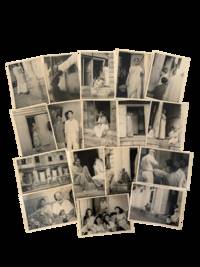
1958réf. 231781958. Bombay red light district photographs of women seated in brothel doorways gathered in interior rooms and receiving male visitors circa 1958 recording the sex trade as it operated in post independence India under the combined pressures of urban poverty migration and state regulation. Drawn from a merchant marine album and anchored by a source page marked 1958 the group preserves an outsider's view of brothel based sex work at the moment when independent India's Suppression of Immoral Traffic in Women and Girls Act had just come into force. British rule had already concentrated prostitution into regulated urban zones in Bombay with districts such as Kamathipura shaped by segregation policing and the management of commercial sex. The 1956 law effective 1 May 1958 targeted brothel keeping procuring and related activities without removing the economic structures that kept poor women in the trade. Photo archive of 17 silver gelatin photographs each 2.75" x 4" Bombay India circa 1958. Several images show women in saris seated on stone thresholds and steps outside narrow ground floor rooms watching the street conversing with one another or facing the camera from darkened doorways. Other photographs move inside the premises where a group of young women pose on a sofa beneath patterned wallpaper one beside a Western man holding a camera while another interior view shows several women crowded before a wall mirror with the same man visible in reflection behind them. Street level exterior views record a worn multistory building with open upper windows shuttered lower bays pedestrians passing and an automobile and hand pulled or cycle traffic in front fixing the brothel within a dense commercial streetscape rather than an isolated interior world. One of the most arresting images shows a white clothed man carrying a tray as he faces several figures in a narrow passage potentially showcasing the work surrounding and upkeeping the trade. The archive belongs to a longer history in which Bombay's sex districts were formed under colonial urban governance and continued after 1947 as sites where caste class migration policing and women's labor met in highly unequal ways. These photographs show the raw historical context of such professions with women waiting at entrances living in cramped quarters and occupying semi public thresholds where domestic space commercial exchange and street visibility collapse into one another. Light surface wear small edge chips and album glue residue en verso. Overall very good condition. The album context fixed 1958 dating and repeated views of the same doorway spaces make this a concise photographic record of brothel based sex work in postcolonial Bombay. unknown books
1958réf. 231781958. Bombay red light district photographs of women seated in brothel doorways gathered in interior rooms and receiving male visitors circa 1958 recording the sex trade as it operated in post independence India under the combined pressures of urban poverty migration and state regulation. Drawn from a merchant marine album and anchored by a source page marked 1958 the group preserves an outsider's view of brothel based sex work at the moment when independent India's Suppression of Immoral Traffic in Women and Girls Act had just come into force. British rule had already concentrated prostitution into regulated urban zones in Bombay with districts such as Kamathipura shaped by segregation policing and the management of commercial sex. The 1956 law effective 1 May 1958 targeted brothel keeping procuring and related activities without removing the economic structures that kept poor women in the trade. Photo archive of 17 silver gelatin photographs each 2.75" x 4" Bombay India circa 1958. Several images show women in saris seated on stone thresholds and steps outside narrow ground floor rooms watching the street conversing with one another or facing the camera from darkened doorways. Other photographs move inside the premises where a group of young women pose on a sofa beneath patterned wallpaper one beside a Western man holding a camera while another interior view shows several women crowded before a wall mirror with the same man visible in reflection behind them. Street level exterior views record a worn multistory building with open upper windows shuttered lower bays pedestrians passing and an automobile and hand pulled or cycle traffic in front fixing the brothel within a dense commercial streetscape rather than an isolated interior world. One of the most arresting images shows a white clothed man carrying a tray as he faces several figures in a narrow passage potentially showcasing the work surrounding and upkeeping the trade. The archive belongs to a longer history in which Bombay's sex districts were formed under colonial urban governance and continued after 1947 as sites where caste class migration policing and women's labor met in highly unequal ways. These photographs show the raw historical context of such professions with women waiting at entrances living in cramped quarters and occupying semi public thresholds where domestic space commercial exchange and street visibility collapse into one another. Light surface wear small edge chips and album glue residue en verso. Overall very good condition. The album context fixed 1958 dating and repeated views of the same doorway spaces make this a concise photographic record of brothel based sex work in postcolonial Bombay. unknown
1956trad. di Mario Casalini in 4°, tela edit. con titolo in oro al dorso e impressione in oro al piatto anteriore
1964in-16°, pp. 330 con 8 ill. f.t. In carrè edit. Buona la conservazione.
1964In-16 (cm 19x11,1), pp. 330, cartonato edit. grigio, 8 tavole b.n. fuori testo, ill. b.n. nel testo. Traduzione di Roberto Bosi. I edizione "Biblioteca Moderna Mondadori"786. Margini delle pagine ingiallite, Buono.
1964Carton. edit. in-16, pp. 330-(4), coll. BMM n° 786, trad. di R. Bosi, 8 tavv. in nero f.t. Ottimo.
1954Pubblicazione che inzia la "Collezione Unesco dell'Arte Mondiale" dedicata alle opere d'arte poco conosciute del mondo. Introduzione di Madanjeet Singh. Copertina con numerose fioriture su entrambi i piatti e sul dorso, stanca ai margini. Fioriture anche alle controgardie. Pagine salde e lievemente brunite. Presenti numerose tavole a colori con didascalia sul retro. Numero tavole XXXII. Numero pagine 70 circa. USATO
1944Cm. 23,5, br. edit., pag. XVI, 405 (3). Raccolta di scritti sull'India, pubblicati postumi, di uno dei maggiori orientalisti italiani, in particolare su Filosofia, Buddismo, letteratura. Alcuni difetti alla brossura ma buon esemplare.
1903Spine ends with light rubbing to extremities ; Top edges gilt. Fold-out map n rear. This is one of the most beautiful set on India: Boards with gilt decoration. Including numerous tissue guarded photogravures ; B&W Photographs; 8vo; 320,338 pages
1903Beautifully gilt decorated boards. Tissue guarded b&w halftones. ; B&W Photographs; 8vo; 320,338 pages
1955In-8 p., tela edit., pp. 238,(2). In buono stato (good copy).
1794in-4, pp. XXIV, 280; leg. post. m. pelle e ang. tit. oro al dorso. Illustrata dal ritratto in tondo a m. pag. di "S. Bartolomeo", una carta geografica ripieg. f. t. dell'India "Neueste Karte von Malabar", 2 incisioni a p. pag. n. t., una raffig. il "Ràma Varner", l'altra le divinità indiane. Monografia sulla geografia e le religioni dell'India, che comprende la storia della cristianizzazione del paese con dettagli riguardanti le missioni, i missionari ed alcuni cenni storici relativi alle principali città. Prima edizione, rara. Esemplare con qualche lieve traccia d'umido nel margine interno dei primi fogli, nota di possesso ms. sul f. di sguardia ed all'interno del piatto superiore, nel complesso un buon esemplare.. Brunet, IV, 446 (citato)..
2017The Title 'India Old and New: With a Memorial Address written/authored/edited by E. Washburn Hopkins', published in the year 2017. The ISBN 9789351284598 is assigned to the Hardcover version of this title. This book has total of pp. 350 (Pages). The publisher of this title is Kalpaz Publications. This Book is in English. The subject of this book is History / India / Development. Size of the book is 14.34 x 22.59 cms Vol:-