11.261 resultados
1844ref. 022107London: J. Hatchard and Son 1844. First Edition. Hardcover. Partly unopened; scattered foxing but text and plates mostly clean. Some fraying along spine edges; gilt fairly bright. Easily Very Good in a Fine clamshell box. Two 6-1/2" x 9-3/4" volumes in publisher's gilt-decorated and lettered green cloth: xii 478; vii i 459 1 pages. Housed in a green cloth clamshell box. Illustrated with 32 color chromolithographic plates with tissue guards. Lieutenant-Colonel William Henry Sleeman who spent his entire career in India was best known for his fight to suppress the activities of "thugs" bands of criminals who attacked robbed and often murdered innocent travelers. In these volumes he describes his experiences doing so as well as his thoughts on various aspects of Indian life including Hinduism local festivals and folklore natural history governance military discipline and the justice system. In 1828 Sleeman made the first documented discovery of dinosaur fossils in Asia before the term "dinosaur" was even formally coined. ABBEY TRAVEL 466. J. Hatchard and Son hardcover books
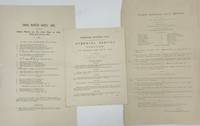
1885ref. 66644Cairo Egypt 1885. Printed broadsheet faint old fold lines. 22 cm. 2 pp. The program includes 6 races and describes a list of conditions for entries. Also names the Judge: Maj. Gen. J. C. Dormer C. B.; the Starter: Maj. Gen. Davis C. B.; and the Clerk of the Scales: Lt. Col. Hitchcock. Offered with two additional broadsides: SUAKIN DIVISIONAL RACE MEETING. First Day Saturday 16th May.Second Day Monday 18th. 5 races each. Names of the President Vice President and Stewards given. 35 cm. Old fold lines some shallow splits at margin edges. And CAIRO WINTER RACES 1885.Friday 2nd January 1885. 6 races. 33 cm. Old fold lines some shallow chipping to margins not affecting text. A few ink notes adjusting times and the order of the races. All three pieces announce races entries handicaps and conditions for betting. The President listed in the Suakin piece is Lt. Gen. Sir Gerald Graham who was a recipient of the Victoria Cross. The Khedivial Sporting Club was founded in 1882 for the use of the British Military it was later remaned the Gezira Sporting Club. It is located on the island of Zamalek in Cairo. In 1952 the club was nationalized and became a public club albeit for the Egyptian elite. Under Nasser it was opened up to the Egyptian populace at large with a membership of 43000 stated in 2012. What began as a British Officers Club became Egypts premier sporting spot which grew to include golf and tennis among a number of other sports. For the three items. unknown books
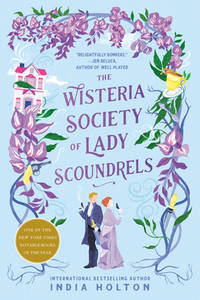
2021ref. UHOLWIS00fpJove 2021. Fine. Holton India. The Wisteria Society of Lady Scoundrels. New York: Jove 2021. viii 324pp. 8vo. Paperback. Book condition: Near fine. Jove paperback books
ref. WELLER9780593641491New. New book. unknown books
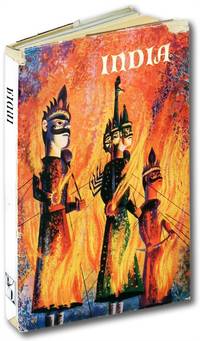
1958ref. 3486Dehli and Calcutta: The Ministry of Information and Broadcasting The Publications Division Government of India 1958. Hardcover. Very Good /Very Good. Hardcover. SCARCE. Very good plus tan cloth boards with red title to front board and to spine. Minor bumping to corners and spine ends. In brilliantly illustrated dust jacket with chips at spine ends and right corner and closed tear to front hinge that has been repaired. Interior is clean and bright. 28 pages of plates many in color; maps notes 43 pages. A nice book. India. INDIA/2053. The Ministry of Information and Broadcasting, The Publications Division, Government of India hardcover books
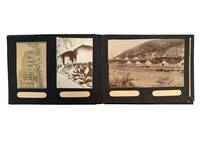
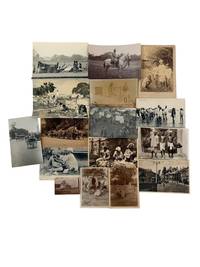
1912ref. 235531912. Missionary education and colonial album depicting India circa 1912 recording Western presence in a British ruled colony through girls' schooling domestic compounds rural labor and major sites of imperial tourism. One of the first images show a group of Indian girls posed with three Western women standing behind them likely a mission school or mission supported classroom during the period when Protestant and Catholic missions made female education one of their central claims to social reform in India. The album also records the wider colonial setting around that work with Western men and women appearing in bungalows on a tennis court and among Indian workers and residents placing missionary possibility inside the everyday social and racial ordering of colonial life. Photo album of 20 silver gelatin photographs each approximately 4 x 3 inches in a 6.5 x 5 inch album India circa 1910s with one image captioned "Holgate 1912." The photos show Indian girls grouped outside a building with three Western women at the rear; children or young laborers crouched in a field; men carrying harvested material along a road; an Indian woman seated at a weaving apparatus; another photo of young Indian girls in seated position in front of grass housing units potentially implying another educational setting; other images show Western figures in colonial settings including a woman holding a tennis racket players on a tennis court with the caption "Holgate 1912" a Western man and children on the veranda of a bungalow a Western woman standing in a brick doorway a Western man with a horse before a house and a large residence set behind a lawn. Architectural and travel views include the Taj Mahal another domed Mughal or Indo Islamic building a street scene with horse drawn vehicles outside commercial buildings a rural village at the base of hills and a settlement or station in a dry mountainous landscape. At the turn of the twentieth century Western women in India came as missionaries teachers medical workers wives of colonial officials tourists and members of expatriate religious and commercial communities. Mission boards used girls' schools orphanages zenana visiting Bible instruction and medical missions to enter spaces that male missionaries could not easily reach while British colonial rule supplied the legal linguistic transport and racial framework that made such work possible and unequal. Light surface wear fading silvering and album wear with some prints unevenly toned. Overall good condition. A compact visual record of Western missionary possibility colonial domestic life Indian labor and tourist seeing in India under the British Raj. unknown books
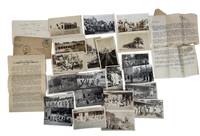
1917ref. 235951917. British frontier military photo archive documenting the garrison system of the North West Frontier during the final years of the First World War 1917 to 1918 showing how the British Indian Army organized training logistics aviation medical services and daily military life across what is now Pakistan. Centered on Risalpur with additional views of Nowshera Sibi and other frontier stations the archive records the infrastructure that sustained Britain's defensive frontier against Afghanistan while thousands of Indian Army troops remained committed to imperial service overseas. Contemporary manuscript captions on many versos identify locations dates military units and events preserving an unusually well-documented record of the frontier during one of the British Empire's most militarized periods. Photo archive of 52 silver gelatin photographs most measuring approximately 3 x 5 inches British India principally Risalpur and the North West Frontier 1917 to 1918. The photographs depict cantonments parade grounds barracks military camps mounted troops cavalry exercises soldiers in formation and group portraits of officers and enlisted men. Other photographs show military hospitals and Red Cross personnel aviation facilities transport columns aerial views of cantonments engineering works fortified compounds rail infrastructure and frontier outposts. Civilian scenes appear as part of the military landscape rather than separate subjects including bazaars camel caravans village streets fruit vendors brick makers ox drawn carts river crossings market stalls and local residents interacting with soldiers. Several photographs record strategic infrastructure including the Attock Bridge mosques military compounds and river transport essential to frontier communications. Numerous versos carry contemporary inscriptions identifying subjects with captions such as "Camp of the 22nd Squadron M.G. Corps at Risalpur Dec. 1917-May 1918" "Risalpur 1918" "Mosque at Nowshera 1917" "Aeroplane accident" and "Filling ammunition belts 22nd M.G. Squadron Risalpur" substantially increasing the documentary precision of the archive. By 1917 the North West Frontier had become one of the British Empire's principal military districts supplying cavalry machine gun units aviation personnel transport and logistical support while simultaneously guarding the Afghan frontier. Risalpur developed into one of the subcontinent's major military centers housing cavalry regiments the Machine Gun Corps flying facilities and training establishments that would remain central to frontier defense through the Third Anglo Afghan War of 1919 and beyond. Photos emphasize the construction and occupation of cantonments preparation of ammunition medical organization transportation networks reconnaissance engineering and the constant interaction between British military institutions and the civilian communities surrounding them. Light surface wear with occasional corner bumps and scattered silvering; manuscript captions remain clear and legible. Overall in very good condition. A concentrated record of the British Indian Army's military infrastructure and frontier administration on the North West Frontier during the closing years of the First World War. unknown books
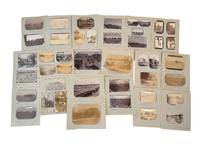
1917ref. 235941917. British frontier military photo archive documenting the administration of Britain's North West Frontier during the final years of the First World War and its immediate aftermath 1917 to 1919 showing how the Indian Army sustained imperial communications cavalry training transport and everyday life across what is now Pakistan. Made at stations including Nowshera Risalpur Sibi Quetta and surrounding cantonments the archive records the military infrastructure supporting British control over one of the Empire's most strategically important frontier regions bordering Afghanistan. Compiled during the years surrounding the Third Anglo Afghan crisis and the closing campaigns of the First World War the photographs preserve both the operational machinery of the frontier and the civilian landscapes through which imperial authority was exercised. Photo archive of approximately 96 sepia and black and white photographs ranging from 2 x 3 to 4 x 5 inches North West Frontier Province and Baluchistan British India 1917 to 1919. Nearly every photograph is mounted on album leaves with careful contemporary manuscript captions identifying places dates and subjects. The photographs depict cavalry exercises mounted reviews riding school instruction the 21st Lancers horse lines transport trains railway stations ferries crossing the Kabul River at Nowshera the boat bridge at Nowshera cantonment buildings military camps and barracks. Other photographs record the "Victory Sports" at Risalpur in December 1918 an aeroplane accident at Risalpur in December 1917 with multiple views of the wreckage and assembled soldiers soldiers posing with local residents officers on horseback rail travel between Nowshera and Sibi and military groups assembled before stores and equipment. Civilian life appears throughout in photographs captioned "Making bricks" "Melons" "Cooks" "Native carts Baluchistan" "The Kabul River Nowshera" "Ferry boat on Kabul River Risalpur" and market scenes at Bagaran. Additional views document Quetta Sibi Baluchistan landscapes bridges forts irrigation works mosques camel caravans washermen working along the Kabul River ox drawn transport and portraits of Punjabi Pashtun and Baluchi residents encountered throughout the frontier. The North West Frontier formed the principal buffer between British India and Afghanistan after the Durand Line agreement of 1893 and by 1917 the region had become one of the Empire's largest concentrations of cavalry transport and logistical forces. Cantonments at Nowshera and Risalpur served as major cavalry and aviation centers while Sibi and Quetta anchored the railway linking the Punjab to Baluchistan and the Bolan Pass a route essential for imperial communications and frontier defense. Rather than concentrating on combat alone this archive records the systems that sustained British rule: transport networks mounted units engineering works indigenous labor military recreation and the daily interactions between colonial personnel and local communities across the frontier. Contemporary manuscript captions throughout provide unusually precise geographical and chronological documentation. Album leaves show edge wear creasing and occasional corner losses; photographs generally remain clean. Overall in very good condition. A concentrated visual record of the military and civilian infrastructure that maintained British authority across the North West Frontier during the closing years of the First World War and the transition to the postwar imperial frontier. unknown books
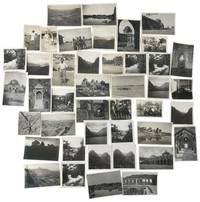
1940ref. 232161940. British India photo archive following an unidentified man likely a serviceman in Mhow and Mandu during World War II 1942-1943 preserving a localized record of colonial wartime life through mess scenes sport staff bungalows named companions imposed colonial social frameworks and visits to the major Islamic monuments of Mandu. The captions place the central figure in the company of "Carroll Sahib" Ken Davis and other men in uniform-style dress while repeated references to the "mess" weapon training staff and cantonment-like grounds situate the photographs within a British colonial wartime environment in central India. The group shows one participant moving between military or officer-adjacent daily life and the monumental landscape of Mandu at a moment when India remained a crucial base of Allied wartime activity. Photo archive of 43 silver gelatin photographs ranging from 2 x 3.5 to 2.5 x 2.5 inches Mhow and Mandu India 1942-1943. Most photographs bear substantial contemporary handwritten inscriptions on the versos often dated. Identifiable scenes include two men with tennis rackets outside a bungalow captioned as taken after tennis; a portrait inscribed "Me the Carroll Sahib & Ken Davis outside the Mess 25/12/42"; a group of eight men captioned "two scotsmen our four weapon training instructors the Carroll Sahib me outside the W/T staff bungalow 25/12/42"; men wearing garlands outside the mess; a sports or gymkhana ground with riders or runners in formation; tented grounds beside a large building; and a portrait of a man identified as "Machdo our bearer." The architectural and landscape views are closely tied to Mandu with captions naming the Jami Masjid Jahaz Mahal Rupmati's Pavilion Baz Bahadur's Palace mosque interiors courtyards pools lake views ravines and elevated plateaus. Several photographs show men posed on open parade or sports grounds in light uniform-style dress including group portraits outside the mess and the W/T staff bungalow with tennis rackets bicycles garlands and temporary tent lines indicating a social world organized around exercise communal dining and station routine. Other images turn to Mandu's built landscape in much greater detail with framed views of domed pavilions arcaded courtyards carved entrances long interior corridors water tanks and palace ruins seen from terraces lakesides and elevated lookouts. The landscape scenes broaden that record further including steep ravines river and waterfall views and plateau panoramas that place the serviceman's movements within the wider terrain of central India. During World War II Mhow remained an important cantonment in British India and these photographs place one serviceman within the daily social world of that station where tennis communal dining staff housing local attendants and holiday gatherings existed alongside travel to nearby historic sites. The Mandu views record the same hand moving through one of central India's best-known Sultanate monument complexes with captions naming the Jami Masjid Jahaz Mahal Rupmati's Pavilion Baz Bahadur's Palace and associated interiors courtyards pools and landscape features. Light general wear occasional silvering and minor handling marks; inscriptions strong and legible on most versos. The dense captioning and photographic record show British colonial India during World War II through the the personal lens colonial rank and language staff organization sport and leisure during wartime Indian attendants and movement through one of central India's historic architectural landscapes. unknown books
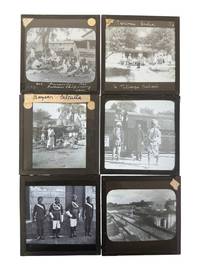
1900ref. 232871900. India glass lantern slide archive documenting class hierarchy dichotomy in British India with scenes of village labor bazaar exchange railway movement industrialization Sikhs and colonial cavalry circa 1900-20. Images clearly depict the class divide and caste system; villagers and laborers are shown seated on bare ground in carpentry work men and goats occupy an unpaved settlement space Sikh men stand beside a railway carriage tied to imperial transport networks a factory scene introduces mechanized industry and a formal portrait of turbaned cavalry soldiers. Photo archive of 8 glass lantern slides 3.25" x 3.25" India circa 1900 to 1920. Several slides retain manuscript captions on the mounts including "Central India" "Village School" "Bazaar Calcutta" and "MV. parannis an Indian carpentry clas." "Parannis" is probably a misspelling or misreading of "Pariahs" a historical caste/community term used in colonial-era descriptions of South Indi The British largely preserved formalized and exploited the Indian caste system rather than dismantling it. Their relationship with caste was pragmatic: caste became a tool for administration taxation labor control military recruitment and social organization across British India. The "Village School" slide shows a line of children and adults posed before a low building under dense tree cover with one figure standing forward in the open yard. The carpentry slide shows a large group of Indian boys outdoors beneath a tree seated or crouched on the ground around planks and hand tools with timber laid across the foreground and simple structures behind. The Calcutta bazaar scene places vendors baskets and goods in an open market setting under palms while the village scene presents men in loose garments in what seems to be a cattle farm setting. One slide shows Sikh men beside a railway carriage one barefoot in the foreground and others gathered near the rail car doors linking Indian bodies to the movement of goods troops and passengers through the colonial rail system. Another slide presents four uniformed soldiers in turbans possibly the Madras cavalry posed formally with boots sashes and weapons before a masonry wall. The factory view shows smoking industrial works with long roofs tracks and an extended production yard further cementing colonial industrialization within the archive. British rule in India relied on linked systems of extraction transport discipline and military force and these slides place those systems beside the people who bore their unequal social effects. Railways expanded under colonial finance and administration to move troops raw materials and commercial goods; industrial sites grew beside older economies of hand labor and bazaar trade; Indian soldiers and cavalry units served within an army organized to secure imperial control; and rural schools workshops and village scenes expose the local social world that existed under those pressures rather than outside them. Light edge wear some mount loss to several slides; no cracks or chips. Overall very good condition. British colonialism widened India's class divide by concentrating wealth transport and military power in imperial systems while leaving many Indians in village labor and low paid market work. unknown books
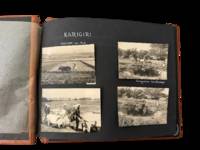
1961ref. 232281961. Southern India photo album documenting an international Christian missionary medical group around Vellore Karigiri Katpadi and Kanchipuram in 1961 many photographs captioned and identify individuals. The album showcases how missionary labor operated after the end of British rule through hospitals training schools religious ceremony and organized visits into village and temple spaces. Compiled by a French speaking participant within an international Christian medical network the album centers on institutions linked to Christian Medical College and Hospital Vellore where foreign and Indian personnel worked inside a system first developed under colonial era Protestant missions and then carried forward in postcolonial India through education nursing public health and evangelical presence. Photo archive of 110 Silver gelatin photographs mounted in a leather bound album most photos measure 3" x 4" album measures 9" x 12" Vellore Karigiri Katpadi Polambakkam and Kanchipuram Tamil Nadu dated by captions to 1961. Many identified individuals. Captioned pages identify "Vellore CMCH" "Christian Medical College and Hospital Vellore" and a "Soirée de remise du voile aux infirmières étudiantes de dernière année Sept. 61" showing large indoor assemblies of Indian nursing students in uniform at a veil ceremony for final year nurses. Other pages name hospital streets a guest house pavilion postman colleagues and an international group including participants identified by nationality including Argentina Belgium Venezuela Australia Thailand the United States England and South India. The album also moves beyond the hospital into the surrounding countryside and sacred landscape with rice cultivation and field irrigation at Karigiri village huts pastoral scenes cattle and goats potters fuel collection pigs and ducks a cyclist returning from Sunday mass the cathedral at Katpadi and multiple views of temples and priests at Kanchipuram. Handwritten French captions guide the viewer through these scenes including "inner courtyard of a temple" "Hindu priest explaining a point of his religion" "signing the temple guest book and giving the offering" and observations of sculpture yogis village labor and local children. The 19th to early 20th century saw an increase in Protestant missionary organizations in India with schools hospitals and women's medical training programs as response both to evangelical ambition and to colonial inequalities in health care access. By 1961 India was politically independent yet this album shows how missionary medicine still organized relations between Western visitors Indian Christian institutions and local Tamil communities. Overall very good condition. A strong record of postcolonial missionary medicine in southern India showing how colonial religious systems survived through healthcare education and cross cultural authority rather than formal imperial rule alone. unknown books
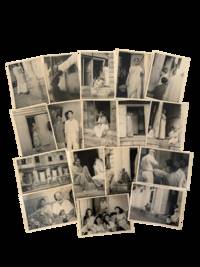
1958ref. 231781958. Bombay red light district photographs of women seated in brothel doorways gathered in interior rooms and receiving male visitors circa 1958 recording the sex trade as it operated in post independence India under the combined pressures of urban poverty migration and state regulation. Drawn from a merchant marine album and anchored by a source page marked 1958 the group preserves an outsider's view of brothel based sex work at the moment when independent India's Suppression of Immoral Traffic in Women and Girls Act had just come into force. British rule had already concentrated prostitution into regulated urban zones in Bombay with districts such as Kamathipura shaped by segregation policing and the management of commercial sex. The 1956 law effective 1 May 1958 targeted brothel keeping procuring and related activities without removing the economic structures that kept poor women in the trade. Photo archive of 17 silver gelatin photographs each 2.75" x 4" Bombay India circa 1958. Several images show women in saris seated on stone thresholds and steps outside narrow ground floor rooms watching the street conversing with one another or facing the camera from darkened doorways. Other photographs move inside the premises where a group of young women pose on a sofa beneath patterned wallpaper one beside a Western man holding a camera while another interior view shows several women crowded before a wall mirror with the same man visible in reflection behind them. Street level exterior views record a worn multistory building with open upper windows shuttered lower bays pedestrians passing and an automobile and hand pulled or cycle traffic in front fixing the brothel within a dense commercial streetscape rather than an isolated interior world. One of the most arresting images shows a white clothed man carrying a tray as he faces several figures in a narrow passage potentially showcasing the work surrounding and upkeeping the trade. The archive belongs to a longer history in which Bombay's sex districts were formed under colonial urban governance and continued after 1947 as sites where caste class migration policing and women's labor met in highly unequal ways. These photographs show the raw historical context of such professions with women waiting at entrances living in cramped quarters and occupying semi public thresholds where domestic space commercial exchange and street visibility collapse into one another. Light surface wear small edge chips and album glue residue en verso. Overall very good condition. The album context fixed 1958 dating and repeated views of the same doorway spaces make this a concise photographic record of brothel based sex work in postcolonial Bombay. unknown books
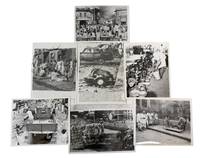
1943ref. 234951943. Indian famine crisis press archive depicting hunger relief work and public unrest from Bengal famine conditions through later food riots in independent India. The Bengal Famine of 1943 killed an estimated three million people and food scarcity remained politically volatile in India for decades afterward. Street demonstrations over grain rationing and hunger drew police deployments in multiple cities turning food access into a public order crisis as well as a humanitarian emergency. Photo archive of 7 silver gelatin press photographs mostly measuring 8" x 10" India 1943-1964. Crowds gather outside food distribution points children sit with metal bowls during feeding mounted police face demonstrators and uniformed officers move through dense street scenes. Press captions identify Calcutta famine conditions food rioters dispersed by police in Kerala fighting and fire in Lucknow and relief activity for famine victims. Typed captions identify "food rioters" being dispersed outside the Travancore state government house in Trivandrum Kerala where police and mounted officers filled the street after looting over food. Another caption describes Lucknow fighting in which "rioters set fire to about a six-block square" with crowds massed near burning buildings and shopfront signs. Calcutta scenes show famine victims clustered around relief vessels and feeding bowls with one caption stating that people had been "reduced to skin and bone" after food shortages. A street-side feeding scene shows children and adults crouched in rows with metal dishes receiving food from a man holding a large bucket.Verso stamps include Acme Newspictures NEA reference markings New York Bureau labels editor crop marks typed captions and publication dates. The group connects famine mortality postwar scarcity and street protest in India across a period when food distribution became a central test of colonial and postcolonial government authority. Press handling wear caption remnants crop marks corner creasing and scattered surface marks; overall in very good condition. A strong press group linking famine relief imagery with the public unrest that followed hunger into India's mid-century political life. unknown books
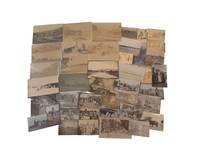
1890ref. 234981890. Colonial Indian labor photo archive depicting street work informal commerce transport labor and social hierarchy under British rule circa 1890s-1920s. British India depended on low-paid manual labor to move people goods food and raw materials through cities ports hill stations and military cantonments. The group contrasts workers seated on the ground with baskets tools tents carts and roadside goods against riders on horseback and passengers carried by rickshaw carriage and bullock cart. Photo archive of 16 silver gelatin photographs and black-and-white real photo postcards various sizes India circa 1890s-1920s. Marketplace sellers sit among baskets cloth tents and on the ground goods; families and workers gather beside tents and rough encampments; men pull or guide rickshaws carriages and ox-drawn carts through colonial streets. A mounted man sits formally on a white horse while views of Simla show pedestrians commercial buildings and hill-station streets associated with British administration and seasonal elite life. Additional scenes show an outdoor "Hindu barber" "Indian coolies" carrying large baskets men seated by stonework near a Gothic-style building children posed in white garments some hand written captions en verso identify locations or tasks. The archive records the everyday labor that supported colonial India before independence when caste landlessness debt and imperial wage economies shaped who carried cleaned hauled shaved sold and served. Ligh toning handling and edge wear; overall in very good condition. A late colonial documentation of Indian labor and social separation grounded in street work transport marketplace survival and the visible privileges of those being carried or served. unknown books
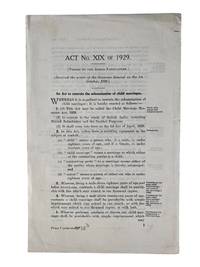
1929ref. 219671929. Government of India An Act to Restrain the Solemnisation of Child Marriages 1929 documents the legal system created to restrict child marriage in British India and supports research into women's rights colonial law childhood and social reform in South Asia. The Act commonly known as the Sarda Act after reformer Har Bilas Sarda reveals how legislation sought to regulate marriage age through statutory definitions penalties and enforcement provisions. It provides primary-source evidence for the study of Indian feminist legal history colonial governance and campaigns against patriarchal marriage customs. Government of India. An Act to Restrain the Solemnisation of Child Marriages. Calcutta: Government of India Central Publication Branch 1929. First edition. Official pamphlet printing of Act No. XIX of 1929 passed by the Indian Legislature and assented to by the Governor General on October 1 1929. The Act defines "child" "child marriage" "contracting party" and "minor" sets age thresholds for boys under eighteen and girls under fourteen and establishes penalties for adult men contracting child marriages as well as for those who solemnize arrange or permit such ceremonies. Its jurisdiction extends across British India including British Baluchistan and the Santhal Parganas with enforcement beginning April 1 1930. The printed price of "1 anna or 1½d" indicates official distribution for public and administrative use. The pamphlet documents a legal enforcement system for marriage reform through statutory age limits criminal penalties and responsibility assigned to adult men parents priests and other facilitators demonstrating the process by which colonial law entered debates over gender childhood and personal status. The timing is significant because Indian social reformers and women's rights advocates used the late colonial legal arena to challenge early marriage and forced domestic subordination. Minor edge creasing; overall very good condition. A concise official printing of a foundational statute in South Asian women's rights law and the legal history of childhood protection. unknown books
1941ref. 209861941. Gregson Anita. A.P. Mission City School archive 1941-1942 documenting girls' education missionary activity and community life in Ambala Punjab during World War II. This material records daily instruction social interaction and local conditions within a mission-run school for girls alongside written correspondence and institutional reporting that situate the school within wartime pressures and colonial India's educational landscape. The archive provides direct evidence of classroom practices gendered education and the integration of local families into school environments as well as the impact of global conflict on regional communities. Archive comprises 21 original black and white and sepia photographs one typed letter and one annual report. Photographs measuring approximately 2" x 3" to 3" x 5" frequently bear handwritten or typed captions on the verso likely by Anita Gregson identifying subjects and activities. Images show groups of schoolgirls engaged in classroom exercises and outdoor instruction including one scene of students constructing a ground map of India to illustrate agricultural production. Another photograph depicts a semicircle of young children seated outdoors during a lesson with their teacher identified as Miss Atmaran and a veiled mother observing her burkha partially drawn back. Additional images document craft instruction including girls weaving coconut palm leaves into fans and producing woven ties on frames. Musical activity is also present with students playing instruments. Beyond the school photographs depict village life in Punjab including oxen operating a water-drawing mechanism children gathered around a missionary playing a ukulele and a merchant carrying goods suspended from a yoke. The accompanying letter dated June 14 1942 from Gregson to a correspondent in New York references World War II noting international observances and local enlistment: "The young men in our Indian community are continuing to sign up for the army navy and air force." The annual report for the 1941-1942 school year details wartime financial strain fundraising efforts and instructional programs including an adult literacy course for women teaching reading writing and arithmetic. Created while India functioned as part of the British Empire during World War II these materials document the intersection of missionary education wartime mobilization and local social life. The inclusion of adult literacy instruction for women reflects ongoing efforts to expand female education under colonial conditions while the letter and report connect the school directly to global conflict and its local consequences. Light wear and minor fading to photographs; handling wear present. Letter on thin paper with tears and fragility consistent with wartime materials poor to fair condition; remaining materials overall very good condition. This archive provides a concentrated visual and textual record of girls' education and community experience in wartime Punjab. unknown books
1929ref. 198081929. Women in Sciences Balfour Margaret and Young Ruth. "The Work of Medical Women in India". London: Oxford University Press 1929. First Edition No Dust Jacket. 201 pages. Measures 5.75" x 8.75". The United States sent the first qualified medical woman to 1880 and for the next sixty years many women physicians from America England and other countries have gone to India as missionaries. The Association of Medical Women in India grew to 281 members by 1930 and there were four women's medical schools where 351 students were studying for the subassistant surgeon's diploma. This book focuses on the women from 1880 to 1929 who contributed to improving the health of women in India. It follows several famous figures from the medical movement of the day including Pechey Phipson E. Bielby CFlara Swain A. Jaganadhan and R. Rukhmabai. The book also includes several illustrations of the women where they worked and additional medical charts. Also included is a map of India from 1930 located as a pull-out at the end of the book. Textblock is tight with only minor wear from shelf use. Overall in very good condition. unknown books
1912ref. 179481912. Lot of 2 silver gelatin photos of students and faculty at Udupiddi Girls' School in India. 1912. Each photo Approx. 5" x 3.5" inches. Pasted to brown paper with inscriptions on both sides one reading "Udupiddi Girls' School 1912" and the other "Matron teachers and graduating class of the Udupiddi GIrls Boarding School March 1912." Women's education in India was uncommon in the early 1900's with very few options available. Among the higher castes who could afford private schooling girls were married before puberty and expected to take on domestic life at that time. If they were lucky they were taught at home. The first photo shows 59 young female students a male and female adult presumably instructors both Indian and a white female adult. The other photo shows a smaller class of 15 girls with the same white adult female who appears to be the "matron" mentioned in inscription. All of the subjects wear white some of the girls in simple long dresses others with more adornments. The girls appear to range in age from around 5 to 18 many of them looking directly at the camera their faces studious as if instructed to look serious some with half smiles. These classes show a group of girls who would have been anomalous during their time paving the way for future generations. These images predate the 1930 law where the age for marriage was raised to fourteen years old that improved female literacy rates substantially. Slight tear to bottom corner has been repaired. Very good condition. unknown books
1914ref. 180951914. Certificate awarded to the Vicereine of India Lady Hardinge of Penshurst upon her visit to the Indraprastha Hindu Girls School in Delhi. 1914. Measures 10" x 16" inches. Text enclosed in ornately decorative box with the school's seal centered at the top reading "The Hindu Girls School Delhi First deserve then desire 1904." The certificate's attractive green script reads in part "To her excellency Lady Hardinge of Penshurst May it please your Excellency It is with feelings of the profoundest joy and gratitude that we to-day welcome Your Excellency to the Indraprastha Hindu Girls School Delhi.Your Excellency's loving interest in the advancement of the women of this land and motherly affection for the children your care for the suffering poor the exemplary fortitude which you have shewn in the time of danger and the heroic devotion to your husband--our ideals of womanhood--have endeared your name to every woman and child in India and we pray you to accept our reverential and warm-hearted welcome to-day." Lady Hardinge of Penshurst Winifred Selina Sturt married her first cousin Henry Sturt a racing magnate and close friend of Edward Prince of Wales. She served as a Woman of the Bedchamber to the Princess of Wales before her husband by then a Baron was named Viceroy of India. The concurrence of monarchical rule and colonialism put aristocratic families with close ties to the royal family put aristocratic Europeans in positions of power worldwide no matter their qualifications. The family moved to India where Lady Hardinge worked to advance women's education. She was instrumental in starting the Lady Hardinge Medical College in Delhi the first medical school exclusively for women in India. She died in November of 1914 just 8 months after receiving this certificate. Signed by the school's President Lady Superintendent and Secretary. Creased along lines where paper was folded. 3 small holes along left side do not affect text. 1" tears along top do not affect text. Tape attached to verso. Very good condition. unknown books
1965ref. 169291965. Birth Control India 2 silver gelatin print photographs showing Rural Indian women learn about birth control in outdoor classroom. An Indian woman instructor from International Planned Parenthood Federation leads a demonstration on different contraceptive health devices. 2 silver gelatin print photographs. 11 x 8 in. Original press photos. Filing stamps on back dated "18 Okt 1965". Printed on the van behind speaker: "Van donated by International Planned Parenthood Federation / Imported through Church World Service". In 1952 India was the first country in the wold to implement a family planning strategy as part of national development. The same year the International Planned Parenthood Federation IPPF a global offshoot fo Planned Parenthood with the broad aims of promoting sexual and reproductive health and advocating the right of individuals to make their own choices in family planning was founded in Bombay present-day Mumbai by Margaret Sanger and Lady Rama Rau. Educators would use vans such as these to travel around rural areas and teach women in makeshift classrooms-sometimes even outdoors as in this images. These original press photo taken by photojournalist within tight timeframe for the benefit of particular editorial board and with the aim of usage by the press to illustrate an article often affected public opinion in the nation. Crease to bottom right corner of vertical photo. Both in very good condition. unknown books
1929ref. 151011929. Act No. XIX of 1929 Passed by the Indian Legislature.An Act to Restrain the Solemnisation of Child Marriages 1929 records the enactment of the Child Marriage Restraint Act an early statutory attempt in British India to restrict marriages involving children. Receiving the Governor-General's assent on October 1 1929 and taking effect April 1 1930 the Act defined a "child" as a male under eighteen or a female under fourteen and imposed criminal penalties on adult men contracting child marriages and on persons performing conducting or directing such marriages. The legislation is commonly associated with reformer Harbilas Sarda and became known as the Sarda Act. Act No. XIX of 1929 Passed by the Indian Legislature.An Act to Restrain the Solemnisation of Child Marriages. 1929. Pamphlet. The text specifies the "punishment for male adult below twenty one years of age marrying a child" the "punishment for male adult above twenty one years of age marrying a child" and the punishment for "solemnising a child marriage." Under the original Act a male between eighteen and twenty-one who contracted a child marriage could be fined up to one thousand rupees; a male over twenty-one could receive up to one month of simple imprisonment a fine of up to one thousand rupees or both. Comparable penalties applied to a person who performed conducted or directed a child marriage. The pamphlet preserves the statutory language by which the colonial legislature sought to regulate marriage age through penalties imposed upon adult participants and officiants. The Act preceded later Indian legislation that progressively raised legal marriage ages and strengthened protections against child marriage. Its provisions document an early legislative attempt to intervene directly in the solemnization of marriages involving children and to assign legal responsibility to adult husbands and those conducting such marriages. unknown books
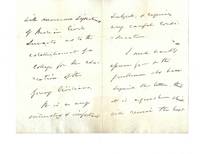
1864ref. 160811864. Wood Charles later 1st Viscount Halifax. Autograph Letter Signed to H. Reckitts 1864 addresses the continuing development of British educational administration in India during Wood's tenure as Secretary of State for India. Wood had earlier set out an extensive program for education in the 1854 document subsequently known as Wood's Despatch recommending provincial education departments universities modeled on British institutions support for public and private schools and the use of Indian languages in provincial curricula. Written a decade later this letter concerns a proposal for a college intended to educate young members of the Indian Civil Service and records Wood's direct consideration of another institution connected with the administration of British India. Wood Charles. Autograph Letter Signed to H. Reckitts. Balmoral September 5 1864. 4 pages. Wood reports that Algernon West had forwarded "the printed letter with numerous signatures of Indian Civil Servants as to the establishment of a College for the education of the young Civilians." He describes the proposal as "a very interesting and important subject" requiring "very careful attention" and assures Reckitts that it "will receive the best attention which the members of the Indian Council and I myself can give to it." The letter documents the route by which a proposal supported by serving Indian Civil Servants reached the Secretary of State and his council showing consultation between colonial administrators and the metropolitan office responsible for Indian government. Wood's 1854 Despatch had recommended the creation of education departments in the provinces and the establishment of universities in major Indian cities; universities at Calcutta Bombay and Madras opened in 1857 with later institutions established in Punjab in 1882 and Allahabad in 1887. This 1864 letter places Wood within the continuing administrative work of developing educational institutions after those initial reforms specifically in relation to the training of British civil servants charged with governing India. Condition was not provided in the supplied description. unknown books
1938ref. 165001938. Jeffrey Mary Pauline. Dr. Ida: India The Life Story of Ida S. Scudder 1938. Signed biography of American physician and medical missionary Ida Sophia Scudder 1870-1960 who established hospitals and medical training programs for women in colonial India. Born in India to American missionary parents Scudder pursued medicine after witnessing the consequences of restrictions preventing Indian women from receiving treatment from male physicians. In 1899 she graduated from Cornell Medical College as a member of its first graduating class to include women returning to India in 1900 to establish a small clinic in Vellore. Within two years she had founded the Mary Taber Schell Memorial Hospital which developed into a major center for women's medical treatment and professional training. Her subsequent establishment of a nursing school in 1909 and the Union Mission Medical School for Women in 1918 expanded opportunities for Indian women to enter the medical profession. Jeffrey Mary Pauline. Dr. Ida: India The Life Story of Ida S. Scudder. New York: Fleming H. Revell Company 1938. Signed and inscribed by the author on the front endpaper. 212 pages with a frontispiece portrait and 18 additional illustrations throughout. Original blue cloth boards measuring 8 x 6 inches. Jeffrey recounts Scudder's upbringing in a missionary family her medical education in the United States and her return to India to establish healthcare facilities for women who faced religious and social restrictions on treatment by male physicians. The biography traces the expansion of her work from a small rural clinic into a hospital and medical training institution documenting her efforts to provide both medical care and professional education for Indian women. Published in 1938 while Scudder remained active in the administration of her medical institutions the biography records the development of women's medical education in British India before independence. Her work at Vellore addressed both the shortage of female physicians and the restrictions that prevented many Indian women from seeking treatment while establishing training opportunities for Indian women in nursing and medicine. The author's inscription distinguishes this copy and the illustrations provide additional contemporary documentation of Scudder's life and medical work. A few pages contain ink corrections or annotations. Very good condition. unknown books
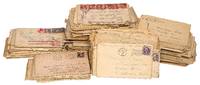
1924ref. 426129Missouri Illinois Maine New Jersey Colorado Washington DC Kansas New York 1924. Unbound. Near Fine. A collection of 209 letters from 1914 through 1924 from a young man sailor writing home to his wife with some later correspondence. Near fine with small tears and some age toning most on the envelopes. The majority of the letters are written from Garnett Blair Martin to his wife India Faye Martin née Gentry with some written from India to Garnett while he was serving in the Navy during World War I. He was stationed in several different base camps and moved around frequently as the letters are from various places in the United States including Missouri Illinois Maine New Jersey Colorado Washington DC Kansas New York among others. A large portion of the letters are holiday and birthday cards along with a few postcards sent to Martin's daughter explaining he will be home soon. However most of the letters are written affectionately to Martin's wife and with her letters replying in kind. Some of the letters discuss Martin's experience at the army bases from packing and moving constantly to having physical ailments such as poor eyesight sores and cuts. He also critiques the living situations while at war "it's cold and cramped here I can't even smoke a cigarette without blowing it in someone's face." Most of the letters somehow find a way back to lovelorn acclamations to his wife about how "a sweet kiss from your dear lips could cure it soon." Accompanied by a few letters and postcards from friends. A collection of romantic correspondence from a wife and husband separated during the World War. unknown books
1959ref. 164581959. Chand Kailash. An Appeal to Members of Parliament of India and the World at Large 1959 a public petition challenging the legal and social preference for paternal lineage in India and advocating the right of individuals to identify through their mothers. Addressing members of the Indian Parliament and an international audience Chand argued that recognition of maternal descent would advance women's equality while eliminating the stigma attached to children born outside marriage. His appeal followed his efforts to establish through India's courts the right to identify with his mother's lineage rather than his father's challenging prevailing conventions governing family descent legitimacy and the legal standing of mothers. Chand Kailash. An Appeal to Members of Parliament of India and the World at Large. Bombay: Society for the Cause of Mother's Lineage Theosophical Colony 1959. One sheet printed on both sides measuring 10 x 7.75 inches. The handbill presents Chand's arguments for recognizing maternal ancestry as an alternative to patrilineal descent. Central to his proposal was the contention that children should be entitled to their mothers' lineage regardless of their parents' marital status thereby removing distinctions that subjected children born outside marriage to social discrimination. Issued under the auspices of the Society for the Cause of Mother's Lineage the appeal sought support for changes in the treatment of ancestry and legitimacy under Indian law. Published during the first decade following India's independence the appeal addressed questions of family law and women's legal status amid continuing debates over marriage inheritance and social reform. The Hindu Marriage Act of 1955 and the Hindu Succession Act of 1956 had introduced major changes to Hindu personal law although customary preferences for paternal descent remained influential. Chand's 1959 petition advanced a distinct proposal: recognizing maternal lineage as a means of challenging both the subordinate status of women in family relationships and the discrimination faced by children classified as illegitimate. Blue pen check marks on the second page and horizontal folds. In very good condition. unknown books