1 345 résultats
réf. DADAX0415622522New unknown
1783réf. 17472London: W. Strahan and T. Cadell. Very Good-. Hardcover. Full leather boards with quite some rubbing. Book block split. Bookplate.; This is volume 5 only of the 8 volume edition. Was originally published in 10 volumes. Including a steel engraved map of the European settlements in Africa.; 8vo 8" - 9" tall; 499 pages . 1783. W. Strahan and T. Cadell hardcover
réf. DADAX0231157843New unknown
réf. SONG3709114217Used: Good unknown
réf. SONG162417597XUsed: Good unknown
1851réf. 200111AG1851. London & New York J & F. Tallis 1851. Original steel engraving / Vintage map. Drawn and engraved by John Rapkin. Partly hand-coloured. Illustrations by H. Warren and Engraved by J. Rogers. Plate Size: 25 cm x 35 cm. Sheet Size: 27 cm x 37.4 cm. Vintage 19th century map in very good condition. A beautiful map of the West Indies: from the Bahamas in the North near the southern tip of Florida down to Barbados and Trinidad of the coast of Colombia. Cuba Jamaica Hispaniola San Domingo and Haiti Porto Rico the Virgin Islands and the myriad of smaller islands throughout the Caribbean Sea are also included. The Mosquito Coast in modern Nicaragua Guatemala and the Panama isthmus can also be seen. Relief depicted with hachuring. The major towns and cities across this region such as Havana Kingston and Port Royal Port Republican Port-au-Prince and Cartagena are also shown. A depiction of native peasants and a medallion complete this pleasant map. John Tallis 7 November 1817 3 June 1876 was an English cartographic publisher. His company John Tallis and Company published views maps and atlases in London from roughly 1838 to 1851. Tallis set up as a publisher with Frederick Tallis in Cripplegate in 1842; the business moved to Smithfield in 1846 and was dissolved in 1849. From 1851 to 1854 Tallis operated as John Tallis and Company. He started The illustrated news of the world and national portrait gallery of eminent personages in 1858 selling it for £1370 in 1861; it folded in 1863. Wikipedia The most important project John Tallis undertook was the 'Illustrated Atlas' from 1851. The original map we offer here was part of this exceptional Atlas and all the maps it contained are still today considered as the last reminder of an era of lavish map production. Tallis worked the project together with John Rapkin 1815-1876 and it was Rapkin's style and talent that we have to thank for when we marvel at these maps today. What makes these maps so special is the detail of engraved vignettes that surround the map and often show indigenous scenes people in their environment and even more so historical buildings or historical views of towns and cities architecture and landscape. The project of 'The Illustrated Atlas' was designed to be finished just in time for the anxiously awaited "Great Exhibition of the Works of Industry of All Nations" or The Great Exhibition sometimes referred to as the Crystal Palace Exhibition in reference to the temporary structure in which it was held was an international exhibition that took place in Hyde Park London from 1 May to 11 October 1851. It was the first in a series of World's Fairs exhibitions of culture and industry that became popular in the 19th century and it was a much anticipated event. The Great Exhibition was organized by Henry Cole and Prince Albert husband of the reigning monarch Queen Victoria. It was attended by numerous notable figures of the time including Charles Darwin Samuel Colt members of the Orléanist Royal Family and the writers Charlotte Brontë Charles Dickens Lewis Carroll George Eliot and Alfred Tennyson. Music for the opening was under the direction of Sir George Thomas Smart and the continuous music from the exhibited organs for the Queen's procession was "under the superintendence of William Sterndale Bennett". Wikipedia unknown
19521st edition. Original Paper Wrappers, 8vo, 157 pages. 23 cm. In Yiddish. On verso of Title Page: "Fun goles Daichland biz mdinas Isroel. " Prolific Cuban Zionist writer. SUBJECT (S) : Zionism. Jewish travelers -- Biography. World War, 1939-1945 -- Refugees. Israel -- Description and travel. OCLC lists 9 copes worldwide. Residue of later outer binding on spine and adjacent original cover, otherwise Very Good Condition (latam-2-3)
réf. DADAX0815324790New unknown
réf. SONG1403975892Used: Good unknown
1783Full leather boards with quite some rubbing. Book block split. Bookplate. ; This is volume 5 only of the 8 volume edition. (Was originally published in 10 volumes). Including a steel engraved map of the European settlements in Africa. ; 8vo; 499 pages
réf. SONG0814762271Used: Good unknown
réf. DADAX019957524XNew unknown
réf. DADAX0312127650New unknown
réf. DADAX041525759XNew unknown
réf. DADAX0964765306New unknown
réf. DADAX0367096595New unknown
réf. SONG1619425491Used: Good unknown
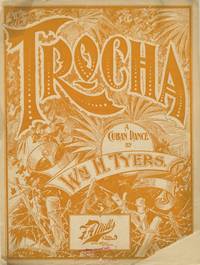
1890réf. List3666New York: Jos. W. Stern & Co 1890. Folio sheet music illustrated pictorial cover printed in orange. 5 pp. including cover. Approximately 13 ½ x 10 ½ inches. Covers detached loss to front cover contents complete fair to good. A decorative late nineteenth-century dance publication for “Trocha” described on the cover as “A Cuban Dance” composed by the African American composer and bandleader W. H. Tyers. The elaborate pictorial cover incorporates stylized tropical foliage and island scenery rendered in a bold single-color design typical for the period’s fascination with exoticized musical forms. William H. Tyers 1870–1924 was an African American composer arranger and bandleader active in New York during the ragtime era. Born in Petersburg Virginia to Henry Tyers and Jane “Jennie” Jones both formerly enslaved he spent part of his youth in Richmond before his family relocated to New York City where he began studying piano. His early teachers recognized an aptitude for composition as well as performance and by the mid-1880s he was writing dance pieces including polkas and waltzes. Around the age of twenty Tyers secured employment as a music librarian and arranger with a touring concert company a position that brought him to Europe where he studied orchestration and arranging with Professor Gaspari in Hamburg. Returning to New York Tyers became active in the city’s rapidly expanding popular music trade working as an arranger and composer for publishers including F. A. Mills and Jos. W. Stern & Co. In 1896 he published “Sambo” a syncopated march sometimes considered to be one of the first instrumental rags.1 “Trocha” also released in the 1980s brought Tyers prominence for his ability to write Latin-style rhythms. It was re-issued in 1913 as a tango and its success led Tyers to work as an arranger with Joseph W. Stern in 1897. Tyers’ compositions blended contemporary American dance music with Caribbean and Latin themes a style reflected in pieces such as Trocha and later in his well-known ragtime composition Panama 1911 which remained a staple of early jazz and dance orchestras. OCLC finds two copies with different entries at the Cleveland Public Library and the British Museum Reference Collections. 1 “William Tyers Music Arranger” African American Registry https://aaregistry.org/story/william-tyers-born/ accessed March 10 2026. Jos. W. Stern & Co unknown
1890réf. List3666New York: Jos. W. Stern & Co 1890. Folio sheet music illustrated pictorial cover printed in orange. 5 pp. including cover. Approximately 13 ½ x 10 ½ inches. Covers detached loss to front cover contents complete fair to good. A decorative late nineteenth-century dance publication for “Trocha” described on the cover as “A Cuban Dance” composed by the African American composer and bandleader W. H. Tyers. The elaborate pictorial cover incorporates stylized tropical foliage and island scenery rendered in a bold single-color design typical for the period’s fascination with exoticized musical forms. William H. Tyers 1870–1924 was an African American composer arranger and bandleader active in New York during the ragtime era. Born in Petersburg Virginia to Henry Tyers and Jane “Jennie” Jones both formerly enslaved he spent part of his youth in Richmond before his family relocated to New York City where he began studying piano. His early teachers recognized an aptitude for composition as well as performance and by the mid-1880s he was writing dance pieces including polkas and waltzes. Around the age of twenty Tyers secured employment as a music librarian and arranger with a touring concert company a position that brought him to Europe where he studied orchestration and arranging with Professor Gaspari in Hamburg. Returning to New York Tyers became active in the city’s rapidly expanding popular music trade working as an arranger and composer for publishers including F. A. Mills and Jos. W. Stern & Co. In 1896 he published “Sambo” a syncopated march sometimes considered to be one of the first instrumental rags.1 “Trocha” also released in the 1980s brought Tyers prominence for his ability to write Latin-style rhythms. It was re-issued in 1913 as a tango and its success led Tyers to work as an arranger with Joseph W. Stern in 1897. Tyers’ compositions blended contemporary American dance music with Caribbean and Latin themes a style reflected in pieces such as Trocha and later in his well-known ragtime composition Panama 1911 which remained a staple of early jazz and dance orchestras. OCLC finds two copies with different entries at the Cleveland Public Library and the British Museum Reference Collections. 1 “William Tyers Music Arranger” African American Registry https://aaregistry.org/story/william-tyers-born/ accessed March 10 2026. Jos. W. Stern & Co unknown books
1994réf. 004097S. l.: Bital Grupo Financiero 1994. Hardcover. Near Fine/very good . 4to. 200 2 pp. Bound in full black cloth stamped in in white on spine in illustrated dust jacket. Profusely illustrated many in full color including two fold-outs. Includes chronology list of works bibliography and an analysis of the composition of several works. Near Fine there is some bleed-through of adhesive on front and rear pastedowns otherwise bright copy in Very Good dust jacket with minor scuffing and wear. Bital Grupo Financiero hardcover
réf. DADAX1423101685New unknown
1849réf. G1027Paris, Firmin Didot Frères, Éditeurs, 1849 ; in-8, 4-160-164-156-102-2-8 pp. + 1 carte dépliante, 26 pl. hors-texte, broché (dos fendu, avec quelques petits manques, quelques rousseurs, quelques planches sont détachées). Collection: l'Univers«Histoire et description de tous les peuples». Ouvrage particulièrement intéressant sur les Antilles, qui sont peu nombreux. Illustré de gravures en taille-douce, exécutées par divers graveurs. État moyen.
1849Paris, Firmin Didot Frères, Éditeurs, 1849; in-8, 4-160-164-156-102-2-8 pp. + 1 carte dépliante, 26 pl. hors-texte, broché (dos fendu, avec quelques petits manques, quelques rousseurs, quelques planches sont détachées). Collection : l'Univers « Histoire et description de tous les peuples ». Ouvrage particulièrement intéressant sur les Antilles, qui sont peu nombreux. Illustré de gravures en taille-douce, exécutées par divers graveurs. État moyen.
1996réf. 100146900Cerf 1996 260 pages 19 4x2x12cm. 1996. Broché. 260 pages.
1829réf. 18501829 Imprimerie Royale, Paris, 1829. In-8 demi-veau. xii, 608 pages. Traduit de l'Espagnol. Supplément sur les "Courants de l'Océan Atlantique"