SLOANE HANSLivre Rare Book
795 Ergebnisse
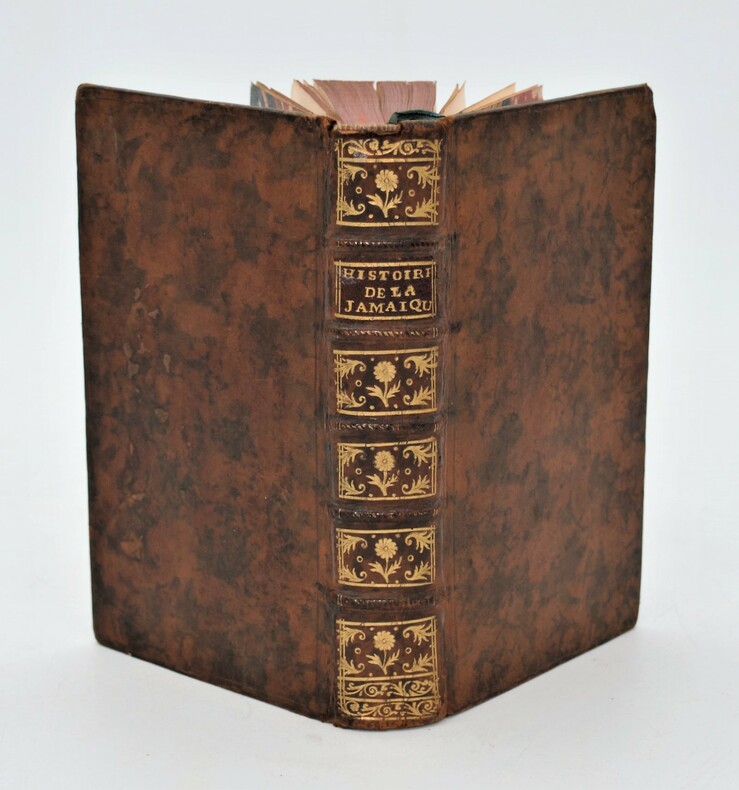
1751Best.-Nr. PHO-1273LONDRES (CHEZ NOURSE) 1751 2 VOL. RELIES EN 1, IN-12°, 17 X 10 CMS, RELIÉ VEAU MOUCHETÉ, DOS A 5 NERFS ORNÉ DE FLEURONS DORÉS, TR. ROUGE. 2FF-285PPS; 1FF-148PPS. PREMIÈRE ÉDITION FRANÇAISE TRADUITE PAR RAULIN, ANCIEN OFFICIER DES DRAGONS.
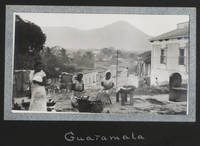
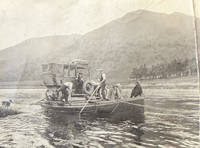
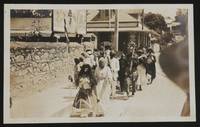
Best.-Nr. PB32Quarto album ca. 255x21 cm 10 x 8 ¼ in. 25 card stock leaves. With 99 gelatin silver photos mounted in windows all ca. 85x145 cm 3 ¼ x 5 ¾ in. All photos with period white ink manuscript captions on the mounts several captions relate to two photos. First leaf with a period white ink manuscript date “March 1st 1934.”. Period black full cloth album fastened with a string; front board with a gilt-lettered generic title “Photographs.” Paper label “Housh Supreme Quality Album The Housh Co. Boston” mounted on the inner side of the rear board. One photo was possibly previously removed several images slightly faded but overall a very good album of interesting strong photos. Attractive collection of original postcard sized vernacular photographs taken during a 1934 voyage from New York to the west coast of the United States via Panama Canal on board the “Grace Line’s” ocean steamer “Santa Elena.” Built in the early 1930s together with three sister ships “Santa Paula” “Santa Lucia” and “Santa Rosa” “Santa Elena” carried out passenger service from New York to San Francisco and Seattle via Panama Canal in 1932-1942. During WW2 it served as a US troopship and was torpedoed and sunk in the Mediterranean in 1943. The album opens with a view of New York berths taken at departure; it also houses several photos of fellow passengers on board the “Santa Elena.” Four views of Havana Morro Castle and grounds of Hotel National are followed by pictures of Barranquilla Columbia port scenes and sixteen images of Cartagena street views and portraits of the locals. Over twenty photos of Panama show Colon the main route and docks of the Canal Culebra Cut Balboa docks of the “old Panama” &c. An interesting group portrait depicts Americans posing next to a hydroplane captioned “across the Canal by plane”. Six photos taken during the stop at El Salvador show the streets of Santa Tecla American passengers going ashore and a coffee plantation. Twenty-two photos of Guatemala depict the embarkation at the port of San Jose streets and the market at “Palem” likely Palin architecture and locals of Antigua Guatemala and Mount Agua. The album concludes with fifteen views of Mexico showing Mazatlan and the grounds of the famous Agua Caliente Casino and Hotel in the historic district of Tijuana. The luxury hotel operated in 1928-1935 taking advantage of high demand from the American public during the Prohibition era. Overall an interesting collection of lively snapshots of the Caribbean and Central America in the early 1930s. A list of captions: Leaving New York; On board S.S. Elena; Cuba - Morro Castle; Hotel National; Cuba – Hotel National; Barraquilla sic!; several photos; Cartagena – Indians; The Dock; Cartagena several photos; Panama – Colon; Across the Canal by plane; Panama Canal several photos; The Culebra Cut; Panama Canal several photos; Balboa; Old Panama; Mr. and Mrs. Zinseer; S.S. Helena – the pool; Balboa; S.S. Helena – Mr. Phelan putting; San Salvador – the market at Tecla; San Salvador – going ashore; San Salvador – a coffee plantation; Guatamala sic! several photos; San Jose; Guatamala – Palem; Guatamala – Santa Maria de Cruces; Guatamala – the market at Palem; On the road to Antigua; Guatamala – Santa Maria di Crusis sic!; Guatamala – Antigua; Mount Aqua; Guatamala – Antiguaseveral photos; Mexico – Mazatlan several photos; Mexico – Miss Phelan and Mr. Harvey with boa; Mazatlan; Mexico – Mazatlan; Mexico – Agua Calliente several photos. hardcover
Best.-Nr. PE22Oblong Folio album ca. 285x37 cm 11 ¼ x 14 ¾ in. 50 black paper leaves 22 blank. With 218 mounted gelatin silver photos from ca. 8x135 cm 3 x 5 ¼ in to ca. 6x8 cm 2 ¼ x 3 ¼ in. No captions. With 15 loosely inserted photos including 5 duplicates: three large images ca. 22x34 cm 8 ½ x 13 ¼ in ten photos ca. 1520 cm 6x8 in and two smaller images. Period maroon full sheep album with a gilt-lettered title on the front cover. Binding rubbed on extremities the first leaf detached from the stub and loosely inserted several images slightly faded two large loosely inserted photos with creases and tears on extremities but overall a very good album. Interesting collection of original snapshot gelatin silver photos taken by an American or British family in the early 19th century which includes about 112 lively images of Bermuda and its people. The photos of Bermuda include a series of views of the Town of St. George showing the harbour with the Ordnance Island a graveyard with a pink Salvation Army church in the background St. Peter’s church and clock tower the oldest surviving Anglican church in continuous use outside of British Isles Stewart Hall city streets and historical houses &c. The identified views of Hamilton the territorial capital show the Princess Hotel taken from the harbour and city wharf. The other pictures of Bermuda show streets roads harbours with sailboats and naval ships coastal views private city houses and countryside residences portraits of local cart drivers local children the album’s compiler and his companions scenes on board a passenger steamer &c. The second half of the album with over a hundred photos depicts the compiler’s family life and their travels around Europe and the United States. The identified images show the “Peacock Hotel” Rowsley Derbyshire the Cliff Palace 11th-12th-century cliff dwelling in Montezuma County Colorado and the Garden of the Gods park in Colorado Springs. A portrait of an elderly lady features a sign that says “Cave of the Winds Pleases Everybody” most likely referring to the Cave of the Winds in the Pikes Peak region of Colorado. The other photos include scenes from an auto trip coastal views family portraits views of European cities likely in France &c. The loosely inserted photos are mostly views of the exterior and interior of a manor most likely in England. Overall an interesting collection of original snapshot photos of Bermuda in the early 20th century. unknown
1794Best.-Nr. PHO-1886John Stockdale, Londres, 1794-1801, 3 volumes in-4 (275 X 225 mm), reliés plein veau marbré époque (restauration ancienne), pièce de titre rouge et de tomaison vert. Tome I, liv-494 pp., Tome II 520 pp, Tome III (1801) xix 443 pp., illustré de 3 frontispices, 11 cartes dont une en double feuille et dépliante (720 X 620) (cartes des Indes occidentales), 2 dépliantes Saint Domingo (250 X 225) et Jamaïque et 8 planches h.t., ex-libris en page de garde, déchirures aux pliures et brunissures en marge de la grande carte, frottements, griffures, pièces de titre et tomaison avec petits manques, quelques brunissures sur les titres et quelques feuillets.
Best.-Nr. PD19Oblong Folio album ca. 285x36 cm. 49 black paper album leaves. With ca. 260 mounted gelatin silver photographs of various size including ca. 20 large photos from ca. 245x32 cm 9 ½ x 12 ½ in to ca. 155x225 cm 6 x 8 ¾ in and 21 panoramas ca. 85x29 cm 3 ¼ x 11 1 /2 in or slightly smaller. The rest of the photos are from ca. 12x17 cm 4 ¾ x 6 ¾ in to ca. 4x6 cm 1 ½ x 2 ¼ in; most photos are ca. 8x14 cm 3 ¼ x 5 ½ in. No captions. About twenty photos with period ink notes “D.K.M. 10” in the corners. Period style black half morocco with cloth boards; decorative gilt-tooled borders on both boards and spine. Album leaves brittle several with tears and losses on extremities two large photos with tears and losses on extremities two small photos with losses of one corner each one photo has been apparently previously removed a few photos smildly faded or with mild silvering but overall a very good album of interesting photos. Historically significant album with lively amateur snapshots and original studio photos taken and collected by a family of American tourists during a Caribbean cruise in the early 1910s onboard the steamship “Moltke” of the Hamburg America Line Hamburg-Amerikanische Packetfahrt-Aktien-Gesellschaft or HAPAG. Launched in 1901 S.S. “Moltke” went on regular cruises around the Caribbean and the Mediterranean until it was seized by Italy in 1915 in the course of WW1. Her Caribbean or West Indies cruises departed from New York and included stops in Cuba Puerto Rico Jamaica Panama Canal Venezuela Trinidad Barbados Martinique St. Thomas Dutch West Indies Bermuda & Bahamas. The album opens with several large views and panoramas of Havana harbour and waterfront featuring Castillo del Morro the iconic building of Lonja del Comercio commodities and stock exchange and S.S. “Moltke.” The other photos show Havana streets and passers-by the interior of a Catholic church &c. Over twenty photos are the views of the city and harbour of Charlotte Amalie on St. Thomas Island – then the capital of the Danish West Indies since 1917 the U.S. Virgin Islands. The images show the city harbour from the distance and close-up a sign of “St. Thomas Bay & Rum Co.” is seen on one of the photos the statue of King Christian IX erected in the Emancipation Garden in 1909 removed in 2021 streets residential neighbourhoods on sloping hills a local market an official residence with the waving Danish flag garden of a Catholic convent with one of the monks posing alone and with a young tourist &c. Over thirty identified views of Puerto Rico a U.S. colony since 1898 a Commonwealth controlled by the U.S. since 1952 show San Juan: Plaza de Armas with the City Hall completed in 1842 Palacio de la Real Independencia now housing the Department of State of Puerto Rico Castillo San Felipe del Morro in the San Juan Bay Plaza Colon with Christopher Columbus monument San Juan harbour city streets and shops building of the “Hotel y Banos” a passenger train with the travellers walking at the front native cart drivers passers-by &c. A large group of photos ca. sixty depict the French Island of Martinique with a series of views of Fort-de-France: statues of Empress Josephine erected in 1859 destroyed in 2020 and Victor Schloelcher erected in 1904 removed in 2020 St. Louis Cathedral with the spire still under construction city streets and harbour “Hotel de l’Europe” distinctive cliffs on the coast near Fort-de-France &c. The views of Martinique include over twenty images of the ill-fated town of St. Pierre which perished during Mount Pelee’s eruption in May 1902. The photos include one view of St. Pierre before the destruction as well as general views of the ruins and desolation with posing tourists. Several images show the ruins of the Co-Cathedral of Our Lady of Assumption the downtown core with a grid of destroyed buildings and charred trees wrecked ships in the harbour a surviving bridge and the remains of the victims. A couple of images feature the top of Mount Pelee with a distinctive lava spine or the “Needle of Pelee” which was formed in October 1902 and collapsed in March 1903. Among the identified photos of Nassau Bahamas are the views of the famous silk cotton tree St. Matthews Anglican church completed in 1802 and the interior of Fort Charlotte. The other images show sugar cane plantations and native workers Caribbean residences streets and markets ports the American coastal steamer “Colonia” a series of scenes from a street carnival procession portraits of local market goers families diving children &c. Several images portray the tourists on board the S.S. Moltke including a group portrait with a lifebuoy of “Moltke Hamburg”. Overall a historically significant visual source on the history of American tourism to the Caribbean in the early 20th century with interesting views of the aftermath of the destruction of St. Pierre by the volcanic eruption. hardcover
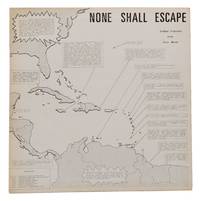
Best.-Nr. 140948116London: Caribbean Situationist 1973. First edition. Original pressing. Vinyl LP in sleeve complete with both poster inserts. Very Good album deep scratch to first track of Side 1 other than that the wear is light; tiny nick to label on Side 1. Sleeve Near Mint slightly bumped bottom corner very slight rubbing and toning. Hint of foxing to the map poster else the posters are Fine folded in fours as issued. A very rare spoken word album of sorts by the Jamaican refrigerator repairman and labor organizer Joseph Edwards under the nom de plume Fundi the Caribbean Situationist. He was inspired by the French-based radical Marxist group The Situationist International who played an important role in the May 1968 student revolt in Paris there were also Scandinavian British and American grouplets that were forever clashing with co-founder Guy Debord in Paris. to start a one-man Caribbean offshoot combining Debord's philosophy with Rastafarianism Trotskyism Black Power and syndicalism. A fascinating document of avant garde politics and media analysis in the Third World during the 1970s. Caribbean Situationist unknown
Best.-Nr. 140948116London: Caribbean Situationist 1973. First edition. Original pressing. Vinyl LP in sleeve complete with both poster inserts. Very Good album deep scratch to first track of Side 1 other than that the wear is light; tiny nick to label on Side 1. Sleeve Near Mint slightly bumped bottom corner very slight rubbing and toning. Hint of foxing to the map poster else the posters are Fine folded in fours as issued. A very rare spoken word album of sorts by the Jamaican refrigerator repairman and labor organizer Joseph Edwards under the nom de plume Fundi the Caribbean Situationist. He was inspired by the French-based radical Marxist group The Situationist International who played an important role in the May 1968 student revolt in Paris there were also Scandinavian British and American grouplets that were forever clashing with co-founder Guy Debord in Paris. to start a one-man Caribbean offshoot combining Debord's philosophy with Rastafarianism Trotskyism Black Power and syndicalism. A fascinating document of avant garde politics and media analysis in the Third World during the 1970s. Caribbean Situationist unknown books
Best.-Nr. 13981678Ansterdam: J. L. de Lorme, Libraire sur le Rockin à l'enseigne de la Liberté, 1698 1 volume in-12 (16,5 x 11 cm), frontispice sur cuivre gravé par B. Picart, page de titre, (8)-402 p. [la relation de voyage du sieur de Montauban occupe les p.360-402] , (2) p. (catalogue de livres nouveaux qui se trouvent chez J. L. De Lorme); page de titre (L'Art de Voyager Utilement), (2)-51 p. Reliure d'ép. dos à 4 nerfs orné, coiffe sup. et coins usés, rel. frottée, bon état. Sabin 11274.
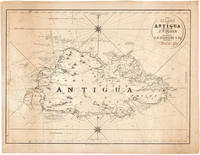
1860Best.-Nr. 48522Antigua but actually Philadelphia: R.B. Eldridge & Co. ca.1860. Interesting Map of the Island of Antigua An unusual lithographic edition of Norie's 1827 revision of this handsome chart lithographed by Wagner & McGuigan in Philadelphia. A statement in the cartouche reads: "Presented by R.B. Eldridge Antigua to Captain Andrew Tyler." The captain's name is accomplished in manuscript. R.B. Eldridge is not listed in Tooley's DICTIONARY OF MAPMAKERS and appears to be unrelated to publisher of charts George Eldridge. It seems most likely that he was rather an Antigua merchant who commissioned a reprint of the chart for complimentary distribution to sea captains. A handsome piece. Lithographic sheet map 20½ x 26½ inches. Backed with contemporary blue paper. Light foxing and toning. A few small tears in margins. Very good. unknown
1860Best.-Nr. 48522Antigua but actually Philadelphia: R.B. Eldridge & Co. ca.1860. Interesting Map of the Island of Antigua An unusual lithographic edition of Norie's 1827 revision of this handsome chart lithographed by Wagner & McGuigan in Philadelphia. A statement in the cartouche reads: "Presented by R.B. Eldridge Antigua to Captain Andrew Tyler." The captain's name is accomplished in manuscript. R.B. Eldridge is not listed in Tooley's DICTIONARY OF MAPMAKERS and appears to be unrelated to publisher of charts George Eldridge. It seems most likely that he was rather an Antigua merchant who commissioned a reprint of the chart for complimentary distribution to sea captains. A handsome piece. Lithographic sheet map 20½ x 26½ inches. Backed with contemporary blue paper. Light foxing and toning. A few small tears in margins. Very good. unknown books
1898Best.-Nr. List2965United States and Caribbean 1898. Approximately twenty-nine pieces: logbook of eighty-four double-sided pages measuring 13 x 20 inches; eight letters seventeen documents and forms and three pieces of miscellany. Much wear and significant damage to logbook including water damage mildew and tearing; log book overall fair to good minus. Other materials good to very good. Overall good. William Higgins 1791–1872 was a farmer sea captain and owner of and investor in ships from Bowdoinham Maine. According to the Maine Maritime Museum which holds his family papers Higgins’ ships traded mainly in lumber which they took from Wilmington North Carolina to the Caribbean. Offered here is a logbook recording the travels of several of Higgins’ ships particularly the brigs Mary Jane and Llewellyn alongside related documents and personal letters. The logbook dating between 1832 and 1836 extensively documents the course wind data and weather remarks for travels of the ships between east coast US port cities and various locations in the Caribbean including Barbados St. Thomas and Martinique. The logbook also contains a copy of astronomer and mathematician Elijah Burritt’s illustration “A Plan of the Solar System Exhibiting its Relative Magnitudes and Distances” engraved by W. G Evans and printed in 1835 by F.J. Huntington. The letters and documents date from 1830 to 1867 and are also mostly business-related including an insurance document for the brig William Parrington a roll of sailors enlisted to work on a six-month journey between the Caribbean and the US in 1845 a bill of sale for ¼ stake in the brig Mary Jane and receipts and logs for items including various liquors sugar molasses casks and so on. One letter from a young man in Wilmington requests advice on how to start his own business in the style of Higgins’; other letters concern family matters. One interesting undated document is a writ addressed to the Marshal of the District of Maine concerning a lawsuit filed against Higgins and Rufus Carr master of the William Parrington by Zachrisson Nelson Co. The suit alleged that Carr acting as an agent for the ship’s owners that is Higgins had agreed to an affreightment involving shipping from Jamaica to Spain to New York but had then “wholly neglected and refused to do so”. Of interest to scholars of maritime history and trade in the mid-19th century. unknown
1898Best.-Nr. List2965United States and Caribbean 1898. Approximately twenty-nine pieces: logbook of eighty-four double-sided pages measuring 13 x 20 inches; eight letters seventeen documents and forms and three pieces of miscellany. Much wear and significant damage to logbook including water damage mildew and tearing; log book overall fair to good minus. Other materials good to very good. Overall good. William Higgins 1791–1872 was a farmer sea captain and owner of and investor in ships from Bowdoinham Maine. According to the Maine Maritime Museum which holds his family papers Higgins’ ships traded mainly in lumber which they took from Wilmington North Carolina to the Caribbean. Offered here is a logbook recording the travels of several of Higgins’ ships particularly the brigs Mary Jane and Llewellyn alongside related documents and personal letters. The logbook dating between 1832 and 1836 extensively documents the course wind data and weather remarks for travels of the ships between east coast US port cities and various locations in the Caribbean including Barbados St. Thomas and Martinique. The logbook also contains a copy of astronomer and mathematician Elijah Burritt’s illustration “A Plan of the Solar System Exhibiting its Relative Magnitudes and Distances” engraved by W. G Evans and printed in 1835 by F.J. Huntington. The letters and documents date from 1830 to 1867 and are also mostly business-related including an insurance document for the brig William Parrington a roll of sailors enlisted to work on a six-month journey between the Caribbean and the US in 1845 a bill of sale for ¼ stake in the brig Mary Jane and receipts and logs for items including various liquors sugar molasses casks and so on. One letter from a young man in Wilmington requests advice on how to start his own business in the style of Higgins’; other letters concern family matters. One interesting undated document is a writ addressed to the Marshal of the District of Maine concerning a lawsuit filed against Higgins and Rufus Carr master of the William Parrington by Zachrisson Nelson Co. The suit alleged that Carr acting as an agent for the ship’s owners that is Higgins had agreed to an affreightment involving shipping from Jamaica to Spain to New York but had then “wholly neglected and refused to do so”. Of interest to scholars of maritime history and trade in the mid-19th century. unknown books
1667Best.-Nr. PHO-2095Paris, Thomas Jolly, 1667, 2 tomes en in-4, veau brun, dos à nerfs orné avec titre et tomaison, (Reliure de l'époque), manques aux coiffes, coins émoussés, début de fente L'illustration, gravée sur cuivre, comprend 2 titres-frontispices, 3 cartes au premier tome et 14 planches au second dont la planche figurant un couple nu, la gravure des armoiries de Harlay manque
1810Best.-Nr. 14534Arthus Bertrand Paris 1810 2 vol. 2 vol. in-8 de 2 ff.n.ch. XLVII 315 pp. 1 f.n.ch. (errata) et 2 ff.n.ch. 324 pp. 1 f.n.ch. (errata), demi veau vert empire moderne, dos lisse richement orné, pièces de titre et de tomaison, tranches jaunes.
1875Best.-Nr. 8011L. Guerin et Cie Paris 1875 4 vol. 3 vol. grand in-8 de 4 ff.n.ch. XXXI 446 pp., 2 ff.n.ch. 466 pp. et 2 ff.n.ch. 502 pp. + un atlas in-folio de 1 f.n.ch. (titre) 30 feuillets 1 f.n.ch. (table), demi-chagrin de l'époque, dos à nerfs orné.
1775Best.-Nr. 14603par la Compagnie Trévoux 1775 4 vol. 4 vol. in-12 de 6 ff.n.ch. (titre et préface) 394 pp. 1 f.n.ch., 1 f.n.ch. (titre) 428 pp., 1 f.n.ch. (titre) 346 pp. et 1 f.n.ch. (titre) LX 356 pp. 1 f.n.ch. (table), veau fauve de l'époque, dos à nerfs orné, pièces de titre et de tomaison, tranches rouges (certains mors restaurés et accroc à une coiffe).
1758FIRST AND ONLY EDITION OF THIS ATLAS OF THE BRITISH WEST INDIES, published in France during the Seven Years' War (also known as the "French and Indian War".) xii, 171 pp + engraved title and THIRTEEN FINE MAPS, of which 8 are folding (complete). Also illustrated with ten headpieces, nine of which depict the entry into a major port. Includes Jamaica (with several maps), Barbuda, St. Kitts, Nevis, the Virgin Islands, Anguilla, Antigua, the Lucayes (now the Bahamas), and Bermuda. 4to (26 x 20.3 cm). Attractively bound in contemporary calf, with the ARMS OF KING LOUS XV OF FRANCE EMBLAZONED IN GILT ON FRONT AND BACK COVERS. Binding restored at head and tail of spine, and very solid. Small, faint marginal stain to engraved title-page, else INTERNALLY FINE AND BRIGHT, WITH MAPS AND TEXT VERY FRESH. Sabin 4553. RARE AND IMPORTANT.
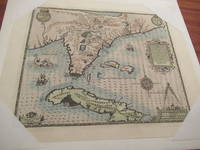
1592Best.-Nr. 026339Frankfurt am Main 1591 1592. Original Antique Map . Single Sheet. Near Fine. Laid Paper. Size: Image And Border Approximately 17 7/8 Inches X 1M.5 Inches 45.2 Cm X 36.75 Cm. Debry Printed His Voyage To Virginia In 1590 As Part I Of His Works But Burden Mapping Of North America Provides No Record That A 1592 Printing Exists. This Map Has No Center Fold But Contemporary Engravings Exist Of The Offices Of The Great 17Th Century Cartographic Publishers With Row Upon Row Of Flat Drawers For Storage Of Single Maps; It Would Be Unreasonable To Believe That None Of These Unbound Maps Survived. This Appears To Be One Of Them Although The Consensus Of Modern Dealers Is That No Unfolded Large Map First Published In A Book Can Exist. Although We Have Been Unable To Locate A 1592 German Edition Of Debry We Believe This Is A Map As Issued In The 1592 German Edition Of De Bry Which Was First Published In 1591 And Subsequently Reprinted In 1592 And 1594 And In The Seventeenth Century. Small Cartouche At Lower Left Monogram With Text "Caesavece Matis. Privilegio Mdxcii" In The Plate Added After Original 1591 Printing. This Is An Unfolded Sheet Which Was Never Bound In A Book; A Strong Impression Without Damage And With Old Light Partial Coloring. Once Quite Aged Then Professionally Cleaned De-Acidified And Mounted Loosely With Archival Materials By A Museum-Experienced Conservator In About 2000. Scarce. And Now 430 Years Later It's Depicting A Hangout For Orangutans. unknown
1655Best.-Nr. 5394Paris: Chez S. Cramoisy & G. Cramoisy 1655. SOLE EDITION. Hardcover. Fine. A fine copy in its original binding of 17th c. mottled French calf spine gilt and with red morocco label minor wear to the spine. Fine and fresh with just the occasional small rust spot. Engraved arms of the dedicatee Nicolas Fouquet on the second leaf. First edition of this rare relation describing the Jesuit missions in the Caribbean and on the South American mainland providing one of the earliest systematic accounts of the Lesser Antilles and Guiana. Much of the book is based on the author's firsthand experiences. He describes the foundation of churches the conversion of enslaved Africans and Indigenous nations Indigenous culture the moral and physical trials of evangelization and the natural history of the islands and mainland. Of special importance is the third part of the work: the author's grammar and vocabulary of the Galibi language one of the earliest printed studies of a South American Indigenous language. Pelleprat explains the purpose of understanding Galibi: "I have composed a small grammar and vocabulary of the Galibi language so that our Fathers who shall come after me may speak to these peoples in their own words and more easily win their souls to God." In 1651 Pierre Pelleprat was sent from France to the Antilles joining Fathers Denys Mesland François Gueymeu and Guillaume Aubergeon. The Jesuits served the indigenous Amerindians enslaved Africans and Irish and French settlers. Two years later Pelleprat and Mesland sailed for the mainland where they established a mission on the Guarapiche River near the Gulf of Paria. After Mesland's departure was Pelleprat remained alone continuing his missionary work and studying the local language. Illness forced him to return to the islands in 1654. He petitioned to return to Europe but was denied and instead lived out the remainder of his life in Mexico dying at Puebla de los Angeles in 1667. The preface outlines the establishment of the Jesuit mission in the French Caribbean following the founding of Martinique and Guadeloupe in 1635. Pelleprat recounts the arrival of the Jesuits and their efforts to learn the native languages in order to communicate doctrine record confessions and translate prayers. His descriptions of the climate geography and local governance of the islands are accompanied by remarks on Indigenous customs domestic life and religious beliefs. Pelleprat portrays the Indigenous inhabitants with clarity and sympathy. They are "without guile or malice. and capable of every good doctrine. They are neither cruel nor treacherous as some have claimed; rather they are generous and easily moved to affection when treated with kindness." He notes the Galibis skill in painting and weaving: "They take great care in painting their bodies and in making their cotton cloths which they dye with beautiful colors." The author records local fishing and hunting practices the use of pirogues canoes along the coasts and the construction of dwellings raised above ground: "They live by fish and roots in houses built upon poles to guard against the waters and the reptiles." He marvels at the beauty and richness of South America: its landscape flora and fauna: "the trees of these islands bear fruit twice a year and the soil is so rich that it needs only to be turned over to yield harvests beyond expectation". The Galibi Language Pelleprat's introduction to the Galibi language is one of the earliest printed attempts to describe and translate a South American Indigenous language. He explains the purpose of understanding Galibi: "I have composed a small grammar and vocabulary of the Galibi language so that our Fathers who shall come after me may speak to these peoples in their own words and more easily win their souls to God." Pelleprat opens by justifying his study as a means to conversion writing that "the barbarous nations. are so docile and so well disposed to receive the Gospel that they await only its preaching." His goal is not philological in the modern sense but practical: to prepare future missionaries to communicate Christian doctrine. Even so his careful observations show an emerging recognition of linguistic structure. He notes that "this language has its own rules its order and its way of composing words" an acknowledgment that Amerindian languages were coherent systems rather than the "corrupted" or "primitive" speech often imagined by Europeans. The Introduction proceeds systematically identifying letters pronunciation and basic grammar before offering a brief bilingual vocabulary. Pelleprat outlines nouns pronouns and verb forms and includes everyday expressions drawn from conversation. The vocabulary reveals the priorities of the missionary encounter pairing religious and material terms: "God" and "Devil" "soul" "heaven" and "earth" alongside "river" "house" and "friend." Through such juxtapositions the work translates the Christian world into the idiom of local experience. Pelleprat also recognizes the limits of his own learning admitting that he "has gathered what he could learn from the natives themselves" and that the book is only a "first attempt." The Islands of America Pelleprat opens with the Jesuits' first arrival at Martinique and he describes the founding of chapels the teaching of catechism and the first baptisms. When the mission expanded to Guadeloupe and Saint Christopher St Kitts he wrote: "we carried with us neither gold nor silver but the Cross of Christ and a heart desirous only to win souls. With this we founded our first church on the edge of the sea the waves serving us for organ and bells." p. 17 Pelleprat relates the successful conversion of enslaved Africans: "for although they have been reared in brutishness many become so chaste and honest when they are Christians that they would rather die than commit the least indecency." p. 33 Irish Catholics who had been exiled by the English sought out the Jesuits for Mass and confession and Pelleprat recounts the secret ministry carried out among them and the extraordinary virtue of an Irish girl raised in disguise to preserve her chastity. "I cannot omit the victory that a young Irish girl won over the weakness of her sex. This girl had come very young to America and her father to protect her had disguised her and raised her in the dress of a boy." pp. 49-50 Pelleprat explains how conversion altered conduct during epidemics and famine and the devoutness of the newly converted: "In the time of pestilence when even the air seemed to breathe death our new Christians came in great numbers to confession and communion choosing rather to die reconciled to God than to live without His grace." p. 47 The Mainland of South America The second section records numerous observations on the geography and natural history of Guiana: "I saw serpents with wings like bats and fish that fly above the water; trees whose leaves close at night as if they slept and others that exude milk when cut." p. 88 "The rivers here are broader than many seas their waters dark as ink under the forest's shadow. The land breathes a perpetual spring; trees bear fruit without ceasing and the air is so temperate that one would think Nature had chosen this region for her rest." p. 60 Pelleprat records the manners dwellings and ceremonies of the Guianese nations: "They are of good stature well-formed their countenance open and agreeable. Their huts are made of palm leaves their hammocks of woven cotton their vessels of baked clay painted with strange figures . . . When we entered their villages they offered us cassava bread and the drink of their country pressing us to sit in their hammocks which they esteem as the greatest courtesy." p. 67-69 Chapter VI outlines the political and moral order of Indigenous societies. Government Pelleprat notes is communal and tempered by reason: "Their government is gentle; they obey the oldest or the bravest and all decisions are taken in council with much shouting but little injustice." p. 92 "When one dies they burn his hammock and his weapons believing that he will find them again beyond the river of souls." p. 93. Chez S. Cramoisy & G. Cramoisy hardcover
1655Best.-Nr. 5394Paris: Chez S. Cramoisy & G. Cramoisy 1655. SOLE EDITION. Hardcover. Fine. A fine copy in its original binding of 17th c. mottled French calf spine gilt and with red morocco label minor wear to the spine. Fine and fresh with just the occasional small rust spot. Engraved arms of the dedicatee Nicolas Fouquet on the second leaf. First edition of this rare relation describing the Jesuit missions in the Caribbean and on the South American mainland providing one of the earliest systematic accounts of the Lesser Antilles and Guiana. Much of the book is based on the author's firsthand experiences. He describes the foundation of churches the conversion of enslaved Africans and Indigenous nations Indigenous culture the moral and physical trials of evangelization and the natural history of the islands and mainland. Of special importance is the third part of the work: the author's grammar and vocabulary of the Galibi language one of the earliest printed studies of a South American Indigenous language. Pelleprat explains the purpose of understanding Galibi: "I have composed a small grammar and vocabulary of the Galibi language so that our Fathers who shall come after me may speak to these peoples in their own words and more easily win their souls to God." In 1651 Pierre Pelleprat was sent from France to the Antilles joining Fathers Denys Mesland François Gueymeu and Guillaume Aubergeon. The Jesuits served the indigenous Amerindians enslaved Africans and Irish and French settlers. Two years later Pelleprat and Mesland sailed for the mainland where they established a mission on the Guarapiche River near the Gulf of Paria. After Mesland's departure was Pelleprat remained alone continuing his missionary work and studying the local language. Illness forced him to return to the islands in 1654. He petitioned to return to Europe but was denied and instead lived out the remainder of his life in Mexico dying at Puebla de los Angeles in 1667. The preface outlines the establishment of the Jesuit mission in the French Caribbean following the founding of Martinique and Guadeloupe in 1635. Pelleprat recounts the arrival of the Jesuits and their efforts to learn the native languages in order to communicate doctrine record confessions and translate prayers. His descriptions of the climate geography and local governance of the islands are accompanied by remarks on Indigenous customs domestic life and religious beliefs. Pelleprat portrays the Indigenous inhabitants with clarity and sympathy. They are "without guile or malice. and capable of every good doctrine. They are neither cruel nor treacherous as some have claimed; rather they are generous and easily moved to affection when treated with kindness." He notes the Galibis skill in painting and weaving: "They take great care in painting their bodies and in making their cotton cloths which they dye with beautiful colors." The author records local fishing and hunting practices the use of pirogues canoes along the coasts and the construction of dwellings raised above ground: "They live by fish and roots in houses built upon poles to guard against the waters and the reptiles." He marvels at the beauty and richness of South America: its landscape flora and fauna: "the trees of these islands bear fruit twice a year and the soil is so rich that it needs only to be turned over to yield harvests beyond expectation". The Galibi Language Pelleprat's introduction to the Galibi language is one of the earliest printed attempts to describe and translate a South American Indigenous language. He explains the purpose of understanding Galibi: "I have composed a small grammar and vocabulary of the Galibi language so that our Fathers who shall come after me may speak to these peoples in their own words and more easily win their souls to God." Pelleprat opens by justifying his study as a means to conversion writing that "the barbarous nations. are so docile and so well disposed to receive the Gospel that they await only its preaching." His goal is not philological in the modern sense but practical: to prepare future missionaries to communicate Christian doctrine. Even so his careful observations show an emerging recognition of linguistic structure. He notes that "this language has its own rules its order and its way of composing words" an acknowledgment that Amerindian languages were coherent systems rather than the "corrupted" or "primitive" speech often imagined by Europeans. The Introduction proceeds systematically identifying letters pronunciation and basic grammar before offering a brief bilingual vocabulary. Pelleprat outlines nouns pronouns and verb forms and includes everyday expressions drawn from conversation. The vocabulary reveals the priorities of the missionary encounter pairing religious and material terms: "God" and "Devil" "soul" "heaven" and "earth" alongside "river" "house" and "friend." Through such juxtapositions the work translates the Christian world into the idiom of local experience. Pelleprat also recognizes the limits of his own learning admitting that he "has gathered what he could learn from the natives themselves" and that the book is only a "first attempt." The Islands of America Pelleprat opens with the Jesuits' first arrival at Martinique and he describes the founding of chapels the teaching of catechism and the first baptisms. When the mission expanded to Guadeloupe and Saint Christopher St Kitts he wrote: "we carried with us neither gold nor silver but the Cross of Christ and a heart desirous only to win souls. With this we founded our first church on the edge of the sea the waves serving us for organ and bells." p. 17 Pelleprat relates the successful conversion of enslaved Africans: "for although they have been reared in brutishness many become so chaste and honest when they are Christians that they would rather die than commit the least indecency." p. 33 Irish Catholics who had been exiled by the English sought out the Jesuits for Mass and confession and Pelleprat recounts the secret ministry carried out among them and the extraordinary virtue of an Irish girl raised in disguise to preserve her chastity. "I cannot omit the victory that a young Irish girl won over the weakness of her sex. This girl had come very young to America and her father to protect her had disguised her and raised her in the dress of a boy." pp. 49-50 Pelleprat explains how conversion altered conduct during epidemics and famine and the devoutness of the newly converted: "In the time of pestilence when even the air seemed to breathe death our new Christians came in great numbers to confession and communion choosing rather to die reconciled to God than to live without His grace." p. 47 The Mainland of South America The second section records numerous observations on the geography and natural history of Guiana: "I saw serpents with wings like bats and fish that fly above the water; trees whose leaves close at night as if they slept and others that exude milk when cut." p. 88 "The rivers here are broader than many seas their waters dark as ink under the forest's shadow. The land breathes a perpetual spring; trees bear fruit without ceasing and the air is so temperate that one would think Nature had chosen this region for her rest." p. 60 Pelleprat records the manners dwellings and ceremonies of the Guianese nations: "They are of good stature well-formed their countenance open and agreeable. Their huts are made of palm leaves their hammocks of woven cotton their vessels of baked clay painted with strange figures . . . When we entered their villages they offered us cassava bread and the drink of their country pressing us to sit in their hammocks which they esteem as the greatest courtesy." p. 67-69 Chapter VI outlines the political and moral order of Indigenous societies. Government Pelleprat notes is communal and tempered by reason: "Their government is gentle; they obey the oldest or the bravest and all decisions are taken in council with much shouting but little injustice." p. 92 "When one dies they burn his hammock and his weapons believing that he will find them again beyond the river of souls." p. 93. Chez S. Cramoisy & G. Cramoisy hardcover books