MacDonald, John DBiblio.com
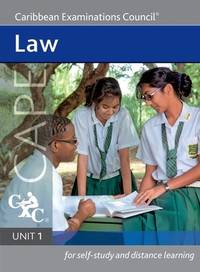
Religious Education for CSEC CXC A Caribbean Examinations Council Study Guide
rif. 21995140like new. unknown

GreatBookPrices · Stati Uniti65,88 USD≈ 58,86 €
1223 risultati
1979rif. 020829N.Y.: J.B. Lippincott Company 1979. First U.S. Hardcover Edition paperback original published by Gold Medal 1972 so stated with complete number line beginning with 1. Fine in fine dust jacket not price clipped in protective mylar cover. Cover illustration by Don Brautigan. Travis McGee with help from his friend Meyer outwaits and outwits a deranged killer as he searches for a missing wife on the remote Caribbean island of Granada where he tangles with a baby-faced businessman with a lust for murder. First Edition. Hardcover. Fine/Fine. Illus. by Brautigan Don. Book. J.B. Lippincott Company
rif. 21995140like new. unknown
rif. 43589575like new. unknown
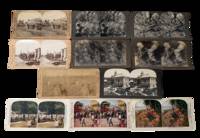
1890rif. 231711890. Stereoview archive of the post-emancipation Caribbean showing how the islands were marketed to western viewers through plantation labor export agriculture civic spectacle and catastrophe. As a group these photos function not only as an ethnographic travel archive but as evidence of the visual economy that followed slavery. The British West Indies moved through emancipation in 1834 to 1838 the French Caribbean in 1848 Puerto Rico in 1873 and Cuba in 1886 yet plantation production remained central to regional life well into the early twentieth century. These stereoviews preserve a colonial way of seeing in which Black and Afro-Caribbean labor rural discipline and extractive agriculture remained the background condition of "tropical" beauty and commercial modernity. Cuba's sugar economy in particular expanded through the nineteenth century and slavery was not abolished there until 1886 while Weyler's later reconcentration policy during the Cuban War of Independence violently reorganized rural life. Martinique after 1848 likewise shifted into new labor regimes including imported workers from India and China. Archive of 11 stereoview cards late 1890s to early 1900s depicting Cuba Jamaica Martinique Puerto Rico and the Dominican Republic. Most black and white with a few colorized. Each measure 3.5" x 7". All with captions on the margins. "Reconcentrado Farming Scene Province of Havana Cuba" links agricultural production to the brutal displacements of Spain's reconcentration campaign; "Cutting sugar cane Montego Bay Jamaica W.I." records cane labor in a colony where emancipation had not ended plantation dependency; and "Harvesting Coconuts Porto Rico" likewise frames Caribbean land through export work rather than local life. Other views extend that economic framing through cacao and coffee scenes while the paired Havana cards shift into urban leisure and public display including "Beautiful Central Park Havana Cuba" and "Holiday in Havana Cuba" the latter with both Cuban and American flags visible a telling image of the new imperial order after 1898. The disaster views from Martinique and the Lesser Antilles show how stereoview publishers also turned Caribbean destruction into consumable spectacle. the Morne Rouge card is accompanied on the reverse by the grim printed text "Dead bodies which were to be seen in Morne Rouge." while the wider context is the 1902 eruptions of Mount Pelée in Martinique and La Soufrière on Saint Vincent two catastrophes that killed roughly 30000 and 1600 people respectively and devastated local communities and agriculture. Some corner wear light toning scattered surface and edge wear. Overall very good condition. This collection gives direct visual representation of Caribbean history Atlantic slavery and emancipation plantation labor and U.S. imperial expansion in the circum-Caribbean preserving the transition from slavery to post-abolition labor. unknown
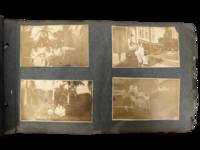
1914rif. 231551914. Caribbean photograph album likely compiled by a person connected to the Panama Canal Zone and the Caribbean documenting how steamship mobility port circulation and U.S. imperial presence linked Jamaica Venezuela Trinidad Barbados Cuba Puerto Rico the Bahamas Florida and Panama in the years after the canal opened. The felt cover lettered "PANAMA" and bearing the Seal of the Canal Zone places the album within the new travel geography created by U.S. control of the Canal Zone and the canal's 1914 opening when Panama became a central hinge between Atlantic and Pacific movement and a major point of contact between North American travelers and Caribbean port cities. Photos show passengers on steamers and docks markets and streets forts and government buildings and repeated encounters between white visitors and Afro Caribbean and mixed-heritage residents across multiple colonial and semi-colonial settings. Panama Canal Zone travel photograph album. Caribbean and circum-Caribbean locations including Kingston Jamaica; La Guaira and Caracas Venezuela; Trinidad; Key West and Palm Beach Florida; Havana Cuba; Barbados; Panama City Balboa and Colón Panama; Nassau Bahamas; and San Juan Puerto Rico. Likely circa mid 1910s to early 1920s. Oblong felt-covered album measuring 6.5" x 11" with "PANAMA" stitched in large letters on the front cover and photographs pasted to grey leaves. Contains more than 160 black-and-white photographs most approximately 2.5 x 4.5 inches many with handwritten captions identifying locations activities and occasional names. The sequence opens in Kingston with captions including "Kingston JA" and "on the steamer" then moves through island and mainland stops; "Port of Spain Trinidad" "Market at Barbados" "Rapid Transit Barbados" "Havana Cuba" "San Juan Porto Rico" "Morro Castle" "Balboa" and "Colon R.P." Repeated figures especially a young college-aged woman and an older woman appear throughout. Notable images include a group of locals in shallow water at Barbados sifting for tossed coins from rowboats; a large crowd scene in San Juan gathered for what appears to be a public speech or civic event; battlements cannon and stone defenses in Havana; vernacular dwellings and children in impoverished conditions in Balboa; posed visitor photographs in what is labeled a "bull ring"; and numerous street dockside market and architectural views that juxtapose local populations with hotels public buildings ruins and newer urban construction. The album's historical force comes from the way it captures the social landscape of Caribbean travel under early twentieth-century U.S. power. After 1914 the Canal Zone intensified Panama's role within a wider American maritime sphere while Caribbean travel increasingly moved through port infrastructures shaped by empire commerce military strategy and tourism; this album records that world at eye level with photographs of docks steamers fortifications government sites public squares and local street life rather than limiting themselves to family snapshots alone. At the same time the images preserve the unequal human encounters built into that system especially where visitors photograph Black children boatmen market crowds and working neighborhoods as part of the travel experience. Felt cover worn and soiled with losses at edges and stitching strain; leaves brittle with chipping and tears; photographs generally present and legible with silvering fading corner wear and occasional losses or lifting. Overall fair to good condition. A substantial early twentieth-century visual record of Canal Zone connected Caribbean travel with dense captioning and wide geographic reach from Jamaica and Barbados to Havana San Juan and Panama. unknown
1940rif. 222371940. Puerto Rico Education Industrial era Puerto Rico elementary school class photo archive. Three vintage silver gelatin black-and-white photographs each mounted on photo studio original boards with decorative borders. Two are early prints circa 1940s; the third is dated 1961. Each measure about 7" x 9". This evocative trio of Puerto Rican school photographs captures diverse elementary-age students posed in front of their local schools documenting a pivotal era of transformation in the island's social and educational landscape. One of the earlier cabinet cards features a group of students seated outdoors with a teacher or administrator standing behind them; the setting includes neoclassical columns and a colonial street with visible signage. Another card marked "Escuela No. 29" shows a racially integrated group of students with the school's flag held at the center of the image. The final print dated 1961-declared "Año de la Educación" Year of Education in the printed caption-presents a classroom posed beneath a prominently displayed Puerto Rican flag reflecting both a growing sense of national identity and post-war political shifts toward public investment in education. These photographs span a transformative period in Puerto Rico's 20th-century history as the island transitioned from an agricultural economy to a more industrialized state-supported system under Operation Bootstrap Operación Manos a la Obra. Begun in the late 1940s and accelerated through the 1950s and early 1960s the program prioritized urban development mass education and labor force modernization. The 1961 card framed by official state messaging reflects this emphasis-part of Governor Luis Muñoz Marín's vision of expanding universal literacy and integrating Puerto Rican youth into a skilled industrial economy. At the same time these images document the continued presence of racial and class diversity within public schools signaling the layered complexities of colonial modernity and U.S. influence on the island's educational and political systems. Mild surface soiling and edge wear to the mounts with light silvering to the gelatin surfaces of the two older prints. Overall very good condition. A rare and compelling visual record of Puerto Rican childhood education and racial integration during a formative mid-century era of political and economic redefinition. unknown
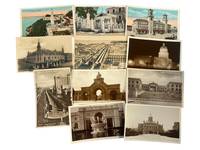
1920rif. 224751920. Cuba Havana landmarks and urban development real photo post card archive ca. 1920s-1940s. 11 color and sepia real photo postcards of iconic civic and cultural architecture in Havana Cuba. Each measure 4" x 6". Many with captions identifying the locations in the negative or en verso with some printed in English and others in Spanish signaling their intended audience of both locals and foreign tourists. A compelling photo archive documenting early 20th-century Havana's architectural and political aspirations this collection showcases prominent landmarks that symbolized Cuba's nationalist identity international cosmopolitanism and American-influenced modernization in the decades between independence from Spain and the Cuban Revolution. The archive includes silver gelatin and printed color views of the National Theatre Cuba's Capitol Building Central Railway Station Gran Casino Nacional National University and the grand gateway of Havana's Colón Cemetery. Other views depict Paseo de Martí one of Havana's most iconic boulevards lined with vintage American cars and flanked by ornate colonial facades and new Art Deco-style hotels evidence of the influx of U.S. capital and tourism during the Batista era. Havana in this period was rapidly transforming into a showcase city of the Caribbean its urban core reflecting both Spanish colonial heritage and American urban planning models. The presence of monumental buildings like El Capitolio constructed between 1926 and 1929 and modeled after the U.S. Capitol in Washington D.C. points to Cuba's alignment with American political aesthetics and aspirations toward modern statehood. Similarly the University and Gran Casino Nacional represent both the intellectual elite and leisure-class investment that typified pre-revolutionary Cuban society. The mixture of European and U.S. architectural influences ranging from Beaux-Arts to Art Deco speaks to the layered colonial legacy and new economic dependency forged during the Platt Amendment era. Some mild edge wear. One card with a small corner crease others clean. Overall very good condition. This archive captures Havana in the midst of dramatic urban renewal and internationalization before the massive ruptures brought on by the 1959 revolution. unknown
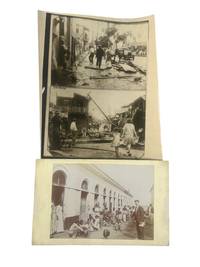
1928rif. 219181928. Puerto Rico photo archive circa 1910s and 1928 documents colonial-era social conditions and hurricane destruction in the decades after the United States took control of the island. The archive centers on two related subjects: a large group portrait of Puerto Rican adults and children gathered outside a long arched building and press images of San Juan after the September 13 1928 San Felipe Segundo hurricane. The photographs provide visual evidence of everyday poverty built environment disaster damage and public movement through wreckage during a period shaped by U.S. civil government under the Foraker Act of 1900 and U.S. citizenship without voting representation in Congress under the Jones-Shafroth Act of 1917. Puerto Rico photo archive. Puerto Rico circa late 1910s and 1928. Three silver gelatin photographs with two images printed on one press sheet. Sizes range from 5 x 9 inches to 8.5 x 11 inches. The 1928 press photograph contains two stacked photojournalistic views of San Juan after the hurricane showing torn corrugated roofing broken utility poles damaged structures debris-filled streets and residents including children and laborers moving through the wreckage. The larger earlier image shows a white man standing before a long arched tenement-style or institutional building surrounded by Puerto Rican women men and numerous children many barefoot and wearing worn or minimal clothing; the image appears posed or observational but the man's role is not identified. The San Felipe Segundo hurricane struck Puerto Rico on September 13 1928 as a Category 5 storm and caused 312 reported deaths widespread housing destruction and several hundred thousand people left homeless giving the press images strong value as disaster documentation within a colonial setting. The earlier group photograph broadens the archive beyond catastrophe recording visible poverty dress housing and racialized colonial social relations without requiring unsupported identification of the white figure. Some edge wear tape on margins of smaller image and original editor's markings en verso to press photograph; very good. A compact Puerto Rico photo archive linking colonial-era social conditions with one of the island's most destructive twentieth-century hurricanes. unknown
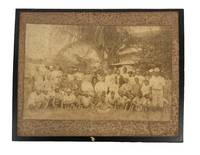
1890rif. 208021890. Unidentified photographers two albumen photographs of Black laborers circa 1890s to early 1900s document agricultural and skilled work performed by African Americans in the decades following emancipation when systems of sharecropping and tenant farming structured rural economies across the American South and parts of the Caribbean. These images provide visual evidence of labor organization racial hierarchy and economic dependency that persisted after the formal end of slavery with large groups of Black workers shown in relation to white overseers or employers. One photograph presents approximately forty five Black men gathered around three centrally seated white men emphasizing supervisory roles and social stratification within plantation labor systems. The clothing of the workers including cotton shirts loose trousers and wide brimmed hats reflects adaptation to agricultural work in hot climates while a smaller number of individuals in jackets and pocket watches suggests internal distinctions within Black labor communities. The second image depicts six Black carpenters engaged in coordinated manual work at an outdoor shop indicating the presence of skilled trades alongside agricultural labor. Group of two albumen photographs mounted on original cardstock measuring approximately 8 x 9.5 inches and 10 x 12 inches. The larger photograph shows an outdoor woodworking scene with six men using tools including a hammer and saw working under a thatched structure suggestive of southern or Caribbean environments. The second photograph shows a large assembled group of plantation workers with three white men seated at center. Faint pencil annotations appear in the margins of one mount. Both photographs retain strong compositional clarity with figures arranged to emphasize both collective labor and hierarchical relationships. These photographs contribute to the study of post emancipation Black life by documenting how agricultural dependency and limited access to capital shaped labor conditions into the late nineteenth and early twentieth centuries. The plantation scene illustrates the persistence of racially stratified labor organization while the carpentry image provides evidence of skilled Black tradesmen operating within local economies often without institutional support or pathways to independent enterprise. The visual contrast between collective field labor and artisanal work expands the interpretive scope of the archive situating these images within broader histories of labor race and economic transition following the end of slavery. Edge wear and minor chipping to mounts with noticeable foxing to one image primarily at the margins; images remain legible and structurally intact. Overall good condition. unknown
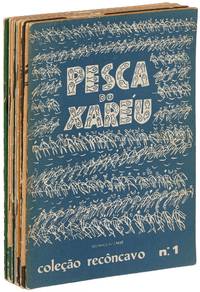
1955rif. 593625Bahia Brasil: Livraria Progresso 1955. Softcover. Very Good. First editions. Illustrated by Caribé. Nine volumes lacking the 10th Orixás. Slim octavos. Stapled wrappers. Text in Portuguese. Moderate tanning and wear wrappers with some foxing and soiling topedges with a small splash of white paint sound and near very good. Each volume prints illustrations by Caribé from the Bahia State Museum as well as text by Caribé Odorico Tavares Vasconcelos Main José Pedreira or Carlos Eduardo. Each also has a number stamp on the copyright page from an unknown limitation. The titles are: A pesca do xaréu; Pelourinho; O jogo da capoeira; Feira de água de meninos; Festa do bonfim; Conceicão da praia; Festa de yemanjá; Rampa do mercado; and Temas de candomblé. Livraria Progresso unknown
rif. A9789210033589Paperback / softback. New. paperback
rif. A9789211221350Paperback / softback. New. The 2023 report offers an in-depth look at economic trends in Latin America and the Caribbean providing updated GDP estimates and 2024 forecasts. It examines evolving social dynamics and policy challenges while highlighting risks and strategies that may shape the region’s path toward a transformative recovery. paperback
rif. A9789211221398Paperback / softback. New. In this edition the impact of population dynamics is illustrated through an analysis of selected indicators of labour force estimates and projections by sex age and area of residence for the 1980-2050 period in the 20 countries of Latin America using the 2023 Revision prepared by the CELADE-Population Division of the ECLAC. paperback
rif. A9789211220698Paperback / softback. New. Examines the social impact of an unprecedented crisis. The effects of the COVID-19 pandemic have spread to all areas of human life altering the way we interact crippling economies and bringing about profound changes in societies. The pandemic has highlighted and exacerbated the major structural gaps in the region. paperback
rif. DADAX1408517027OXFORD UNIVERSITY PRESS 2014-11-01. Revised ed. paperback. New. 7.69x0.36x10.50. Buy with confidence. Excellent Customer Service & Return policy. OXFORD UNIVERSITY PRESS paperback
rif. 210455595United Nations Publications. paperback. Good. 0x0x0. Ex-library book with light to moderate shelf wear with usual stamps and markings. Photos and additional details upon request. Thank you for supporting Last Word Books and independent bookstores. United Nations Publications paperback
rif. A9789211218763Paperback / softback. New. Presents ECLAC measurements for the analysis of income poverty taking as well a multidimensional approach to poverty. Applying these two approaches to data for the countries of the region provides confirmation that despite the progress made over the past decade structural poverty is still a feature of Latin American society. paperback
rif. 1408516349.Gbundle. Good. Access codes and supplements are not guaranteed with used items. May be an ex-library book. unknown
rif. 21962744like new. unknown
1940rif. 21699New York: University Society. Very Good-. First Edition. Hardcover. Boards with light to moderate rubbing to extremities. Two tiny holes along outer hinges. Edges a bit toned.; This is the first and only edition of this increasingly hard-to-find title from the American Guide Series.; American Guide Series; B&W Photographs; 8vo 8" - 9" tall; 409 pages . 1940. University Society hardcover
1928rif. 21658New York: Dodd Mead & Company. Very Good-. Third Edition. Hardcover. Boards with light rubbing to extremities. Light bumping to one corner. A bit of browning to first and last few pages. Small discoloration of boards near fore edges and a small spot to the spine.; Numerous charts fold-out maps in color b&w photographs - a very thorough guidebook to The Bermudas The Bahamas Cuba Jamaica Santo Domingo Haiti Porto Rico Saint Thomas and Virgin Islands Saint Kitts Nevis Monserrat Antigua Barbuda Guadeloupe Dominica Martinique St. Lucia Saint Vincent Barbados Grenada and the Grenadines Tobago Trinidad Panama and the Canal Zone. Additionally with a short Glimpse of South America.; 16mo 7" - 7½" tall; ix 533 pages . 1928. Dodd, Mead & Company hardcover
1922rif. 21184Kingston Jamaica: The Institute of Jamaica. Very Good. Eighth Edition. Softcover. Boards with light rubbing to extremities.; A detailed travel guide of the British colony with beautiful pictorial boards and numerous b&w photographs in the book. Extensive statistical information and history. Many ads.; B&W Photographs; 12mo 7" - 7½" tall; viii 217 16 pages . 1922. The Institute of Jamaica paperback
1854rif. 21221Boston: Phillips Sampson and Company. Very Good-. Early edition. Hardcover. Boards with moderate wear to extremities. Minute tears to spine ends. Spine a bit slanted. Former owner's name on front free endpaper. The slightest of foxing to the first and last few pages.; "Being a political historical and statistical amount of the island from it first discovery to the present time". Author Ballou was from Boston and later worked as the first editor for the Boston Globe. He was an extensive traveler and this book was his second one on Cuba and his second travel book. Before he wrote travel books he had a career as a fiction writer.; B&W Illustrations; 12mo 7" - 7½" tall; viii 230 10 pages . 1854. Phillips, Sampson and Company hardcover
1937rif. 20741Kingston Jamaica: The Tourist Trade Development Board. Very Good. First Edition. Hardcover. Boards with light rubbing to extremities. Top spine a bit frayed.; Ads in front and back. Several fold-out maps as well as one large rear fold-out map. Many b&w photographs.; 16mo 6" - 7" tall; 346 pages . 1937. The Tourist Trade Development Board hardcover
1965rif. 19830London: Collins. Very Good in Very Good dust jacket. Revised Edition. Hardcover. Small closed tears to DJ.; Expanded and revised edition originally published in 1958; B&W Photographs; 8vo 8" - 9" tall; 256 pages . 1965. Collins hardcover