795 Ergebnisse
1940Best.-Nr. 222371940. Puerto Rico Education Industrial era Puerto Rico elementary school class photo archive. Three vintage silver gelatin black-and-white photographs each mounted on photo studio original boards with decorative borders. Two are early prints circa 1940s; the third is dated 1961. Each measure about 7" x 9". This evocative trio of Puerto Rican school photographs captures diverse elementary-age students posed in front of their local schools documenting a pivotal era of transformation in the island's social and educational landscape. One of the earlier cabinet cards features a group of students seated outdoors with a teacher or administrator standing behind them; the setting includes neoclassical columns and a colonial street with visible signage. Another card marked "Escuela No. 29" shows a racially integrated group of students with the school's flag held at the center of the image. The final print dated 1961-declared "Año de la Educación" Year of Education in the printed caption-presents a classroom posed beneath a prominently displayed Puerto Rican flag reflecting both a growing sense of national identity and post-war political shifts toward public investment in education. These photographs span a transformative period in Puerto Rico's 20th-century history as the island transitioned from an agricultural economy to a more industrialized state-supported system under Operation Bootstrap Operación Manos a la Obra. Begun in the late 1940s and accelerated through the 1950s and early 1960s the program prioritized urban development mass education and labor force modernization. The 1961 card framed by official state messaging reflects this emphasis-part of Governor Luis Muñoz Marín's vision of expanding universal literacy and integrating Puerto Rican youth into a skilled industrial economy. At the same time these images document the continued presence of racial and class diversity within public schools signaling the layered complexities of colonial modernity and U.S. influence on the island's educational and political systems. Mild surface soiling and edge wear to the mounts with light silvering to the gelatin surfaces of the two older prints. Overall very good condition. A rare and compelling visual record of Puerto Rican childhood education and racial integration during a formative mid-century era of political and economic redefinition. unknown books
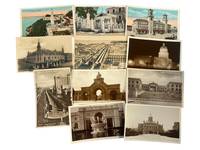
1920Best.-Nr. 224751920. Cuba Havana landmarks and urban development real photo post card archive ca. 1920s-1940s. 11 color and sepia real photo postcards of iconic civic and cultural architecture in Havana Cuba. Each measure 4" x 6". Many with captions identifying the locations in the negative or en verso with some printed in English and others in Spanish signaling their intended audience of both locals and foreign tourists. A compelling photo archive documenting early 20th-century Havana's architectural and political aspirations this collection showcases prominent landmarks that symbolized Cuba's nationalist identity international cosmopolitanism and American-influenced modernization in the decades between independence from Spain and the Cuban Revolution. The archive includes silver gelatin and printed color views of the National Theatre Cuba's Capitol Building Central Railway Station Gran Casino Nacional National University and the grand gateway of Havana's Colón Cemetery. Other views depict Paseo de Martí one of Havana's most iconic boulevards lined with vintage American cars and flanked by ornate colonial facades and new Art Deco-style hotels evidence of the influx of U.S. capital and tourism during the Batista era. Havana in this period was rapidly transforming into a showcase city of the Caribbean its urban core reflecting both Spanish colonial heritage and American urban planning models. The presence of monumental buildings like El Capitolio constructed between 1926 and 1929 and modeled after the U.S. Capitol in Washington D.C. points to Cuba's alignment with American political aesthetics and aspirations toward modern statehood. Similarly the University and Gran Casino Nacional represent both the intellectual elite and leisure-class investment that typified pre-revolutionary Cuban society. The mixture of European and U.S. architectural influences ranging from Beaux-Arts to Art Deco speaks to the layered colonial legacy and new economic dependency forged during the Platt Amendment era. Some mild edge wear. One card with a small corner crease others clean. Overall very good condition. This archive captures Havana in the midst of dramatic urban renewal and internationalization before the massive ruptures brought on by the 1959 revolution. unknown books
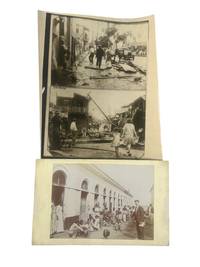
1928Best.-Nr. 219181928. Puerto Rico photo archive circa 1910s and 1928 documents colonial-era social conditions and hurricane destruction in the decades after the United States took control of the island. The archive centers on two related subjects: a large group portrait of Puerto Rican adults and children gathered outside a long arched building and press images of San Juan after the September 13 1928 San Felipe Segundo hurricane. The photographs provide visual evidence of everyday poverty built environment disaster damage and public movement through wreckage during a period shaped by U.S. civil government under the Foraker Act of 1900 and U.S. citizenship without voting representation in Congress under the Jones-Shafroth Act of 1917. Puerto Rico photo archive. Puerto Rico circa late 1910s and 1928. Three silver gelatin photographs with two images printed on one press sheet. Sizes range from 5 x 9 inches to 8.5 x 11 inches. The 1928 press photograph contains two stacked photojournalistic views of San Juan after the hurricane showing torn corrugated roofing broken utility poles damaged structures debris-filled streets and residents including children and laborers moving through the wreckage. The larger earlier image shows a white man standing before a long arched tenement-style or institutional building surrounded by Puerto Rican women men and numerous children many barefoot and wearing worn or minimal clothing; the image appears posed or observational but the man's role is not identified. The San Felipe Segundo hurricane struck Puerto Rico on September 13 1928 as a Category 5 storm and caused 312 reported deaths widespread housing destruction and several hundred thousand people left homeless giving the press images strong value as disaster documentation within a colonial setting. The earlier group photograph broadens the archive beyond catastrophe recording visible poverty dress housing and racialized colonial social relations without requiring unsupported identification of the white figure. Some edge wear tape on margins of smaller image and original editor's markings en verso to press photograph; very good. A compact Puerto Rico photo archive linking colonial-era social conditions with one of the island's most destructive twentieth-century hurricanes. unknown books
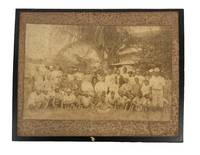
1890Best.-Nr. 208021890. Unidentified photographers two albumen photographs of Black laborers circa 1890s to early 1900s document agricultural and skilled work performed by African Americans in the decades following emancipation when systems of sharecropping and tenant farming structured rural economies across the American South and parts of the Caribbean. These images provide visual evidence of labor organization racial hierarchy and economic dependency that persisted after the formal end of slavery with large groups of Black workers shown in relation to white overseers or employers. One photograph presents approximately forty five Black men gathered around three centrally seated white men emphasizing supervisory roles and social stratification within plantation labor systems. The clothing of the workers including cotton shirts loose trousers and wide brimmed hats reflects adaptation to agricultural work in hot climates while a smaller number of individuals in jackets and pocket watches suggests internal distinctions within Black labor communities. The second image depicts six Black carpenters engaged in coordinated manual work at an outdoor shop indicating the presence of skilled trades alongside agricultural labor. Group of two albumen photographs mounted on original cardstock measuring approximately 8 x 9.5 inches and 10 x 12 inches. The larger photograph shows an outdoor woodworking scene with six men using tools including a hammer and saw working under a thatched structure suggestive of southern or Caribbean environments. The second photograph shows a large assembled group of plantation workers with three white men seated at center. Faint pencil annotations appear in the margins of one mount. Both photographs retain strong compositional clarity with figures arranged to emphasize both collective labor and hierarchical relationships. These photographs contribute to the study of post emancipation Black life by documenting how agricultural dependency and limited access to capital shaped labor conditions into the late nineteenth and early twentieth centuries. The plantation scene illustrates the persistence of racially stratified labor organization while the carpentry image provides evidence of skilled Black tradesmen operating within local economies often without institutional support or pathways to independent enterprise. The visual contrast between collective field labor and artisanal work expands the interpretive scope of the archive situating these images within broader histories of labor race and economic transition following the end of slavery. Edge wear and minor chipping to mounts with noticeable foxing to one image primarily at the margins; images remain legible and structurally intact. Overall good condition. unknown books
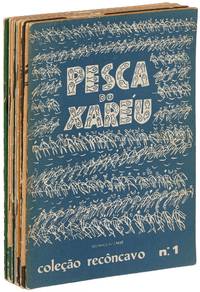
1955Best.-Nr. 593625Bahia Brasil: Livraria Progresso 1955. Softcover. Very Good. First editions. Illustrated by Caribé. Nine volumes lacking the 10th Orixás. Slim octavos. Stapled wrappers. Text in Portuguese. Moderate tanning and wear wrappers with some foxing and soiling topedges with a small splash of white paint sound and near very good. Each volume prints illustrations by Caribé from the Bahia State Museum as well as text by Caribé Odorico Tavares Vasconcelos Main José Pedreira or Carlos Eduardo. Each also has a number stamp on the copyright page from an unknown limitation. The titles are: A pesca do xaréu; Pelourinho; O jogo da capoeira; Feira de água de meninos; Festa do bonfim; Conceicão da praia; Festa de yemanjá; Rampa do mercado; and Temas de candomblé. Livraria Progresso unknown books
1655Best.-Nr. 5394Paris: Chez S. Cramoisy & G. Cramoisy 1655. SOLE EDITION. Hardcover. Fine. A fine copy in its original binding of 17th c. mottled French calf spine gilt and with red morocco label minor wear to the spine. Fine and fresh with just the occasional small rust spot. Engraved arms of the dedicatee Nicolas Fouquet on the second leaf. First edition of this rare relation describing the Jesuit missions in the Caribbean and on the South American mainland providing one of the earliest systematic accounts of the Lesser Antilles and Guiana. Much of the book is based on the author's firsthand experiences. He describes the foundation of churches the conversion of enslaved Africans and Indigenous nations Indigenous culture the moral and physical trials of evangelization and the natural history of the islands and mainland. Of special importance is the third part of the work: the author's grammar and vocabulary of the Galibi language one of the earliest printed studies of a South American Indigenous language. Pelleprat explains the purpose of understanding Galibi: "I have composed a small grammar and vocabulary of the Galibi language so that our Fathers who shall come after me may speak to these peoples in their own words and more easily win their souls to God." In 1651 Pierre Pelleprat was sent from France to the Antilles joining Fathers Denys Mesland François Gueymeu and Guillaume Aubergeon. The Jesuits served the indigenous Amerindians enslaved Africans and Irish and French settlers. Two years later Pelleprat and Mesland sailed for the mainland where they established a mission on the Guarapiche River near the Gulf of Paria. After Mesland's departure was Pelleprat remained alone continuing his missionary work and studying the local language. Illness forced him to return to the islands in 1654. He petitioned to return to Europe but was denied and instead lived out the remainder of his life in Mexico dying at Puebla de los Angeles in 1667. The preface outlines the establishment of the Jesuit mission in the French Caribbean following the founding of Martinique and Guadeloupe in 1635. Pelleprat recounts the arrival of the Jesuits and their efforts to learn the native languages in order to communicate doctrine record confessions and translate prayers. His descriptions of the climate geography and local governance of the islands are accompanied by remarks on Indigenous customs domestic life and religious beliefs. Pelleprat portrays the Indigenous inhabitants with clarity and sympathy. They are "without guile or malice. and capable of every good doctrine. They are neither cruel nor treacherous as some have claimed; rather they are generous and easily moved to affection when treated with kindness." He notes the Galibis skill in painting and weaving: "They take great care in painting their bodies and in making their cotton cloths which they dye with beautiful colors." The author records local fishing and hunting practices the use of pirogues canoes along the coasts and the construction of dwellings raised above ground: "They live by fish and roots in houses built upon poles to guard against the waters and the reptiles." He marvels at the beauty and richness of South America: its landscape flora and fauna: "the trees of these islands bear fruit twice a year and the soil is so rich that it needs only to be turned over to yield harvests beyond expectation". The Galibi Language Pelleprat's introduction to the Galibi language is one of the earliest printed attempts to describe and translate a South American Indigenous language. He explains the purpose of understanding Galibi: "I have composed a small grammar and vocabulary of the Galibi language so that our Fathers who shall come after me may speak to these peoples in their own words and more easily win their souls to God." Pelleprat opens by justifying his study as a means to conversion writing that "the barbarous nations. are so docile and so well disposed to receive the Gospel that they await only its preaching." His goal is not philological in the modern sense but practical: to prepare future missionaries to communicate Christian doctrine. Even so his careful observations show an emerging recognition of linguistic structure. He notes that "this language has its own rules its order and its way of composing words" an acknowledgment that Amerindian languages were coherent systems rather than the "corrupted" or "primitive" speech often imagined by Europeans. The Introduction proceeds systematically identifying letters pronunciation and basic grammar before offering a brief bilingual vocabulary. Pelleprat outlines nouns pronouns and verb forms and includes everyday expressions drawn from conversation. The vocabulary reveals the priorities of the missionary encounter pairing religious and material terms: "God" and "Devil" "soul" "heaven" and "earth" alongside "river" "house" and "friend." Through such juxtapositions the work translates the Christian world into the idiom of local experience. Pelleprat also recognizes the limits of his own learning admitting that he "has gathered what he could learn from the natives themselves" and that the book is only a "first attempt." The Islands of America Pelleprat opens with the Jesuits' first arrival at Martinique and he describes the founding of chapels the teaching of catechism and the first baptisms. When the mission expanded to Guadeloupe and Saint Christopher St Kitts he wrote: "we carried with us neither gold nor silver but the Cross of Christ and a heart desirous only to win souls. With this we founded our first church on the edge of the sea the waves serving us for organ and bells." p. 17 Pelleprat relates the successful conversion of enslaved Africans: "for although they have been reared in brutishness many become so chaste and honest when they are Christians that they would rather die than commit the least indecency." p. 33 Irish Catholics who had been exiled by the English sought out the Jesuits for Mass and confession and Pelleprat recounts the secret ministry carried out among them and the extraordinary virtue of an Irish girl raised in disguise to preserve her chastity. "I cannot omit the victory that a young Irish girl won over the weakness of her sex. This girl had come very young to America and her father to protect her had disguised her and raised her in the dress of a boy." pp. 49-50 Pelleprat explains how conversion altered conduct during epidemics and famine and the devoutness of the newly converted: "In the time of pestilence when even the air seemed to breathe death our new Christians came in great numbers to confession and communion choosing rather to die reconciled to God than to live without His grace." p. 47 The Mainland of South America The second section records numerous observations on the geography and natural history of Guiana: "I saw serpents with wings like bats and fish that fly above the water; trees whose leaves close at night as if they slept and others that exude milk when cut." p. 88 "The rivers here are broader than many seas their waters dark as ink under the forest's shadow. The land breathes a perpetual spring; trees bear fruit without ceasing and the air is so temperate that one would think Nature had chosen this region for her rest." p. 60 Pelleprat records the manners dwellings and ceremonies of the Guianese nations: "They are of good stature well-formed their countenance open and agreeable. Their huts are made of palm leaves their hammocks of woven cotton their vessels of baked clay painted with strange figures . . . When we entered their villages they offered us cassava bread and the drink of their country pressing us to sit in their hammocks which they esteem as the greatest courtesy." p. 67-69 Chapter VI outlines the political and moral order of Indigenous societies. Government Pelleprat notes is communal and tempered by reason: "Their government is gentle; they obey the oldest or the bravest and all decisions are taken in council with much shouting but little injustice." p. 92 "When one dies they burn his hammock and his weapons believing that he will find them again beyond the river of souls." p. 93. Chez S. Cramoisy & G. Cramoisy hardcover books
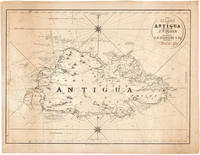
1860Best.-Nr. 48522Antigua but actually Philadelphia: R.B. Eldridge & Co. ca.1860. Interesting Map of the Island of Antigua An unusual lithographic edition of Norie's 1827 revision of this handsome chart lithographed by Wagner & McGuigan in Philadelphia. A statement in the cartouche reads: "Presented by R.B. Eldridge Antigua to Captain Andrew Tyler." The captain's name is accomplished in manuscript. R.B. Eldridge is not listed in Tooley's DICTIONARY OF MAPMAKERS and appears to be unrelated to publisher of charts George Eldridge. It seems most likely that he was rather an Antigua merchant who commissioned a reprint of the chart for complimentary distribution to sea captains. A handsome piece. Lithographic sheet map 20½ x 26½ inches. Backed with contemporary blue paper. Light foxing and toning. A few small tears in margins. Very good. unknown books
Best.-Nr. 5300CARIBBEAN TRAVEL JOURNAL. Diary. 101 pages. The Caribbean. c. 1908-9. The handwritten journal belonging to C. B. Benson of Hudson New York. The diary recounts Bensons experience on an organized cruise group visit to Caribbean locations such as St. Thomas Puerto Rico Kingston Jamaica Caracas Venezuela Panama City Panama Port of Spain Trinidad and Martinique. Benson records his experiences in each location including his impressions of the town the locals sights he visited and local travel. He visited forts a school churches a mill a sugar plantation and Carnival celebrations. Benson took his tour during the era of colonial rule the attitudes of which infuse both his experiences and observations. Based on his mention of an earthquake in Kingston Jamaica taking place a year or two before he travelled in 1908 or 1909. St. Thomas where we arrived about 6 A.M. mid morning Jan 26 is one of the Virgin group and we found her framed and frescoed in the principal churches. Columbus in 1493 gave the group of 100 islands rocks andwhich comprise the group. St. Thomas is 13 miles in length and 3 miles in width at its broadest. And I guess we walked the length of it speaking broadly and in the abstract at this distance.The heat of the tropical sun also takes its toll and blurs our ideas of time and distance somewhat. The town of Charlotte Amelia contains 13000 inhabitants merchants and black babies and they are all dressed in their Sunday best to receive us properly.Thursday morning at 8 we went ashore at Porto sic Rico.Returning thro the village streets we stopped at the market place and noticed the display of fruits in baskets a couple of men seated on low stools with blacks in front of them.a native womanwas entertaining us in the middle of the road with a dance.When passing the island of Haiti.Do you know why we do not stop at the Island of Haiti No There are cannibals there there are so many fat people aboard you would lose your wife At St Thomas the American council held open house and received some of us who dared to invade this solitude.An hours railroad ride which was made interesting by stops at every littleand station where the bare legged boy with the oil gun in hand squirted oilbearings sic of the cars and engine. As it was before the 17 miles came to an end the rear axle of the parlor car so called because it had leather covered reclining seats caught fire. But when this happened we were nearly at the end of our journey and we were not delayed much. At the sugar plantation where we detrained we found we had some distance to walk downto the sugar mill. As there was no path and the sticky wet ground to soil made worse by the heavy rain of the night before.A sugar mill is never a clean place.The process is somewhat intricate but way he likened to the process of brewing.The cane piled up in the yard is boiled in a number of vats then is run off with barrels and in a black and solid state in shipped to the Refineries at New York. The fiber of the cane is then hardened and dried and is fed to the furnaces to boilcane. After return to the town San Juan we visited the shops. Walked out to the fort at the entrance of the harbor. The town is excellently policed and paved in the principal streets with telegram blocks.As this day was Thursday we concluded that every day was wash day for the native women and girls who for want of other diversions spend most of their time in this form of dissipation. Even the balconies of the main public street filled with traffic of street cars carriages and drays had their fill of wash some of which are found laying in the street having been carried down by the wind. No one had appropriated it as yet; and we did not add it to our collection of souvenirs. At the officers quarters I applied for a permit of the officer of the day to enter the fort San Cristobal the fort commanding the entrance to the harbor.The fort was like most forts. The high tower gave a commanding view of the town and harbor. Then we visited the Governors Palace. In the Reception Room hanging on opposite sides facing each other are life sized oil paintings of McKinley & Cleveland. In the garden were some large palms tropical ferns a fountain &.Jan 29. early in the morning we were at Kingston in Jamaica. The channel is narrow and tortuous but well Taking a local pilot we soonopposite itof three vessels one of which was the Princess Louise that was caught in the hurricane here three years ago andthe larger of the three vessels was trying to pick up the light from the light house which had been blown down. This destruction of the hurricane.After driving about a mile thru the city the destruction to the buildings & pavements made by the earthquake here a year or two ago half of the city seems to be in ruins and no attempt has been made apparently to rebuild & restore the city. Thousands of lives were lost here at that time which did immense damage to the fruits. Most of the uninhabitable part of the island belongs to the United Fruit Company a Boston Corporation who ships immense quantities of bananas from Port Antonio. Owing to recent destruction by fire of Hotel Litchfield our stop at the port of San Antonio and stay of night at the Hotel was omitted. An excursion across the island by train to Mandeville was arranged in its place.The town of Colon in its principle streets are paved with brick and appear clean. We noticed many buzzards. The air was clear and there was a delightful cool breeze blowing.We stopped at all of the stations going to Panama and noted the wonderful impressions made by the Sanitary Commission. The well ventilated and screened houses. The plan for disposal of garbage the open drainage the cleared landsBut of course the facts are here bug and drain all working to the mutual exclusion of some ideas to the American white employers. Therefore after a few months they must have a reaction in the States toand detach themselves from all absorbing facts. The fighting for life againstfires. Most things arebetween the white employers and the black employees. So we find the White Bar and the Black Bar The White Employees The Silver White Employees &c as signs on the cars intended to carry workmen back and forth from the works.Caracas the capital of Venezuela is about 3000 ft up but the sun in the middle of the day we found very hot.Plaza Bolivar was decorated with rows of colored electric lights. They are preparing for the Carnival season which ushers in Lent in Catholic countries. The market place had counters for dry goods highly colored handkerchiefs etc. Another section was devoted to fruits vegetables etc. We noticed some very large apricots. Mr. Bolivar apparently has done a great deal for his native town. He has given his name while the people furnished the funds for the largest parks a street and the coinage of the plutocrats.The Spaniard theHildago -in his easy subjugation of thepleasure loving tropical savage has replaced the native of simple taste and left in his place the mongrel half-breed with all the vices of the conqueror and none of the virtues of theIndian savage. The diary is in very good condition. It is mostly written in pencil but is quite legible. hardcover books
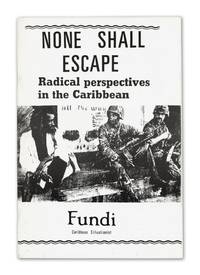
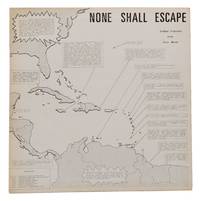
Best.-Nr. 140948802London: News from Everywhere 1988. First edition. Fine. First edition. 21 pp. Staple bound in publisher's printed wraps. Fine condition; lacking folding map originally laid in. Rare with only nine copies located in OCLC. Ford 245. The key text of the one-man Caribbean Situationist movement which was inspired by the '60s Paris-centered avant garde Marxist group the Situationist International. It comprises the three essays "Radical Perspectives in the Caribbean" "What Padmore Passed Through" about Pan-Africanist leader George Padmore and "The Adventures of Westmoreland" about labor struggles in a southwestern parish in Jamaica. News from Everywhere unknown books
Best.-Nr. 140948116London: Caribbean Situationist 1973. First edition. Original pressing. Vinyl LP in sleeve complete with both poster inserts. Very Good album deep scratch to first track of Side 1 other than that the wear is light; tiny nick to label on Side 1. Sleeve Near Mint slightly bumped bottom corner very slight rubbing and toning. Hint of foxing to the map poster else the posters are Fine folded in fours as issued. A very rare spoken word album of sorts by the Jamaican refrigerator repairman and labor organizer Joseph Edwards under the nom de plume Fundi the Caribbean Situationist. He was inspired by the French-based radical Marxist group The Situationist International who played an important role in the May 1968 student revolt in Paris there were also Scandinavian British and American grouplets that were forever clashing with co-founder Guy Debord in Paris. to start a one-man Caribbean offshoot combining Debord's philosophy with Rastafarianism Trotskyism Black Power and syndicalism. A fascinating document of avant garde politics and media analysis in the Third World during the 1970s. Caribbean Situationist unknown books
1973Best.-Nr. 44039London: Caribbean Situationist 1973. First Edition. thus. Very good. Poster reproducing translated text by Khayati originally published in Internationale Situationniste and subsequently as a brochure in 1971 Ford 167. Illustrated with black and white photographs of Kingston Jamaica; Trinidad; and Hungary. Lower right corner includes a blank space intended to advertise a record shop where an LP of the text apparently spurious would be available. Uncommon. OCLC odes not locate a copy though there does appear to be on at Michigan. Wraps. Poster folded into quarters 36" x 23" approx. unfolded. Verso lightly toned; moderate wear to edges and fold lines. Creasing to corners. Very good. Caribbean Situationist paperback books
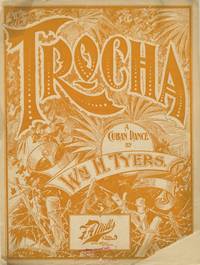
1890Best.-Nr. List3666New York: Jos. W. Stern & Co 1890. Folio sheet music illustrated pictorial cover printed in orange. 5 pp. including cover. Approximately 13 ½ x 10 ½ inches. Covers detached loss to front cover contents complete fair to good. A decorative late nineteenth-century dance publication for “Trocha” described on the cover as “A Cuban Dance” composed by the African American composer and bandleader W. H. Tyers. The elaborate pictorial cover incorporates stylized tropical foliage and island scenery rendered in a bold single-color design typical for the period’s fascination with exoticized musical forms. William H. Tyers 1870–1924 was an African American composer arranger and bandleader active in New York during the ragtime era. Born in Petersburg Virginia to Henry Tyers and Jane “Jennie” Jones both formerly enslaved he spent part of his youth in Richmond before his family relocated to New York City where he began studying piano. His early teachers recognized an aptitude for composition as well as performance and by the mid-1880s he was writing dance pieces including polkas and waltzes. Around the age of twenty Tyers secured employment as a music librarian and arranger with a touring concert company a position that brought him to Europe where he studied orchestration and arranging with Professor Gaspari in Hamburg. Returning to New York Tyers became active in the city’s rapidly expanding popular music trade working as an arranger and composer for publishers including F. A. Mills and Jos. W. Stern & Co. In 1896 he published “Sambo” a syncopated march sometimes considered to be one of the first instrumental rags.1 “Trocha” also released in the 1980s brought Tyers prominence for his ability to write Latin-style rhythms. It was re-issued in 1913 as a tango and its success led Tyers to work as an arranger with Joseph W. Stern in 1897. Tyers’ compositions blended contemporary American dance music with Caribbean and Latin themes a style reflected in pieces such as Trocha and later in his well-known ragtime composition Panama 1911 which remained a staple of early jazz and dance orchestras. OCLC finds two copies with different entries at the Cleveland Public Library and the British Museum Reference Collections. 1 “William Tyers Music Arranger” African American Registry https://aaregistry.org/story/william-tyers-born/ accessed March 10 2026. Jos. W. Stern & Co unknown books
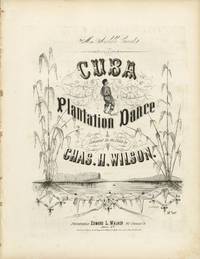
1855Best.-Nr. List3682Philadelphia: Edward L. Walker 142 Chestnut St. above 6th 1855. Folio sheet music pictorial lithographed cover approximately 13.5 × 10.5 inches. Light edge wear and minor toning; very good with a strong impression of the cover illustration. An antebellum piano dance reflecting the plantation imagery that circulated widely in mid-nineteenth-century American popular music. “Cuba Plantation Dance” was composed by Chas. H. Wilson a little-documented composer whose name appears chiefly in connection with this work and issued in Philadelphia during the early 1850s by Edward L. Walker the predecessor firm to the major publishing house Lee & Walker. A copy is recorded in the Levy Collection at Johns Hopkins which dates the publication to 1855. The cover presents a stylized plantation landscape framed by tall stalks of sugar cane with a small central vignette of a dancing Black figure. The use of Cuban plantation imagery reflects contemporary American fascination with the Caribbean sugar economy and with plantation life beyond the United States. During the 1850s Cuba was one of the largest slave societies in the Atlantic world. By the midcentury the island’s sugar plantations relied on hundreds of thousands of enslaved Africans and the enslaved population of Cuba was estimated at roughly 400000 people in the 1840s–1850s working primarily in the rapidly expanding sugar industry. Although Spain formally agreed to end the Atlantic slave trade in 1820 illegal importations of enslaved Africans into Cuba continued for decades supplying labor for the island’s plantations well into the 1850s. American publishers frequently borrowed such imagery for plantation-themed dance music marketed to the parlor trade. Pieces labeled “plantation dances” or “Ethiopian dances” formed part of the broader culture of minstrel and plantation entertainment. The title page bears a dedication to “Miss Arabelle Conrad” typical of mid-century sheet music addressed to amateur pianists. Along with the aforementioned copy in the Levy collection we find copies at Michigan and Temple. Edward L. Walker, 142 Chestnut St., above 6th unknown books
1898Best.-Nr. List2965United States and Caribbean 1898. Approximately twenty-nine pieces: logbook of eighty-four double-sided pages measuring 13 x 20 inches; eight letters seventeen documents and forms and three pieces of miscellany. Much wear and significant damage to logbook including water damage mildew and tearing; log book overall fair to good minus. Other materials good to very good. Overall good. William Higgins 1791–1872 was a farmer sea captain and owner of and investor in ships from Bowdoinham Maine. According to the Maine Maritime Museum which holds his family papers Higgins’ ships traded mainly in lumber which they took from Wilmington North Carolina to the Caribbean. Offered here is a logbook recording the travels of several of Higgins’ ships particularly the brigs Mary Jane and Llewellyn alongside related documents and personal letters. The logbook dating between 1832 and 1836 extensively documents the course wind data and weather remarks for travels of the ships between east coast US port cities and various locations in the Caribbean including Barbados St. Thomas and Martinique. The logbook also contains a copy of astronomer and mathematician Elijah Burritt’s illustration “A Plan of the Solar System Exhibiting its Relative Magnitudes and Distances” engraved by W. G Evans and printed in 1835 by F.J. Huntington. The letters and documents date from 1830 to 1867 and are also mostly business-related including an insurance document for the brig William Parrington a roll of sailors enlisted to work on a six-month journey between the Caribbean and the US in 1845 a bill of sale for ¼ stake in the brig Mary Jane and receipts and logs for items including various liquors sugar molasses casks and so on. One letter from a young man in Wilmington requests advice on how to start his own business in the style of Higgins’; other letters concern family matters. One interesting undated document is a writ addressed to the Marshal of the District of Maine concerning a lawsuit filed against Higgins and Rufus Carr master of the William Parrington by Zachrisson Nelson Co. The suit alleged that Carr acting as an agent for the ship’s owners that is Higgins had agreed to an affreightment involving shipping from Jamaica to Spain to New York but had then “wholly neglected and refused to do so”. Of interest to scholars of maritime history and trade in the mid-19th century. unknown books
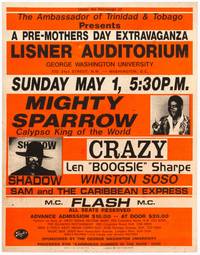
1988Best.-Nr. 564096Landover Maryland / Washington D.C.: Special Effects Inc. / George Washington University 1988. Softcover. Very Good. Poster. Measuring 22" x 28". Printed in orange and black on thick coated card stock. Staple holes some foxing and soil a very good copy of a scarce poster advertising a 1988 performance by some of the world's greatest Calypso artists. Special Effects Inc. / George Washington University unknown books
2002Best.-Nr. 23739Athens: University of Georgia Press. Fine in Fine dust jacket. 2002. Hardcover. 0820324175 . First printing. Fine in a fine dust jacket. . University of Georgia Press hardcover books
1987Best.-Nr. 10242Chicago: University of Chicago Press. Near Fine in Near Fine dust jacket. 1987. Hardcover. 0226499901 . First printing. Near fine in a near fine light vertical crease to front flap dust jacket. . University of Chicago Press hardcover books
1981Best.-Nr. 37442Old Chatham:: Sachem Press. Fine. 1981. Paperback. 0937584029 . Bilingual edition: Spanish and English. Translated with an essay by H. R. Hays. Edited with an introduction by Louis Hammer. First paperback edition. Fine in pictorial wraps.; 122 pages . Sachem Press, paperback books
1901Best.-Nr. 2221928First edition. Small octavo. Illustrated with b/w photos by V.K. Van De Venter Robin H. Ford John H. Rising L.E. Mayo and W.G. Spiker. Original grey pictorial cloth stamped in gilt black and green. No dust jacket. Very good small crack at rear joint. 220 pages 3 pages of ads. No signatures or bookplates. Scarce. The Rumford Press hardcover books
1905Best.-Nr. 105099Four postcards approximately 3 1/2" x 5 1/2" with stamps. Some writing on image side post marked some aging and browning edges slightly bumped; otherwise very good. This collection of four postcards from Cuba are postmarked stamped and written out. The authors are Anna and Nestor although in one card the author is less clear to a Miss K. Greve. Who lived in the upper West side of New York City. One card features Baby New Year for 1907 and has some color; the other three show La Catedral a promenade and what appears to me some kind of American monument. books
1961Best.-Nr. 2221673First edition. Octavo. Frontispiece drawing of Adam and Eve by Tomas Di Taranto. Original stiff white wrappers light soiling; short tear. No dust jacket. Very good. 143 pages. Signed and inscribed by Pinto on half title page to poet Alicia Ghiragossian; with name stamped on title page. Francisco A. Colombo paperback books
1965Best.-Nr. 2221599First edition. Small thin octavo. Preface by Felix B. Visillac. Original stiff tan wrappers stamped in black. Text browned due to paper quality. Very good. 54 pages. Signed and inscribed by author to poet Alicia Ghiragossian on title page. Direccion Lafuente paperback books
2003Best.-Nr. 31672Westport: Greenwood Press. As New. 2003. Hardcover. 0313323941 . First printing. As new in glossy illustrated boards. No dust jacket as issued. . Greenwood Press hardcover books
Best.-Nr. ria9789211592016_inpPaperback / softback. New. New Book; Fast Shipping from UK; Not signed; Not First Edition; Digital transformation in public systems depends on more than deploying ICT. Institutional cultural regulatory technical organizational and leadership factors are crucial to consolidating digital government. A robust model of digit paperback
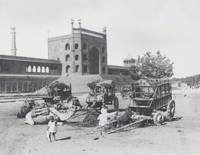
Best.-Nr. PF38Quarto album ca. 282x175 cm 11 x 7 in. 24 card stock leaves. With 94 mounted original gelatin silver photographs ca. 9x115 cm 3 ¾ x 4 ½ in. Ca. 77 photos with period English ink captions on the mounts. Period hunter green full-cloth album with the gilt-tooled sunburst motif and the generic title “Photographs” on the front cover. Paper inventory label and pencil trances on the front cover worn edges two photos missing but otherwise a very good album with strong interesting photographs. Historically interesting album with excellent original photographs apparently taken by a British tourist during a voyage from England to present-day India the Mediterranean and the Caribbean at the turn of the twentieth century. The album follows a wide-ranging journey that begins in Calcutta then the capital of British India and continues through Varanasi Lucknow Agra and Delhi capturing the movement of the travelers across northern India. From there the route turns south to Madras and Colombo in Sri Lanka where the party embarked on a long sea passage. Traveling by steamer through the Suez Canal with recorded stops at Port Said and Malta the voyage gradually leads to the Caribbean. The final portion of the album centers on their time in Havana and is especially notable for its firsthand visual record of the aftermath of the 1902 eruption of Mount Pelée which devastated the city of Saint-Pierre on Martinique. The album contains ninety-four well-executed photographs with most images of colonial India. About thirty early vibrant views portray iconic landmarks of Calcutta Tagore Castle Varanasi Monkey Temple Manikarnia Ghat Jaipur temples Agra exterior and entrance of Taj Mahal Delhi Sixty-four pillars interior the Great Mosque Jama Masjid jumping wells city gates Lucknow Gate of Kaiser Bagh the Residency Madurai Meenakshi Amman Temple and Madras the Great Pagoda Parthasarathy Temple. Especially interesting are over twenty candid urban scenes showing a snake charmer playing pungi an elephant transporting passengers boys gathering coal near railway tracks steamer passengers crossing the Ganges at embarkation point and dozens of Indians strolling through native markets guiding ox carts or gathered for communal prayer. The rest of the Indian photos comprise excellent nature and street views as well as a portrait of the apparent well-dressed compiler posing by his/her companion at a Bombay Harbor. About fifteen lively vernacular photos from Sri Lanka include views of the Galle Road Maligakane Temple the Galle Face Hotel and vibrant street scenes with locals in traditional attire strolling through the bustling thoroughfares. The Caribbean series contains over twenty-five excellent photos with the most interesting images documenting the infamous 1902 eruption of Mount Pelée and the ruins of Saint-Pierre Martinique. Other important identified photographs feature the sunken USS Maine in Havana Harbor an event that helped prompt the Spanish–American War as well as views of Castillo de los Tres Reyes del Morro Havana Wharf and Havana street scenes. The series also includes views of Kingston Harbor in Jamaica together with other lively candid scenes. The collection further contains several photographs of Port Said and Valetta mostly showing harbor and sea views. Overall a historically interesting album with excellent original gelatin silver photographs taken during a voyage from British India to the Mediterranean Sea and the Caribbean at the turn of the twentieth century. hardcover