Mixer, KnowltonBiblio.com

1.022 Ergebnisse
1926Best.-Nr. 21216New York: The MacMillan Company. Very Good in Very Good- dust jacket. Hardcover. White DJ with a bit of darkening and with light chipping. One small open tear to DJ front closed tears to DJ back. Price clipped. Boards with light rubbing to extremities.; A comprehensive look at the island. Including a rear fold-out railroad and road map printed on japon paper. - Chapters include: Geology Topography Climate History The Discovery Prehistoric Customs and Habits of the People Economic Conditions Social Problems The Jibaro Education Government Twenty-Five Years of American Cooperation. The appendix includes: Transportation Hotels Roads Clubs Cost of Living. Summary of Organic Laws Labor Cities.; B&W Photographs; 8vo 8" - 9" tall; 329 pages . 1926. The MacMillan Company hardcover
1937316p., illus. Hardcover Very good condition good
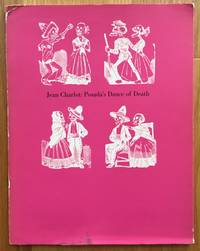
1964Best.-Nr. 002757New York: Pratt Graphic Art Center 1964. Paperback. Very Good. Eichenberg Fritz. 8vo. 12 pp. 4 pages of plates. Bound in stapled dark pink wrappers with cover illustration in white and title in black. One wood engraving by Fritz Eichenberg on title page signed by him in pencil and four relief engravings by José Guadalupe Posada. Printed in an edition of 500 numbered copies signed by Charlot on colophon this is No. 67. Very Good internally clean and sound rubbing and wear to extremities - heaviest at spine 1/2" tear to head of spine 1" dark smudge to lower front cover. Pratt Graphic Art Center paperback
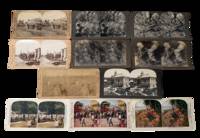
1890Best.-Nr. 231711890. Stereoview archive of the post-emancipation Caribbean showing how the islands were marketed to western viewers through plantation labor export agriculture civic spectacle and catastrophe. As a group these photos function not only as an ethnographic travel archive but as evidence of the visual economy that followed slavery. The British West Indies moved through emancipation in 1834 to 1838 the French Caribbean in 1848 Puerto Rico in 1873 and Cuba in 1886 yet plantation production remained central to regional life well into the early twentieth century. These stereoviews preserve a colonial way of seeing in which Black and Afro-Caribbean labor rural discipline and extractive agriculture remained the background condition of "tropical" beauty and commercial modernity. Cuba's sugar economy in particular expanded through the nineteenth century and slavery was not abolished there until 1886 while Weyler's later reconcentration policy during the Cuban War of Independence violently reorganized rural life. Martinique after 1848 likewise shifted into new labor regimes including imported workers from India and China. Archive of 11 stereoview cards late 1890s to early 1900s depicting Cuba Jamaica Martinique Puerto Rico and the Dominican Republic. Most black and white with a few colorized. Each measure 3.5" x 7". All with captions on the margins. "Reconcentrado Farming Scene Province of Havana Cuba" links agricultural production to the brutal displacements of Spain's reconcentration campaign; "Cutting sugar cane Montego Bay Jamaica W.I." records cane labor in a colony where emancipation had not ended plantation dependency; and "Harvesting Coconuts Porto Rico" likewise frames Caribbean land through export work rather than local life. Other views extend that economic framing through cacao and coffee scenes while the paired Havana cards shift into urban leisure and public display including "Beautiful Central Park Havana Cuba" and "Holiday in Havana Cuba" the latter with both Cuban and American flags visible a telling image of the new imperial order after 1898. The disaster views from Martinique and the Lesser Antilles show how stereoview publishers also turned Caribbean destruction into consumable spectacle. the Morne Rouge card is accompanied on the reverse by the grim printed text "Dead bodies which were to be seen in Morne Rouge." while the wider context is the 1902 eruptions of Mount Pelée in Martinique and La Soufrière on Saint Vincent two catastrophes that killed roughly 30000 and 1600 people respectively and devastated local communities and agriculture. Some corner wear light toning scattered surface and edge wear. Overall very good condition. This collection gives direct visual representation of Caribbean history Atlantic slavery and emancipation plantation labor and U.S. imperial expansion in the circum-Caribbean preserving the transition from slavery to post-abolition labor. unknown
1890Best.-Nr. 231711890. Stereoview archive of the post-emancipation Caribbean showing how the islands were marketed to western viewers through plantation labor export agriculture civic spectacle and catastrophe. As a group these photos function not only as an ethnographic travel archive but as evidence of the visual economy that followed slavery. The British West Indies moved through emancipation in 1834 to 1838 the French Caribbean in 1848 Puerto Rico in 1873 and Cuba in 1886 yet plantation production remained central to regional life well into the early twentieth century. These stereoviews preserve a colonial way of seeing in which Black and Afro-Caribbean labor rural discipline and extractive agriculture remained the background condition of "tropical" beauty and commercial modernity. Cuba's sugar economy in particular expanded through the nineteenth century and slavery was not abolished there until 1886 while Weyler's later reconcentration policy during the Cuban War of Independence violently reorganized rural life. Martinique after 1848 likewise shifted into new labor regimes including imported workers from India and China. Archive of 11 stereoview cards late 1890s to early 1900s depicting Cuba Jamaica Martinique Puerto Rico and the Dominican Republic. Most black and white with a few colorized. Each measure 3.5" x 7". All with captions on the margins. "Reconcentrado Farming Scene Province of Havana Cuba" links agricultural production to the brutal displacements of Spain's reconcentration campaign; "Cutting sugar cane Montego Bay Jamaica W.I." records cane labor in a colony where emancipation had not ended plantation dependency; and "Harvesting Coconuts Porto Rico" likewise frames Caribbean land through export work rather than local life. Other views extend that economic framing through cacao and coffee scenes while the paired Havana cards shift into urban leisure and public display including "Beautiful Central Park Havana Cuba" and "Holiday in Havana Cuba" the latter with both Cuban and American flags visible a telling image of the new imperial order after 1898. The disaster views from Martinique and the Lesser Antilles show how stereoview publishers also turned Caribbean destruction into consumable spectacle. the Morne Rouge card is accompanied on the reverse by the grim printed text "Dead bodies which were to be seen in Morne Rouge." while the wider context is the 1902 eruptions of Mount Pelée in Martinique and La Soufrière on Saint Vincent two catastrophes that killed roughly 30000 and 1600 people respectively and devastated local communities and agriculture. Some corner wear light toning scattered surface and edge wear. Overall very good condition. This collection gives direct visual representation of Caribbean history Atlantic slavery and emancipation plantation labor and U.S. imperial expansion in the circum-Caribbean preserving the transition from slavery to post-abolition labor. unknown books
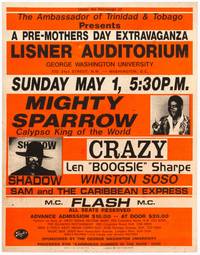
1988Best.-Nr. 564096Landover Maryland / Washington D.C.: Special Effects Inc. / George Washington University 1988. Softcover. Very Good. Poster. Measuring 22" x 28". Printed in orange and black on thick coated card stock. Staple holes some foxing and soil a very good copy of a scarce poster advertising a 1988 performance by some of the world's greatest Calypso artists. Special Effects Inc. / George Washington University unknown
1988Best.-Nr. 564096Landover Maryland / Washington D.C.: Special Effects Inc. / George Washington University 1988. Softcover. Very Good. Poster. Measuring 22" x 28". Printed in orange and black on thick coated card stock. Staple holes some foxing and soil a very good copy of a scarce poster advertising a 1988 performance by some of the world's greatest Calypso artists. Special Effects Inc. / George Washington University unknown books
1931Best.-Nr. 014924Paris La Caravelle - "Le Livre & l'Image" 1931 In-8 Broché Dédicacé par l'auteur
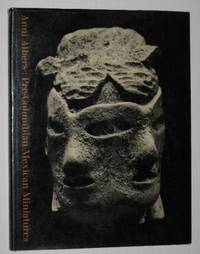
1970Best.-Nr. 000206New York: Praeger 1970. First Edition. Hardcover. Very Good/Good. 4to. Unpaged. Bound in yellow cloth in black dust jacket printed in orange. Illustrated with black and white photographs by John T. Hill. Forward by Ignacio Bernal. Introduction by Michael D. Coe. Very Good 1/8" stain through first few pages minor age-toning to upper edge of several pages photographs sharp and clean in Good price-clipped dust jacket 1/2" closed tear and several small gouges to upper right corner of back cover light overall scuffing. Praeger hardcover
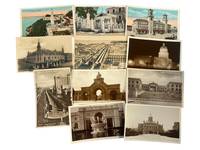
1920Best.-Nr. 224751920. Cuba Havana landmarks and urban development real photo post card archive ca. 1920s-1940s. 11 color and sepia real photo postcards of iconic civic and cultural architecture in Havana Cuba. Each measure 4" x 6". Many with captions identifying the locations in the negative or en verso with some printed in English and others in Spanish signaling their intended audience of both locals and foreign tourists. A compelling photo archive documenting early 20th-century Havana's architectural and political aspirations this collection showcases prominent landmarks that symbolized Cuba's nationalist identity international cosmopolitanism and American-influenced modernization in the decades between independence from Spain and the Cuban Revolution. The archive includes silver gelatin and printed color views of the National Theatre Cuba's Capitol Building Central Railway Station Gran Casino Nacional National University and the grand gateway of Havana's Colón Cemetery. Other views depict Paseo de Martí one of Havana's most iconic boulevards lined with vintage American cars and flanked by ornate colonial facades and new Art Deco-style hotels evidence of the influx of U.S. capital and tourism during the Batista era. Havana in this period was rapidly transforming into a showcase city of the Caribbean its urban core reflecting both Spanish colonial heritage and American urban planning models. The presence of monumental buildings like El Capitolio constructed between 1926 and 1929 and modeled after the U.S. Capitol in Washington D.C. points to Cuba's alignment with American political aesthetics and aspirations toward modern statehood. Similarly the University and Gran Casino Nacional represent both the intellectual elite and leisure-class investment that typified pre-revolutionary Cuban society. The mixture of European and U.S. architectural influences ranging from Beaux-Arts to Art Deco speaks to the layered colonial legacy and new economic dependency forged during the Platt Amendment era. Some mild edge wear. One card with a small corner crease others clean. Overall very good condition. This archive captures Havana in the midst of dramatic urban renewal and internationalization before the massive ruptures brought on by the 1959 revolution. unknown
1920Best.-Nr. 224751920. Cuba Havana landmarks and urban development real photo post card archive ca. 1920s-1940s. 11 color and sepia real photo postcards of iconic civic and cultural architecture in Havana Cuba. Each measure 4" x 6". Many with captions identifying the locations in the negative or en verso with some printed in English and others in Spanish signaling their intended audience of both locals and foreign tourists. A compelling photo archive documenting early 20th-century Havana's architectural and political aspirations this collection showcases prominent landmarks that symbolized Cuba's nationalist identity international cosmopolitanism and American-influenced modernization in the decades between independence from Spain and the Cuban Revolution. The archive includes silver gelatin and printed color views of the National Theatre Cuba's Capitol Building Central Railway Station Gran Casino Nacional National University and the grand gateway of Havana's Colón Cemetery. Other views depict Paseo de Martí one of Havana's most iconic boulevards lined with vintage American cars and flanked by ornate colonial facades and new Art Deco-style hotels evidence of the influx of U.S. capital and tourism during the Batista era. Havana in this period was rapidly transforming into a showcase city of the Caribbean its urban core reflecting both Spanish colonial heritage and American urban planning models. The presence of monumental buildings like El Capitolio constructed between 1926 and 1929 and modeled after the U.S. Capitol in Washington D.C. points to Cuba's alignment with American political aesthetics and aspirations toward modern statehood. Similarly the University and Gran Casino Nacional represent both the intellectual elite and leisure-class investment that typified pre-revolutionary Cuban society. The mixture of European and U.S. architectural influences ranging from Beaux-Arts to Art Deco speaks to the layered colonial legacy and new economic dependency forged during the Platt Amendment era. Some mild edge wear. One card with a small corner crease others clean. Overall very good condition. This archive captures Havana in the midst of dramatic urban renewal and internationalization before the massive ruptures brought on by the 1959 revolution. unknown books
Best.-Nr. 42793Paris Chez Pillet Ainé, Imprimeur Libraire 1819 in 8 (21x13,5) 1 volume broché, couverture imprimée, XII et 135 pages [1], renfort ancien sur le dos de la couverture, rousseurs éparses, non rogné. Rare. Bon exemplaire
Best.-Nr. A9789210033992Paperback / softback. New. The 2024 edition of Preliminary Overview of the Economies of Latin America and the Caribbean examines the behavior of the region’s economies over the current year and updates estimates for growth and other economic indicators. Specifically this annual report presents new gross domestic product GDP estimates for the region and all its countries in 2024 as well as projections for 2025. The document analyzes the economic and social dynamics of the year that is about to end and discusses the policy risks and challenges that the region will face in 2025 for fostering a transformative recovery. paperback
Best.-Nr. ria9789211220841_inpPaperback / softback. New. New Book; Fast Shipping from UK; Not signed; Not First Edition; Analyses the economic and social dynamics at play in2021 and explores the risks and policy challenges that the region will face in 2022 for driving a transformative recovery. More specifically the document presents new Gross Domestic paperback
Best.-Nr. ria9789210033992_inpPaperback / softback. New. New Book; Fast Shipping from UK; Not signed; Not First Edition; N/A paperback
Best.-Nr. A9789211221350Paperback / softback. New. The 2023 report offers an in-depth look at economic trends in Latin America and the Caribbean providing updated GDP estimates and 2024 forecasts. It examines evolving social dynamics and policy challenges while highlighting risks and strategies that may shape the region’s path toward a transformative recovery. paperback
Best.-Nr. A9789211220841Paperback / softback. New. Analyses the economic and social dynamics at play in2021 and explores the risks and policy challenges that the region will face in 2022 for driving a transformative recovery. More specifically the document presents new Gross Domestic Product GDP estimates for the region and all of its countries in 2021 along with projections for 2022. paperback
Zaragoza, 1966. 4to.; 54 pp. Cubiertas originales.
1972Best.-Nr. 30082Couverture souple. Broché. 72 pages. 21 x 27 cm. Annotation au stylo sur la couverture.
1954Best.-Nr. ZB321275Coral Gables: Unversity of Miami Marine Laboratory 1954. Price HAS BEEN REDUCED by 10% until Monday Oct. 26 weekend SALE item 143 pp. age speckling to paper wrappers interior very good. - If you are reading this this item is actually physically in our stock and ready for shipment once ordered. We are not bookjackers. Buyer is responsible for any additional duties taxes or fees required by recipient's country. Coral Gables: Unversity of Miami Marine Laboratory, unknown
1950Best.-Nr. ZB321273Coral Gables: Unversity of Miami Marine Laboratory 1950. Price HAS BEEN REDUCED by 10% until Monday Oct. 26 weekend SALE item 132 pp. paper wrappers faded else very good. - If you are reading this this item is actually physically in our stock and ready for shipment once ordered. We are not bookjackers. Buyer is responsible for any additional duties taxes or fees required by recipient's country. Coral Gables: Unversity of Miami Marine Laboratory, unknown
Best.-Nr. 8449953480.Gpaperback. Good. Access codes and supplements are not guaranteed with used items. May be an ex-library book. paperback
1940Best.-Nr. 222371940. Puerto Rico Education Industrial era Puerto Rico elementary school class photo archive. Three vintage silver gelatin black-and-white photographs each mounted on photo studio original boards with decorative borders. Two are early prints circa 1940s; the third is dated 1961. Each measure about 7" x 9". This evocative trio of Puerto Rican school photographs captures diverse elementary-age students posed in front of their local schools documenting a pivotal era of transformation in the island's social and educational landscape. One of the earlier cabinet cards features a group of students seated outdoors with a teacher or administrator standing behind them; the setting includes neoclassical columns and a colonial street with visible signage. Another card marked "Escuela No. 29" shows a racially integrated group of students with the school's flag held at the center of the image. The final print dated 1961-declared "Año de la Educación" Year of Education in the printed caption-presents a classroom posed beneath a prominently displayed Puerto Rican flag reflecting both a growing sense of national identity and post-war political shifts toward public investment in education. These photographs span a transformative period in Puerto Rico's 20th-century history as the island transitioned from an agricultural economy to a more industrialized state-supported system under Operation Bootstrap Operación Manos a la Obra. Begun in the late 1940s and accelerated through the 1950s and early 1960s the program prioritized urban development mass education and labor force modernization. The 1961 card framed by official state messaging reflects this emphasis-part of Governor Luis Muñoz Marín's vision of expanding universal literacy and integrating Puerto Rican youth into a skilled industrial economy. At the same time these images document the continued presence of racial and class diversity within public schools signaling the layered complexities of colonial modernity and U.S. influence on the island's educational and political systems. Mild surface soiling and edge wear to the mounts with light silvering to the gelatin surfaces of the two older prints. Overall very good condition. A rare and compelling visual record of Puerto Rican childhood education and racial integration during a formative mid-century era of political and economic redefinition. unknown
1938Best.-Nr. 033134New York: Frederick A. Stokes Company 1938. 1st Edition 1st Printing. Hardcover. Very Good /No Jacket. Map; 47 Reproductions Of Photographs. Xxiv 383 Pp. Yellow-Brown Cloth Printed In Green Map Endpapers. First Printing. Very Good Slight Wear At Corners No Fading Or Staining No Names Or Marks Hinges Tight 1/4" Neatly Closed Pull-Tear At Top Of Spine. Frederick A. Stokes Company hardcover
1940Best.-Nr. 21699New York: University Society. Very Good-. First Edition. Hardcover. Boards with light to moderate rubbing to extremities. Two tiny holes along outer hinges. Edges a bit toned.; This is the first and only edition of this increasingly hard-to-find title from the American Guide Series.; American Guide Series; B&W Photographs; 8vo 8" - 9" tall; 409 pages . 1940. University Society hardcover