Eggleston, George TBiblio.com

795 Ergebnisse
1959Best.-Nr. 20102Princeton NJ: D. Van Nostrand Company Inc. . Very Good in Very Good- dust jacket. Hardcover. Boards with light shelfwear. DJ with small chips and one open tear.; One of the few books about the islands nicely illustrated.; B&W Photographs; 4to 11" - 13" tall; 208 pages . 1959. D. Van Nostrand Company, Inc. hardcover
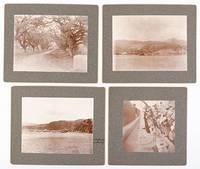
Best.-Nr. 51-4293Circa 1902. Gray card mount 5x6". Photograph 3½x4¾". "Queen's Arch Port of Spain Trinidad B.V.I." written on card verso.Gray card mount 5x6". Photograph 3½x4¾". "View of St. Piere sugar mill and plantation to the right of the City of St. Piere. Martinique B.V.I." written on the card verso.Gray card mount 5x5". Photograph 3½x3". "Alabama anchorage" written on the front of the card mount and "The city of St. Piere and Harbor with Mt. Pelee to the left." written on card verso.Gray card mount 5x6". Photograph 3¼x3". "Alabama crew catching a shark in Culebra Harbor Virgin Islands. Jan 27th 1902." writ Circa 1902 unknown
1864Paris Librairie Internationale 1864, 3 volumes In-8 brochés, 354 + 330 + 348 pages. Dos fragiles et quelques petits défauts aux couvertures, intérieurs en trés bon état. Traduit de l'anglais par G. RENSON. Un excellent ouvrage sur le sujet. Trés bon exemplaire malgré les défauts signalés.
1990Very good clean copy, pages bright and tight. Used
Best.-Nr. 1528327918.Gpaperback. Good. Access codes and supplements are not guaranteed with used items. May be an ex-library book. paperback
1966Best.-Nr. 171671966. Saint-Domingue République Dominicaine Unidad n°4 5 6 et 7 du 8 au 29 mai 1966 - Agrafé 17 cm x 25 cm et 21 5 cm x 29 cm pour le dernier 51 et 48 pages pour le dernier photos noir & blanc in-texte - Directeur : Alfonso Ovalles Martinez textes en espagnol - Bon état
2005Best.-Nr. 500270035Editions Métailié 2005 14x1 5x21 5cm. 2005. Broché.
1993Un volume broché de format in 8° de 170 pp.; couverture illustrée. Bel état. Voir photo. Peu courant.
1903226pp.avec illustrations dans le texte + quelques planches hors-texte, reliure cart., 24cm., bon état, R42669
1903Best.-Nr. R42669Lille-Paris-Bruges, Desclée de Brouwer et cie. 1903 226pp.avec illustrations dans le texte + quelques planches hors-texte, reliure cart., 24cm., bon état, R42669
1992Best.-Nr. biblio1482In Spanish. Seix Barral Biblioteca Breve Barcelona 1992. Paperback. 187 pp. New never used but has a light crease on back. Ships immediately. Seix Barral paperback
2013Best.-Nr. 9878Plon 2013 305 pages 13 2x2 8x20cm. 2013. broché. 305 pages.
1883Best.-Nr. 14974Plon, Nourrit Paris 1883 1 vol. In-12 de 2 ff.n.ch. 349 pp., demi-chagrin de l'époque, dos à nerfs.
2003Best.-Nr. 500160345Phébus 2003 176 pages 13 8x1 2x19 6cm. 2003. Broché. 176 pages.
2003Best.-Nr. LFA-126739774Revue de 82 pages, format 220 x 280 mm, illustrée, brochée couverture couleurs, bon état
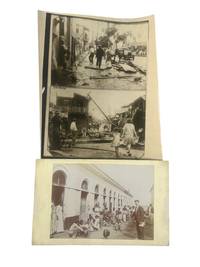
1928Best.-Nr. 219181928. Puerto Rico photo archive circa 1910s and 1928 documents colonial-era social conditions and hurricane destruction in the decades after the United States took control of the island. The archive centers on two related subjects: a large group portrait of Puerto Rican adults and children gathered outside a long arched building and press images of San Juan after the September 13 1928 San Felipe Segundo hurricane. The photographs provide visual evidence of everyday poverty built environment disaster damage and public movement through wreckage during a period shaped by U.S. civil government under the Foraker Act of 1900 and U.S. citizenship without voting representation in Congress under the Jones-Shafroth Act of 1917. Puerto Rico photo archive. Puerto Rico circa late 1910s and 1928. Three silver gelatin photographs with two images printed on one press sheet. Sizes range from 5 x 9 inches to 8.5 x 11 inches. The 1928 press photograph contains two stacked photojournalistic views of San Juan after the hurricane showing torn corrugated roofing broken utility poles damaged structures debris-filled streets and residents including children and laborers moving through the wreckage. The larger earlier image shows a white man standing before a long arched tenement-style or institutional building surrounded by Puerto Rican women men and numerous children many barefoot and wearing worn or minimal clothing; the image appears posed or observational but the man's role is not identified. The San Felipe Segundo hurricane struck Puerto Rico on September 13 1928 as a Category 5 storm and caused 312 reported deaths widespread housing destruction and several hundred thousand people left homeless giving the press images strong value as disaster documentation within a colonial setting. The earlier group photograph broadens the archive beyond catastrophe recording visible poverty dress housing and racialized colonial social relations without requiring unsupported identification of the white figure. Some edge wear tape on margins of smaller image and original editor's markings en verso to press photograph; very good. A compact Puerto Rico photo archive linking colonial-era social conditions with one of the island's most destructive twentieth-century hurricanes. unknown books
1928Best.-Nr. 219181928. Puerto Rico photo archive circa 1910s and 1928 documents colonial-era social conditions and hurricane destruction in the decades after the United States took control of the island. The archive centers on two related subjects: a large group portrait of Puerto Rican adults and children gathered outside a long arched building and press images of San Juan after the September 13 1928 San Felipe Segundo hurricane. The photographs provide visual evidence of everyday poverty built environment disaster damage and public movement through wreckage during a period shaped by U.S. civil government under the Foraker Act of 1900 and U.S. citizenship without voting representation in Congress under the Jones-Shafroth Act of 1917. Puerto Rico photo archive. Puerto Rico circa late 1910s and 1928. Three silver gelatin photographs with two images printed on one press sheet. Sizes range from 5 x 9 inches to 8.5 x 11 inches. The 1928 press photograph contains two stacked photojournalistic views of San Juan after the hurricane showing torn corrugated roofing broken utility poles damaged structures debris-filled streets and residents including children and laborers moving through the wreckage. The larger earlier image shows a white man standing before a long arched tenement-style or institutional building surrounded by Puerto Rican women men and numerous children many barefoot and wearing worn or minimal clothing; the image appears posed or observational but the man's role is not identified. The San Felipe Segundo hurricane struck Puerto Rico on September 13 1928 as a Category 5 storm and caused 312 reported deaths widespread housing destruction and several hundred thousand people left homeless giving the press images strong value as disaster documentation within a colonial setting. The earlier group photograph broadens the archive beyond catastrophe recording visible poverty dress housing and racialized colonial social relations without requiring unsupported identification of the white figure. Some edge wear tape on margins of smaller image and original editor's markings en verso to press photograph; very good. A compact Puerto Rico photo archive linking colonial-era social conditions with one of the island's most destructive twentieth-century hurricanes. unknown
1931Faint foxing to top edge; Limited Edition # 811 of 1,000 copies; 8vo; 318 pages
1931Quarto in dark green cloth; xix, 317 pages, 82 unnumbered leaves of plates : illustrations, maps ; 23 cm; bibliographical references (pages 307-309) "This edition is limited to one thousand numbered copies of which this is no. [118]" / Forests and forestry -- Caribbean Sea. Forests and forestry -- Tropics. Forests and forestry -- Caribbean Area. ForÍts -- CaraÔbes (RÈgion) ForÍts -- RÈgions tropicales. Forests and forestry. Regenwouden. Caribbean Sea. Tropics. Autecologie; autecology; caribisch gebied; caribbean; bosbouw; forestry; plantenecologie; plant ecology; opstandsontwikkeling; stand development; opstandsstructuur; stand structure; subtropen; subtropics; bomen; trees; tropische regenbossen; tropical rain forests; tropen; tropics; vegetatie; vegetation; Ecology of Tropical Forests; Ecologie van tropische bossen
1931Best.-Nr. 18263Tropical Plant Research Foundation/Charles Lathrop Pack Forestry Trust. Near Fine. Hardcover. Faint foxing to top edge; Limited Edition # 811 of 1000 copies; 8vo; 318 pages . 1931. Tropical Plant Research Foundation/Charles Lathrop Pack Forestry Trust hardcover
1995Best.-Nr. 6176ABLahaina, Hawaii, Ross-Hargreaves, [1995]. 21 cm. 64 S. Mit zahlr. Farbabb. Illustrierte Originalbroschur (Softcover). Neuwertiges Exemplar.
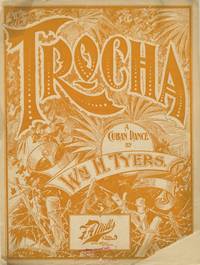
1890Best.-Nr. List3666New York: Jos. W. Stern & Co 1890. Folio sheet music illustrated pictorial cover printed in orange. 5 pp. including cover. Approximately 13 ½ x 10 ½ inches. Covers detached loss to front cover contents complete fair to good. A decorative late nineteenth-century dance publication for “Trocha” described on the cover as “A Cuban Dance” composed by the African American composer and bandleader W. H. Tyers. The elaborate pictorial cover incorporates stylized tropical foliage and island scenery rendered in a bold single-color design typical for the period’s fascination with exoticized musical forms. William H. Tyers 1870–1924 was an African American composer arranger and bandleader active in New York during the ragtime era. Born in Petersburg Virginia to Henry Tyers and Jane “Jennie” Jones both formerly enslaved he spent part of his youth in Richmond before his family relocated to New York City where he began studying piano. His early teachers recognized an aptitude for composition as well as performance and by the mid-1880s he was writing dance pieces including polkas and waltzes. Around the age of twenty Tyers secured employment as a music librarian and arranger with a touring concert company a position that brought him to Europe where he studied orchestration and arranging with Professor Gaspari in Hamburg. Returning to New York Tyers became active in the city’s rapidly expanding popular music trade working as an arranger and composer for publishers including F. A. Mills and Jos. W. Stern & Co. In 1896 he published “Sambo” a syncopated march sometimes considered to be one of the first instrumental rags.1 “Trocha” also released in the 1980s brought Tyers prominence for his ability to write Latin-style rhythms. It was re-issued in 1913 as a tango and its success led Tyers to work as an arranger with Joseph W. Stern in 1897. Tyers’ compositions blended contemporary American dance music with Caribbean and Latin themes a style reflected in pieces such as Trocha and later in his well-known ragtime composition Panama 1911 which remained a staple of early jazz and dance orchestras. OCLC finds two copies with different entries at the Cleveland Public Library and the British Museum Reference Collections. 1 “William Tyers Music Arranger” African American Registry https://aaregistry.org/story/william-tyers-born/ accessed March 10 2026. Jos. W. Stern & Co unknown books
1890Best.-Nr. List3666New York: Jos. W. Stern & Co 1890. Folio sheet music illustrated pictorial cover printed in orange. 5 pp. including cover. Approximately 13 ½ x 10 ½ inches. Covers detached loss to front cover contents complete fair to good. A decorative late nineteenth-century dance publication for “Trocha” described on the cover as “A Cuban Dance” composed by the African American composer and bandleader W. H. Tyers. The elaborate pictorial cover incorporates stylized tropical foliage and island scenery rendered in a bold single-color design typical for the period’s fascination with exoticized musical forms. William H. Tyers 1870–1924 was an African American composer arranger and bandleader active in New York during the ragtime era. Born in Petersburg Virginia to Henry Tyers and Jane “Jennie” Jones both formerly enslaved he spent part of his youth in Richmond before his family relocated to New York City where he began studying piano. His early teachers recognized an aptitude for composition as well as performance and by the mid-1880s he was writing dance pieces including polkas and waltzes. Around the age of twenty Tyers secured employment as a music librarian and arranger with a touring concert company a position that brought him to Europe where he studied orchestration and arranging with Professor Gaspari in Hamburg. Returning to New York Tyers became active in the city’s rapidly expanding popular music trade working as an arranger and composer for publishers including F. A. Mills and Jos. W. Stern & Co. In 1896 he published “Sambo” a syncopated march sometimes considered to be one of the first instrumental rags.1 “Trocha” also released in the 1980s brought Tyers prominence for his ability to write Latin-style rhythms. It was re-issued in 1913 as a tango and its success led Tyers to work as an arranger with Joseph W. Stern in 1897. Tyers’ compositions blended contemporary American dance music with Caribbean and Latin themes a style reflected in pieces such as Trocha and later in his well-known ragtime composition Panama 1911 which remained a staple of early jazz and dance orchestras. OCLC finds two copies with different entries at the Cleveland Public Library and the British Museum Reference Collections. 1 “William Tyers Music Arranger” African American Registry https://aaregistry.org/story/william-tyers-born/ accessed March 10 2026. Jos. W. Stern & Co unknown
Trinidad, The Trinidad Publishing Co., Vuillé's Printerie, 1924. 4to.; II-156 pp. Con ilustraciones entre el texto y 6 láminas fotográficas dobles, aparte. Más 28 hojas con anuncios publicitarios. Cubiertas originales.
1893Best.-Nr. 26050Paris Victor Retaux et Fils 1893 In-8 451 pp, quelques illustrations in et hors texte, exemplaire non coupé, fils du brochage sectionnés , rousseurs sur la couverture