Albers, AnniBiblio.com
955 risultati
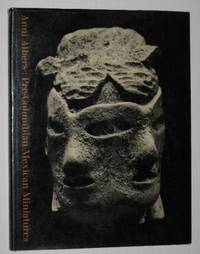
1970rif. 000206New York: Praeger 1970. First Edition. Hardcover. Very Good/Good. 4to. Unpaged. Bound in yellow cloth in black dust jacket printed in orange. Illustrated with black and white photographs by John T. Hill. Forward by Ignacio Bernal. Introduction by Michael D. Coe. Very Good 1/8" stain through first few pages minor age-toning to upper edge of several pages photographs sharp and clean in Good price-clipped dust jacket 1/2" closed tear and several small gouges to upper right corner of back cover light overall scuffing. Praeger hardcover
rif. 42793Paris Chez Pillet Ainé, Imprimeur Libraire 1819 in 8 (21x13,5) 1 volume broché, couverture imprimée, XII et 135 pages [1], renfort ancien sur le dos de la couverture, rousseurs éparses, non rogné. Rare. Bon exemplaire
1931rif. 014924Paris La Caravelle - "Le Livre & l'Image" 1931 In-8 Broché Dédicacé par l'auteur
rif. 500373627Harlequin Sans date. Alors qu'elle séjourne pour affaires dans les Caraïbes Antonella a la stupeur de se retrouver nez à nez avec le prince Cristiano di Savaré un homme qu'elle hait de toute son âme et qui a causé tant de souffrances à son peuple
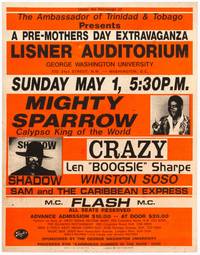
1988rif. 564096Landover Maryland / Washington D.C.: Special Effects Inc. / George Washington University 1988. Softcover. Very Good. Poster. Measuring 22" x 28". Printed in orange and black on thick coated card stock. Staple holes some foxing and soil a very good copy of a scarce poster advertising a 1988 performance by some of the world's greatest Calypso artists. Special Effects Inc. / George Washington University unknown books
1988rif. 564096Landover Maryland / Washington D.C.: Special Effects Inc. / George Washington University 1988. Softcover. Very Good. Poster. Measuring 22" x 28". Printed in orange and black on thick coated card stock. Staple holes some foxing and soil a very good copy of a scarce poster advertising a 1988 performance by some of the world's greatest Calypso artists. Special Effects Inc. / George Washington University unknown
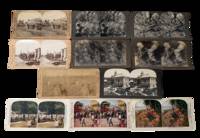
1890rif. 231711890. Stereoview archive of the post-emancipation Caribbean showing how the islands were marketed to western viewers through plantation labor export agriculture civic spectacle and catastrophe. As a group these photos function not only as an ethnographic travel archive but as evidence of the visual economy that followed slavery. The British West Indies moved through emancipation in 1834 to 1838 the French Caribbean in 1848 Puerto Rico in 1873 and Cuba in 1886 yet plantation production remained central to regional life well into the early twentieth century. These stereoviews preserve a colonial way of seeing in which Black and Afro-Caribbean labor rural discipline and extractive agriculture remained the background condition of "tropical" beauty and commercial modernity. Cuba's sugar economy in particular expanded through the nineteenth century and slavery was not abolished there until 1886 while Weyler's later reconcentration policy during the Cuban War of Independence violently reorganized rural life. Martinique after 1848 likewise shifted into new labor regimes including imported workers from India and China. Archive of 11 stereoview cards late 1890s to early 1900s depicting Cuba Jamaica Martinique Puerto Rico and the Dominican Republic. Most black and white with a few colorized. Each measure 3.5" x 7". All with captions on the margins. "Reconcentrado Farming Scene Province of Havana Cuba" links agricultural production to the brutal displacements of Spain's reconcentration campaign; "Cutting sugar cane Montego Bay Jamaica W.I." records cane labor in a colony where emancipation had not ended plantation dependency; and "Harvesting Coconuts Porto Rico" likewise frames Caribbean land through export work rather than local life. Other views extend that economic framing through cacao and coffee scenes while the paired Havana cards shift into urban leisure and public display including "Beautiful Central Park Havana Cuba" and "Holiday in Havana Cuba" the latter with both Cuban and American flags visible a telling image of the new imperial order after 1898. The disaster views from Martinique and the Lesser Antilles show how stereoview publishers also turned Caribbean destruction into consumable spectacle. the Morne Rouge card is accompanied on the reverse by the grim printed text "Dead bodies which were to be seen in Morne Rouge." while the wider context is the 1902 eruptions of Mount Pelée in Martinique and La Soufrière on Saint Vincent two catastrophes that killed roughly 30000 and 1600 people respectively and devastated local communities and agriculture. Some corner wear light toning scattered surface and edge wear. Overall very good condition. This collection gives direct visual representation of Caribbean history Atlantic slavery and emancipation plantation labor and U.S. imperial expansion in the circum-Caribbean preserving the transition from slavery to post-abolition labor. unknown books
1890rif. 231711890. Stereoview archive of the post-emancipation Caribbean showing how the islands were marketed to western viewers through plantation labor export agriculture civic spectacle and catastrophe. As a group these photos function not only as an ethnographic travel archive but as evidence of the visual economy that followed slavery. The British West Indies moved through emancipation in 1834 to 1838 the French Caribbean in 1848 Puerto Rico in 1873 and Cuba in 1886 yet plantation production remained central to regional life well into the early twentieth century. These stereoviews preserve a colonial way of seeing in which Black and Afro-Caribbean labor rural discipline and extractive agriculture remained the background condition of "tropical" beauty and commercial modernity. Cuba's sugar economy in particular expanded through the nineteenth century and slavery was not abolished there until 1886 while Weyler's later reconcentration policy during the Cuban War of Independence violently reorganized rural life. Martinique after 1848 likewise shifted into new labor regimes including imported workers from India and China. Archive of 11 stereoview cards late 1890s to early 1900s depicting Cuba Jamaica Martinique Puerto Rico and the Dominican Republic. Most black and white with a few colorized. Each measure 3.5" x 7". All with captions on the margins. "Reconcentrado Farming Scene Province of Havana Cuba" links agricultural production to the brutal displacements of Spain's reconcentration campaign; "Cutting sugar cane Montego Bay Jamaica W.I." records cane labor in a colony where emancipation had not ended plantation dependency; and "Harvesting Coconuts Porto Rico" likewise frames Caribbean land through export work rather than local life. Other views extend that economic framing through cacao and coffee scenes while the paired Havana cards shift into urban leisure and public display including "Beautiful Central Park Havana Cuba" and "Holiday in Havana Cuba" the latter with both Cuban and American flags visible a telling image of the new imperial order after 1898. The disaster views from Martinique and the Lesser Antilles show how stereoview publishers also turned Caribbean destruction into consumable spectacle. the Morne Rouge card is accompanied on the reverse by the grim printed text "Dead bodies which were to be seen in Morne Rouge." while the wider context is the 1902 eruptions of Mount Pelée in Martinique and La Soufrière on Saint Vincent two catastrophes that killed roughly 30000 and 1600 people respectively and devastated local communities and agriculture. Some corner wear light toning scattered surface and edge wear. Overall very good condition. This collection gives direct visual representation of Caribbean history Atlantic slavery and emancipation plantation labor and U.S. imperial expansion in the circum-Caribbean preserving the transition from slavery to post-abolition labor. unknown
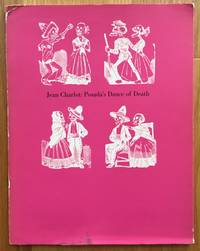
1964rif. 002757New York: Pratt Graphic Art Center 1964. Paperback. Very Good. Eichenberg Fritz. 8vo. 12 pp. 4 pages of plates. Bound in stapled dark pink wrappers with cover illustration in white and title in black. One wood engraving by Fritz Eichenberg on title page signed by him in pencil and four relief engravings by José Guadalupe Posada. Printed in an edition of 500 numbered copies signed by Charlot on colophon this is No. 67. Very Good internally clean and sound rubbing and wear to extremities - heaviest at spine 1/2" tear to head of spine 1" dark smudge to lower front cover. Pratt Graphic Art Center paperback
1937316p., illus. Hardcover Very good condition good
1926rif. 21216New York: The MacMillan Company. Very Good in Very Good- dust jacket. Hardcover. White DJ with a bit of darkening and with light chipping. One small open tear to DJ front closed tears to DJ back. Price clipped. Boards with light rubbing to extremities.; A comprehensive look at the island. Including a rear fold-out railroad and road map printed on japon paper. - Chapters include: Geology Topography Climate History The Discovery Prehistoric Customs and Habits of the People Economic Conditions Social Problems The Jibaro Education Government Twenty-Five Years of American Cooperation. The appendix includes: Transportation Hotels Roads Clubs Cost of Living. Summary of Organic Laws Labor Cities.; B&W Photographs; 8vo 8" - 9" tall; 329 pages . 1926. The MacMillan Company hardcover
2009xlvi + 345pp., Dissertation at the Katholieke Universiteit Leuven in partial fulfillment of the requirements for the Doctor's Degree in Theology, 24cm., softcover, with handwritten dedication by the author, very good, R105845
rif. SONG0857457608Berghahn Books 2012-09-01. 1. hardcover. Used: Good. 6.00x0.63x9.00. Buy with confidence. Excellent Customer Service & Return policy. Berghahn Books hardcover
900Port Antonio (556x644 mm) Surveyed by Captain R.W. Glennie assisted by Lieut.t Com.dr C.S. Lockhart A.E. Harbord D.L. Cowan R.M. Southern & A.H. Stanley H.M. Surveying Ship "Mutine" Jan.y - March 1921. Intesting "Objects on this chart conspicuous to the Navigator" Titchfield Hotel, Richmond House, Isolation Hospital...London Published at the Admiralty 7 May 1923 under the Superintendence of Rear Admiral Fred.k C. Learmonth. Folded
A Coruña, Fundación Barrié, 2011. 4to.; 388 pp. Mapas en color. Cubiertas originales.
Barcelona, Barral Editores, 1971 ("Libros de Enlace"). 4to. menor; 225 pp., 3 hs. Cubiertas originales.
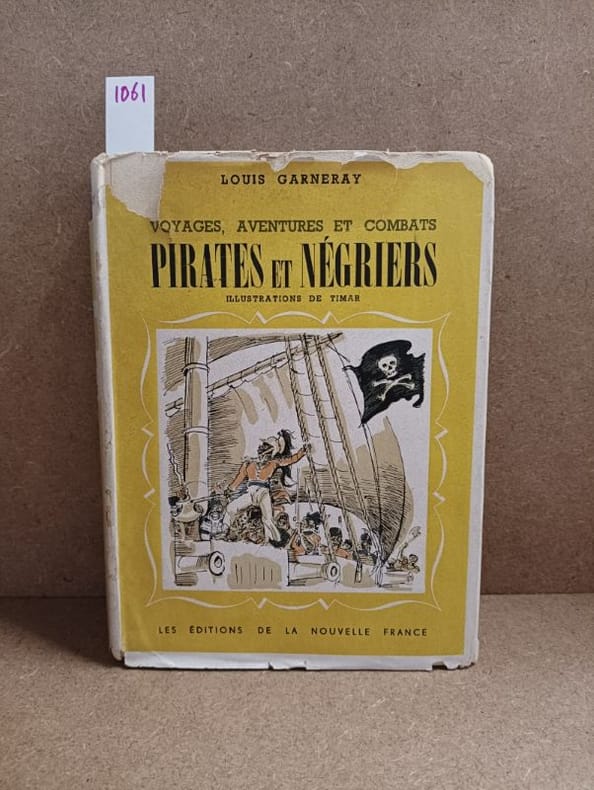
1944rif. 10611944 - cartonné - Les Editions de la Nouvelle France - Collection La vie exaltante, N° 16 - MCMXLIV (1944) - In-12 (19,5 x 15 cm) cartonné sous jaquette de l'éditeur - 244 pages - Nombreuses illustrations de TIMAR - Edition originale, achevé d'imprimer le 25 août 1944, sans justificatif de tirage - Titre complet : Voyages, aventures et combats. Pirates et négriers
rif. HIST5047M2001, Hoëbeke. In-8, broché, 216p. Nombreuses illustrations en couleurs ainsi qu’en noir et blanc. Exemplaire en bon état.
1901rif. 2221928First edition. Small octavo. Illustrated with b/w photos by V.K. Van De Venter Robin H. Ford John H. Rising L.E. Mayo and W.G. Spiker. Original grey pictorial cloth stamped in gilt black and green. No dust jacket. Very good small crack at rear joint. 220 pages 3 pages of ads. No signatures or bookplates. Scarce. The Rumford Press hardcover books
1901rif. 2221928First edition. Small octavo. Illustrated with b/w photos by V.K. Van De Venter Robin H. Ford John H. Rising L.E. Mayo and W.G. Spiker. Original grey pictorial cloth stamped in gilt black and green. No dust jacket. Very good small crack at rear joint. 220 pages 3 pages of ads. No signatures or bookplates. Scarce. The Rumford Press hardcover
1956Bound without title page in beautiful 1/4 red calf leather with raised bands and gilt spine lettering. Attractive marbled boards. ; B&W Illustrations; 8vo; 220 pages
1910rif. 238911910. Pineapple plantation photo archive circa 1910s documenting cultivation harvest and transport on an unidentified tropical plantation during the expansion of commercial pineapple production for export markets and black sharecropping labor. The photographs concentrate on the agricultural cycle rather than plantation buildings or domestic life moving from densely planted acreage and individual ripening fruit to large accumulations of harvested pineapples and a mule drawn wagon loaded for transport. Pineapple cultivation expanded substantially in the Caribbean and Hawaii during the early twentieth century making the crop increasingly visible within American commercial agriculture and food consumption. Photo archive of 10 silver gelatin photographs each approximately 3 x 4 inches Caribbean location circa 1910s. Several photographs survey extensive fields planted almost entirely in pineapple including broad views in which rows of spiked plants extend toward distant hills and close studies showing mature fruit rising from individual plants. Other images record the harvest after removal from the field: pineapples are arranged in substantial piles beside cultivated acreage while two white men pose before one accumulation holding individual fruit. Another photograph shows a mule drawn wooden wagon filled above its sideboards with harvested pineapples with one white man standing beside the wagon another seated atop the load and a black man positioned with the mule team further highlights post emancipation plantation labor. The men's differing positions within the harvest scenes preserve visible evidence of diverse groups participating in the plantation's agricultural economy alongside the animal powered transportation used to move a bulky commercial crop from the field. Commercial pineapple production was developing rapidly across several regions connected to the United States Hawaii and the Carbons during this period. The photographs belong to that broader transformation of pineapple from a geographically restricted tropical fruit into an increasingly standardized export commodity but neither crop morphology nor the visible terrain distinguishes securely among these producing regions. More specifically the images record the material stages behind that trade: dense monocrop planting maturation in the field manual harvesting accumulation of fruit and transportation by mule drawn wagon. Light handling wear occasional edge and corner losses minor curling and scattered toning; image surfaces remain generally clear with strong detail. Overall in good condition. A concentrated photographic record of early twentieth century pineapple agriculture showing the field harvest labor and transport required to move a tropical crop toward commercial distribution. unknown books
1910rif. 238911910. Pineapple plantation photo archive circa 1910s documenting cultivation harvest and transport on an unidentified tropical plantation during the expansion of commercial pineapple production for export markets and black sharecropping labor. The photographs concentrate on the agricultural cycle rather than plantation buildings or domestic life moving from densely planted acreage and individual ripening fruit to large accumulations of harvested pineapples and a mule drawn wagon loaded for transport. Pineapple cultivation expanded substantially in the Caribbean and Hawaii during the early twentieth century making the crop increasingly visible within American commercial agriculture and food consumption. Photo archive of 10 silver gelatin photographs each approximately 3 x 4 inches Caribbean location circa 1910s. Several photographs survey extensive fields planted almost entirely in pineapple including broad views in which rows of spiked plants extend toward distant hills and close studies showing mature fruit rising from individual plants. Other images record the harvest after removal from the field: pineapples are arranged in substantial piles beside cultivated acreage while two white men pose before one accumulation holding individual fruit. Another photograph shows a mule drawn wooden wagon filled above its sideboards with harvested pineapples with one white man standing beside the wagon another seated atop the load and a black man positioned with the mule team further highlights post emancipation plantation labor. The men's differing positions within the harvest scenes preserve visible evidence of diverse groups participating in the plantation's agricultural economy alongside the animal powered transportation used to move a bulky commercial crop from the field. Commercial pineapple production was developing rapidly across several regions connected to the United States Hawaii and the Carbons during this period. The photographs belong to that broader transformation of pineapple from a geographically restricted tropical fruit into an increasingly standardized export commodity but neither crop morphology nor the visible terrain distinguishes securely among these producing regions. More specifically the images record the material stages behind that trade: dense monocrop planting maturation in the field manual harvesting accumulation of fruit and transportation by mule drawn wagon. Light handling wear occasional edge and corner losses minor curling and scattered toning; image surfaces remain generally clear with strong detail. Overall in good condition. A concentrated photographic record of early twentieth century pineapple agriculture showing the field harvest labor and transport required to move a tropical crop toward commercial distribution. unknown
1999Austin Clarke grew up in Barbados, enveloped in the heavenly smells and smoke of women cooking. From them, he learned how to prepare the beloved dishes of the island - Rich Golden Roast Pork, Fried King Fish, Breadfruit Cou-Cou and, of course, his very own Chicken Austintacious. He shares his recipes for these hearty meals and reminisces about the "slave" food that was so much a part of his life. Whether it's a story about the village butcher whose qualifications were somewhat suspect, or a sure-fire route to a woman's love through her stomach, Austin Clarke will make you hungry for the "hot cuisine" and spirit of the island. 248p. Inscribed by author 22 February 2002, else as new Book
2011rif. 500188705SERPENT A PLUME 2011 279 pages 13x2 2x20 4cm. 2011. Broché. 279 pages.