2,536 results
1485ref. 707841485. Mainz Peter Schöffer 28 März 1485 1 einspaltiges original Inkunabelblatt 265 x 196 mm; etwas fleckig. Erstdruck! Cap. 53: Betonica - betonien. Stachys officinalis L. Trev. Kapitelende. "Im Gegensatz zu den meisten Kräuterbuch-Inkunabeln lässt sich das Druckdatum des "Gart der Gesundheit genau auf den 28. März 1485 festlegen wie es am Ende des Werks vermerkt ist: "Disser Herbarius ist rzu mentz gedruckt und geendet uff dem XXVIII dage des mertz -Anno-M-CCCC-LXXXV". An gleicher Stelle wird Peter Schöffer als Drucker durch das Fust-Schöffersche Signet bestätigt. Der "Gart der Gesundheit gilt wie Muther 1884: 88: "als wichtigstes naturhistorisches Werk des Mittelalters" und Klebs/Becher 1925: 11: "The most important mediaeval work on natural history with illustrations Choulant the publication of which forms an important landmark in the history of botanical Illustration and marks perhaps the grea-test single Step ever made in that art" meinten als wichtigste bebilderte Arzneipflanzen-Inkunabel. Auch Keil 1982: 604 bestätigte später diese Aussage: "Zweifellos ist der "Gart das wichtigste naturhistorische Werk des Mittelalters". Auf 359 Seiten die in 435 Kapitel gegliedert sind wird der gesamte zur damaligen Zeit bekannte Arzneischatz abgehandelt und mit 382 Holzschnitten illustriert. Die wichtigsten 366 Heilpflanzen zwei Wiederholungen werden jeweils einzeln in den verschiedenen Kapiteln beschrieben und abgebildet. Der Text ist 42zeilig geordnet." B. Baumann & H. Baumann Die Mainzer Kräuterbuch-Inkunabeln 2010 p.111 Johann Wonnecke von Kaub um 1430 in Kaub am Rhein; gestorben 1503/04 in Frankfurt am Main auch Johannfes Dronnecke bzw. Johannes de Cuba er selbst nannte sich "Johan von Cube" war ein deutscher Arzt und Botaniker. Am Mainzer Hof wirkte er als Leibarzt. unknown
1875ref. 4417Paris Plon 1875 in-12 demi-chagr. bleu, dos orné [Rel. de l'époque], coiffe sup. arrachée
1899ref. 34190New York, Verlag von Chas. Wildermann, 1899. 8°, 210 S.; Bezahlung per PayPal möglich, we accept PayPal, Einb. ger. beschabt u. ger. bestoßen u. angeschmutzt, Rückenbindung defekt, altersbed. Bräunungen, Gebr.sp., broschiert
1900ref. 25439Havana Cuba: Not Published 1900. Both letters two pages on Samuel Wyman Smith Importer Havana Cuba letterhead paper; dated Jan. 4 1900 and Dec. 5 1900. Both addressed to "My Dear Gilbert"; the contents typed and concerning the fate of their mutual investment in "The Studio" restaurant & bar in Havana. ".all the papers that I can find at the Studio have been forwarded to you at Cambridge Springs. The reason for this delay has been that I have been quite ill having had a toe amputated.You will see the Studio is improving. I have just made an arrangement with two Chinamen as cooks Spanish waiters however.this should finally put the place on a paying basis." adding handwritten ".I trust you will soon send me a good sized check as I need money desperately." The letter of December relates Smith's attempts to find buyers and leasors for the restaurant ".I am bothered to death by the bills of the place existing before you left some of which I have personally guaranteed.have also had a proposition from a Spaniard to take the restaurant.As a restaurant is always a dead loser except under very competent management this seems to me to be most advantageous.The quarantine has been taken off the camps here and business is much better."; continuing to ask for money. With the original mailing envelopes addressed to Mr. W.E. Gilbert. This venture was perhaps an attempt to meet the needs of the very large population of North Americans residing in Cuba after the Spanish-American War; many businesses opened especially in Havana including hotels bars and restaurants. In his book "On Becoming Cuban: Identity Nationality and Culture" By Louis A. Perez 2008 Univ. of North Carolina Press an individual named Edward E. Nelson opened the Studio restaurant in Havana in 1899 and was not very successful per the contents of these letters. Envelopes very soiled and worn; letters with light wear old fold lines; in very good condition. Interesting Cuban - U.S. business history ephemera from the early days of the 20th century telling of the unsettled commercial climate. . Manuscript. Not Bound. Very Good. Not Published paperback
1977ref. 24689Cuba: Union de Escritores y Artistas de Cuba UNEAC 1977. Poster in colors text in Spanish. Also printed at bottom edge: C.P. "Evelio Rodriguez Curbelo"/Taller experimental. Approx. 20" x 30" size; in very good condition. Poster. Not Bound. Very Good. Union de Escritores y Artistas de Cuba UNEAC Paperback
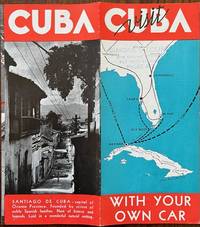
1940ref. 59321Havana Cuba: Cuban Tourist Commission ca. 1940. 8vo. 12 pp unpaginated. folds out leporello accordion-style format printed in red blue & black photo illustrations & map on recto large map of Cuba’s Central Highway on verso slight shelfwear NF. First edition of this scarce travel brochure touting the advantages of U.S. tourists to bring their own cars and travel over the Carretera Central which ran the entire length of the Island from Pinar del Rio to Santiago de Cuba over 700 miles. The highway construction launched in may 1927 and when finished proved very popular as a means to see the island. Tourists could bring their own cars from Tampa Miami or Key West on a ferryboat and travel through Cuba. No copies in Worldcat. Cuban Tourist Commission, unknown
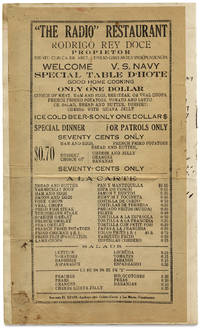
ref. 3726630Guantanamo Cuba: Imprenta El Suaso Aguilerae ntre Calixto Carćia y Los Maceo. ca. 1930s. 13½ x 7½ inches. Broadside simple ornamental border. Single sheet mounted to a larger ledger sheet. Two short tears upon fold lines in margins; tanning; good. A rare unrecorded Cuban restaurant menu directed at American naval servicemen. This bilingual broadside functions as both menu and advertisement for Rodrigo Rey Doce’s restaurant aptly named “The Radio” promising “Good Home Cooking” to the U.S. Navy through a fixed-price offering. For one dollar patrons could order familiar comforts—ham and eggs “beesteak” “french fried potatoes” veal chops or cheese with guava jelly—while ice-cold beer was offered at the same price a detail that hints at the economics of leisure near a U.S. base. An à la carte menu supplemented the set meal listing dishes in both English and Spanish including bacon and eggs fried fish steak fried fish parguitos vermicelli soup and simple fruit desserts. The menu suggests a steady clientele of American sailors likely stationed at Guantánamo and captures a small but telling moment of cultural exchange between Cuban proprietors and the U.S. Navy. A rare survival likely kept as a souvenir by a sailor and brought home to the United States. unknown
1931ref. D1703La Habana 1931. Hardcover. Very Good. Five issues all but the last with their original wraps bound in one volume leather-backed marbled paper over boards -- a bit scuffed and bumped along the edges. Includes: Ano I. No. 1; Febrero 15 1931 / Ano I. No. 2; Febrero 22 1931 / Ano I. No. 3; Marzo 1 1931 / Ano I. No. 4; Marzo 8 1931 / Ano I. No. 5; Marzo 15 1931. The last issue No. 5. does not have the original front cover otherwise all original illustrated wraps are present. All a bit browned as expected and brittle with the occasional small marginal tear but perfectly good reading copies complete and nicely preserving the text illustrations sheet music and ads. Santa Clara bookseller's ticket on front paste-down. A wonderful and uncommon look at Cuba. hardcover
1931ref. D1703La Habana 1931. Hardcover. Very Good. Five issues all but the last with their original wraps bound in one volume leather-backed marbled paper over boards -- a bit scuffed and bumped along the edges. Includes: Ano I. No. 1; Febrero 15 1931 / Ano I. No. 2; Febrero 22 1931 / Ano I. No. 3; Marzo 1 1931 / Ano I. No. 4; Marzo 8 1931 / Ano I. No. 5; Marzo 15 1931. The last issue No. 5. does not have the original front cover otherwise all original illustrated wraps are present. All a bit browned as expected and brittle with the occasional small marginal tear but perfectly good reading copies complete and nicely preserving the text illustrations sheet music and ads. Santa Clara bookseller's ticket on front paste-down. A wonderful and uncommon look at Cuba. hardcover books
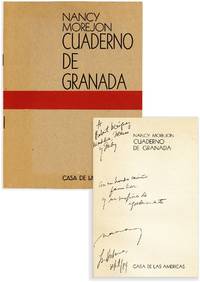
1984ref. 88455Havana: Casa de las Americas 1984. First Edition. Slim quarto 23.75cm; original printed card wrappers with French flaps stapled; 16pp; text is entirely in Spanish. Inscribed by Morejon on the title page to Puerto Rican editor translator and literary critic Roberto Márquez and his family: "A Robert Márquez Maddie Maceo y Gaby / Con un hondo cariño familiar y suspiro de agradecimiento y un suspiro de agradecimiento / Nancy / La Habana / Sept/84." Trivial external wear and a hint of sunning to spine-fold; touch of oxidation to staples; contents fresh; Near Fine. Short collection of verse by the noted Afro-Cuban poet critic and essayist gathrering nine poems. A nice inscription connecting two prominent Caribbean literary figures. 88455. Casa de las Americas unknown
1984ref. 88455Havana: Casa de las Americas 1984. First Edition. Slim quarto 23.75cm; original printed card wrappers with French flaps stapled; 16pp; text is entirely in Spanish. Inscribed by Morejon on the title page to Puerto Rican editor translator and literary critic Roberto Márquez and his family: "A Robert Márquez Maddie Maceo y Gaby / Con un hondo cariño familiar y suspiro de agradecimiento y un suspiro de agradecimiento / Nancy / La Habana / Sept/84." Trivial external wear and a hint of sunning to spine-fold; touch of oxidation to staples; contents fresh; Near Fine. Short collection of verse by the noted Afro-Cuban poet critic and essayist gathrering nine poems. A nice inscription connecting two prominent Caribbean literary figures. 88455. Casa de las Americas unknown books
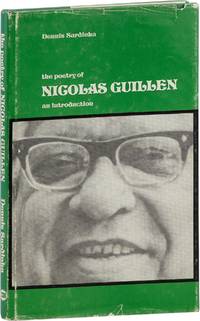
1976ref. 85000London & Port of Spain: New Beacon Books 1976. First Edition. First Impression cloth issue. Octavo 22.25cm; green paper-covered boards with titles stamped in gilt on spine; dustjacket; 45-80pp. This copy is from the library of to Puerto Rican editor translator and literary critic Roberto Marquez with his ink name at upper margin of title page and inscribed to him by the author on the front endpaper: "To Roberto / with love best wishes / Dennis / London 1976." About Fine in a Very Good dustjacket unclipped priced £2.50 gently spine-sunned and lightly shelfworn with a few tiny nicks small tears and attendant creases. Text of a lengthly lecture on Guillen by the Trinidadian author which he delivered to members of the Caribbean Artists Movement in London. It includes the text of an interview between Ciro Bianchi Ross and Guillen on the poet's 70th birthday. A nice association linking two Guillen scholars; Marquez has written extensively on Guillen and has translated several of his works faithfully from Spanish into English. 85000. New Beacon Books unknown
1976ref. 85000London & Port of Spain: New Beacon Books 1976. First Edition. First Impression cloth issue. Octavo 22.25cm; green paper-covered boards with titles stamped in gilt on spine; dustjacket; 45-80pp. This copy is from the library of to Puerto Rican editor translator and literary critic Roberto Marquez with his ink name at upper margin of title page and inscribed to him by the author on the front endpaper: "To Roberto / with love best wishes / Dennis / London 1976." About Fine in a Very Good dustjacket unclipped priced £2.50 gently spine-sunned and lightly shelfworn with a few tiny nicks small tears and attendant creases. Text of a lengthly lecture on Guillen by the Trinidadian author which he delivered to members of the Caribbean Artists Movement in London. It includes the text of an interview between Ciro Bianchi Ross and Guillen on the poet's 70th birthday. A nice association linking two Guillen scholars; Marquez has written extensively on Guillen and has translated several of his works faithfully from Spanish into English. 85000. New Beacon Books unknown books
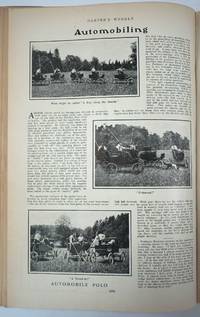
1902ref. 28399New York: Harper's 1902. First printing. Hardcover. Good overall. Content on the Russo-Japanese & Spanish American War; Automobiling early cars playing polo!; Teddy Roosevelt Chinese rugby cartoon Blackwell Island Bridge Thomas Nast cartoon Henley regatta. Half year bound volume of Harper's Weekly with woodblock illustrations throughout. Color supplements were included in the Christmas issue. Chinese playing rugby cartoon p1582; US Naval Academy p1498; Blackwell Island Bridge p1308; Wall Street p1180; Thomas Nast p1972. Folio 1155pp. Weekly issues bound up into a large single volume with 3/4 leather and marbled boards. Leather spine chipped cracked at hinge binding firm internally very clean. Harper's hardcover
1981ref. 86364Havana Cuba: Political Publishers 1981. Presumed First Edition First printing. Hardcover. Good/Good. 116 4 pages. Index. Among the topics addressed in the Index are Socioeconomic Developments Revolutionary Armed Forces Social Organizations Ministry of the Interior Union of Young Communists Communist Party Ideological Struggle Foreign Policy and Economics. Fidel Alejandro Castro Ruz 13 August 1926 - 25 November 2016 was a Cuban revolutionary and politician who was the leader of Cuba from 1959 to 2008 serving as the prime minister of Cuba from 1959 to 1976 and president from 1976 to 2008. Ideologically a Marxist-Leninist and Cuban nationalist he also served as the first secretary of the Communist Party of Cuba from 1965 until 2011. Under his administration Cuba became a one-party communist state; industry and business were nationalized and socialist reforms were implemented throughout society. On January 20 1981 Fidel Castro gave the closing speech at the Communist Party of Cuba's second Congress held from January 17-20. He addressed almost 150 foreign delegations representing pro-Soviet communist parties liberation movements and even some social democratic parties of the Socialist international as well as more than a million Cubans. This fact alone is a measure of the prestige which the CPC has among many political trends and working people around the world. But the economic situation in Cuba brought to light during the congress and the path which Castro is proposing to the peoples struggling against imperialism give food for thought and should lead us to question the supposedly revolutionary path which Castro claims to be defending. One of the main concerns of the congress was the economic situation in Cuba. Despite an overall situation envied by many of the peoples dominated by U.S. imperialism the main report presented by Castro revealed that the objectives of the 5-year plan adopted at the First Congress in 1975 were not attained. Economic growth reached only 4% despite an objective of 6% and the industrialization plan met with difficulties. These results are of some importance since the objectives set at the last congress were consciously modest. Given this situation the Second Congress underlined the need for increased mobilization in production and stepped up plans to implement the new system to manage the economy which was first adopted at the First Congress. At the time this system was presented as an answer to the idealist errors of the 1965-70 period when it was claimed that all forms of market economy had abruptly been eliminated. The system clearly draws inspiration from the experience of the economic reforms introduced in the U.S.S.R. by Khrushchev in the early sixties which are judged as positive. These reforms underlined the importance of "the law of value the necessity that in all enterprises including State enterprises there are buy and sell relations and that within these relations the market categories function as indispensable instruments for measuring the use we make of our productive resources. in order to decide which investments are the most advisable and to know which enterprises.work the best.". Political Publishers hardcover
1941ref. 056819BALTIMORE MD.: LITHO COPY PREP. CLEAN COPY. . Very Good. Hardcover. 1941. LITHO COPY PREP hardcover
ref. CA06AA-00225Deford & Company. Collectible - Acceptable. Baltimore: Deford & Company 1970. Sm 4to Hardcover. 160pp. Fair book no dust jacket. Ex-library with usual markings. genealogy coppernoll coppernoll family Inquire if you need further information. Deford & Company hardcover
2002A clean, unmarked book with a tight binding. Small closed tear on spine. 9 1/4"w x 11 1/4"h. 228 pages. Many illustrations.
Madrid, Tipografía de San Francisco de Sales, 1896, 22 x 15 cm., holandesa piel de época, XVIII + 490 págs. + 1 hoja.
La Habana, 1934, 18,5 x 14 cm., dedicatoria autógrafa del autor, hol. piel moderna, retrato + 177 págs. + 5 h. (1ª edición de esta obra del poeta y marino cubano Francisco Jordán).
ref. 1966932332.Ghardcover. Good. Access codes and supplements are not guaranteed with used items. May be an ex-library book. hardcover
1787Carta geografica raffigurante l'isola di Cuba e la Giamaica. Sulla sinistra sono riportate le scale grafiche. Piega centrale editoriale.Rigobert Bonne (1727-1795) fu uno dei più importanti cartografi del tardo XVIII secolo. Nel 1773 succedette a Jacques Bellin come cartografo reale in Francia.
1987ref. G110347s.l., Editions Caribéennes 1987 Complet en 2 tomes, 976 + 32pp., cm., br.orig., Thèse de doctorat à l'Université de Lille, cachet au verso de la p.d.t., texte frais, poids: 1.6kg., G110347
1987Complet en 2 tomes, 976 + 32pp., cm., br.orig., Thèse de doctorat à l'Université de Lille, cachet au verso de la p.d.t., texte frais, poids: 1.6kg., G110347
ref. 014633Orestes Ferrara (1876-1972), écrivain cubain d'origine italienne, s'étant battu pour l'indépendance de Cuba, et en devint ambassadeur et député. L.A.S., Grand Hôtel, Rome, 11 novembre 1963, 2p in-4. A André Sabatier, directeur littéraire chez Albin-Michel. Très longue et belle lettre amicale donnant des nouvelles notamment de sa femme Marie-Louise qui semble perdre la tête et a subi une opération. Il ne bouge plus de l'hôtel. Rare lettre de ce révolutionnaire devenu cubain. [354]