Lyon, Ian: EditorMareMagnum

2 538 résultats
196938 pages. Features: In Castro's Cuba; Which Europe for US?; Festival Highlights; Ulster Battles; Antarctica; New Finds from New Paphos; and more. Unmarked. Average wear. Binding sound. Magazine
Paris, 1760 circa. Incisione in rame all'acquaforte, colore, cm 23 x 35,2 (alla lastra). Sono segnati meridiani e paralleli sulla “Longitude du Méridien de l'Isle de Fer” e sulla “Longitude du Méridien de Paris”. Buone condizioni.
1485réf. 707511485. Mainz Peter Schöffer 28 März 1485 1 einspaltiges original Inkunabelblatt 265 x 195 mm; etwas fleckig. Erstdruck! Cap. 135: Capparus - cappern; Capparis Spinose L. Cap. 136: Calx - kalck ; Calx Kalk. "Im Gegensatz zu den meisten Kräuterbuch-Inkunabeln lässt sich das Druckdatum des "Gart der Gesundheit genau auf den 28. März 1485 festlegen wie es am Ende des Werks vermerkt ist: "Disser Herbarius ist rzu mentz gedruckt und geendet uff dem XXVIII dage des mertz -Anno-M-CCCC-LXXXV". An gleicher Stelle wird Peter Schöffer als Drucker durch das Fust-Schöffersche Signet bestätigt. Der "Gart der Gesundheit gilt wie Muther 1884: 88: "als wichtigstes naturhistorisches Werk des Mittelalters" und Klebs/Becher 1925: 11: "The most important mediaeval work on natural history with illustrations Choulant the publication of which forms an important landmark in the history of botanical Illustration and marks perhaps the grea-test single Step ever made in that art" meinten als wichtigste bebilderte Arzneipflanzen-Inkunabel. Auch Keil 1982: 604 bestätigte später diese Aussage: "Zweifellos ist der "Gart das wichtigste naturhistorische Werk des Mittelalters". Auf 359 Seiten die in 435 Kapitel gegliedert sind wird der gesamte zur damaligen Zeit bekannte Arzneischatz abgehandelt und mit 382 Holzschnitten illustriert. Die wichtigsten 366 Heilpflanzen zwei Wiederholungen werden jeweils einzeln in den verschiedenen Kapiteln beschrieben und abgebildet. Der Text ist 42zeilig geordnet." B. Baumann & H. Baumann Die Mainzer Kräuterbuch-Inkunabeln 2010 p.111 Johann Wonnecke von Kaub um 1430 in Kaub am Rhein; gestorben 1503/04 in Frankfurt am Main auch Johannfes Dronnecke bzw. Johannes de Cuba er selbst nannte sich "Johan von Cube" war ein deutscher Arzt und Botaniker. Am Mainzer Hof wirkte er als Leibarzt. unknown
1485réf. 707381485. Mainz Peter Schöffer 28 März 1485 1 einspaltiges original Inkunabelblatt 261 x 195 mm 1 alt color. Holzschnitt; mit handschriftlichen Anmerkungen. Erstdruck! Cap. 290: Oliuarum arbor - olebaum zam. Olea eurpaea L. Kapitelende. Cap. 291: Olibanum - wys wyrauch; Boswllia sacra Flueck; Darstellung schematisiert. "Im Gegensatz zu den meisten Kräuterbuch-Inkunabeln lässt sich das Druckdatum des "Gart der Gesundheit genau auf den 28. März 1485 festlegen wie es am Ende des Werks vermerkt ist: "Disser Herbarius ist rzu mentz gedruckt und geendet uff dem XXVIII dage des mertz -Anno-M-CCCC-LXXXV". An gleicher Stelle wird Peter Schöffer als Drucker durch das Fust-Schöffersche Signet bestätigt. Der "Gart der Gesundheit gilt wie Muther 1884: 88: "als wichtigstes naturhistorisches Werk des Mittelalters" und Klebs/Becher 1925: 11: "The most important mediaeval work on natural history with illustrations Choulant the publication of which forms an important landmark in the history of botanical Illustration and marks perhaps the grea-test single Step ever made in that art" meinten als wichtigste bebilderte Arzneipflanzen-Inkunabel. Auch Keil 1982: 604 bestätigte später diese Aussage: "Zweifellos ist der "Gart das wichtigste naturhistorische Werk des Mittelalters". Auf 359 Seiten die in 435 Kapitel gegliedert sind wird der gesamte zur damaligen Zeit bekannte Arzneischatz abgehandelt und mit 382 Holzschnitten illustriert. Die wichtigsten 366 Heilpflanzen zwei Wiederholungen werden jeweils einzeln in den verschiedenen Kapiteln beschrieben und abgebildet. Der Text ist 42zeilig geordnet." B. Baumann & H. Baumann Die Mainzer Kräuterbuch-Inkunabeln 2010 p.111 Johann Wonnecke von Kaub um 1430 in Kaub am Rhein; gestorben 1503/04 in Frankfurt am Main auch Johannfes Dronnecke bzw. Johannes de Cuba er selbst nannte sich "Johan von Cube" war ein deutscher Arzt und Botaniker. Am Mainzer Hof wirkte er als Leibarzt. unknown
1485réf. 707561485. Mainz Peter Schöffer 28 März 1485 1 einspaltiges original Inkunabelblatt 266 x 196 mm. Erstdruck! Cap. 79: Berwinca - syngrun; Vinca minior L./ V. major L. Cap. 80: Bitumen jadaicum - iudden lyme; Bitumen Erdpech. Cap. 81: Bos - eyn ochs oder rynt; Bos Stier. "Im Gegensatz zu den meisten Kräuterbuch-Inkunabeln lässt sich das Druckdatum des "Gart der Gesundheit genau auf den 28. März 1485 festlegen wie es am Ende des Werks vermerkt ist: "Disser Herbarius ist rzu mentz gedruckt und geendet uff dem XXVIII dage des mertz -Anno-M-CCCC-LXXXV". An gleicher Stelle wird Peter Schöffer als Drucker durch das Fust-Schöffersche Signet bestätigt. Der "Gart der Gesundheit gilt wie Muther 1884: 88: "als wichtigstes naturhistorisches Werk des Mittelalters" und Klebs/Becher 1925: 11: "The most important mediaeval work on natural history with illustrations Choulant the publication of which forms an important landmark in the history of botanical Illustration and marks perhaps the grea-test single Step ever made in that art" meinten als wichtigste bebilderte Arzneipflanzen-Inkunabel. Auch Keil 1982: 604 bestätigte später diese Aussage: "Zweifellos ist der "Gart das wichtigste naturhistorische Werk des Mittelalters". Auf 359 Seiten die in 435 Kapitel gegliedert sind wird der gesamte zur damaligen Zeit bekannte Arzneischatz abgehandelt und mit 382 Holzschnitten illustriert. Die wichtigsten 366 Heilpflanzen zwei Wiederholungen werden jeweils einzeln in den verschiedenen Kapiteln beschrieben und abgebildet. Der Text ist 42zeilig geordnet." B. Baumann & H. Baumann Die Mainzer Kräuterbuch-Inkunabeln 2010 p.111 Johann Wonnecke von Kaub um 1430 in Kaub am Rhein; gestorben 1503/04 in Frankfurt am Main auch Johannfes Dronnecke bzw. Johannes de Cuba er selbst nannte sich "Johan von Cube" war ein deutscher Arzt und Botaniker. Am Mainzer Hof wirkte er als Leibarzt. unknown
M., Aurelio J. Alaria, 1885, 20 x 13’5 cm., 2 h. – 105 págs. – 1 h. (Demócrata y abolicionista, Gómez propone reformas radicales para terminar con la explotación colonial de la isla, entre ellas la abolición de la esclavitud, la introducción del libre comercio y el final del gobierno militar de la isla).
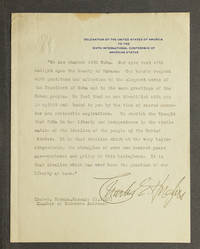
1928réf. 249718Havana 1928. 1 page. 8vo. Minor soiling else fine. 1 page. 8vo. Reading in part: "We are charmed with Cuba. Our Eyes rest with delight upon the beauty of Cuba.We cherish the thought that Cuba in her liberty and indepedndence is the vindication of the idealism of the people of the United States." unknown
réf. 90478hardcover. 211pp. 12mo modern 3/4 cloth. Montevideo: La Espana 1896. First Edition. Palau 82136. unknown
1918réf. 6299Havana 1918. Hardcover. Good. Second half of the year 1918 6 issues of the important Cuban monthly magazine Social which was published from 1916-1938. Cover art by editor and famed Cuban caricaturist Conrado Massaguer. A rare and early section of the publication. A fascinating glimpse into Cuba at this time. Filled with great period art and advertisements black and white photographs and articles. Some scattered foxing 1st cover of 6 much worse than the others staining and wear varies from issue to issue. Bound together in period cloth with floral pattern worn. hardcover
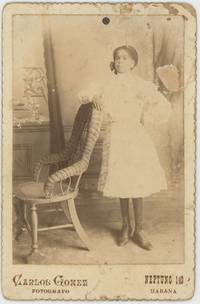
1905réf. BK0085Havana Cuba: Carlos Gómez 1905. Cabinet photograph measuring 4 x 5 ½ inches on photographer's mount measuring 4 ½ x 6 ½ inches with imprint "Carlos Gómez / Fotógrafo / Neptuno 149 / Habana. Image somewhat faded with scattered surface wear and an area of loss at upper right; mount worn at edges good overall. A studio portrait of a young woman posed beside a wicker rocking chair wearing a light-colored dress with high collar and puffed sleeves and looking directly toward the camera. The photograph is notable in the context of Afro-Cuban portraiture around the turn of the twentieth century a period when Havana supported a large commercial photographic trade serving an increasingly broad urban clientele. The sitter is unidentified and no inscription survives to provide further biographical information. Carlos Gómez Guardiola was operating a photographic studio at 149 Neptuno by 1902 when a contemporary Havana newspaper noted that he had already established a reputation despite having been in business only a short time. Gómez's work appears in Juaco López Ãlvarez's Fotografía de Asturianos en américa with an identical "Carlos Gómez / Fotógrafo / Neptuno 149 / Habana" imprint; Ãlvarez dates it to about 1905 and we date the present portrait accordingly. 1 Juaco López Ãlvarez Ed. Fotografía de Asturianos en américa 2000 222. . Carlos Gómez unknown
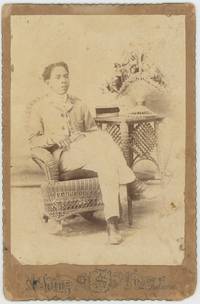
1905réf. BK0086Havana Cuba: A. Sainz 1905. Cabinet photograph measuring 4 x 5 ½ inches on photographer's mount measuring 4 ½ x 6 ½ inches with imprint "A. Sainz / Reina 67 / Habana. Some fading and spotting to image with wear and small losses to edges of mount; good overall. A formal studio portrait of a young Black man seated in a wicker chair beside an elaborate wicker table and floral arrangement. He wears a light-colored suit and holds his hat in his lap posed directly toward the camera. The mount identifies the photographer as A. Sainz of 67 Reina Street Havana. Contemporary Havana advertisements from July and August 1905 place Sainz's photographic studio at this address providing a useful basis for dating the portrait. An appealing example of Black portraiture in early twentieth-century Havana. A. Sainz unknown
1963réf. 87864Havana: Cuadernos de la Casa de Las Americas 1963. First Edition. First Impression one of 4000 copies. Slim octavo 24.25cm; original pictorial card wrappers stapled; Inscribed by the author on the half-title page to Puerto Rican editor translator and literary critic Roberto Márquez: "Para Roberto Marquez / apenas un libro cordialmente / Eduardo / 3/80." Light wear to extremities some oxidation to staples toning to rear wrapper with a faint crease to upper left corner; Very Good. The Cuban author's extended essay on the life and work of Afro-Cuban painter Wilfredo Lam 1902-1982. Uncommon inscribed. 87864. Cuadernos de la Casa de Las Americas unknown
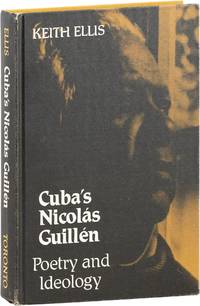
1983réf. 85035Toronto: University of Toronto Press 1983. First Edition. First Impression. Octavo 23.5cm; pictorial cloth-covered boards; x34-251252-254pp. This copy is from the library of to Puerto Rican editor translator and literary critic Roberto Marquez with his ink markings and notations throughout the text and inscribed to him by the author on the title page: "To Robert / as a token of my highest esteem and my admiration for your work / Keith." Base of spine gently nudged light wear to extremities with a few dog-eared pages; Very Good and sound without dustjacket as issued. Scholarly work on the writings of Nicolás Guillén 1902-1989 with a particularly generous inscription to Marquez who has written extensively on Guillén and has translated several of the poet's works faithfully from Spanish into English. A nice association linking two Guillén scholars. Uncommon inscribed. University of Toronto Press unknown
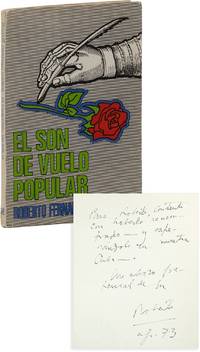
1972réf. 88465Havana: UNEAC 1972. First Edition. First Impression one of 10000 copies. Octavo 21cm; original pictorial wrappers with French flaps; 89-897pp; text is entirely in Spanish. Inscribed by Retamar on the front endpaper to Puerto Rican editor translator and literary critic Roberto Márquez: "Para Roberto / Contento con haberlo rencontrado - y esperandolo en nuestra Cuba - Un abrazo fraternal del Roberto / Ap. 73." The recipient's pervasive ink annotations and markings appear throughout the text. Edgeworn a few tiny tears and creases and a 2" split at upper front joint; Very Good. Collection of four extended essays on Nicolas Guillen by the noted Cuban poet essayist and literary critic. A warm inscription and a nice association to Marquez a Guillen scholar and translator of his work. 88465. UNEAC unknown
1947réf. 55153Havana: Cuban Tourist Commission 1947. Paperback. Very good. Paperback. 22 by 28 inches unfolded. Foxed overall with some expected toning at the creases else very good and crisp. Cuban Tourist Commission paperback
1954réf. 5156Anuario azucarero de cubacuba sugar year book 1954 censo de la industria azucarera de cuba y manual estadistico nacional e internacionalcuban sugar census national and international statistical manual.primera edicioncaratulas originaleslibro ilustrado.edicion original de 1954.publicado por Cuba economica y financiera juan b suris director.El Anuario azucarero de Cuba Cuba sugar yearbook es un catálogo anual publicado por el Ministerio del Comercio Exterior de Cuba que reúne datos estadísticos comerciales y técnicos sobre la industria azucarera cubana y su relación con el mercado nacional e internacional.refleja su doble función: por un lado como censo que recoge información sobre la producción consumo exportaciones e importaciones de azúcar; y por otro como manual estadístico que ofrece datos históricos y actuales sobre la actividad azucarera y su contexto económico.el Anuario es una referencia clave para estudios sobre la economía cubana especialmente en el sector azucarero y se ha editado en varias ediciones algunas en bilingüe español-inglés para facilitar su uso en el ámbito internacional Cuba economica y financiera hardcover
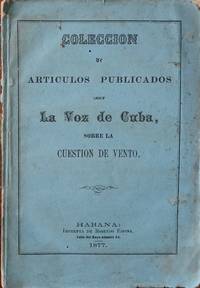
1877réf. 3543Coleccion de articulos publicados por la voz de cuba sobre la cuestion de vento primera edicion habanaimprenta de rosendo espina 1877 caratulas originaleslibro originalestado regularla voz de cuba fue un periodico cubano del siglo XIX en este libro se publican articulos del ingeniero cubano francisco de albearcon respecto a la construccion del acueducto de vento en la habanaAsí a solicitud del capitán general de la Isla el coronel de ingenieros >Francisco de Albear y Fernández de Lara presentó en 1855 una "Memoria acerca del Proyecto de conducción a La Habana de las aguas de los manantiales de Vento" que proyectaba un sistema de acueducto de mampostería cerrado que conduciría por gravedad las aguas de dichos manantiales hasta su destino final a una distancia de once kilómetros. En la Memoria Albear realizó un estudio de los antecedentes y las posibilidades de aprovechamiento de los acueductos anteriores efectuó un cálculo de la dotación de agua para la ciudad valoró las dificultades para lograr la obra de captación en Vento y propuso el trazado del canal hasta el depósito. Atendiendo a la extraordinaria complejidad de la obra y a las dificultades de su ejecución en el convulso período de la >Guerra de los diez años Albear elaboró y presentó en 1876 dos nuevos documentos: la "Memoria del Proyecto de depósito de recepción y de distribución de las obras del Canal de Vento" y la "Memoria del Proyecto de la distribución del agua de Vento en La Habana". En la primera valoraba los aspectos relativos a la ubicación altura capacidad y dimensiones del depósito así como otros aspectos tecnológicos; mientras que en la segunda se argumentaban las condiciones requeridas para un buen sistema de distribución dividido en dos partes interior y exterior así como las particularidades y aportes de cada una de ellas. La inauguración del Acueducto de Albear denominado finalmente así tras la muerte de su artífice el 22 de octubre de 1887 no ocurriría hasta seis años más tarde el 23 de enero de 1893 en medio de condiciones políticas y económicas sumamente adversas plagadas de dificultades no sólo topográficas y tecnológicas sino incluso higiénicas en momentos en que las llamadas "fiebres de Vento" diezmaban a sus constructores. La etapa final de las obras a cargo de la firma Runkle Smith and Co. de Nueva York y encabezada por el ingeniero Sherman Gould por la parte norteamericana fue dirigida de acuerdo con los proyectos originales por un discípulo y continuador de Albear el coronel de ingenieros >Joaquín Ruiz. No obstante su artífice llegó a tener en vida la satisfacción de ver su proyecto premiado con Medalla de Oro en la Exposición Universal de >París de 1878 donde se la consideró como una obra maestra de la ingeniería del siglo XIX. Imprenta de rosendo espina paperback
Habana, Imp. de G. Montiel, 1882, 27 x 18 cm., cubierta original anterior montada sobre papel, 42 págs. (Impreso de defensa de los síndicos judiciales nombrados para administrar los bienes de D. Jose Antonio Suárez Argudin en concurso de acreedores).
Habana, Imprenta del Gobierno y Capitanía General, 1892, 21,5 x 15,5 cm., rústica editorial, 143 págs.
Habana, Manuel Santana, 1897, 25 x 17,5 cm., rústica editorial, dedicatoria manuscrita del autor, IV + 79 págs. + (Apéndices:) 4 hojas, incluso 2 estados, uno de ellos plegado + (Análisis, explicación y comentarios del proyecto del nuevo matadero:) LVI págs.
Madrid, Colegio de Sordo-Mudos y de Ciegos, 1866, 20,5 x 14 cm., 132 págs. (Falto de las cubiertas originales. Entre otras cosas contiene: De la conveniencia y medios de llevar a los campos la población de color esclava empleada hoy en el servicio doméstico. De la inmigración de trabajadores libres. De la colonización blanca. La Emancipación...).
Habana, Imprenta del Gobierno y Capitanía General, 1889, 25 x 17 cm., rústica editorial a falta de la cubierta posterior, 81 págs.
Habana, Avisador Comercial, 1915, 19’5 x 14 cm., retrato – X – 153 págs. con caricaturas intercaladas – 1 h. (Falto de la cubierta original anterior).
1929Milano, T.C.I., 1929, annata completa in 12 fascicoli legati in un volume, in-8, piena tela coeva, titolo e filettature oro al dorso, sguardie in carta decorata, pp. 1358. Con numerose illustrazioni in b.n. nel testo. Qualche adesione.
1970(Cuba - Rivoluzione cubana - Poster politici - Illustrazione) In folio (cm 45 x 34,5), brossura editoriale illustrata a colori, pp. XXXVI, 97 tavole a colori a piena pagina (di cui una in antiporta) con riproduzioni di poster, 2 pagine non numerate con indice delle opere. Uno scritto introduttivo di Susan Sontag : "Posters : advertisement, art, political artifact, commodity" ed uno di Dugald Stermer : "Bread and the rose". Alcune leggere mende alla brossura, peraltro esemplare in ottimo stato di conservazione.