[LATIN AMERICA - CUBA] CONI (artist)Biblio.com
2.484 resultados
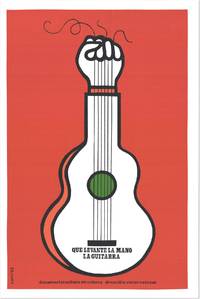
1983ref. 83069Havana: S.i. 1983. Original illustrated poster with text and pictorial elements silkscreened in four colors on white stock measuring 51cm x 76.25cm 20 1/8" x 30". Mild handling to extremities ele a bright Fine copy unbacked. Striking poster designed by Concepción Robinson Mendoza aka. "Coni" for Victor Cassaus's 1983 documentary Que Levante la Mano la Guitarra centered around Cuban musician and folk singer Silvio Rodríguez Domínguez. 83069. S.i. unknown
1983ref. 83069Havana: S.i. 1983. Original illustrated poster with text and pictorial elements silkscreened in four colors on white stock measuring 51cm x 76.25cm 20 1/8" x 30". Mild handling to extremities ele a bright Fine copy unbacked. Striking poster designed by Concepción Robinson Mendoza aka. "Coni" for Victor Cassaus's 1983 documentary Que Levante la Mano la Guitarra centered around Cuban musician and folk singer Silvio Rodríguez Domínguez. 83069. S.i. unknown books
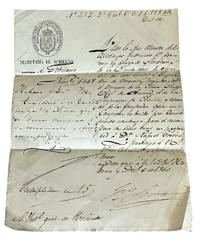
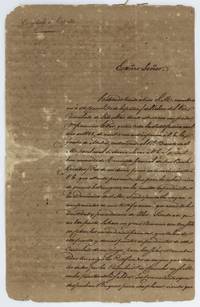
1860ref. 234291860. Spanish colonial administration in Havana used port health regulation as a mechanism of commercial and maritime control with the Captaincy General directing military customs and sanitary officials through centralized orders. This December 6 1860 manuscript concerns the "Junta local de Sanidad" "víveres averiados" and Dr. Rafael Cortés placing damaged provisions public health authority and port enforcement within the same bureaucratic chain. The phrase "usando de las facultades que me competen" invokes the vested powers of the colonial government confirming that the matter was handled through Spanish imperial authority rather than local civic discretion. Gobierno y Capitanía General de la Isla de Cuba. Secretaría de Gobierno sección de Gobierno. Manuscript order. Havana Cuba: December 6 1860. Single folded manuscript document with printed colonial seal and heading docketed "Habana y Dic. 6 de 1860" and addressed to maritime or port authorities. The text instructs compliance with a petition or order involving the local Board of Health damaged provisions or foodstuffs and Dr. Rafael Cortés with official endorsements and large administrative signatures below. The verso bears docketing and filing marks consistent with bureaucratic circulation. The document belongs directly to Spanish colonial governance in Cuba where the Governor and Captain General exercised civil military and administrative power over the island until the end of Spanish rule in 1898. Its contents connect colonial rule to the management of ports food safety and public health all crucial areas in Havana's nineteenth-century Atlantic economy. Folded as issued with toning scattered foxing edge wear and original folds; seal heading date and principal manuscript text remain legible. Overall good condition. unknown
1860ref. 234291860. Spanish colonial administration in Havana used port health regulation as a mechanism of commercial and maritime control with the Captaincy General directing military customs and sanitary officials through centralized orders. This December 6 1860 manuscript concerns the "Junta local de Sanidad" "víveres averiados" and Dr. Rafael Cortés placing damaged provisions public health authority and port enforcement within the same bureaucratic chain. The phrase "usando de las facultades que me competen" invokes the vested powers of the colonial government confirming that the matter was handled through Spanish imperial authority rather than local civic discretion. Gobierno y Capitanía General de la Isla de Cuba. Secretaría de Gobierno sección de Gobierno. Manuscript order. Havana Cuba: December 6 1860. Single folded manuscript document with printed colonial seal and heading docketed "Habana y Dic. 6 de 1860" and addressed to maritime or port authorities. The text instructs compliance with a petition or order involving the local Board of Health damaged provisions or foodstuffs and Dr. Rafael Cortés with official endorsements and large administrative signatures below. The verso bears docketing and filing marks consistent with bureaucratic circulation. The document belongs directly to Spanish colonial governance in Cuba where the Governor and Captain General exercised civil military and administrative power over the island until the end of Spanish rule in 1898. Its contents connect colonial rule to the management of ports food safety and public health all crucial areas in Havana's nineteenth-century Atlantic economy. Folded as issued with toning scattered foxing edge wear and original folds; seal heading date and principal manuscript text remain legible. Overall good condition. unknown books
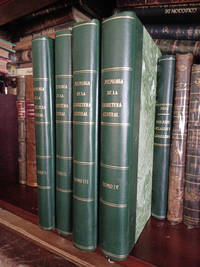
1930ref. 2416Memoria administrativa y descriptiva de las obras de la carretera nacional de cuba 4 vols primera edicion habana cuba 1930 nueva encuadernacion 4 tomos con algunas paginas restauradas y algo gastadas publicado por la Republica de cuba secretaria de obras publicas negociado de caminos y puentes bajo la administracion del honorable presidente de la republica de cuba general gerardo machado y morales siendo secretario de obras publicas el dr carlos miguel de cespedes. La Carretera Central de Cuba es la principal vía de transporte automotor de la isla. Fue construida entre 1927 y 1931 bajo el gobierno del presidente Gerardo Machado. Con una longitud total de 1139 km en 1931 la carretera está dividida en dos ramas a partir de La Habana: una hacia oriente y otra a occidente. El kilómetro 0 se encuentra en el Capitolio de La Habana. En el momento de su construcción enlazaba las 6 capitales provinciales: >Pinar del Río La Habana Matanzas Santa Clara >Camagüey y Santiago de Cuba actualmente enlaza 14 de las 15 provincias del país con la sola excepción de Cienfuegos. Gerardo Machado y Morales Camajuaní Las Villas 28 de septiembre de 1869-Miami Beach Florida 29 de marzo de 1939 fue un militar y >político cubano que fungió como general a favor de su país en la guerra de independencia contra España y fue el quinto presidente de la >República de Cuba 1925-1933. Machado ingresó a la presidencia con una amplia popularidad y apoyo de los principales partidos políticos. Cabe destacar que durante su administración se realizaron obras que perduran hasta el día de hoy: el Capitolio de La Habana y la Carretera Central. Aquellas obras públicas y otras "menores" caracterizaron su gestión dado que puso énfasis en la impulsión de ellas para absorber el desempleo que entonces azotaba a la isla tras el hundimiento de los precios del azúcar en 1921. Sin embargo su apoyo disminuyó con el tiempo puesto que reformó la Constitución de 1901 para perpetuarse en el poder. A medida que las protestas y rebeliones se volvían más estridentes debido al impacto del crac del 29 en Cuba su administración redujo la libertad de expresión y recrudeció la represión cosa que significó por parte de su mandato la lenta transición a una dictadura. Finalmente en 1933 fue obligado a dimitir a favor de un Gobierno provisional encabezado por Carlos Manuel de Céspedes y Quesada hijo de su homónimo padre a quien se considera padre de la patria y mediado por el embajador estadounidense Sumner Welles secretaria de obras publicas hardcover
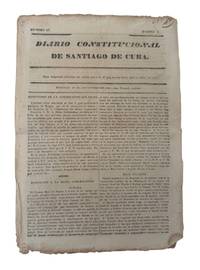
1836ref. 231491836. Diario Constitucional de Santiago de Cuba No. 57 November 1836 just months after the restoration of Spain's liberal Constitution of 1812. This newspaper records the transmission of Spanish constitutional government into eastern Cuba in late 1836 through decrees ministerial correspondence and public political dispute printed for circulation in Santiago de Cuba. Issued weeks after the political upheavals that restored constitutional rule in Spain this number shows how the language of the regency government the suppression and reorganization of state bodies and local declarations of loyalty to Isabel II reached colonial readers through the newspaper press. In a Cuban setting where metropolitan policy was filtered through governors ministries and municipal elites an issue such as this preserves the working connection between imperial administration and provincial print. Diario Constitucional de Santiago de Cuba. No. 57. Santiago de Cuba 27 November 1836. 4 pages. Folio newspaper issue. The masthead reads "DIARIO CONSTITUCIONAL / DE SANTIAGO DE CUBA" with the date line "DOMINGO 27 DE NOVIEMBRE DE 1836." Page 1 opens with "MINISTERIO DE LA GOBERNACION DEL REINO" followed by a circular and a substantial "EXPOSICION A LA REINA GOBERNADORA" leading into a "REAL DECRETO" concerning the suppression of the Consejo Real de España e Indias. Interior pages continue the decree and carry translatedly legible sections including "MISCELANEA" notices on "Las islas turcas libres" and "Noticias sobre Tejas" and a long exchange under "REMITIDOS" dated "Cuba 25 de Noviembre de 1836" addressing militia service volunteers of Isabel II and the political insult attributed to an earlier subscriber. The issue survives as a complete four page folio with dense double column text throughout and no wrappers as issued. Printed in Santiago the issue shows constitutional and monarchist language being adapted for a colonial audience that was expected to follow ministry decrees military loyalty and debates over public honor in the same sheet. Folded as issued with minor edge chipping small losses at corners and margins some toning and closed tears and pinholes; complete and legible. Overall good condition. The juxtaposition of metropolitan government text Caribbean and Atlantic news and the local controversy printed in "Remitidos" gives the number a documentary range broader than a routine official gazette placing state policy beside the contested language of provincial political life. unknown
1836ref. 231491836. Diario Constitucional de Santiago de Cuba No. 57 November 1836 just months after the restoration of Spain's liberal Constitution of 1812. This newspaper records the transmission of Spanish constitutional government into eastern Cuba in late 1836 through decrees ministerial correspondence and public political dispute printed for circulation in Santiago de Cuba. Issued weeks after the political upheavals that restored constitutional rule in Spain this number shows how the language of the regency government the suppression and reorganization of state bodies and local declarations of loyalty to Isabel II reached colonial readers through the newspaper press. In a Cuban setting where metropolitan policy was filtered through governors ministries and municipal elites an issue such as this preserves the working connection between imperial administration and provincial print. Diario Constitucional de Santiago de Cuba. No. 57. Santiago de Cuba 27 November 1836. 4 pages. Folio newspaper issue. The masthead reads "DIARIO CONSTITUCIONAL / DE SANTIAGO DE CUBA" with the date line "DOMINGO 27 DE NOVIEMBRE DE 1836." Page 1 opens with "MINISTERIO DE LA GOBERNACION DEL REINO" followed by a circular and a substantial "EXPOSICION A LA REINA GOBERNADORA" leading into a "REAL DECRETO" concerning the suppression of the Consejo Real de España e Indias. Interior pages continue the decree and carry translatedly legible sections including "MISCELANEA" notices on "Las islas turcas libres" and "Noticias sobre Tejas" and a long exchange under "REMITIDOS" dated "Cuba 25 de Noviembre de 1836" addressing militia service volunteers of Isabel II and the political insult attributed to an earlier subscriber. The issue survives as a complete four page folio with dense double column text throughout and no wrappers as issued. Printed in Santiago the issue shows constitutional and monarchist language being adapted for a colonial audience that was expected to follow ministry decrees military loyalty and debates over public honor in the same sheet. Folded as issued with minor edge chipping small losses at corners and margins some toning and closed tears and pinholes; complete and legible. Overall good condition. The juxtaposition of metropolitan government text Caribbean and Atlantic news and the local controversy printed in "Remitidos" gives the number a documentary range broader than a routine official gazette placing state policy beside the contested language of provincial political life. unknown books
1915ref. 224781915. Polk George Washington Jr. Havana and rural Cuba photo archive 1915 documents Cuba through the viewpoint of an American military traveler during the Platt Amendment era when U.S. power shaped Cuban sovereignty port security naval access and commercial movement. The photographs record ships in Havana Harbor coastal fortifications rural dwellings Cuban farmers agricultural landscapes and colonial plazas providing insight into how U.S. military personnel visually encountered Cuba just before American entry into World War I. The Platt Amendment gave the United States broad authority to intervene in Cuban affairs and required Cuba to lease land for naval stations remaining central to U.S.-Cuba relations until its repeal in 1934; this archive therefore places vernacular travel photography within a larger framework of military oversight and commercial access. Polk George Washington Jr. Havana Cuba vernacular photo collection. Havana Cuba: unpublished December 1915. Twenty-eight silver gelatin photographs pasted to album pages with some loose or partially detached ranging from approximately 2 x 2½ inches to 4½ x 3½ inches many with handwritten ink annotations dated December 22 to 29 1915. The images include vessels anchored in Havana Harbor harbor views from on board ship Morro Castle and other coastal fortification views colonial civic plazas local laborers and civilians thatched rural huts or bohíos sugarcane fields and agricultural scenes captioned "Orange Trees & Coconut Palms Near Havana." One photograph is captioned "Cuban Farmer & Son Near Havana Dec 22 1915" giving the archive direct documentary value for rural family life and American observation of Cuban agricultural communities. Other captions identify boats as "U.S.C. 5th Protectors off Havana" and refer to the United Fruit Company steamer Abangarez on the Havana-Colon route; the Abangarez was a United Fruit Company passenger and cargo vessel completed in 1909 and later brought under United States registry during World War I. The photographs combine military commercial and rural subjects in a compact record of U.S.-Cuban contact. Polk's annotations and the repeated Potchernick-Birdsong Co. Kodak Place San Antonio Texas stamps on versos indicate that the images were developed in the United States after the trip or sent home for processing preserving the path by which overseas military travel became a personal photographic record. Polk's later military service is supported by burial and veterans' records identifying George Washington Polk Jr. as born May 13 1889 died July 27 1976 and buried at Fort Rosecrans National Cemetery; the supplied description identifies him as later a Colonel in the U.S. Army Air Corps and instructor in the early U.S. Air Force. Most photographs lightly pasted along one edge to scrapbook leaves with some detached or partially affixed; a few corner creases otherwise sharp images with strong contrast good to very good overall. Focused 1915 Cuba archive linking Havana Harbor rural Cuban labor vernacular architecture United Fruit maritime movement and American military observation during the U.S. protectorate period. unknown
1915ref. 224781915. Polk George Washington Jr. Havana and rural Cuba photo archive 1915 documents Cuba through the viewpoint of an American military traveler during the Platt Amendment era when U.S. power shaped Cuban sovereignty port security naval access and commercial movement. The photographs record ships in Havana Harbor coastal fortifications rural dwellings Cuban farmers agricultural landscapes and colonial plazas providing insight into how U.S. military personnel visually encountered Cuba just before American entry into World War I. The Platt Amendment gave the United States broad authority to intervene in Cuban affairs and required Cuba to lease land for naval stations remaining central to U.S.-Cuba relations until its repeal in 1934; this archive therefore places vernacular travel photography within a larger framework of military oversight and commercial access. Polk George Washington Jr. Havana Cuba vernacular photo collection. Havana Cuba: unpublished December 1915. Twenty-eight silver gelatin photographs pasted to album pages with some loose or partially detached ranging from approximately 2 x 2½ inches to 4½ x 3½ inches many with handwritten ink annotations dated December 22 to 29 1915. The images include vessels anchored in Havana Harbor harbor views from on board ship Morro Castle and other coastal fortification views colonial civic plazas local laborers and civilians thatched rural huts or bohíos sugarcane fields and agricultural scenes captioned "Orange Trees & Coconut Palms Near Havana." One photograph is captioned "Cuban Farmer & Son Near Havana Dec 22 1915" giving the archive direct documentary value for rural family life and American observation of Cuban agricultural communities. Other captions identify boats as "U.S.C. 5th Protectors off Havana" and refer to the United Fruit Company steamer Abangarez on the Havana-Colon route; the Abangarez was a United Fruit Company passenger and cargo vessel completed in 1909 and later brought under United States registry during World War I. The photographs combine military commercial and rural subjects in a compact record of U.S.-Cuban contact. Polk's annotations and the repeated Potchernick-Birdsong Co. Kodak Place San Antonio Texas stamps on versos indicate that the images were developed in the United States after the trip or sent home for processing preserving the path by which overseas military travel became a personal photographic record. Polk's later military service is supported by burial and veterans' records identifying George Washington Polk Jr. as born May 13 1889 died July 27 1976 and buried at Fort Rosecrans National Cemetery; the supplied description identifies him as later a Colonel in the U.S. Army Air Corps and instructor in the early U.S. Air Force. Most photographs lightly pasted along one edge to scrapbook leaves with some detached or partially affixed; a few corner creases otherwise sharp images with strong contrast good to very good overall. Focused 1915 Cuba archive linking Havana Harbor rural Cuban labor vernacular architecture United Fruit maritime movement and American military observation during the U.S. protectorate period. unknown books
2007ref. 300-05028Grafika Press 2007-11-01. paperback. New. In shrink wrap! Looks like an interesting title! Grafika Press paperback
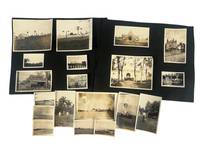
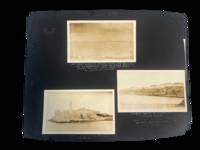
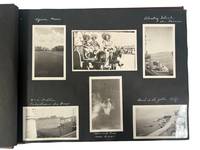
1920ref. 227281920. Havana Cuba travel photo album circa 1920s documents an American visitor's encounter with Havana during the interwar years when U.S. tourism commercial presence and Spanish-American War memory shaped how many American travelers interpreted the city. The vernacular photographs record arrival by steamship harbor landmarks civic buildings commercial streets factories boulevards monuments cemeteries and guarded public spaces giving insight into both Havana's urban landscape and the traveler's assumptions about access history and spectacle. The album's references to the USS Maine and Spanish-American War memorials place ordinary sightseeing within a longer history of U.S. intervention in Cuba; the Maine exploded in Havana Harbor on February 15 1898 killing more than 260 sailors and intensifying the crisis that led to war with Spain. Approximately 25 sepia-toned silver gelatin photographs each about 3 x 5 inches mounted to black album leaves with detailed handwritten captions in white pencil. The sequence begins aboard the S.S. Kroonland with one caption reading "My first view of Havana from the deck. three miles out at sea in a dark storm" followed by a landing view captioned "where we landed in Havana Cuba." The S.S. Kroonland returned to Panama Pacific Line service in 1923 on a New York to San Francisco route via Havana the Panama Canal and Los Angeles supporting the album's interwar travel context. The photographs then trace Havana's maritime and civic topography: harbor views Morro Castle captioned "Famous during the Spanish-American War" the waterfront in front of the fortress the Court House the President's Palace a "600-year-old church" the Henry Clay Cigar Store Havana's factory district and public boulevards "where all streets have parks in the center." Other images include a cemetery visit captioned "All people in Cuba are laid to rest above the ground" and a restricted-view street or carriage scene captioned "Officer would not let me take picture but when he turned I took it anyway" a revealing note on tourist privilege and unauthorized looking. Several images directly record the ways American travelers consumed Havana through imperial memory and Cuban nationalist commemoration. One monument is captioned "This was given by the Cuban people to the American soldiers that fell in the Spanish-American War" while another marks "the spot where the Maine sank at the entrance of the harbor." The album was made after Cuba's formal independence in 1902 and during the long aftermath of the Platt Amendment framework under which the United States retained extensive influence over Cuban affairs and intervened repeatedly in the early twentieth century. Album leaves chipped at edges several with corner losses not affecting images; prints generally sharp with strong contrast and clear annotations very good overall. Socially revealing Havana travel album documenting how a U.S. visitor pictured Cuba through steamship tourism colonial architecture cigar commerce Spanish-American War remembrance and the everyday authority structures of an interwar Caribbean capital. unknown
1920ref. 227281920. Havana Cuba travel photo album circa 1920s documents an American visitor's encounter with Havana during the interwar years when U.S. tourism commercial presence and Spanish-American War memory shaped how many American travelers interpreted the city. The vernacular photographs record arrival by steamship harbor landmarks civic buildings commercial streets factories boulevards monuments cemeteries and guarded public spaces giving insight into both Havana's urban landscape and the traveler's assumptions about access history and spectacle. The album's references to the USS Maine and Spanish-American War memorials place ordinary sightseeing within a longer history of U.S. intervention in Cuba; the Maine exploded in Havana Harbor on February 15 1898 killing more than 260 sailors and intensifying the crisis that led to war with Spain. Approximately 25 sepia-toned silver gelatin photographs each about 3 x 5 inches mounted to black album leaves with detailed handwritten captions in white pencil. The sequence begins aboard the S.S. Kroonland with one caption reading "My first view of Havana from the deck. three miles out at sea in a dark storm" followed by a landing view captioned "where we landed in Havana Cuba." The S.S. Kroonland returned to Panama Pacific Line service in 1923 on a New York to San Francisco route via Havana the Panama Canal and Los Angeles supporting the album's interwar travel context. The photographs then trace Havana's maritime and civic topography: harbor views Morro Castle captioned "Famous during the Spanish-American War" the waterfront in front of the fortress the Court House the President's Palace a "600-year-old church" the Henry Clay Cigar Store Havana's factory district and public boulevards "where all streets have parks in the center." Other images include a cemetery visit captioned "All people in Cuba are laid to rest above the ground" and a restricted-view street or carriage scene captioned "Officer would not let me take picture but when he turned I took it anyway" a revealing note on tourist privilege and unauthorized looking. Several images directly record the ways American travelers consumed Havana through imperial memory and Cuban nationalist commemoration. One monument is captioned "This was given by the Cuban people to the American soldiers that fell in the Spanish-American War" while another marks "the spot where the Maine sank at the entrance of the harbor." The album was made after Cuba's formal independence in 1902 and during the long aftermath of the Platt Amendment framework under which the United States retained extensive influence over Cuban affairs and intervened repeatedly in the early twentieth century. Album leaves chipped at edges several with corner losses not affecting images; prints generally sharp with strong contrast and clear annotations very good overall. Socially revealing Havana travel album documenting how a U.S. visitor pictured Cuba through steamship tourism colonial architecture cigar commerce Spanish-American War remembrance and the everyday authority structures of an interwar Caribbean capital. unknown books
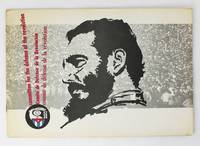
1965ref. 6257Habana 1965. Very good. 16pp. Oblong pamphlet in original pictorial wrappers stapled. Light wear and toning at wrapper edges with a few faint creases. Internally clean. A visually rich pro-Casto and pro-Communist pamphlet that highlights the history and core activities of Cuba's Committee for the Defense of the Revolution CDR neighborhood-based civil defense organizations created by Castro in 1960 to defend the revolution and maintain social and political control at the local level. This often included activities like surveillance distribution of propaganda and vigilante justice. The pamphlet is illustrated with photos throughout and also contains a two-page spread with maps of the island and charts data and statistics about the Cuban people. It contains a year-by-year account of the Committee's achievements and activities and ends with a section concerning its relations with other countries and their visits to Cuba. The rear wrapper states that editions were published in English French and Spanish as evidenced by the trilingual title on the front cover but we find no evidence of any edition in OCLC. Scarce and with much interesting and propagandized information about Castro's local enforcers during the early years of the Communist regime. unknown
1965ref. 6257Habana 1965. Very good. 16pp. Oblong pamphlet in original pictorial wrappers stapled. Light wear and toning at wrapper edges with a few faint creases. Internally clean. A visually rich pro-Casto and pro-Communist pamphlet that highlights the history and core activities of Cuba's Committee for the Defense of the Revolution CDR neighborhood-based civil defense organizations created by Castro in 1960 to defend the revolution and maintain social and political control at the local level. This often included activities like surveillance distribution of propaganda and vigilante justice. The pamphlet is illustrated with photos throughout and also contains a two-page spread with maps of the island and charts data and statistics about the Cuban people. It contains a year-by-year account of the Committee's achievements and activities and ends with a section concerning its relations with other countries and their visits to Cuba. The rear wrapper states that editions were published in English French and Spanish as evidenced by the trilingual title on the front cover but we find no evidence of any edition in OCLC. Scarce and with much interesting and propagandized information about Castro's local enforcers during the early years of the Communist regime. unknown books
1828ref. 2401Gibraltar 1828. Good. 3pp. on a bifolium. Previously folded with separations. Tanned somewhat brittle. An interesting example of official communications concerning trade between colonial Cuba and the Spanish mainland. In this manuscript letter date March 14 1828 the new Spanish Vice Consul in Gibraltar writes to the Governor General of Cuba concerning several topics. These include the regulation of shipping to Cuba and by implication the rest of the Caribbean through Gibraltar particularly of French ships leaving Mediterranean ports. Also discussed is keeping track of individuals particularly merchants going to Cuba by means of identification papers and other documents. The consul also reminds the colonial government of the importance of documenting duties and tariffs paid for shipping cargo and goods. unknown books
1981367 pages. Index. List of Abbreviations. "The narrative and memoranda of the Taylor Committee are presented here with minimal editorial changes from the actual declassified documents. Average wear. Binding intact. Usual library markings. Front free endpaper neatly removed. A sound copy of this important work. Book
183925x15,5. 201p. Colección de varios escritos presentados por su apoderado y defensor. Ej. Mareado con páginas amarronadas. Enc. Plena piel con nervios y ruedas en planos con pequeñas rozaduras. Cantos dorados.
1861ref. 11929Paris Collection Hetzel, E. Dentu [1861] in-12 de 2 ff.n.ch. et 446 pp. demi-veau glacé bleu, dos à nerfs rehaussés de point. dorés, fleurettes dans les entrenerfs [Rel. de l'époque]
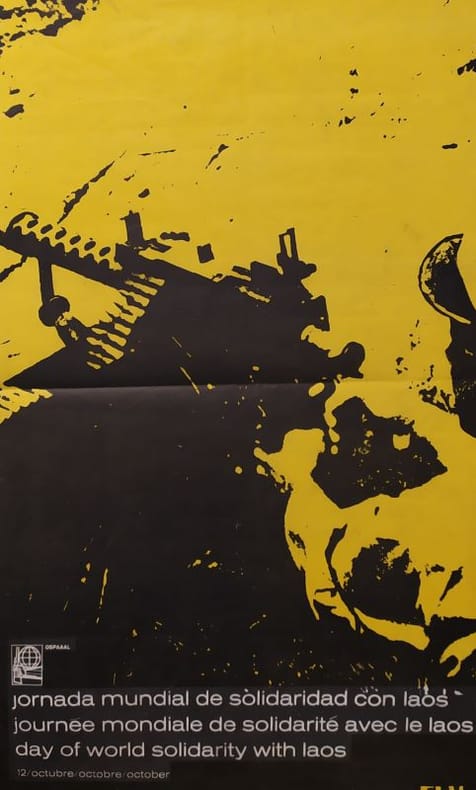
ref. 3365OSPAAAL. 1967. Impression en offset. Dim: 550 x 330 mm.
ref. 3365OSPAAAL. 1967. Impression en offset. Dim: 550 x 330 mm.
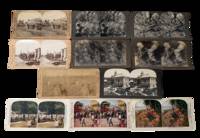
1890ref. 231711890. Stereoview archive of the post-emancipation Caribbean showing how the islands were marketed to western viewers through plantation labor export agriculture civic spectacle and catastrophe. As a group these photos function not only as an ethnographic travel archive but as evidence of the visual economy that followed slavery. The British West Indies moved through emancipation in 1834 to 1838 the French Caribbean in 1848 Puerto Rico in 1873 and Cuba in 1886 yet plantation production remained central to regional life well into the early twentieth century. These stereoviews preserve a colonial way of seeing in which Black and Afro-Caribbean labor rural discipline and extractive agriculture remained the background condition of "tropical" beauty and commercial modernity. Cuba's sugar economy in particular expanded through the nineteenth century and slavery was not abolished there until 1886 while Weyler's later reconcentration policy during the Cuban War of Independence violently reorganized rural life. Martinique after 1848 likewise shifted into new labor regimes including imported workers from India and China. Archive of 11 stereoview cards late 1890s to early 1900s depicting Cuba Jamaica Martinique Puerto Rico and the Dominican Republic. Most black and white with a few colorized. Each measure 3.5" x 7". All with captions on the margins. "Reconcentrado Farming Scene Province of Havana Cuba" links agricultural production to the brutal displacements of Spain's reconcentration campaign; "Cutting sugar cane Montego Bay Jamaica W.I." records cane labor in a colony where emancipation had not ended plantation dependency; and "Harvesting Coconuts Porto Rico" likewise frames Caribbean land through export work rather than local life. Other views extend that economic framing through cacao and coffee scenes while the paired Havana cards shift into urban leisure and public display including "Beautiful Central Park Havana Cuba" and "Holiday in Havana Cuba" the latter with both Cuban and American flags visible a telling image of the new imperial order after 1898. The disaster views from Martinique and the Lesser Antilles show how stereoview publishers also turned Caribbean destruction into consumable spectacle. the Morne Rouge card is accompanied on the reverse by the grim printed text "Dead bodies which were to be seen in Morne Rouge." while the wider context is the 1902 eruptions of Mount Pelée in Martinique and La Soufrière on Saint Vincent two catastrophes that killed roughly 30000 and 1600 people respectively and devastated local communities and agriculture. Some corner wear light toning scattered surface and edge wear. Overall very good condition. This collection gives direct visual representation of Caribbean history Atlantic slavery and emancipation plantation labor and U.S. imperial expansion in the circum-Caribbean preserving the transition from slavery to post-abolition labor. unknown
1890ref. 231711890. Stereoview archive of the post-emancipation Caribbean showing how the islands were marketed to western viewers through plantation labor export agriculture civic spectacle and catastrophe. As a group these photos function not only as an ethnographic travel archive but as evidence of the visual economy that followed slavery. The British West Indies moved through emancipation in 1834 to 1838 the French Caribbean in 1848 Puerto Rico in 1873 and Cuba in 1886 yet plantation production remained central to regional life well into the early twentieth century. These stereoviews preserve a colonial way of seeing in which Black and Afro-Caribbean labor rural discipline and extractive agriculture remained the background condition of "tropical" beauty and commercial modernity. Cuba's sugar economy in particular expanded through the nineteenth century and slavery was not abolished there until 1886 while Weyler's later reconcentration policy during the Cuban War of Independence violently reorganized rural life. Martinique after 1848 likewise shifted into new labor regimes including imported workers from India and China. Archive of 11 stereoview cards late 1890s to early 1900s depicting Cuba Jamaica Martinique Puerto Rico and the Dominican Republic. Most black and white with a few colorized. Each measure 3.5" x 7". All with captions on the margins. "Reconcentrado Farming Scene Province of Havana Cuba" links agricultural production to the brutal displacements of Spain's reconcentration campaign; "Cutting sugar cane Montego Bay Jamaica W.I." records cane labor in a colony where emancipation had not ended plantation dependency; and "Harvesting Coconuts Porto Rico" likewise frames Caribbean land through export work rather than local life. Other views extend that economic framing through cacao and coffee scenes while the paired Havana cards shift into urban leisure and public display including "Beautiful Central Park Havana Cuba" and "Holiday in Havana Cuba" the latter with both Cuban and American flags visible a telling image of the new imperial order after 1898. The disaster views from Martinique and the Lesser Antilles show how stereoview publishers also turned Caribbean destruction into consumable spectacle. the Morne Rouge card is accompanied on the reverse by the grim printed text "Dead bodies which were to be seen in Morne Rouge." while the wider context is the 1902 eruptions of Mount Pelée in Martinique and La Soufrière on Saint Vincent two catastrophes that killed roughly 30000 and 1600 people respectively and devastated local communities and agriculture. Some corner wear light toning scattered surface and edge wear. Overall very good condition. This collection gives direct visual representation of Caribbean history Atlantic slavery and emancipation plantation labor and U.S. imperial expansion in the circum-Caribbean preserving the transition from slavery to post-abolition labor. unknown books
1930ref. 221561930. This Photo Album captures a series of trips across California Mexico Dominican Republic Cuba Panama and other U.S. and North American travel documents the coastal and cross-border tourist experience of an American social group during the 1930s through the early 1950s.The album records a continuous itinerary of domestic and international travel with dated captions such as "July 19 1938 / On Board S/S Dixie from New Orleans La" situating the group within organized steamship routes linking the United States to Caribbean destinations. Oblong photograph album measuring approximately 11.5 x 15.25 inches containing 218 silver gelatin photographs mounted on black pages with images ranging from approximately 2.25 x 2.75 inches to 4.5 x 5.5 inches. Photographs are captioned on album pages and occasionally on versos identifying locations and dates. California scenes include Los Angeles Hollywood Olvera Street Pasadena gardens San Diego Balboa Park Mission Beach La Jolla Catalina Island and the Hotel del Coronado with recurring images of beaches coastal views small boats and leisure activities such as bathing and sightseeing. Additional images depict San Francisco landmarks including Alcatraz Island and Muir Woods. Travel beyond the United States includes Tijuana Mexico; Havana Cuba; Santo Domingo Dominican Republic; and Panama City with scenes of street activity ruins courtyards and waterfronts. A sequence from Catalina Island emphasizes seaside recreation while Caribbean and Central American images show plazas tropical vegetation and urban environments including Afro-Caribbean individuals in public spaces. Additional photographs document travel to New Orleans Utah Salt Lake City Nova Scotia and a location labeled "Indian Island." This album documents patterns of American tourism during the mid-twentieth century when organized travel by rail and steamship enabled access to domestic resorts and international destinations across the Americas. The combination of coastal California imagery with Caribbean and Latin American scenes reflects a broader گردش of leisure travel that emphasized climate landscape and cultural difference within reachable distance of the United States. The presence of consistent captions and chronological markers provides a structured record of travel routes and destinations contributing to research on tourism history visual culture and cross-border movement in the pre-jet era. Light wear to album and photographs with minor handling marks; overall very good condition. A substantial visual record of American travel practices and geographic mobility across the Americas in the mid-twentieth century. unknown
1930ref. 221561930. This Photo Album captures a series of trips across California Mexico Dominican Republic Cuba Panama and other U.S. and North American travel documents the coastal and cross-border tourist experience of an American social group during the 1930s through the early 1950s.The album records a continuous itinerary of domestic and international travel with dated captions such as "July 19 1938 / On Board S/S Dixie from New Orleans La" situating the group within organized steamship routes linking the United States to Caribbean destinations. Oblong photograph album measuring approximately 11.5 x 15.25 inches containing 218 silver gelatin photographs mounted on black pages with images ranging from approximately 2.25 x 2.75 inches to 4.5 x 5.5 inches. Photographs are captioned on album pages and occasionally on versos identifying locations and dates. California scenes include Los Angeles Hollywood Olvera Street Pasadena gardens San Diego Balboa Park Mission Beach La Jolla Catalina Island and the Hotel del Coronado with recurring images of beaches coastal views small boats and leisure activities such as bathing and sightseeing. Additional images depict San Francisco landmarks including Alcatraz Island and Muir Woods. Travel beyond the United States includes Tijuana Mexico; Havana Cuba; Santo Domingo Dominican Republic; and Panama City with scenes of street activity ruins courtyards and waterfronts. A sequence from Catalina Island emphasizes seaside recreation while Caribbean and Central American images show plazas tropical vegetation and urban environments including Afro-Caribbean individuals in public spaces. Additional photographs document travel to New Orleans Utah Salt Lake City Nova Scotia and a location labeled "Indian Island." This album documents patterns of American tourism during the mid-twentieth century when organized travel by rail and steamship enabled access to domestic resorts and international destinations across the Americas. The combination of coastal California imagery with Caribbean and Latin American scenes reflects a broader گردش of leisure travel that emphasized climate landscape and cultural difference within reachable distance of the United States. The presence of consistent captions and chronological markers provides a structured record of travel routes and destinations contributing to research on tourism history visual culture and cross-border movement in the pre-jet era. Light wear to album and photographs with minor handling marks; overall very good condition. A substantial visual record of American travel practices and geographic mobility across the Americas in the mid-twentieth century. unknown books
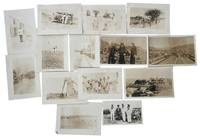
1914ref. 235561914. US Navy photograph archive 1914 to 1919 documenting American sailors in Cuba during the years when Guantánamo Bay served as a U.S. naval station for Caribbean fleet activity training and strategic movement. Verso inscriptions reading "25wyn" and "1914 to 1919" likely connect the group to USS Wyoming BB 32 whose documented service placed the battleship repeatedly in Cuban waters during this period. The photographs provide a sailor's vernacular record of Cuban streets roads transportation local residents agricultural hauling commerce and infrastructure within a wartime Cuba shaped by U.S. naval presence Caribbean patrol activity and the uneven modernization of industry under US Imperial rule. Photo archive of 14 silver gelatin photographs various sizes most approximately 5 x 3.5 inches Cuba 1914 to 1919. The images show U.S. Navy sailors posed among cactus and agave standing with Cuban men beside an open touring automobile and gathered in uniform at a public outdoor event with benches crowds buildings and hills beyond. Cuban infrastructure appears throughout the group: horse drawn carriages and wagons move through a town street lined with utility poles and commercial buildings; an ox team pulls a high wooden cart loaded with cut cane or brush along a rural road; a windmill or water pumping structure stands beside a group of local residents; a rail or tram line runs through a lightly built district; and a roadside scene combines naval uniforms automobile travel and undeveloped terrain. One commercial view shows a tourist photography and souvenir stand advertising "post cards made while you wait" "souvenirs & novelties" "Kodak films for sale" and "photo printing developing" placing commercial image making tourist exchange and modern photographic supply in the same Cuban landscape the sailors moved through during the US's imperial organization. The U.S. naval presence in Cuba began with the Spanish American War and the occupation that followed. The Platt Amendment which limited Cuban sovereignty after independence in 1902 and the 1903 lease agreements gave the United States a permanent base at Guantánamo Bay. By World War I Guantánamo was part of the working map of U.S. power in the Caribbean. It supported fleet exercises patrol movements and regional security from Cuban territory. These photographs show US imperial interest by depicting American sailors moving through streets and roads where motorcars utility poles photographic shops horse drawn traffic ox carts windmills rural tram lines and agricultural hauling all appear in the same landscape. Overall in good to fair condition with heavy image fading slight handling wear some curling. Some photographs have tears which do not obstruct the images. A visual record of U.S. naval presence in Platt Amendment Cuba and the roads shops vehicles animals and rural working systems during the World War I period. unknown