2.484 resultados
1903ref. 6457V.p. 1903. 36 postcards all completed in manuscript generally very good or better with some wear and rounded corners. A fascinating assemblage of cards written by Pre-Castro intellectuals to a Maria de Serra though a few are written to other women. It is difficult to pin down de Serra though we do know she was highly educated and very well-known and connected. It makes sense to us that she is perhaps the Maria de Serra mentioned by William Wells Brown in his important work The Rising Son or the Antecedents and advancement of the Colored Race 1874. On pg 260 Brown writes: "The free blacks in Cuba form an important element in her population and these people are found in all the professions and trades. .one of the best young ladies' academies at present existing at Havana is personally conducted by an accomplished negro woman Maria de Serra to whom many a lady of high rank owes her social and intellectual accomplishments." Further research may be fruitful in retrieving more information on this Maria de Serra. It goes without saying that the sentiments and signatures are the most appealing part of this collection. Many of the cards appear to contain original verse and all are quite legible and well preserved. Equally as lovely are the cards themselves many being of exceptional beauty as they were all chosen by artists and intellectuals. All in all a remarkable set worthy of further research. The correspondents are as follows: Diego Vicente Tejera; one of the most famous turn-of-the-century Cuban poets but also known as a short story writer orator and political activists. Nestor Cargonell; famous poet and writer. His son went on to become a Hollywood star. Conde Kostia pseudonym of Aniceto Valdivia; writer journalist poet critic lecturer dramatist founder of newspapers and Cuban diplomat. Rafael Maria Merchain; very influential poet and philosopher Enrique Fontanills; very prominent Cuban journalist. Florimel: great Cuban journalist writer and poet who died early in life. Manuel Raul Blanco Belmonte; Cuban poet. Ramon Meza; One of the most important Cuban writers of his time. Many of his books are considered classics and remain in print. Aurelio Cancio; Cuban journalist who founded "La Discusion" newspaper. Manuel Serafin Pichardo; one of the most popular Cuban poet of the 1900s. Frederico Mendes Cobos; a Cuban politician who became a a senator in 1902. Juan Maria Alberti: influential Cuban politician. Manuel Marquez Sterling; fine writer and politician. Jose Manuel Govin; journalist and director of the popular newspaper "El Munto" Cesar Cancio; Very popular Cuban poet born in St Spiritus. Pablo Bonachea; great Cuban journalist and director of "La Discussion" newspaper for one year. Jose Ernesto Trian; Cuban writer with political connections. Was ambassador to Venezuela. Manuel Tierso; Romantic Cuban poet Alvaro de la Iglesia. revered Cuban writer who penned the great "Cuban Traditions" Frederico Ledesma Balsunde: journalist and editor at "El Lucero." Fabio Fiallo; a leading Dominican writer poet and politician. He died in Cuba. Dulce Maria Borrero de Lujan; the most important Cuban woman writer and poet of her time. Frederico Hermida; author of any Cuban novels in the 1900s. Mariana Comas; Cuban essayist Joaquin Lopez Sena; renown Cuban poet and a politician from the 1900s to the 1920s. Eliseo Giberga; a very powerful and influential Cuban politician of the early 1900s. Manuek Coronado; an important Cuban journalist. Antonio San Miguel; Cuban writer and journalist. Pablo Santi Rois; Poet and respected journalist. Armando Celorio; One of the finest Cuban poets. Jose Maria Carbonell; famous Cuban poet and writer. Marcos Trazivark; famous Cuban writer and Musician. Esteban Joven; Cuban writer poet and essayist. Narciso de Puso; famous poet well entrenched in Cuban high society. Eduardo Mencis Capote; Cuban journalist popular among the elite. Lorenzo Frau Marsal; respected Cuban journalist . unknown books
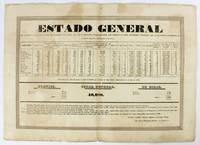
1838ref. 5957Sancti Spiritus 1838. Good plus. Broadside measuring 12.5 x 17.5 inches. Previously folded. Light wear to edges and along old fold lines with a few small chips at edges. Moderate toning and soiling. An unrecorded broadside that prints statistics relating to agricultural production for the region of Sancti Spiritus in central Cuba during the late 1830s. For each municipality the broadside prints the number of property owners; ranches; land-grant farms; slaves; white employees; animals including mules donkeys cows and sheep; distances to transport and shipping hubs; and several other figures. In the bottom third of the broadside are printed the census figures from 1836 with the population totaling just over 40000 people and split into Black and white groups. Rather pointedly the figures for the white population are divided by gender while the figures for the Black population are divided by status free or slave. A very interesting statistical snapshot of a smaller rural region in colonial Cuba in 1838. Not in OCLC. unknown
1838ref. 5957Sancti Spiritus 1838. Good plus. Broadside measuring 12.5 x 17.5 inches. Previously folded. Light wear to edges and along old fold lines with a few small chips at edges. Moderate toning and soiling. An unrecorded broadside that prints statistics relating to agricultural production for the region of Sancti Spiritus in central Cuba during the late 1830s. For each municipality the broadside prints the number of property owners; ranches; land-grant farms; slaves; white employees; animals including mules donkeys cows and sheep; distances to transport and shipping hubs; and several other figures. In the bottom third of the broadside are printed the census figures from 1836 with the population totaling just over 40000 people and split into Black and white groups. Rather pointedly the figures for the white population are divided by gender while the figures for the Black population are divided by status free or slave. A very interesting statistical snapshot of a smaller rural region in colonial Cuba in 1838. Not in OCLC. unknown books
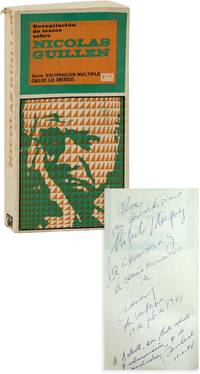
1974ref. 88452Havana: Casa de las Americas 1974. First Edition. First Impression one of 18000 copies. Narrow octavo 22.75cm; original pictorial card wrappers; 67-4293pp; illus.; text is entirely in Spanish. Inscribed by Guillen on the title page to Puerto Rican editor translator and literary critic Roberto Márquez: "Para Roberto Márquez / con el fraternal cariño de Nicolas / La Habana Feb. 74." Signed directly beneath by an unknown figure and below that by Afro-Cuban poet and journalist Marcelino Arozarena 1912-1996. The opposing page is inscribed for Márquez in verse with a small drawing by an undetermined poet signed "David Feb.74." The verso of the half-title page is warmly inscribed by Cuban poet and critic Nancy Morejón who has written the foreword to this volume: "Para mi queridísimo Roberto Marquez / la admiracion y el cariño immenso de Nancy / La Habana / 19 de feb. de 1974." Directly beneath this is another warm year of publication inscription by an underemined individual. This volume has been extensively marked-up by Márquez whose contribution "Introducción a Guillén" appears on pp.127-138. Some wear to extremities a few nicks and tears to spine ends with some creases to wrappers; Very Good. A key volume of critical texts on Guillén 1902-1989 the national poet of Cuba by many of his contemporaries like Mirta Aguirre Angel Augier Roberto Fernández Retamar Nancy Morejón Alejo Carpentier Pablo Neruda Ciro Alegría and others. This copy bears a number of contemporary inscriptions to Márquez a Guillén scholar who has written extensively on his work and has translated several of the poet's works faithfully from Spanish into English. 88452. Casa de las Americas unknown
1856ref. 0006868New York: D. Appleton 1856. First edition. Hardcover. fine. 12mo xii 412 pages original light brown embossed cloth. These observations are related in a series of 61 letters. These were originally composed in Spanish then translated into English by Joseito. "I have thereby been enabled to impart entirely new data and reliable information instead of merely copying from books already known. . I applied myself to natives who besides an intimate knowledge of affairs in general possessed a sound judgment and an investigating disposition. It has beeen indeed a very happy incident to have found them. . That part of my work which treats on judicial matters and the secrets of the management of the tribunals will especially attract the attention of my readers. - Introductory Letter." Sabin 17816; Treiles BIBLIO. CUBANA vo. 4 p.17. D. Appleton hardcover
ref. PD19Oblong Folio album ca. 285x36 cm. 49 black paper album leaves. With ca. 260 mounted gelatin silver photographs of various size including ca. 20 large photos from ca. 245x32 cm 9 ½ x 12 ½ in to ca. 155x225 cm 6 x 8 ¾ in and 21 panoramas ca. 85x29 cm 3 ¼ x 11 1 /2 in or slightly smaller. The rest of the photos are from ca. 12x17 cm 4 ¾ x 6 ¾ in to ca. 4x6 cm 1 ½ x 2 ¼ in; most photos are ca. 8x14 cm 3 ¼ x 5 ½ in. No captions. About twenty photos with period ink notes “D.K.M. 10” in the corners. Period style black half morocco with cloth boards; decorative gilt-tooled borders on both boards and spine. Album leaves brittle several with tears and losses on extremities two large photos with tears and losses on extremities two small photos with losses of one corner each one photo has been apparently previously removed a few photos smildly faded or with mild silvering but overall a very good album of interesting photos. Historically significant album with lively amateur snapshots and original studio photos taken and collected by a family of American tourists during a Caribbean cruise in the early 1910s onboard the steamship “Moltke” of the Hamburg America Line Hamburg-Amerikanische Packetfahrt-Aktien-Gesellschaft or HAPAG. Launched in 1901 S.S. “Moltke” went on regular cruises around the Caribbean and the Mediterranean until it was seized by Italy in 1915 in the course of WW1. Her Caribbean or West Indies cruises departed from New York and included stops in Cuba Puerto Rico Jamaica Panama Canal Venezuela Trinidad Barbados Martinique St. Thomas Dutch West Indies Bermuda & Bahamas. The album opens with several large views and panoramas of Havana harbour and waterfront featuring Castillo del Morro the iconic building of Lonja del Comercio commodities and stock exchange and S.S. “Moltke.” The other photos show Havana streets and passers-by the interior of a Catholic church &c. Over twenty photos are the views of the city and harbour of Charlotte Amalie on St. Thomas Island – then the capital of the Danish West Indies since 1917 the U.S. Virgin Islands. The images show the city harbour from the distance and close-up a sign of “St. Thomas Bay & Rum Co.” is seen on one of the photos the statue of King Christian IX erected in the Emancipation Garden in 1909 removed in 2021 streets residential neighbourhoods on sloping hills a local market an official residence with the waving Danish flag garden of a Catholic convent with one of the monks posing alone and with a young tourist &c. Over thirty identified views of Puerto Rico a U.S. colony since 1898 a Commonwealth controlled by the U.S. since 1952 show San Juan: Plaza de Armas with the City Hall completed in 1842 Palacio de la Real Independencia now housing the Department of State of Puerto Rico Castillo San Felipe del Morro in the San Juan Bay Plaza Colon with Christopher Columbus monument San Juan harbour city streets and shops building of the “Hotel y Banos” a passenger train with the travellers walking at the front native cart drivers passers-by &c. A large group of photos ca. sixty depict the French Island of Martinique with a series of views of Fort-de-France: statues of Empress Josephine erected in 1859 destroyed in 2020 and Victor Schloelcher erected in 1904 removed in 2020 St. Louis Cathedral with the spire still under construction city streets and harbour “Hotel de l’Europe” distinctive cliffs on the coast near Fort-de-France &c. The views of Martinique include over twenty images of the ill-fated town of St. Pierre which perished during Mount Pelee’s eruption in May 1902. The photos include one view of St. Pierre before the destruction as well as general views of the ruins and desolation with posing tourists. Several images show the ruins of the Co-Cathedral of Our Lady of Assumption the downtown core with a grid of destroyed buildings and charred trees wrecked ships in the harbour a surviving bridge and the remains of the victims. A couple of images feature the top of Mount Pelee with a distinctive lava spine or the “Needle of Pelee” which was formed in October 1902 and collapsed in March 1903. Among the identified photos of Nassau Bahamas are the views of the famous silk cotton tree St. Matthews Anglican church completed in 1802 and the interior of Fort Charlotte. The other images show sugar cane plantations and native workers Caribbean residences streets and markets ports the American coastal steamer “Colonia” a series of scenes from a street carnival procession portraits of local market goers families diving children &c. Several images portray the tourists on board the S.S. Moltke including a group portrait with a lifebuoy of “Moltke Hamburg”. Overall a historically significant visual source on the history of American tourism to the Caribbean in the early 20th century with interesting views of the aftermath of the destruction of St. Pierre by the volcanic eruption. hardcover
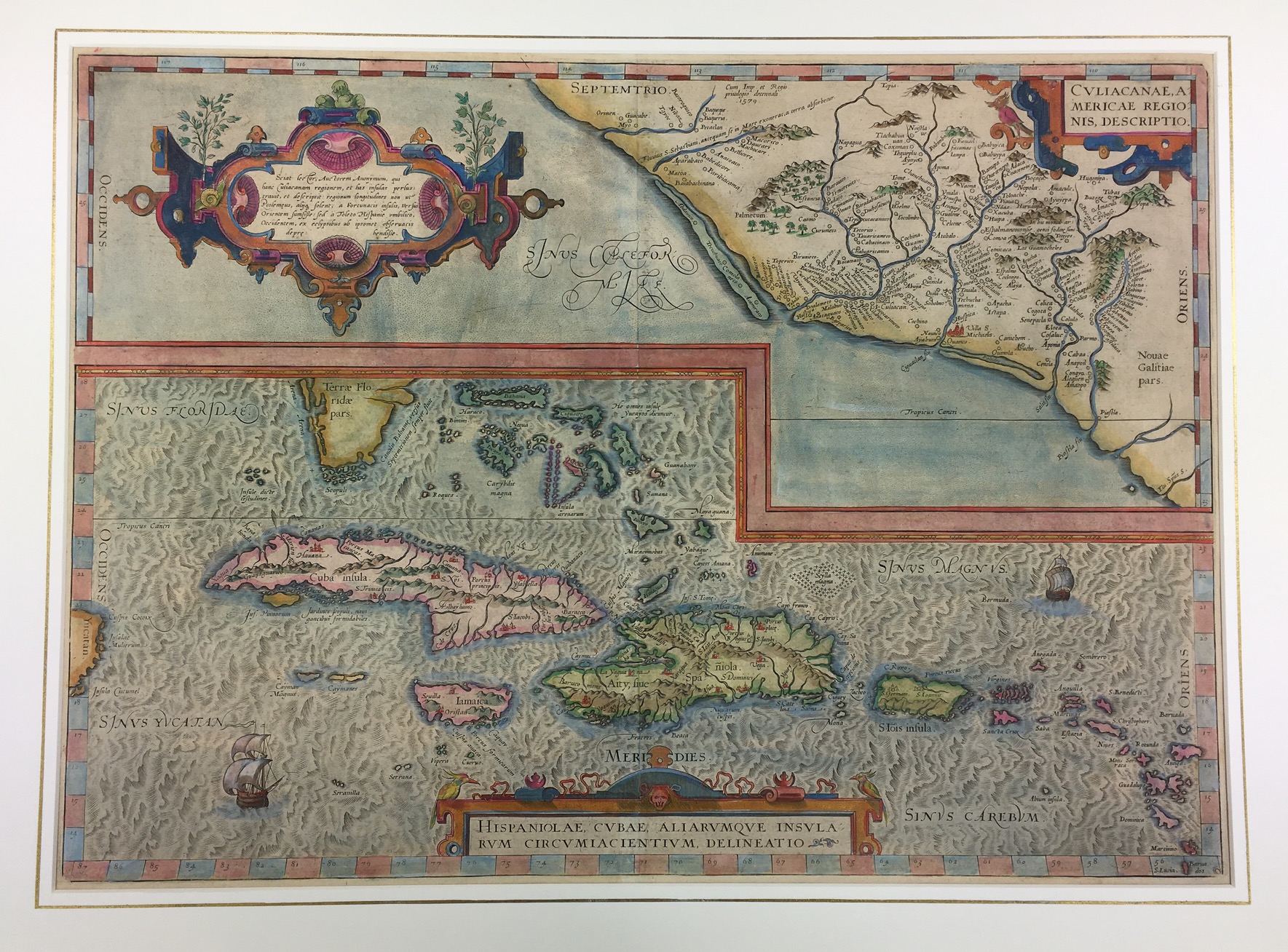
1584ref. 53607Antwerpen, Plantin 1584. Orig.- Altkolor. Kupferstichkarte 36 x 50 cm. (Blattgröße 54 x 56 cm.) Unter Passepartout. Gleichmäßige Papierbräunung. Gut erhalten.
1908ref. ZB573260Habana: Rambla y Bouza printers last two volumes with libreria 1908-1919. 40 volumes all issued; text browning especially at margins needs rebinding. - If you are reading this this item is actually physically in our stock and ready for shipment once ordered. We are not bookjackers. Buyer is responsible for any additional duties taxes or fees required by recipient's country. Photos available upon request. Habana: Rambla y Bouza, printers last two volumes with libreria unknown
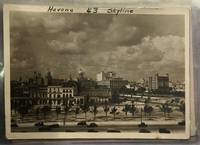
1930ref. RF 56517 original photos from La Habana. 8vo. 17 photographs from Havana. Photographs are 17.5 cm x 12.5 cm. Each photograph bears an ink handwritten description across the top: Prado & Morro Castle; Havana Skyline; Prado & Capitol; Residential Palace; El Morro no inscription; Race Track Havana; Prado from the Capitol; Prado from the Capitol another view Maine Monument; Capitol Grounds; Tropical Beer Garden; Main Monument & National Hotel Havana; Race Track another view; National Theatre and Capitol. Set of photographs of Havana from the 1920s 1930s. The inscriptions on each photograph are in English. Unidentified photographer. Interesting Cuban photographici conography. O02G000074 RF 565 X99X001603
ref. 8028Ao.J. Pressefoto. 20 x 15 cm.
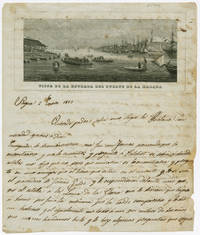
1853ref. 54601Havana. 1853. Writing Home from Havana An attractive Cuban pictorial lettersheet with a neatly executed third-page lithograph illustration of the port of Havana. The image depicts several small boats rowing barrels to and from a loading dock. In another small boat a plantation owner or some form of dignitary is being rowed to shore by a crew of men. On the right side of the image several larger ships lie at anchor and in the background on the shore is the fort guarding the mouth of the harbor the Morro Castle. The sheet is filled out by a man named Juan Fabre writing to his parents on Jan. 2 1853 advising them of his safe arrival in Havana. He talks about meeting up with a relative that he had not seen in two years and working at a shoe shop with another relative who adds a brief post script on the verso of the second leaf. Pictorial lettersheets of Cuba are quite rare on the market. Previously folded. Some chipping at fore-edge slightly affecting text. Light dampstaining and tanning. About very good. unknown
1853ref. 54601Havana. 1853. Writing Home from Havana An attractive Cuban pictorial lettersheet with a neatly executed third-page lithograph illustration of the port of Havana. The image depicts several small boats rowing barrels to and from a loading dock. In another small boat a plantation owner or some form of dignitary is being rowed to shore by a crew of men. On the right side of the image several larger ships lie at anchor and in the background on the shore is the fort guarding the mouth of the harbor the Morro Castle. The sheet is filled out by a man named Juan Fabre writing to his parents on Jan. 2 1853 advising them of his safe arrival in Havana. He talks about meeting up with a relative that he had not seen in two years and working at a shoe shop with another relative who adds a brief post script on the verso of the second leaf. Pictorial lettersheets of Cuba are quite rare on the market. Previously folded. Some chipping at fore-edge slightly affecting text. Light dampstaining and tanning. About very good. unknown books
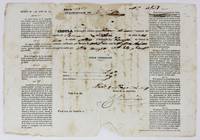
1857ref. 4502Havana 1857. Good plus. Small broadside form approximately 8.5 x 12.5 inches. Previously folded with some separation and minor loss along vertical fold. Completed in manuscript with additional manuscript docketing on blank verso. Ink burn causing additional minor loss in a few small areas. Light edge wear; some staining and offsetting; light tanning. A 19-century Cuban identification form known as a cedula filled out in manuscript to authorize the travel of an Asian indentured servant between plantations in early May 1857. The document was completed for a twenty-six-year-old Asian fieldhand named Chan who had signed a contract to work for one Gallego Toriceo to be transferred to the premises of "P. Soler y Compañia." Printed at the left and right edges are nine articles from an 1855 decree that outline the regulations for issuing and keeping such documents including the following: "Estas cédulas servirán de documentos de seguridad y además de licencias de transito para los colonos que se trasladen de un punto á otro de la Isla. Los patronos respectivos cuidarán de que los colonos no emprendan el viage sin licencia expresa suya que haràn constar al pié de la cedula. Si algun colono fuere hallado sin cédula deberá ser detenido y puesto à disposicion del Gobernador ó Capitan del partido mas inmediato e cual dará conocimiento al patrono dentro de segundo dia." On the otherwise blank verso is additional contemporary manuscript docketing concerning the transfer of the cedula and therefore the laborer concerned to the receiver located in Matanzas. A very interesting document of the bureaucracy and control of indentured servitude in Cuba during the mid-19th century. unknown
1857ref. 4502Havana 1857. Good plus. Small broadside form approximately 8.5 x 12.5 inches. Previously folded with some separation and minor loss along vertical fold. Completed in manuscript with additional manuscript docketing on blank verso. Ink burn causing additional minor loss in a few small areas. Light edge wear; some staining and offsetting; light tanning. A 19-century Cuban identification form known as a cedula filled out in manuscript to authorize the travel of an Asian indentured servant between plantations in early May 1857. The document was completed for a twenty-six-year-old Asian fieldhand named Chan who had signed a contract to work for one Gallego Toriceo to be transferred to the premises of "P. Soler y Compañia." Printed at the left and right edges are nine articles from an 1855 decree that outline the regulations for issuing and keeping such documents including the following: "Estas cédulas servirán de documentos de seguridad y además de licencias de transito para los colonos que se trasladen de un punto á otro de la Isla. Los patronos respectivos cuidarán de que los colonos no emprendan el viage sin licencia expresa suya que haràn constar al pié de la cedula. Si algun colono fuere hallado sin cédula deberá ser detenido y puesto à disposicion del Gobernador ó Capitan del partido mas inmediato e cual dará conocimiento al patrono dentro de segundo dia." On the otherwise blank verso is additional contemporary manuscript docketing concerning the transfer of the cedula and therefore the laborer concerned to the receiver located in Matanzas. A very interesting document of the bureaucracy and control of indentured servitude in Cuba during the mid-19th century. unknown books
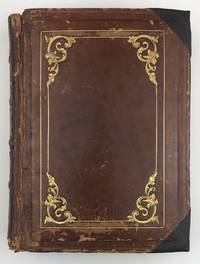
1884ref. 1574Habana 1884. Good plus. 2496 i.e. 498pp. Quarto. Contemporary calf gilt a.e.g.; rebacked with original spine laid down. Corners repaired with later black buckram; boards scuffed spine chipped. Hinges cracked repaired with later cloth and renewed endpapers. Minor scattered foxing and toning to text. Accomplished in a neat highly legible hand. A very attractive manuscript translation into Spanish of Pierre Larousse's well-known work on eminent and historical personages Fleurs Historiques des Dames et des Gens du Monde in a contemporary Cuban gilt goatskin binding. The manuscript connects three figures in the upper social echelons of Cuban society. José Fernandez Pellon the scribe of this volume is recorded as the Grand Master of Cuba's freemasons lodge the Gran Logia Unida de Colón y la Isla de Cuba. The translator Aurelio Almeida helped to found the organization in 1875 and at this time served as the Lodge Secretary. The initials E.D. gilt at the foot of the spine and the dedicatory inscription "A Eugenia Desvernine" refer to Eugenia Desvernine y Galdós b. 1865 daughter of the famous Cuban pianist Pablo Desvernine and Carolina Galdós y Echániz. She was also the niece of Benito Pérez Galdós the Spanish realist novelist who some authorities consider only second in stature to Cervantes. A contemporary social register remarks that Eugenia was one of the most beautiful women in Cuba perhaps an inspiration for the painstaking production of this manuscript. The original work by Larousse was a loose collection of religious parables classical myths biographies of ancient and modern historical figures. The title of the manuscript advises that is an extract and in the brief introduction Almeida explains his selection process writing that "He suprimido algunos artículos sobre cosas muy sabidas de la historia sagrada; y otros sobre la de Francia que mencionan frases ó personas casi ninca citadas ó citades solamente por las escritores francesas." He also notes several alterations and additions more relevant to Spanish history saying "En Cambio he agregado algunos artículos sobre historia de España que no están en el original y he tomado unos pocos de otra obra del mismo Mr. Larousse y de libros diversos." The result is an original amalgam of biographies historical episodes and religious parables. Interestingly we find no recorded printed editions of Larousse's work in Spanish so that the present manuscript is also an entirely original work of translation. A fascinating product of the cultural interests and mores of Cuban high society near the end of the Spanish colonial period. unknown
1884ref. 1574Habana 1884. Good plus. 2496 i.e. 498pp. Quarto. Contemporary calf gilt a.e.g.; rebacked with original spine laid down. Corners repaired with later black buckram; boards scuffed spine chipped. Hinges cracked repaired with later cloth and renewed endpapers. Minor scattered foxing and toning to text. Accomplished in a neat highly legible hand. A very attractive manuscript translation into Spanish of Pierre Larousse's well-known work on eminent and historical personages Fleurs Historiques des Dames et des Gens du Monde in a contemporary Cuban gilt goatskin binding. The manuscript connects three figures in the upper social echelons of Cuban society. José Fernandez Pellon the scribe of this volume is recorded as the Grand Master of Cuba's freemasons lodge the Gran Logia Unida de Colón y la Isla de Cuba. The translator Aurelio Almeida helped to found the organization in 1875 and at this time served as the Lodge Secretary. The initials E.D. gilt at the foot of the spine and the dedicatory inscription "A Eugenia Desvernine" refer to Eugenia Desvernine y Galdós b. 1865 daughter of the famous Cuban pianist Pablo Desvernine and Carolina Galdós y Echániz. She was also the niece of Benito Pérez Galdós the Spanish realist novelist who some authorities consider only second in stature to Cervantes. A contemporary social register remarks that Eugenia was one of the most beautiful women in Cuba perhaps an inspiration for the painstaking production of this manuscript. The original work by Larousse was a loose collection of religious parables classical myths biographies of ancient and modern historical figures. The title of the manuscript advises that is an extract and in the brief introduction Almeida explains his selection process writing that "He suprimido algunos artículos sobre cosas muy sabidas de la historia sagrada; y otros sobre la de Francia que mencionan frases ó personas casi ninca citadas ó citades solamente por las escritores francesas." He also notes several alterations and additions more relevant to Spanish history saying "En Cambio he agregado algunos artículos sobre historia de España que no están en el original y he tomado unos pocos de otra obra del mismo Mr. Larousse y de libros diversos." The result is an original amalgam of biographies historical episodes and religious parables. Interestingly we find no recorded printed editions of Larousse's work in Spanish so that the present manuscript is also an entirely original work of translation. A fascinating product of the cultural interests and mores of Cuban high society near the end of the Spanish colonial period. unknown books
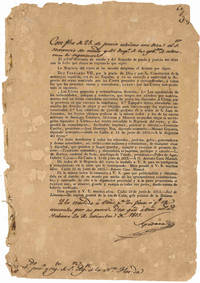
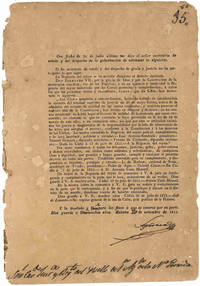
1813ref. 46892Havana. Sept. 20 1813. Early Havana Imprint A rare printed decree from Cuba at the beginning of the 19th century as Spanish power in the world was waning but Spain's grip on Cuba was still quite firm. This decree issued by the King on June 14 1813 and printed on September 20 announces new laws regarding the rights to vote and to be elected to hold government positions for professors and scholars from certain universities collegiums and seminars. The decree forbade these rights to the Knights of Justice of the Order of St. John of Jerusalem as well as members of the four military orders of Santiago Calatrava Alcantara and Montesa. It is endorsed in manuscript with the imprint and header also written in by hand. Early Caribbean imprints are rare. Folio. Old fold lines. Moderately chipped and worn at edges. Lightly and evenly toned. Contemporary manuscript notations. Good. unknown
1813ref. 46891Havana. Sept. 20 1813. Amnesty to Curry Favor A rare Havana imprint. As Spanish power in the New World was waning its grip on Cuba was threatened by domestic and foreign intruders. This decree issued by the Council of Regents "Cortes" standing in for Fernando VII on June 17 1813 and printed on September 20 orders the annulment of all criminal cases. This amnesty policy extended to other areas of New Spain as well sought to placate opposition forces. It calls on all levels of government to announce and enforce the decree. It is endorsed in manuscript. Folio. Old fold lines. Moderately chipped and worn at edges. Evenly toned. Contemporary manuscript notations. Good. unknown
1813ref. 46892Havana. Sept. 20 1813. Early Havana Imprint A rare printed decree from Cuba at the beginning of the 19th century as Spanish power in the world was waning but Spain's grip on Cuba was still quite firm. This decree issued by the King on June 14 1813 and printed on September 20 announces new laws regarding the rights to vote and to be elected to hold government positions for professors and scholars from certain universities collegiums and seminars. The decree forbade these rights to the Knights of Justice of the Order of St. John of Jerusalem as well as members of the four military orders of Santiago Calatrava Alcantara and Montesa. It is endorsed in manuscript with the imprint and header also written in by hand. Early Caribbean imprints are rare. Folio. Old fold lines. Moderately chipped and worn at edges. Lightly and evenly toned. Contemporary manuscript notations. Good. unknown books
1813ref. 46891Havana. Sept. 20 1813. Amnesty to Curry Favor A rare Havana imprint. As Spanish power in the New World was waning its grip on Cuba was threatened by domestic and foreign intruders. This decree issued by the Council of Regents "Cortes" standing in for Fernando VII on June 17 1813 and printed on September 20 orders the annulment of all criminal cases. This amnesty policy extended to other areas of New Spain as well sought to placate opposition forces. It calls on all levels of government to announce and enforce the decree. It is endorsed in manuscript. Folio. Old fold lines. Moderately chipped and worn at edges. Evenly toned. Contemporary manuscript notations. Good. unknown books
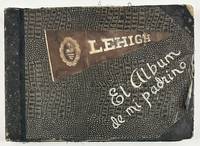
ref. 12844Various locations in Cuba and Pennsylvania: contents ca 1973. 25 leaves totaling 40pp. illustrated with thirty black-and-white and sepia-toned photographs with detailed manuscript captions plus seven large clippings from school publications and six additional ephemeral items. Oblong folio. Black cloth with alligator-patterned cloth on front board with manuscript title below a drawn representation of a small pennant for Lehigh University. Covers worn frayed and chipped alligator-style cloth curling a bit along fore edge. A few items loose from adhesive and a few with small tears scattered spotting and soiling. Overall very good condition with fascinating materiality. A lovingly-compiled photograph album and memorial book created by a young woman named Magdalena Sofia Guitart in tribute to her godfather Rafael Genó a Cuban engineer who studied at Lehigh University in Pennsylvania. Juan Rafael Genó Rizo was born in Santiago de Cuba in 1883. A doctoral thesis on Cuban architecture found online deems him one of the premiere Art Deco architects of Santiago and the only one to obtain a degree abroad. Genó graduated with a degree in Civil Engineering from Lehigh in 1909 and from the University of Havana in 1913. He died in Miami Florida in 1973. This doting scrapbook was compiled and heavily captioned in Spanish which we hereafter present in translation as a "Memorial which with love and pride I dedicate to my godfather and some of his works; a pale reflection of all the good he has done in his life" by Magdalena Sofia Guitart who was born in 1936 in Santiago and arrived in Miami in 1958. She includes photos of Genó as a baby and a boy of 11 "From a very young age as you can see here my godfather was a little gentleman" as well as in uniform alongside Mexican and Costa Rican comrades at Pennsylvania's Wayne Field. She lauds his "triumphs" and "genius" in "thousands of battles." Genó likely came to the United States following the Spanish-American War during the growth of Cuban immigration resulting from increased American attention of the island country. All of the content in the album is artfully presented within decorative rules or floral borders providing an unusual flair to the presentation. The book displays not only the hand-drawn Lehigh pennant on the cover but also large artistic renditions of the campus and an internal shot of its library clipped from school publications and comparing views from 1873 1909 and 1933 the relevance of Lehigh at the later date is unclear. Additional photographs and decorative designs share the story as "our engineer" returns to Cuba and "begins to demonstrate his knowledge" in the mines of Ponupo. Soon "his hard work integrity and honesty led him to be chosen" for other feats of engineering including "la Iglesia church Los Desamparados constructed by my godfather 1932" and a train terminal in Guantánamo. Images and a photographic clipping laud his renovations of "Colegio La Salle" in 1937. There are also six photos and a clipping showing Genó's work on the altar for the Eucharistic Congress held in Santiago in 1936 during which the original statue of Our Lady of Charity of El Cobre Patroness of Cuba was granted a canonical coronation by Pope Pius XI. The album also holds a clipping naming Genó as president of the Board of Directors of Santiago's Urban Property Center an inauguration ribbon and brochure for the Municipal Food Market in 1950 with which he was also involved and photos of the celebrated engineer later in life. A captivating and carefully-assembled homage created by a Cuban immigrant to the United States honoring a loved one who was educated in Pennsylvania and then returned to his home country to serve as a noted engineer during the first half of the 20th century. contents ca unknown
ref. 12844Various locations in Cuba and Pennsylvania: contents ca 1973. 25 leaves totaling 40pp. illustrated with thirty black-and-white and sepia-toned photographs with detailed manuscript captions plus seven large clippings from school publications and six additional ephemeral items. Oblong folio. Black cloth with alligator-patterned cloth on front board with manuscript title below a drawn representation of a small pennant for Lehigh University. Covers worn frayed and chipped alligator-style cloth curling a bit along fore edge. A few items loose from adhesive and a few with small tears scattered spotting and soiling. Overall very good condition with fascinating materiality. A lovingly-compiled photograph album and memorial book created by a young woman named Magdalena Sofia Guitart in tribute to her godfather Rafael Genó a Cuban engineer who studied at Lehigh University in Pennsylvania. Juan Rafael Genó Rizo was born in Santiago de Cuba in 1883. A doctoral thesis on Cuban architecture found online deems him one of the premiere Art Deco architects of Santiago and the only one to obtain a degree abroad. Genó graduated with a degree in Civil Engineering from Lehigh in 1909 and from the University of Havana in 1913. He died in Miami Florida in 1973. This doting scrapbook was compiled and heavily captioned in Spanish which we hereafter present in translation as a "Memorial which with love and pride I dedicate to my godfather and some of his works; a pale reflection of all the good he has done in his life" by Magdalena Sofia Guitart who was born in 1936 in Santiago and arrived in Miami in 1958. She includes photos of Genó as a baby and a boy of 11 "From a very young age as you can see here my godfather was a little gentleman" as well as in uniform alongside Mexican and Costa Rican comrades at Pennsylvania's Wayne Field. She lauds his "triumphs" and "genius" in "thousands of battles." Genó likely came to the United States following the Spanish-American War during the growth of Cuban immigration resulting from increased American attention of the island country. All of the content in the album is artfully presented within decorative rules or floral borders providing an unusual flair to the presentation. The book displays not only the hand-drawn Lehigh pennant on the cover but also large artistic renditions of the campus and an internal shot of its library clipped from school publications and comparing views from 1873 1909 and 1933 the relevance of Lehigh at the later date is unclear. Additional photographs and decorative designs share the story as "our engineer" returns to Cuba and "begins to demonstrate his knowledge" in the mines of Ponupo. Soon "his hard work integrity and honesty led him to be chosen" for other feats of engineering including "la Iglesia church Los Desamparados constructed by my godfather 1932" and a train terminal in Guantánamo. Images and a photographic clipping laud his renovations of "Colegio La Salle" in 1937. There are also six photos and a clipping showing Genó's work on the altar for the Eucharistic Congress held in Santiago in 1936 during which the original statue of Our Lady of Charity of El Cobre Patroness of Cuba was granted a canonical coronation by Pope Pius XI. The album also holds a clipping naming Genó as president of the Board of Directors of Santiago's Urban Property Center an inauguration ribbon and brochure for the Municipal Food Market in 1950 with which he was also involved and photos of the celebrated engineer later in life. A captivating and carefully-assembled homage created by a Cuban immigrant to the United States honoring a loved one who was educated in Pennsylvania and then returned to his home country to serve as a noted engineer during the first half of the 20th century. contents ca unknown books
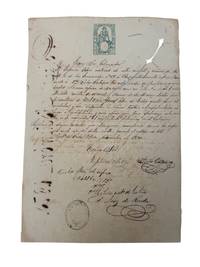
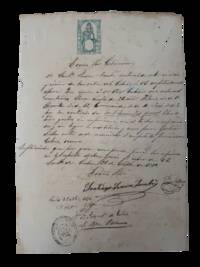
1870ref. 231221870. Slavery Cuba Spanish colonial slave sale manuscript recording the transfer of four enslaved individuals in Cuba in 1870. Produced within the official bureaucratic framework of Spanish colonial governance the document reflects the legal normalization of slavery in Cuba even as abolitionist pressures mounted across the Atlantic world. The document records the sale of four enslaved people described as "criollos" and African-born individuals situating the transaction within a labor system that combined locally born and imported enslaved populations. Created at a time when Spain had formally restricted the transatlantic slave trade but continued to permit slavery itself the manuscript demonstrates the persistence of legalized human commodification and the integration of enslaved labor into the island's economic structure sixteen years prior to abolition in 1886. Official Cuban slave contract documenting the sale of four enslaved individuals to Don Pedro Catasús by Don Enfemia Ochoa for the sum of 1100 pesos on November 29 1870. Single manuscript leaf written in Spanish cursive in black ink measuring 8.25" x 12". A green "50 cs de escudo" revenue stamp is affixed at the top center with a blind embossed Spanish crest at the upper left and a circular black ink government seal impressed at the lower left. Large vertical docketing appears on the verso. A stylized watermark is visible within the paper. The text organizes the enslaved individuals within a standardized transactional structure while the signatures of Enfemia Ochoa Pedro Catasús and A. Díaz de Rada authenticate the exchange and identify participants within the slaveholding economy. By 1870 Cuba remained a central node in the late Atlantic slave system with plantation agriculture especially sugar dependent on enslaved labor despite mounting abolitionist pressure. Although Spain had curtailed official slave imports earlier in the century illegal trafficking persisted into the 1860s and other coerced labor systems including the importation of Chinese indentured workers overlapped with slavery into the 1870s. The presence of both Creole and African individuals in this document reflects the layered composition of the enslaved population during this period. Light toning scattered foxing and edge wear visible. A closed wormhole extends from the upper right margin approximately five inches into the sheet resulting in partial loss of text. Evidence of prior tape reinforcement visible on the verso along with offsetting from previously adjacent material. Overall in very good condition. This document provides named transactional evidence of late-period slavery in Cuba offering concrete material for examining race labor and legal practice within Spanish colonial society. unknown
1870ref. 231191870. Slavery Cuba Spanish colonial manuscript documenting the late persistence of slavery in Cuba recording the sale of five enslaved Creole individuals including women and children 1870. Produced within the official bureaucratic framework of Spanish colonial governance the document reflects the legal normalization of slavery in Cuba even as abolitionist pressures mounted across the Atlantic world. The presence of multiple children within the transaction underscores the hereditary nature of enslavement and the commodification of family units offering direct material evidence of how slavery functioned socially and economically in its final decades on the island. Although Spain had formally ended the transatlantic slave trade earlier in the century illegal trafficking and internal slave markets persisted and slavery itself would not be abolished in Cuba until 1886 placing this document within a crucial transitional period marked by reform debates gradual emancipation laws and continued exploitation. Official Cuban slave contract recording the sale of five enslaved individuals identified as "criollos" including one adult woman and four children from Santiago Simón Fambi to Don Pedro Catasús for the sum of 1200 pesos on November 21 1870. Single page manuscript leaf measuring 8.25" x 12". The manuscript is written in Spanish cursive hand in black ink. The upper left bears a blind embossed crest of Spain while a circular black ink government seal is impressed at the lower left partially overlapping the text. The text enumerates the enslaved individuals with ages and names embedding human lives within the formulaic language of sale and valuation while the bold signatures of both seller Santiago Simón Fambi and buyer Pedro Catasús anchor the transaction in identifiable actors within the colonial economy. By 1870 slavery in Spanish Cuba remained central to the island's plantation economy particularly in sugar production which had expanded rapidly in the mid-19th century with industrialized mills and global demand. Enslaved people were primarily forced into agricultural labor under highly regimented and brutal conditions though others were used in urban domestic service skilled trades or as hired laborers generating income for their owners. This document exhibits light toning edge wear and scattered foxing throughout. A closed wormhole extends approximately two inches from the upper right margin inward not affecting legibility of the text. Minor losses and small tears along the edges. Overall in very good condition. Given that this document records a woman and four children the family was likely intended for a combination of field labor and domestic or auxiliary work with the children gradually incorporated into plantation labor as they aged reflecting the system's reliance on both immediate exploitation and the reproduction of enslaved labor over time. unknown
1870ref. 231221870. Slavery Cuba Spanish colonial slave sale manuscript recording the transfer of four enslaved individuals in Cuba in 1870. Produced within the official bureaucratic framework of Spanish colonial governance the document reflects the legal normalization of slavery in Cuba even as abolitionist pressures mounted across the Atlantic world. The document records the sale of four enslaved people described as "criollos" and African-born individuals situating the transaction within a labor system that combined locally born and imported enslaved populations. Created at a time when Spain had formally restricted the transatlantic slave trade but continued to permit slavery itself the manuscript demonstrates the persistence of legalized human commodification and the integration of enslaved labor into the island's economic structure sixteen years prior to abolition in 1886. Official Cuban slave contract documenting the sale of four enslaved individuals to Don Pedro Catasús by Don Enfemia Ochoa for the sum of 1100 pesos on November 29 1870. Single manuscript leaf written in Spanish cursive in black ink measuring 8.25" x 12". A green "50 cs de escudo" revenue stamp is affixed at the top center with a blind embossed Spanish crest at the upper left and a circular black ink government seal impressed at the lower left. Large vertical docketing appears on the verso. A stylized watermark is visible within the paper. The text organizes the enslaved individuals within a standardized transactional structure while the signatures of Enfemia Ochoa Pedro Catasús and A. Díaz de Rada authenticate the exchange and identify participants within the slaveholding economy. By 1870 Cuba remained a central node in the late Atlantic slave system with plantation agriculture especially sugar dependent on enslaved labor despite mounting abolitionist pressure. Although Spain had curtailed official slave imports earlier in the century illegal trafficking persisted into the 1860s and other coerced labor systems including the importation of Chinese indentured workers overlapped with slavery into the 1870s. The presence of both Creole and African individuals in this document reflects the layered composition of the enslaved population during this period. Light toning scattered foxing and edge wear visible. A closed wormhole extends from the upper right margin approximately five inches into the sheet resulting in partial loss of text. Evidence of prior tape reinforcement visible on the verso along with offsetting from previously adjacent material. Overall in very good condition. This document provides named transactional evidence of late-period slavery in Cuba offering concrete material for examining race labor and legal practice within Spanish colonial society. unknown books