[Cuba]Biblio.com
2545 risultati
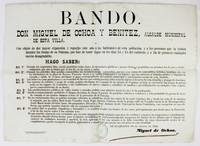
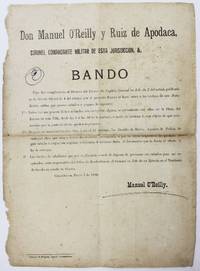
1896rif. 3188Guanabacoa: Imprenta el Progreso 1896. About very good. Broadside approximately 17 x 12.5 inches. Previously folded. Some biopredation at left edge not affecting text. Otherwise faint foxing light tanning and dust soiling. Two contemporary manuscript rubrics. Unrecorded broadside that orders the presentation of privately-owned horses and pack animals in the town square of Guanabacoa for requisition by the Spanish army in January 1896 at the outset of the Cuban uprising that would eventually lead to the end of Spanish colonial rule. This bando states first that "Todos los que posean dichos animales sin excepción alguna se presentarán con ellos en la Plaza del Recreo de esta Villa desde las 8 á las 10 de la mañana á partir de mañana 8 con objeto de que reconocidos por la junta al efecto queden requisados." Following these initial voluntary presentations inspections would be made of homes and farms and those found not to have handed over usable animals would be guilty disobeying army orders during a time of war. At this point Spain had 100000 troops on the island and another two years of fighting the insurrection incited by José Marti would pass before the intervention of the United States. Not in OCLC. Imprenta el Progreso unknown
1896rif. 3188Guanabacoa: Imprenta el Progreso 1896. About very good. Broadside approximately 17 x 12.5 inches. Previously folded. Some biopredation at left edge not affecting text. Otherwise faint foxing light tanning and dust soiling. Two contemporary manuscript rubrics. Unrecorded broadside that orders the presentation of privately-owned horses and pack animals in the town square of Guanabacoa for requisition by the Spanish army in January 1896 at the outset of the Cuban uprising that would eventually lead to the end of Spanish colonial rule. This bando states first that "Todos los que posean dichos animales sin excepción alguna se presentarán con ellos en la Plaza del Recreo de esta Villa desde las 8 á las 10 de la mañana á partir de mañana 8 con objeto de que reconocidos por la junta al efecto queden requisados." Following these initial voluntary presentations inspections would be made of homes and farms and those found not to have handed over usable animals would be guilty disobeying army orders during a time of war. At this point Spain had 100000 troops on the island and another two years of fighting the insurrection incited by José Marti would pass before the intervention of the United States. Not in OCLC. Imprenta el Progreso unknown books
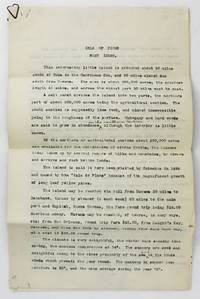
1910rif. 5377N.p. 1910. Very good. 11pp. of folio typescript totaling around 3000 words with a handful of manuscript corrections. Old folds minor marginal stains from old paper clips. An anonymously-written typescript promotional and business prospectus touting the Isle of Pines Isla de la Juventud off the southern coast of Cuba in the West Indies. The author writes of the many advantages of the Isle of Pines noting "This interesting little island is situated about 50 miles south of Cuba in the Caribbean Sea" with a population of "well-to-do Americans who own about 95% of the island and are after the other 5%." The author also states that "the laborers are mostly 'Pineros' or Isle of Pines people and are very efficient. They are kind and courteous and seem well pleased with the present situation. They are paid from $1.00 to $1.50 per day according to the grade of work." More of the usual language encouraging emigration to the island follows describing the agriculture climate soil government business environment the "old Spanish cities on the island" and more along with several pages of cost estimates for creating a working ten-acre fruit grove. The anonymous author mentions that he and his partner in Nueva Gerona J.A. Miller bought forty acres in Cuchilla Alta or Santa Ana Estates at $40 per acre from H.R. Leland "the sole representative in the United States." The author states he has given up his profession as an engineer in order to devote his time and energy to building a grapefruit grove and pineapple farm and to get others interested in investing with him "We will organize a Development Company with a Citrus Fruit Expert at its head.". He concludes by reiterating that "the country itself is a delightful place to live.raises a superior quality of fruit" and he is glad he "learned about it in time to enable us to enjoy all the benefits of the 'Great Ground Floor.' unknown
1910rif. 5377N.p. 1910. Very good. 11pp. of folio typescript totaling around 3000 words with a handful of manuscript corrections. Old folds minor marginal stains from old paper clips. An anonymously-written typescript promotional and business prospectus touting the Isle of Pines Isla de la Juventud off the southern coast of Cuba in the West Indies. The author writes of the many advantages of the Isle of Pines noting "This interesting little island is situated about 50 miles south of Cuba in the Caribbean Sea" with a population of "well-to-do Americans who own about 95% of the island and are after the other 5%." The author also states that "the laborers are mostly 'Pineros' or Isle of Pines people and are very efficient. They are kind and courteous and seem well pleased with the present situation. They are paid from $1.00 to $1.50 per day according to the grade of work." More of the usual language encouraging emigration to the island follows describing the agriculture climate soil government business environment the "old Spanish cities on the island" and more along with several pages of cost estimates for creating a working ten-acre fruit grove. The anonymous author mentions that he and his partner in Nueva Gerona J.A. Miller bought forty acres in Cuchilla Alta or Santa Ana Estates at $40 per acre from H.R. Leland "the sole representative in the United States." The author states he has given up his profession as an engineer in order to devote his time and energy to building a grapefruit grove and pineapple farm and to get others interested in investing with him "We will organize a Development Company with a Citrus Fruit Expert at its head.". He concludes by reiterating that "the country itself is a delightful place to live.raises a superior quality of fruit" and he is glad he "learned about it in time to enable us to enjoy all the benefits of the 'Great Ground Floor.' unknown books
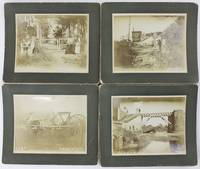
1898rif. 4079Puerto Principe 1898. Good plus. Thirteen photographs each approximately 4 x 5 inches on original card mounts. A few images rather faded. Light edge wear to mounts. Some photo credits in negatives; each with manuscript caption on mount verso. An interesting group of thirteen photographs taken by an amateur military photographer while deployed to Cuba during the Spanish-American War. The photos are centered around Puerto Principe now Camaguey in Central Cuba an unusual location for photos of this genre and focus on natives local architecture and natural views. Crude credits in the negatives of several images attribute the photographs to "Woodward" or "W.D.W" of the "15th U.S.I.B" i.e. 15th U.S. Infantry Battalion . Each image is also captioned in manuscript on the rear of its mount as follows: 1 Rail Road Bridge Near Puerto Principe Cuba 2 Same Bridge Different View 3 Natives in Cuba 4 Military Headquarters 5 Soldier Camp in Cuba 6 Cuban Prison 7 Cemetery in Puerto Principe Cuba 8 Water Wagon in Cuba 9 Plaza in Puerto Principe Cuba 10 Residence in Cuba 11 Cuban Carriage 12 Summer Resort in Cuba 13 Military Headquarters Inside. unknown
1898rif. 4079Puerto Principe 1898. Good plus. Thirteen photographs each approximately 4 x 5 inches on original card mounts. A few images rather faded. Light edge wear to mounts. Some photo credits in negatives; each with manuscript caption on mount verso. An interesting group of thirteen photographs taken by an amateur military photographer while deployed to Cuba during the Spanish-American War. The photos are centered around Puerto Principe now Camaguey in Central Cuba an unusual location for photos of this genre and focus on natives local architecture and natural views. Crude credits in the negatives of several images attribute the photographs to "Woodward" or "W.D.W" of the "15th U.S.I.B" i.e. 15th U.S. Infantry Battalion . Each image is also captioned in manuscript on the rear of its mount as follows: 1 Rail Road Bridge Near Puerto Principe Cuba 2 Same Bridge Different View 3 Natives in Cuba 4 Military Headquarters 5 Soldier Camp in Cuba 6 Cuban Prison 7 Cemetery in Puerto Principe Cuba 8 Water Wagon in Cuba 9 Plaza in Puerto Principe Cuba 10 Residence in Cuba 11 Cuban Carriage 12 Summer Resort in Cuba 13 Military Headquarters Inside. unknown books
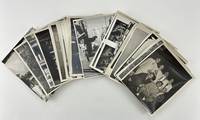
1961rif. 2137Various places in Florida Mexico Cuba & Spain 1961. About very good. 138 original prints each 8 x 10 inches; mostly large format images with twelve contact sheet containing multiple smaller images and including several duplicates. Light wear at edges; slight curling. Occasional patches of scuffing or soiling. Scattered manuscript annotations and ink stamps on blank versos of photographs. An interesting aggregation of approximately 150 unique professional images that depict the travels and activities of the Latin American Fiesta Association of Tampa Florida. The cultural heritage group was founded in 1940 and flourished from the late 1940s to the 1980s and organized or participated in local social events had an annual ball and traveled widely across Latin America. The photographs here date from 1949 to the early 1960s and document the travels of association members to Spain Mexico and Cuba. They attended numerous events entertainments dinners and other social gatherings as well as made visits to attractions and local cultural clubs. In Spain and Cuba their trips seem to have been limited to Madrid and Havana respectively and there are some interesting series of travel images in Cuba from just prior to the Revolution. The group seems to have made multiple trips to Mexico and traveled somewhat more widely. Scattered images show the activities of the association in Florida as well and many of the prints have contemporary manuscript captions and ink stamps of local photographers and photography studios on the versos. In all a wide-ranging and quite engaging group of large photographs that document this midcentury Latin American social club in Florida. unknown
1961rif. 2137Various places in Florida Mexico Cuba & Spain 1961. About very good. 138 original prints each 8 x 10 inches; mostly large format images with twelve contact sheet containing multiple smaller images and including several duplicates. Light wear at edges; slight curling. Occasional patches of scuffing or soiling. Scattered manuscript annotations and ink stamps on blank versos of photographs. An interesting aggregation of approximately 150 unique professional images that depict the travels and activities of the Latin American Fiesta Association of Tampa Florida. The cultural heritage group was founded in 1940 and flourished from the late 1940s to the 1980s and organized or participated in local social events had an annual ball and traveled widely across Latin America. The photographs here date from 1949 to the early 1960s and document the travels of association members to Spain Mexico and Cuba. They attended numerous events entertainments dinners and other social gatherings as well as made visits to attractions and local cultural clubs. In Spain and Cuba their trips seem to have been limited to Madrid and Havana respectively and there are some interesting series of travel images in Cuba from just prior to the Revolution. The group seems to have made multiple trips to Mexico and traveled somewhat more widely. Scattered images show the activities of the association in Florida as well and many of the prints have contemporary manuscript captions and ink stamps of local photographers and photography studios on the versos. In all a wide-ranging and quite engaging group of large photographs that document this midcentury Latin American social club in Florida. unknown books
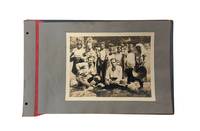
1910rif. 235641910. Cuba photograph album depicting encounters between Western visitors and Cuban communities during the early republican period circa 1910s to 1920s when the island occupied an unusual position between formal independence and continuing American political and economic influence. The photographs move between Havana's monumental architecture hotels and waterfront districts and the rural landscapes villages rivers and agricultural communities that remained largely outside the tourist image promoted to foreign visitors. Repeated appearances of the same Western man often accompanied by a woman who appears to be his wife suggest an extended journey through both urban and remote regions of the island during a period when American travelers businessmen and government personnel moved through Cuba in growing numbers following the Spanish American War and the establishment of the Cuban Republic. Photo album of 26 silver gelatin photographs mounted on unbound album boards with blue covers boards measuring approximately 9 x 15 inches Cuba circa 1910s to 1920s. The photographs range from 6 x 6.5 to 8 x 9.5 inches. Images show waterfront houses built directly along riverbanks; tropical waterfalls and dense forest landscapes; interior courtyards and hotel spaces with colonnades and tiled floors; Morro Castle and lighthouse overlooking Havana Harbor; panoramic views of Cuban towns set among surrounding mountains; market scenes crowded with vendors women and children; cattle standing in shallow waterways; village gatherings outside rural buildings; and groups of local residents posed alongside visiting Westerners. Several photographs depict women standing in rivers holding broad metal pans possibly associated with washing river labor or mineral collection activities. Other images show children families agricultural workers and river communities while a series of portraits records the principal traveler and his companion at various points throughout the journey. One image depicts a group of local residents and Western visitors posed together in a forested region; another shows villagers gathered near a rural homestead while several photographs focus on transportation livestock and daily work in the countryside. The album belongs to the decades following Cuba's transition from Spanish colony to nominally independent republic a period shaped by the Platt Amendment American investment expanding tourism and intensive foreign interest in the island's economic resources and landscapes. Rather than concentrating exclusively on Havana's civic monuments and colonial architecture the photographer devoted substantial attention to rural communities Afro Cuban and mixed-race populations river labor village life and frontier environments seldom emphasized in commercial tourist imagery of the period. The contrast between hotels government-era landmarks village settlements cattle crossings market scenes and encounters with local residents documents the unequal worlds that coexisted within early twentieth century Cuba as foreign visitors moved between urban centers and agricultural regions. Light surface wear occasional toning minor album mounting wear and scattered edge wear to several boards; overall very good condition. A concentrated visual record of how Westerners experienced and represented Cuba's rural communities laboring populations landscapes and colonial-era urban centers during the first decades of the Cuban Republic. unknown
1910rif. 235641910. Cuba photograph album depicting encounters between Western visitors and Cuban communities during the early republican period circa 1910s to 1920s when the island occupied an unusual position between formal independence and continuing American political and economic influence. The photographs move between Havana's monumental architecture hotels and waterfront districts and the rural landscapes villages rivers and agricultural communities that remained largely outside the tourist image promoted to foreign visitors. Repeated appearances of the same Western man often accompanied by a woman who appears to be his wife suggest an extended journey through both urban and remote regions of the island during a period when American travelers businessmen and government personnel moved through Cuba in growing numbers following the Spanish American War and the establishment of the Cuban Republic. Photo album of 26 silver gelatin photographs mounted on unbound album boards with blue covers boards measuring approximately 9 x 15 inches Cuba circa 1910s to 1920s. The photographs range from 6 x 6.5 to 8 x 9.5 inches. Images show waterfront houses built directly along riverbanks; tropical waterfalls and dense forest landscapes; interior courtyards and hotel spaces with colonnades and tiled floors; Morro Castle and lighthouse overlooking Havana Harbor; panoramic views of Cuban towns set among surrounding mountains; market scenes crowded with vendors women and children; cattle standing in shallow waterways; village gatherings outside rural buildings; and groups of local residents posed alongside visiting Westerners. Several photographs depict women standing in rivers holding broad metal pans possibly associated with washing river labor or mineral collection activities. Other images show children families agricultural workers and river communities while a series of portraits records the principal traveler and his companion at various points throughout the journey. One image depicts a group of local residents and Western visitors posed together in a forested region; another shows villagers gathered near a rural homestead while several photographs focus on transportation livestock and daily work in the countryside. The album belongs to the decades following Cuba's transition from Spanish colony to nominally independent republic a period shaped by the Platt Amendment American investment expanding tourism and intensive foreign interest in the island's economic resources and landscapes. Rather than concentrating exclusively on Havana's civic monuments and colonial architecture the photographer devoted substantial attention to rural communities Afro Cuban and mixed-race populations river labor village life and frontier environments seldom emphasized in commercial tourist imagery of the period. The contrast between hotels government-era landmarks village settlements cattle crossings market scenes and encounters with local residents documents the unequal worlds that coexisted within early twentieth century Cuba as foreign visitors moved between urban centers and agricultural regions. Light surface wear occasional toning minor album mounting wear and scattered edge wear to several boards; overall very good condition. A concentrated visual record of how Westerners experienced and represented Cuba's rural communities laboring populations landscapes and colonial-era urban centers during the first decades of the Cuban Republic. unknown books
1841rif. 25455PARIS 1841-45 -in-8 demi-basane 31 plaquettes du même Auteur, reliées en 2 volumes, reliure demi-basane (half binding sheepskin) bleu-marine in-octavo, dos long (spine without raised band)décoré "or" (gilt decoration), Auteur et Titre frappés "or" (gilt title) avec 4 filets fins "or" de part et d'autre, 4 filets fin "or" en place des nerfs et en tête et en pied, papier marbré vert, crème et marron aux plats (cover with marbled paper), toutes tranches lisses (all smooth edges), sans illustration (no illustration), Oeuvres Reliées comme suit : TOME I ...... 1- Précis de l'Affaire Douillard-Mahaudière adressé à la Chambre des Députés, 20 pages, 1841, Paris Imprimerie de Cosse et G.-Lagionie Editeur, 2- Mémoire du Conseil des Délégués des Colonies à M. le Baron DUPERRE Amiral de France, Ministre de la Marine et des Colonies, 28 pages, 1841, Paris Imprimerie de Cosse et G.-Lagionie Editeur, 3- Conseil des Délégués des Colonies. a Monsieur le Ministre de l'Agriculture et du Commerce, 21 pages, 1841, Paris Imprimerie d'Ad. Blondeau Editeur, 4- Avis de M. JOLLIVET, Délégué de la Martinique à Monsieur le Ministre de la Marine et des Colonies, sur le projet d'Ordonnance relatif à l'emprisonnement disciplinaire des Esclaves, 24 pages, 1841, Paris Imprimerie d'Ad. Blondeau Editeur, 5- ANALYSE DES OPINIONS ET VOTES DES CONSEILS GENERAUX DE L'AGRICULTURE, DES MANUFACTURES ET DU COMMERCE, SUR LA QUESTION DES SUCRES : Lettre de Mr A. JOLLIVET, Membre de la Chambre des Députés, Délégué de la Martinique à Messieurs les Présidents et Membres du Conseil Supérieur du Commerce, SUR LA QUESTION DES SUCRES, 18 pages, 1842 Paris Imprimerie d'Ad. Blondeau Editeur, 6- Des Missions en France de la Société Abolitionniste Anglaise et Etrangère, par M. JOLLIVET, Député d'Ille-et-Vilaine, Délégué de la Martinique, 15 pages, sans date (1841)Paris Imprimerie d'Ad. Blondeau Editeur, 7- Question des Sucres dans la Chambre des Communes d'Angleterre - Du Travail Libre et du Travail Forcé. Leur Influence sur la Production Coloniale, par M. JOLLIVET, Député d'Ille-et-Vilaine, Délégué de la Martinique, Bon à Tirer avec dernières corrections de fautes et parfois de phrases rajoutée de la main de l'Auteur avant impression définitive par l'Editeur, 27 pages, Mai 1841 Paris Imprimerie d'Ad. Blondeau Editeur, 8- De L'Expropriation Forcée dans les Colonies de la Martinique, de la Guadeloupe et de la guyane par M. JOLLIVET, membre de la Chambre des Députés, 70 pages, 1842 Paris Imprimerie d'Ad. Blondeau Editeur, 9- Du Projet de Loi tendant à Régler les Attributions Financières des Conseils Coloniaux par M. JOLLIVET, membre de la Chambre des Députés, 51 pages, 2 Avril 1842 Paris Imprimerie d'Ad. Blondeau Editeur, 10- De la Philantropie Anglaise par Mr JOLLIVET, membre de la Chambre des Députés (deuxième edition), 55 pages, 1842 Paris Imprimerie d'Ad. Blondeau Editeur, 11- Discours de Mr JOLLIVET, Député d'Ille-et-Vilaine, dans les Séances des 28 et 30 Mai 1842, 15 pages, 1842 Paris Imprimerie de Cosse et G.-Laguionie Editeur, 12 - LETTRE ET REPONSE AU JOURNAL DES DEBATS, par M. JOLLIVET, Membre de la Chambre des Députés, Délégué de la Martinique, 14 pages, 1842 Paris Imprimerie de E.-B. DELANCHY Editeur, 13 - LETTRES de M. A. JOLLIVET, Membre de la Chambre des Députés et Délégué de la Martinique, 31 pages, 1842 Paris Imprimerie de E.-B. DELANCHY Editeur, 14- Analyse des Délibérations et Avis des CONSEILS COLONIAUX des Gouverneurs et des Administrateurs des Colonies sur les PROJETS D'EMANCIPATION(ABOLITION DE L'ESCLAVAGE), de la Commission présidée par M. Le Duc de Broglie, Par M. JOLLIVET, Membre de la Chambre des Députés, 69 pages, 1843 Paris Imprimerie Bruneau Editeur, 15 - L'EMANCIPATION ANGLAISE (ABOLITION DE L'ESCLAVAGE) Jugée par ses Résultats - Analyse des Documents Officiels Imprimés par ordre de M. le Ministre de la Marine et des Colonies, par M. JOLLIVET, Membre de la Chambre des Députés, Délégué de la Martinique, 104 pages, 1842 Paris Imprimerie de Moquet et Hauquelin Editeur, 16 - Enquête Parlementaire sur les COLONIES ANGLAISES publiée en Septembre 1842 - ANALYSE DE L'ENQUÊTE par M. JOLLIVET, Membre de la Chambre des Députés, 48 pages, 1843 Paris Imprimerie de Bruneau Editeur, 17- QUESTION DES SUCRES par M. JOLLIVET, Membre de la Chambre des Députés, 86 pages, 1843 Paris Imprimerie de Bruneau Editeur, 18 - PARALLELE entre les COLONIES FRANCAISES ET LES COLONIES ANGLAISES, Appendice au Rapport du Duc de Broglie par M. JOLLIVET, Membre de la Chambre des Députés, Délégué de la Martinique, 40 pages, 1843 PARIS Imprimerie de Bruneau Editeur, TOME II ..... 1 - Lettre de M. JOLLIVET, Membre de la Chambre des Députés, Délégué de la Martinique, au Rédacteur du Journal des Débats, 13 pages, 1844 Paris Imprimerie de Bruneau Editeur, 2 - Note Présentée au Conseil des Ministres Par M. JOLLIVET, Membre de la Chambre des Députés, Délégué de la Martinique, sur UN PROJET DE LOI RELATIF A LA CONSTITUTION POLITIQUE DES COLONIES, 23 pages, sans date (1844)Paris Imprimerie de Bruneau Editeur, 3 - A LOS HABITANTES DE LA ISLA DE CUBA (texte en espagnol ...par A. JOLLIVET, diputado de la camara de francia, y delegado de la Martinica), 23 pages, 1844 Paris imprimerie d'Ed. Proux et Cie Editeur, 4 - HISTORIQUE DE LA TRAITE ET DU DROIT DE VISITE. Par M. JOLLIVET, Membre de la Chambre des Députés, 35 pages, 1844 Paris Imprimerie de Bruneau Editeur, 5 - PETITIONS DE QUELQUES OUVRIERS ET OUVRIERES DE PARIS POUR L'ABOLITION IMMEDIATE DE L'ESCLAVAGE - VERITABLE SITUATION DES NOIRS DANS LES COLONIES FRANCAISES Par M. JOLLIVET, Membre de la Chambre des Députés, 20 pages, 1844 Paris Imprimerie de Bruneau Editeur, 6 - Observations Présentées par M. JOLLIVET, Délégué de la Martinique, devant la Commission de la Chambre des Pairs sur LE PROJET DE LOI (SUR L'ESCLAVAGE DES NOIRS), Tendant à Modifier les Articles 2 et 3 de la loi du 24 Avril 1833 - Séance du 11 Juin- 81 pages, 1844 Paris Imprimerie de Bruneau Editeur, 7 - QUESTION DES SUCRES EN ANGLETERRE. - DU TRAVAIL LIBRE ET DU TRAVAIL ESCLAVE, par M. JOLLIVET, Membre de la Chambre des Députés, 23 pages, 1845 Paris Imprimerie de Bruneau Editeur, 8 - DOCUMENTS AMERICAINS, ANNEXION DU TEXAS, EMANCIPATION DES NOIRS(ABOLITION DE L'ESCLAVAGE), POLITIQUE DE L'ANGLETERRE, par M. JOLLIVET, Membre de la Chambre des Députés, 40 pages, 1845 Paris Imprimerie de Bruneau Editeur, 9- ANNEXION DU TEXAS - NOUVEAUX DOCUMENTS AMERICAINS Publiés par M. JOLLIVET, Membre de la Chambre des Députés, 55 pages, 1845 Paris Imprimerie de Bruneau Editeur, 10 - DOCUMENTS AMERICAINS, 3ème Série. LES ETATS UNIS D'AMERIQUE ET L'ANGLETERRE. ANNEXION DU TEXAS. L'OREGON, par M. JOLLIVET, Membre de la Chambre des Députés, 74 pages, Avril 1845 Paris Imprimerie de Bruneau Editeur, 11 - LES COLONIES FRANCAISES DEVANT LA CHAMBRE DES PAIRS. Analyse de la Discussion Générale du Projet de Loi sur le Régime Colonial, par M. JOLLIVET, Membre de la Chambre des Députés, 112 pages, 1845 Paris imprimerie de Guiraudet et Jouaust Editeur, 12 - Chambre des Députés - Session de 1844-1845 - DISCOURS prononcé par M. JOLLIVET, Député d'Ille-et-Vilaine dans la discussion générale du projet de loi relatif aux COLONIES, Séance du 29 Mai 1845, 31 pages, extrait du Moniteur Universel du 30 Mai 1845, 1845 Paris Imprimerie Panckoucke Editeur, 13 - DISCOURS prononcés par M. JOLLIVET, Député d'Ille-et-Vilaine, dans la discussion des articles du projet de loi relatif au REGIME DES COLONIES, Séances des 2, 3 et 4 Juin 1845, extraits du Moniteur Universel des 3, 4 et 5 Juin 1845, 36 pages, 1845 Paris Imprimerie Panckoucke Editeur,
rif. 3332OSPAAAL. 1969. Impression en offset. Dim: 532 x 328 mm.
rif. 3332OSPAAAL. 1969. Impression en offset. Dim: 532 x 328 mm.
Habana, Imprenta de Manuel Soler, Calle de la Muralla, núm. 82, 1854. 4to. menor; XVI-452 pp., y 6 hojas. Encuadernación de época en media piel. "La suerte de los negros esclavos tocante a su salud que tanto importa conservar, es despreciada en sumo grado. Regularmente al arbitrio de hombres que con las facultades de mayoral o contramayoral, no les permiten siquiera quejarse aunque tengan el cuerpo adolorido, desprecian sus lamentos, exigen de ellos en este principio de enfermedad, trabajos recios y así es que en muchos casos estos infelices llegan a la enfermería sólo para exhalar el alma".
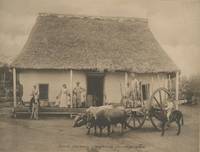
1913rif. List3218Brooklyn New York: The Albertype Co 1913. Photo album of twenty-five 12 ½ x 10 inch pages containing fifty 8 x 6 inch photographs with cardstock cover. Cover and pages worn with marginal damage; pages mostly detached from string binding; photos with captions on negative; Near Fine with Fine contrast. Overall excellent to Near Fine. After the Spanish American War the Isle of Pines now Isla de Juventud in Cuba was contested territory because the 1901 Platt Amendment had specifically left ownership of the island up to a future treaty; the 1904 Hay-Quesada Treaty recognizing Cuban sovereignty over the island failed to be ratified by the US until 1925. American citizens controlled ninety-five per cent or more of the island’s land and were strongly in favor of American annexation. Offered here is a 1913 photo album exhibiting the island’s lush scenery productive farmland and luxurious American residences and resorts. The American property owners are identified by name and include American Residents and Property Owners’ Association President T.J. Keenan who in 1902 described the island under default administration by the Cuban government as “on the verge of anarchy . American interests are absolutely unprotected”1; H.A. Christy Vice President of the Cincinnati Richmond & Muncie Railroad; coal and coke businessman John F. Atcheson and other elites. There are also shots of a number of hotels; grapefruit banana and pineapple farms belonging to the settlers; and recreation by both automobile and boat. Two photographs are not of American ventures: one of the home of José Sarda which housed José Martí before his exile to Spain labeled merely “Nueva Gerona Sarda Homstead”; and one of a house labeled “San Juan Native Homestead” showing a family standing on the porch of their thatched-roof home with an oxcart before them. We find four copies of this photo book on OCLC. Of interest to historians of US imperialism in Cuba following the military withdrawal. 1 “The Isle of Pines President Orders Investigation of Affairs There” The Press-Herald November 15 1902 2. The Albertype Co unknown
1913rif. List3218Brooklyn New York: The Albertype Co 1913. Photo album of twenty-five 12 ½ x 10 inch pages containing fifty 8 x 6 inch photographs with cardstock cover. Cover and pages worn with marginal damage; pages mostly detached from string binding; photos with captions on negative; Near Fine with Fine contrast. Overall excellent to Near Fine. After the Spanish American War the Isle of Pines now Isla de Juventud in Cuba was contested territory because the 1901 Platt Amendment had specifically left ownership of the island up to a future treaty; the 1904 Hay-Quesada Treaty recognizing Cuban sovereignty over the island failed to be ratified by the US until 1925. American citizens controlled ninety-five per cent or more of the island’s land and were strongly in favor of American annexation. Offered here is a 1913 photo album exhibiting the island’s lush scenery productive farmland and luxurious American residences and resorts. The American property owners are identified by name and include American Residents and Property Owners’ Association President T.J. Keenan who in 1902 described the island under default administration by the Cuban government as “on the verge of anarchy . American interests are absolutely unprotected”1; H.A. Christy Vice President of the Cincinnati Richmond & Muncie Railroad; coal and coke businessman John F. Atcheson and other elites. There are also shots of a number of hotels; grapefruit banana and pineapple farms belonging to the settlers; and recreation by both automobile and boat. Two photographs are not of American ventures: one of the home of José Sarda which housed José Martí before his exile to Spain labeled merely “Nueva Gerona Sarda Homstead”; and one of a house labeled “San Juan Native Homestead” showing a family standing on the porch of their thatched-roof home with an oxcart before them. We find four copies of this photo book on OCLC. Of interest to historians of US imperialism in Cuba following the military withdrawal. 1 “The Isle of Pines President Orders Investigation of Affairs There” The Press-Herald November 15 1902 2. The Albertype Co unknown books
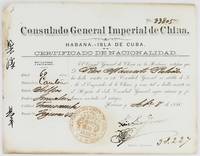
1880rif. 2592Havana: September 8 1880. Very good. Partially-printed broadside 6.5 x 8.25 inches completed in manuscript in Spanish and Chinese. Small marginal wormhole mild edge wear light toning. Ink stamp of the Consulado General at bottom-center. A scarce certificate issued in 1880 by the Chinese Consulate in Havana authenticating the registration and details of a Chinese laborer in Cuba. The printed form is completed in manuscript with the name of the recipient his age place of origin occupation and place of residence. The present examples were completed for a sixty-year-old laborer from Canton being called Pedro Pulido who was going to work and/or live at 48 Calle Figueroa in Havana. The printed text states that "El Cónsul General de China en la Habana certifica que blank ha hecho constar en este Consulado General ser súbdito de S.M. el Emperador de la China y como tal se halla inscrito en el Registro de dicho Consulado General segun número y filiacion anotados al márgen." The certificate is dated September 8 1880 and is stamped with the seal of the consulate in red and with the rubberstamped signature of the Consul General Lin Liang Yuan. The form are also bears two ink signatures in Chinese in the left margin a rare occurrence. An excellent document of the bureaucracy surrounding imported Chinese labor to Cuba in the last quarter of the 19th century. September 8 unknown
1880rif. 2592Havana: September 8 1880. Very good. Partially-printed broadside 6.5 x 8.25 inches completed in manuscript in Spanish and Chinese. Small marginal wormhole mild edge wear light toning. Ink stamp of the Consulado General at bottom-center. A scarce certificate issued in 1880 by the Chinese Consulate in Havana authenticating the registration and details of a Chinese laborer in Cuba. The printed form is completed in manuscript with the name of the recipient his age place of origin occupation and place of residence. The present examples were completed for a sixty-year-old laborer from Canton being called Pedro Pulido who was going to work and/or live at 48 Calle Figueroa in Havana. The printed text states that "El Cónsul General de China en la Habana certifica que blank ha hecho constar en este Consulado General ser súbdito de S.M. el Emperador de la China y como tal se halla inscrito en el Registro de dicho Consulado General segun número y filiacion anotados al márgen." The certificate is dated September 8 1880 and is stamped with the seal of the consulate in red and with the rubberstamped signature of the Consul General Lin Liang Yuan. The form are also bears two ink signatures in Chinese in the left margin a rare occurrence. An excellent document of the bureaucracy surrounding imported Chinese labor to Cuba in the last quarter of the 19th century. September 8 unknown books
1888rif. 3032Guanabacoa 1888. About very good. Broadside approximately 12 x 17 inches. Previously folded. Contemporary manuscript rubric and small ink stamp. small patch of ink burn causing separation along rubric line. A few tiny wormholes slightly affecting text. Light tanning minor foxing. An otherwise unrecorded 19th-century Cuban broadside decree announcing the rules for celebrations in Guanabacoa during "las fiestas de su Patrona" taking place on August 14 & 15 1888. The patron saint of Guanabacoa then a small town just outside Havana and now an outlying district of the city is Our Lady of the Assumption and August 15 is the Feast of the Assumption. This broadside prints eight articles the first of which allow games and "diversiones públicas" but prohibit games of chance and gambling of any kind and authorize the erection of food and drink stalls in public places that do not impede public traffic. Permission must be obtained from the municipal magistrates for balls and parties in private houses; shooting guns rockets and fireworks is still strictly forbidden but the lighting of torches is allowed during the saint's procession. Other rules regulate vehicular traffic cafés and restaurants horse races ball games and theatrical performances. A very interesting document of municipal regulation for popular religious events in Cuba during the late-19th century. unknown
1888rif. 3032Guanabacoa 1888. About very good. Broadside approximately 12 x 17 inches. Previously folded. Contemporary manuscript rubric and small ink stamp. small patch of ink burn causing separation along rubric line. A few tiny wormholes slightly affecting text. Light tanning minor foxing. An otherwise unrecorded 19th-century Cuban broadside decree announcing the rules for celebrations in Guanabacoa during "las fiestas de su Patrona" taking place on August 14 & 15 1888. The patron saint of Guanabacoa then a small town just outside Havana and now an outlying district of the city is Our Lady of the Assumption and August 15 is the Feast of the Assumption. This broadside prints eight articles the first of which allow games and "diversiones públicas" but prohibit games of chance and gambling of any kind and authorize the erection of food and drink stalls in public places that do not impede public traffic. Permission must be obtained from the municipal magistrates for balls and parties in private houses; shooting guns rockets and fireworks is still strictly forbidden but the lighting of torches is allowed during the saint's procession. Other rules regulate vehicular traffic cafés and restaurants horse races ball games and theatrical performances. A very interesting document of municipal regulation for popular religious events in Cuba during the late-19th century. unknown books
1894rif. 1064651894. Pamphlet format 70 pp. Illustrations; map. 14.3x11.8 cm 5½x4½" pictorial wrappers. Some light staining and wear to wrappers spine a little worn very good overall. Rare tourists' guide book produced under the auspices of the Grand Hotel Macotte with much on Havana transportation options sights to see including bull fights prices a Spanish vocabulary etc. with numerous advertisements for Cuban and some Florida businesses and other hotels. One advertisement features cigar maker La Corona. They even include an illustration of Christopher Columbus. OCLC/WorldCat lists only one copy at the California State Library Sutro Branch. J. Carbonell and P. Montero, Proprietors.
1894rif. 1064651894. Pamphlet format 70 pp. Illustrations; map. 14.3x11.8 cm 5½x4½" pictorial wrappers. Some light staining and wear to wrappers spine a little worn very good overall. Rare tourists' guide book produced under the auspices of the Grand Hotel Macotte with much on Havana transportation options sights to see including bull fights prices a Spanish vocabulary etc. with numerous advertisements for Cuban and some Florida businesses and other hotels. One advertisement features cigar maker La Corona. They even include an illustration of Christopher Columbus. OCLC/WorldCat lists only one copy at the California State Library Sutro Branch. J. Carbonell and P. Montero, Proprietors. books
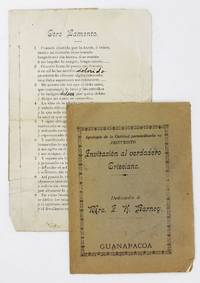
1903rif. 6144Guanabacoa: Imprenta "El Progreso 1903. Good. 24; 12pp. One small pamphlet in original printed wrappers plus a bifolium stitched together with four small broadside flyers. Previously folded. Some moderate creasing and wear with a few scattered short closed tears. Light dust soiling and toning. An assemblage of six individually printed poems composed in the early 20th century by obscure Cuban poet Anastasio Orozco y Etienne. The first poem "Apologia de la Caridad." is in its own wrappers and dedicated to Susan Hammond Barney the noted prison reformer Christian writer evangelist and world traveler. She is one of the founders of the Prisoners' Aid Society of Rhode Island and for many years was the President of the Women's Christian Temperance Union in Rhode Island. The second lengthier work titled "Otro Lamento" is printed on a bifolium and also carries religious themes. Stitched with this bifolium are four small broadside poems printed from 1901 to 1903. One of these is a tribute to President McKinley following his assassination and is dated the day of his death September 14 1901. The titles of the broadside poems in full are as follows: 1 A MacKinley sic. La Gloria Es de los Redentores. 2 El 10 de Octubre. Reminiscencia. 3 En Memoria del Pundonoroso Capitán Don Federico Capdevila. 4 Al Rev. H.B. Someillán. Su Regresso. OCLC records an 1882 work by Orozco y Etienne Emblema de las Flores y de los Colores en Prosa y Verso but not the later ephemeral works collected here. Interesting literary printing from a small newspaper press in Cuba just after the Spanish-American War. Imprenta "El Progreso unknown
1903rif. 6144Guanabacoa: Imprenta "El Progreso 1903. Good. 24; 12pp. One small pamphlet in original printed wrappers plus a bifolium stitched together with four small broadside flyers. Previously folded. Some moderate creasing and wear with a few scattered short closed tears. Light dust soiling and toning. An assemblage of six individually printed poems composed in the early 20th century by obscure Cuban poet Anastasio Orozco y Etienne. The first poem "Apologia de la Caridad." is in its own wrappers and dedicated to Susan Hammond Barney the noted prison reformer Christian writer evangelist and world traveler. She is one of the founders of the Prisoners' Aid Society of Rhode Island and for many years was the President of the Women's Christian Temperance Union in Rhode Island. The second lengthier work titled "Otro Lamento" is printed on a bifolium and also carries religious themes. Stitched with this bifolium are four small broadside poems printed from 1901 to 1903. One of these is a tribute to President McKinley following his assassination and is dated the day of his death September 14 1901. The titles of the broadside poems in full are as follows: 1 A MacKinley sic. La Gloria Es de los Redentores. 2 El 10 de Octubre. Reminiscencia. 3 En Memoria del Pundonoroso Capitán Don Federico Capdevila. 4 Al Rev. H.B. Someillán. Su Regresso. OCLC records an 1882 work by Orozco y Etienne Emblema de las Flores y de los Colores en Prosa y Verso but not the later ephemeral works collected here. Interesting literary printing from a small newspaper press in Cuba just after the Spanish-American War. Imprenta "El Progreso unknown books
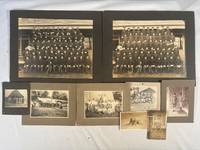
1909rif. 224671909. Soldier Harold Howard's person documentaation of service in the 11th U.S. Cavalry during the period of American military occupation and intervention in Cuba following the Spanish American War. These photographs place an enlisted cavalryman within the broader framework of U.S. expansionist policy in the Caribbean under the Platt Amendment when American troops were repeatedly deployed to Cuba to oversee political stability infrastructure and economic interests. The archive includes identified images of Sgt. Harold Howard and captures both formal military organization and informal daily life offering a ground-level record of U.S. cavalry presence during a period of continued occupation and reintervention including the second U.S. occupation of Cuba from 1912 to 1913. Archive of nine vintage silver gelatin photographs ranging approximately from 3.5 x 5 inches to 10 x 13 inches many mounted to original photographer boards and some annotated in ink or pencil. Two large-format formal group portraits depict Troop K 11th U.S. Cavalry at Fort Oglethorpe Georgia 1913 showing soldiers in full dress uniform arranged in tiered formation with visible regimental flag marked "11" and "K" with Howard identified in one image. Smaller photographs include a group portrait of U.S. cavalrymen in Pinar del Río Cuba dated 1908 showing soldiers in campaign dress posed near a stable as well as candid camp scenes featuring cooking areas barracks life and assembled troops. Two photo postcards function as personal correspondence with handwritten messages from Howard dated April 1 and September 9 1913 addressed to Mrs. A. L. Howard in Maine referencing weather conditions and upcoming exhibition drills providing direct evidence of mobility and routine within cavalry service. Additional images include a cabinet card of two uniformed soldiers and a scene depicting Black Cuban civilians posed near a thatched structure situating U.S. military presence within local social environments. Taken together the archive documents the lived experience of a U.S. cavalryman operating within the infrastructure of American imperial policy in the Caribbean linking domestic military bases such as Fort Oglethorpe with overseas deployment in Cuba. The photographs record both the formal visual culture of the U.S. Army and the everyday conditions of enlisted service while the inclusion of Cuban subjects and locations underscores the entanglement of military occupation with local populations. General edge wear throughout with occasional pinholes adhesive remnants and minor chipping to mounts; some toning to boards. Photographs remain clear and stable with annotations legible. Overall very good condition. unknown