2724 risultati
rif. 86443Havana: El Siglo XX. First Edition. hardcover. very good. 9 volumes bound in one. Very thick 4to 1/2 polished green calf stiff original printed wrappers bound-in. Habana: El Siglo XX 1924-1932. Very good. DIHIGO Y MESTRE Juan Miguel et al. El Siglo XX unknown books
rif. DADAX0553061089New unknown
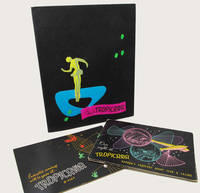
1955rif. 34840Havana Cuba: The Tropicana circa 1955. 4 volumes. Original Printing. Original velour cover illustrated by hand using the technique of collage in yellow green blue pink and black and illustrated throughout with photographs designs and decorations the three brochures also in colour. Large 4to 28 x 23 cm Original velour with collage decorations to the cover the brochures of paper over board all coloured. 24 pages with numerous illustrations and 2 hand-made excerpts that allow a view of the following page. The large format brochure also includes: 1. 'Our Night at Tropicana. Havana's Fabulous Night Club & Casino' illustrated folder to insert a photograph here without photo. 2. The same with an original photograph of a party hand-dated 'Marzo 1962' and inscribed 'Boda de Cora y Vicente' with the names of the guests. The envelope is rubbed a bit. 3. The same in a different design with a photograph showing a lady in an evening dress. Her companion has been cropped from the photograph. Two additional postcards are provided here one showing the poolo of the Cabana Sun Club the other shows Calle Obispo in Havana in an older photograph. A fine copy of the 'This is Tropicana' cover and contents the brochures with a bit of age or evidence of use. VERY SCARCE. A beautiful collection from one of the most famous nightclubs of the 1950's. In 1950 Martin Fox bought Villa Mina and commissioned architect Max E. Borges to carry out the spectacular renovation with parabolic concrete arches and glass walls to roof the stage. On March 15 1952 the new Arcos de Cristal cabaret building was opened. Artists who performed at the Tropicana included star such as Nat King Cole and Josephine Baker and visitors included Edith Piaf Ernest Hemingway Jimmy Durante and Marlon Brando. Shortly after the revolution in 1959 the Tropicana like other casinos and nightclubs was nationalized. The Tropicana unknown
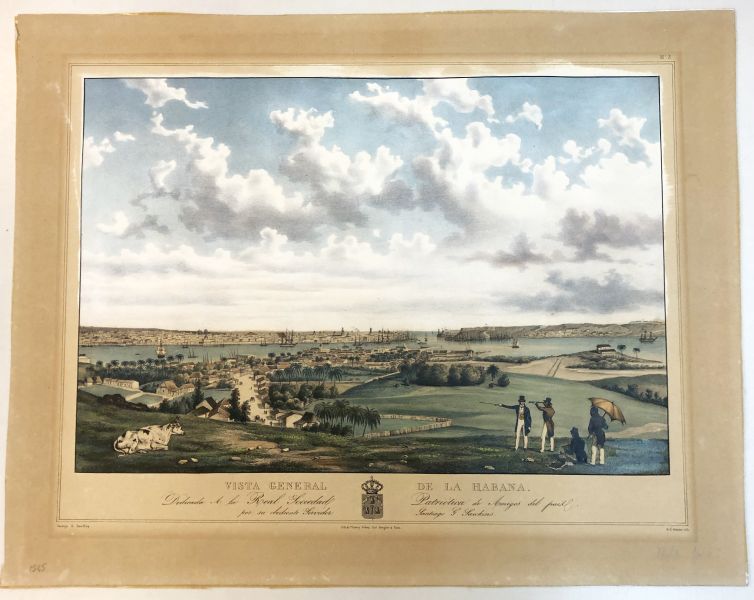
1850rif. 230131Um 1850. In der Platte bezeichnet. 27 x 39,8 cm (Darstellung) 39 x 49 cm (Papier).
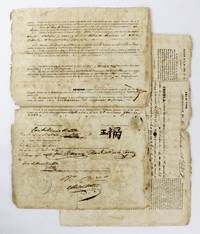
1863rif. 6222Havana 1863. Good. Two partially printed broadsheets completed in manuscript 13 x 9 inches. Old folds wear at edges; some light worming slightly affecting text. Lightly soiled. A pair of documents recording the indenture of a Chinese national in Havana. The present documents contract the "Asiatico Francisco" as a cook to Don Jose Antonio Battle y Olle; the contract is dated June 28 1861 and is signed by "Francisco" in Chinese characters for a term of two years. At the end it is noted in manuscript that the Asiatico Francisco has completed the two years of his contract. The cedula is dated 1863 and indicates that Francisco is 33 years of age and now indentured for eight years as a "cocinero." An interesting pair of documents showing the continuing servitude of imported Chinese laborers particularly attractive for being signed in Chinese characters. unknown
1863rif. 6222Havana 1863. Good. Two partially printed broadsheets completed in manuscript 13 x 9 inches. Old folds wear at edges; some light worming slightly affecting text. Lightly soiled. A pair of documents recording the indenture of a Chinese national in Havana. The present documents contract the "Asiatico Francisco" as a cook to Don Jose Antonio Battle y Olle; the contract is dated June 28 1861 and is signed by "Francisco" in Chinese characters for a term of two years. At the end it is noted in manuscript that the Asiatico Francisco has completed the two years of his contract. The cedula is dated 1863 and indicates that Francisco is 33 years of age and now indentured for eight years as a "cocinero." An interesting pair of documents showing the continuing servitude of imported Chinese laborers particularly attractive for being signed in Chinese characters. unknown books
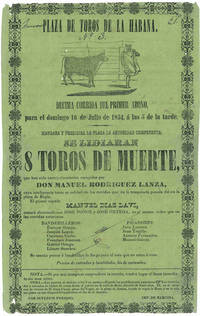
1854rif. 46994Havana. 1854. A Bullfighting Broadside from Cuba in 1854 Cuban broadside advertising a bullfight featuring matador Don Manuel Rodriguez Lanza and the "8 toros de muerte." The top of the sheet features a woodcut of a matador holding his cape out to a bull. The first swordsman for the fight is Manuel Diaz Lavi with two alternates listed. The names of the Banderilleros and Picadores for the fight are also noted. Bullfighting was a popular entertainment in Cuba during the Spanish colonial period though it was done away with after Cuban independence at the beginning of the 20th century. Broadside 12½ × 8 inches. Printed on green paper. Old fold lines. Light wear and soiling minor separation at some folds. A few contemporary notations. Very good. unknown
1854rif. 46994Havana. 1854. A Bullfighting Broadside from Cuba in 1854 Cuban broadside advertising a bullfight featuring matador Don Manuel Rodriguez Lanza and the "8 toros de muerte." The top of the sheet features a woodcut of a matador holding his cape out to a bull. The first swordsman for the fight is Manuel Diaz Lavi with two alternates listed. The names of the Banderilleros and Picadores for the fight are also noted. Bullfighting was a popular entertainment in Cuba during the Spanish colonial period though it was done away with after Cuban independence at the beginning of the 20th century. Broadside 12½ × 8 inches. Printed on green paper. Old fold lines. Light wear and soiling minor separation at some folds. A few contemporary notations. Very good. unknown books
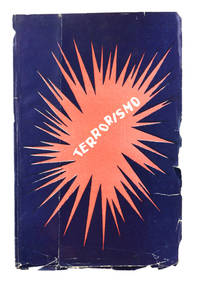
rif. RF5883334 pp.: ills. 235x155 cm. In original publisher’s cloth binding with lettering on the front cover. With the binder’s ticket of the printer P. Fernández y Co. “Capitolio” on the front pastedown. With the piece of original dust-jacket tipped in showing the illustration on the front side of the wrapper. Binding slightly worn piece of dust-jacket with tears but otherwise a very good copy. Scarce. First edition. Text in Spanish. Dedicated to General Alberto Herrera y Franch 1874-1954 Chief of the Army General Staff. A rare imprint of Cuban propaganda and apparently the earliest official record of the wave of bombings that swept Cuba under President Gerardo Machado 1871-1939 from October 1930 to November 1931. The book was compiled by Florindo L. Fernández Prieto First Lieutenant of Coast Artillery and Inspector General of Explosives in an attempt to attribute the bombings to foreign influence. The title page also identifies him as a doctor of pharmacy and of the natural and physical-chemical sciences a professor of explosives and war gases at army schools and a member of the American Chemical Society. Gerardo Machado was elected President of Cuba in 1924 and secured re-election in 1928 after extending his mandate through constitutional reform. The Great Depression and falling sugar prices deepened economic hardship and opposition to his regime. Tensions escalated on 30 September 1930 when police violently suppressed a student demonstration at the University of Havana mortally wounding Rafael Trejo 1910-1930. Bombings soon spread across the island followed by sabotage an armed uprising in August 1931 and increasingly brutal government repression. Machado’s rule ended on 12 August 1933 when a general strike army defections and US pressure forced him to resign and flee Cuba. The volume opens with a prologue by Ramiro Cabrera dated Havana November 1931. In the text Cabrera denies that the bombings could be a native Cuban phenomenon blaming instead “a breath of communism that comes from abroad” linked to Russia Spain “the great organizations created in the United States” China India and England. The introductory chapters survey Spanish and Cuban explosives legislation from 1894 to 1931 the history of bombs and grenades and the composition and handling of explosives detonators and fuses. The main section provides a day-by-day chronicle of attacks across the island from October 1930 to November 1931 targeting schools churches theatres banks cafés transport networks government offices and foreign legations. It documents the evolution of devices from paper petards to shrapnel bombs and factory-made fragmentation grenades as well as clandestine workshops discovered in Havana Trinidad and Santiago de Cuba. Importantly the edition features detailed expert reports on the bombings of the Presidential Palace and the Royal Bank of Canada co-signed by the author. The account also records foreign connections imported German shotgun cartridges American-made explosives and detonators and dynamite found alongside communist and anarchist pamphlets. Especially interesting are photographs of Fernández's field tests of seized grenades at the National Explosives Factory in Santiago de las Vegas and Castillo de Atarés together with images of the detonations and official witnesses. The book is supplemented with numerous extremely rare black-and-white photographs showing seized bombs grenades tear-gas and phosphorus ampoules bomb-makers’ tools and the bomb sites children victims with the identification of names etc. The volume concludes with statistical tables recording 562 bombs exploded 627 bombs and 1755 grenades seized lists of casualties inventories of confiscated explosives by town including nearly 89000 detonators and over 12000 lb of potassium chlorate and a province-by-province list of prosecutions under the explosives law. Overall a rare piece of propaganda and vivid record of political violence in Cuba on the eve of the 1933 Revolution compiled by the officer charged with defusing it. Excerpts from the book: “¡Es comunismo es anarquismo es lo que se quiera!. pero no es local…” p. 12 “It is communism it is anarchism it is whatever you like!… but it is not local…” “Esto es simplemente un soplo de comunismo que viene de afuera; la máscara que informa de la libertad de la constitución pisoteada; de la crisis económica; de los desaciertos de un gobierno descarriado sirve de pretexto y se está urdiendo con ella un movimiento tendencioso análogo al que se está agitando en otros países lejanos por parte de Rusia de España; del fondo de las grandes organizaciones creadas en los Estados Unidos…” p. 12 “This is simply a breath of communism that comes from abroad; the mask of liberty of the trampled constitution of the economic crisis of the blunders of a misguided government serves as a pretext and with it a tendentious movement is being woven like the one stirring in other distant countries on the part of Russia of Spain from the depths of the great organisations created in the United States…” “La existencia en la Habana de estas bombas y máquinas infernales no pueden ser producto de una elucubración genuinamente nativa. Estamos a no dudarlo frente a un fenómeno de índole distinta. La Habana es campo escogido de actividades que se agitan en otros países.” p. 10 “The existence in Havana of these bombs and infernal machines cannot be the product of a genuinely native invention. We are without doubt facing a phenomenon of a different kind. Havana is the chosen field of activities stirring in other countries.” Extremely Rare. Not found in the Worldcat hardcover
rif. SONG0253316057Used: Good unknown
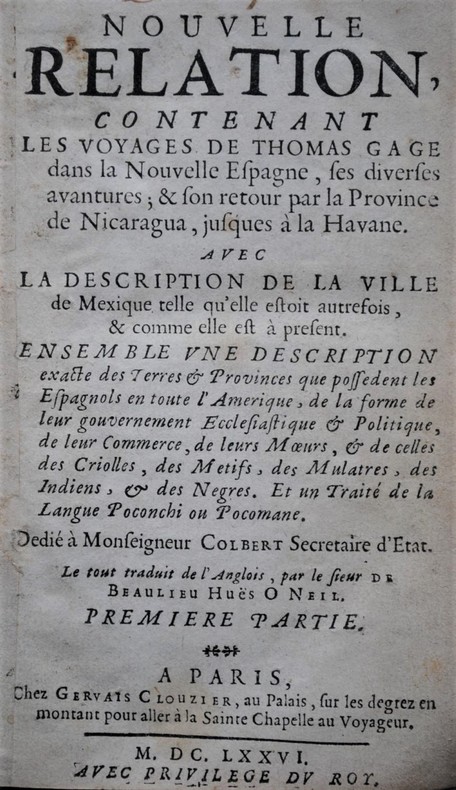
1676rif. P2-5A-3Paris : Gervais Clouzier, 1676. 4 parties en deux volumes, 8° (160 x 100 mm) , plein veau époque, dos à nerfs ornés avec titre et tomaison , différence de reliure, 13ffnch.-246pp-2ffnch et 4ffnch.240pp. , 4ffnch.-297pp.-2ffnch. Et 4ffnch.-153pp.-2ffnch. , coins et coupes usés , reliure solide , mouillure sur quelques feuillets (t3-4).
1678In -4°, pp. (40), 146, (6), pergamena coeva, difetti al dorso. Prima edizione. Nato a Saragozza, l’autore insegnò a Napoli e Roma prima di partire per Cuba, dove avrebbe passato la vecchiaia. Il libro, interessante e curioso, si occupa di prostituzione e della sua accettabilità dottrinaria, argomento rispetto al quale l’autore è fortemente contrario. Lo scritto replica a un manoscritto (poi stampato a Catania, “Resolutio theologica moralis in qua occasione cuiusdam casus occurrentis afferitur et propugnatur, licite permitti posse Meretrices”, 1677) del francescano Giovanni dell’Olmo, che difendeva il diritto delle prostitute a entrare nelle dimore nobiliari napoletane. La polemica svela molto sui costumi del sesso a pagamento all’epoca. Born in Saragoza, the author was a professor in Naples and Rome before leaving to Cuba. This curious book deals with prostitution and its doctrinaire acceptability (that the author is strongly against to). This work replies to a manuscript (then printed in Catania, “Resolutio theologica moralis in qua occasione… licite permitti posse meretrices”, 1677) of a franciscan preacher, Giovanni dell’Olmo, who supports permission to prostitutes to enter in neapolitan noble palaces. This controversy reveals many facts about prostitution at time.
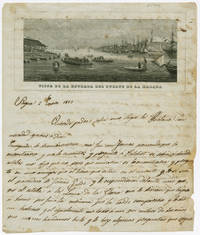
1853rif. 54601Havana. 1853. Writing Home from Havana An attractive Cuban pictorial lettersheet with a neatly executed third-page lithograph illustration of the port of Havana. The image depicts several small boats rowing barrels to and from a loading dock. In another small boat a plantation owner or some form of dignitary is being rowed to shore by a crew of men. On the right side of the image several larger ships lie at anchor and in the background on the shore is the fort guarding the mouth of the harbor the Morro Castle. The sheet is filled out by a man named Juan Fabre writing to his parents on Jan. 2 1853 advising them of his safe arrival in Havana. He talks about meeting up with a relative that he had not seen in two years and working at a shoe shop with another relative who adds a brief post script on the verso of the second leaf. Pictorial lettersheets of Cuba are quite rare on the market. Previously folded. Some chipping at fore-edge slightly affecting text. Light dampstaining and tanning. About very good. unknown
1853rif. 54601Havana. 1853. Writing Home from Havana An attractive Cuban pictorial lettersheet with a neatly executed third-page lithograph illustration of the port of Havana. The image depicts several small boats rowing barrels to and from a loading dock. In another small boat a plantation owner or some form of dignitary is being rowed to shore by a crew of men. On the right side of the image several larger ships lie at anchor and in the background on the shore is the fort guarding the mouth of the harbor the Morro Castle. The sheet is filled out by a man named Juan Fabre writing to his parents on Jan. 2 1853 advising them of his safe arrival in Havana. He talks about meeting up with a relative that he had not seen in two years and working at a shoe shop with another relative who adds a brief post script on the verso of the second leaf. Pictorial lettersheets of Cuba are quite rare on the market. Previously folded. Some chipping at fore-edge slightly affecting text. Light dampstaining and tanning. About very good. unknown books
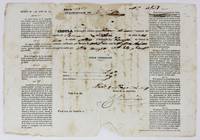
1857rif. 4502Havana 1857. Good plus. Small broadside form approximately 8.5 x 12.5 inches. Previously folded with some separation and minor loss along vertical fold. Completed in manuscript with additional manuscript docketing on blank verso. Ink burn causing additional minor loss in a few small areas. Light edge wear; some staining and offsetting; light tanning. A 19-century Cuban identification form known as a cedula filled out in manuscript to authorize the travel of an Asian indentured servant between plantations in early May 1857. The document was completed for a twenty-six-year-old Asian fieldhand named Chan who had signed a contract to work for one Gallego Toriceo to be transferred to the premises of "P. Soler y Compañia." Printed at the left and right edges are nine articles from an 1855 decree that outline the regulations for issuing and keeping such documents including the following: "Estas cédulas servirán de documentos de seguridad y además de licencias de transito para los colonos que se trasladen de un punto á otro de la Isla. Los patronos respectivos cuidarán de que los colonos no emprendan el viage sin licencia expresa suya que haràn constar al pié de la cedula. Si algun colono fuere hallado sin cédula deberá ser detenido y puesto à disposicion del Gobernador ó Capitan del partido mas inmediato e cual dará conocimiento al patrono dentro de segundo dia." On the otherwise blank verso is additional contemporary manuscript docketing concerning the transfer of the cedula and therefore the laborer concerned to the receiver located in Matanzas. A very interesting document of the bureaucracy and control of indentured servitude in Cuba during the mid-19th century. unknown
1857rif. 4502Havana 1857. Good plus. Small broadside form approximately 8.5 x 12.5 inches. Previously folded with some separation and minor loss along vertical fold. Completed in manuscript with additional manuscript docketing on blank verso. Ink burn causing additional minor loss in a few small areas. Light edge wear; some staining and offsetting; light tanning. A 19-century Cuban identification form known as a cedula filled out in manuscript to authorize the travel of an Asian indentured servant between plantations in early May 1857. The document was completed for a twenty-six-year-old Asian fieldhand named Chan who had signed a contract to work for one Gallego Toriceo to be transferred to the premises of "P. Soler y Compañia." Printed at the left and right edges are nine articles from an 1855 decree that outline the regulations for issuing and keeping such documents including the following: "Estas cédulas servirán de documentos de seguridad y además de licencias de transito para los colonos que se trasladen de un punto á otro de la Isla. Los patronos respectivos cuidarán de que los colonos no emprendan el viage sin licencia expresa suya que haràn constar al pié de la cedula. Si algun colono fuere hallado sin cédula deberá ser detenido y puesto à disposicion del Gobernador ó Capitan del partido mas inmediato e cual dará conocimiento al patrono dentro de segundo dia." On the otherwise blank verso is additional contemporary manuscript docketing concerning the transfer of the cedula and therefore the laborer concerned to the receiver located in Matanzas. A very interesting document of the bureaucracy and control of indentured servitude in Cuba during the mid-19th century. unknown books
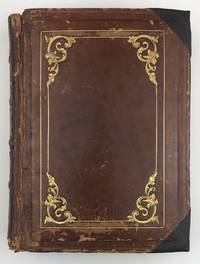
1884rif. 1574Habana 1884. Good plus. 2496 i.e. 498pp. Quarto. Contemporary calf gilt a.e.g.; rebacked with original spine laid down. Corners repaired with later black buckram; boards scuffed spine chipped. Hinges cracked repaired with later cloth and renewed endpapers. Minor scattered foxing and toning to text. Accomplished in a neat highly legible hand. A very attractive manuscript translation into Spanish of Pierre Larousse's well-known work on eminent and historical personages Fleurs Historiques des Dames et des Gens du Monde in a contemporary Cuban gilt goatskin binding. The manuscript connects three figures in the upper social echelons of Cuban society. José Fernandez Pellon the scribe of this volume is recorded as the Grand Master of Cuba's freemasons lodge the Gran Logia Unida de Colón y la Isla de Cuba. The translator Aurelio Almeida helped to found the organization in 1875 and at this time served as the Lodge Secretary. The initials E.D. gilt at the foot of the spine and the dedicatory inscription "A Eugenia Desvernine" refer to Eugenia Desvernine y Galdós b. 1865 daughter of the famous Cuban pianist Pablo Desvernine and Carolina Galdós y Echániz. She was also the niece of Benito Pérez Galdós the Spanish realist novelist who some authorities consider only second in stature to Cervantes. A contemporary social register remarks that Eugenia was one of the most beautiful women in Cuba perhaps an inspiration for the painstaking production of this manuscript. The original work by Larousse was a loose collection of religious parables classical myths biographies of ancient and modern historical figures. The title of the manuscript advises that is an extract and in the brief introduction Almeida explains his selection process writing that "He suprimido algunos artículos sobre cosas muy sabidas de la historia sagrada; y otros sobre la de Francia que mencionan frases ó personas casi ninca citadas ó citades solamente por las escritores francesas." He also notes several alterations and additions more relevant to Spanish history saying "En Cambio he agregado algunos artículos sobre historia de España que no están en el original y he tomado unos pocos de otra obra del mismo Mr. Larousse y de libros diversos." The result is an original amalgam of biographies historical episodes and religious parables. Interestingly we find no recorded printed editions of Larousse's work in Spanish so that the present manuscript is also an entirely original work of translation. A fascinating product of the cultural interests and mores of Cuban high society near the end of the Spanish colonial period. unknown
1884rif. 1574Habana 1884. Good plus. 2496 i.e. 498pp. Quarto. Contemporary calf gilt a.e.g.; rebacked with original spine laid down. Corners repaired with later black buckram; boards scuffed spine chipped. Hinges cracked repaired with later cloth and renewed endpapers. Minor scattered foxing and toning to text. Accomplished in a neat highly legible hand. A very attractive manuscript translation into Spanish of Pierre Larousse's well-known work on eminent and historical personages Fleurs Historiques des Dames et des Gens du Monde in a contemporary Cuban gilt goatskin binding. The manuscript connects three figures in the upper social echelons of Cuban society. José Fernandez Pellon the scribe of this volume is recorded as the Grand Master of Cuba's freemasons lodge the Gran Logia Unida de Colón y la Isla de Cuba. The translator Aurelio Almeida helped to found the organization in 1875 and at this time served as the Lodge Secretary. The initials E.D. gilt at the foot of the spine and the dedicatory inscription "A Eugenia Desvernine" refer to Eugenia Desvernine y Galdós b. 1865 daughter of the famous Cuban pianist Pablo Desvernine and Carolina Galdós y Echániz. She was also the niece of Benito Pérez Galdós the Spanish realist novelist who some authorities consider only second in stature to Cervantes. A contemporary social register remarks that Eugenia was one of the most beautiful women in Cuba perhaps an inspiration for the painstaking production of this manuscript. The original work by Larousse was a loose collection of religious parables classical myths biographies of ancient and modern historical figures. The title of the manuscript advises that is an extract and in the brief introduction Almeida explains his selection process writing that "He suprimido algunos artículos sobre cosas muy sabidas de la historia sagrada; y otros sobre la de Francia que mencionan frases ó personas casi ninca citadas ó citades solamente por las escritores francesas." He also notes several alterations and additions more relevant to Spanish history saying "En Cambio he agregado algunos artículos sobre historia de España que no están en el original y he tomado unos pocos de otra obra del mismo Mr. Larousse y de libros diversos." The result is an original amalgam of biographies historical episodes and religious parables. Interestingly we find no recorded printed editions of Larousse's work in Spanish so that the present manuscript is also an entirely original work of translation. A fascinating product of the cultural interests and mores of Cuban high society near the end of the Spanish colonial period. unknown books
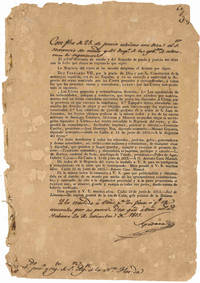
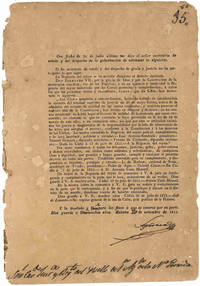
1813rif. 46892Havana. Sept. 20 1813. Early Havana Imprint A rare printed decree from Cuba at the beginning of the 19th century as Spanish power in the world was waning but Spain's grip on Cuba was still quite firm. This decree issued by the King on June 14 1813 and printed on September 20 announces new laws regarding the rights to vote and to be elected to hold government positions for professors and scholars from certain universities collegiums and seminars. The decree forbade these rights to the Knights of Justice of the Order of St. John of Jerusalem as well as members of the four military orders of Santiago Calatrava Alcantara and Montesa. It is endorsed in manuscript with the imprint and header also written in by hand. Early Caribbean imprints are rare. Folio. Old fold lines. Moderately chipped and worn at edges. Lightly and evenly toned. Contemporary manuscript notations. Good. unknown
1813rif. 46891Havana. Sept. 20 1813. Amnesty to Curry Favor A rare Havana imprint. As Spanish power in the New World was waning its grip on Cuba was threatened by domestic and foreign intruders. This decree issued by the Council of Regents "Cortes" standing in for Fernando VII on June 17 1813 and printed on September 20 orders the annulment of all criminal cases. This amnesty policy extended to other areas of New Spain as well sought to placate opposition forces. It calls on all levels of government to announce and enforce the decree. It is endorsed in manuscript. Folio. Old fold lines. Moderately chipped and worn at edges. Evenly toned. Contemporary manuscript notations. Good. unknown
1813rif. 46892Havana. Sept. 20 1813. Early Havana Imprint A rare printed decree from Cuba at the beginning of the 19th century as Spanish power in the world was waning but Spain's grip on Cuba was still quite firm. This decree issued by the King on June 14 1813 and printed on September 20 announces new laws regarding the rights to vote and to be elected to hold government positions for professors and scholars from certain universities collegiums and seminars. The decree forbade these rights to the Knights of Justice of the Order of St. John of Jerusalem as well as members of the four military orders of Santiago Calatrava Alcantara and Montesa. It is endorsed in manuscript with the imprint and header also written in by hand. Early Caribbean imprints are rare. Folio. Old fold lines. Moderately chipped and worn at edges. Lightly and evenly toned. Contemporary manuscript notations. Good. unknown books
1813rif. 46891Havana. Sept. 20 1813. Amnesty to Curry Favor A rare Havana imprint. As Spanish power in the New World was waning its grip on Cuba was threatened by domestic and foreign intruders. This decree issued by the Council of Regents "Cortes" standing in for Fernando VII on June 17 1813 and printed on September 20 orders the annulment of all criminal cases. This amnesty policy extended to other areas of New Spain as well sought to placate opposition forces. It calls on all levels of government to announce and enforce the decree. It is endorsed in manuscript. Folio. Old fold lines. Moderately chipped and worn at edges. Evenly toned. Contemporary manuscript notations. Good. unknown books
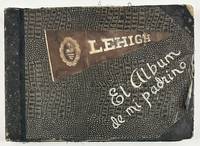
rif. 12844Various locations in Cuba and Pennsylvania: contents ca 1973. 25 leaves totaling 40pp. illustrated with thirty black-and-white and sepia-toned photographs with detailed manuscript captions plus seven large clippings from school publications and six additional ephemeral items. Oblong folio. Black cloth with alligator-patterned cloth on front board with manuscript title below a drawn representation of a small pennant for Lehigh University. Covers worn frayed and chipped alligator-style cloth curling a bit along fore edge. A few items loose from adhesive and a few with small tears scattered spotting and soiling. Overall very good condition with fascinating materiality. A lovingly-compiled photograph album and memorial book created by a young woman named Magdalena Sofia Guitart in tribute to her godfather Rafael Genó a Cuban engineer who studied at Lehigh University in Pennsylvania. Juan Rafael Genó Rizo was born in Santiago de Cuba in 1883. A doctoral thesis on Cuban architecture found online deems him one of the premiere Art Deco architects of Santiago and the only one to obtain a degree abroad. Genó graduated with a degree in Civil Engineering from Lehigh in 1909 and from the University of Havana in 1913. He died in Miami Florida in 1973. This doting scrapbook was compiled and heavily captioned in Spanish which we hereafter present in translation as a "Memorial which with love and pride I dedicate to my godfather and some of his works; a pale reflection of all the good he has done in his life" by Magdalena Sofia Guitart who was born in 1936 in Santiago and arrived in Miami in 1958. She includes photos of Genó as a baby and a boy of 11 "From a very young age as you can see here my godfather was a little gentleman" as well as in uniform alongside Mexican and Costa Rican comrades at Pennsylvania's Wayne Field. She lauds his "triumphs" and "genius" in "thousands of battles." Genó likely came to the United States following the Spanish-American War during the growth of Cuban immigration resulting from increased American attention of the island country. All of the content in the album is artfully presented within decorative rules or floral borders providing an unusual flair to the presentation. The book displays not only the hand-drawn Lehigh pennant on the cover but also large artistic renditions of the campus and an internal shot of its library clipped from school publications and comparing views from 1873 1909 and 1933 the relevance of Lehigh at the later date is unclear. Additional photographs and decorative designs share the story as "our engineer" returns to Cuba and "begins to demonstrate his knowledge" in the mines of Ponupo. Soon "his hard work integrity and honesty led him to be chosen" for other feats of engineering including "la Iglesia church Los Desamparados constructed by my godfather 1932" and a train terminal in Guantánamo. Images and a photographic clipping laud his renovations of "Colegio La Salle" in 1937. There are also six photos and a clipping showing Genó's work on the altar for the Eucharistic Congress held in Santiago in 1936 during which the original statue of Our Lady of Charity of El Cobre Patroness of Cuba was granted a canonical coronation by Pope Pius XI. The album also holds a clipping naming Genó as president of the Board of Directors of Santiago's Urban Property Center an inauguration ribbon and brochure for the Municipal Food Market in 1950 with which he was also involved and photos of the celebrated engineer later in life. A captivating and carefully-assembled homage created by a Cuban immigrant to the United States honoring a loved one who was educated in Pennsylvania and then returned to his home country to serve as a noted engineer during the first half of the 20th century. contents ca unknown
rif. 12844Various locations in Cuba and Pennsylvania: contents ca 1973. 25 leaves totaling 40pp. illustrated with thirty black-and-white and sepia-toned photographs with detailed manuscript captions plus seven large clippings from school publications and six additional ephemeral items. Oblong folio. Black cloth with alligator-patterned cloth on front board with manuscript title below a drawn representation of a small pennant for Lehigh University. Covers worn frayed and chipped alligator-style cloth curling a bit along fore edge. A few items loose from adhesive and a few with small tears scattered spotting and soiling. Overall very good condition with fascinating materiality. A lovingly-compiled photograph album and memorial book created by a young woman named Magdalena Sofia Guitart in tribute to her godfather Rafael Genó a Cuban engineer who studied at Lehigh University in Pennsylvania. Juan Rafael Genó Rizo was born in Santiago de Cuba in 1883. A doctoral thesis on Cuban architecture found online deems him one of the premiere Art Deco architects of Santiago and the only one to obtain a degree abroad. Genó graduated with a degree in Civil Engineering from Lehigh in 1909 and from the University of Havana in 1913. He died in Miami Florida in 1973. This doting scrapbook was compiled and heavily captioned in Spanish which we hereafter present in translation as a "Memorial which with love and pride I dedicate to my godfather and some of his works; a pale reflection of all the good he has done in his life" by Magdalena Sofia Guitart who was born in 1936 in Santiago and arrived in Miami in 1958. She includes photos of Genó as a baby and a boy of 11 "From a very young age as you can see here my godfather was a little gentleman" as well as in uniform alongside Mexican and Costa Rican comrades at Pennsylvania's Wayne Field. She lauds his "triumphs" and "genius" in "thousands of battles." Genó likely came to the United States following the Spanish-American War during the growth of Cuban immigration resulting from increased American attention of the island country. All of the content in the album is artfully presented within decorative rules or floral borders providing an unusual flair to the presentation. The book displays not only the hand-drawn Lehigh pennant on the cover but also large artistic renditions of the campus and an internal shot of its library clipped from school publications and comparing views from 1873 1909 and 1933 the relevance of Lehigh at the later date is unclear. Additional photographs and decorative designs share the story as "our engineer" returns to Cuba and "begins to demonstrate his knowledge" in the mines of Ponupo. Soon "his hard work integrity and honesty led him to be chosen" for other feats of engineering including "la Iglesia church Los Desamparados constructed by my godfather 1932" and a train terminal in Guantánamo. Images and a photographic clipping laud his renovations of "Colegio La Salle" in 1937. There are also six photos and a clipping showing Genó's work on the altar for the Eucharistic Congress held in Santiago in 1936 during which the original statue of Our Lady of Charity of El Cobre Patroness of Cuba was granted a canonical coronation by Pope Pius XI. The album also holds a clipping naming Genó as president of the Board of Directors of Santiago's Urban Property Center an inauguration ribbon and brochure for the Municipal Food Market in 1950 with which he was also involved and photos of the celebrated engineer later in life. A captivating and carefully-assembled homage created by a Cuban immigrant to the United States honoring a loved one who was educated in Pennsylvania and then returned to his home country to serve as a noted engineer during the first half of the 20th century. contents ca unknown books
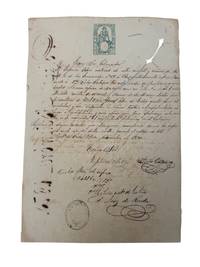
1870rif. 231221870. Slavery Cuba Spanish colonial slave sale manuscript recording the transfer of four enslaved individuals in Cuba in 1870. Produced within the official bureaucratic framework of Spanish colonial governance the document reflects the legal normalization of slavery in Cuba even as abolitionist pressures mounted across the Atlantic world. The document records the sale of four enslaved people described as "criollos" and African-born individuals situating the transaction within a labor system that combined locally born and imported enslaved populations. Created at a time when Spain had formally restricted the transatlantic slave trade but continued to permit slavery itself the manuscript demonstrates the persistence of legalized human commodification and the integration of enslaved labor into the island's economic structure sixteen years prior to abolition in 1886. Official Cuban slave contract documenting the sale of four enslaved individuals to Don Pedro Catasús by Don Enfemia Ochoa for the sum of 1100 pesos on November 29 1870. Single manuscript leaf written in Spanish cursive in black ink measuring 8.25" x 12". A green "50 cs de escudo" revenue stamp is affixed at the top center with a blind embossed Spanish crest at the upper left and a circular black ink government seal impressed at the lower left. Large vertical docketing appears on the verso. A stylized watermark is visible within the paper. The text organizes the enslaved individuals within a standardized transactional structure while the signatures of Enfemia Ochoa Pedro Catasús and A. Díaz de Rada authenticate the exchange and identify participants within the slaveholding economy. By 1870 Cuba remained a central node in the late Atlantic slave system with plantation agriculture especially sugar dependent on enslaved labor despite mounting abolitionist pressure. Although Spain had curtailed official slave imports earlier in the century illegal trafficking persisted into the 1860s and other coerced labor systems including the importation of Chinese indentured workers overlapped with slavery into the 1870s. The presence of both Creole and African individuals in this document reflects the layered composition of the enslaved population during this period. Light toning scattered foxing and edge wear visible. A closed wormhole extends from the upper right margin approximately five inches into the sheet resulting in partial loss of text. Evidence of prior tape reinforcement visible on the verso along with offsetting from previously adjacent material. Overall in very good condition. This document provides named transactional evidence of late-period slavery in Cuba offering concrete material for examining race labor and legal practice within Spanish colonial society. unknown