2,650 results
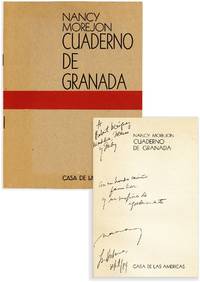
1984ref. 88455Havana: Casa de las Americas 1984. First Edition. Slim quarto 23.75cm; original printed card wrappers with French flaps stapled; 16pp; text is entirely in Spanish. Inscribed by Morejon on the title page to Puerto Rican editor translator and literary critic Roberto Márquez and his family: "A Robert Márquez Maddie Maceo y Gaby / Con un hondo cariño familiar y suspiro de agradecimiento y un suspiro de agradecimiento / Nancy / La Habana / Sept/84." Trivial external wear and a hint of sunning to spine-fold; touch of oxidation to staples; contents fresh; Near Fine. Short collection of verse by the noted Afro-Cuban poet critic and essayist gathrering nine poems. A nice inscription connecting two prominent Caribbean literary figures. 88455. Casa de las Americas unknown books
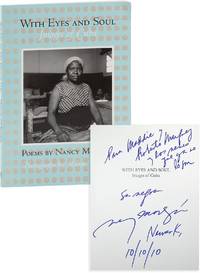
2004ref. 88456Buffalo NY: White Pine Press 2004. First Edition. First Printing. Small quarto 25.5cm; original glossy pictorial card wrappers; 910-1155pp; illus.; with parallel text in English and in Spanish. Inscribed by Morejon on the half-title page to Puerto Rican editor translator and literary critic Roberto Márquez and his wife: "Para Maddie y Roberto y los nenes que ya no lo son / Su negra / Nancy Morejon / 10/10/10." Hint of sunning to spine tiny crease to upper right corner of front wrapper; Near Fine. Collection of verse by the noted Afro-Cuban poet written between the summers of 1986-87 pairing her poems prose poems and vignettes with photos by Milton Rogovin. A nice inscription connecting two prominent Caribbean literary figures. 88456. White Pine Press unknown books
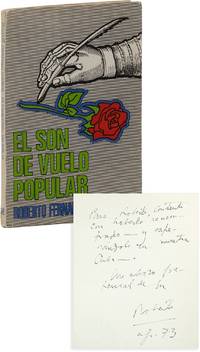
1972ref. 88465Havana: UNEAC 1972. First Edition. First Impression one of 10000 copies. Octavo 21cm; original pictorial wrappers with French flaps; 89-897pp; text is entirely in Spanish. Inscribed by Retamar on the front endpaper to Puerto Rican editor translator and literary critic Roberto Márquez: "Para Roberto / Contento con haberlo rencontrado - y esperandolo en nuestra Cuba - Un abrazo fraternal del Roberto / Ap. 73." The recipient's pervasive ink annotations and markings appear throughout the text. Edgeworn a few tiny tears and creases and a 2" split at upper front joint; Very Good. Collection of four extended essays on Nicolas Guillen by the noted Cuban poet essayist and literary critic. A warm inscription and a nice association to Marquez a Guillen scholar and translator of his work. 88465. UNEAC unknown books
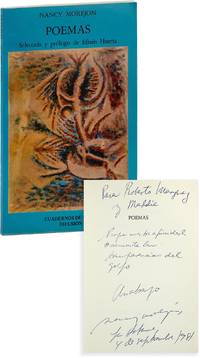
1980ref. 88457Mexico City: Difusion Cultural Departamiento de Humanidades / Universidad Nacional Autónoma de México 1980. First Edition. First Impression one of 2000 copies. Small octavo 18cm; original pictorial card wrappers; 89-62pp. With a full-page inscription from Morejon to Puerto Rican editor translator and literary critic Roberto Márquez and his wife signed and dated in Havana 4 September 1981." Mild surface wear else a fresh very Near Fine copy. A collection of verse by the noted Afro-Cuban poet selected and edited by Mexican poet and journalist Efraín Huerta Roma 1914-1982. A nice inscription connecting two prominent Caribbean literary figures. 88457. Difusion Cultural Departamiento de Humanidades / Universidad Nacional Autónoma de México unknown books
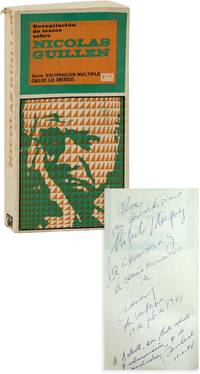
1974ref. 88452Havana: Casa de las Americas 1974. First Edition. First Impression one of 18000 copies. Narrow octavo 22.75cm; original pictorial card wrappers; 67-4293pp; illus.; text is entirely in Spanish. Inscribed by Guillen on the title page to Puerto Rican editor translator and literary critic Roberto Márquez: "Para Roberto Márquez / con el fraternal cariño de Nicolas / La Habana Feb. 74." Signed directly beneath by an unknown figure and below that by Afro-Cuban poet and journalist Marcelino Arozarena 1912-1996. The opposing page is inscribed for Márquez in verse with a small drawing by an undetermined poet signed "David Feb.74." The verso of the half-title page is warmly inscribed by Cuban poet and critic Nancy Morejón who has written the foreword to this volume: "Para mi queridísimo Roberto Marquez / la admiracion y el cariño immenso de Nancy / La Habana / 19 de feb. de 1974." Directly beneath this is another warm year of publication inscription by an underemined individual. This volume has been extensively marked-up by Márquez whose contribution "Introducción a Guillén" appears on pp.127-138. Some wear to extremities a few nicks and tears to spine ends with some creases to wrappers; Very Good. A key volume of critical texts on Guillén 1902-1989 the national poet of Cuba by many of his contemporaries like Mirta Aguirre Angel Augier Roberto Fernández Retamar Nancy Morejón Alejo Carpentier Pablo Neruda Ciro Alegría and others. This copy bears a number of contemporary inscriptions to Márquez a Guillén scholar who has written extensively on his work and has translated several of the poet's works faithfully from Spanish into English. 88452. Casa de las Americas unknown books
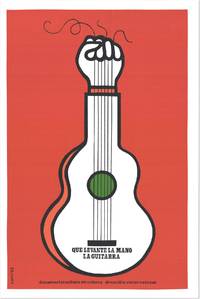
1983ref. 83069Havana: S.i. 1983. Original illustrated poster with text and pictorial elements silkscreened in four colors on white stock measuring 51cm x 76.25cm 20 1/8" x 30". Mild handling to extremities ele a bright Fine copy unbacked. Striking poster designed by Concepción Robinson Mendoza aka. "Coni" for Victor Cassaus's 1983 documentary Que Levante la Mano la Guitarra centered around Cuban musician and folk singer Silvio Rodríguez Domínguez. 83069. S.i. unknown books
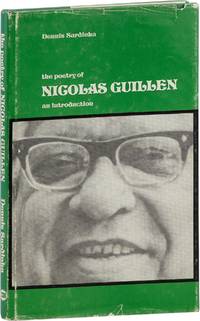
1976ref. 85000London & Port of Spain: New Beacon Books 1976. First Edition. First Impression cloth issue. Octavo 22.25cm; green paper-covered boards with titles stamped in gilt on spine; dustjacket; 45-80pp. This copy is from the library of to Puerto Rican editor translator and literary critic Roberto Marquez with his ink name at upper margin of title page and inscribed to him by the author on the front endpaper: "To Roberto / with love best wishes / Dennis / London 1976." About Fine in a Very Good dustjacket unclipped priced £2.50 gently spine-sunned and lightly shelfworn with a few tiny nicks small tears and attendant creases. Text of a lengthly lecture on Guillen by the Trinidadian author which he delivered to members of the Caribbean Artists Movement in London. It includes the text of an interview between Ciro Bianchi Ross and Guillen on the poet's 70th birthday. A nice association linking two Guillen scholars; Marquez has written extensively on Guillen and has translated several of his works faithfully from Spanish into English. 85000. New Beacon Books unknown books
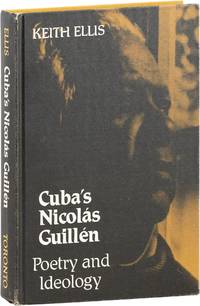
1983ref. 85035Toronto: University of Toronto Press 1983. First Edition. First Impression. Octavo 23.5cm; pictorial cloth-covered boards; x34-251252-254pp. This copy is from the library of to Puerto Rican editor translator and literary critic Roberto Marquez with his ink markings and notations throughout the text and inscribed to him by the author on the title page: "To Robert / as a token of my highest esteem and my admiration for your work / Keith." Base of spine gently nudged light wear to extremities with a few dog-eared pages; Very Good and sound without dustjacket as issued. Scholarly work on the writings of Nicolás Guillén 1902-1989 with a particularly generous inscription to Marquez who has written extensively on Guillén and has translated several of the poet's works faithfully from Spanish into English. A nice association linking two Guillén scholars. Uncommon inscribed. University of Toronto Press unknown books
1971ref. 47663Miami: Ediciones Universal 1971. First Edition. Octavo 20.5cm.; publisher's pictorial card wrappers; 263pp. Light shelf wear tiny dampstain to bottom fore-edge corner of textblock else Near Fine. Account of present-day Cuba by the exiled Cuban journalist who nearly twenty-five years earlier was nominated Vice President by the Socialist Revolutionary Movement with twenty-two-year-old Enrique Ovares as President. According to the author biography on the rear cover: "Ni un sólo minuto de sa vida no está dedicado a Cuba. Nadie lo aventaja en la lucha constante contra el régimen castrista y contra los malandrines que ofenden la dignidad nacional. Ediciones Universal unknown books
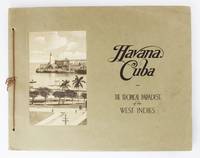
1925ref. 6379Havana: American Photo Studios 1925. Very good plus. 48pp. each with 6x8-inch photographic prints directly mounted. Original card wrappers photo-illustrated and string-tied. Minor wear and dust soiling. Images strong and clear. An attractive and uncommon 1920s travel brochure distributed by ocean liners sailing to and from Havana. This album of photographic prints opens with shots of Ward Line and P & O steamships entering and leaving the city harbor. The images by American Photo Studios images encompass views of Havana's Carnival Hotel Plaza Colon Park the old city walls the Santa Clara Convent and the monument to the USS Maine on Malecon Drive. Also included are views of freshly built suburbs stately homes on "Fifth Avenue" the Havana Country Club Jockey Club and even a view of the Hershey Company's sugar mill. An engaging album that shows Havana at the beginning of its run as a Caribbean destination for American high society in the first half of the 20th century. American Photo Studios unknown books
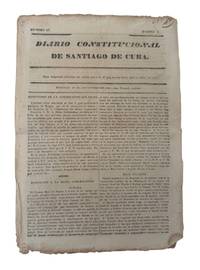
1836ref. 231491836. Diario Constitucional de Santiago de Cuba No. 57 November 1836 just months after the restoration of Spain's liberal Constitution of 1812. This newspaper records the transmission of Spanish constitutional government into eastern Cuba in late 1836 through decrees ministerial correspondence and public political dispute printed for circulation in Santiago de Cuba. Issued weeks after the political upheavals that restored constitutional rule in Spain this number shows how the language of the regency government the suppression and reorganization of state bodies and local declarations of loyalty to Isabel II reached colonial readers through the newspaper press. In a Cuban setting where metropolitan policy was filtered through governors ministries and municipal elites an issue such as this preserves the working connection between imperial administration and provincial print. Diario Constitucional de Santiago de Cuba. No. 57. Santiago de Cuba 27 November 1836. 4 pages. Folio newspaper issue. The masthead reads "DIARIO CONSTITUCIONAL / DE SANTIAGO DE CUBA" with the date line "DOMINGO 27 DE NOVIEMBRE DE 1836." Page 1 opens with "MINISTERIO DE LA GOBERNACION DEL REINO" followed by a circular and a substantial "EXPOSICION A LA REINA GOBERNADORA" leading into a "REAL DECRETO" concerning the suppression of the Consejo Real de España e Indias. Interior pages continue the decree and carry translatedly legible sections including "MISCELANEA" notices on "Las islas turcas libres" and "Noticias sobre Tejas" and a long exchange under "REMITIDOS" dated "Cuba 25 de Noviembre de 1836" addressing militia service volunteers of Isabel II and the political insult attributed to an earlier subscriber. The issue survives as a complete four page folio with dense double column text throughout and no wrappers as issued. Printed in Santiago the issue shows constitutional and monarchist language being adapted for a colonial audience that was expected to follow ministry decrees military loyalty and debates over public honor in the same sheet. Folded as issued with minor edge chipping small losses at corners and margins some toning and closed tears and pinholes; complete and legible. Overall good condition. The juxtaposition of metropolitan government text Caribbean and Atlantic news and the local controversy printed in "Remitidos" gives the number a documentary range broader than a routine official gazette placing state policy beside the contested language of provincial political life. unknown books
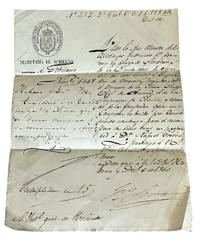
1860ref. 234291860. Spanish colonial administration in Havana used port health regulation as a mechanism of commercial and maritime control with the Captaincy General directing military customs and sanitary officials through centralized orders. This December 6 1860 manuscript concerns the "Junta local de Sanidad" "víveres averiados" and Dr. Rafael Cortés placing damaged provisions public health authority and port enforcement within the same bureaucratic chain. The phrase "usando de las facultades que me competen" invokes the vested powers of the colonial government confirming that the matter was handled through Spanish imperial authority rather than local civic discretion. Gobierno y Capitanía General de la Isla de Cuba. Secretaría de Gobierno sección de Gobierno. Manuscript order. Havana Cuba: December 6 1860. Single folded manuscript document with printed colonial seal and heading docketed "Habana y Dic. 6 de 1860" and addressed to maritime or port authorities. The text instructs compliance with a petition or order involving the local Board of Health damaged provisions or foodstuffs and Dr. Rafael Cortés with official endorsements and large administrative signatures below. The verso bears docketing and filing marks consistent with bureaucratic circulation. The document belongs directly to Spanish colonial governance in Cuba where the Governor and Captain General exercised civil military and administrative power over the island until the end of Spanish rule in 1898. Its contents connect colonial rule to the management of ports food safety and public health all crucial areas in Havana's nineteenth-century Atlantic economy. Folded as issued with toning scattered foxing edge wear and original folds; seal heading date and principal manuscript text remain legible. Overall good condition. unknown books
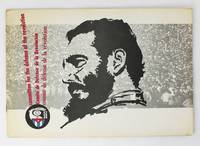
1965ref. 6257Habana 1965. Very good. 16pp. Oblong pamphlet in original pictorial wrappers stapled. Light wear and toning at wrapper edges with a few faint creases. Internally clean. A visually rich pro-Casto and pro-Communist pamphlet that highlights the history and core activities of Cuba's Committee for the Defense of the Revolution CDR neighborhood-based civil defense organizations created by Castro in 1960 to defend the revolution and maintain social and political control at the local level. This often included activities like surveillance distribution of propaganda and vigilante justice. The pamphlet is illustrated with photos throughout and also contains a two-page spread with maps of the island and charts data and statistics about the Cuban people. It contains a year-by-year account of the Committee's achievements and activities and ends with a section concerning its relations with other countries and their visits to Cuba. The rear wrapper states that editions were published in English French and Spanish as evidenced by the trilingual title on the front cover but we find no evidence of any edition in OCLC. Scarce and with much interesting and propagandized information about Castro's local enforcers during the early years of the Communist regime. unknown books
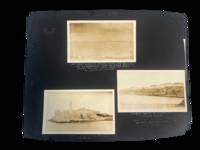
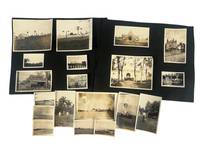
1920ref. 227281920. Havana Cuba travel photo album circa 1920s documents an American visitor's encounter with Havana during the interwar years when U.S. tourism commercial presence and Spanish-American War memory shaped how many American travelers interpreted the city. The vernacular photographs record arrival by steamship harbor landmarks civic buildings commercial streets factories boulevards monuments cemeteries and guarded public spaces giving insight into both Havana's urban landscape and the traveler's assumptions about access history and spectacle. The album's references to the USS Maine and Spanish-American War memorials place ordinary sightseeing within a longer history of U.S. intervention in Cuba; the Maine exploded in Havana Harbor on February 15 1898 killing more than 260 sailors and intensifying the crisis that led to war with Spain. Approximately 25 sepia-toned silver gelatin photographs each about 3 x 5 inches mounted to black album leaves with detailed handwritten captions in white pencil. The sequence begins aboard the S.S. Kroonland with one caption reading "My first view of Havana from the deck. three miles out at sea in a dark storm" followed by a landing view captioned "where we landed in Havana Cuba." The S.S. Kroonland returned to Panama Pacific Line service in 1923 on a New York to San Francisco route via Havana the Panama Canal and Los Angeles supporting the album's interwar travel context. The photographs then trace Havana's maritime and civic topography: harbor views Morro Castle captioned "Famous during the Spanish-American War" the waterfront in front of the fortress the Court House the President's Palace a "600-year-old church" the Henry Clay Cigar Store Havana's factory district and public boulevards "where all streets have parks in the center." Other images include a cemetery visit captioned "All people in Cuba are laid to rest above the ground" and a restricted-view street or carriage scene captioned "Officer would not let me take picture but when he turned I took it anyway" a revealing note on tourist privilege and unauthorized looking. Several images directly record the ways American travelers consumed Havana through imperial memory and Cuban nationalist commemoration. One monument is captioned "This was given by the Cuban people to the American soldiers that fell in the Spanish-American War" while another marks "the spot where the Maine sank at the entrance of the harbor." The album was made after Cuba's formal independence in 1902 and during the long aftermath of the Platt Amendment framework under which the United States retained extensive influence over Cuban affairs and intervened repeatedly in the early twentieth century. Album leaves chipped at edges several with corner losses not affecting images; prints generally sharp with strong contrast and clear annotations very good overall. Socially revealing Havana travel album documenting how a U.S. visitor pictured Cuba through steamship tourism colonial architecture cigar commerce Spanish-American War remembrance and the everyday authority structures of an interwar Caribbean capital. unknown books
1915ref. 224781915. Polk George Washington Jr. Havana and rural Cuba photo archive 1915 documents Cuba through the viewpoint of an American military traveler during the Platt Amendment era when U.S. power shaped Cuban sovereignty port security naval access and commercial movement. The photographs record ships in Havana Harbor coastal fortifications rural dwellings Cuban farmers agricultural landscapes and colonial plazas providing insight into how U.S. military personnel visually encountered Cuba just before American entry into World War I. The Platt Amendment gave the United States broad authority to intervene in Cuban affairs and required Cuba to lease land for naval stations remaining central to U.S.-Cuba relations until its repeal in 1934; this archive therefore places vernacular travel photography within a larger framework of military oversight and commercial access. Polk George Washington Jr. Havana Cuba vernacular photo collection. Havana Cuba: unpublished December 1915. Twenty-eight silver gelatin photographs pasted to album pages with some loose or partially detached ranging from approximately 2 x 2½ inches to 4½ x 3½ inches many with handwritten ink annotations dated December 22 to 29 1915. The images include vessels anchored in Havana Harbor harbor views from on board ship Morro Castle and other coastal fortification views colonial civic plazas local laborers and civilians thatched rural huts or bohíos sugarcane fields and agricultural scenes captioned "Orange Trees & Coconut Palms Near Havana." One photograph is captioned "Cuban Farmer & Son Near Havana Dec 22 1915" giving the archive direct documentary value for rural family life and American observation of Cuban agricultural communities. Other captions identify boats as "U.S.C. 5th Protectors off Havana" and refer to the United Fruit Company steamer Abangarez on the Havana-Colon route; the Abangarez was a United Fruit Company passenger and cargo vessel completed in 1909 and later brought under United States registry during World War I. The photographs combine military commercial and rural subjects in a compact record of U.S.-Cuban contact. Polk's annotations and the repeated Potchernick-Birdsong Co. Kodak Place San Antonio Texas stamps on versos indicate that the images were developed in the United States after the trip or sent home for processing preserving the path by which overseas military travel became a personal photographic record. Polk's later military service is supported by burial and veterans' records identifying George Washington Polk Jr. as born May 13 1889 died July 27 1976 and buried at Fort Rosecrans National Cemetery; the supplied description identifies him as later a Colonel in the U.S. Army Air Corps and instructor in the early U.S. Air Force. Most photographs lightly pasted along one edge to scrapbook leaves with some detached or partially affixed; a few corner creases otherwise sharp images with strong contrast good to very good overall. Focused 1915 Cuba archive linking Havana Harbor rural Cuban labor vernacular architecture United Fruit maritime movement and American military observation during the U.S. protectorate period. unknown books
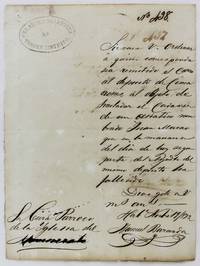
1872ref. 3066Havana 1872. Very good. Manuscript form approximately 8.5 x 6.25 inches. Minor wear at edges; a few small worm holes. Contemporary ink stamp. Light tanning and offsetting. This 1872 manuscript form from a Havana jail the Celaduria de la Punta notes the death there of an "Asiatico" a Chinese indentured servant with the given name of Juan Macao and orders the transfer of the body to the mortuary for cremation. Indentured servants found themselves jailed for several reasons including suspicion of theft and other crimes recapture following runaway or mere suspicion of abandoning a contract. unknown books
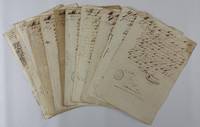
1873ref. 12720Cuba 1873. Twelve manuscript documents on folio sheets approximately 8.5 x 12.5 inches all with official rubber-stamped seal. Small pinholes along left margin light wear occasional chipping to edges some ink bleed and light damp staining. Overall very good. A collection of documents recording the liberation or attempted liberation of numerous men women teenagers and a child from enslavement. The child is but seven years old while the remaining slaves range from fifteen to fifty-seven years old. The slave trade ended in Cuba around 1867 but the practice of owning slaves remained legal until 1880 and then was abolished completely by Spanish decree in 1886. Cuba was the penultimate country to outlaw slavery in the western hemisphere beating Brazil to formal abolishment by two years. Even before the official abolition of slavery in Cuba African or criollo slaves were manumitted by a variety of owners and at various costs as evidenced here especially after the practice of importing Chinese indentured servants began. Each of the present documents names the slaveholder and the slave granted "libertad" along with the cost in escudos or pesetas of that liberty. The slaves liberated here are as follows: 1 Luis criollo 7 years old for the sum of 28 pesos 2 Maria Antonia part criolla 20 years old for the sum of 2500 pesetas 3 Catalina morena de Africa 41 years old for c.200 pesetas 4 Lorenzo moreno criollo 21 years old for 2500 pesetas 5 Lucia morena criolla 15 years old for 320 pesos or 1600 pesetas 6 Frigidae "negro.de Africae" 56 years old 7 Augusto criollo 19 years old for 1750 pesetas 8 Marta criolla 16 years old for 1621 pesetas 9 Gil moreno de Africa 57 years old for 1500 pesos 10 Carmita morena criolla 20 years old for 1750 pesetas 11 Augustina Prieto morena criolla 30 years old for 1750 pesetas 12 Edwigio 39 criolla; Lazara 36 criolla; and Maria Leoncia 15 criolla for 2000 pesetas. These Cuban slave manumissions are offered with one 1844 manumission document liberating a slave in Spain totaling two pages and measuring about 8.5 x 13.5 inches. The document also has three rubber-stamped official seals at the head noting Isabella II. This document appears to free slave Nicolas 25 years old for the sum of 400 pesos and is signed November 5 1844. unknown books
1908ref. 228161908. Ober Frederick A. A Guide to the West Indies and Bermudas. New York: Dodd Mead & Company 1908. First edition. First printing. 525 pages with five fold-out color maps and numerous black-and-white photographic illustrations. Original red cloth stamped in gilt as issued with no dust jacket. 8vo. An early 20th-century travel guide reflecting U.S. and European imperial tourism in the Caribbean at the height of American expansion following the Spanish-American War. Ober a prolific writer on the Caribbean and Latin America interweaves geography natural history and colonial ethnography offering a period perspective into the ways tourists imperial authorities and travel publishers framed the predominantly Black Afro-Caribbean and Creole cultures of the region during the Jim Crow era. This guide includes detailed chapters on Cuba Puerto Rico Jamaica Trinidad Barbados Guadeloupe Martinique and dozens of other island territories along with sections on "The Bermudas" "The Lesser Antilles" "The South Coast of Cuba" and "A Glimpse of South America." The contents pages visible here show Ober's systematic movement through the archipelago giving each island a discrete treatment with notes on climate agriculture transportation and colonial governance. As Ober writes in his introduction the West Indies form "a region of infinite variety" a phrase that reflects both genuine admiration and the period's exoticizing tone common to pre-WWI travel literature. The fold-out maps chart shipping routes railways ports and political boundaries at a moment when the United States had recently taken possession of Puerto Rico 1898 and solidified its influence in Cuba and the broader Caribbean basin. Light rubbing to cloth with slight sunning to spine; corners mildly worn. Five fold-out maps complete crisp and clean one with a minor tear near margins. Interior exceptionally bright with no writing or markings; binding tight. Overall very good condition. A well-preserved first printing of an important Caribbean travel guide valuable for scholars of U.S. imperial history Caribbean studies tourism studies and the racial-cultural representation of the West Indies during the early American century. unknown books
1959ref. 93985Havana: Office of the Prime Minister of Cuba 1959. Pamphlet. 32p. one photographic reproduction soupkitchen: "This is why Cuba needs the land reform" 8.5 x 5.5 inches wraps of substantial white paperstock decorated with the Cuban coat-of-arms rendered in 3 colors staplebound. wraps mildly soiled minor handling wear. Dated from internal declaration on p.31 over Urrutia Lleo's name; "Enacted in la Plata Sierra Maestra on May 17 1959 'Year of the Liberation.'" Also suggestive that 1959 date is correct is professional presswork and cover color work sophisticated by standards that in a year or two will be much lower as money and professionals run out. Office of the Prime Minister of Cuba unknown books
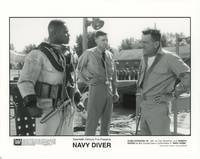
2000ref. 173101Los Angeles: Twentieth Century-Fox 2000. Vintage satin-finished studio still photograph from the 2000 film here under the alternative title "Navy Diver." A former sharecropper tries to become the first African American diver in the United States Navy. Shot on location in Washington Oregon and California. 8 x 10 inches. Fine. Twentieth Century-Fox unknown books
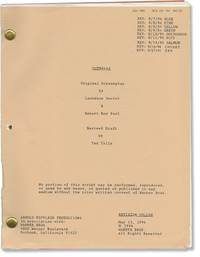
1994ref. 170268Burbank CA: Warner Brothers 1994. Revised Draft script for the 1995 film. Bound in at the rear of the script are nine pages relating to revisions to the script. US Army doctors race to find the cure to a deadly virus quickly spreading from Africa to North America by way of a smuggled capuchin monkey. Shot on location in California and Hawaii. Self wrappers. Title page present dated May 13 1994 noted as REVISION POLISH with credits for screenwriters Laurence Dworet and Robert Roy Pool and revision credits for uncredited screenwriter Ted Tally. 174 leaves with last page of text numbered 136. Xerographic duplication rectos only with rainbow revision pages throughout dated variously between August 7 and 17 1994. Pages Near Fine bound with two gold brads. Warner Brothers unknown books
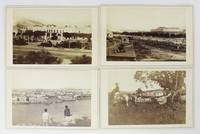
1872ref. 6289Havana 1872. Very good. Eight albumen photographs 3.75 x 5.5 inches; mounted on cardstock 4.25 x 6.5 inches. Manuscript captions on verso. Minor wear and soiling most images clean and crisp. Group of eight photographs of Havana and environs dated March of 1872. Each is captioned on the verso in manuscript with the date of March 27 1872; "Havana" and a caption identifying the place are also present. Images here include a view of the bay; a view of the city from across the water with two young men standing in the foreground admiring the view; the Castle de Morro; a scene in the botanical garden; Casino Español; and two women seated in a carriage. Particularly nice with the contemporary captions and most of the images are well-composed. unknown books
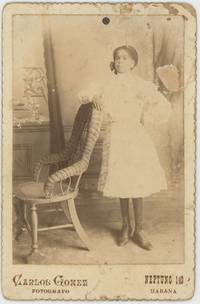
1905ref. BK0085Havana Cuba: Carlos Gómez 1905. Cabinet photograph measuring 4 x 5 ½ inches on photographer's mount measuring 4 ½ x 6 ½ inches with imprint "Carlos Gómez / Fotógrafo / Neptuno 149 / Habana. Image somewhat faded with scattered surface wear and an area of loss at upper right; mount worn at edges good overall. A studio portrait of a young woman posed beside a wicker rocking chair wearing a light-colored dress with high collar and puffed sleeves and looking directly toward the camera. The photograph is notable in the context of Afro-Cuban portraiture around the turn of the twentieth century a period when Havana supported a large commercial photographic trade serving an increasingly broad urban clientele. The sitter is unidentified and no inscription survives to provide further biographical information. Carlos Gómez Guardiola was operating a photographic studio at 149 Neptuno by 1902 when a contemporary Havana newspaper noted that he had already established a reputation despite having been in business only a short time. Gómez's work appears in Juaco López Ãlvarez's Fotografía de Asturianos en américa with an identical "Carlos Gómez / Fotógrafo / Neptuno 149 / Habana" imprint; Ãlvarez dates it to about 1905 and we date the present portrait accordingly. 1 Juaco López Ãlvarez Ed. Fotografía de Asturianos en américa 2000 222. . Carlos Gómez unknown books
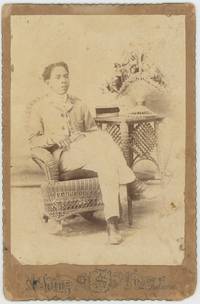
1905ref. BK0086Havana Cuba: A. Sainz 1905. Cabinet photograph measuring 4 x 5 ½ inches on photographer's mount measuring 4 ½ x 6 ½ inches with imprint "A. Sainz / Reina 67 / Habana. Some fading and spotting to image with wear and small losses to edges of mount; good overall. A formal studio portrait of a young Black man seated in a wicker chair beside an elaborate wicker table and floral arrangement. He wears a light-colored suit and holds his hat in his lap posed directly toward the camera. The mount identifies the photographer as A. Sainz of 67 Reina Street Havana. Contemporary Havana advertisements from July and August 1905 place Sainz's photographic studio at this address providing a useful basis for dating the portrait. An appealing example of Black portraiture in early twentieth-century Havana. A. Sainz unknown books
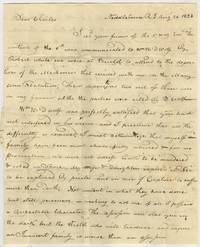
1823ref. BK0184Middletown Rhode Island 1823. Autograph letter signed three pages on a folded sheet with integral address panel to Charles E. Dudley in Albany and Newport postal markings. 7 ¾ x 9 ¾ inches. Old folds scattered staining and some marginal losses a few affecting text. Good to very good. A letter from Newport mariner John Wood concerning his acrimonious departure from the DeWolf family's Mary Ann plantation in Cuba and the ensuing legal dispute with James DeWolf and Charles Collins. Wood was almost certainly the same John Wood whose signature appears on an 1806 Newport agreement for an illegal voyage transporting enslaved Africans from Cape Coast to Havana now held by the Smithsonian's National Museum of African American History and Culture.1 By 1823 he was residing on the Mary Ann plantation one of several Cuban estates belonging to the DeWolfs among the most prominent families involved in the American slave trade. His relationship with DeWolf and Collins had evidently collapsed over his obligations on the estate resulting in what he describes as his forced departure from Cuba under apparently dangerous conditions with his family and a contentious effort to settle their accounts. Writing to his friend Charles E. Dudley then mayor of Albany and a New York state senator Wood reports that three mechanics who had resided with him on the plantation had recently given depositions in Bristol Rhode Island. Two of the three had testified in his favor though all had been called by DeWolf. Wood was particularly incensed by the circumstances surrounding his family's departure from Cuba writing: "I must acknowledge that myself & family have been most shamefully abused & for no provocation we were set adrift liable to be murdered & robbed on Shore My Wife & Daughter exposed at Sea to be captured By pirates and in case of Capture to suffer more than Death; Not content in what they have done but still persevere in wishing to rob me of all I possess a Respectable Character. The assassin will stab you in the dark but the Wretch who will traduce and injure an Innocent family is worse than an assassin." Wood goes on to describe receiving two writs from DeWolf and Collins and transcribes an August 8 letter from James DeWolf explaining his decision to pursue legal action despite their previous discussions of an amicable settlement: "Lest you should think me inconsistent in causing an action to be brought after the last conversation we had I take leave to explain my wishes to come to an amicable settlement by referring to men as we talked remains the same my object is to put the business in a legal and proper train for bringing it to a close . & to enable me to avail of the testimony of the people who were on the Estate with you." Wood expected the Rhode Island Supreme Court meeting at Bristol the following month to appoint referees to settle the accounts. The precise origin of the disagreement is not stated though the depositions of the mechanics and the references to outstanding accounts suggest a dispute over Wood's contractual obligations or activities on the plantation. Wood 1770-1826 was a Newport merchant and captain with longstanding connections to Atlantic commerce. He died at Cape Coast West Africa in 1826 three years after writing the present letter. James DeWolf 1764-1837 then serving in the United States Senate had amassed a substantial fortune through the slave trade and his Cuban plantation interests. Charles Collins his brother-in-law had served as collector of customs at Bristol from 1804 to 1820 an appointment closely connected to the family's slave-trading operations. The Mary Ann plantation is documented in the DeWolf Papers at the Rhode Island Historical Society which include inventories from 1818 and 1820 and contemporary plans of the plantation grounds. The present letter preserves Wood's account of his treatment by the DeWolf family together with his transcription of DeWolf's explanation for pursuing legal action. 1 "Agreement facilitating illegal trade of enslaved Africans" National Museum of African American History & Culture accessed October 12 2026 https://nmaahc.si.edu/object/nmaahc_2019.28.1. . unknown books