2,670 results
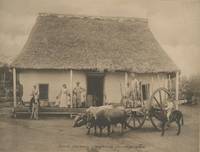
1913ref. List3218Brooklyn New York: The Albertype Co 1913. Photo album of twenty-five 12 ½ x 10 inch pages containing fifty 8 x 6 inch photographs with cardstock cover. Cover and pages worn with marginal damage; pages mostly detached from string binding; photos with captions on negative; Near Fine with Fine contrast. Overall excellent to Near Fine. After the Spanish American War the Isle of Pines now Isla de Juventud in Cuba was contested territory because the 1901 Platt Amendment had specifically left ownership of the island up to a future treaty; the 1904 Hay-Quesada Treaty recognizing Cuban sovereignty over the island failed to be ratified by the US until 1925. American citizens controlled ninety-five per cent or more of the island’s land and were strongly in favor of American annexation. Offered here is a 1913 photo album exhibiting the island’s lush scenery productive farmland and luxurious American residences and resorts. The American property owners are identified by name and include American Residents and Property Owners’ Association President T.J. Keenan who in 1902 described the island under default administration by the Cuban government as “on the verge of anarchy . American interests are absolutely unprotected”1; H.A. Christy Vice President of the Cincinnati Richmond & Muncie Railroad; coal and coke businessman John F. Atcheson and other elites. There are also shots of a number of hotels; grapefruit banana and pineapple farms belonging to the settlers; and recreation by both automobile and boat. Two photographs are not of American ventures: one of the home of José Sarda which housed José Martí before his exile to Spain labeled merely “Nueva Gerona Sarda Homstead”; and one of a house labeled “San Juan Native Homestead” showing a family standing on the porch of their thatched-roof home with an oxcart before them. We find four copies of this photo book on OCLC. Of interest to historians of US imperialism in Cuba following the military withdrawal. 1 “The Isle of Pines President Orders Investigation of Affairs There” The Press-Herald November 15 1902 2. The Albertype Co unknown books
1894ref. 1064651894. Pamphlet format 70 pp. Illustrations; map. 14.3x11.8 cm 5½x4½" pictorial wrappers. Some light staining and wear to wrappers spine a little worn very good overall. Rare tourists' guide book produced under the auspices of the Grand Hotel Macotte with much on Havana transportation options sights to see including bull fights prices a Spanish vocabulary etc. with numerous advertisements for Cuban and some Florida businesses and other hotels. One advertisement features cigar maker La Corona. They even include an illustration of Christopher Columbus. OCLC/WorldCat lists only one copy at the California State Library Sutro Branch. J. Carbonell and P. Montero, Proprietors. books
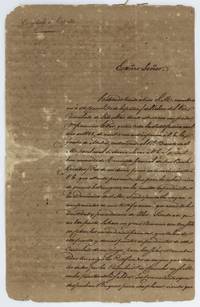
1828ref. 2401Gibraltar 1828. Good. 3pp. on a bifolium. Previously folded with separations. Tanned somewhat brittle. An interesting example of official communications concerning trade between colonial Cuba and the Spanish mainland. In this manuscript letter date March 14 1828 the new Spanish Vice Consul in Gibraltar writes to the Governor General of Cuba concerning several topics. These include the regulation of shipping to Cuba and by implication the rest of the Caribbean through Gibraltar particularly of French ships leaving Mediterranean ports. Also discussed is keeping track of individuals particularly merchants going to Cuba by means of identification papers and other documents. The consul also reminds the colonial government of the importance of documenting duties and tariffs paid for shipping cargo and goods. unknown books
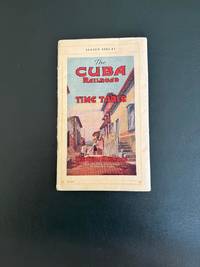
1916ref. 100842Tall 8vo stiff paper stapled illustrated some in color 54 pp. Lacks wrappers and last page but the rest of the pamphlet including the double page map of Cuba is present a few small chips some minor aging and soiling. The 9 x 21 folding map of Cuba features its railroads. There are two attractive color photographs and seven full page black and white photographs illustrating the charms of Cuba. Smaller photos including one of a sleeping car are included in the text. A rail schedule some facts about Cuba and a few advertisements for hotels and cruise lines are also included. Cuba Railroad Company, books
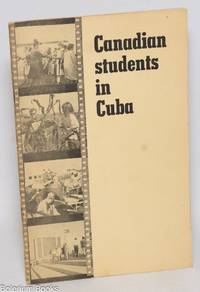
1965ref. 80372Toronto: Fair Play for Cuba Committee 1965. Pamphlet. 59p. numerous vignette b&w photos softbound in stapled 8.5x5.5 inch wraps;very good condition. Fair Play for Cuba Committee unknown books
1950ref. 244442Republic of Cuba: Cuban Tourist Commission A Government Department 1950. First item on a 9x11.5 inch leaf of semi-alkaline paperstock printed smallpoint in black folded twice to make an upright 9x4 inch brochure this hand-folded again transversely; rather dust-soiled and handled a fair to good copy. Second item single leaf 11.5x17.5 inches machine-folded three times to make an upright 9x3.7 inch promotional brochure printed color both recto and verso displaying 19 happy snapshots captioned e.g. "Improve your rhumba where the rhumba was born". Item has a little creasing a pinpoint hole at a fold intersection a good to very good exemplar. The two together. Cuban Tourist Commission, A Government Department unknown books
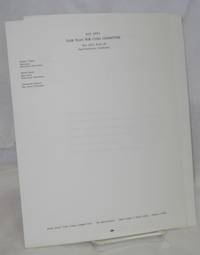
ref. 214582San Francisco: the Committee 196_. two 8.5x11 inch sheets one is blank stationery for the Bay Area chapter of the FPFC Committee while the other is a type-set form letter for thanking contributors and summarizing the purpose of the FPFC Committee. Very good condition. Staff names on both sheets are Alexander Saxton Bay Area Chairman Asher Harer Bay Area Executive Secretary and Robert Taber National Executive Secretary. Saxton was a noted historian and proletarian novelist. the Committee unknown books
1999ref. 200122Havana: Palcogra/Artes Graficas 1999. Pamphlet. 17p. softbound pamphlet in 7.5x5.5 inch stapled wraps; clean and sound a very good copy. Palcogra/Artes Graficas unknown books
1999ref. 200664Havana: the National Assembly 1999. Pamphlet. 37p. 5.5x8.5 inches fine first edition pamphlet in stapled white wraps with depiction of Cuba on cover. This presentation "aired on Cuban television and broadcast on international radio on.January 8 1999. the National Assembly unknown books
1991ref. 159359Habana: Editorial de Ciencias Sociales 1991. vii 187p. 11x8.5 inch hardcover in dj pages evenly toned else good condition in a lightly worn and soiled dj. Editorial de Ciencias Sociales unknown books
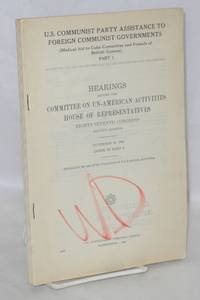
1963ref. 127791Washington: GPO 1963. Pamphlet. Volume I: vi 1837-1949p. Volume II: vi 1951-2045 xv p. first volume has yellowed wraps rubberstamps and pen markings on front cover second volume cleaner but minor penciling on cover. US. 87th congress 2nd session. GPO unknown books
1947ref. 55153Havana: Cuban Tourist Commission 1947. Paperback. Very good. Paperback. 22 by 28 inches unfolded. Foxed overall with some expected toning at the creases else very good and crisp. Cuban Tourist Commission paperback books
1903ref. 6457V.p. 1903. 36 postcards all completed in manuscript generally very good or better with some wear and rounded corners. A fascinating assemblage of cards written by Pre-Castro intellectuals to a Maria de Serra though a few are written to other women. It is difficult to pin down de Serra though we do know she was highly educated and very well-known and connected. It makes sense to us that she is perhaps the Maria de Serra mentioned by William Wells Brown in his important work The Rising Son or the Antecedents and advancement of the Colored Race 1874. On pg 260 Brown writes: "The free blacks in Cuba form an important element in her population and these people are found in all the professions and trades. .one of the best young ladies' academies at present existing at Havana is personally conducted by an accomplished negro woman Maria de Serra to whom many a lady of high rank owes her social and intellectual accomplishments." Further research may be fruitful in retrieving more information on this Maria de Serra. It goes without saying that the sentiments and signatures are the most appealing part of this collection. Many of the cards appear to contain original verse and all are quite legible and well preserved. Equally as lovely are the cards themselves many being of exceptional beauty as they were all chosen by artists and intellectuals. All in all a remarkable set worthy of further research. The correspondents are as follows: Diego Vicente Tejera; one of the most famous turn-of-the-century Cuban poets but also known as a short story writer orator and political activists. Nestor Cargonell; famous poet and writer. His son went on to become a Hollywood star. Conde Kostia pseudonym of Aniceto Valdivia; writer journalist poet critic lecturer dramatist founder of newspapers and Cuban diplomat. Rafael Maria Merchain; very influential poet and philosopher Enrique Fontanills; very prominent Cuban journalist. Florimel: great Cuban journalist writer and poet who died early in life. Manuel Raul Blanco Belmonte; Cuban poet. Ramon Meza; One of the most important Cuban writers of his time. Many of his books are considered classics and remain in print. Aurelio Cancio; Cuban journalist who founded "La Discusion" newspaper. Manuel Serafin Pichardo; one of the most popular Cuban poet of the 1900s. Frederico Mendes Cobos; a Cuban politician who became a a senator in 1902. Juan Maria Alberti: influential Cuban politician. Manuel Marquez Sterling; fine writer and politician. Jose Manuel Govin; journalist and director of the popular newspaper "El Munto" Cesar Cancio; Very popular Cuban poet born in St Spiritus. Pablo Bonachea; great Cuban journalist and director of "La Discussion" newspaper for one year. Jose Ernesto Trian; Cuban writer with political connections. Was ambassador to Venezuela. Manuel Tierso; Romantic Cuban poet Alvaro de la Iglesia. revered Cuban writer who penned the great "Cuban Traditions" Frederico Ledesma Balsunde: journalist and editor at "El Lucero." Fabio Fiallo; a leading Dominican writer poet and politician. He died in Cuba. Dulce Maria Borrero de Lujan; the most important Cuban woman writer and poet of her time. Frederico Hermida; author of any Cuban novels in the 1900s. Mariana Comas; Cuban essayist Joaquin Lopez Sena; renown Cuban poet and a politician from the 1900s to the 1920s. Eliseo Giberga; a very powerful and influential Cuban politician of the early 1900s. Manuek Coronado; an important Cuban journalist. Antonio San Miguel; Cuban writer and journalist. Pablo Santi Rois; Poet and respected journalist. Armando Celorio; One of the finest Cuban poets. Jose Maria Carbonell; famous Cuban poet and writer. Marcos Trazivark; famous Cuban writer and Musician. Esteban Joven; Cuban writer poet and essayist. Narciso de Puso; famous poet well entrenched in Cuban high society. Eduardo Mencis Capote; Cuban journalist popular among the elite. Lorenzo Frau Marsal; respected Cuban journalist . unknown books
1901ref. 2221928First edition. Small octavo. Illustrated with b/w photos by V.K. Van De Venter Robin H. Ford John H. Rising L.E. Mayo and W.G. Spiker. Original grey pictorial cloth stamped in gilt black and green. No dust jacket. Very good small crack at rear joint. 220 pages 3 pages of ads. No signatures or bookplates. Scarce. The Rumford Press hardcover books
1905ref. 105099Four postcards approximately 3 1/2" x 5 1/2" with stamps. Some writing on image side post marked some aging and browning edges slightly bumped; otherwise very good. This collection of four postcards from Cuba are postmarked stamped and written out. The authors are Anna and Nestor although in one card the author is less clear to a Miss K. Greve. Who lived in the upper West side of New York City. One card features Baby New Year for 1907 and has some color; the other three show La Catedral a promenade and what appears to me some kind of American monument. books
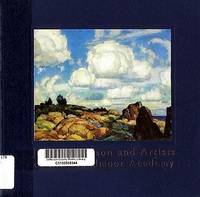
ref. 0967615607-11-1David Cook Fine Art. 1st. Very Good. It's a well-cared-for item that has seen limited use. The item may show minor signs of wear. All the text is legible with all pages included. It may have slight markings and/or highlighting. David Cook Fine Art unknown
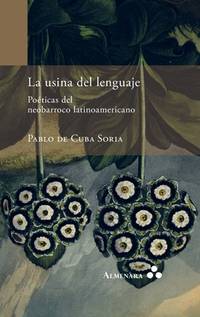
2026ref. x-1966932332Almenara 2026. Hardcover. New. 316 pages. Spanish language. 6.14x0.88x9.21 inches. Almenara hardcover
2026ref. x-1966932200Almenara 2026. Paperback. New. 316 pages. Spanish language. 6.14x0.71x9.21 inches. Almenara paperback
ref. RF5883334 pp.: ills. 235x155 cm. In original publisher’s cloth binding with lettering on the front cover. With the binder’s ticket of the printer P. Fernández y Co. “Capitolio” on the front pastedown. With the piece of original dust-jacket tipped in showing the illustration on the front side of the wrapper. Binding slightly worn piece of dust-jacket with tears but otherwise a very good copy. Scarce. First edition. Text in Spanish. Dedicated to General Alberto Herrera y Franch 1874-1954 Chief of the Army General Staff. A rare imprint of Cuban propaganda and apparently the earliest official record of the wave of bombings that swept Cuba under President Gerardo Machado 1871-1939 from October 1930 to November 1931. The book was compiled by Florindo L. Fernández Prieto First Lieutenant of Coast Artillery and Inspector General of Explosives in an attempt to attribute the bombings to foreign influence. The title page also identifies him as a doctor of pharmacy and of the natural and physical-chemical sciences a professor of explosives and war gases at army schools and a member of the American Chemical Society. Gerardo Machado was elected President of Cuba in 1924 and secured re-election in 1928 after extending his mandate through constitutional reform. The Great Depression and falling sugar prices deepened economic hardship and opposition to his regime. Tensions escalated on 30 September 1930 when police violently suppressed a student demonstration at the University of Havana mortally wounding Rafael Trejo 1910-1930. Bombings soon spread across the island followed by sabotage an armed uprising in August 1931 and increasingly brutal government repression. Machado’s rule ended on 12 August 1933 when a general strike army defections and US pressure forced him to resign and flee Cuba. The volume opens with a prologue by Ramiro Cabrera dated Havana November 1931. In the text Cabrera denies that the bombings could be a native Cuban phenomenon blaming instead “a breath of communism that comes from abroad” linked to Russia Spain “the great organizations created in the United States” China India and England. The introductory chapters survey Spanish and Cuban explosives legislation from 1894 to 1931 the history of bombs and grenades and the composition and handling of explosives detonators and fuses. The main section provides a day-by-day chronicle of attacks across the island from October 1930 to November 1931 targeting schools churches theatres banks cafés transport networks government offices and foreign legations. It documents the evolution of devices from paper petards to shrapnel bombs and factory-made fragmentation grenades as well as clandestine workshops discovered in Havana Trinidad and Santiago de Cuba. Importantly the edition features detailed expert reports on the bombings of the Presidential Palace and the Royal Bank of Canada co-signed by the author. The account also records foreign connections imported German shotgun cartridges American-made explosives and detonators and dynamite found alongside communist and anarchist pamphlets. Especially interesting are photographs of Fernández's field tests of seized grenades at the National Explosives Factory in Santiago de las Vegas and Castillo de Atarés together with images of the detonations and official witnesses. The book is supplemented with numerous extremely rare black-and-white photographs showing seized bombs grenades tear-gas and phosphorus ampoules bomb-makers’ tools and the bomb sites children victims with the identification of names etc. The volume concludes with statistical tables recording 562 bombs exploded 627 bombs and 1755 grenades seized lists of casualties inventories of confiscated explosives by town including nearly 89000 detonators and over 12000 lb of potassium chlorate and a province-by-province list of prosecutions under the explosives law. Overall a rare piece of propaganda and vivid record of political violence in Cuba on the eve of the 1933 Revolution compiled by the officer charged with defusing it. Excerpts from the book: “¡Es comunismo es anarquismo es lo que se quiera!. pero no es local…” p. 12 “It is communism it is anarchism it is whatever you like!… but it is not local…” “Esto es simplemente un soplo de comunismo que viene de afuera; la máscara que informa de la libertad de la constitución pisoteada; de la crisis económica; de los desaciertos de un gobierno descarriado sirve de pretexto y se está urdiendo con ella un movimiento tendencioso análogo al que se está agitando en otros países lejanos por parte de Rusia de España; del fondo de las grandes organizaciones creadas en los Estados Unidos…” p. 12 “This is simply a breath of communism that comes from abroad; the mask of liberty of the trampled constitution of the economic crisis of the blunders of a misguided government serves as a pretext and with it a tendentious movement is being woven like the one stirring in other distant countries on the part of Russia of Spain from the depths of the great organisations created in the United States…” “La existencia en la Habana de estas bombas y máquinas infernales no pueden ser producto de una elucubración genuinamente nativa. Estamos a no dudarlo frente a un fenómeno de índole distinta. La Habana es campo escogido de actividades que se agitan en otros países.” p. 10 “The existence in Havana of these bombs and infernal machines cannot be the product of a genuinely native invention. We are without doubt facing a phenomenon of a different kind. Havana is the chosen field of activities stirring in other countries.” Extremely Rare. Not found in the Worldcat hardcover
ref. DADAX1612052258New unknown
1485ref. 707591485. Mainz Peter Schöffer 28 März 1485 1 einspaltiges original Inkunabelblatt 239 x 169 mm; etwas fleckig. Erstdruck! Cap. 75: Balsamus - Balsambaum; Commiphora opobalsamum Engl. "Im Gegensatz zu den meisten Kräuterbuch-Inkunabeln lässt sich das Druckdatum des "Gart der Gesundheit genau auf den 28. März 1485 festlegen wie es am Ende des Werks vermerkt ist: "Disser Herbarius ist rzu mentz gedruckt und geendet uff dem XXVIII dage des mertz -Anno-M-CCCC-LXXXV". An gleicher Stelle wird Peter Schöffer als Drucker durch das Fust-Schöffersche Signet bestätigt. Der "Gart der Gesundheit gilt wie Muther 1884: 88: "als wichtigstes naturhistorisches Werk des Mittelalters" und Klebs/Becher 1925: 11: "The most important mediaeval work on natural history with illustrations Choulant the publication of which forms an important landmark in the history of botanical Illustration and marks perhaps the grea-test single Step ever made in that art" meinten als wichtigste bebilderte Arzneipflanzen-Inkunabel. Auch Keil 1982: 604 bestätigte später diese Aussage: "Zweifellos ist der "Gart das wichtigste naturhistorische Werk des Mittelalters". Auf 359 Seiten die in 435 Kapitel gegliedert sind wird der gesamte zur damaligen Zeit bekannte Arzneischatz abgehandelt und mit 382 Holzschnitten illustriert. Die wichtigsten 366 Heilpflanzen zwei Wiederholungen werden jeweils einzeln in den verschiedenen Kapiteln beschrieben und abgebildet. Der Text ist 42zeilig geordnet." B. Baumann & H. Baumann Die Mainzer Kräuterbuch-Inkunabeln 2010 p.111 Johann Wonnecke von Kaub um 1430 in Kaub am Rhein; gestorben 1503/04 in Frankfurt am Main auch Johannfes Dronnecke bzw. Johannes de Cuba er selbst nannte sich "Johan von Cube" war ein deutscher Arzt und Botaniker. Am Mainzer Hof wirkte er als Leibarzt. Kapitelende fehlt unknown
1485ref. 707441485. Mainz Peter Schöffer 28 März 1485 1 einspaltiges original Inkunabelblatt 239 x 171 mm 1 alt color. Holzschnitt der Lenticula aque. Erstdruck! Cap. 230: Lilium convallium - meyblomen; Convallaria majalis L. Cap. 231: Labrum veneris wyß disteln; Dipsacus fullonum L. "Im Gegensatz zu den meisten Kräuterbuch-Inkunabeln lässt sich das Druckdatum des "Gart der Gesundheit genau auf den 28. März 1485 festlegen wie es am Ende des Werks vermerkt ist: "Disser Herbarius ist rzu mentz gedruckt und geendet uff dem XXVIII dage des mertz -Anno-M-CCCC-LXXXV". An gleicher Stelle wird Peter Schöffer als Drucker durch das Fust-Schöffersche Signet bestätigt. Der "Gart der Gesundheit gilt wie Muther 1884: 88: "als wichtigstes naturhistorisches Werk des Mittelalters" und Klebs/Becher 1925: 11: "The most important mediaeval work on natural history with illustrations Choulant the publication of which forms an important landmark in the history of botanical Illustration and marks perhaps the grea-test single Step ever made in that art" meinten als wichtigste bebilderte Arzneipflanzen-Inkunabel. Auch Keil 1982: 604 bestätigte später diese Aussage: "Zweifellos ist der "Gart das wichtigste naturhistorische Werk des Mittelalters". Auf 359 Seiten die in 435 Kapitel gegliedert sind wird der gesamte zur damaligen Zeit bekannte Arzneischatz abgehandelt und mit 382 Holzschnitten illustriert. Die wichtigsten 366 Heilpflanzen zwei Wiederholungen werden jeweils einzeln in den verschiedenen Kapiteln beschrieben und abgebildet. Der Text ist 42zeilig geordnet." B. Baumann & H. Baumann Die Mainzer Kräuterbuch-Inkunabeln 2010 p.111 Johann Wonnecke von Kaub um 1430 in Kaub am Rhein; gestorben 1503/04 in Frankfurt am Main auch Johannfes Dronnecke bzw. Johannes de Cuba er selbst nannte sich "Johan von Cube" war ein deutscher Arzt und Botaniker. Am Mainzer Hof wirkte er als Leibarzt. unknown
1485ref. 707781485. Mainz Peter Schöffer 28 März 1485 1 einspaltiges original Inkunabelblatt 239 x 164 mm 1 alt color. Holzschnitt; etwas fleckig. Erstdruck! Cap. 28: Auricula muris siueAnagallus - mußore. Anagallis arvensis L. Darstellung: naturgetreu. "Im Gegensatz zu den meisten Kräuterbuch-Inkunabeln lässt sich das Druckdatum des "Gart der Gesundheit genau auf den 28. März 1485 festlegen wie es am Ende des Werks vermerkt ist: "Disser Herbarius ist rzu mentz gedruckt und geendet uff dem XXVIII dage des mertz -Anno-M-CCCC-LXXXV". An gleicher Stelle wird Peter Schöffer als Drucker durch das Fust-Schöffersche Signet bestätigt. Der "Gart der Gesundheit gilt wie Muther 1884: 88: "als wichtigstes naturhistorisches Werk des Mittelalters" und Klebs/Becher 1925: 11: "The most important mediaeval work on natural history with illustrations Choulant the publication of which forms an important landmark in the history of botanical Illustration and marks perhaps the grea-test single Step ever made in that art" meinten als wichtigste bebilderte Arzneipflanzen-Inkunabel. Auch Keil 1982: 604 bestätigte später diese Aussage: "Zweifellos ist der "Gart das wichtigste naturhistorische Werk des Mittelalters". Auf 359 Seiten die in 435 Kapitel gegliedert sind wird der gesamte zur damaligen Zeit bekannte Arzneischatz abgehandelt und mit 382 Holzschnitten illustriert. Die wichtigsten 366 Heilpflanzen zwei Wiederholungen werden jeweils einzeln in den verschiedenen Kapiteln beschrieben und abgebildet. Der Text ist 42zeilig geordnet." B. Baumann & H. Baumann Die Mainzer Kräuterbuch-Inkunabeln 2010 p.111 Johann Wonnecke von Kaub um 1430 in Kaub am Rhein; gestorben 1503/04 in Frankfurt am Main auch Johannfes Dronnecke bzw. Johannes de Cuba er selbst nannte sich "Johan von Cube" war ein deutscher Arzt und Botaniker. Am Mainzer Hof wirkte er als Leibarzt. unknown
1485ref. 707341485. Mainz Peter Schöffer 28 März 1485 1 einspaltiges original Inkunabelblatt 238 x 171 mm 1 alt color. Holzschnitt. Erstdruck! Cap. 341: Reuponticum - eyn wurzel also genannt; Rheum rhaponticum L.; Darstellung: schematisiert. "Im Gegensatz zu den meisten Kräuterbuch-Inkunabeln lässt sich das Druckdatum des "Gart der Gesundheit genau auf den 28. März 1485 festlegen wie es am Ende des Werks vermerkt ist: "Disser Herbarius ist rzu mentz gedruckt und geendet uff dem XXVIII dage des mertz -Anno-M-CCCC-LXXXV". An gleicher Stelle wird Peter Schöffer als Drucker durch das Fust-Schöffersche Signet bestätigt. Der "Gart der Gesundheit gilt wie Muther 1884: 88: "als wichtigstes naturhistorisches Werk des Mittelalters" und Klebs/Becher 1925: 11: "The most important mediaeval work on natural history with illustrations Choulant the publication of which forms an important landmark in the history of botanical Illustration and marks perhaps the grea-test single Step ever made in that art" meinten als wichtigste bebilderte Arzneipflanzen-Inkunabel. Auch Keil 1982: 604 bestätigte später diese Aussage: "Zweifellos ist der "Gart das wichtigste naturhistorische Werk des Mittelalters". Auf 359 Seiten die in 435 Kapitel gegliedert sind wird der gesamte zur damaligen Zeit bekannte Arzneischatz abgehandelt und mit 382 Holzschnitten illustriert. Die wichtigsten 366 Heilpflanzen zwei Wiederholungen werden jeweils einzeln in den verschiedenen Kapiteln beschrieben und abgebildet. Der Text ist 42zeilig geordnet." B. Baumann & H. Baumann Die Mainzer Kräuterbuch-Inkunabeln 2010 p.111 Johann Wonnecke von Kaub um 1430 in Kaub am Rhein; gestorben 1503/04 in Frankfurt am Main auch Johannfes Dronnecke bzw. Johannes de Cuba er selbst nannte sich "Johan von Cube" war ein deutscher Arzt und Botaniker. Am Mainzer Hof wirkte er als Leibarzt. unknown
1485ref. 707611485. Mainz Peter Schöffer 28 März 1485 1 einspaltiges original Inkunabelblatt 265 x 196 mm; etwas fleckig. Erstdruck! Cap. 49: Acetum - essig; Acetum. Kapitelende Cap. 50: Aqua - wasser; Agua. "Im Gegensatz zu den meisten Kräuterbuch-Inkunabeln lässt sich das Druckdatum des "Gart der Gesundheit genau auf den 28. März 1485 festlegen wie es am Ende des Werks vermerkt ist: "Disser Herbarius ist rzu mentz gedruckt und geendet uff dem XXVIII dage des mertz -Anno-M-CCCC-LXXXV". An gleicher Stelle wird Peter Schöffer als Drucker durch das Fust-Schöffersche Signet bestätigt. Der "Gart der Gesundheit gilt wie Muther 1884: 88: "als wichtigstes naturhistorisches Werk des Mittelalters" und Klebs/Becher 1925: 11: "The most important mediaeval work on natural history with illustrations Choulant the publication of which forms an important landmark in the history of botanical Illustration and marks perhaps the grea-test single Step ever made in that art" meinten als wichtigste bebilderte Arzneipflanzen-Inkunabel. Auch Keil 1982: 604 bestätigte später diese Aussage: "Zweifellos ist der "Gart das wichtigste naturhistorische Werk des Mittelalters". Auf 359 Seiten die in 435 Kapitel gegliedert sind wird der gesamte zur damaligen Zeit bekannte Arzneischatz abgehandelt und mit 382 Holzschnitten illustriert. Die wichtigsten 366 Heilpflanzen zwei Wiederholungen werden jeweils einzeln in den verschiedenen Kapiteln beschrieben und abgebildet. Der Text ist 42zeilig geordnet." B. Baumann & H. Baumann Die Mainzer Kräuterbuch-Inkunabeln 2010 p.111 Johann Wonnecke von Kaub um 1430 in Kaub am Rhein; gestorben 1503/04 in Frankfurt am Main auch Johannfes Dronnecke bzw. Johannes de Cuba er selbst nannte sich "Johan von Cube" war ein deutscher Arzt und Botaniker. Am Mainzer Hof wirkte er als Leibarzt. Capitel nicht vollständig. unknown