Cuba: Between Reform and RevolutionBiblio.com
Lee CubaBiblio.com
Practice for Life: Making Decisions in College
réf. A9780674970663Hardback. New. hardcover

The Saint Bookstore · Royaume-Uni38,80 £GB≈ 46,34 €
2 679 résultats
réf. DADAX0199301441New unknown
réf. A9780674970663Hardback. New. hardcover
2000réf. 54535Havana: Editorial Echevarria ca. 2000. Oblong 4to. 32 pp unpaginated. w/ 271 colour numbered Revolutionary trading cards all tipped-in including 3 for Revolutionist flags on verso front cover. Colour-illustrated coated softcovers cover art showing heroic Fidel Castro leading the revolutionaries rubbing creasing rippling to textblock still VG- copy. Facsimile souvenir of this famed piece of Cuban Revolutionary propaganda distributed free to the Cuban people originally by Felices Frutas the local canned fruit industry trying to stay afloat and appease Castro as all the countries industries and businesses were nationalized after the Revolution. Featuring the cartoon art of Capdevila this piece traces the return of the Castros from exile in Mexico as they fought capitalist exploitation the fall of Batista the bloody running battles and more all celebrating the success. Editorial Echevarria, paperback
réf. DADAX0847858405New unknown
1958réf. 72030Havana: Santos Foto ca. 1958. Original Cuban Revolution era photograph showing a seated group of five people. 9 1/2 x 7 3/4 inches. In the center is a soldier very much trying to look like Che Guevara with a full beard and mustache in army cloths and hat and holding a rifle. Seated on either side of him are two couples all in street clothes and each of the men is holding a rifle. The guns appear to be Thompson M1 A1s which would place this photograph at the beginning of the Revolution before Soviet weapons were commonplace. The photographer Santos Foto Habana is identified in the plate and stamped on the rear. Ironically this picture is laid into a Empire Room Waldorf Astoria printed folder. It should be noted that Che Guevara once worked as a dishwasher at the Waldorf so this pairing is probably intentional. Santos Foto hardcover
réf. DADAX1859847900New unknown
réf. DADAX0195090144New unknown
réf. DADAX0230603017New unknown
réf. DADAX0521430631New unknown
réf. DADAX0553061089New unknown
réf. DADAX0807857726New unknown
réf. SONG3540429573Used: Good unknown
réf. SONG0964107732Used: Good unknown
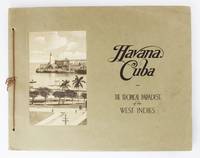
1925réf. 6379Havana: American Photo Studios 1925. Very good plus. 48pp. each with 6x8-inch photographic prints directly mounted. Original card wrappers photo-illustrated and string-tied. Minor wear and dust soiling. Images strong and clear. An attractive and uncommon 1920s travel brochure distributed by ocean liners sailing to and from Havana. This album of photographic prints opens with shots of Ward Line and P & O steamships entering and leaving the city harbor. The images by American Photo Studios images encompass views of Havana's Carnival Hotel Plaza Colon Park the old city walls the Santa Clara Convent and the monument to the USS Maine on Malecon Drive. Also included are views of freshly built suburbs stately homes on "Fifth Avenue" the Havana Country Club Jockey Club and even a view of the Hershey Company's sugar mill. An engaging album that shows Havana at the beginning of its run as a Caribbean destination for American high society in the first half of the 20th century. American Photo Studios unknown
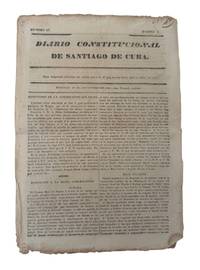
1836réf. 231491836. Diario Constitucional de Santiago de Cuba No. 57 November 1836 just months after the restoration of Spain's liberal Constitution of 1812. This newspaper records the transmission of Spanish constitutional government into eastern Cuba in late 1836 through decrees ministerial correspondence and public political dispute printed for circulation in Santiago de Cuba. Issued weeks after the political upheavals that restored constitutional rule in Spain this number shows how the language of the regency government the suppression and reorganization of state bodies and local declarations of loyalty to Isabel II reached colonial readers through the newspaper press. In a Cuban setting where metropolitan policy was filtered through governors ministries and municipal elites an issue such as this preserves the working connection between imperial administration and provincial print. Diario Constitucional de Santiago de Cuba. No. 57. Santiago de Cuba 27 November 1836. 4 pages. Folio newspaper issue. The masthead reads "DIARIO CONSTITUCIONAL / DE SANTIAGO DE CUBA" with the date line "DOMINGO 27 DE NOVIEMBRE DE 1836." Page 1 opens with "MINISTERIO DE LA GOBERNACION DEL REINO" followed by a circular and a substantial "EXPOSICION A LA REINA GOBERNADORA" leading into a "REAL DECRETO" concerning the suppression of the Consejo Real de España e Indias. Interior pages continue the decree and carry translatedly legible sections including "MISCELANEA" notices on "Las islas turcas libres" and "Noticias sobre Tejas" and a long exchange under "REMITIDOS" dated "Cuba 25 de Noviembre de 1836" addressing militia service volunteers of Isabel II and the political insult attributed to an earlier subscriber. The issue survives as a complete four page folio with dense double column text throughout and no wrappers as issued. Printed in Santiago the issue shows constitutional and monarchist language being adapted for a colonial audience that was expected to follow ministry decrees military loyalty and debates over public honor in the same sheet. Folded as issued with minor edge chipping small losses at corners and margins some toning and closed tears and pinholes; complete and legible. Overall good condition. The juxtaposition of metropolitan government text Caribbean and Atlantic news and the local controversy printed in "Remitidos" gives the number a documentary range broader than a routine official gazette placing state policy beside the contested language of provincial political life. unknown
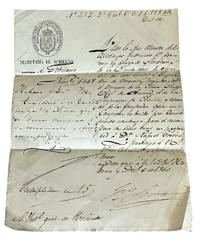
1860réf. 234291860. Spanish colonial administration in Havana used port health regulation as a mechanism of commercial and maritime control with the Captaincy General directing military customs and sanitary officials through centralized orders. This December 6 1860 manuscript concerns the "Junta local de Sanidad" "víveres averiados" and Dr. Rafael Cortés placing damaged provisions public health authority and port enforcement within the same bureaucratic chain. The phrase "usando de las facultades que me competen" invokes the vested powers of the colonial government confirming that the matter was handled through Spanish imperial authority rather than local civic discretion. Gobierno y Capitanía General de la Isla de Cuba. Secretaría de Gobierno sección de Gobierno. Manuscript order. Havana Cuba: December 6 1860. Single folded manuscript document with printed colonial seal and heading docketed "Habana y Dic. 6 de 1860" and addressed to maritime or port authorities. The text instructs compliance with a petition or order involving the local Board of Health damaged provisions or foodstuffs and Dr. Rafael Cortés with official endorsements and large administrative signatures below. The verso bears docketing and filing marks consistent with bureaucratic circulation. The document belongs directly to Spanish colonial governance in Cuba where the Governor and Captain General exercised civil military and administrative power over the island until the end of Spanish rule in 1898. Its contents connect colonial rule to the management of ports food safety and public health all crucial areas in Havana's nineteenth-century Atlantic economy. Folded as issued with toning scattered foxing edge wear and original folds; seal heading date and principal manuscript text remain legible. Overall good condition. unknown
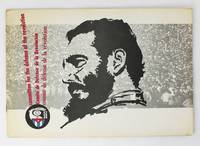
1965réf. 6257Habana 1965. Very good. 16pp. Oblong pamphlet in original pictorial wrappers stapled. Light wear and toning at wrapper edges with a few faint creases. Internally clean. A visually rich pro-Casto and pro-Communist pamphlet that highlights the history and core activities of Cuba's Committee for the Defense of the Revolution CDR neighborhood-based civil defense organizations created by Castro in 1960 to defend the revolution and maintain social and political control at the local level. This often included activities like surveillance distribution of propaganda and vigilante justice. The pamphlet is illustrated with photos throughout and also contains a two-page spread with maps of the island and charts data and statistics about the Cuban people. It contains a year-by-year account of the Committee's achievements and activities and ends with a section concerning its relations with other countries and their visits to Cuba. The rear wrapper states that editions were published in English French and Spanish as evidenced by the trilingual title on the front cover but we find no evidence of any edition in OCLC. Scarce and with much interesting and propagandized information about Castro's local enforcers during the early years of the Communist regime. unknown
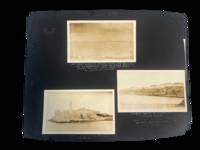
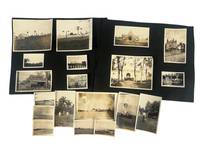
1920réf. 227281920. Havana Cuba travel photo album circa 1920s documents an American visitor's encounter with Havana during the interwar years when U.S. tourism commercial presence and Spanish-American War memory shaped how many American travelers interpreted the city. The vernacular photographs record arrival by steamship harbor landmarks civic buildings commercial streets factories boulevards monuments cemeteries and guarded public spaces giving insight into both Havana's urban landscape and the traveler's assumptions about access history and spectacle. The album's references to the USS Maine and Spanish-American War memorials place ordinary sightseeing within a longer history of U.S. intervention in Cuba; the Maine exploded in Havana Harbor on February 15 1898 killing more than 260 sailors and intensifying the crisis that led to war with Spain. Approximately 25 sepia-toned silver gelatin photographs each about 3 x 5 inches mounted to black album leaves with detailed handwritten captions in white pencil. The sequence begins aboard the S.S. Kroonland with one caption reading "My first view of Havana from the deck. three miles out at sea in a dark storm" followed by a landing view captioned "where we landed in Havana Cuba." The S.S. Kroonland returned to Panama Pacific Line service in 1923 on a New York to San Francisco route via Havana the Panama Canal and Los Angeles supporting the album's interwar travel context. The photographs then trace Havana's maritime and civic topography: harbor views Morro Castle captioned "Famous during the Spanish-American War" the waterfront in front of the fortress the Court House the President's Palace a "600-year-old church" the Henry Clay Cigar Store Havana's factory district and public boulevards "where all streets have parks in the center." Other images include a cemetery visit captioned "All people in Cuba are laid to rest above the ground" and a restricted-view street or carriage scene captioned "Officer would not let me take picture but when he turned I took it anyway" a revealing note on tourist privilege and unauthorized looking. Several images directly record the ways American travelers consumed Havana through imperial memory and Cuban nationalist commemoration. One monument is captioned "This was given by the Cuban people to the American soldiers that fell in the Spanish-American War" while another marks "the spot where the Maine sank at the entrance of the harbor." The album was made after Cuba's formal independence in 1902 and during the long aftermath of the Platt Amendment framework under which the United States retained extensive influence over Cuban affairs and intervened repeatedly in the early twentieth century. Album leaves chipped at edges several with corner losses not affecting images; prints generally sharp with strong contrast and clear annotations very good overall. Socially revealing Havana travel album documenting how a U.S. visitor pictured Cuba through steamship tourism colonial architecture cigar commerce Spanish-American War remembrance and the everyday authority structures of an interwar Caribbean capital. unknown
réf. SONG8499928072Used: Good unknown
1915réf. 224781915. Polk George Washington Jr. Havana and rural Cuba photo archive 1915 documents Cuba through the viewpoint of an American military traveler during the Platt Amendment era when U.S. power shaped Cuban sovereignty port security naval access and commercial movement. The photographs record ships in Havana Harbor coastal fortifications rural dwellings Cuban farmers agricultural landscapes and colonial plazas providing insight into how U.S. military personnel visually encountered Cuba just before American entry into World War I. The Platt Amendment gave the United States broad authority to intervene in Cuban affairs and required Cuba to lease land for naval stations remaining central to U.S.-Cuba relations until its repeal in 1934; this archive therefore places vernacular travel photography within a larger framework of military oversight and commercial access. Polk George Washington Jr. Havana Cuba vernacular photo collection. Havana Cuba: unpublished December 1915. Twenty-eight silver gelatin photographs pasted to album pages with some loose or partially detached ranging from approximately 2 x 2½ inches to 4½ x 3½ inches many with handwritten ink annotations dated December 22 to 29 1915. The images include vessels anchored in Havana Harbor harbor views from on board ship Morro Castle and other coastal fortification views colonial civic plazas local laborers and civilians thatched rural huts or bohíos sugarcane fields and agricultural scenes captioned "Orange Trees & Coconut Palms Near Havana." One photograph is captioned "Cuban Farmer & Son Near Havana Dec 22 1915" giving the archive direct documentary value for rural family life and American observation of Cuban agricultural communities. Other captions identify boats as "U.S.C. 5th Protectors off Havana" and refer to the United Fruit Company steamer Abangarez on the Havana-Colon route; the Abangarez was a United Fruit Company passenger and cargo vessel completed in 1909 and later brought under United States registry during World War I. The photographs combine military commercial and rural subjects in a compact record of U.S.-Cuban contact. Polk's annotations and the repeated Potchernick-Birdsong Co. Kodak Place San Antonio Texas stamps on versos indicate that the images were developed in the United States after the trip or sent home for processing preserving the path by which overseas military travel became a personal photographic record. Polk's later military service is supported by burial and veterans' records identifying George Washington Polk Jr. as born May 13 1889 died July 27 1976 and buried at Fort Rosecrans National Cemetery; the supplied description identifies him as later a Colonel in the U.S. Army Air Corps and instructor in the early U.S. Air Force. Most photographs lightly pasted along one edge to scrapbook leaves with some detached or partially affixed; a few corner creases otherwise sharp images with strong contrast good to very good overall. Focused 1915 Cuba archive linking Havana Harbor rural Cuban labor vernacular architecture United Fruit maritime movement and American military observation during the U.S. protectorate period. unknown
réf. 12937380-nnew. unknown
réf. 44508189-nnew. unknown
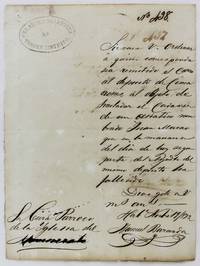
1872réf. 3066Havana 1872. Very good. Manuscript form approximately 8.5 x 6.25 inches. Minor wear at edges; a few small worm holes. Contemporary ink stamp. Light tanning and offsetting. This 1872 manuscript form from a Havana jail the Celaduria de la Punta notes the death there of an "Asiatico" a Chinese indentured servant with the given name of Juan Macao and orders the transfer of the body to the mortuary for cremation. Indentured servants found themselves jailed for several reasons including suspicion of theft and other crimes recapture following runaway or mere suspicion of abandoning a contract. unknown
réf. SONG383652998XUsed: Good unknown
réf. SONG0415737850Used: Good unknown