2650 resultados
ref. DADAX0415780675New unknown
ref. SONG0060142596Used: Good unknown
1954ref. 023286London: The Author 1954. Book. Illus. by Ivan Cuba. Near Fine. Pictorial Cover. First Edition. 8vo - over 7¾" - 9¾" tall. 12p. The Author Paperback
1994ref. 170268Burbank CA: Warner Brothers 1994. Revised Draft script for the 1995 film. Bound in at the rear of the script are nine pages relating to revisions to the script. US Army doctors race to find the cure to a deadly virus quickly spreading from Africa to North America by way of a smuggled capuchin monkey. Shot on location in California and Hawaii. Self wrappers. Title page present dated May 13 1994 noted as REVISION POLISH with credits for screenwriters Laurence Dworet and Robert Roy Pool and revision credits for uncredited screenwriter Ted Tally. 174 leaves with last page of text numbered 136. Xerographic duplication rectos only with rainbow revision pages throughout dated variously between August 7 and 17 1994. Pages Near Fine bound with two gold brads. Warner Brothers unknown

ref. 697424264Booklocker.com Incorporated . Papeback. New. pp. 212 Booklocker.com, Incorporated unknown
1993ref. 13842Golden CO: Fulcrum Publishing Published in cooperation with the Denver Public Library. Fine hardcover copy with dustjacket 146 pp 1 pp ack 2 pp appreciation 78 4/C illustrations text throughout 2 pp bibliography. . Fine Copy. Hardcover. 1993. Fulcrum Publishing Published in cooperation with the Denver Public Library hardcover
ref. CA06AA-00225Deford & Company. Collectible - Acceptable. Baltimore: Deford & Company 1970. Sm 4to Hardcover. 160pp. Fair book no dust jacket. Ex-library with usual markings. genealogy coppernoll coppernoll family Inquire if you need further information. Deford & Company hardcover
1932ref. 61114Havana Cuba: Cuban Tourist Commission Printed by “Ucar Garcia & Co.” ca. 1932. 4to. 36 pp unpaginated. Printed & illustrated throughout in green black & white photo illustrations throughout graphic text illustrations in green & white. Self-printed colour-illustrated softcovers wraparound cover art by Conrado W. Massaguer minor bumping head of spine shelfwear still VG copy. First edition of this informative travel brochure touting the joys of visiting Cuba touting the historic cathedral square the lush countryside the offerings of sugar coffee and tobacco as well as the beaches hunting sport fishing night life and The Rumba. Massaguer 1889-1965 was an influential Cuban artist whose modernist look dominated magazines catalogues and ads across Latin America and also was a founding member of the Grupo Minorista. Cuban Tourist Commission, Printed by “Ucar Garcia & Co.,” paperback
2000ref. 54535Havana: Editorial Echevarria ca. 2000. Oblong 4to. 32 pp unpaginated. w/ 271 colour numbered Revolutionary trading cards all tipped-in including 3 for Revolutionist flags on verso front cover. Colour-illustrated coated softcovers cover art showing heroic Fidel Castro leading the revolutionaries rubbing creasing rippling to textblock still VG- copy. Facsimile souvenir of this famed piece of Cuban Revolutionary propaganda distributed free to the Cuban people originally by Felices Frutas the local canned fruit industry trying to stay afloat and appease Castro as all the countries industries and businesses were nationalized after the Revolution. Featuring the cartoon art of Capdevila this piece traces the return of the Castros from exile in Mexico as they fought capitalist exploitation the fall of Batista the bloody running battles and more all celebrating the success. Editorial Echevarria, paperback
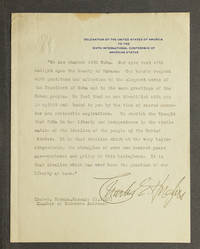
1928ref. 249718Havana 1928. 1 page. 8vo. Minor soiling else fine. 1 page. 8vo. Reading in part: "We are charmed with Cuba. Our Eyes rest with delight upon the beauty of Cuba.We cherish the thought that Cuba in her liberty and indepedndence is the vindication of the idealism of the people of the United States." unknown
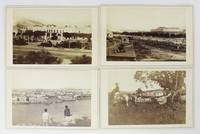
1872ref. 6289Havana 1872. Very good. Eight albumen photographs 3.75 x 5.5 inches; mounted on cardstock 4.25 x 6.5 inches. Manuscript captions on verso. Minor wear and soiling most images clean and crisp. Group of eight photographs of Havana and environs dated March of 1872. Each is captioned on the verso in manuscript with the date of March 27 1872; "Havana" and a caption identifying the place are also present. Images here include a view of the bay; a view of the city from across the water with two young men standing in the foreground admiring the view; the Castle de Morro; a scene in the botanical garden; Casino Español; and two women seated in a carriage. Particularly nice with the contemporary captions and most of the images are well-composed. unknown
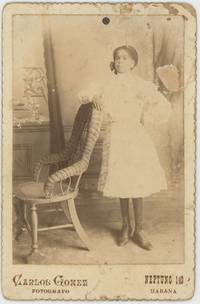
1905ref. BK0085Havana Cuba: Carlos Gómez 1905. Cabinet photograph measuring 4 x 5 ½ inches on photographer's mount measuring 4 ½ x 6 ½ inches with imprint "Carlos Gómez / Fotógrafo / Neptuno 149 / Habana. Image somewhat faded with scattered surface wear and an area of loss at upper right; mount worn at edges good overall. A studio portrait of a young woman posed beside a wicker rocking chair wearing a light-colored dress with high collar and puffed sleeves and looking directly toward the camera. The photograph is notable in the context of Afro-Cuban portraiture around the turn of the twentieth century a period when Havana supported a large commercial photographic trade serving an increasingly broad urban clientele. The sitter is unidentified and no inscription survives to provide further biographical information. Carlos Gómez Guardiola was operating a photographic studio at 149 Neptuno by 1902 when a contemporary Havana newspaper noted that he had already established a reputation despite having been in business only a short time. Gómez's work appears in Juaco López Ãlvarez's Fotografía de Asturianos en américa with an identical "Carlos Gómez / Fotógrafo / Neptuno 149 / Habana" imprint; Ãlvarez dates it to about 1905 and we date the present portrait accordingly. 1 Juaco López Ãlvarez Ed. Fotografía de Asturianos en américa 2000 222. . Carlos Gómez unknown
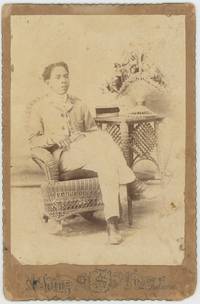
1905ref. BK0086Havana Cuba: A. Sainz 1905. Cabinet photograph measuring 4 x 5 ½ inches on photographer's mount measuring 4 ½ x 6 ½ inches with imprint "A. Sainz / Reina 67 / Habana. Some fading and spotting to image with wear and small losses to edges of mount; good overall. A formal studio portrait of a young Black man seated in a wicker chair beside an elaborate wicker table and floral arrangement. He wears a light-colored suit and holds his hat in his lap posed directly toward the camera. The mount identifies the photographer as A. Sainz of 67 Reina Street Havana. Contemporary Havana advertisements from July and August 1905 place Sainz's photographic studio at this address providing a useful basis for dating the portrait. An appealing example of Black portraiture in early twentieth-century Havana. A. Sainz unknown
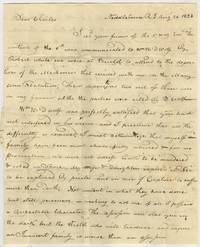
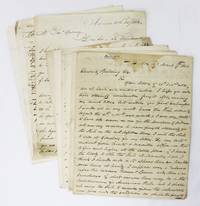
1823ref. BK0184Middletown Rhode Island 1823. Autograph letter signed three pages on a folded sheet with integral address panel to Charles E. Dudley in Albany and Newport postal markings. 7 ¾ x 9 ¾ inches. Old folds scattered staining and some marginal losses a few affecting text. Good to very good. A letter from Newport mariner John Wood concerning his acrimonious departure from the DeWolf family's Mary Ann plantation in Cuba and the ensuing legal dispute with James DeWolf and Charles Collins. Wood was almost certainly the same John Wood whose signature appears on an 1806 Newport agreement for an illegal voyage transporting enslaved Africans from Cape Coast to Havana now held by the Smithsonian's National Museum of African American History and Culture.1 By 1823 he was residing on the Mary Ann plantation one of several Cuban estates belonging to the DeWolfs among the most prominent families involved in the American slave trade. His relationship with DeWolf and Collins had evidently collapsed over his obligations on the estate resulting in what he describes as his forced departure from Cuba under apparently dangerous conditions with his family and a contentious effort to settle their accounts. Writing to his friend Charles E. Dudley then mayor of Albany and a New York state senator Wood reports that three mechanics who had resided with him on the plantation had recently given depositions in Bristol Rhode Island. Two of the three had testified in his favor though all had been called by DeWolf. Wood was particularly incensed by the circumstances surrounding his family's departure from Cuba writing: "I must acknowledge that myself & family have been most shamefully abused & for no provocation we were set adrift liable to be murdered & robbed on Shore My Wife & Daughter exposed at Sea to be captured By pirates and in case of Capture to suffer more than Death; Not content in what they have done but still persevere in wishing to rob me of all I possess a Respectable Character. The assassin will stab you in the dark but the Wretch who will traduce and injure an Innocent family is worse than an assassin." Wood goes on to describe receiving two writs from DeWolf and Collins and transcribes an August 8 letter from James DeWolf explaining his decision to pursue legal action despite their previous discussions of an amicable settlement: "Lest you should think me inconsistent in causing an action to be brought after the last conversation we had I take leave to explain my wishes to come to an amicable settlement by referring to men as we talked remains the same my object is to put the business in a legal and proper train for bringing it to a close . & to enable me to avail of the testimony of the people who were on the Estate with you." Wood expected the Rhode Island Supreme Court meeting at Bristol the following month to appoint referees to settle the accounts. The precise origin of the disagreement is not stated though the depositions of the mechanics and the references to outstanding accounts suggest a dispute over Wood's contractual obligations or activities on the plantation. Wood 1770-1826 was a Newport merchant and captain with longstanding connections to Atlantic commerce. He died at Cape Coast West Africa in 1826 three years after writing the present letter. James DeWolf 1764-1837 then serving in the United States Senate had amassed a substantial fortune through the slave trade and his Cuban plantation interests. Charles Collins his brother-in-law had served as collector of customs at Bristol from 1804 to 1820 an appointment closely connected to the family's slave-trading operations. The Mary Ann plantation is documented in the DeWolf Papers at the Rhode Island Historical Society which include inventories from 1818 and 1820 and contemporary plans of the plantation grounds. The present letter preserves Wood's account of his treatment by the DeWolf family together with his transcription of DeWolf's explanation for pursuing legal action. 1 "Agreement facilitating illegal trade of enslaved Africans" National Museum of African American History & Culture accessed October 12 2026 https://nmaahc.si.edu/object/nmaahc_2019.28.1. . unknown
ref. 0942576586.Gpaperback. Good. Access codes and supplements are not guaranteed with used items. May be an ex-library book. paperback
ref. 7756Book about the famous cigars from Havana Cuba. In four languages: English French German and Spanish.Original paper binding with dustjacket 195 x 13 cm.NL Boek over de sigaren afkomstig uit Havana de hoofdstad van Cuba. Deze staan wereldwijd bekend als de beste sigaren wegens de unieke tabakssoorten uit Cuba het klimaat en de bodem Vuelta Abajo-regio handgerolde productie en de eeuwenlange traditie. Rijk geïllustreerd met veel wetenswaardigheden in vier talen: Engels Duits Frans en Spaans. Luxe exportproduct zeer geliefd bij de elite.Stofomslag van transparant papier. Enkele vlekjes op de stofomslag. Interieur goed. unknown
2010ref. SONG1145385893Nabu Press 2010-02-23. paperback. Used: Good. 7.44x0.96x9.69. Buy with confidence. Excellent Customer Service & Return policy. Nabu Press paperback
1992ref. SONG1875284486Brand: Ocean Press AU 1992-07-16. First Edition. paperback. Used: Good. 5.75x0.75x8.75. Buy with confidence. Excellent Customer Service & Return policy. Brand: Ocean Press (AU) paperback
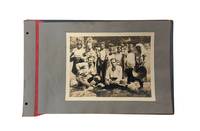
1910ref. 235641910. Cuba photograph album depicting encounters between Western visitors and Cuban communities during the early republican period circa 1910s to 1920s when the island occupied an unusual position between formal independence and continuing American political and economic influence. The photographs move between Havana's monumental architecture hotels and waterfront districts and the rural landscapes villages rivers and agricultural communities that remained largely outside the tourist image promoted to foreign visitors. Repeated appearances of the same Western man often accompanied by a woman who appears to be his wife suggest an extended journey through both urban and remote regions of the island during a period when American travelers businessmen and government personnel moved through Cuba in growing numbers following the Spanish American War and the establishment of the Cuban Republic. Photo album of 26 silver gelatin photographs mounted on unbound album boards with blue covers boards measuring approximately 9 x 15 inches Cuba circa 1910s to 1920s. The photographs range from 6 x 6.5 to 8 x 9.5 inches. Images show waterfront houses built directly along riverbanks; tropical waterfalls and dense forest landscapes; interior courtyards and hotel spaces with colonnades and tiled floors; Morro Castle and lighthouse overlooking Havana Harbor; panoramic views of Cuban towns set among surrounding mountains; market scenes crowded with vendors women and children; cattle standing in shallow waterways; village gatherings outside rural buildings; and groups of local residents posed alongside visiting Westerners. Several photographs depict women standing in rivers holding broad metal pans possibly associated with washing river labor or mineral collection activities. Other images show children families agricultural workers and river communities while a series of portraits records the principal traveler and his companion at various points throughout the journey. One image depicts a group of local residents and Western visitors posed together in a forested region; another shows villagers gathered near a rural homestead while several photographs focus on transportation livestock and daily work in the countryside. The album belongs to the decades following Cuba's transition from Spanish colony to nominally independent republic a period shaped by the Platt Amendment American investment expanding tourism and intensive foreign interest in the island's economic resources and landscapes. Rather than concentrating exclusively on Havana's civic monuments and colonial architecture the photographer devoted substantial attention to rural communities Afro Cuban and mixed-race populations river labor village life and frontier environments seldom emphasized in commercial tourist imagery of the period. The contrast between hotels government-era landmarks village settlements cattle crossings market scenes and encounters with local residents documents the unequal worlds that coexisted within early twentieth century Cuba as foreign visitors moved between urban centers and agricultural regions. Light surface wear occasional toning minor album mounting wear and scattered edge wear to several boards; overall very good condition. A concentrated visual record of how Westerners experienced and represented Cuba's rural communities laboring populations landscapes and colonial-era urban centers during the first decades of the Cuban Republic. unknown
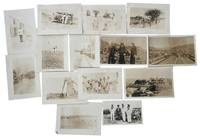
1914ref. 235561914. US Navy photograph archive 1914 to 1919 documenting American sailors in Cuba during the years when Guantánamo Bay served as a U.S. naval station for Caribbean fleet activity training and strategic movement. Verso inscriptions reading "25wyn" and "1914 to 1919" likely connect the group to USS Wyoming BB 32 whose documented service placed the battleship repeatedly in Cuban waters during this period. The photographs provide a sailor's vernacular record of Cuban streets roads transportation local residents agricultural hauling commerce and infrastructure within a wartime Cuba shaped by U.S. naval presence Caribbean patrol activity and the uneven modernization of industry under US Imperial rule. Photo archive of 14 silver gelatin photographs various sizes most approximately 5 x 3.5 inches Cuba 1914 to 1919. The images show U.S. Navy sailors posed among cactus and agave standing with Cuban men beside an open touring automobile and gathered in uniform at a public outdoor event with benches crowds buildings and hills beyond. Cuban infrastructure appears throughout the group: horse drawn carriages and wagons move through a town street lined with utility poles and commercial buildings; an ox team pulls a high wooden cart loaded with cut cane or brush along a rural road; a windmill or water pumping structure stands beside a group of local residents; a rail or tram line runs through a lightly built district; and a roadside scene combines naval uniforms automobile travel and undeveloped terrain. One commercial view shows a tourist photography and souvenir stand advertising "post cards made while you wait" "souvenirs & novelties" "Kodak films for sale" and "photo printing developing" placing commercial image making tourist exchange and modern photographic supply in the same Cuban landscape the sailors moved through during the US's imperial organization. The U.S. naval presence in Cuba began with the Spanish American War and the occupation that followed. The Platt Amendment which limited Cuban sovereignty after independence in 1902 and the 1903 lease agreements gave the United States a permanent base at Guantánamo Bay. By World War I Guantánamo was part of the working map of U.S. power in the Caribbean. It supported fleet exercises patrol movements and regional security from Cuban territory. These photographs show US imperial interest by depicting American sailors moving through streets and roads where motorcars utility poles photographic shops horse drawn traffic ox carts windmills rural tram lines and agricultural hauling all appear in the same landscape. Overall in good to fair condition with heavy image fading slight handling wear some curling. Some photographs have tears which do not obstruct the images. A visual record of U.S. naval presence in Platt Amendment Cuba and the roads shops vehicles animals and rural working systems during the World War I period. unknown
1824ref. 6529Bristol R.I.; Matanzas Cuba 1824. Good plus. Nine letters totaling 17pp. plus docketing. Some loss where previously sealed not affecting text. Otherwise old folds light wear at edges and some toning and dampstaining. Nine manuscript letters addressed to Edward Spalding a shipping agent in Havana and Matanzas with connections to trade out of Bristol and New England during the 1820s. The letters highlight the significant commercial networks between Cuba New England Europe and South America. The correspondence concerns shipments of sugar coffee molasses tobacco cotton and indigo and also reflects on the effects of European political tensions on Atlantic commerce. Several letters are from members of the notable DeWolf family who were major players in trade from Rhode Island to the Caribbean and also quite involved in the transatlantic slave trade that was a large part of the 19th-century Cuban economy. Spalding himself was active in the Cuban slave trade and in its many other facets until at least the end of the 1820s. A good group of correspondence with much firsthand information on trade between Cuba and the United States in the early 19th century. unknown
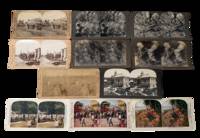
1890ref. 231711890. Stereoview archive of the post-emancipation Caribbean showing how the islands were marketed to western viewers through plantation labor export agriculture civic spectacle and catastrophe. As a group these photos function not only as an ethnographic travel archive but as evidence of the visual economy that followed slavery. The British West Indies moved through emancipation in 1834 to 1838 the French Caribbean in 1848 Puerto Rico in 1873 and Cuba in 1886 yet plantation production remained central to regional life well into the early twentieth century. These stereoviews preserve a colonial way of seeing in which Black and Afro-Caribbean labor rural discipline and extractive agriculture remained the background condition of "tropical" beauty and commercial modernity. Cuba's sugar economy in particular expanded through the nineteenth century and slavery was not abolished there until 1886 while Weyler's later reconcentration policy during the Cuban War of Independence violently reorganized rural life. Martinique after 1848 likewise shifted into new labor regimes including imported workers from India and China. Archive of 11 stereoview cards late 1890s to early 1900s depicting Cuba Jamaica Martinique Puerto Rico and the Dominican Republic. Most black and white with a few colorized. Each measure 3.5" x 7". All with captions on the margins. "Reconcentrado Farming Scene Province of Havana Cuba" links agricultural production to the brutal displacements of Spain's reconcentration campaign; "Cutting sugar cane Montego Bay Jamaica W.I." records cane labor in a colony where emancipation had not ended plantation dependency; and "Harvesting Coconuts Porto Rico" likewise frames Caribbean land through export work rather than local life. Other views extend that economic framing through cacao and coffee scenes while the paired Havana cards shift into urban leisure and public display including "Beautiful Central Park Havana Cuba" and "Holiday in Havana Cuba" the latter with both Cuban and American flags visible a telling image of the new imperial order after 1898. The disaster views from Martinique and the Lesser Antilles show how stereoview publishers also turned Caribbean destruction into consumable spectacle. the Morne Rouge card is accompanied on the reverse by the grim printed text "Dead bodies which were to be seen in Morne Rouge." while the wider context is the 1902 eruptions of Mount Pelée in Martinique and La Soufrière on Saint Vincent two catastrophes that killed roughly 30000 and 1600 people respectively and devastated local communities and agriculture. Some corner wear light toning scattered surface and edge wear. Overall very good condition. This collection gives direct visual representation of Caribbean history Atlantic slavery and emancipation plantation labor and U.S. imperial expansion in the circum-Caribbean preserving the transition from slavery to post-abolition labor. unknown
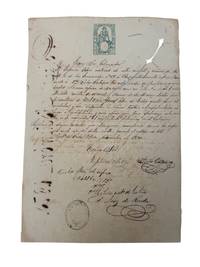
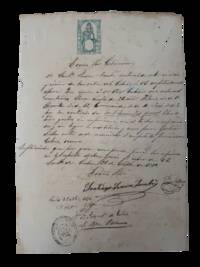
1870ref. 231221870. Slavery Cuba Spanish colonial slave sale manuscript recording the transfer of four enslaved individuals in Cuba in 1870. Produced within the official bureaucratic framework of Spanish colonial governance the document reflects the legal normalization of slavery in Cuba even as abolitionist pressures mounted across the Atlantic world. The document records the sale of four enslaved people described as "criollos" and African-born individuals situating the transaction within a labor system that combined locally born and imported enslaved populations. Created at a time when Spain had formally restricted the transatlantic slave trade but continued to permit slavery itself the manuscript demonstrates the persistence of legalized human commodification and the integration of enslaved labor into the island's economic structure sixteen years prior to abolition in 1886. Official Cuban slave contract documenting the sale of four enslaved individuals to Don Pedro Catasús by Don Enfemia Ochoa for the sum of 1100 pesos on November 29 1870. Single manuscript leaf written in Spanish cursive in black ink measuring 8.25" x 12". A green "50 cs de escudo" revenue stamp is affixed at the top center with a blind embossed Spanish crest at the upper left and a circular black ink government seal impressed at the lower left. Large vertical docketing appears on the verso. A stylized watermark is visible within the paper. The text organizes the enslaved individuals within a standardized transactional structure while the signatures of Enfemia Ochoa Pedro Catasús and A. Díaz de Rada authenticate the exchange and identify participants within the slaveholding economy. By 1870 Cuba remained a central node in the late Atlantic slave system with plantation agriculture especially sugar dependent on enslaved labor despite mounting abolitionist pressure. Although Spain had curtailed official slave imports earlier in the century illegal trafficking persisted into the 1860s and other coerced labor systems including the importation of Chinese indentured workers overlapped with slavery into the 1870s. The presence of both Creole and African individuals in this document reflects the layered composition of the enslaved population during this period. Light toning scattered foxing and edge wear visible. A closed wormhole extends from the upper right margin approximately five inches into the sheet resulting in partial loss of text. Evidence of prior tape reinforcement visible on the verso along with offsetting from previously adjacent material. Overall in very good condition. This document provides named transactional evidence of late-period slavery in Cuba offering concrete material for examining race labor and legal practice within Spanish colonial society. unknown
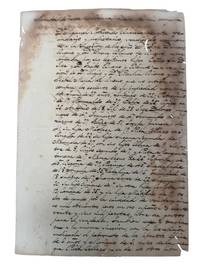
1875ref. 231241875. Slavery Cuba Spanish colonial slave sale manuscript recording the transfer of thirty-eight enslaved individuals in Cuba in 1875 materializing the sheer scale and organization of enslaved labor within the island's plantation economy during the final decade before abolition. The document enumerates a large group of enslaved people including multiple family units with young children demonstrating how slavery functioned as both an economic system and a hereditary condition sustained through the sale and reproduction of enslaved populations. Created eleven years prior to the abolition of slavery in Cuba in 1886 the manuscript documents the continued legality and normalization of large-scale slave transactions despite decades of international pressure and earlier prohibitions on the transatlantic trade offering concrete evidence of how internal markets sustained the institution in its final phase. Official Cuban slave contract documenting the sale of thirty-eight enslaved individuals for the sum of 126000 pesetas formalized before a public notary or legal authority. Single manuscript leaf written in Spanish cursive in black ink on both recto and verso densely filled with names ages and relational identifiers. Measures 8.5" x 12.25". The text lists individuals sequentially including men women and children with repeated references to kinship structures such as mothers with multiple children indicating the sale of family groupings rather than isolated individuals. The script reflects extended passages detailing ownership exclusions and conditions of transfer. A partial watermark of the official coat of arms of Cuba is visible. By 1875 Cuba remained one of the last major slave societies in the Atlantic world with sugar production driving demand for large controlled labor forces. Even after Spain curtailed the official slave trade earlier in the century illegal importation persisted into the 1860s and alternative systems of coerced labor including Chinese indenture supplemented plantation workforces. The scale of this transaction demonstrates the consolidation and redistribution of enslaved labor within domestic markets while the inclusion of children underscores the long-term economic logic of slavery as a self-reproducing system. Moderate toning and foxing concentrated along the edges with numerous small closed wormholes a few affecting portions of the text. Light edge wear present. Overall in good condition. This document provides unusually extensive nominal data on a large enslaved population encompassing the roles of kinship valuation and labor organization in late Spanish colonial Cuba. unknown
1870ref. 231191870. Slavery Cuba Spanish colonial manuscript documenting the late persistence of slavery in Cuba recording the sale of five enslaved Creole individuals including women and children 1870. Produced within the official bureaucratic framework of Spanish colonial governance the document reflects the legal normalization of slavery in Cuba even as abolitionist pressures mounted across the Atlantic world. The presence of multiple children within the transaction underscores the hereditary nature of enslavement and the commodification of family units offering direct material evidence of how slavery functioned socially and economically in its final decades on the island. Although Spain had formally ended the transatlantic slave trade earlier in the century illegal trafficking and internal slave markets persisted and slavery itself would not be abolished in Cuba until 1886 placing this document within a crucial transitional period marked by reform debates gradual emancipation laws and continued exploitation. Official Cuban slave contract recording the sale of five enslaved individuals identified as "criollos" including one adult woman and four children from Santiago Simón Fambi to Don Pedro Catasús for the sum of 1200 pesos on November 21 1870. Single page manuscript leaf measuring 8.25" x 12". The manuscript is written in Spanish cursive hand in black ink. The upper left bears a blind embossed crest of Spain while a circular black ink government seal is impressed at the lower left partially overlapping the text. The text enumerates the enslaved individuals with ages and names embedding human lives within the formulaic language of sale and valuation while the bold signatures of both seller Santiago Simón Fambi and buyer Pedro Catasús anchor the transaction in identifiable actors within the colonial economy. By 1870 slavery in Spanish Cuba remained central to the island's plantation economy particularly in sugar production which had expanded rapidly in the mid-19th century with industrialized mills and global demand. Enslaved people were primarily forced into agricultural labor under highly regimented and brutal conditions though others were used in urban domestic service skilled trades or as hired laborers generating income for their owners. This document exhibits light toning edge wear and scattered foxing throughout. A closed wormhole extends approximately two inches from the upper right margin inward not affecting legibility of the text. Minor losses and small tears along the edges. Overall in very good condition. Given that this document records a woman and four children the family was likely intended for a combination of field labor and domestic or auxiliary work with the children gradually incorporated into plantation labor as they aged reflecting the system's reliance on both immediate exploitation and the reproduction of enslaved labor over time. unknown