[CUBA -- AUTOMOBILE TRAVEL].Biblio.com
2682 resultados
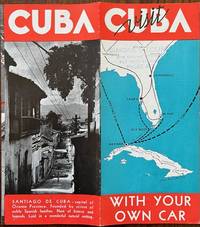
1940ref. 59321Havana Cuba: Cuban Tourist Commission ca. 1940. 8vo. 12 pp unpaginated. folds out leporello accordion-style format printed in red blue & black photo illustrations & map on recto large map of Cuba’s Central Highway on verso slight shelfwear NF. First edition of this scarce travel brochure touting the advantages of U.S. tourists to bring their own cars and travel over the Carretera Central which ran the entire length of the Island from Pinar del Rio to Santiago de Cuba over 700 miles. The highway construction launched in may 1927 and when finished proved very popular as a means to see the island. Tourists could bring their own cars from Tampa Miami or Key West on a ferryboat and travel through Cuba. No copies in Worldcat. Cuban Tourist Commission, unknown
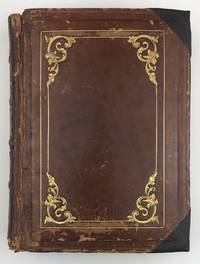
1884ref. 1574Habana 1884. Good plus. 2496 i.e. 498pp. Quarto. Contemporary calf gilt a.e.g.; rebacked with original spine laid down. Corners repaired with later black buckram; boards scuffed spine chipped. Hinges cracked repaired with later cloth and renewed endpapers. Minor scattered foxing and toning to text. Accomplished in a neat highly legible hand. A very attractive manuscript translation into Spanish of Pierre Larousse's well-known work on eminent and historical personages Fleurs Historiques des Dames et des Gens du Monde in a contemporary Cuban gilt goatskin binding. The manuscript connects three figures in the upper social echelons of Cuban society. José Fernandez Pellon the scribe of this volume is recorded as the Grand Master of Cuba's freemasons lodge the Gran Logia Unida de Colón y la Isla de Cuba. The translator Aurelio Almeida helped to found the organization in 1875 and at this time served as the Lodge Secretary. The initials E.D. gilt at the foot of the spine and the dedicatory inscription "A Eugenia Desvernine" refer to Eugenia Desvernine y Galdós b. 1865 daughter of the famous Cuban pianist Pablo Desvernine and Carolina Galdós y Echániz. She was also the niece of Benito Pérez Galdós the Spanish realist novelist who some authorities consider only second in stature to Cervantes. A contemporary social register remarks that Eugenia was one of the most beautiful women in Cuba perhaps an inspiration for the painstaking production of this manuscript. The original work by Larousse was a loose collection of religious parables classical myths biographies of ancient and modern historical figures. The title of the manuscript advises that is an extract and in the brief introduction Almeida explains his selection process writing that "He suprimido algunos artículos sobre cosas muy sabidas de la historia sagrada; y otros sobre la de Francia que mencionan frases ó personas casi ninca citadas ó citades solamente por las escritores francesas." He also notes several alterations and additions more relevant to Spanish history saying "En Cambio he agregado algunos artículos sobre historia de España que no están en el original y he tomado unos pocos de otra obra del mismo Mr. Larousse y de libros diversos." The result is an original amalgam of biographies historical episodes and religious parables. Interestingly we find no recorded printed editions of Larousse's work in Spanish so that the present manuscript is also an entirely original work of translation. A fascinating product of the cultural interests and mores of Cuban high society near the end of the Spanish colonial period. unknown
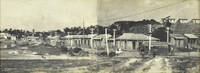
ref. 72959c.1890. . Albumen print. Two-part panorama good tonal range and in good condition pasted on original card. [c.1890]. unknown
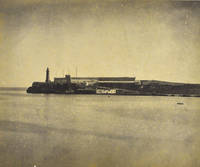
ref. 73963c.1875. . Albumen print Fair tonal range and in good condition pasted on original card. [c.1875]. unknown
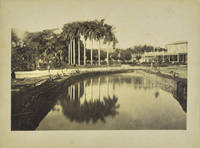
ref. 73964c.1875. . Albumen print Fair tonal range and in good condition pasted on original card. [c.1875]. unknown
ref. 45410886-nnew. unknown
1927ref. 66008Richmond VA: Williams Printing Co 1927. First Edition. Very Good to Near Fine condition. Williams Printing Co unknown
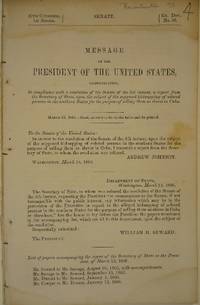
ref. #[20228]Washington 1866. Disbound. 55 pp. - Senate Ex. Doc. 39th Congress 1st session. unknown
ref. 1351Oasis 1971 México. 20x13. 255 pgs. D6329 Oasis, 1971, México. unknown
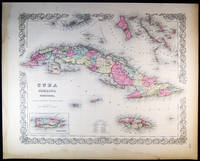
1857ref. 030272New York City NY: J.H. Colton & Co. 1857. Hand-colored map; with decorative border; the map with inset of Porto Rico. Separate sheets with these Spanish & British islands' demographic details. Map printed for use in Colton's uncommon Advertising Atlas of America 1857. American companies used this atlas as a vehicle to promote their businesses. The atlas made use of the same maps used in the 1855 printing with many of them having that imprint date. Richard Swainson Fisher authored the accompanying geographical statistical and historical descriptions. Approx. 15" x 18 1/2" overall size; Some edge-toning to the paper; old edge-nick to paper at margin. In good condition. Note: Shipped rolled for safety. . Map. Good. J.H. Colton & Co.
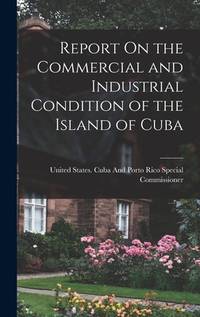
2020ref. Gyan-9789357138239Facsimile Publisher 2020. Hardcover. New. 25.13 x 18.78 x 2.3 cm. English Facsimile Publisher hardcover
2020ref. Gyan-9789357138239Facsimile Publisher 2020. Hardcover. New. 25.13 x 18.78 x 2.3 cm. English Facsimile Publisher hardcover
ref. 54302894like new. unknown
ref. ria9781646423453_inpHardcover. New. New Book; Fast Shipping from UK; Not signed; Not First Edition; N/A hardcover
ref. B9781020883842Hardback. New. hardcover
ref. B9781019797266Hardback. New. hardcover
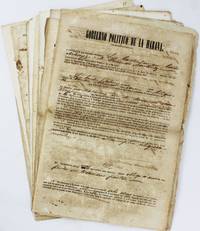
1869ref. 5608Various places in Cuba including Bejucal Havana Matanzas & Sagua la Grande 1869. Good plus. Sixteen broadside broadsheet and bifolium forms completed in manuscript. Previously folded with some short separations along old folds; one longer closed tear from lower left corner of one form. Some chipping and wear at edges not affecting text. Contemporary ink stamps. Varying degrees of tanning and foxing. A group of sixteen contracts for Chinese indentured laborers in Cuba executed during the 1860s. The importation of Chinese labor to Cuba began in earnest in 1853 and in 1860 a law passed by the colonial government essentially enjoined Chinese workers to renew their agreements. The forms present here are sixteen such contract renewals signed by Chinese workers who had completed their initial term of indentured servitude but had no recourse to fairer forms of employment or means to leave the island. "The new law required a change in the contract that required coolies who completed their original term of service to recontract with the same or another master. Otherwise they were obligated to leave Cuba within two months. There is no doubt that the Cubans issued the recontracting regulation in order to keep as many as possible of this captive alien labor force on the plantations knowing full well that very few of the coolies could have saved enough from their meager wages to pay for their passage home" - Hu-DuHart. The present group dating from 1862 to 1869 includes five renewals from Havana; four from Matanzas; three from Colon; two from Guanabacoa; and one apiece from the towns of Sancti Spiritus and Sagua la Grande. Each form gives the adopted Spanish name of the laborer his age place of birth the new and old masters in some cases the same and the duration of the new indenture from six months to two years. The forms also state that the laborers are signing fresh contracts in compliance with the law of 1860 and give the terms for worker and employer including daily hours to be worked amount of food provided weekly shelter if any and meager salaries amongst other stipulations. One contract is signed in Chinese but the preponderance are signed by "witnesses" or "interpreters" for the workers. Fascinating primary documents of the exploitative Chinese labor system in Cuba during the mid-19th century. Elizabeth Hu-Duhart "Chinese Coolie Labor in Cuba in the Nineteenth Century" Contributions in Black Studies 12 1994 pp. 43-46.
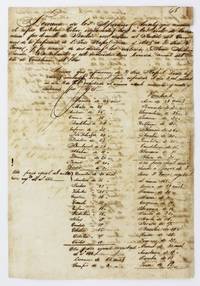
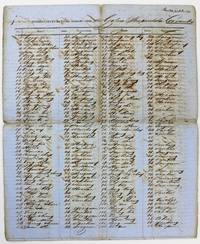
1866ref. 4747Havana: July 10 1866. Good. 3pp. on a bifolium. Separated at fold. Some wear to edge of first leaf cause some minor loss to text. A few scattered tape repairs and reattachments. Some offsetting. A colonial Spanish manuscript slave manifest for the steamship Cristobal Colon carrying dozens of enslaved Africans from Bailen to Partido del Cano both in Cuba. The text at the head reads as follows: "Nomina de los Africano bozales que conducten el vapor Cristobol Colon embarcado hoy a las siete de la mañana por el muelle de Bailen con destino al Partido del Cano unos de la propridad de D. José Rafael Diaz y otros de D. José Garcia y por encargo de sus dueños los custodia D. Juan Antonio Sanchez Bustamante y este individuo tiene biencia annal del Partido de Consolacion del Sur." Bailen is on the southern coast of Cuba north of the Isle of Pines; "El Cano" seems to have been a plantation outside of Havana while Consolacion del Sur is coastal town in the Pinar del Rio region of Cuba. The manifest lists 133 "Africanos bozales" that is slaves who could not speak Spanish in two or three columns separated between men "varones" and women "hembras" - their assigned names are given generally of Christian origin but with some range e.g "Ciforiana" "Liborio" and "Dionisia." Their ages are given one as young as nine several in their late thirties but most in their teens to early thirties. An additional leaf signed from Manila and dated July 10 1866 notes that although 133 people were sent only 115 survived the journey and lists the names of those who perished. July 10
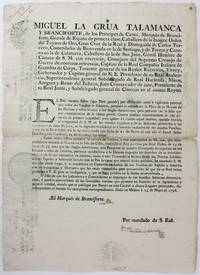
1796ref. 5074Mexico City: May 13 1796. About very good. Broadside 17 x 12.25 inches. Old fold lines. Slight separation and loss at center fold slightly affecting a few letters. Minor wear else. Proclamation made by the Viceroy of New Spain authorizing trade between Cuba and the United States. The Caribbean was in tumult in the 1790s with Toussaint L'Ouverture overthrowing the French colonial government and outlawing slavery. Likewise in Cuba there was a similar revolt against slavery demanding abolition and equality -- both revolutions were of substantial concern to slaveholders in the American South. Specifically the present decree mentions flour and other vital foodstuffs as a measure against shortages in Cuba intended to prevent further trouble. "Para precaver la escasez de viveres y con especialidad de harinas que verosimilmente causaria la guerra concedio El Rey Permiso por Real Orden de 25 Junio de 93. para que los Anglo-Americanos.pudiesen conducirlos a la Havana pagando los derechos los puertos habilitados de España." The Viceroy at the time was Don Miguel de la Grua Talamanca de Carini y Branciforte First Marques de Branciforte. The Marques was notoriously corrupt even for colonial Spain having gained position through marriage to the Prime Minister's sister. He made sure to make some profit on everything that passed through his hands including taking advantage of the war in Cuba to remove the French from their lands and sell them to his benefit. A rare and interesting decree. We locate a single copy in OCLC at the University of Minnesota. May 13 unknown
1867ref. 3978Macau: April 6 1867. Very good. 6pp. on large folio partially-printed forms printed in two columns completed in manuscript. Old folds with minor losses at a few spots along the horizontal fold. Five hundred and fifty Chinese laborers bound for Cuba aboard the Spanish galley "Cervantes" are listed by name with their age and town or city of origin given. The laborers hail from several different cities in China and their ages range from 18 to 36 with the majority of the men in their 20s. The end of the document is signed and dated on the final page by José de Aguilar the Spanish consul at Macau. The left side of the final page contains two separate lists one with five numbers and the other with four numbers keyed to the manifest. The list of five names has an "x" next to each number perhaps noting that these men did not in fact make the trip to Cuba; each "x" could also signal that these men died during the voyage from Macau to Cuba which was a common-enough occurrence that it is often noted on manifests of this kind. Chinese indentured servitude in 19th-century Cuba was an insidious practice tantamount to slavery which flourished in Cuba even after the abolition of the peculiar institution in the British West Indies. With their free source of labor no longer available plantation owners in Cuba looked elsewhere; and they looked east. From around 1848 to the mid-1870s over 100000 Chinese indentured servants made their way to Cuba often sailing to Cuba in large groups. Once they arrived Chinese laborers indentured themselves to Cuban masters for terms of at least five years. The treatment of Asian indentured servants in Cuba varied widely with reports of some particularly ill-treated laborers ending their lives by suicide. "Some contemporaries and later historians.have condemned the servitude of the Asians as a thinly disguised revival of slavery. These critics have pointed to a variety of abuses to which the Asians were subjected both legally - with severe laws governing absenteeism vagrancy and insufficient work - and illegally in the form of harassment by vicious masters. Yet other observers have defended the system as a boon to the Asian workers. Voluntary reindenture at the end of their terms was common among the migrants suggesting that many Asians judged the system to be beneficial to them" - Drescher. Seymour Drescher & Stanley L. Engerman editors A Historical Guide to World Slavery New York 1998 pp.239-42. April 6 unknown
ref. 54302894-nnew. unknown
ref. 0439137543.Gpaperback. Good. Access codes and supplements are not guaranteed with used items. May be an ex-library book. paperback
ref. ria9798241116253_inpPaperback. New. New Book; Fast Shipping from UK; Not signed; Not First Edition; Förberedelse inför nationella prov i engelska spanska och svenskaAtt stå inför de nationella proven kan kännas som att befinna sig vid foten av ett högt berg. För många elever föräldrar och lärare väcker orden nationella prov en bland paperback
ref. ria9781966932338_inpHardcover. New. New Book; Fast Shipping from UK; Not signed; Not First Edition; La usina del lenguaje lee el neobarroco latinoamericano como una maquinaria verbal contra la transparencia y el desgaste de las formas. En sus páginas el poema aparece como artefacto de máxima presión: una sintaxis que se pliega hardcover
ref. ria9781966932208_inpPaperback. New. New Book; Fast Shipping from UK; Not signed; Not First Edition; La usina del lenguaje lee el neobarroco latinoamericano como una maquinaria verbal contra la transparencia y el desgaste de las formas. En sus páginas el poema aparece como artefacto de máxima presión: una sintaxis que se pliega paperback