Fair Play for Cuba CommitteeBiblio.com
2 548 résultats
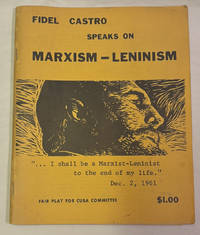
1961réf. 212Book is in good condition additional photos can be provided upon reasonable request. Book has no markings as it is a clean copy. Seller is open to any inquiries interested parties may have. paperback
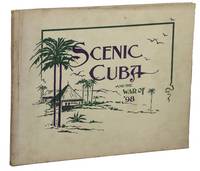
1898réf. 00009833Chicago: Belford Middlebrook & Co 1898. First edition. Hardcover. Very Good. 4to. Unpaginated. White cloth with decorations in purple and green on the front board. Illustrated with numerous black and white photographs and maps. With introduction and descriptive text. Photographs showcase the beautiful sights of Cuba along with military points of interest and several U.S. Navy ships. A Very Good book with a touch of rubbing to the corners and a bit of soiling to the cloth. Belford, Middlebrook & Co hardcover
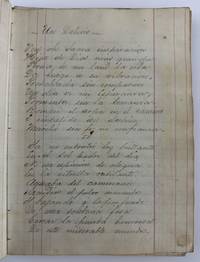
1889réf. 4403Havana Cuba 1889. Good. 69pp. of manuscript text plus 77pp. of newspaper extracts. Contemporary quarter calf and marbled paper-covered boards. Moderate scuffing and wear to boards and edges spine scuffed. Hinges broken with text block only nominally attached by threads with many leaves detached. Ownership ink stamp on front free endpaper "Manuel F. Barranco" with a gilt insignia affixed below reading "MB." A unique and personal manuscript journal and scrapbook composed and maintained by an important but obscure Cuban-American poet and author Manuel Francisco Barranco y Miranda 1843-1894. Barranco was born in Puerto Principe and lived about half of his life in Cuba before emigrating to Florida in 1875. He married Mercedes Fernández y Fernández-Mora and the couple raised a family in Cuba Florida and New York. Mentions of Barranco are rare in available records but he seems to have been a colleague of famed Cuban revolutionary figure Jose Marti. Barranco and Marti were involved with a Cuban revolutionary emigrant colony in Key West as well as Cuban literary and political societies in Havana and New York such as La Liga. Regarding the latter one of Barranco's poems in the present work composed in eleven parts is titled "Versos recitados en la sesion ordinaria de la Sociedad Literaria Hispano-Americana la noche del 17 de Maya de 1889." The Sociedad Literaria Hispano-Americana or Spanish American Literary Society provides a further connection to Jose Marti as Marti was one of the most prominent members of the club in the 1880s and '90s. Barranco presumably spent the remainder of his life between Cuba and the eastern coast of the United States where he passed away in Tampa Florida in 1894. The present material was written and compiled by Barranco over about a thirty year period in the mid-19th century before and after he emigrated to the United States. The chief feature of the present work is contained in almost seventy pages of manuscript poetry by Barranco. The poems which number around a couple dozen compositions include "Un Delirio" written in six parts "Versas improvisados en el Bautiro de mi hija Ana Maria el dia 1 de Enero de 1875" "Versos improvisados en comemora cion del Bautiro de mi hija Ana Maria el dio 1 de Enero del 1876" "Al congreso de la Paz" and various sonnets and other poems dated between 1875 and 1889. Barranco authored a few poems here about his wife Mercedes with titles such as "A Mercedes" "Improvisados a la orrilla del mon - A Mercedes" and "Al contemplar tu retrato." He also composed poems about his mother Ana Maria Sebastiana de Miranda. Several of the later poems from 1888-89 are datelined Havana next to the date of composition indicating Barranco moved back and forth between Cuba and America. The manuscript text is supplemented by almost eighty pages of newspaper extracts featuring various articles letters and printed poetry by Barranco published under his own name and a pen name "Leunam." The subject matter of these pieces include education women literature and various family members and other subjects in his own poetry. An example of the latter is a memorial poem for his granddaughter Margarita Barranco who died in Puerto Principe in 1866. Following the manuscript poems themselves is a single handwritten page of contents relating to these newspaper extracts. The extracts very likely come from Cuban newspapers and periodicals since they predate his move to Florida in 1875. A printed note laid into the book reads: "A Bound Journal Containing Published and Unpublished Handwritten Letters and Poems by My Grandfather Manuel Francisco Barranco y Miranda in Habana in the mid-19th Century Probably During the Period 1859-1869." Not much else is easily discovered about Barranco providing an excellent chance for original research into the work of this obscure but important 19th-century Cuban-American poet and writer. unknown
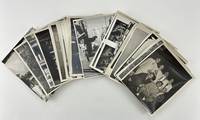
1961réf. 2137Various places in Florida Mexico Cuba & Spain 1961. About very good. 138 original prints each 8 x 10 inches; mostly large format images with twelve contact sheet containing multiple smaller images and including several duplicates. Light wear at edges; slight curling. Occasional patches of scuffing or soiling. Scattered manuscript annotations and ink stamps on blank versos of photographs. An interesting aggregation of approximately 150 unique professional images that depict the travels and activities of the Latin American Fiesta Association of Tampa Florida. The cultural heritage group was founded in 1940 and flourished from the late 1940s to the 1980s and organized or participated in local social events had an annual ball and traveled widely across Latin America. The photographs here date from 1949 to the early 1960s and document the travels of association members to Spain Mexico and Cuba. They attended numerous events entertainments dinners and other social gatherings as well as made visits to attractions and local cultural clubs. In Spain and Cuba their trips seem to have been limited to Madrid and Havana respectively and there are some interesting series of travel images in Cuba from just prior to the Revolution. The group seems to have made multiple trips to Mexico and traveled somewhat more widely. Scattered images show the activities of the association in Florida as well and many of the prints have contemporary manuscript captions and ink stamps of local photographers and photography studios on the versos. In all a wide-ranging and quite engaging group of large photographs that document this midcentury Latin American social club in Florida. unknown
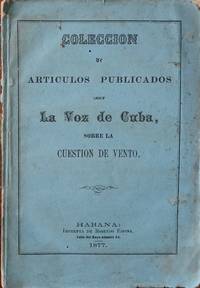
1877réf. 3543Coleccion de articulos publicados por la voz de cuba sobre la cuestion de vento primera edicion habanaimprenta de rosendo espina 1877 caratulas originaleslibro originalestado regularla voz de cuba fue un periodico cubano del siglo XIX en este libro se publican articulos del ingeniero cubano francisco de albearcon respecto a la construccion del acueducto de vento en la habanaAsí a solicitud del capitán general de la Isla el coronel de ingenieros >Francisco de Albear y Fernández de Lara presentó en 1855 una "Memoria acerca del Proyecto de conducción a La Habana de las aguas de los manantiales de Vento" que proyectaba un sistema de acueducto de mampostería cerrado que conduciría por gravedad las aguas de dichos manantiales hasta su destino final a una distancia de once kilómetros. En la Memoria Albear realizó un estudio de los antecedentes y las posibilidades de aprovechamiento de los acueductos anteriores efectuó un cálculo de la dotación de agua para la ciudad valoró las dificultades para lograr la obra de captación en Vento y propuso el trazado del canal hasta el depósito. Atendiendo a la extraordinaria complejidad de la obra y a las dificultades de su ejecución en el convulso período de la >Guerra de los diez años Albear elaboró y presentó en 1876 dos nuevos documentos: la "Memoria del Proyecto de depósito de recepción y de distribución de las obras del Canal de Vento" y la "Memoria del Proyecto de la distribución del agua de Vento en La Habana". En la primera valoraba los aspectos relativos a la ubicación altura capacidad y dimensiones del depósito así como otros aspectos tecnológicos; mientras que en la segunda se argumentaban las condiciones requeridas para un buen sistema de distribución dividido en dos partes interior y exterior así como las particularidades y aportes de cada una de ellas. La inauguración del Acueducto de Albear denominado finalmente así tras la muerte de su artífice el 22 de octubre de 1887 no ocurriría hasta seis años más tarde el 23 de enero de 1893 en medio de condiciones políticas y económicas sumamente adversas plagadas de dificultades no sólo topográficas y tecnológicas sino incluso higiénicas en momentos en que las llamadas "fiebres de Vento" diezmaban a sus constructores. La etapa final de las obras a cargo de la firma Runkle Smith and Co. de Nueva York y encabezada por el ingeniero Sherman Gould por la parte norteamericana fue dirigida de acuerdo con los proyectos originales por un discípulo y continuador de Albear el coronel de ingenieros >Joaquín Ruiz. No obstante su artífice llegó a tener en vida la satisfacción de ver su proyecto premiado con Medalla de Oro en la Exposición Universal de >París de 1878 donde se la consideró como una obra maestra de la ingeniería del siglo XIX. Imprenta de rosendo espina paperback
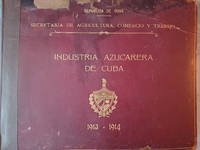
1915réf. 3017Portafolio azucarero de la industria azucarera de cuba 1912-1914 primera edicion libreria e imprenta la moderna poesia 1915 esta obra ha sido realizada siendo presidente de la republica de cuba dr mario garcia menocal y secretario de agriculturacomercio y trabajo el general emilio nunez caratulas originalesrestauradasgran libro ilustrado 424 pgs mas graficos libro con peso de 13 librascon 16 cm de largo por 12.5 cm de anchoes una obra super rarade colecciondonde se describen todos los centrales azucareros de cubacon fotos y sus caracteristicas publicada en el ano 1915 por la libreria e imprenta la moderna poesiaes una de las rarezas de la bibliografia cubana Libreria e imprenta la moderna poesia hardcover
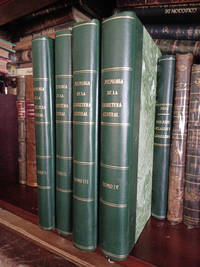
1930réf. 2416Memoria administrativa y descriptiva de las obras de la carretera nacional de cuba 4 vols primera edicion habana cuba 1930 nueva encuadernacion 4 tomos con algunas paginas restauradas y algo gastadas publicado por la Republica de cuba secretaria de obras publicas negociado de caminos y puentes bajo la administracion del honorable presidente de la republica de cuba general gerardo machado y morales siendo secretario de obras publicas el dr carlos miguel de cespedes. La Carretera Central de Cuba es la principal vía de transporte automotor de la isla. Fue construida entre 1927 y 1931 bajo el gobierno del presidente Gerardo Machado. Con una longitud total de 1139 km en 1931 la carretera está dividida en dos ramas a partir de La Habana: una hacia oriente y otra a occidente. El kilómetro 0 se encuentra en el Capitolio de La Habana. En el momento de su construcción enlazaba las 6 capitales provinciales: >Pinar del Río La Habana Matanzas Santa Clara >Camagüey y Santiago de Cuba actualmente enlaza 14 de las 15 provincias del país con la sola excepción de Cienfuegos. Gerardo Machado y Morales Camajuaní Las Villas 28 de septiembre de 1869-Miami Beach Florida 29 de marzo de 1939 fue un militar y >político cubano que fungió como general a favor de su país en la guerra de independencia contra España y fue el quinto presidente de la >República de Cuba 1925-1933. Machado ingresó a la presidencia con una amplia popularidad y apoyo de los principales partidos políticos. Cabe destacar que durante su administración se realizaron obras que perduran hasta el día de hoy: el Capitolio de La Habana y la Carretera Central. Aquellas obras públicas y otras "menores" caracterizaron su gestión dado que puso énfasis en la impulsión de ellas para absorber el desempleo que entonces azotaba a la isla tras el hundimiento de los precios del azúcar en 1921. Sin embargo su apoyo disminuyó con el tiempo puesto que reformó la Constitución de 1901 para perpetuarse en el poder. A medida que las protestas y rebeliones se volvían más estridentes debido al impacto del crac del 29 en Cuba su administración redujo la libertad de expresión y recrudeció la represión cosa que significó por parte de su mandato la lenta transición a una dictadura. Finalmente en 1933 fue obligado a dimitir a favor de un Gobierno provisional encabezado por Carlos Manuel de Céspedes y Quesada hijo de su homónimo padre a quien se considera padre de la patria y mediado por el embajador estadounidense Sumner Welles secretaria de obras publicas hardcover
1995réf. 049294KBA Books 1995. Book. Fair. Paperback. 1st Printing. Worn copy with yellow highlighting on 3 pages upper edge of title page clipped presumably to remove owner name faint dampstain to upper corners. 57-page booklet. KBA Books Paperback
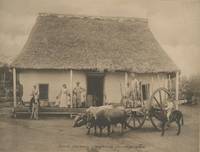
1913réf. List3218Brooklyn New York: The Albertype Co 1913. Photo album of twenty-five 12 ½ x 10 inch pages containing fifty 8 x 6 inch photographs with cardstock cover. Cover and pages worn with marginal damage; pages mostly detached from string binding; photos with captions on negative; Near Fine with Fine contrast. Overall excellent to Near Fine. After the Spanish American War the Isle of Pines now Isla de Juventud in Cuba was contested territory because the 1901 Platt Amendment had specifically left ownership of the island up to a future treaty; the 1904 Hay-Quesada Treaty recognizing Cuban sovereignty over the island failed to be ratified by the US until 1925. American citizens controlled ninety-five per cent or more of the island’s land and were strongly in favor of American annexation. Offered here is a 1913 photo album exhibiting the island’s lush scenery productive farmland and luxurious American residences and resorts. The American property owners are identified by name and include American Residents and Property Owners’ Association President T.J. Keenan who in 1902 described the island under default administration by the Cuban government as “on the verge of anarchy . American interests are absolutely unprotected”1; H.A. Christy Vice President of the Cincinnati Richmond & Muncie Railroad; coal and coke businessman John F. Atcheson and other elites. There are also shots of a number of hotels; grapefruit banana and pineapple farms belonging to the settlers; and recreation by both automobile and boat. Two photographs are not of American ventures: one of the home of José Sarda which housed José Martí before his exile to Spain labeled merely “Nueva Gerona Sarda Homstead”; and one of a house labeled “San Juan Native Homestead” showing a family standing on the porch of their thatched-roof home with an oxcart before them. We find four copies of this photo book on OCLC. Of interest to historians of US imperialism in Cuba following the military withdrawal. 1 “The Isle of Pines President Orders Investigation of Affairs There” The Press-Herald November 15 1902 2. The Albertype Co unknown
1894réf. 1064651894. Pamphlet format 70 pp. Illustrations; map. 14.3x11.8 cm 5½x4½" pictorial wrappers. Some light staining and wear to wrappers spine a little worn very good overall. Rare tourists' guide book produced under the auspices of the Grand Hotel Macotte with much on Havana transportation options sights to see including bull fights prices a Spanish vocabulary etc. with numerous advertisements for Cuban and some Florida businesses and other hotels. One advertisement features cigar maker La Corona. They even include an illustration of Christopher Columbus. OCLC/WorldCat lists only one copy at the California State Library Sutro Branch. J. Carbonell and P. Montero, Proprietors.
1931réf. D1703La Habana 1931. Hardcover. Very Good. Five issues all but the last with their original wraps bound in one volume leather-backed marbled paper over boards -- a bit scuffed and bumped along the edges. Includes: Ano I. No. 1; Febrero 15 1931 / Ano I. No. 2; Febrero 22 1931 / Ano I. No. 3; Marzo 1 1931 / Ano I. No. 4; Marzo 8 1931 / Ano I. No. 5; Marzo 15 1931. The last issue No. 5. does not have the original front cover otherwise all original illustrated wraps are present. All a bit browned as expected and brittle with the occasional small marginal tear but perfectly good reading copies complete and nicely preserving the text illustrations sheet music and ads. Santa Clara bookseller's ticket on front paste-down. A wonderful and uncommon look at Cuba. hardcover
2003réf. 017614Madrid Spain: Centro de Arte Contemporaneo Wifredo Lam 2003. Book. Very good condition. Paperback. First Edition. Octavo 8vo. 431 pages of text. Paperback binding with a minor crease to the spine. The text is clean and unmarked. Profusely illustrated in full color. Text is in Spanish. Art museum located in La Habana or Havana Cuba. First edition. Centro de Arte Contemporaneo Wifredo Lam Paperback
1847réf. LL 559"Appointment of Lieutenant General Federico Roncali count of alcoy "as governor and captain general of the island of cuba and president of the courts of the same" in replacement of general leopoldo o'donell. Given in the palace on november 30 1847. Begins: Doña Isabel Segunda por la gracia de Dios y por la constitucion de la monarquia española Reina de las Españas. "5750 Handwritten bifolio on paper with the printed heading of Isabel II. Queen's stamp signature and plate seal with fleur-de-lys shaped paper protection. Signature of Ramón Narváez. On the second page different statements appear in Madrid and Havana signed by the Count of Villanueva also by the Marquis of Selva Alegre. Federico Roncali count of Alcoy Cádiz 1800- Madrid 1857 came to generalship at the hands of Espartero. Between December 14 1852 and April 14 1853 he was president of the council of ministers after his time as Captaincy of the island of Cuba a position in which he replaced O'Donell. His mandate in Cuba was characterized by the creation of different infrastructures and the increase in the arrival of Chinese laborers that had begun in the previous period. During his mandate the lighthouse that bears his name Roncali was built of great importance for navigation in the Yucatan Strait "the last place on the island where the sun sets"; it is located at Cape San Antonio which was the last place where the aborigines remained at the time of colonization. The document talks about the replacement of Captain General Leopoldo O'Donell the oath that must be taken before taking office and how it should be exercised. UNIQUE AND OF UTMOST IMPORTANCE
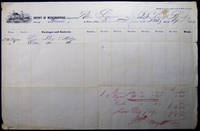
1864réf. 029846Philadelphia PA: Not Published 1864. Bill of lading & Entry of Merchandise form completed in manuscript. Dated 23rd April 1864 for the Bark Speed; Bram master; sailing from Trinidad de Cuba & bringing in a small cargo of merchandise guava jelly longans & books. The goods were imported by Peter Lynn and are listed in the packages and contents section of the form. The quantities are calculated for customs duties and signed by the agents in charge in manuscript. The reverse with the District and Port of Philadelphia bill of lading affirmation printed information with receipted note of duties paid on the blank panel at the bottom of the sheet. Form with a small woodcut of ship at sea; printed and sold by Geo. W. Henry. Document approx. 11" x 16 3/4" size; with old fold lines little nicks closed edge-tears to the paper edges; in good condition. Manuscript. Not Bound. Good. Not Published paperback
1981réf. 86364Havana Cuba: Political Publishers 1981. Presumed First Edition First printing. Hardcover. Good/Good. 116 4 pages. Index. Among the topics addressed in the Index are Socioeconomic Developments Revolutionary Armed Forces Social Organizations Ministry of the Interior Union of Young Communists Communist Party Ideological Struggle Foreign Policy and Economics. Fidel Alejandro Castro Ruz 13 August 1926 - 25 November 2016 was a Cuban revolutionary and politician who was the leader of Cuba from 1959 to 2008 serving as the prime minister of Cuba from 1959 to 1976 and president from 1976 to 2008. Ideologically a Marxist-Leninist and Cuban nationalist he also served as the first secretary of the Communist Party of Cuba from 1965 until 2011. Under his administration Cuba became a one-party communist state; industry and business were nationalized and socialist reforms were implemented throughout society. On January 20 1981 Fidel Castro gave the closing speech at the Communist Party of Cuba's second Congress held from January 17-20. He addressed almost 150 foreign delegations representing pro-Soviet communist parties liberation movements and even some social democratic parties of the Socialist international as well as more than a million Cubans. This fact alone is a measure of the prestige which the CPC has among many political trends and working people around the world. But the economic situation in Cuba brought to light during the congress and the path which Castro is proposing to the peoples struggling against imperialism give food for thought and should lead us to question the supposedly revolutionary path which Castro claims to be defending. One of the main concerns of the congress was the economic situation in Cuba. Despite an overall situation envied by many of the peoples dominated by U.S. imperialism the main report presented by Castro revealed that the objectives of the 5-year plan adopted at the First Congress in 1975 were not attained. Economic growth reached only 4% despite an objective of 6% and the industrialization plan met with difficulties. These results are of some importance since the objectives set at the last congress were consciously modest. Given this situation the Second Congress underlined the need for increased mobilization in production and stepped up plans to implement the new system to manage the economy which was first adopted at the First Congress. At the time this system was presented as an answer to the idealist errors of the 1965-70 period when it was claimed that all forms of market economy had abruptly been eliminated. The system clearly draws inspiration from the experience of the economic reforms introduced in the U.S.S.R. by Khrushchev in the early sixties which are judged as positive. These reforms underlined the importance of "the law of value the necessity that in all enterprises including State enterprises there are buy and sell relations and that within these relations the market categories function as indispensable instruments for measuring the use we make of our productive resources. in order to decide which investments are the most advisable and to know which enterprises.work the best.". Political Publishers hardcover
réf. 1437008380.Ghardcover. Good. Access codes and supplements are not guaranteed with used items. May be an ex-library book. hardcover
réf. 102449067X.Ghardcover. Good. Access codes and supplements are not guaranteed with used items. May be an ex-library book. hardcover
réf. 1024495299.Gpaperback. Good. Access codes and supplements are not guaranteed with used items. May be an ex-library book. paperback
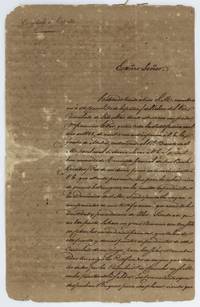
1828réf. 2401Gibraltar 1828. Good. 3pp. on a bifolium. Previously folded with separations. Tanned somewhat brittle. An interesting example of official communications concerning trade between colonial Cuba and the Spanish mainland. In this manuscript letter date March 14 1828 the new Spanish Vice Consul in Gibraltar writes to the Governor General of Cuba concerning several topics. These include the regulation of shipping to Cuba and by implication the rest of the Caribbean through Gibraltar particularly of French ships leaving Mediterranean ports. Also discussed is keeping track of individuals particularly merchants going to Cuba by means of identification papers and other documents. The consul also reminds the colonial government of the importance of documenting duties and tariffs paid for shipping cargo and goods. unknown
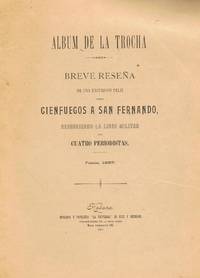
réf. 1032654. . Habana Cuba Imp. ¿La Universal¿ de Ruiz y Hermano. 1897. 30x20 cm. 90 págs. 55 láms. fotográficas en b/n. amplísimos márgenes. los periodistas fuerón: Eva Canel Nicolás de Gamboa Alejandro Menéndez y Antonio Porrúa. Viaje realizado dos años antes de la perdida de Cuba. unknown
réf. 0873489047.Gpaperback. Good. Access codes and supplements are not guaranteed with used items. May be an ex-library book. paperback
2020réf. 2-6200359172Editorial Académica Española 2020. Paperback. New. 112 pages. Spanish language. 8.62x5.91x0.32 inches. Editorial Académica Española paperback
2019réf. 2-6200019932Editorial Académica Española 2019. Paperback. New. 56 pages. Spanish language. 8.66x5.91x0.13 inches. Editorial Académica Española paperback
1941réf. 056819BALTIMORE MD.: LITHO COPY PREP. CLEAN COPY. . Very Good. Hardcover. 1941. LITHO COPY PREP hardcover
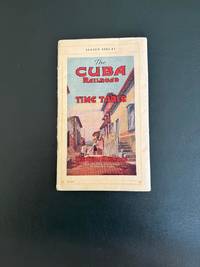
1916réf. 100842Tall 8vo stiff paper stapled illustrated some in color 54 pp. Lacks wrappers and last page but the rest of the pamphlet including the double page map of Cuba is present a few small chips some minor aging and soiling. The 9 x 21 folding map of Cuba features its railroads. There are two attractive color photographs and seven full page black and white photographs illustrating the charms of Cuba. Smaller photos including one of a sleeping car are included in the text. A rail schedule some facts about Cuba and a few advertisements for hotels and cruise lines are also included. Cuba Railroad Company,