Governor, Cuba MilitaryBiblio.com
2.639 Ergebnisse
Best.-Nr. 1247409120.Gpaperback. Good. Access codes and supplements are not guaranteed with used items. May be an ex-library book. paperback
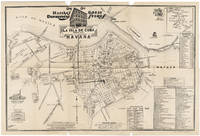
1930Best.-Nr. 560Havana Cuba: American Express Co et al. 1930. Small archive of six items from a trip in the early years of the 1930s all good or better. Items include: One forty page brochure in decorated and printed card stock wrappers "CUBA The Pearl of the Antilles" with 16 itineraries and copious pictorial advertisements; two contemporary color picture postcards unused; small brochure folded to make four pages offering visits to "Algibe" Farm the "most typical Cuban Farm in the vicinity of Havana" where you are invited to see how crops are grown attend "Thrilling Cock-Fights at all hours" and "Royal Palm Climbing Exhibitions." Finally a fan-folded invitation to "Buy where Cubans buy" at La Isla de Cuba with an accompanying map 21 x 14 in. dated 1928 of the entire downtown Havana shopping district folded into twelve 7 x 3.75 in. panels with breaks at folds see photo. All good or better with nicks small closed tears and a few smudges. American Express Co, et al. unknown
Best.-Nr. 20CCUBALOTCIsrael Jerusalem Havana Cuba New York Usa. Fair with no dust jacket. Non-Book. On offer is a remarkable nine-document archive tracing nearly two decades of Zionist political cultural and financial correspondence linking Cubas Jewish leadership with the centers of world Jewry in Jerusalem New York and Latin America. Together these communications chart the transformation of Cuban Jewry from a peripheral supporter of the Yishuv to an active and recognized participant in the international Zionist networka Caribbean outpost engaged in fundraising education youth mobilization and ideological exchange. Mandatory-Era Migration and Bureaucratic RestraintThe earliest piece dated September 22 1937 comes from the Jewish Agency for Palestine in Jerusalem addressed to the Zionist Federation of Cuba in Havana regarding an individual immigration request the case of Rudzenewsky. The letter opens: - . We do not have any immigration certificates in our possession; therefore we cannot discuss your request regarding obtaining Aliyah certificates at all. Issued amid the tightening British immigration quotas of the Arab Revolt this restrained refusal captures the bureaucratic limits of Mandatory-era migration and the frustration of a community newly seeking direct participation in the Zionist project. Even a sympathetic outpost such as Havana remained outside the gates of the Yishuvs allocation system dependent on permissions that never came. As one of the earliest known correspondence between the Cuban Zionist Federation and Jerusalem it marks the beginning of a paper trail that would over the following two decades trace the communitys evolution from petitioners to recognized partners in global Zionist coordination. Fundraising for Settlement and DefenseBarely six weeks later the tone shifts from denial to mobilization. On 5 Kislev 5698 November 5 1937 Keren Hayesod Ltd. the Erez Israel Palestine Foundation Fund issued a Hebrew circular from Jerusalem to its global committees including Havana. Typed on vivid blue-and-white letterhead it announced the forthcoming fourth issue of HaMassad dedicated to the great enterprise of construction and security of Keren Hayesod this year. Inviting regional feedback to ensure the bulletin fulfills its task perfectly and reflects the creative work being done in Eretz Israel the circular unites the twin imperatives of binyan uvebitachon building and defense central to the Yishuvs ethos amid the Arab Revolt. For Cubas emerging Zionist Federation this stands as one of the earliest direct communications from Jerusalem confirming the islands inclusion in the pre-state fundraising and ideological network. Wartime Solidarity and Political ConscienceTwo vivid wartime items from 1944 illustrate how ideology culture and politics intertwined in Havana. The Unión Sionista de Cuba issued a bilingual flyer inviting the Jewish public of Havana to a lecture by Nathan Bistritzky on Moscow and Jerusalem An Analysis of Two Revolutions adding: En este Acto se homenajeará al heroico Ejército Rojo en ocasión de su 26º Aniversario. In this Act the heroic Red Army will be honored on the occasion of its 26th Anniversary. An accompanying invitation from the Patronato de Ayuda al Pueblo Español greets the President of Zionist Youth and invites him to a December meeting about the struggle of the Spanish people and the delivery of economic contributions for the Year-End Effort. These intertwined documents vividly position Jewish Havana within the broader antifascist and humanitarian currents of the Second World War. Youth Networks and Ideological PluralismA Hashomer Hatzair letter of April 17 1945 conveys the disciplined optimism of the socialist-Zionist youth movement as it rebuilt its trans-American network in the final months of war. Written from the North American headquarters in New York to the Cuban branch it reports on arrangements for Tova Levin a young Hebrew teacher in training at the movements Hightstown farm who would soon travel to Cuba to assist with education and leadership development. The circular further details plans for a Latin-American management camp in Mexico and urges an immediate reply with participant names. The writers lament the branchs silence since October and request news and photographs for The Young Guard anniversary issue. Closing with With the blessing of the movement. Strong and courageous! it perfectly fuses administration and inspiration. Its bilingual Hebrew-English letterhead / Hashomer Hatzairembodies the groups dual mission: Hebrew in content international in spirit linking Havana New York and Mexico in a single youth-driven Zionist network. From Jerusalem the Executive of the Zionist Organization issued a communiqué on July 15 1946 signed by Dr. A. L. Leuterbach in the aftermath of the British arrests and seizure of the Jewish Agencys offices during the Black Sabbath raids: The imprisonment of members of the Jewish Agency came as a heavy blow to us and greatly shocked the Yishuv and the entire Zionist world. The statement thanks Jewish communities abroad for solidarity vows to continue our work without hesitation and appeals to every Zionist body to spread the spirit of Zionism even more strongly in their respective places. Although the Agencys files had been seized the call radiates steadfastness and unity amid repression. A decade later this networks endurance is reaffirmed through two trans-Atlantic communications. On December 14 1955 The Jewish Agency Inc. 16 E. 66th Street New York wrote to Betar Calle 10 esq. 3 Vedado Havana enclosing a check for $150 representing allocation by the Youth and Hechalutz Department for the period October 1 1955 through March 31 1956.The letter explicitly notes that the payment was made pursuant to instructions received from Israel confirming that the directive to fund Havanas Betar chapter originated in Jerusalem. Signed by Fannie Speiser Assistant Treasurer the letter attests to the continuing New YorkHavana financial conduit and to Israels oversight of diaspora youth programming. Soon afterward Dr. Aron Weinberger of Midstream magazine wrote inviting the Havana community to help distribute the journal for free and frank discussion of all problems that face the contemporary Jew. final item dated November 12 1956 brings the narrative full circle. Issued by the Club Juvenil del Patronato de la Casa de la Comunidad Hebrea de Cuba it invites Hashomer Hatzair Prado 260 Ciudad to attend the installation ceremony of the Patronatos new youth board to be held on Tuesday 20 November at 9 p. M. In the Conference Hall of the Patronato. Signed by Rafael Kapuskin Secretary the letter is both social and symbolicaffirming that by the mid-1950s Zionist youth movements were no longer peripheral study circles but active civic partners within Havanas central Jewish institutions. The letters tone En la seguridad de vernos honrados con vuestra presencia In the certainty of being honored by your presence embodies the confidence of a mature interconnected Jewish community just before the political transformations of late-1950s Cuba. Together these communications trace Havanas evolving role in Israel-oriented and diasporic intellectual lifefrom the practical fundraising of Keren Hayesod to the ideological pluralism of Betar and Hashomer Hatzair. As a whole the archive captures the rhythm of Cuban Zionist life from supplication and bureaucracy to political maturity and cultural dialogue. It offers scholars a uniquely multilingual cross-section of Hebrew Yiddish Spanish and English voices negotiating identity loyalty and nationhood from the Caribbean periphery of world Zionism. Condition and Language: Nine documents spanning Hebrew Yiddish Spanish and English. Mixed paper stocks; significant folds generally minor stains and varying edge tears especially prominent on thinner stock. Heavy handling all text complete and legible. Age toning. Overall Fair to Good.; Manuscripts; 8vo 8" - 9" tall; 10 pages; Signed by Author . unknown
Best.-Nr. 0332314847.Ghardcover. Good. Access codes and supplements are not guaranteed with used items. May be an ex-library book. hardcover
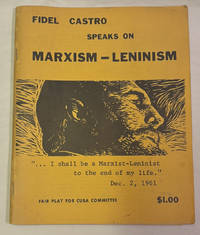
1961Best.-Nr. 212Book is in good condition additional photos can be provided upon reasonable request. Book has no markings as it is a clean copy. Seller is open to any inquiries interested parties may have. paperback
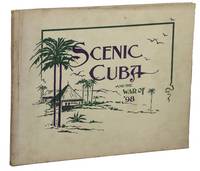
1898Best.-Nr. 00009833Chicago: Belford Middlebrook & Co 1898. First edition. Hardcover. Very Good. 4to. Unpaginated. White cloth with decorations in purple and green on the front board. Illustrated with numerous black and white photographs and maps. With introduction and descriptive text. Photographs showcase the beautiful sights of Cuba along with military points of interest and several U.S. Navy ships. A Very Good book with a touch of rubbing to the corners and a bit of soiling to the cloth. Belford, Middlebrook & Co hardcover
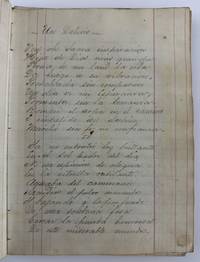
1889Best.-Nr. 4403Havana Cuba 1889. Good. 69pp. of manuscript text plus 77pp. of newspaper extracts. Contemporary quarter calf and marbled paper-covered boards. Moderate scuffing and wear to boards and edges spine scuffed. Hinges broken with text block only nominally attached by threads with many leaves detached. Ownership ink stamp on front free endpaper "Manuel F. Barranco" with a gilt insignia affixed below reading "MB." A unique and personal manuscript journal and scrapbook composed and maintained by an important but obscure Cuban-American poet and author Manuel Francisco Barranco y Miranda 1843-1894. Barranco was born in Puerto Principe and lived about half of his life in Cuba before emigrating to Florida in 1875. He married Mercedes Fernández y Fernández-Mora and the couple raised a family in Cuba Florida and New York. Mentions of Barranco are rare in available records but he seems to have been a colleague of famed Cuban revolutionary figure Jose Marti. Barranco and Marti were involved with a Cuban revolutionary emigrant colony in Key West as well as Cuban literary and political societies in Havana and New York such as La Liga. Regarding the latter one of Barranco's poems in the present work composed in eleven parts is titled "Versos recitados en la sesion ordinaria de la Sociedad Literaria Hispano-Americana la noche del 17 de Maya de 1889." The Sociedad Literaria Hispano-Americana or Spanish American Literary Society provides a further connection to Jose Marti as Marti was one of the most prominent members of the club in the 1880s and '90s. Barranco presumably spent the remainder of his life between Cuba and the eastern coast of the United States where he passed away in Tampa Florida in 1894. The present material was written and compiled by Barranco over about a thirty year period in the mid-19th century before and after he emigrated to the United States. The chief feature of the present work is contained in almost seventy pages of manuscript poetry by Barranco. The poems which number around a couple dozen compositions include "Un Delirio" written in six parts "Versas improvisados en el Bautiro de mi hija Ana Maria el dia 1 de Enero de 1875" "Versos improvisados en comemora cion del Bautiro de mi hija Ana Maria el dio 1 de Enero del 1876" "Al congreso de la Paz" and various sonnets and other poems dated between 1875 and 1889. Barranco authored a few poems here about his wife Mercedes with titles such as "A Mercedes" "Improvisados a la orrilla del mon - A Mercedes" and "Al contemplar tu retrato." He also composed poems about his mother Ana Maria Sebastiana de Miranda. Several of the later poems from 1888-89 are datelined Havana next to the date of composition indicating Barranco moved back and forth between Cuba and America. The manuscript text is supplemented by almost eighty pages of newspaper extracts featuring various articles letters and printed poetry by Barranco published under his own name and a pen name "Leunam." The subject matter of these pieces include education women literature and various family members and other subjects in his own poetry. An example of the latter is a memorial poem for his granddaughter Margarita Barranco who died in Puerto Principe in 1866. Following the manuscript poems themselves is a single handwritten page of contents relating to these newspaper extracts. The extracts very likely come from Cuban newspapers and periodicals since they predate his move to Florida in 1875. A printed note laid into the book reads: "A Bound Journal Containing Published and Unpublished Handwritten Letters and Poems by My Grandfather Manuel Francisco Barranco y Miranda in Habana in the mid-19th Century Probably During the Period 1859-1869." Not much else is easily discovered about Barranco providing an excellent chance for original research into the work of this obscure but important 19th-century Cuban-American poet and writer. unknown
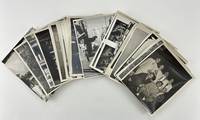
1961Best.-Nr. 2137Various places in Florida Mexico Cuba & Spain 1961. About very good. 138 original prints each 8 x 10 inches; mostly large format images with twelve contact sheet containing multiple smaller images and including several duplicates. Light wear at edges; slight curling. Occasional patches of scuffing or soiling. Scattered manuscript annotations and ink stamps on blank versos of photographs. An interesting aggregation of approximately 150 unique professional images that depict the travels and activities of the Latin American Fiesta Association of Tampa Florida. The cultural heritage group was founded in 1940 and flourished from the late 1940s to the 1980s and organized or participated in local social events had an annual ball and traveled widely across Latin America. The photographs here date from 1949 to the early 1960s and document the travels of association members to Spain Mexico and Cuba. They attended numerous events entertainments dinners and other social gatherings as well as made visits to attractions and local cultural clubs. In Spain and Cuba their trips seem to have been limited to Madrid and Havana respectively and there are some interesting series of travel images in Cuba from just prior to the Revolution. The group seems to have made multiple trips to Mexico and traveled somewhat more widely. Scattered images show the activities of the association in Florida as well and many of the prints have contemporary manuscript captions and ink stamps of local photographers and photography studios on the versos. In all a wide-ranging and quite engaging group of large photographs that document this midcentury Latin American social club in Florida. unknown
1995Best.-Nr. 049294KBA Books 1995. Book. Fair. Paperback. 1st Printing. Worn copy with yellow highlighting on 3 pages upper edge of title page clipped presumably to remove owner name faint dampstain to upper corners. 57-page booklet. KBA Books Paperback
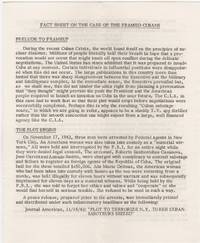
1963Best.-Nr. 206861New York: Defense Committee for Garcia and Sueiro 1963. Folded for mailing otherwise fine. Bifolium approx. 7 x 8-1/5 in. making a four-page offset printed document; with 8-1/2 x 14 in. mimeo letter and original mailing envelope. Documentation from the effort to defend two Cuban-Americans arrested as suspected saboteurs with plans to blow up Manhattan businesses and New Jersey oil refineries. The FBI generated prominent headlines with the arrests at the height of cold-war tensions between the Bay of Pigs and the assassination of President Kennedy. Defense Committee for Garcia and Sueiro unknown
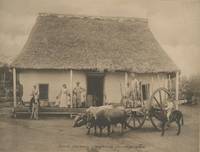
1913Best.-Nr. List3218Brooklyn New York: The Albertype Co 1913. Photo album of twenty-five 12 ½ x 10 inch pages containing fifty 8 x 6 inch photographs with cardstock cover. Cover and pages worn with marginal damage; pages mostly detached from string binding; photos with captions on negative; Near Fine with Fine contrast. Overall excellent to Near Fine. After the Spanish American War the Isle of Pines now Isla de Juventud in Cuba was contested territory because the 1901 Platt Amendment had specifically left ownership of the island up to a future treaty; the 1904 Hay-Quesada Treaty recognizing Cuban sovereignty over the island failed to be ratified by the US until 1925. American citizens controlled ninety-five per cent or more of the island’s land and were strongly in favor of American annexation. Offered here is a 1913 photo album exhibiting the island’s lush scenery productive farmland and luxurious American residences and resorts. The American property owners are identified by name and include American Residents and Property Owners’ Association President T.J. Keenan who in 1902 described the island under default administration by the Cuban government as “on the verge of anarchy . American interests are absolutely unprotected”1; H.A. Christy Vice President of the Cincinnati Richmond & Muncie Railroad; coal and coke businessman John F. Atcheson and other elites. There are also shots of a number of hotels; grapefruit banana and pineapple farms belonging to the settlers; and recreation by both automobile and boat. Two photographs are not of American ventures: one of the home of José Sarda which housed José Martí before his exile to Spain labeled merely “Nueva Gerona Sarda Homstead”; and one of a house labeled “San Juan Native Homestead” showing a family standing on the porch of their thatched-roof home with an oxcart before them. We find four copies of this photo book on OCLC. Of interest to historians of US imperialism in Cuba following the military withdrawal. 1 “The Isle of Pines President Orders Investigation of Affairs There” The Press-Herald November 15 1902 2. The Albertype Co unknown
1894Best.-Nr. 1064651894. Pamphlet format 70 pp. Illustrations; map. 14.3x11.8 cm 5½x4½" pictorial wrappers. Some light staining and wear to wrappers spine a little worn very good overall. Rare tourists' guide book produced under the auspices of the Grand Hotel Macotte with much on Havana transportation options sights to see including bull fights prices a Spanish vocabulary etc. with numerous advertisements for Cuban and some Florida businesses and other hotels. One advertisement features cigar maker La Corona. They even include an illustration of Christopher Columbus. OCLC/WorldCat lists only one copy at the California State Library Sutro Branch. J. Carbonell and P. Montero, Proprietors.
2003Best.-Nr. 017614Madrid Spain: Centro de Arte Contemporaneo Wifredo Lam 2003. Book. Very good condition. Paperback. First Edition. Octavo 8vo. 431 pages of text. Paperback binding with a minor crease to the spine. The text is clean and unmarked. Profusely illustrated in full color. Text is in Spanish. Art museum located in La Habana or Havana Cuba. First edition. Centro de Arte Contemporaneo Wifredo Lam Paperback
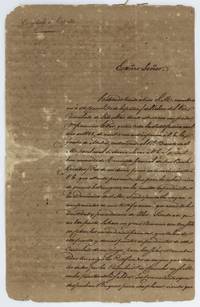
1847Best.-Nr. LL 559"Appointment of Lieutenant General Federico Roncali count of alcoy "as governor and captain general of the island of cuba and president of the courts of the same" in replacement of general leopoldo o'donell. Given in the palace on november 30 1847. Begins: Doña Isabel Segunda por la gracia de Dios y por la constitucion de la monarquia española Reina de las Españas. "5750 Handwritten bifolio on paper with the printed heading of Isabel II. Queen's stamp signature and plate seal with fleur-de-lys shaped paper protection. Signature of Ramón Narváez. On the second page different statements appear in Madrid and Havana signed by the Count of Villanueva also by the Marquis of Selva Alegre. Federico Roncali count of Alcoy Cádiz 1800- Madrid 1857 came to generalship at the hands of Espartero. Between December 14 1852 and April 14 1853 he was president of the council of ministers after his time as Captaincy of the island of Cuba a position in which he replaced O'Donell. His mandate in Cuba was characterized by the creation of different infrastructures and the increase in the arrival of Chinese laborers that had begun in the previous period. During his mandate the lighthouse that bears his name Roncali was built of great importance for navigation in the Yucatan Strait "the last place on the island where the sun sets"; it is located at Cape San Antonio which was the last place where the aborigines remained at the time of colonization. The document talks about the replacement of Captain General Leopoldo O'Donell the oath that must be taken before taking office and how it should be exercised. UNIQUE AND OF UTMOST IMPORTANCE
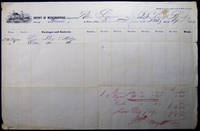
1864Best.-Nr. 029846Philadelphia PA: Not Published 1864. Bill of lading & Entry of Merchandise form completed in manuscript. Dated 23rd April 1864 for the Bark Speed; Bram master; sailing from Trinidad de Cuba & bringing in a small cargo of merchandise guava jelly longans & books. The goods were imported by Peter Lynn and are listed in the packages and contents section of the form. The quantities are calculated for customs duties and signed by the agents in charge in manuscript. The reverse with the District and Port of Philadelphia bill of lading affirmation printed information with receipted note of duties paid on the blank panel at the bottom of the sheet. Form with a small woodcut of ship at sea; printed and sold by Geo. W. Henry. Document approx. 11" x 16 3/4" size; with old fold lines little nicks closed edge-tears to the paper edges; in good condition. Manuscript. Not Bound. Good. Not Published paperback
1981Best.-Nr. 86364Havana Cuba: Political Publishers 1981. Presumed First Edition First printing. Hardcover. Good/Good. 116 4 pages. Index. Among the topics addressed in the Index are Socioeconomic Developments Revolutionary Armed Forces Social Organizations Ministry of the Interior Union of Young Communists Communist Party Ideological Struggle Foreign Policy and Economics. Fidel Alejandro Castro Ruz 13 August 1926 - 25 November 2016 was a Cuban revolutionary and politician who was the leader of Cuba from 1959 to 2008 serving as the prime minister of Cuba from 1959 to 1976 and president from 1976 to 2008. Ideologically a Marxist-Leninist and Cuban nationalist he also served as the first secretary of the Communist Party of Cuba from 1965 until 2011. Under his administration Cuba became a one-party communist state; industry and business were nationalized and socialist reforms were implemented throughout society. On January 20 1981 Fidel Castro gave the closing speech at the Communist Party of Cuba's second Congress held from January 17-20. He addressed almost 150 foreign delegations representing pro-Soviet communist parties liberation movements and even some social democratic parties of the Socialist international as well as more than a million Cubans. This fact alone is a measure of the prestige which the CPC has among many political trends and working people around the world. But the economic situation in Cuba brought to light during the congress and the path which Castro is proposing to the peoples struggling against imperialism give food for thought and should lead us to question the supposedly revolutionary path which Castro claims to be defending. One of the main concerns of the congress was the economic situation in Cuba. Despite an overall situation envied by many of the peoples dominated by U.S. imperialism the main report presented by Castro revealed that the objectives of the 5-year plan adopted at the First Congress in 1975 were not attained. Economic growth reached only 4% despite an objective of 6% and the industrialization plan met with difficulties. These results are of some importance since the objectives set at the last congress were consciously modest. Given this situation the Second Congress underlined the need for increased mobilization in production and stepped up plans to implement the new system to manage the economy which was first adopted at the First Congress. At the time this system was presented as an answer to the idealist errors of the 1965-70 period when it was claimed that all forms of market economy had abruptly been eliminated. The system clearly draws inspiration from the experience of the economic reforms introduced in the U.S.S.R. by Khrushchev in the early sixties which are judged as positive. These reforms underlined the importance of "the law of value the necessity that in all enterprises including State enterprises there are buy and sell relations and that within these relations the market categories function as indispensable instruments for measuring the use we make of our productive resources. in order to decide which investments are the most advisable and to know which enterprises.work the best.". Political Publishers hardcover
Best.-Nr. 1437008380.Ghardcover. Good. Access codes and supplements are not guaranteed with used items. May be an ex-library book. hardcover
Best.-Nr. 102449067X.Ghardcover. Good. Access codes and supplements are not guaranteed with used items. May be an ex-library book. hardcover
Best.-Nr. 1024495299.Gpaperback. Good. Access codes and supplements are not guaranteed with used items. May be an ex-library book. paperback
1828Best.-Nr. 2401Gibraltar 1828. Good. 3pp. on a bifolium. Previously folded with separations. Tanned somewhat brittle. An interesting example of official communications concerning trade between colonial Cuba and the Spanish mainland. In this manuscript letter date March 14 1828 the new Spanish Vice Consul in Gibraltar writes to the Governor General of Cuba concerning several topics. These include the regulation of shipping to Cuba and by implication the rest of the Caribbean through Gibraltar particularly of French ships leaving Mediterranean ports. Also discussed is keeping track of individuals particularly merchants going to Cuba by means of identification papers and other documents. The consul also reminds the colonial government of the importance of documenting duties and tariffs paid for shipping cargo and goods. unknown
Best.-Nr. 0873489047.Gpaperback. Good. Access codes and supplements are not guaranteed with used items. May be an ex-library book. paperback
2020Best.-Nr. 2-6200359172Editorial Académica Española 2020. Paperback. New. 112 pages. Spanish language. 8.62x5.91x0.32 inches. Editorial Académica Española paperback
2019Best.-Nr. 2-6200019932Editorial Académica Española 2019. Paperback. New. 56 pages. Spanish language. 8.66x5.91x0.13 inches. Editorial Académica Española paperback
1941Best.-Nr. 056819BALTIMORE MD.: LITHO COPY PREP. CLEAN COPY. . Very Good. Hardcover. 1941. LITHO COPY PREP hardcover
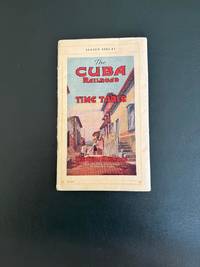
1916Best.-Nr. 100842Tall 8vo stiff paper stapled illustrated some in color 54 pp. Lacks wrappers and last page but the rest of the pamphlet including the double page map of Cuba is present a few small chips some minor aging and soiling. The 9 x 21 folding map of Cuba features its railroads. There are two attractive color photographs and seven full page black and white photographs illustrating the charms of Cuba. Smaller photos including one of a sleeping car are included in the text. A rail schedule some facts about Cuba and a few advertisements for hotels and cruise lines are also included. Cuba Railroad Company,