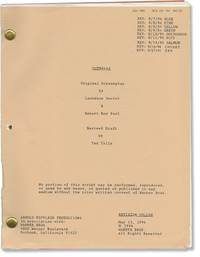
1994réf. 170268Burbank CA: Warner Brothers 1994. Revised Draft script for the 1995 film. Bound in at the rear of the script are nine pages relating to revisions to the script. US Army doctors race to find the cure to a deadly virus quickly spreading from Africa to North America by way of a smuggled capuchin monkey. Shot on location in California and Hawaii. Self wrappers. Title page present dated May 13 1994 noted as REVISION POLISH with credits for screenwriters Laurence Dworet and Robert Roy Pool and revision credits for uncredited screenwriter Ted Tally. 174 leaves with last page of text numbered 136. Xerographic duplication rectos only with rainbow revision pages throughout dated variously between August 7 and 17 1994. Pages Near Fine bound with two gold brads. Warner Brothers unknown books
Barcelona, Destino,1992. 4to.; 336 pp., 1 h. Cubiertas originales.
1967réf. 140181967. Paris Éditions Maspéro « dossiers partisans » 1967 - Broché 12 cm x 21 cm 21 pages - Texte de E. « Che » Guevara - Très bon état
1971réf. 1243821971-1972 François Maspero / Petite collection maspero, Paris - 1971/1972 - 6 volumes in-12 broché, couverture à rabats - 164 + 199 + 322 + 188 + 118 + 195 pages
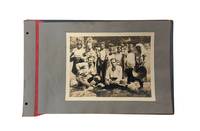
1910réf. 235641910. Cuba photograph album depicting encounters between Western visitors and Cuban communities during the early republican period circa 1910s to 1920s when the island occupied an unusual position between formal independence and continuing American political and economic influence. The photographs move between Havana's monumental architecture hotels and waterfront districts and the rural landscapes villages rivers and agricultural communities that remained largely outside the tourist image promoted to foreign visitors. Repeated appearances of the same Western man often accompanied by a woman who appears to be his wife suggest an extended journey through both urban and remote regions of the island during a period when American travelers businessmen and government personnel moved through Cuba in growing numbers following the Spanish American War and the establishment of the Cuban Republic. Photo album of 26 silver gelatin photographs mounted on unbound album boards with blue covers boards measuring approximately 9 x 15 inches Cuba circa 1910s to 1920s. The photographs range from 6 x 6.5 to 8 x 9.5 inches. Images show waterfront houses built directly along riverbanks; tropical waterfalls and dense forest landscapes; interior courtyards and hotel spaces with colonnades and tiled floors; Morro Castle and lighthouse overlooking Havana Harbor; panoramic views of Cuban towns set among surrounding mountains; market scenes crowded with vendors women and children; cattle standing in shallow waterways; village gatherings outside rural buildings; and groups of local residents posed alongside visiting Westerners. Several photographs depict women standing in rivers holding broad metal pans possibly associated with washing river labor or mineral collection activities. Other images show children families agricultural workers and river communities while a series of portraits records the principal traveler and his companion at various points throughout the journey. One image depicts a group of local residents and Western visitors posed together in a forested region; another shows villagers gathered near a rural homestead while several photographs focus on transportation livestock and daily work in the countryside. The album belongs to the decades following Cuba's transition from Spanish colony to nominally independent republic a period shaped by the Platt Amendment American investment expanding tourism and intensive foreign interest in the island's economic resources and landscapes. Rather than concentrating exclusively on Havana's civic monuments and colonial architecture the photographer devoted substantial attention to rural communities Afro Cuban and mixed-race populations river labor village life and frontier environments seldom emphasized in commercial tourist imagery of the period. The contrast between hotels government-era landmarks village settlements cattle crossings market scenes and encounters with local residents documents the unequal worlds that coexisted within early twentieth century Cuba as foreign visitors moved between urban centers and agricultural regions. Light surface wear occasional toning minor album mounting wear and scattered edge wear to several boards; overall very good condition. A concentrated visual record of how Westerners experienced and represented Cuba's rural communities laboring populations landscapes and colonial-era urban centers during the first decades of the Cuban Republic. unknown
1910réf. 235641910. Cuba photograph album depicting encounters between Western visitors and Cuban communities during the early republican period circa 1910s to 1920s when the island occupied an unusual position between formal independence and continuing American political and economic influence. The photographs move between Havana's monumental architecture hotels and waterfront districts and the rural landscapes villages rivers and agricultural communities that remained largely outside the tourist image promoted to foreign visitors. Repeated appearances of the same Western man often accompanied by a woman who appears to be his wife suggest an extended journey through both urban and remote regions of the island during a period when American travelers businessmen and government personnel moved through Cuba in growing numbers following the Spanish American War and the establishment of the Cuban Republic. Photo album of 26 silver gelatin photographs mounted on unbound album boards with blue covers boards measuring approximately 9 x 15 inches Cuba circa 1910s to 1920s. The photographs range from 6 x 6.5 to 8 x 9.5 inches. Images show waterfront houses built directly along riverbanks; tropical waterfalls and dense forest landscapes; interior courtyards and hotel spaces with colonnades and tiled floors; Morro Castle and lighthouse overlooking Havana Harbor; panoramic views of Cuban towns set among surrounding mountains; market scenes crowded with vendors women and children; cattle standing in shallow waterways; village gatherings outside rural buildings; and groups of local residents posed alongside visiting Westerners. Several photographs depict women standing in rivers holding broad metal pans possibly associated with washing river labor or mineral collection activities. Other images show children families agricultural workers and river communities while a series of portraits records the principal traveler and his companion at various points throughout the journey. One image depicts a group of local residents and Western visitors posed together in a forested region; another shows villagers gathered near a rural homestead while several photographs focus on transportation livestock and daily work in the countryside. The album belongs to the decades following Cuba's transition from Spanish colony to nominally independent republic a period shaped by the Platt Amendment American investment expanding tourism and intensive foreign interest in the island's economic resources and landscapes. Rather than concentrating exclusively on Havana's civic monuments and colonial architecture the photographer devoted substantial attention to rural communities Afro Cuban and mixed-race populations river labor village life and frontier environments seldom emphasized in commercial tourist imagery of the period. The contrast between hotels government-era landmarks village settlements cattle crossings market scenes and encounters with local residents documents the unequal worlds that coexisted within early twentieth century Cuba as foreign visitors moved between urban centers and agricultural regions. Light surface wear occasional toning minor album mounting wear and scattered edge wear to several boards; overall very good condition. A concentrated visual record of how Westerners experienced and represented Cuba's rural communities laboring populations landscapes and colonial-era urban centers during the first decades of the Cuban Republic. unknown books
199849 pages. Oblong 8.5 x 11". Printed upon glossy stock. Map. Generously illustrated with reproductions of archival black and white photos of locomotives and the trains they pulled, accompanied by very informative text. "The selection of photos which follows is not meant to be a comprehensive overview of steam in Cuba as this would be impossible in this size of book. However, it is intended to be representative, with record shots and shed shots mixed with action photos and scenic views, all illustrating locomitives at work or at rest on the four different gauges still in use. With one exception, no mill is featured on more than two pages." - Introduction. Clean and unmarked with moderate wear. A sound copy of this excellent reference. Book
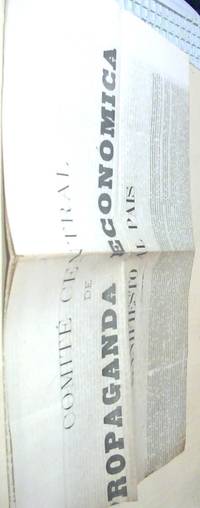
réf. *XS018419.- La Habana. 1891. La Razón. 625 x 49 cm. 1 hoja impresa por ambas caras. Pequeña falta papel afectando algunas letras sin impedir lectura. . . Economía unknown
réf. 30639Editions Messidor, 1990. 16 x 24, 249 pp., broché, très bon état.
1990réf. 103803messidor 1990 In-12 broché 24 cm sur 15. 249 pages. Bon état d’occasion.
1998A clean, unmarked book with a tight binding. Full blue cloth boards. Edge wear to dust jacket. 10"w x 10"h. 142 pages. Claudio Edinger's color photographs of Havana, Cuba.
2009New New English Paperback. Pbo. Dust wrapper. 4to. (28 x 22 cm). In English and Turkish. [vii], [1], 157, [2] p., color and b/w ills. Narrative of a potrait: Korda's Che from revolution to icon.= Korda'nin objektifinden Che: Bir portrenin devrimle baslayip ikonla biten öyküsü. 9 Ekim / October - 4 Ocak / January 2009. Texts by Rodrigo Fresan, David Kunzle, Wally Ollins, Bülent Somay, Trisha Ziff. [Exhibition catalogue].
1992réf. 25791992. Paris éditions Flammarion 1992 - Broché 13 5 cm x 22 cm 402 pages - Texte de Eduardo Manet - Très bel envoi de l'auteur à Françoise Dorin - Bien complet de la jaquette - Etat neuf
1976réf. 116073Plon, 1976, in-8°, 407 pp, traduit de l'espagnol, cart. éditeur, jaquette illustrée, bon état
réf. 69066Lingua italiana Bompiani, 1975, 356 pp., brossura editore, tracce d'uso, condizioni discrete.
1975Mm 130x215 Volume nella sua brossura originale, 356 pagine. Opera in buone condizioni, presenta una piccola etichetta di biblioteca dismessa alla prima carta. Spedizione in 24 ore dalla conferma dell'ordine.
1973réf. ch4311,7 cm X 17,9 cm, 124 pp, couverture souple à rabats et illustrée + jaquette illustrée. Broché.
1997(Codice VS/0522) In 8° (28x21 cm) 175 pp. Documentario fotografico. Brossura editoriale, ottimo stato. ~~~ SPEDIZIONE IN ITALIA SEMPRE TRACCIATA
1961réf. ch4113,9 cm X 20,1 cm, 78 pp, couverture souple, à rabats et illustrée. Broché.
2000réf. 1-9875002186Manantial 2000. Paperback. New. Spanish language. 8.46x5.51x0.79 inches. Manantial paperback
2016réf. 139436Fayard 2016 In-8 broché 23,6 cm sur 15,2. 792 pages. Bon état d’occasion.
1929réf. boz_002262Enrique José VARONA. Lettre autographe signée, 1929 Lettre autographe signée de Enrique José VARONA, adressée à Armand Godoy, écrite à l'encre noire sur un feuillet double, datée du 25 juillet 1929. Dimensions : 15,6 x 19,4 cm Nombre de pages : 1 page
Barcelona, Editorial Anagrama, 1973. 4to.; 170 pp., 1 h. Cubiertas originales.
1883réf. 15500BBParis, Plon, Nourrit et Cie., 1883. 3 Bl., 349 Seiten, 2 Bl. Halblederband der Zeit mit Rückentitelvergoldung., 15500bb Kapitale, Kanten und Rücken berieben und stellenweise beschabt.
2001réf. 122548Köln, Kiepernheuer & Witsch, 2001. 319, [1] S., mit s/w Abbildungen nach Fotografien. Original-Broschur, 8°. 2. Auflage. Softcover Zwei Seiten mit Bleistiftanstreichungen, davon abgesehen gutes Exemplar. Kiwi 563