2 528 résultats
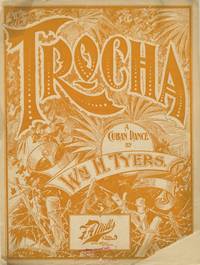
1890réf. List3666New York: Jos. W. Stern & Co 1890. Folio sheet music illustrated pictorial cover printed in orange. 5 pp. including cover. Approximately 13 ½ x 10 ½ inches. Covers detached loss to front cover contents complete fair to good. A decorative late nineteenth-century dance publication for “Trocha” described on the cover as “A Cuban Dance” composed by the African American composer and bandleader W. H. Tyers. The elaborate pictorial cover incorporates stylized tropical foliage and island scenery rendered in a bold single-color design typical for the period’s fascination with exoticized musical forms. William H. Tyers 1870–1924 was an African American composer arranger and bandleader active in New York during the ragtime era. Born in Petersburg Virginia to Henry Tyers and Jane “Jennie” Jones both formerly enslaved he spent part of his youth in Richmond before his family relocated to New York City where he began studying piano. His early teachers recognized an aptitude for composition as well as performance and by the mid-1880s he was writing dance pieces including polkas and waltzes. Around the age of twenty Tyers secured employment as a music librarian and arranger with a touring concert company a position that brought him to Europe where he studied orchestration and arranging with Professor Gaspari in Hamburg. Returning to New York Tyers became active in the city’s rapidly expanding popular music trade working as an arranger and composer for publishers including F. A. Mills and Jos. W. Stern & Co. In 1896 he published “Sambo” a syncopated march sometimes considered to be one of the first instrumental rags.1 “Trocha” also released in the 1980s brought Tyers prominence for his ability to write Latin-style rhythms. It was re-issued in 1913 as a tango and its success led Tyers to work as an arranger with Joseph W. Stern in 1897. Tyers’ compositions blended contemporary American dance music with Caribbean and Latin themes a style reflected in pieces such as Trocha and later in his well-known ragtime composition Panama 1911 which remained a staple of early jazz and dance orchestras. OCLC finds two copies with different entries at the Cleveland Public Library and the British Museum Reference Collections. 1 “William Tyers Music Arranger” African American Registry https://aaregistry.org/story/william-tyers-born/ accessed March 10 2026. Jos. W. Stern & Co unknown
1890réf. List3666New York: Jos. W. Stern & Co 1890. Folio sheet music illustrated pictorial cover printed in orange. 5 pp. including cover. Approximately 13 ½ x 10 ½ inches. Covers detached loss to front cover contents complete fair to good. A decorative late nineteenth-century dance publication for “Trocha” described on the cover as “A Cuban Dance” composed by the African American composer and bandleader W. H. Tyers. The elaborate pictorial cover incorporates stylized tropical foliage and island scenery rendered in a bold single-color design typical for the period’s fascination with exoticized musical forms. William H. Tyers 1870–1924 was an African American composer arranger and bandleader active in New York during the ragtime era. Born in Petersburg Virginia to Henry Tyers and Jane “Jennie” Jones both formerly enslaved he spent part of his youth in Richmond before his family relocated to New York City where he began studying piano. His early teachers recognized an aptitude for composition as well as performance and by the mid-1880s he was writing dance pieces including polkas and waltzes. Around the age of twenty Tyers secured employment as a music librarian and arranger with a touring concert company a position that brought him to Europe where he studied orchestration and arranging with Professor Gaspari in Hamburg. Returning to New York Tyers became active in the city’s rapidly expanding popular music trade working as an arranger and composer for publishers including F. A. Mills and Jos. W. Stern & Co. In 1896 he published “Sambo” a syncopated march sometimes considered to be one of the first instrumental rags.1 “Trocha” also released in the 1980s brought Tyers prominence for his ability to write Latin-style rhythms. It was re-issued in 1913 as a tango and its success led Tyers to work as an arranger with Joseph W. Stern in 1897. Tyers’ compositions blended contemporary American dance music with Caribbean and Latin themes a style reflected in pieces such as Trocha and later in his well-known ragtime composition Panama 1911 which remained a staple of early jazz and dance orchestras. OCLC finds two copies with different entries at the Cleveland Public Library and the British Museum Reference Collections. 1 “William Tyers Music Arranger” African American Registry https://aaregistry.org/story/william-tyers-born/ accessed March 10 2026. Jos. W. Stern & Co unknown books
réf. 1106Impression offset. Affiche OSPAAL. ca.1975. Dim: 69 x 38 cm. Bon état.
réf. 1106Impression offset. Affiche OSPAAL. ca.1975. Dim: 69 x 38 cm. Bon état.
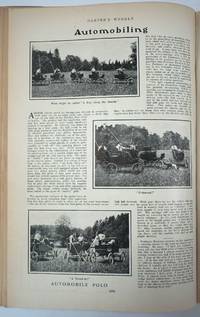
1902réf. 28399New York: Harper's 1902. First printing. Hardcover. Good overall. Content on the Russo-Japanese & Spanish American War; Automobiling early cars playing polo!; Teddy Roosevelt Chinese rugby cartoon Blackwell Island Bridge Thomas Nast cartoon Henley regatta. Half year bound volume of Harper's Weekly with woodblock illustrations throughout. Color supplements were included in the Christmas issue. Chinese playing rugby cartoon p1582; US Naval Academy p1498; Blackwell Island Bridge p1308; Wall Street p1180; Thomas Nast p1972. Folio 1155pp. Weekly issues bound up into a large single volume with 3/4 leather and marbled boards. Leather spine chipped cracked at hinge binding firm internally very clean. Harper's hardcover
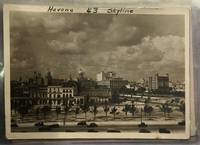
1930réf. RF 56517 original photos from La Habana. 8vo. 17 photographs from Havana. Photographs are 17.5 cm x 12.5 cm. Each photograph bears an ink handwritten description across the top: Prado & Morro Castle; Havana Skyline; Prado & Capitol; Residential Palace; El Morro no inscription; Race Track Havana; Prado from the Capitol; Prado from the Capitol another view Maine Monument; Capitol Grounds; Tropical Beer Garden; Main Monument & National Hotel Havana; Race Track another view; National Theatre and Capitol. Set of photographs of Havana from the 1920s 1930s. The inscriptions on each photograph are in English. Unidentified photographer. Interesting Cuban photographici conography. O02G000074 RF 565 X99X001603
1949réf. LFA-126711332N° 18 - 1er mai 1949 - Hebdomadaire de 8 pages, format 260 x 320 mm, illustré de bandes dessinées en couleurs et en noir, bon état
1949réf. LFA-126711333N° 20 - 15 mai 1949 - Hebdomadaire de 8 pages, format 260 x 320 mm, illustré de bandes dessinées en couleurs et en noir, bon état
1949réf. LFA-126711334N° 21 - 22 mai 1949 - Hebdomadaire de 8 pages, format 260 x 320 mm, illustré de bandes dessinées en couleurs et en noir, bon état
1949réf. LFA-126711335N° 22 - 29 mai 1949 - Hebdomadaire de 8 pages, format 260 x 320 mm, illustré de bandes dessinées en couleurs et en noir, bon état
1949réf. LFA-126711336N° 23 - 5 juin 1949 - Hebdomadaire de 8 pages, format 260 x 320 mm, illustré de bandes dessinées en couleurs et en noir, bon état
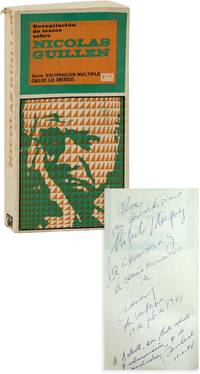
1974réf. 88452Havana: Casa de las Americas 1974. First Edition. First Impression one of 18000 copies. Narrow octavo 22.75cm; original pictorial card wrappers; 67-4293pp; illus.; text is entirely in Spanish. Inscribed by Guillen on the title page to Puerto Rican editor translator and literary critic Roberto Márquez: "Para Roberto Márquez / con el fraternal cariño de Nicolas / La Habana Feb. 74." Signed directly beneath by an unknown figure and below that by Afro-Cuban poet and journalist Marcelino Arozarena 1912-1996. The opposing page is inscribed for Márquez in verse with a small drawing by an undetermined poet signed "David Feb.74." The verso of the half-title page is warmly inscribed by Cuban poet and critic Nancy Morejón who has written the foreword to this volume: "Para mi queridísimo Roberto Marquez / la admiracion y el cariño immenso de Nancy / La Habana / 19 de feb. de 1974." Directly beneath this is another warm year of publication inscription by an underemined individual. This volume has been extensively marked-up by Márquez whose contribution "Introducción a Guillén" appears on pp.127-138. Some wear to extremities a few nicks and tears to spine ends with some creases to wrappers; Very Good. A key volume of critical texts on Guillén 1902-1989 the national poet of Cuba by many of his contemporaries like Mirta Aguirre Angel Augier Roberto Fernández Retamar Nancy Morejón Alejo Carpentier Pablo Neruda Ciro Alegría and others. This copy bears a number of contemporary inscriptions to Márquez a Guillén scholar who has written extensively on his work and has translated several of the poet's works faithfully from Spanish into English. 88452. Casa de las Americas unknown
1974réf. 88452Havana: Casa de las Americas 1974. First Edition. First Impression one of 18000 copies. Narrow octavo 22.75cm; original pictorial card wrappers; 67-4293pp; illus.; text is entirely in Spanish. Inscribed by Guillen on the title page to Puerto Rican editor translator and literary critic Roberto Márquez: "Para Roberto Márquez / con el fraternal cariño de Nicolas / La Habana Feb. 74." Signed directly beneath by an unknown figure and below that by Afro-Cuban poet and journalist Marcelino Arozarena 1912-1996. The opposing page is inscribed for Márquez in verse with a small drawing by an undetermined poet signed "David Feb.74." The verso of the half-title page is warmly inscribed by Cuban poet and critic Nancy Morejón who has written the foreword to this volume: "Para mi queridísimo Roberto Marquez / la admiracion y el cariño immenso de Nancy / La Habana / 19 de feb. de 1974." Directly beneath this is another warm year of publication inscription by an underemined individual. This volume has been extensively marked-up by Márquez whose contribution "Introducción a Guillén" appears on pp.127-138. Some wear to extremities a few nicks and tears to spine ends with some creases to wrappers; Very Good. A key volume of critical texts on Guillén 1902-1989 the national poet of Cuba by many of his contemporaries like Mirta Aguirre Angel Augier Roberto Fernández Retamar Nancy Morejón Alejo Carpentier Pablo Neruda Ciro Alegría and others. This copy bears a number of contemporary inscriptions to Márquez a Guillén scholar who has written extensively on his work and has translated several of the poet's works faithfully from Spanish into English. 88452. Casa de las Americas unknown books
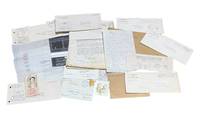
1945réf. 9277New York New York and Havana Cuba 1945. William John Mantz Jr. worked as an engineer and assistant manager for the West Indies Sugar Corporation for 10 years traveling back and forth frequently between his home in Tarrytown New York and the sugar plantations in Havana Cuba. This archive contains travel materials government documents and other personal artifacts pertaining to his time in Cuba and concerning his status with the draft during World War II. Most correspondence in original postmarked envelope. Included: - One black and white photograph of Bill and Marjorie Mantz - Birth certificate copy with raised seal for Bill Mantz dated January 1938 - Two personal letters from Marjorie to Bill in 1938 that mention her recent travels to visit him in Cuba - Cuban drivers license for Bill dated January 1940 with photo attached and stamped by the police department - Cuban Foreign Identification Card for Marjorie dated June 1940 with receipt and three copies of her photo attached - Receipt for surrendered passport in Miami Florida December 1940 - Letter from Bill's sister Margie in May 1942 forwarding paperwork from Selective Services - Two Cuban tax withholding documents from May/July 1942 - Letter from Bill in Spanish requesting the renewal of Marjorie's Foreigner's Identification card in May 1943 and follow up letter to a different recipient in English dated June 1943 regarding missing documents - Three permits from Selective Services for to depart from the United States 1943-1945 plus one duplicate - Four pieces of correspondence from the American Consulate in Cuba dated December 1944 - April 1945 regarding passports medical exams and registering the Mantz’s infant daughter - Sixteen letters and other correspondence between Bill his boss Arthur Kirstein and Selective Services mostly regarding Bill’s draft status but also some sugar industry business such as frequent air travel to Havana trains and fuel options and US politics after Truman assumed the presidency. . unknown
réf. 1325La Habana. Janvier-avril 1964. Grand in-8° carré broché. 156 pages.
réf. 1326La Habana. Novembre-décembre 1965. Grand in-8° carré broché. 171 pages.
réf. 1327La Habana. Janvier-février 1967. Grand in-8° carré broché. 155 pages.
réf. 9346DEMOCRATIE NOUVELLE, décembre 1967. In-8, broché.
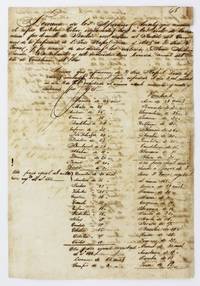
1866réf. 4747Havana: July 10 1866. Good. 3pp. on a bifolium. Separated at fold. Some wear to edge of first leaf cause some minor loss to text. A few scattered tape repairs and reattachments. Some offsetting. A colonial Spanish manuscript slave manifest for the steamship Cristobal Colon carrying dozens of enslaved Africans from Bailen to Partido del Cano both in Cuba. The text at the head reads as follows: "Nomina de los Africano bozales que conducten el vapor Cristobol Colon embarcado hoy a las siete de la mañana por el muelle de Bailen con destino al Partido del Cano unos de la propridad de D. José Rafael Diaz y otros de D. José Garcia y por encargo de sus dueños los custodia D. Juan Antonio Sanchez Bustamante y este individuo tiene biencia annal del Partido de Consolacion del Sur." Bailen is on the southern coast of Cuba north of the Isle of Pines; "El Cano" seems to have been a plantation outside of Havana while Consolacion del Sur is coastal town in the Pinar del Rio region of Cuba. The manifest lists 133 "Africanos bozales" that is slaves who could not speak Spanish in two or three columns separated between men "varones" and women "hembras" - their assigned names are given generally of Christian origin but with some range e.g "Ciforiana" "Liborio" and "Dionisia." Their ages are given one as young as nine several in their late thirties but most in their teens to early thirties. An additional leaf signed from Manila and dated July 10 1866 notes that although 133 people were sent only 115 survived the journey and lists the names of those who perished. July 10
1866réf. 4747Havana: July 10 1866. Good. 3pp. on a bifolium. Separated at fold. Some wear to edge of first leaf cause some minor loss to text. A few scattered tape repairs and reattachments. Some offsetting. A colonial Spanish manuscript slave manifest for the steamship Cristobal Colon carrying dozens of enslaved Africans from Bailen to Partido del Cano both in Cuba. The text at the head reads as follows: "Nomina de los Africano bozales que conducten el vapor Cristobol Colon embarcado hoy a las siete de la mañana por el muelle de Bailen con destino al Partido del Cano unos de la propridad de D. José Rafael Diaz y otros de D. José Garcia y por encargo de sus dueños los custodia D. Juan Antonio Sanchez Bustamante y este individuo tiene biencia annal del Partido de Consolacion del Sur." Bailen is on the southern coast of Cuba north of the Isle of Pines; "El Cano" seems to have been a plantation outside of Havana while Consolacion del Sur is coastal town in the Pinar del Rio region of Cuba. The manifest lists 133 "Africanos bozales" that is slaves who could not speak Spanish in two or three columns separated between men "varones" and women "hembras" - their assigned names are given generally of Christian origin but with some range e.g "Ciforiana" "Liborio" and "Dionisia." Their ages are given one as young as nine several in their late thirties but most in their teens to early thirties. An additional leaf signed from Manila and dated July 10 1866 notes that although 133 people were sent only 115 survived the journey and lists the names of those who perished. July 10 books
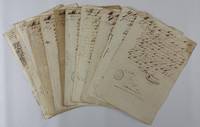
1873réf. 12720Cuba 1873. Twelve manuscript documents on folio sheets approximately 8.5 x 12.5 inches all with official rubber-stamped seal. Small pinholes along left margin light wear occasional chipping to edges some ink bleed and light damp staining. Overall very good. A collection of documents recording the liberation or attempted liberation of numerous men women teenagers and a child from enslavement. The child is but seven years old while the remaining slaves range from fifteen to fifty-seven years old. The slave trade ended in Cuba around 1867 but the practice of owning slaves remained legal until 1880 and then was abolished completely by Spanish decree in 1886. Cuba was the penultimate country to outlaw slavery in the western hemisphere beating Brazil to formal abolishment by two years. Even before the official abolition of slavery in Cuba African or criollo slaves were manumitted by a variety of owners and at various costs as evidenced here especially after the practice of importing Chinese indentured servants began. Each of the present documents names the slaveholder and the slave granted "libertad" along with the cost in escudos or pesetas of that liberty. The slaves liberated here are as follows: 1 Luis criollo 7 years old for the sum of 28 pesos 2 Maria Antonia part criolla 20 years old for the sum of 2500 pesetas 3 Catalina morena de Africa 41 years old for c.200 pesetas 4 Lorenzo moreno criollo 21 years old for 2500 pesetas 5 Lucia morena criolla 15 years old for 320 pesos or 1600 pesetas 6 Frigidae "negro.de Africae" 56 years old 7 Augusto criollo 19 years old for 1750 pesetas 8 Marta criolla 16 years old for 1621 pesetas 9 Gil moreno de Africa 57 years old for 1500 pesos 10 Carmita morena criolla 20 years old for 1750 pesetas 11 Augustina Prieto morena criolla 30 years old for 1750 pesetas 12 Edwigio 39 criolla; Lazara 36 criolla; and Maria Leoncia 15 criolla for 2000 pesetas. These Cuban slave manumissions are offered with one 1844 manumission document liberating a slave in Spain totaling two pages and measuring about 8.5 x 13.5 inches. The document also has three rubber-stamped official seals at the head noting Isabella II. This document appears to free slave Nicolas 25 years old for the sum of 400 pesos and is signed November 5 1844. unknown
1873réf. 12720Cuba 1873. Twelve manuscript documents on folio sheets approximately 8.5 x 12.5 inches all with official rubber-stamped seal. Small pinholes along left margin light wear occasional chipping to edges some ink bleed and light damp staining. Overall very good. A collection of documents recording the liberation or attempted liberation of numerous men women teenagers and a child from enslavement. The child is but seven years old while the remaining slaves range from fifteen to fifty-seven years old. The slave trade ended in Cuba around 1867 but the practice of owning slaves remained legal until 1880 and then was abolished completely by Spanish decree in 1886. Cuba was the penultimate country to outlaw slavery in the western hemisphere beating Brazil to formal abolishment by two years. Even before the official abolition of slavery in Cuba African or criollo slaves were manumitted by a variety of owners and at various costs as evidenced here especially after the practice of importing Chinese indentured servants began. Each of the present documents names the slaveholder and the slave granted "libertad" along with the cost in escudos or pesetas of that liberty. The slaves liberated here are as follows: 1 Luis criollo 7 years old for the sum of 28 pesos 2 Maria Antonia part criolla 20 years old for the sum of 2500 pesetas 3 Catalina morena de Africa 41 years old for c.200 pesetas 4 Lorenzo moreno criollo 21 years old for 2500 pesetas 5 Lucia morena criolla 15 years old for 320 pesos or 1600 pesetas 6 Frigidae "negro.de Africae" 56 years old 7 Augusto criollo 19 years old for 1750 pesetas 8 Marta criolla 16 years old for 1621 pesetas 9 Gil moreno de Africa 57 years old for 1500 pesos 10 Carmita morena criolla 20 years old for 1750 pesetas 11 Augustina Prieto morena criolla 30 years old for 1750 pesetas 12 Edwigio 39 criolla; Lazara 36 criolla; and Maria Leoncia 15 criolla for 2000 pesetas. These Cuban slave manumissions are offered with one 1844 manumission document liberating a slave in Spain totaling two pages and measuring about 8.5 x 13.5 inches. The document also has three rubber-stamped official seals at the head noting Isabella II. This document appears to free slave Nicolas 25 years old for the sum of 400 pesos and is signed November 5 1844. unknown books
1938réf. Q988Made by hand 1938-1940. Very good. Cord bound hardcover scrap book 14.5 x 12.5 inches. With ephemera from two trips: the first to Europe Ireland Scotland and France in August 1938 sailing from Boston to Cobh County Cork Ireland aboard the S. S. California ship operated by Anchor Line. 7 leaves of ephemera from Dublin Edinburgh Paris and Reims. Used on both sides the first 5 leaves are split at the gutter because of the fragility of the paper but remain loosely inserted. The second trip chronicled is to Cuba in September-October 1940 with Clyde-Mallory Lines sailing from Miami to Havana aboard the "Shawnee" first class. Ephemera from the trips include luggage tags hotel bills postcards telegrams theater tickets programs menus etc. There's also a guide to Esperanto etc and two unusual but beautiful crepe paper items possibly hats. The original owner's surname has been redacted throughout but was a First-Class traveler from Massachusetts. Nice collection. Shipping for this item will be charged at-cost. Made by hand hardcover
réf. 32534Editions sociales, 1975. Format poche. Bon etat.
1995Mm 215x280 Catalogo della mostra del Museo Nacional de CUba. Brossura editoriale con bandelle di pp. 95 con illustrazioni a colori, in ottimo stato. SPEDIZIONE IN 24 ORE DALLA CONFERMA DELL'ORDINE.