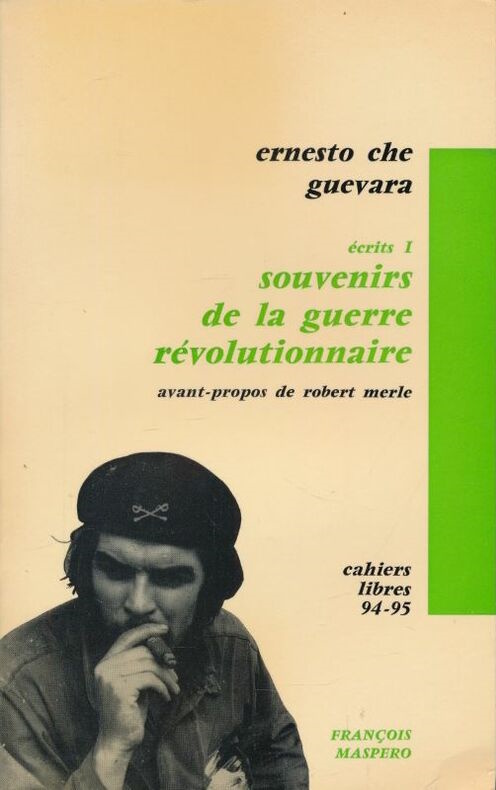
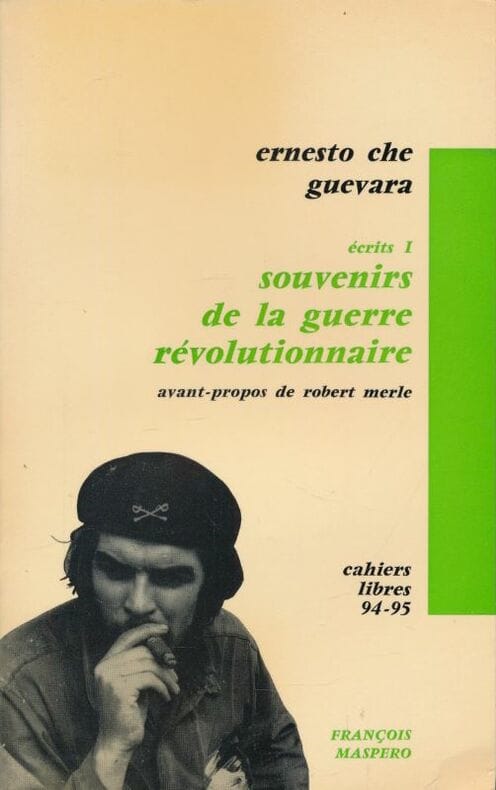
1967Maspéro, 1967. In-8 broché, couverture à rabats de 228 pages, cartes. Collection cahiers libres 94-95. Ecrits I. Passages discrètement soulignés au crayon de papier sinon Bon état.
Madrid, Imprenta que fue de Operarios, a cargo de Joaquín Muñoz, 1853. 4to. menor; 77 pp. Cubiertas modernas en cartulina.
New Haven, Yale University Press, 1964. 4to.menor; XLIV-218 pp. Ejemplar con rastros de humedad. Enc. original en tela.
Madrid, Edit. Agencia Mundial Librería, 1935. 294p. 8ºmayor. Rústica editorial ilustrada, algo rozada. Intonso. Leves puntos óxido en los cantos. Interior en buen estado. Buen ejemplar. Sobre el cultivo de azúcar en Cuba y las Antillas.
français 0 1903' p. 109 à 132. Fascicule orig., extrait de la série TOUR DU MONDE de l'année et semestre indiqués. Gravures ou photographies in-t et h-t. Format 21 x 29cm. Ex. collé en couverture d'attente, illustrée, carton rouge ou vert. Bonne présentation. TOUR-DU-MONDE VOYAGES CUBA
1967réf. 4867Maspero, 1967, in-8°, 235 pp, traduit de l'espagnol, avant-propos de Robert Merle, 3 cartes, broché, couv. illustrée à rabats, qqs rares annotations crayon, bon état (Coll. Cahiers libres 94-95)
1968réf. 58815Maspero, 1968, in-8°, 300 pp, introduction de Roberto Fernandez Retamar, traduction de Fanchita Gonzalez Batlle, broché, couv. illustrée à rabats, qqs marques au crayon en marges, bon état (Coll. Cahiers libres 116-117)
1967réf. 125034Maspero, 1967 in-8°, 235 pp, traduit de l'espagnol, avant-propos de Robert Merle, 3 cartes, broché, couv. illustrée à rabats (défraîchie), état correct (Coll. Cahiers libres 94-95)
1988réf. 31405Couverture souple. Broché. 428 pages.
réf. 3990François Maspéro, éditeur. 1968. Grand in-8° broché. 190 pages. E.O. française. Très propre.
1967réf. 9972Maspero, 1967, pt in-8°, 183 pp, broché, couv. à rabats, bon état (Coll. Cahiers libres)
1966réf. 208613Couverture souple. Broché. 58 pages.
1989réf. 31558Düsseldorf, Edition Marxistische Blätter, 1989. 491 S., Tab., OBr., Umschlagtitel berieben und im Fuß gestaucht, 2 S. mit Knickfalte, etwas nachgedunkelt.
2019ill., br. "Credo che la fotografia abbia la sua naturale destinazione nella stampa, dove diviene visione definitiva, ed ecco allora il progetto del libro. Non avevo in mente un libro che parlasse di una Cuba stereotipata ma di una visione che ho lasciato decantare per arrivare ad un racconto fatto nel rispetto della verità, senza giudizio o denuncia, il racconto come un viaggio esso stesso. La Cuba frutto della tradizione, dell'embargo, dell'accoglienza e il tempo proprio dell'isola. Ognuno dei progetti che ho fatto miei nella terra della Isla, mi pare paradigmatico di tante altre situazioni in luoghi altri da Cuba. La loro sospensione anche se drammaticamente vera, mi riporta in mente sensazioni riconducibili ai valori su cui si basa la mia vita giovanile." (L'autore)
1970Reli?. 355 pages. Jaquette. 17,5x24xcm.
1970réf. 28965Couverture rigide. Cartonnage de l'éditeur. 356 pages. Jaquette défraîchie.
1973réf. 95958SCEMI, 1973, gr. in-8°, 354 pp, 64 pl. de photos hors texte en héliogravure, 8 pl. hors texte en couleurs, 22 cartes et croquis, reliure toile éditeur, 1er plat illustré, bon état. Edition originale, tirage hors commerce réservé aux Bibliophiles de l'Aventure (Coll. Connaissance des îles)
197018x11. 236p.
réf. 102449067X.Ghardcover. Good. Access codes and supplements are not guaranteed with used items. May be an ex-library book. hardcover
réf. 1024495299.Gpaperback. Good. Access codes and supplements are not guaranteed with used items. May be an ex-library book. paperback
réf. 1247409120.Gpaperback. Good. Access codes and supplements are not guaranteed with used items. May be an ex-library book. paperback
réf. 1278869239.Gpaperback. Good. Access codes and supplements are not guaranteed with used items. May be an ex-library book. paperback
réf. 1278900748.Gpaperback. Good. Access codes and supplements are not guaranteed with used items. May be an ex-library book. paperback
réf. 1275600719.Gpaperback. Good. Access codes and supplements are not guaranteed with used items. May be an ex-library book. paperback
réf. 20CCUBALOTCIsrael Jerusalem Havana Cuba New York Usa. Fair with no dust jacket. Non-Book. On offer is a remarkable nine-document archive tracing nearly two decades of Zionist political cultural and financial correspondence linking Cubas Jewish leadership with the centers of world Jewry in Jerusalem New York and Latin America. Together these communications chart the transformation of Cuban Jewry from a peripheral supporter of the Yishuv to an active and recognized participant in the international Zionist networka Caribbean outpost engaged in fundraising education youth mobilization and ideological exchange. Mandatory-Era Migration and Bureaucratic RestraintThe earliest piece dated September 22 1937 comes from the Jewish Agency for Palestine in Jerusalem addressed to the Zionist Federation of Cuba in Havana regarding an individual immigration request the case of Rudzenewsky. The letter opens: - . We do not have any immigration certificates in our possession; therefore we cannot discuss your request regarding obtaining Aliyah certificates at all. Issued amid the tightening British immigration quotas of the Arab Revolt this restrained refusal captures the bureaucratic limits of Mandatory-era migration and the frustration of a community newly seeking direct participation in the Zionist project. Even a sympathetic outpost such as Havana remained outside the gates of the Yishuvs allocation system dependent on permissions that never came. As one of the earliest known correspondence between the Cuban Zionist Federation and Jerusalem it marks the beginning of a paper trail that would over the following two decades trace the communitys evolution from petitioners to recognized partners in global Zionist coordination. Fundraising for Settlement and DefenseBarely six weeks later the tone shifts from denial to mobilization. On 5 Kislev 5698 November 5 1937 Keren Hayesod Ltd. the Erez Israel Palestine Foundation Fund issued a Hebrew circular from Jerusalem to its global committees including Havana. Typed on vivid blue-and-white letterhead it announced the forthcoming fourth issue of HaMassad dedicated to the great enterprise of construction and security of Keren Hayesod this year. Inviting regional feedback to ensure the bulletin fulfills its task perfectly and reflects the creative work being done in Eretz Israel the circular unites the twin imperatives of binyan uvebitachon building and defense central to the Yishuvs ethos amid the Arab Revolt. For Cubas emerging Zionist Federation this stands as one of the earliest direct communications from Jerusalem confirming the islands inclusion in the pre-state fundraising and ideological network. Wartime Solidarity and Political ConscienceTwo vivid wartime items from 1944 illustrate how ideology culture and politics intertwined in Havana. The Unión Sionista de Cuba issued a bilingual flyer inviting the Jewish public of Havana to a lecture by Nathan Bistritzky on Moscow and Jerusalem An Analysis of Two Revolutions adding: En este Acto se homenajeará al heroico Ejército Rojo en ocasión de su 26º Aniversario. In this Act the heroic Red Army will be honored on the occasion of its 26th Anniversary. An accompanying invitation from the Patronato de Ayuda al Pueblo Español greets the President of Zionist Youth and invites him to a December meeting about the struggle of the Spanish people and the delivery of economic contributions for the Year-End Effort. These intertwined documents vividly position Jewish Havana within the broader antifascist and humanitarian currents of the Second World War. Youth Networks and Ideological PluralismA Hashomer Hatzair letter of April 17 1945 conveys the disciplined optimism of the socialist-Zionist youth movement as it rebuilt its trans-American network in the final months of war. Written from the North American headquarters in New York to the Cuban branch it reports on arrangements for Tova Levin a young Hebrew teacher in training at the movements Hightstown farm who would soon travel to Cuba to assist with education and leadership development. The circular further details plans for a Latin-American management camp in Mexico and urges an immediate reply with participant names. The writers lament the branchs silence since October and request news and photographs for The Young Guard anniversary issue. Closing with With the blessing of the movement. Strong and courageous! it perfectly fuses administration and inspiration. Its bilingual Hebrew-English letterhead / Hashomer Hatzairembodies the groups dual mission: Hebrew in content international in spirit linking Havana New York and Mexico in a single youth-driven Zionist network. From Jerusalem the Executive of the Zionist Organization issued a communiqué on July 15 1946 signed by Dr. A. L. Leuterbach in the aftermath of the British arrests and seizure of the Jewish Agencys offices during the Black Sabbath raids: The imprisonment of members of the Jewish Agency came as a heavy blow to us and greatly shocked the Yishuv and the entire Zionist world. The statement thanks Jewish communities abroad for solidarity vows to continue our work without hesitation and appeals to every Zionist body to spread the spirit of Zionism even more strongly in their respective places. Although the Agencys files had been seized the call radiates steadfastness and unity amid repression. A decade later this networks endurance is reaffirmed through two trans-Atlantic communications. On December 14 1955 The Jewish Agency Inc. 16 E. 66th Street New York wrote to Betar Calle 10 esq. 3 Vedado Havana enclosing a check for $150 representing allocation by the Youth and Hechalutz Department for the period October 1 1955 through March 31 1956.The letter explicitly notes that the payment was made pursuant to instructions received from Israel confirming that the directive to fund Havanas Betar chapter originated in Jerusalem. Signed by Fannie Speiser Assistant Treasurer the letter attests to the continuing New YorkHavana financial conduit and to Israels oversight of diaspora youth programming. Soon afterward Dr. Aron Weinberger of Midstream magazine wrote inviting the Havana community to help distribute the journal for free and frank discussion of all problems that face the contemporary Jew. final item dated November 12 1956 brings the narrative full circle. Issued by the Club Juvenil del Patronato de la Casa de la Comunidad Hebrea de Cuba it invites Hashomer Hatzair Prado 260 Ciudad to attend the installation ceremony of the Patronatos new youth board to be held on Tuesday 20 November at 9 p. M. In the Conference Hall of the Patronato. Signed by Rafael Kapuskin Secretary the letter is both social and symbolicaffirming that by the mid-1950s Zionist youth movements were no longer peripheral study circles but active civic partners within Havanas central Jewish institutions. The letters tone En la seguridad de vernos honrados con vuestra presencia In the certainty of being honored by your presence embodies the confidence of a mature interconnected Jewish community just before the political transformations of late-1950s Cuba. Together these communications trace Havanas evolving role in Israel-oriented and diasporic intellectual lifefrom the practical fundraising of Keren Hayesod to the ideological pluralism of Betar and Hashomer Hatzair. As a whole the archive captures the rhythm of Cuban Zionist life from supplication and bureaucracy to political maturity and cultural dialogue. It offers scholars a uniquely multilingual cross-section of Hebrew Yiddish Spanish and English voices negotiating identity loyalty and nationhood from the Caribbean periphery of world Zionism. Condition and Language: Nine documents spanning Hebrew Yiddish Spanish and English. Mixed paper stocks; significant folds generally minor stains and varying edge tears especially prominent on thinner stock. Heavy handling all text complete and legible. Age toning. Overall Fair to Good.; Manuscripts; 8vo 8" - 9" tall; 10 pages; Signed by Author . unknown