2 484 résultats
1986Albin Michel 1986, fort In-8 broché. 536 pages. Bon état.
réf. 6017Albin Michel Albin Michel, 1986 - Fort volume broché au format 15x24cm, couverture souple glacée de l'éditeur, 532 pages, dont en annexes quelques portraits de personnes poursuivies par le régime Castriste. Bon ensemble en bon état.
1986réf. 121360Albin Michel Albin Michel, 1986. Fort In-8 broché de 536 pages. Bon état.
réf. 1467Broché, 24X15 cm, 536 pages, 1986, Albin Michel. Bon exemplaire.
1986réf. 9841Albin Michel, 1986, fort gr. in-8°, 536 pp, 45 photos en annexe, broché, bon état
1986réf. 74951986 Albin Michel, Paris, 1986. Un volume in-8 dos collé, couverture blanche illustrée, 536 pages. Pliures au dos, néanmoins bon état.
2007In 8, cm. 22 x 26, pp. 271 + (1), con centinaia di illustrazioni fotografiche in bianco e nero e a colori prevalentemente a piena e doppia pagina nel testo. Cartonato editoriale illustrato in bianco e nero, sovraccoperta con alette informative illustrata. In ottimo stato. Testi di Luciano Garibaldi. Il volume e' stato pubblicato a cura dell'Espresso - National Geographic.
Buenos Aires, Edit. Emecé, 2003. 94p. 8º mayor. Rústica editorial ilustrada. Muy buen ejemplar. 1ª edición en Argentina..
Palma de Mallorca, Bitzoc, 1995. 72 p. 5 h. 8º. Rústica editorial con sobrecubierta ilustrada. Muy buen ejemplar. III Premio de Novela Breve Juan March Cencillo. 1ª edición. 1st edition.
1999Un volume broché de format petit in 8° de 352 pp.; couverture illustrée par Loustal. Comme neuf. Voir photo.
réf. 70539Paris, éd. Vents de sable, 2001, gd. In-4 oblong, cartonnage toilé brun éd. Jaquette photos coul. Éd., non paginé, très nb. Photos en coul., Superbe ouvrage sur l'île de Cuba et ses habitants. Très belles photographies couleur de Robert van der Hilst. Très bon état
200324x16. 242p. Enc. Cart. Ed. Sobrecubierta.
1998réf. 134390Couverture rigide. Cartonné. 395 pages.
2000Broch?. 202 pages. Jaquette.
2003Broch?. 182 pages. Etat neuf.
1997A clean, unmarked book with a tight binding. Slight wear to cover. 8 1/2"w x 11"h. 160 pages. List of works, biographies, Spanish texts. Includes: Abel Barroso, Los Carpinteros, Luis Gomez, Ren? Francisco, Esterio Segura, Tonel, Kcho, Carlos Garaicoa.
2001réf. 11370Vents de sable 2001 In-4 cartonné, sous jaquette illustrée. Traduit de l’Espagnol pae Carmen Val Julian
réf. 13978830Paris: Editions Cercle d'Art, 2000 in-4, 207 pages, nombreuses illustrations. Cartonnage d'éd. jaquette, bon état.
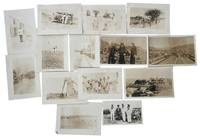
1914réf. 235561914. US Navy photograph archive 1914 to 1919 documenting American sailors in Cuba during the years when Guantánamo Bay served as a U.S. naval station for Caribbean fleet activity training and strategic movement. Verso inscriptions reading "25wyn" and "1914 to 1919" likely connect the group to USS Wyoming BB 32 whose documented service placed the battleship repeatedly in Cuban waters during this period. The photographs provide a sailor's vernacular record of Cuban streets roads transportation local residents agricultural hauling commerce and infrastructure within a wartime Cuba shaped by U.S. naval presence Caribbean patrol activity and the uneven modernization of industry under US Imperial rule. Photo archive of 14 silver gelatin photographs various sizes most approximately 5 x 3.5 inches Cuba 1914 to 1919. The images show U.S. Navy sailors posed among cactus and agave standing with Cuban men beside an open touring automobile and gathered in uniform at a public outdoor event with benches crowds buildings and hills beyond. Cuban infrastructure appears throughout the group: horse drawn carriages and wagons move through a town street lined with utility poles and commercial buildings; an ox team pulls a high wooden cart loaded with cut cane or brush along a rural road; a windmill or water pumping structure stands beside a group of local residents; a rail or tram line runs through a lightly built district; and a roadside scene combines naval uniforms automobile travel and undeveloped terrain. One commercial view shows a tourist photography and souvenir stand advertising "post cards made while you wait" "souvenirs & novelties" "Kodak films for sale" and "photo printing developing" placing commercial image making tourist exchange and modern photographic supply in the same Cuban landscape the sailors moved through during the US's imperial organization. The U.S. naval presence in Cuba began with the Spanish American War and the occupation that followed. The Platt Amendment which limited Cuban sovereignty after independence in 1902 and the 1903 lease agreements gave the United States a permanent base at Guantánamo Bay. By World War I Guantánamo was part of the working map of U.S. power in the Caribbean. It supported fleet exercises patrol movements and regional security from Cuban territory. These photographs show US imperial interest by depicting American sailors moving through streets and roads where motorcars utility poles photographic shops horse drawn traffic ox carts windmills rural tram lines and agricultural hauling all appear in the same landscape. Overall in good to fair condition with heavy image fading slight handling wear some curling. Some photographs have tears which do not obstruct the images. A visual record of U.S. naval presence in Platt Amendment Cuba and the roads shops vehicles animals and rural working systems during the World War I period. unknown books
1914réf. 235561914. US Navy photograph archive 1914 to 1919 documenting American sailors in Cuba during the years when Guantánamo Bay served as a U.S. naval station for Caribbean fleet activity training and strategic movement. Verso inscriptions reading "25wyn" and "1914 to 1919" likely connect the group to USS Wyoming BB 32 whose documented service placed the battleship repeatedly in Cuban waters during this period. The photographs provide a sailor's vernacular record of Cuban streets roads transportation local residents agricultural hauling commerce and infrastructure within a wartime Cuba shaped by U.S. naval presence Caribbean patrol activity and the uneven modernization of industry under US Imperial rule. Photo archive of 14 silver gelatin photographs various sizes most approximately 5 x 3.5 inches Cuba 1914 to 1919. The images show U.S. Navy sailors posed among cactus and agave standing with Cuban men beside an open touring automobile and gathered in uniform at a public outdoor event with benches crowds buildings and hills beyond. Cuban infrastructure appears throughout the group: horse drawn carriages and wagons move through a town street lined with utility poles and commercial buildings; an ox team pulls a high wooden cart loaded with cut cane or brush along a rural road; a windmill or water pumping structure stands beside a group of local residents; a rail or tram line runs through a lightly built district; and a roadside scene combines naval uniforms automobile travel and undeveloped terrain. One commercial view shows a tourist photography and souvenir stand advertising "post cards made while you wait" "souvenirs & novelties" "Kodak films for sale" and "photo printing developing" placing commercial image making tourist exchange and modern photographic supply in the same Cuban landscape the sailors moved through during the US's imperial organization. The U.S. naval presence in Cuba began with the Spanish American War and the occupation that followed. The Platt Amendment which limited Cuban sovereignty after independence in 1902 and the 1903 lease agreements gave the United States a permanent base at Guantánamo Bay. By World War I Guantánamo was part of the working map of U.S. power in the Caribbean. It supported fleet exercises patrol movements and regional security from Cuban territory. These photographs show US imperial interest by depicting American sailors moving through streets and roads where motorcars utility poles photographic shops horse drawn traffic ox carts windmills rural tram lines and agricultural hauling all appear in the same landscape. Overall in good to fair condition with heavy image fading slight handling wear some curling. Some photographs have tears which do not obstruct the images. A visual record of U.S. naval presence in Platt Amendment Cuba and the roads shops vehicles animals and rural working systems during the World War I period. unknown
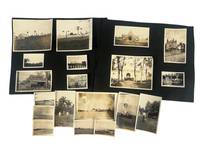
1915réf. 224781915. Polk George Washington Jr. Havana and rural Cuba photo archive 1915 documents Cuba through the viewpoint of an American military traveler during the Platt Amendment era when U.S. power shaped Cuban sovereignty port security naval access and commercial movement. The photographs record ships in Havana Harbor coastal fortifications rural dwellings Cuban farmers agricultural landscapes and colonial plazas providing insight into how U.S. military personnel visually encountered Cuba just before American entry into World War I. The Platt Amendment gave the United States broad authority to intervene in Cuban affairs and required Cuba to lease land for naval stations remaining central to U.S.-Cuba relations until its repeal in 1934; this archive therefore places vernacular travel photography within a larger framework of military oversight and commercial access. Polk George Washington Jr. Havana Cuba vernacular photo collection. Havana Cuba: unpublished December 1915. Twenty-eight silver gelatin photographs pasted to album pages with some loose or partially detached ranging from approximately 2 x 2½ inches to 4½ x 3½ inches many with handwritten ink annotations dated December 22 to 29 1915. The images include vessels anchored in Havana Harbor harbor views from on board ship Morro Castle and other coastal fortification views colonial civic plazas local laborers and civilians thatched rural huts or bohíos sugarcane fields and agricultural scenes captioned "Orange Trees & Coconut Palms Near Havana." One photograph is captioned "Cuban Farmer & Son Near Havana Dec 22 1915" giving the archive direct documentary value for rural family life and American observation of Cuban agricultural communities. Other captions identify boats as "U.S.C. 5th Protectors off Havana" and refer to the United Fruit Company steamer Abangarez on the Havana-Colon route; the Abangarez was a United Fruit Company passenger and cargo vessel completed in 1909 and later brought under United States registry during World War I. The photographs combine military commercial and rural subjects in a compact record of U.S.-Cuban contact. Polk's annotations and the repeated Potchernick-Birdsong Co. Kodak Place San Antonio Texas stamps on versos indicate that the images were developed in the United States after the trip or sent home for processing preserving the path by which overseas military travel became a personal photographic record. Polk's later military service is supported by burial and veterans' records identifying George Washington Polk Jr. as born May 13 1889 died July 27 1976 and buried at Fort Rosecrans National Cemetery; the supplied description identifies him as later a Colonel in the U.S. Army Air Corps and instructor in the early U.S. Air Force. Most photographs lightly pasted along one edge to scrapbook leaves with some detached or partially affixed; a few corner creases otherwise sharp images with strong contrast good to very good overall. Focused 1915 Cuba archive linking Havana Harbor rural Cuban labor vernacular architecture United Fruit maritime movement and American military observation during the U.S. protectorate period. unknown books
1915réf. 224781915. Polk George Washington Jr. Havana and rural Cuba photo archive 1915 documents Cuba through the viewpoint of an American military traveler during the Platt Amendment era when U.S. power shaped Cuban sovereignty port security naval access and commercial movement. The photographs record ships in Havana Harbor coastal fortifications rural dwellings Cuban farmers agricultural landscapes and colonial plazas providing insight into how U.S. military personnel visually encountered Cuba just before American entry into World War I. The Platt Amendment gave the United States broad authority to intervene in Cuban affairs and required Cuba to lease land for naval stations remaining central to U.S.-Cuba relations until its repeal in 1934; this archive therefore places vernacular travel photography within a larger framework of military oversight and commercial access. Polk George Washington Jr. Havana Cuba vernacular photo collection. Havana Cuba: unpublished December 1915. Twenty-eight silver gelatin photographs pasted to album pages with some loose or partially detached ranging from approximately 2 x 2½ inches to 4½ x 3½ inches many with handwritten ink annotations dated December 22 to 29 1915. The images include vessels anchored in Havana Harbor harbor views from on board ship Morro Castle and other coastal fortification views colonial civic plazas local laborers and civilians thatched rural huts or bohíos sugarcane fields and agricultural scenes captioned "Orange Trees & Coconut Palms Near Havana." One photograph is captioned "Cuban Farmer & Son Near Havana Dec 22 1915" giving the archive direct documentary value for rural family life and American observation of Cuban agricultural communities. Other captions identify boats as "U.S.C. 5th Protectors off Havana" and refer to the United Fruit Company steamer Abangarez on the Havana-Colon route; the Abangarez was a United Fruit Company passenger and cargo vessel completed in 1909 and later brought under United States registry during World War I. The photographs combine military commercial and rural subjects in a compact record of U.S.-Cuban contact. Polk's annotations and the repeated Potchernick-Birdsong Co. Kodak Place San Antonio Texas stamps on versos indicate that the images were developed in the United States after the trip or sent home for processing preserving the path by which overseas military travel became a personal photographic record. Polk's later military service is supported by burial and veterans' records identifying George Washington Polk Jr. as born May 13 1889 died July 27 1976 and buried at Fort Rosecrans National Cemetery; the supplied description identifies him as later a Colonel in the U.S. Army Air Corps and instructor in the early U.S. Air Force. Most photographs lightly pasted along one edge to scrapbook leaves with some detached or partially affixed; a few corner creases otherwise sharp images with strong contrast good to very good overall. Focused 1915 Cuba archive linking Havana Harbor rural Cuban labor vernacular architecture United Fruit maritime movement and American military observation during the U.S. protectorate period. unknown
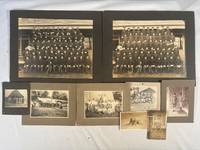
1909réf. 224671909. Soldier Harold Howard's person documentaation of service in the 11th U.S. Cavalry during the period of American military occupation and intervention in Cuba following the Spanish American War. These photographs place an enlisted cavalryman within the broader framework of U.S. expansionist policy in the Caribbean under the Platt Amendment when American troops were repeatedly deployed to Cuba to oversee political stability infrastructure and economic interests. The archive includes identified images of Sgt. Harold Howard and captures both formal military organization and informal daily life offering a ground-level record of U.S. cavalry presence during a period of continued occupation and reintervention including the second U.S. occupation of Cuba from 1912 to 1913. Archive of nine vintage silver gelatin photographs ranging approximately from 3.5 x 5 inches to 10 x 13 inches many mounted to original photographer boards and some annotated in ink or pencil. Two large-format formal group portraits depict Troop K 11th U.S. Cavalry at Fort Oglethorpe Georgia 1913 showing soldiers in full dress uniform arranged in tiered formation with visible regimental flag marked "11" and "K" with Howard identified in one image. Smaller photographs include a group portrait of U.S. cavalrymen in Pinar del Río Cuba dated 1908 showing soldiers in campaign dress posed near a stable as well as candid camp scenes featuring cooking areas barracks life and assembled troops. Two photo postcards function as personal correspondence with handwritten messages from Howard dated April 1 and September 9 1913 addressed to Mrs. A. L. Howard in Maine referencing weather conditions and upcoming exhibition drills providing direct evidence of mobility and routine within cavalry service. Additional images include a cabinet card of two uniformed soldiers and a scene depicting Black Cuban civilians posed near a thatched structure situating U.S. military presence within local social environments. Taken together the archive documents the lived experience of a U.S. cavalryman operating within the infrastructure of American imperial policy in the Caribbean linking domestic military bases such as Fort Oglethorpe with overseas deployment in Cuba. The photographs record both the formal visual culture of the U.S. Army and the everyday conditions of enlisted service while the inclusion of Cuban subjects and locations underscores the entanglement of military occupation with local populations. General edge wear throughout with occasional pinholes adhesive remnants and minor chipping to mounts; some toning to boards. Photographs remain clear and stable with annotations legible. Overall very good condition. unknown books
1909réf. 224671909. Soldier Harold Howard's person documentaation of service in the 11th U.S. Cavalry during the period of American military occupation and intervention in Cuba following the Spanish American War. These photographs place an enlisted cavalryman within the broader framework of U.S. expansionist policy in the Caribbean under the Platt Amendment when American troops were repeatedly deployed to Cuba to oversee political stability infrastructure and economic interests. The archive includes identified images of Sgt. Harold Howard and captures both formal military organization and informal daily life offering a ground-level record of U.S. cavalry presence during a period of continued occupation and reintervention including the second U.S. occupation of Cuba from 1912 to 1913. Archive of nine vintage silver gelatin photographs ranging approximately from 3.5 x 5 inches to 10 x 13 inches many mounted to original photographer boards and some annotated in ink or pencil. Two large-format formal group portraits depict Troop K 11th U.S. Cavalry at Fort Oglethorpe Georgia 1913 showing soldiers in full dress uniform arranged in tiered formation with visible regimental flag marked "11" and "K" with Howard identified in one image. Smaller photographs include a group portrait of U.S. cavalrymen in Pinar del Río Cuba dated 1908 showing soldiers in campaign dress posed near a stable as well as candid camp scenes featuring cooking areas barracks life and assembled troops. Two photo postcards function as personal correspondence with handwritten messages from Howard dated April 1 and September 9 1913 addressed to Mrs. A. L. Howard in Maine referencing weather conditions and upcoming exhibition drills providing direct evidence of mobility and routine within cavalry service. Additional images include a cabinet card of two uniformed soldiers and a scene depicting Black Cuban civilians posed near a thatched structure situating U.S. military presence within local social environments. Taken together the archive documents the lived experience of a U.S. cavalryman operating within the infrastructure of American imperial policy in the Caribbean linking domestic military bases such as Fort Oglethorpe with overseas deployment in Cuba. The photographs record both the formal visual culture of the U.S. Army and the everyday conditions of enlisted service while the inclusion of Cuban subjects and locations underscores the entanglement of military occupation with local populations. General edge wear throughout with occasional pinholes adhesive remnants and minor chipping to mounts; some toning to boards. Photographs remain clear and stable with annotations legible. Overall very good condition. unknown
1959réf. 93985Havana: Office of the Prime Minister of Cuba 1959. Pamphlet. 32p. one photographic reproduction soupkitchen: "This is why Cuba needs the land reform" 8.5 x 5.5 inches wraps of substantial white paperstock decorated with the Cuban coat-of-arms rendered in 3 colors staplebound. wraps mildly soiled minor handling wear. Dated from internal declaration on p.31 over Urrutia Lleo's name; "Enacted in la Plata Sierra Maestra on May 17 1959 'Year of the Liberation.'" Also suggestive that 1959 date is correct is professional presswork and cover color work sophisticated by standards that in a year or two will be much lower as money and professionals run out. Office of the Prime Minister of Cuba unknown books