2639 risultati
rif. 12254Ed. François Maspero, 1963. In-8 br. Coll. " Cahiers Libres ", n° 45. 6 photographies sur les rabats de la couverture. E.O.
1890rif. LIST110Havana: R. Testar 1890. Albumen photograph on cardstock mount image measuring 7 1/4 x 4 1/2 inches on 8 3/4 x 5 1/2 inch mount. A view of an American warship in Havana harbor likely taken prior to the outbreak of hostilities between the United States and Spain in early 1898. The photographers Leach and Patterson of Calle San Rafael published several views of Cuba at this time mostly of bucolic scenes around Havana and its environs. The American cruiser is similar in design to the U.S.S. Maine with slight differences - two smokestacks instead of three. An excellent example with minor wear to mount and fine image. R. Testar unknown books
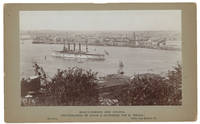
1890rif. LIST110Havana: R. Testar 1890. Albumen photograph on cardstock mount image measuring 7 1/4 x 4 1/2 inches on 8 3/4 x 5 1/2 inch mount. A view of an American warship in Havana harbor likely taken prior to the outbreak of hostilities between the United States and Spain in early 1898. The photographers Leach and Patterson of Calle San Rafael published several views of Cuba at this time mostly of bucolic scenes around Havana and its environs. The American cruiser is similar in design to the U.S.S. Maine with slight differences - two smokestacks instead of three. An excellent example with minor wear to mount and fine image. R. Testar unknown
1947rif. 98519Havana, Cuban Tourist Commission, impr. Ucar, Garcia y Cia, Cuba 1947 1 carte. In-12 18,5 x 12,5 cm repliée, In-folio 55,5 x 71cm dépliée. Exemplaire en bon état.
1903rif. 6457V.p. 1903. 36 postcards all completed in manuscript generally very good or better with some wear and rounded corners. A fascinating assemblage of cards written by Pre-Castro intellectuals to a Maria de Serra though a few are written to other women. It is difficult to pin down de Serra though we do know she was highly educated and very well-known and connected. It makes sense to us that she is perhaps the Maria de Serra mentioned by William Wells Brown in his important work The Rising Son or the Antecedents and advancement of the Colored Race 1874. On pg 260 Brown writes: "The free blacks in Cuba form an important element in her population and these people are found in all the professions and trades. .one of the best young ladies' academies at present existing at Havana is personally conducted by an accomplished negro woman Maria de Serra to whom many a lady of high rank owes her social and intellectual accomplishments." Further research may be fruitful in retrieving more information on this Maria de Serra. It goes without saying that the sentiments and signatures are the most appealing part of this collection. Many of the cards appear to contain original verse and all are quite legible and well preserved. Equally as lovely are the cards themselves many being of exceptional beauty as they were all chosen by artists and intellectuals. All in all a remarkable set worthy of further research. The correspondents are as follows: Diego Vicente Tejera; one of the most famous turn-of-the-century Cuban poets but also known as a short story writer orator and political activists. Nestor Cargonell; famous poet and writer. His son went on to become a Hollywood star. Conde Kostia pseudonym of Aniceto Valdivia; writer journalist poet critic lecturer dramatist founder of newspapers and Cuban diplomat. Rafael Maria Merchain; very influential poet and philosopher Enrique Fontanills; very prominent Cuban journalist. Florimel: great Cuban journalist writer and poet who died early in life. Manuel Raul Blanco Belmonte; Cuban poet. Ramon Meza; One of the most important Cuban writers of his time. Many of his books are considered classics and remain in print. Aurelio Cancio; Cuban journalist who founded "La Discusion" newspaper. Manuel Serafin Pichardo; one of the most popular Cuban poet of the 1900s. Frederico Mendes Cobos; a Cuban politician who became a a senator in 1902. Juan Maria Alberti: influential Cuban politician. Manuel Marquez Sterling; fine writer and politician. Jose Manuel Govin; journalist and director of the popular newspaper "El Munto" Cesar Cancio; Very popular Cuban poet born in St Spiritus. Pablo Bonachea; great Cuban journalist and director of "La Discussion" newspaper for one year. Jose Ernesto Trian; Cuban writer with political connections. Was ambassador to Venezuela. Manuel Tierso; Romantic Cuban poet Alvaro de la Iglesia. revered Cuban writer who penned the great "Cuban Traditions" Frederico Ledesma Balsunde: journalist and editor at "El Lucero." Fabio Fiallo; a leading Dominican writer poet and politician. He died in Cuba. Dulce Maria Borrero de Lujan; the most important Cuban woman writer and poet of her time. Frederico Hermida; author of any Cuban novels in the 1900s. Mariana Comas; Cuban essayist Joaquin Lopez Sena; renown Cuban poet and a politician from the 1900s to the 1920s. Eliseo Giberga; a very powerful and influential Cuban politician of the early 1900s. Manuek Coronado; an important Cuban journalist. Antonio San Miguel; Cuban writer and journalist. Pablo Santi Rois; Poet and respected journalist. Armando Celorio; One of the finest Cuban poets. Jose Maria Carbonell; famous Cuban poet and writer. Marcos Trazivark; famous Cuban writer and Musician. Esteban Joven; Cuban writer poet and essayist. Narciso de Puso; famous poet well entrenched in Cuban high society. Eduardo Mencis Capote; Cuban journalist popular among the elite. Lorenzo Frau Marsal; respected Cuban journalist . unknown books
1903rif. 6457V.p. 1903. 36 postcards all completed in manuscript generally very good or better with some wear and rounded corners. A fascinating assemblage of cards written by Pre-Castro intellectuals to a Maria de Serra though a few are written to other women. It is difficult to pin down de Serra though we do know she was highly educated and very well-known and connected. It makes sense to us that she is perhaps the Maria de Serra mentioned by William Wells Brown in his important work The Rising Son or the Antecedents and advancement of the Colored Race 1874. On pg 260 Brown writes: "The free blacks in Cuba form an important element in her population and these people are found in all the professions and trades. .one of the best young ladies' academies at present existing at Havana is personally conducted by an accomplished negro woman Maria de Serra to whom many a lady of high rank owes her social and intellectual accomplishments." Further research may be fruitful in retrieving more information on this Maria de Serra. It goes without saying that the sentiments and signatures are the most appealing part of this collection. Many of the cards appear to contain original verse and all are quite legible and well preserved. Equally as lovely are the cards themselves many being of exceptional beauty as they were all chosen by artists and intellectuals. All in all a remarkable set worthy of further research. The correspondents are as follows: Diego Vicente Tejera; one of the most famous turn-of-the-century Cuban poets but also known as a short story writer orator and political activists. Nestor Cargonell; famous poet and writer. His son went on to become a Hollywood star. Conde Kostia pseudonym of Aniceto Valdivia; writer journalist poet critic lecturer dramatist founder of newspapers and Cuban diplomat. Rafael Maria Merchain; very influential poet and philosopher Enrique Fontanills; very prominent Cuban journalist. Florimel: great Cuban journalist writer and poet who died early in life. Manuel Raul Blanco Belmonte; Cuban poet. Ramon Meza; One of the most important Cuban writers of his time. Many of his books are considered classics and remain in print. Aurelio Cancio; Cuban journalist who founded "La Discusion" newspaper. Manuel Serafin Pichardo; one of the most popular Cuban poet of the 1900s. Frederico Mendes Cobos; a Cuban politician who became a a senator in 1902. Juan Maria Alberti: influential Cuban politician. Manuel Marquez Sterling; fine writer and politician. Jose Manuel Govin; journalist and director of the popular newspaper "El Munto" Cesar Cancio; Very popular Cuban poet born in St Spiritus. Pablo Bonachea; great Cuban journalist and director of "La Discussion" newspaper for one year. Jose Ernesto Trian; Cuban writer with political connections. Was ambassador to Venezuela. Manuel Tierso; Romantic Cuban poet Alvaro de la Iglesia. revered Cuban writer who penned the great "Cuban Traditions" Frederico Ledesma Balsunde: journalist and editor at "El Lucero." Fabio Fiallo; a leading Dominican writer poet and politician. He died in Cuba. Dulce Maria Borrero de Lujan; the most important Cuban woman writer and poet of her time. Frederico Hermida; author of any Cuban novels in the 1900s. Mariana Comas; Cuban essayist Joaquin Lopez Sena; renown Cuban poet and a politician from the 1900s to the 1920s. Eliseo Giberga; a very powerful and influential Cuban politician of the early 1900s. Manuek Coronado; an important Cuban journalist. Antonio San Miguel; Cuban writer and journalist. Pablo Santi Rois; Poet and respected journalist. Armando Celorio; One of the finest Cuban poets. Jose Maria Carbonell; famous Cuban poet and writer. Marcos Trazivark; famous Cuban writer and Musician. Esteban Joven; Cuban writer poet and essayist. Narciso de Puso; famous poet well entrenched in Cuban high society. Eduardo Mencis Capote; Cuban journalist popular among the elite. Lorenzo Frau Marsal; respected Cuban journalist . unknown
rif. L12171François Maspero, 1968. In-8 br. Coll. " Cahiers libres ", n° 120. Traduit par A. Meyer. E.O.
rif. 200914393Paris, Vadis editions, s.d. ; in-4, 175 pp., cartonnage de l'éditeur.
rif. 201300629Paris, Editions amalthée, 2006 ; in-8, 133 pp., broché, couverture illustr. Comme neuf - broché.
rif. 200817713Paris, Masson et cie - regard sur le monde hispanique, 1970 ; in-8, 120 pp., broché, couverture illustr. Texte espagnol.
rif. 201112380La Habana, Cuba, Ediotial SI_MAr sa, 1996 ; in-8, 278 pp., br. Broché en très bon état.
1970rif. 757501970 Paris, Cercle du Nouveau Livre d'HIstoire, 1970, fort volume in 8° relié pleine toile rouge décorée de l'éditeur, 600 pages et 29 pages de documents photographiques.
rif. 201906341Paris, L'histoire immediate Seuil, 1993 ; in-8, 601 pp., br.
1994rif. 771771994 Paris, Autrement, 1994, in 8° broché, 245 pages ; couvetrure illustrée.
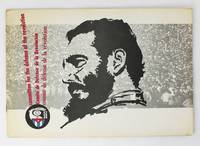
1965rif. 6257Habana 1965. Very good. 16pp. Oblong pamphlet in original pictorial wrappers stapled. Light wear and toning at wrapper edges with a few faint creases. Internally clean. A visually rich pro-Casto and pro-Communist pamphlet that highlights the history and core activities of Cuba's Committee for the Defense of the Revolution CDR neighborhood-based civil defense organizations created by Castro in 1960 to defend the revolution and maintain social and political control at the local level. This often included activities like surveillance distribution of propaganda and vigilante justice. The pamphlet is illustrated with photos throughout and also contains a two-page spread with maps of the island and charts data and statistics about the Cuban people. It contains a year-by-year account of the Committee's achievements and activities and ends with a section concerning its relations with other countries and their visits to Cuba. The rear wrapper states that editions were published in English French and Spanish as evidenced by the trilingual title on the front cover but we find no evidence of any edition in OCLC. Scarce and with much interesting and propagandized information about Castro's local enforcers during the early years of the Communist regime. unknown
1965rif. 6257Habana 1965. Very good. 16pp. Oblong pamphlet in original pictorial wrappers stapled. Light wear and toning at wrapper edges with a few faint creases. Internally clean. A visually rich pro-Casto and pro-Communist pamphlet that highlights the history and core activities of Cuba's Committee for the Defense of the Revolution CDR neighborhood-based civil defense organizations created by Castro in 1960 to defend the revolution and maintain social and political control at the local level. This often included activities like surveillance distribution of propaganda and vigilante justice. The pamphlet is illustrated with photos throughout and also contains a two-page spread with maps of the island and charts data and statistics about the Cuban people. It contains a year-by-year account of the Committee's achievements and activities and ends with a section concerning its relations with other countries and their visits to Cuba. The rear wrapper states that editions were published in English French and Spanish as evidenced by the trilingual title on the front cover but we find no evidence of any edition in OCLC. Scarce and with much interesting and propagandized information about Castro's local enforcers during the early years of the Communist regime. unknown books
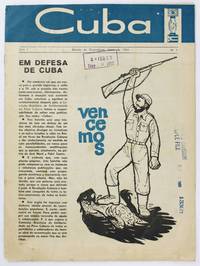
1961rif. 5832Guanabara 1961. About very good. 111pp. Small folio. Original pictorial self-wrappers stapled. Contemporary and slightly later ink stamps to front wrap. Light edge wear. Some tanning and dust soiling. First issue of this evidently unrecorded periodical published by the "Comissão Brasileira de Solidariedade ao Pavo Cubano" in May 1961. The publication contains numerous positive stories on the progress of the Cuban Revolution and support of the cause from the Brazilian people. Illustrated throughout with photographs and drawings including the beginning of a serial comic on the history of the revolution at the rear. The front wrap depicts Fidel Castro with his foot on the chest of a supine eagle and a rifle raised triumphantly over his head. Interesting support for the Communist cause in Cuba from South America. Not in OCLC. unknown
1961rif. 5832Guanabara 1961. About very good. 111pp. Small folio. Original pictorial self-wrappers stapled. Contemporary and slightly later ink stamps to front wrap. Light edge wear. Some tanning and dust soiling. First issue of this evidently unrecorded periodical published by the "Comissão Brasileira de Solidariedade ao Pavo Cubano" in May 1961. The publication contains numerous positive stories on the progress of the Cuban Revolution and support of the cause from the Brazilian people. Illustrated throughout with photographs and drawings including the beginning of a serial comic on the history of the revolution at the rear. The front wrap depicts Fidel Castro with his foot on the chest of a supine eagle and a rifle raised triumphantly over his head. Interesting support for the Communist cause in Cuba from South America. Not in OCLC. unknown books
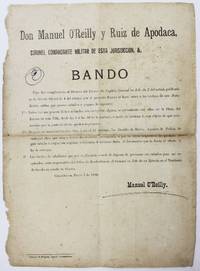
1896rif. 3188Guanabacoa: Imprenta el Progreso 1896. About very good. Broadside approximately 17 x 12.5 inches. Previously folded. Some biopredation at left edge not affecting text. Otherwise faint foxing light tanning and dust soiling. Two contemporary manuscript rubrics. Unrecorded broadside that orders the presentation of privately-owned horses and pack animals in the town square of Guanabacoa for requisition by the Spanish army in January 1896 at the outset of the Cuban uprising that would eventually lead to the end of Spanish colonial rule. This bando states first that "Todos los que posean dichos animales sin excepción alguna se presentarán con ellos en la Plaza del Recreo de esta Villa desde las 8 á las 10 de la mañana á partir de mañana 8 con objeto de que reconocidos por la junta al efecto queden requisados." Following these initial voluntary presentations inspections would be made of homes and farms and those found not to have handed over usable animals would be guilty disobeying army orders during a time of war. At this point Spain had 100000 troops on the island and another two years of fighting the insurrection incited by José Marti would pass before the intervention of the United States. Not in OCLC. Imprenta el Progreso unknown
1896rif. 3188Guanabacoa: Imprenta el Progreso 1896. About very good. Broadside approximately 17 x 12.5 inches. Previously folded. Some biopredation at left edge not affecting text. Otherwise faint foxing light tanning and dust soiling. Two contemporary manuscript rubrics. Unrecorded broadside that orders the presentation of privately-owned horses and pack animals in the town square of Guanabacoa for requisition by the Spanish army in January 1896 at the outset of the Cuban uprising that would eventually lead to the end of Spanish colonial rule. This bando states first that "Todos los que posean dichos animales sin excepción alguna se presentarán con ellos en la Plaza del Recreo de esta Villa desde las 8 á las 10 de la mañana á partir de mañana 8 con objeto de que reconocidos por la junta al efecto queden requisados." Following these initial voluntary presentations inspections would be made of homes and farms and those found not to have handed over usable animals would be guilty disobeying army orders during a time of war. At this point Spain had 100000 troops on the island and another two years of fighting the insurrection incited by José Marti would pass before the intervention of the United States. Not in OCLC. Imprenta el Progreso unknown books
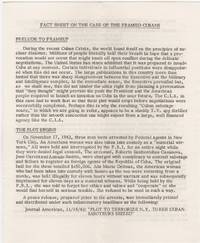
1963rif. 206861New York: Defense Committee for Garcia and Sueiro 1963. Folded for mailing otherwise fine. Bifolium approx. 7 x 8-1/5 in. making a four-page offset printed document; with 8-1/2 x 14 in. mimeo letter and original mailing envelope. Documentation from the effort to defend two Cuban-Americans arrested as suspected saboteurs with plans to blow up Manhattan businesses and New Jersey oil refineries. The FBI generated prominent headlines with the arrests at the height of cold-war tensions between the Bay of Pigs and the assassination of President Kennedy. Defense Committee for Garcia and Sueiro unknown
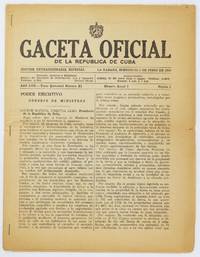
1959rif. 5470Habana: June 3 1959. Good plus. 11pp. Small folio. Previously folded; stapled along gutter margin. Some edge and corner wear; closed tear to initial leaf from fore-edge along old fold. Toned cheap newsprint. A special edition of the Gaceta Oficial of Communist Cuba devoted to the printing of the First Agrarian Reform Law passed and signed on May 17 1959. The law effected the first major land redistribution under Fidel Castro and the Communist Party. Under its authority all properties were over 420 hectares were confiscated and redistributed to the people and native businesses. Prior to the law over 80% of Cuban land was owned by foreign mostly American companies. The preamble and sixty-seven articles lay out the motivations for the law the parameters for confiscation by the Department of Agriculture the mechanisms for seizure and redistribution and the creation of a new government organization to facilitate the land transfers the Instituto Nacional de Reforma Agraria. Signed in print by Fidel as Prime Minister Manuel Urrutia Lleo as President and a slew of other officials. June 3 unknown
1959rif. 5470Habana: June 3 1959. Good plus. 11pp. Small folio. Previously folded; stapled along gutter margin. Some edge and corner wear; closed tear to initial leaf from fore-edge along old fold. Toned cheap newsprint. A special edition of the Gaceta Oficial of Communist Cuba devoted to the printing of the First Agrarian Reform Law passed and signed on May 17 1959. The law effected the first major land redistribution under Fidel Castro and the Communist Party. Under its authority all properties were over 420 hectares were confiscated and redistributed to the people and native businesses. Prior to the law over 80% of Cuban land was owned by foreign mostly American companies. The preamble and sixty-seven articles lay out the motivations for the law the parameters for confiscation by the Department of Agriculture the mechanisms for seizure and redistribution and the creation of a new government organization to facilitate the land transfers the Instituto Nacional de Reforma Agraria. Signed in print by Fidel as Prime Minister Manuel Urrutia Lleo as President and a slew of other officials. June 3 unknown books
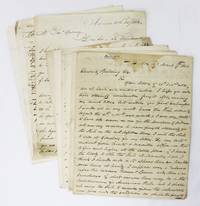
1824rif. 6529Bristol R.I.; Matanzas Cuba 1824. Good plus. Nine letters totaling 17pp. plus docketing. Some loss where previously sealed not affecting text. Otherwise old folds light wear at edges and some toning and dampstaining. Nine manuscript letters addressed to Edward Spalding a shipping agent in Havana and Matanzas with connections to trade out of Bristol and New England during the 1820s. The letters highlight the significant commercial networks between Cuba New England Europe and South America. The correspondence concerns shipments of sugar coffee molasses tobacco cotton and indigo and also reflects on the effects of European political tensions on Atlantic commerce. Several letters are from members of the notable DeWolf family who were major players in trade from Rhode Island to the Caribbean and also quite involved in the transatlantic slave trade that was a large part of the 19th-century Cuban economy. Spalding himself was active in the Cuban slave trade and in its many other facets until at least the end of the 1820s. A good group of correspondence with much firsthand information on trade between Cuba and the United States in the early 19th century. unknown
1824rif. 6529Bristol R.I.; Matanzas Cuba 1824. Good plus. Nine letters totaling 17pp. plus docketing. Some loss where previously sealed not affecting text. Otherwise old folds light wear at edges and some toning and dampstaining. Nine manuscript letters addressed to Edward Spalding a shipping agent in Havana and Matanzas with connections to trade out of Bristol and New England during the 1820s. The letters highlight the significant commercial networks between Cuba New England Europe and South America. The correspondence concerns shipments of sugar coffee molasses tobacco cotton and indigo and also reflects on the effects of European political tensions on Atlantic commerce. Several letters are from members of the notable DeWolf family who were major players in trade from Rhode Island to the Caribbean and also quite involved in the transatlantic slave trade that was a large part of the 19th-century Cuban economy. Spalding himself was active in the Cuban slave trade and in its many other facets until at least the end of the 1820s. A good group of correspondence with much firsthand information on trade between Cuba and the United States in the early 19th century. unknown books