CubaBiblio.com

2.682 Ergebnisse
Best.-Nr. 0483788457.Ghardcover. Good. Access codes and supplements are not guaranteed with used items. May be an ex-library book. hardcover
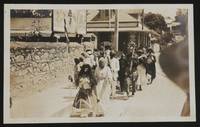
Best.-Nr. PD19Oblong Folio album ca. 285x36 cm. 49 black paper album leaves. With ca. 260 mounted gelatin silver photographs of various size including ca. 20 large photos from ca. 245x32 cm 9 ½ x 12 ½ in to ca. 155x225 cm 6 x 8 ¾ in and 21 panoramas ca. 85x29 cm 3 ¼ x 11 1 /2 in or slightly smaller. The rest of the photos are from ca. 12x17 cm 4 ¾ x 6 ¾ in to ca. 4x6 cm 1 ½ x 2 ¼ in; most photos are ca. 8x14 cm 3 ¼ x 5 ½ in. No captions. About twenty photos with period ink notes “D.K.M. 10” in the corners. Period style black half morocco with cloth boards; decorative gilt-tooled borders on both boards and spine. Album leaves brittle several with tears and losses on extremities two large photos with tears and losses on extremities two small photos with losses of one corner each one photo has been apparently previously removed a few photos smildly faded or with mild silvering but overall a very good album of interesting photos. Historically significant album with lively amateur snapshots and original studio photos taken and collected by a family of American tourists during a Caribbean cruise in the early 1910s onboard the steamship “Moltke” of the Hamburg America Line Hamburg-Amerikanische Packetfahrt-Aktien-Gesellschaft or HAPAG. Launched in 1901 S.S. “Moltke” went on regular cruises around the Caribbean and the Mediterranean until it was seized by Italy in 1915 in the course of WW1. Her Caribbean or West Indies cruises departed from New York and included stops in Cuba Puerto Rico Jamaica Panama Canal Venezuela Trinidad Barbados Martinique St. Thomas Dutch West Indies Bermuda & Bahamas. The album opens with several large views and panoramas of Havana harbour and waterfront featuring Castillo del Morro the iconic building of Lonja del Comercio commodities and stock exchange and S.S. “Moltke.” The other photos show Havana streets and passers-by the interior of a Catholic church &c. Over twenty photos are the views of the city and harbour of Charlotte Amalie on St. Thomas Island – then the capital of the Danish West Indies since 1917 the U.S. Virgin Islands. The images show the city harbour from the distance and close-up a sign of “St. Thomas Bay & Rum Co.” is seen on one of the photos the statue of King Christian IX erected in the Emancipation Garden in 1909 removed in 2021 streets residential neighbourhoods on sloping hills a local market an official residence with the waving Danish flag garden of a Catholic convent with one of the monks posing alone and with a young tourist &c. Over thirty identified views of Puerto Rico a U.S. colony since 1898 a Commonwealth controlled by the U.S. since 1952 show San Juan: Plaza de Armas with the City Hall completed in 1842 Palacio de la Real Independencia now housing the Department of State of Puerto Rico Castillo San Felipe del Morro in the San Juan Bay Plaza Colon with Christopher Columbus monument San Juan harbour city streets and shops building of the “Hotel y Banos” a passenger train with the travellers walking at the front native cart drivers passers-by &c. A large group of photos ca. sixty depict the French Island of Martinique with a series of views of Fort-de-France: statues of Empress Josephine erected in 1859 destroyed in 2020 and Victor Schloelcher erected in 1904 removed in 2020 St. Louis Cathedral with the spire still under construction city streets and harbour “Hotel de l’Europe” distinctive cliffs on the coast near Fort-de-France &c. The views of Martinique include over twenty images of the ill-fated town of St. Pierre which perished during Mount Pelee’s eruption in May 1902. The photos include one view of St. Pierre before the destruction as well as general views of the ruins and desolation with posing tourists. Several images show the ruins of the Co-Cathedral of Our Lady of Assumption the downtown core with a grid of destroyed buildings and charred trees wrecked ships in the harbour a surviving bridge and the remains of the victims. A couple of images feature the top of Mount Pelee with a distinctive lava spine or the “Needle of Pelee” which was formed in October 1902 and collapsed in March 1903. Among the identified photos of Nassau Bahamas are the views of the famous silk cotton tree St. Matthews Anglican church completed in 1802 and the interior of Fort Charlotte. The other images show sugar cane plantations and native workers Caribbean residences streets and markets ports the American coastal steamer “Colonia” a series of scenes from a street carnival procession portraits of local market goers families diving children &c. Several images portray the tourists on board the S.S. Moltke including a group portrait with a lifebuoy of “Moltke Hamburg”. Overall a historically significant visual source on the history of American tourism to the Caribbean in the early 20th century with interesting views of the aftermath of the destruction of St. Pierre by the volcanic eruption. hardcover
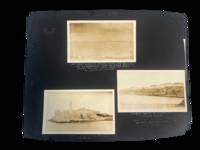
1920Best.-Nr. 227281920. Havana Cuba travel photo album circa 1920s documents an American visitor's encounter with Havana during the interwar years when U.S. tourism commercial presence and Spanish-American War memory shaped how many American travelers interpreted the city. The vernacular photographs record arrival by steamship harbor landmarks civic buildings commercial streets factories boulevards monuments cemeteries and guarded public spaces giving insight into both Havana's urban landscape and the traveler's assumptions about access history and spectacle. The album's references to the USS Maine and Spanish-American War memorials place ordinary sightseeing within a longer history of U.S. intervention in Cuba; the Maine exploded in Havana Harbor on February 15 1898 killing more than 260 sailors and intensifying the crisis that led to war with Spain. Approximately 25 sepia-toned silver gelatin photographs each about 3 x 5 inches mounted to black album leaves with detailed handwritten captions in white pencil. The sequence begins aboard the S.S. Kroonland with one caption reading "My first view of Havana from the deck. three miles out at sea in a dark storm" followed by a landing view captioned "where we landed in Havana Cuba." The S.S. Kroonland returned to Panama Pacific Line service in 1923 on a New York to San Francisco route via Havana the Panama Canal and Los Angeles supporting the album's interwar travel context. The photographs then trace Havana's maritime and civic topography: harbor views Morro Castle captioned "Famous during the Spanish-American War" the waterfront in front of the fortress the Court House the President's Palace a "600-year-old church" the Henry Clay Cigar Store Havana's factory district and public boulevards "where all streets have parks in the center." Other images include a cemetery visit captioned "All people in Cuba are laid to rest above the ground" and a restricted-view street or carriage scene captioned "Officer would not let me take picture but when he turned I took it anyway" a revealing note on tourist privilege and unauthorized looking. Several images directly record the ways American travelers consumed Havana through imperial memory and Cuban nationalist commemoration. One monument is captioned "This was given by the Cuban people to the American soldiers that fell in the Spanish-American War" while another marks "the spot where the Maine sank at the entrance of the harbor." The album was made after Cuba's formal independence in 1902 and during the long aftermath of the Platt Amendment framework under which the United States retained extensive influence over Cuban affairs and intervened repeatedly in the early twentieth century. Album leaves chipped at edges several with corner losses not affecting images; prints generally sharp with strong contrast and clear annotations very good overall. Socially revealing Havana travel album documenting how a U.S. visitor pictured Cuba through steamship tourism colonial architecture cigar commerce Spanish-American War remembrance and the everyday authority structures of an interwar Caribbean capital. unknown
1920Best.-Nr. 227281920. Havana Cuba travel photo album circa 1920s documents an American visitor's encounter with Havana during the interwar years when U.S. tourism commercial presence and Spanish-American War memory shaped how many American travelers interpreted the city. The vernacular photographs record arrival by steamship harbor landmarks civic buildings commercial streets factories boulevards monuments cemeteries and guarded public spaces giving insight into both Havana's urban landscape and the traveler's assumptions about access history and spectacle. The album's references to the USS Maine and Spanish-American War memorials place ordinary sightseeing within a longer history of U.S. intervention in Cuba; the Maine exploded in Havana Harbor on February 15 1898 killing more than 260 sailors and intensifying the crisis that led to war with Spain. Approximately 25 sepia-toned silver gelatin photographs each about 3 x 5 inches mounted to black album leaves with detailed handwritten captions in white pencil. The sequence begins aboard the S.S. Kroonland with one caption reading "My first view of Havana from the deck. three miles out at sea in a dark storm" followed by a landing view captioned "where we landed in Havana Cuba." The S.S. Kroonland returned to Panama Pacific Line service in 1923 on a New York to San Francisco route via Havana the Panama Canal and Los Angeles supporting the album's interwar travel context. The photographs then trace Havana's maritime and civic topography: harbor views Morro Castle captioned "Famous during the Spanish-American War" the waterfront in front of the fortress the Court House the President's Palace a "600-year-old church" the Henry Clay Cigar Store Havana's factory district and public boulevards "where all streets have parks in the center." Other images include a cemetery visit captioned "All people in Cuba are laid to rest above the ground" and a restricted-view street or carriage scene captioned "Officer would not let me take picture but when he turned I took it anyway" a revealing note on tourist privilege and unauthorized looking. Several images directly record the ways American travelers consumed Havana through imperial memory and Cuban nationalist commemoration. One monument is captioned "This was given by the Cuban people to the American soldiers that fell in the Spanish-American War" while another marks "the spot where the Maine sank at the entrance of the harbor." The album was made after Cuba's formal independence in 1902 and during the long aftermath of the Platt Amendment framework under which the United States retained extensive influence over Cuban affairs and intervened repeatedly in the early twentieth century. Album leaves chipped at edges several with corner losses not affecting images; prints generally sharp with strong contrast and clear annotations very good overall. Socially revealing Havana travel album documenting how a U.S. visitor pictured Cuba through steamship tourism colonial architecture cigar commerce Spanish-American War remembrance and the everyday authority structures of an interwar Caribbean capital. unknown books
2007Best.-Nr. 38485BBChapel Hill, Publishers: The University of South Carolina Press, 2007. Original Flexible Boards. Very good Condition with only minimal Signs of Usage at the Cover. No Markings in the Text! No Underlinings! No private Owner's Note!
1985Best.-Nr. PHOT0794London, Zena 1985. 4°. 191 S. mit zahlreichen farb. Abb., OPpbd. m. OU., Vorsatzblatt m. Rückständen eines Klebeetiketts.
1994Best.-Nr. 2-1560007869Transaction Pub 1994. Paperback. New. 1st edition. 176 pages. 9.25x6.25x0.50 inches. Transaction Pub paperback
Best.-Nr. 38422Revista de la Universidad Central de Las Villas Santa Clara, Cuba - un volume 15,2x23 cm broché sous couverture illustrée, 372 pages abondamment illustrées en noir dans et hors texte - bon état -
1992Best.-Nr. SONG1875284486Brand: Ocean Press AU 1992-07-16. First Edition. paperback. Used: Good. 5.75x0.75x8.75. Buy with confidence. Excellent Customer Service & Return policy. Brand: Ocean Press (AU) paperback
La Habana, Editorial Lux, 1960, 23 x 15,5 cm., 2 h. + págs. 317 a 811 con figuras intercaladas. (Sumario: A los pueblos Latinoamericanos, por Samuel Feijóo. José Martí, su circunstancia y su tiempo, por Manuel Pedro González. Alejandro de Humboldt, embajador de la ciencia alemana en Iberoamérica, por Helmunth Johanni. Campo y paisaje en la Literarura Cubana, por Lorenzo García Vega. San Agustín, la intimidad o interioridad, por Humberto Piñera Llera. La epopeya religiosa en la conquista ibérica, por Juan A. Mackay. Bhagavad Gita, el canto del señor, traduccción por Miroslav Marcovich. Aproximaciones a la Poesía, por Jorge García Gómez. Casa de Dios, por Samuel Feijóo... Y desde la página 727 al fin del tomo, Caguanes, nueva zona arqueológica de Cuba, por Manuel Rivero dde la Calle).
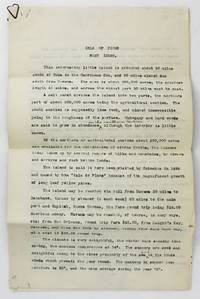
1910Best.-Nr. 5377N.p. 1910. Very good. 11pp. of folio typescript totaling around 3000 words with a handful of manuscript corrections. Old folds minor marginal stains from old paper clips. An anonymously-written typescript promotional and business prospectus touting the Isle of Pines Isla de la Juventud off the southern coast of Cuba in the West Indies. The author writes of the many advantages of the Isle of Pines noting "This interesting little island is situated about 50 miles south of Cuba in the Caribbean Sea" with a population of "well-to-do Americans who own about 95% of the island and are after the other 5%." The author also states that "the laborers are mostly 'Pineros' or Isle of Pines people and are very efficient. They are kind and courteous and seem well pleased with the present situation. They are paid from $1.00 to $1.50 per day according to the grade of work." More of the usual language encouraging emigration to the island follows describing the agriculture climate soil government business environment the "old Spanish cities on the island" and more along with several pages of cost estimates for creating a working ten-acre fruit grove. The anonymous author mentions that he and his partner in Nueva Gerona J.A. Miller bought forty acres in Cuchilla Alta or Santa Ana Estates at $40 per acre from H.R. Leland "the sole representative in the United States." The author states he has given up his profession as an engineer in order to devote his time and energy to building a grapefruit grove and pineapple farm and to get others interested in investing with him "We will organize a Development Company with a Citrus Fruit Expert at its head.". He concludes by reiterating that "the country itself is a delightful place to live.raises a superior quality of fruit" and he is glad he "learned about it in time to enable us to enjoy all the benefits of the 'Great Ground Floor.' unknown
1910Best.-Nr. 5377N.p. 1910. Very good. 11pp. of folio typescript totaling around 3000 words with a handful of manuscript corrections. Old folds minor marginal stains from old paper clips. An anonymously-written typescript promotional and business prospectus touting the Isle of Pines Isla de la Juventud off the southern coast of Cuba in the West Indies. The author writes of the many advantages of the Isle of Pines noting "This interesting little island is situated about 50 miles south of Cuba in the Caribbean Sea" with a population of "well-to-do Americans who own about 95% of the island and are after the other 5%." The author also states that "the laborers are mostly 'Pineros' or Isle of Pines people and are very efficient. They are kind and courteous and seem well pleased with the present situation. They are paid from $1.00 to $1.50 per day according to the grade of work." More of the usual language encouraging emigration to the island follows describing the agriculture climate soil government business environment the "old Spanish cities on the island" and more along with several pages of cost estimates for creating a working ten-acre fruit grove. The anonymous author mentions that he and his partner in Nueva Gerona J.A. Miller bought forty acres in Cuchilla Alta or Santa Ana Estates at $40 per acre from H.R. Leland "the sole representative in the United States." The author states he has given up his profession as an engineer in order to devote his time and energy to building a grapefruit grove and pineapple farm and to get others interested in investing with him "We will organize a Development Company with a Citrus Fruit Expert at its head.". He concludes by reiterating that "the country itself is a delightful place to live.raises a superior quality of fruit" and he is glad he "learned about it in time to enable us to enjoy all the benefits of the 'Great Ground Floor.' unknown books
1787Carta geografica raffigurante l'isola di Cuba e la Giamaica. Sulla sinistra sono riportate le scale grafiche. Piega centrale editoriale.Rigobert Bonne (1727-1795) fu uno dei più importanti cartografi del tardo XVIII secolo. Nel 1773 succedette a Jacques Bellin come cartografo reale in Francia.
1999Best.-Nr. POE479C166Caracas. Co-Edicion Conac/Celarg. 1999. 141pp. In-8° Encuadernado suave. Uno de los 1000 ejemplares en papel Luminova.
1574Inserita nell'opera "La Geografia di Claudio Tolomeo alessandrino, già tradotta di greco in italiano da M. Giero. Ruscelli: & hora in questa nuoua editione da M. Gio. Malombra ricorretta, & purgata d'infiniti errori: ... Con l'Espositioni del Ruscelli, ... Con una copiosa tauola de' nomi antichi, dichiarati co' nomi moderni: dal Malombra riueduta, & ampliata. Et con un Discorso di M. Gioseppe Moleto, .. "
2019ill., br. "Credo che la fotografia abbia la sua naturale destinazione nella stampa, dove diviene visione definitiva, ed ecco allora il progetto del libro. Non avevo in mente un libro che parlasse di una Cuba stereotipata ma di una visione che ho lasciato decantare per arrivare ad un racconto fatto nel rispetto della verità, senza giudizio o denuncia, il racconto come un viaggio esso stesso. La Cuba frutto della tradizione, dell'embargo, dell'accoglienza e il tempo proprio dell'isola. Ognuno dei progetti che ho fatto miei nella terra della Isla, mi pare paradigmatico di tante altre situazioni in luoghi altri da Cuba. La loro sospensione anche se drammaticamente vera, mi riporta in mente sensazioni riconducibili ai valori su cui si basa la mia vita giovanile." (L'autore)
Best.-Nr. 1331280249.Gpaperback. Good. Access codes and supplements are not guaranteed with used items. May be an ex-library book. paperback
1999DISPONIBILITÀ GARANTITA AL 99%; SPEDIZIONE ENTRO 12 ORE DALL'ORDINE. RIMANENZA DI MAGAZZINO PARI AL NUOVO. LIEVISSIMI SEGNI DEL TEMPO. Realizzata in luoghi e periodi diversi, questa straordinaria raccolta di immagini - 77 in tutto - fornisce il ritratto più completo di Fidel Castro, dagli anni avventurosi della Rivoluzione a quelli difficili della Guerra Fredda, dai momenti di grande ufficialità a quelli di inevitabile relax. Il risultato è un collage sorprendente dove, attimo per attimo, si ricostruisce la storia di un Paese (ma anche di un'epoca) attraverso il volto, le mani, le espressioni del lider maximo. Descrizione bibliografica Titolo: Istantanee Di Fidel Titolo originale: Instantáneas Autore: Liborio Noval Traduzione dallo spagnolo di: Patrizia Spinato Editore: Milano: Baldini & Castoldi Dalai, 1999 Lunghezza: 76 pagine; 24 x 27 cm; illustrato in b/n (bianco e nero) Peso: 1 Kg ISBN: 8880896253, 9788880896258 Collana: Le boe Soggetti: Fotografia, Libri illustrati, Cuba, Comandanti, Rivoluzione cubana, Ritratti, Collezionismo, Libri vintage, Fuori catalogo, Biografie illustrate, Storia contemporanea, Novecento, Comunismo, Che Guevara, Capi di Stato, Fotografie, L'Avana, La Habana, Incontri pubblici e privati, Papa Wojtyla, Giovanni Po alo II, Salvator Allende, Reportage, Fotoreporter, America Latina, Paco Ignacio Taibo II, Hasta siempre, Revolución cubana, Instituto Cubano del Libro, Congressi, Viaggi, Università, Marxismo, Cerimonie, Raccolte fotografiche, Photography, Illustrated books, Commanders, Revolution, Portraits, Collectibles, Vintage books, Out of print, Illustrated biographies, Contemporary history, Twentieth century, Communism, Heads of State, Photographs, Public meetings and individuals, Pope, Photojournalist, Latin America, Cuban Revolucion, Cuban Book Institute, Congresses, Travels, University, Marxism, Ceremonies, Photo Collections Parole e frasi comuni Abel Prieto Abel Santamaría Abelardo Colomé Ibarra Adriana Corcho aeroporto Rancho aeropuerto Agostinho Neto inaugurazione Aniversario Armea de Arriba Bolivia Braulio Coroneaux Camilo Cienfuegos Capitán Orestes Acosta Cerimonia conclusiva Colombia Comunista de Cuba Congresso ANAP Convenciones CTC Central Cubano del Libro cubano Sindo Garay Eddy Martin Efrén Monteagudo Granma Guantanamo inauguración Insieme a José Instituto Cubano José Ramírez Cruz José Sarney Melba Hernández Nelson Mandela Pedro de Alejandrino Pedro Pablo Araujo Pepín Naranjo Pierre Trudeau programa televisión programma televisivo Universidad provincia La Habana Ramiro Valdés Rancho Boyeros Samora Maohel Santa Clara Santiago de Cuba Scuola Serie de Pelota Shenzhen stadium Cerro televisión Universidad Popular televisivo Universidad Popular ufficio Palacio UJC Unione Vladimir Lenin Valle Caiyerí viaggio provincia Villa Clara Congreso XXX
19684°, 62 fogli dattiloscritti con tabelle n.t. Br. edit.
Best.-Nr. 57005aafParis, Grasset, 1933, in-8vo, 148 p. non-coupées, non-rognées, brochure originale.
2000Mm 195x280 Collana "Biografia per immagini". Volume rilegato in tela con sovraccoperta originale, 207 pagine con un ricco corredo di ilustrazioni in nero nel testo e fuori testo. Opera in ottime condizioni, pari al nuovo. Spedizione in 24 ore dalla conferma dell'ordine.
2016Best.-Nr. 500292774First 2016 351 pages 13 8x22 4x3 2cm. 2016. Broché. 351 pages.
México, Premià Editora, 1980. 4to.; 56 pp., 1 h. Primera edición. Cubiertas originales.
1999Best.-Nr. G0967615607I4N00Cook Fine Art David 1999. Paperback. Very Good. Disclaimer:May have limited writing in cover pages. Pages are unmarked. ~ ThriftBooks: Read More Spend Less.Dust jacket quality is not guaranteed. Cook Fine Art, David paperback
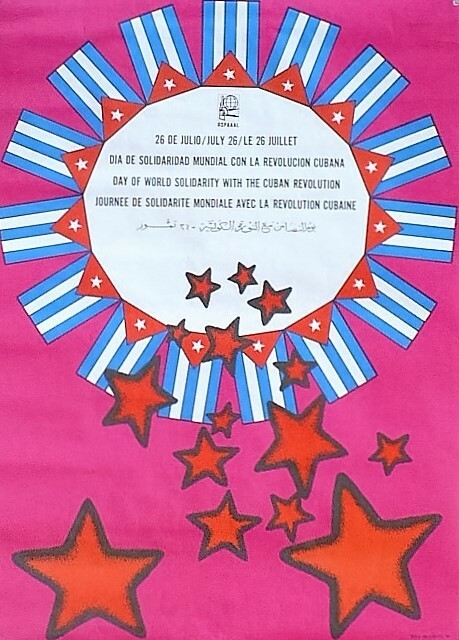
Best.-Nr. 776Éditée par OSPAAL. 1975. Impression offset. Dimensions: 55,5x35. Petits manques coins inférieurs et une déchirure. Rare.