2 538 résultats
2002Testo di riferimento fondamentale per chiunque desideri conoscere la rivoluzione cubana e il duo massimo leader.
2020brossura Questo libro è una specie di viaggio musicale tra il Delta del Mississippi e i Caraibi attraverso la cultura nera e la sua contaminazione con quella bianca. Molti spunti di riflessione, peculiarità e curiosità tutte da scoprire, pagina dopo pagina.
1870Milano, Sonzogno, 1870, 2 gennaio, articolo e una illustrazione xilografica, stralcio di "L'Emporio Pittoresco". - !! ATTENZIONE !!: Con il termine estratto (o stralcio) intendiamo riferirci ad un fascicolo contenente un articolo di rivista, sia che esso sia stato stampato a parte utilizzando la stessa composizione sia che provenga direttamente da una rivista. Le pagine sono indicate come "da/a", ad esempio: 229/231 significa che il testo è composto da tre pagine. Quando la rivista di provenienza non viene indicata é perchè ci è sconosciuta. - !! ATTENTION !!: : NOT A BOOK : “estratto” or “stralcio” means simply a few pages, original nonetheless, printed in a magazine. Pages are indicated as in "from” “to", for example: 229/231 means the text comprises three pages (229, 230 and 231). If the magazine that contained the pages is not mentioned, it is because it is unknown to us.
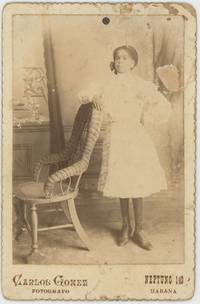
1905réf. BK0085Havana Cuba: Carlos Gómez 1905. Cabinet photograph measuring 4 x 5 ½ inches on photographer's mount measuring 4 ½ x 6 ½ inches with imprint "Carlos Gómez / Fotógrafo / Neptuno 149 / Habana. Image somewhat faded with scattered surface wear and an area of loss at upper right; mount worn at edges good overall. A studio portrait of a young woman posed beside a wicker rocking chair wearing a light-colored dress with high collar and puffed sleeves and looking directly toward the camera. The photograph is notable in the context of Afro-Cuban portraiture around the turn of the twentieth century a period when Havana supported a large commercial photographic trade serving an increasingly broad urban clientele. The sitter is unidentified and no inscription survives to provide further biographical information. Carlos Gómez Guardiola was operating a photographic studio at 149 Neptuno by 1902 when a contemporary Havana newspaper noted that he had already established a reputation despite having been in business only a short time. Gómez's work appears in Juaco López Ãlvarez's Fotografía de Asturianos en américa with an identical "Carlos Gómez / Fotógrafo / Neptuno 149 / Habana" imprint; Ãlvarez dates it to about 1905 and we date the present portrait accordingly. 1 Juaco López Ãlvarez Ed. Fotografía de Asturianos en américa 2000 222. . Carlos Gómez unknown
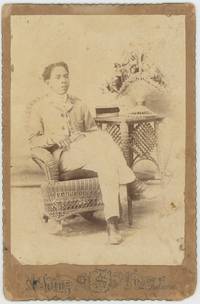
1905réf. BK0086Havana Cuba: A. Sainz 1905. Cabinet photograph measuring 4 x 5 ½ inches on photographer's mount measuring 4 ½ x 6 ½ inches with imprint "A. Sainz / Reina 67 / Habana. Some fading and spotting to image with wear and small losses to edges of mount; good overall. A formal studio portrait of a young Black man seated in a wicker chair beside an elaborate wicker table and floral arrangement. He wears a light-colored suit and holds his hat in his lap posed directly toward the camera. The mount identifies the photographer as A. Sainz of 67 Reina Street Havana. Contemporary Havana advertisements from July and August 1905 place Sainz's photographic studio at this address providing a useful basis for dating the portrait. An appealing example of Black portraiture in early twentieth-century Havana. A. Sainz unknown
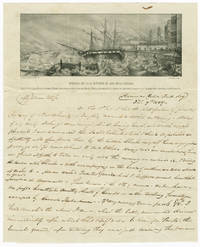
1847réf. WRCAM56260Havana Cuba and onboard ship to New Orleans 1847. 11pp. in black or blue ink on two different Cuban pictorial letter sheets plus a folded sheet of plain paper the latter also used as the enclosure for the entire letter addressed on verso of last page of enclosure. Minor soiling old folds with a few short fold separations and a longer separation in last folded sheet. Last sheet with small abrasion from removed wax seal most of which remains. Overall good plus condition. A lengthy and interesting letter from a Pennsylvania businessman named M.L. Dawson to his "dear wife" back in Philadelphia written over the course of a few weeks during his time in Havana and onboard a ship traveling from Cuba to New Orleans in the spring of 1847. Being written over the course of several entries the letter also acts as a kind of brief diary of Dawson's time in Cuba and the Gulf of Mexico and contains much information on the people and places he saw in and around Havana and much on the ship's activities on the way to Louisiana. Two- thirds of the letter is written on two separate Cuban letter sheets that are themselves rare and desirable printed ephemeral items from mid-19th century Cuba. The eleven-page letter covers Dawson's stay in Havana and his voyage to New Orleans. He writes that he had previously arrived in Havana from Philadelphia. His letter begins on March 7 and Dawson details trips on horseback to the Cuban countryside which he finds beautiful. He comments on odd Cuban funerary practices Cuban agricultural products seeing the home where Santa Anna spent his exile and gives firsthand observations on the effects of slavery. He witnesses a scene in Havana where slaves are chained and forced to make repairs while being overseen by men with whips and muskets. Dawson comments that despite the beauty of the countryside "the evidence of Slavery is every where apparent." Also apparent are "the ravages of the awful storm of the 10th month last" a reference to the devastating October 11 1846 hurricane the effect of which is depicted in each of the letter sheets here. Dawson also reports on being invited to breakfast by a Cuban nobleman but was so taken aback by the food and the experience that he vows never to repeat the experience. After departing Havana for New Orleans on May 9 on the Brig P. Soule Dawson reports on various shipboard activities a disagreeable cursing captain slow progress boredom and seasickness. He comments on claret as the typical drink for breakfast. The letter ends on April 1 when Dawson's ship anchors in New Orleans Road. He closes with a promise to write again soon after he lands in New Orleans and sends kisses and love to his children and relatives. The Cuban letter sheets Dawson employs for more than two-thirds of his letter are interesting and attractive printed items in their own right. The first titled HURACAN DEL 11 DE OCTUBRE DE 1846 EN LA HABANA shows a lithographed scene of various ships in an angry sea being tossed against a breakwater in Havana harbor during the October 11 1846 hurricane. One passenger is being rescued with a breeches buoy while other ships flounder in the distance. The second letter sheet is titled TEATRO PRINCIPAL DE LA HABANA. The scene at the head of this sheet shows further destruction of the October 11 hurricane centered on the damaged ruins of the Teatro Principal Main Theater near the harbor. Two men in top hats survey the damage while an African-American man stands at left center holding long boards. Havana harbor is visible in the background showing two paddlewheel steamers and other ships damaged or sunken in the harbor. Mordecai L. Dawson was the proprietor of M.L. Dawson & Co. a brewery in Philadelphia. Here Dawson addresses the letter to his company noting the letter is specifically intended "for E Dawson" his wife. The Dawson brewery opened in 1820 at 79 Chestnut Street then moved to the corner of 10th and Filbert Streets in 1830 after the company purchased the old Farmers' Brewery in 1829. Dawson apparently closed his brewery in 1849 not long after penning this letter home. Though he does not state it explicitly in his letter Dawson may have been traveling to Cuba to establish an import business. Philadelphia was a pipeline for numerous imports into Cuba in the mid-19th century including beer. An interesting record of one man's sojourn to Cuba in the 1840s with notable observations on slavery and the Cuban situation in the wake of the October 11 1846 hurricane written mostly on two attractive and rare Cuban letter sheets that also memorialize the hurricane. hardcover books
réf. 46564Marseille, directeur : Yves Broussard. 1 volume 14,5x22cm, 277 pages. Edition bilingue de cet excellent numéro sur la poésie à Cuba. Introduction, sélection, traduction et notes de Benito Pelegrin. Bon état.
200123,7x22,5 cm; 19, (1) pp. Brossura editoriale. Monografia dedicata all'opera del noto artista Ernesto García Peña. Buon esemplare. Non comune.
New Haven, Yale University Press, 1964. 4to.menor; XLIV-218 pp. Ejemplar con rastros de humedad. Enc. original en tela.
1988réf. 003367Middletown CT: Wesleyan University Press 1988. First edition. Hardcover. Very Good/very good. 8vo. xvi 2 346 2 pp. Bound in full black cloth title in gilt on spine in illustrated dust jacket. Black and white illustrations. Very Good some soiling to edges of text block including a 2" blue stain to lower fore edge internally clean and tight in Very Good price-clipped dust jacket with wear to extremities and similar blue stain to lower fore edge of rear cover. Wesleyan University Press hardcover
1965Prima edizione.Brossura editoriale illustrata.In 16o grande.Qualche egno d'uso sulla copertina.Interno ottimo.Pp.128
réf. 86838Pantin (Paris), Le Temps des Cerises, 2005. 20 x 21, 103 pp., quelques illustrations en couleurs, broché, très bon état.
réf. a718971951 Freeport Sulphur Company of New York City. All original mimeos of typed documents. 4to. 289 leaves rectos only 4 large foldout maps gilt titled limp black boards with 3 metal studs for binding. VG. Scarce. . hardcover
Madrid, Gredos,1960. 4to.; 541 pp. Cubiertas originales.
1930Milano, 1930, 8vo stralcio con copertina posticcia muta, pp. 1051/1056 con 4 illustrazioni fotografiche. - !! ATTENZIONE !!: Con il termine estratto (o stralcio) intendiamo riferirci ad un fascicolo contenente un articolo, completo in se, sia che esso sia stato stampato a parte utilizzando la stessa composizione sia che provenga direttamente da una rivista. Le pagine sono indicate come "da/a", ad esempio: 229/231 significa che il testo è composto da tre pagine. Quando la rivista di provenienza non viene indicata é perché ci è sconosciuta. - !! ATTENTION !!: : NOT A BOOK : “extract” or “excerpt” means simply a few pages, original nonetheless, printed in a magazine. Pages are indicated as in "from” “to", for example: 229/231 means the text comprises three pages (229, 230 and 231). If the magazine that contained the pages is not mentioned, it is because it is unknown to us.
1982réf. 631121982. Paperback. Very Good. Original wrappers. 26cm. Spanish text. paperback books
Madrid, Editorial Alfaguara, 1968 ["Ágora"]. 4to. mayor; 108 pp., 1 h. Primera edición. Cubiertas originales. Lleva un interesante "Vocabulario" de modismos cubanos al fin.
réf. 70567Coll. "Horizons", Paris, éd. Point de Mire, 2004, EDITION ORIGINALE, in-8 carré, cartonnage souple, couv. Photo en noir sur fond jaune et noir éd., 256 pp., "Dans le Cuba des années castristes, les pérégrinations de Tatiana, jolie jeune femme russe tenancière d'une maison close bien particulière où se mêlent intrigues amoureuses et conversations artistiques. Dans une langue mordante, classique et précise, Juan Arcocha explore les turpitudes et les travers de la classe politique." Très bon état
1933Broch?. 151 pages. Papier bruni au faux-titre par le "vient de para?tre" ins?r?.
Madrid, Aguilar, 1962. 4to.; 452 pp. Cubiertas originales.
Oviedo, Universidad, 1997. 4to. alargado; 325 pp. Cubiertas originales.
196318,5x12. 295p. Col. Literatura Hispanoamericana, N. 3.
La Habana, Instituto Cubano del Libro, 1976. 4to.; 410 pp., 5 hs. Cubiertas originales.
Zaragoza, Litho Arte, 1975. 4to.; 302 pp., 1 h. Cubiertas originales.