[Cuba/Affiches] ANONYMELivre Rare Book
2484 risultati
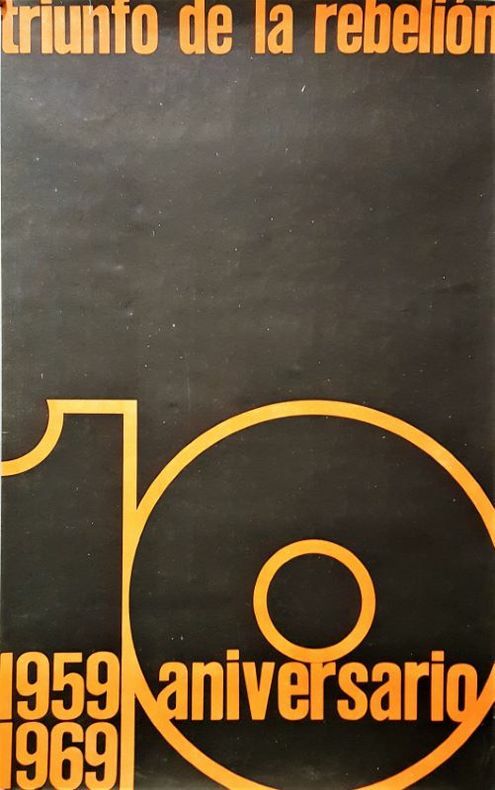
rif. 2096Dans lesprit OLAS.1969. Impression offset.Dim : 52 x 33 cm
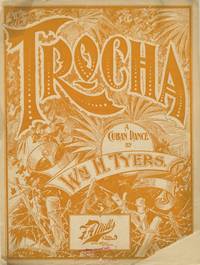
1890rif. List3666New York: Jos. W. Stern & Co 1890. Folio sheet music illustrated pictorial cover printed in orange. 5 pp. including cover. Approximately 13 ½ x 10 ½ inches. Covers detached loss to front cover contents complete fair to good. A decorative late nineteenth-century dance publication for “Trocha” described on the cover as “A Cuban Dance” composed by the African American composer and bandleader W. H. Tyers. The elaborate pictorial cover incorporates stylized tropical foliage and island scenery rendered in a bold single-color design typical for the period’s fascination with exoticized musical forms. William H. Tyers 1870–1924 was an African American composer arranger and bandleader active in New York during the ragtime era. Born in Petersburg Virginia to Henry Tyers and Jane “Jennie” Jones both formerly enslaved he spent part of his youth in Richmond before his family relocated to New York City where he began studying piano. His early teachers recognized an aptitude for composition as well as performance and by the mid-1880s he was writing dance pieces including polkas and waltzes. Around the age of twenty Tyers secured employment as a music librarian and arranger with a touring concert company a position that brought him to Europe where he studied orchestration and arranging with Professor Gaspari in Hamburg. Returning to New York Tyers became active in the city’s rapidly expanding popular music trade working as an arranger and composer for publishers including F. A. Mills and Jos. W. Stern & Co. In 1896 he published “Sambo” a syncopated march sometimes considered to be one of the first instrumental rags.1 “Trocha” also released in the 1980s brought Tyers prominence for his ability to write Latin-style rhythms. It was re-issued in 1913 as a tango and its success led Tyers to work as an arranger with Joseph W. Stern in 1897. Tyers’ compositions blended contemporary American dance music with Caribbean and Latin themes a style reflected in pieces such as Trocha and later in his well-known ragtime composition Panama 1911 which remained a staple of early jazz and dance orchestras. OCLC finds two copies with different entries at the Cleveland Public Library and the British Museum Reference Collections. 1 “William Tyers Music Arranger” African American Registry https://aaregistry.org/story/william-tyers-born/ accessed March 10 2026. Jos. W. Stern & Co unknown
1890rif. List3666New York: Jos. W. Stern & Co 1890. Folio sheet music illustrated pictorial cover printed in orange. 5 pp. including cover. Approximately 13 ½ x 10 ½ inches. Covers detached loss to front cover contents complete fair to good. A decorative late nineteenth-century dance publication for “Trocha” described on the cover as “A Cuban Dance” composed by the African American composer and bandleader W. H. Tyers. The elaborate pictorial cover incorporates stylized tropical foliage and island scenery rendered in a bold single-color design typical for the period’s fascination with exoticized musical forms. William H. Tyers 1870–1924 was an African American composer arranger and bandleader active in New York during the ragtime era. Born in Petersburg Virginia to Henry Tyers and Jane “Jennie” Jones both formerly enslaved he spent part of his youth in Richmond before his family relocated to New York City where he began studying piano. His early teachers recognized an aptitude for composition as well as performance and by the mid-1880s he was writing dance pieces including polkas and waltzes. Around the age of twenty Tyers secured employment as a music librarian and arranger with a touring concert company a position that brought him to Europe where he studied orchestration and arranging with Professor Gaspari in Hamburg. Returning to New York Tyers became active in the city’s rapidly expanding popular music trade working as an arranger and composer for publishers including F. A. Mills and Jos. W. Stern & Co. In 1896 he published “Sambo” a syncopated march sometimes considered to be one of the first instrumental rags.1 “Trocha” also released in the 1980s brought Tyers prominence for his ability to write Latin-style rhythms. It was re-issued in 1913 as a tango and its success led Tyers to work as an arranger with Joseph W. Stern in 1897. Tyers’ compositions blended contemporary American dance music with Caribbean and Latin themes a style reflected in pieces such as Trocha and later in his well-known ragtime composition Panama 1911 which remained a staple of early jazz and dance orchestras. OCLC finds two copies with different entries at the Cleveland Public Library and the British Museum Reference Collections. 1 “William Tyers Music Arranger” African American Registry https://aaregistry.org/story/william-tyers-born/ accessed March 10 2026. Jos. W. Stern & Co unknown books
rif. 7727Gallimard In-8,broché,fort volume de 405 pages,peu fané et bien intègre.
1970París, NRF - Gallimard - Du Monde Entier, 1970. Traduit du cuban par Albert Bensoussan avec la collaboration de l'auteur. 460 p. 4 h. 8º mayor. 1ª edición francesa.
1900rif. 25439Havana Cuba: Not Published 1900. Both letters two pages on Samuel Wyman Smith Importer Havana Cuba letterhead paper; dated Jan. 4 1900 and Dec. 5 1900. Both addressed to "My Dear Gilbert"; the contents typed and concerning the fate of their mutual investment in "The Studio" restaurant & bar in Havana. ".all the papers that I can find at the Studio have been forwarded to you at Cambridge Springs. The reason for this delay has been that I have been quite ill having had a toe amputated.You will see the Studio is improving. I have just made an arrangement with two Chinamen as cooks Spanish waiters however.this should finally put the place on a paying basis." adding handwritten ".I trust you will soon send me a good sized check as I need money desperately." The letter of December relates Smith's attempts to find buyers and leasors for the restaurant ".I am bothered to death by the bills of the place existing before you left some of which I have personally guaranteed.have also had a proposition from a Spaniard to take the restaurant.As a restaurant is always a dead loser except under very competent management this seems to me to be most advantageous.The quarantine has been taken off the camps here and business is much better."; continuing to ask for money. With the original mailing envelopes addressed to Mr. W.E. Gilbert. This venture was perhaps an attempt to meet the needs of the very large population of North Americans residing in Cuba after the Spanish-American War; many businesses opened especially in Havana including hotels bars and restaurants. In his book "On Becoming Cuban: Identity Nationality and Culture" By Louis A. Perez 2008 Univ. of North Carolina Press an individual named Edward E. Nelson opened the Studio restaurant in Havana in 1899 and was not very successful per the contents of these letters. Envelopes very soiled and worn; letters with light wear old fold lines; in very good condition. Interesting Cuban - U.S. business history ephemera from the early days of the 20th century telling of the unsettled commercial climate. . Manuscript. Not Bound. Very Good. Not Published paperback
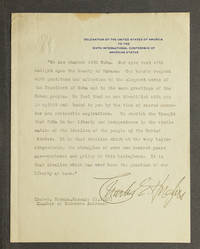
1928rif. 249718Havana 1928. 1 page. 8vo. Minor soiling else fine. 1 page. 8vo. Reading in part: "We are charmed with Cuba. Our Eyes rest with delight upon the beauty of Cuba.We cherish the thought that Cuba in her liberty and indepedndence is the vindication of the idealism of the people of the United States." unknown
1995rif. 165784Zch., gdz, 1995. 24, 16, 8 S., mit zahlreichen, teilweise farbigen Abbildungen. Original-Broschur, 4°. Thema "Design und Typografie aus Kuba". Redaktion Jean-Pierre Graber, Roger Chatelain und andere. Die "Typografischen Monatsblätter",erst "Typographischen Monatsblätter" erschienen von 1933 bis 2014, sie waren lange Zeit massgebend für typographische Gestaltung.. Softcover Guter Zustand. TM - RSI, Nr. 5, 1995
2004rif. 165780Zch., gdz, 2004. 6 Nummern, je 50-70 S., mit zahlreichen s/w und farbigen Abbildungen. Original-Broschur, 4°. Heft 1: Dieter Bachmann über Bruno Monguzzi, ausserdem zahlreiche Abbildungen von Plakaten von Flavia Cocchi; Heft 2 mit einem Nachruf auf Max Caflisch, einem Aufsatz von Hans Eduard Meier: ABCSchrift: eine zeitgemässe Handschrift sowie einem Bericht "Das trikontinentale Solidaritätsplakat" von René Lechleiter; Heft 3: Gérard Ifert über "Schach und Gestaltungsunterricht"; Heft 4: Hans Rudolf Bosshard über Helmut Schmid, Typograph, und Guillaume Faisant, "Petit itinéraire d'un apprenti grafiste"; Heft 5/6: Überblick über "Typositionen", Ausrichtungen und Positionen in der Ausbidlung von Typographen. Viele Texte parallel deutsch-englisch. Redaktion Lukas Hartmann, für die RSI Claude Darbellay und andere. Die "Typografischen Monatsblätter",erst "Typographischen Monatsblätter" erschienen von 1933 bis 2014, sie waren lange Zeit massgebend für typographische Gestaltung.. Softcover Guter Zustand. TM - RSI - STM, Nr. 1-6, 2004
1995rif. 165748Zch., gdz, 1995. 6 Hefte, je 48 S., mit zahlreichen, teilweise farbigen Abbildungen. Original-Broschur, 4°. Heft 1: Hans Rudolf Bosshard über "Aussenbeschriftungen. Wahrnehmung und Lesbarkeit von Schrift im Stadtbild." Ausserdem Plakatentwürfe für die gdz, Wettbewerb. Im französischsprachigen Teil Max Bill "Sur la typographie" und Jan Tschichold "Foi et réalité". Heft 2: Aufsatz von Max Caflisch über "Die Cancelleresca in Vergangenheit und Gegenwart anhand der Poetica dargestellt". Ausserdem Christoph Hegger: "Die Zeit in den Kulturen. Ein Kalender". Im französischsprachigen Teil "Adrian Frutiger raconte ..." und Aufsatz von Roger Chatelain: "La fausse route de Francis Thibaudeau". Heft 3: Aufsatz von Hans Rudolf Bosshard: Lesbarkeit, Lesefreundlichkeit und typografische Gestaltung, Teil 1, ausserdem Aufsatz von Max Caflisch über die Stone Print. Im französischsprachigen Teil Aufsatz von Roger Chatelain: Comment Jan Tschichold voyait la "Nouvelle Typographie en 1930 ...". Heft 4: Teil 2 des Aufsatzes von Hans Rudolf Bosshard: Lesbarkeit, Lesefreundlichkeit und typografische Gestaltung, ausserdem Max Caflisch über die Big Caslon. Im französischsprachigen Teil "Maximilien Vox. Son analyse dans les années soixante ..." und "Le chantre de la 'graphie latine'" von Roger Chatelain. Heft 5: Design und Typografie aus Kuba; Heft 6: Max Caflisch: Silica, die neue Egyptienne. Redaktion Jean-Pierre Graber, Roger Chatelain und andere. Die "Typografischen Monatsblätter",erst "Typographischen Monatsblätter" erschienen von 1933 bis 2014, sie waren lange Zeit massgebend für typographische Gestaltung.. Softcover Guter Zustand. TM - RSI, Nr. 1-6, 1995
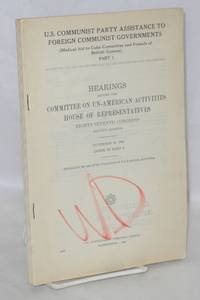
1963rif. 127791Washington: GPO 1963. Pamphlet. Volume I: vi 1837-1949p. Volume II: vi 1951-2045 xv p. first volume has yellowed wraps rubberstamps and pen markings on front cover second volume cleaner but minor penciling on cover. US. 87th congress 2nd session. GPO unknown books
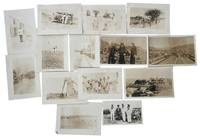
1914rif. 235561914. US Navy photograph archive 1914 to 1919 documenting American sailors in Cuba during the years when Guantánamo Bay served as a U.S. naval station for Caribbean fleet activity training and strategic movement. Verso inscriptions reading "25wyn" and "1914 to 1919" likely connect the group to USS Wyoming BB 32 whose documented service placed the battleship repeatedly in Cuban waters during this period. The photographs provide a sailor's vernacular record of Cuban streets roads transportation local residents agricultural hauling commerce and infrastructure within a wartime Cuba shaped by U.S. naval presence Caribbean patrol activity and the uneven modernization of industry under US Imperial rule. Photo archive of 14 silver gelatin photographs various sizes most approximately 5 x 3.5 inches Cuba 1914 to 1919. The images show U.S. Navy sailors posed among cactus and agave standing with Cuban men beside an open touring automobile and gathered in uniform at a public outdoor event with benches crowds buildings and hills beyond. Cuban infrastructure appears throughout the group: horse drawn carriages and wagons move through a town street lined with utility poles and commercial buildings; an ox team pulls a high wooden cart loaded with cut cane or brush along a rural road; a windmill or water pumping structure stands beside a group of local residents; a rail or tram line runs through a lightly built district; and a roadside scene combines naval uniforms automobile travel and undeveloped terrain. One commercial view shows a tourist photography and souvenir stand advertising "post cards made while you wait" "souvenirs & novelties" "Kodak films for sale" and "photo printing developing" placing commercial image making tourist exchange and modern photographic supply in the same Cuban landscape the sailors moved through during the US's imperial organization. The U.S. naval presence in Cuba began with the Spanish American War and the occupation that followed. The Platt Amendment which limited Cuban sovereignty after independence in 1902 and the 1903 lease agreements gave the United States a permanent base at Guantánamo Bay. By World War I Guantánamo was part of the working map of U.S. power in the Caribbean. It supported fleet exercises patrol movements and regional security from Cuban territory. These photographs show US imperial interest by depicting American sailors moving through streets and roads where motorcars utility poles photographic shops horse drawn traffic ox carts windmills rural tram lines and agricultural hauling all appear in the same landscape. Overall in good to fair condition with heavy image fading slight handling wear some curling. Some photographs have tears which do not obstruct the images. A visual record of U.S. naval presence in Platt Amendment Cuba and the roads shops vehicles animals and rural working systems during the World War I period. unknown
1914rif. 235561914. US Navy photograph archive 1914 to 1919 documenting American sailors in Cuba during the years when Guantánamo Bay served as a U.S. naval station for Caribbean fleet activity training and strategic movement. Verso inscriptions reading "25wyn" and "1914 to 1919" likely connect the group to USS Wyoming BB 32 whose documented service placed the battleship repeatedly in Cuban waters during this period. The photographs provide a sailor's vernacular record of Cuban streets roads transportation local residents agricultural hauling commerce and infrastructure within a wartime Cuba shaped by U.S. naval presence Caribbean patrol activity and the uneven modernization of industry under US Imperial rule. Photo archive of 14 silver gelatin photographs various sizes most approximately 5 x 3.5 inches Cuba 1914 to 1919. The images show U.S. Navy sailors posed among cactus and agave standing with Cuban men beside an open touring automobile and gathered in uniform at a public outdoor event with benches crowds buildings and hills beyond. Cuban infrastructure appears throughout the group: horse drawn carriages and wagons move through a town street lined with utility poles and commercial buildings; an ox team pulls a high wooden cart loaded with cut cane or brush along a rural road; a windmill or water pumping structure stands beside a group of local residents; a rail or tram line runs through a lightly built district; and a roadside scene combines naval uniforms automobile travel and undeveloped terrain. One commercial view shows a tourist photography and souvenir stand advertising "post cards made while you wait" "souvenirs & novelties" "Kodak films for sale" and "photo printing developing" placing commercial image making tourist exchange and modern photographic supply in the same Cuban landscape the sailors moved through during the US's imperial organization. The U.S. naval presence in Cuba began with the Spanish American War and the occupation that followed. The Platt Amendment which limited Cuban sovereignty after independence in 1902 and the 1903 lease agreements gave the United States a permanent base at Guantánamo Bay. By World War I Guantánamo was part of the working map of U.S. power in the Caribbean. It supported fleet exercises patrol movements and regional security from Cuban territory. These photographs show US imperial interest by depicting American sailors moving through streets and roads where motorcars utility poles photographic shops horse drawn traffic ox carts windmills rural tram lines and agricultural hauling all appear in the same landscape. Overall in good to fair condition with heavy image fading slight handling wear some curling. Some photographs have tears which do not obstruct the images. A visual record of U.S. naval presence in Platt Amendment Cuba and the roads shops vehicles animals and rural working systems during the World War I period. unknown books
1961116 pages. Features: Cover photo of Russian Yuri Gagarin, the first human to travel to outer space and back; Nice one-page ad for the Volkswagen (VW) truck (microbus); Showdown nears for Castro in Cuba; JFK and how he runs the White House; One-page photo ad for GE's two-way radio; Russia's Triumph in Space - What Does It Mean? - photo-illustrated article; Why The U.S. Wasn't First; A Look at what the U.S. has - and plans - in space; Where U.S. Went Wrong - The Ways to Catch Up; JFK Learns About Personal Diplomacy; Why De Gaulle is a Growing Problem for U.S.; Kennedy's plan to deal with corn surplus; Up Front with U.S. Guerrillas in Southeast Asia - an eyewitness report; A Close New Look at Nehru's India; The Red Terror in Tibet - Interview with the Dalai Lama; Crime Wave Hits Washington, D.C. - with photo of Dallas O. Williams who has 59 convictions, including murder; Critical thinking about the "Show" trial of Adolf Eichmann in Israel; Nice small photo ad for Checker Motors Corp. of Kalamazoo; Nice two-page color-photo ad for (red) Chevy trucks with IFS (independent front suspension) on excavation site; How the United Mine Workers (UMW) under John L. Lewis uses its considerable investments, and why; and more. Unmarked with average wear. A sound vintage copy. Book
1978Square small quarto in white wraps with gilt title; 94 p. : ill., ports. ; 23 x 22 cm In Spanish. An homage to the much admired Cuban writer. Several b/ew photos. || Carpentier, Alejo, 1904-1980. Carpentier, Alejo, 1904-1980 -- Critique et interpretation.
193319x13. 266p. Lomo rozado.
1929Napoli, 1929, maggio 6, copertina illustrata a colori in fascicolo originale completo di pp. 16 de “Il Mattino illustrato”
1978In 8o.Brossura edit.illustrata.Saggio introduttivo di Valerio Riva.Timbro sulla sec.pag."Serviszio stampa".Ottima copia.Pp.273
1978In 8°, br. edit. ill., pp. LXII,273,(1); piccole mancanze al d., per il resto esemplare molto buono, solo lievemente brunito. (x011/d)
1895Milano, 1895, novembre 17, bella copertina litografica illustrata a colori in fascicolo originale completo di pp. 8 De “La Tribuna – Supplemento illustrato della Domenica”
1883rif. 15500BBParis, Plon, Nourrit et Cie., 1883. 3 Bl., 349 Seiten, 2 Bl. Halblederband der Zeit mit Rückentitelvergoldung., 15500bb Kapitale, Kanten und Rücken berieben und stellenweise beschabt.
1883rif. 10007Paris Plon, Nourrit et Cie 1883 in-12 demi-chagr. dos à nerfs, orné [Rel. de l'époque]
rif. PHO515M1996, Bay Vista, Nice. In-4, broché, 55pp. Ouvrage photographique en b&b. Envoi de Txomin Laxalt au marchand d'art Paul Haïm. Bon exemplaire
Zaragoza, Institución Fernando el Católico, 1981. 4to.; 255 pp. y trece láminas fotográficas aparte. Cubiertas originales.
1983in-4°, pp. 428 con numerose ill. e disegni n.t. di R. Martinez. Leg. edit. con sovrac. figurata. Tracce del tempo e d'uso sulla sovrac. Buono l'interno.