A. Carrel / G. FournialLivre Rare Book

2 541 résultats
réf. 32534Editions sociales, 1975. Format poche. Bon etat.
1975pp. 281, cm 18x11, bross.
français 0 1903' p. 109 à 132. Fascicule orig., extrait de la série TOUR DU MONDE de l'année et semestre indiqués. Gravures ou photographies in-t et h-t. Format 21 x 29cm. Ex. collé en couverture d'attente, illustrée, carton rouge ou vert. Bonne présentation. TOUR-DU-MONDE VOYAGES CUBA
1932réf. 61114Havana Cuba: Cuban Tourist Commission Printed by “Ucar Garcia & Co.” ca. 1932. 4to. 36 pp unpaginated. Printed & illustrated throughout in green black & white photo illustrations throughout graphic text illustrations in green & white. Self-printed colour-illustrated softcovers wraparound cover art by Conrado W. Massaguer minor bumping head of spine shelfwear still VG copy. First edition of this informative travel brochure touting the joys of visiting Cuba touting the historic cathedral square the lush countryside the offerings of sugar coffee and tobacco as well as the beaches hunting sport fishing night life and The Rumba. Massaguer 1889-1965 was an influential Cuban artist whose modernist look dominated magazines catalogues and ads across Latin America and also was a founding member of the Grupo Minorista. Cuban Tourist Commission, Printed by “Ucar Garcia & Co.,” paperback
1995pp. 179, cm 23x15, brossura. In perfetto stato.
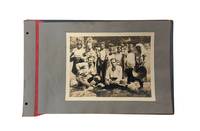
1910réf. 235641910. Cuba photograph album depicting encounters between Western visitors and Cuban communities during the early republican period circa 1910s to 1920s when the island occupied an unusual position between formal independence and continuing American political and economic influence. The photographs move between Havana's monumental architecture hotels and waterfront districts and the rural landscapes villages rivers and agricultural communities that remained largely outside the tourist image promoted to foreign visitors. Repeated appearances of the same Western man often accompanied by a woman who appears to be his wife suggest an extended journey through both urban and remote regions of the island during a period when American travelers businessmen and government personnel moved through Cuba in growing numbers following the Spanish American War and the establishment of the Cuban Republic. Photo album of 26 silver gelatin photographs mounted on unbound album boards with blue covers boards measuring approximately 9 x 15 inches Cuba circa 1910s to 1920s. The photographs range from 6 x 6.5 to 8 x 9.5 inches. Images show waterfront houses built directly along riverbanks; tropical waterfalls and dense forest landscapes; interior courtyards and hotel spaces with colonnades and tiled floors; Morro Castle and lighthouse overlooking Havana Harbor; panoramic views of Cuban towns set among surrounding mountains; market scenes crowded with vendors women and children; cattle standing in shallow waterways; village gatherings outside rural buildings; and groups of local residents posed alongside visiting Westerners. Several photographs depict women standing in rivers holding broad metal pans possibly associated with washing river labor or mineral collection activities. Other images show children families agricultural workers and river communities while a series of portraits records the principal traveler and his companion at various points throughout the journey. One image depicts a group of local residents and Western visitors posed together in a forested region; another shows villagers gathered near a rural homestead while several photographs focus on transportation livestock and daily work in the countryside. The album belongs to the decades following Cuba's transition from Spanish colony to nominally independent republic a period shaped by the Platt Amendment American investment expanding tourism and intensive foreign interest in the island's economic resources and landscapes. Rather than concentrating exclusively on Havana's civic monuments and colonial architecture the photographer devoted substantial attention to rural communities Afro Cuban and mixed-race populations river labor village life and frontier environments seldom emphasized in commercial tourist imagery of the period. The contrast between hotels government-era landmarks village settlements cattle crossings market scenes and encounters with local residents documents the unequal worlds that coexisted within early twentieth century Cuba as foreign visitors moved between urban centers and agricultural regions. Light surface wear occasional toning minor album mounting wear and scattered edge wear to several boards; overall very good condition. A concentrated visual record of how Westerners experienced and represented Cuba's rural communities laboring populations landscapes and colonial-era urban centers during the first decades of the Cuban Republic. unknown
1910réf. 235641910. Cuba photograph album depicting encounters between Western visitors and Cuban communities during the early republican period circa 1910s to 1920s when the island occupied an unusual position between formal independence and continuing American political and economic influence. The photographs move between Havana's monumental architecture hotels and waterfront districts and the rural landscapes villages rivers and agricultural communities that remained largely outside the tourist image promoted to foreign visitors. Repeated appearances of the same Western man often accompanied by a woman who appears to be his wife suggest an extended journey through both urban and remote regions of the island during a period when American travelers businessmen and government personnel moved through Cuba in growing numbers following the Spanish American War and the establishment of the Cuban Republic. Photo album of 26 silver gelatin photographs mounted on unbound album boards with blue covers boards measuring approximately 9 x 15 inches Cuba circa 1910s to 1920s. The photographs range from 6 x 6.5 to 8 x 9.5 inches. Images show waterfront houses built directly along riverbanks; tropical waterfalls and dense forest landscapes; interior courtyards and hotel spaces with colonnades and tiled floors; Morro Castle and lighthouse overlooking Havana Harbor; panoramic views of Cuban towns set among surrounding mountains; market scenes crowded with vendors women and children; cattle standing in shallow waterways; village gatherings outside rural buildings; and groups of local residents posed alongside visiting Westerners. Several photographs depict women standing in rivers holding broad metal pans possibly associated with washing river labor or mineral collection activities. Other images show children families agricultural workers and river communities while a series of portraits records the principal traveler and his companion at various points throughout the journey. One image depicts a group of local residents and Western visitors posed together in a forested region; another shows villagers gathered near a rural homestead while several photographs focus on transportation livestock and daily work in the countryside. The album belongs to the decades following Cuba's transition from Spanish colony to nominally independent republic a period shaped by the Platt Amendment American investment expanding tourism and intensive foreign interest in the island's economic resources and landscapes. Rather than concentrating exclusively on Havana's civic monuments and colonial architecture the photographer devoted substantial attention to rural communities Afro Cuban and mixed-race populations river labor village life and frontier environments seldom emphasized in commercial tourist imagery of the period. The contrast between hotels government-era landmarks village settlements cattle crossings market scenes and encounters with local residents documents the unequal worlds that coexisted within early twentieth century Cuba as foreign visitors moved between urban centers and agricultural regions. Light surface wear occasional toning minor album mounting wear and scattered edge wear to several boards; overall very good condition. A concentrated visual record of how Westerners experienced and represented Cuba's rural communities laboring populations landscapes and colonial-era urban centers during the first decades of the Cuban Republic. unknown books
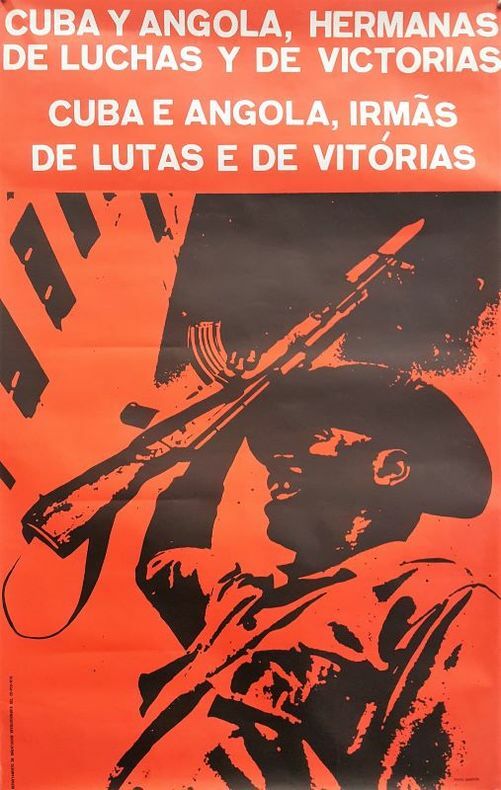
réf. 1105Impression offset. ca.1975. Dim: 72,7 x 46,5 cm. Departamento de Orientación Revolucionaria del Comité Central del Partido Comunista de Cuba. Bon état.
réf. 1105Impression offset. ca.1975. Dim: 72,7 x 46,5 cm. Departamento de Orientación Revolucionaria del Comité Central del Partido Comunista de Cuba. Bon état.
1994réf. 17300DBMailand., Frederico Motta Ed., 1994. 22,5 x 23 cm. 58 S. OPappband mit illustriertem OUmschlag., 17300D.jpg Erste Auflage. Umschlagkanten mit kleinen Bereibungen, etwas angestaubt. Gutes Exemplar.
196216x8,5. 79p.
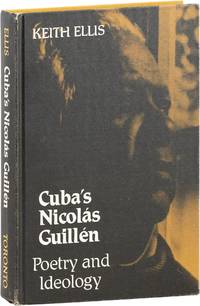
1983réf. 85035Toronto: University of Toronto Press 1983. First Edition. First Impression. Octavo 23.5cm; pictorial cloth-covered boards; x34-251252-254pp. This copy is from the library of to Puerto Rican editor translator and literary critic Roberto Marquez with his ink markings and notations throughout the text and inscribed to him by the author on the title page: "To Robert / as a token of my highest esteem and my admiration for your work / Keith." Base of spine gently nudged light wear to extremities with a few dog-eared pages; Very Good and sound without dustjacket as issued. Scholarly work on the writings of Nicolás Guillén 1902-1989 with a particularly generous inscription to Marquez who has written extensively on Guillén and has translated several of the poet's works faithfully from Spanish into English. A nice association linking two Guillén scholars. Uncommon inscribed. University of Toronto Press unknown
1983réf. 85035Toronto: University of Toronto Press 1983. First Edition. First Impression. Octavo 23.5cm; pictorial cloth-covered boards; x34-251252-254pp. This copy is from the library of to Puerto Rican editor translator and literary critic Roberto Marquez with his ink markings and notations throughout the text and inscribed to him by the author on the title page: "To Robert / as a token of my highest esteem and my admiration for your work / Keith." Base of spine gently nudged light wear to extremities with a few dog-eared pages; Very Good and sound without dustjacket as issued. Scholarly work on the writings of Nicolás Guillén 1902-1989 with a particularly generous inscription to Marquez who has written extensively on Guillén and has translated several of the poet's works faithfully from Spanish into English. A nice association linking two Guillén scholars. Uncommon inscribed. University of Toronto Press unknown books
Harmondsworth, Penguin Books, 1964. 4to. menor; 368 pp. Cubiertas originales.
1973réf. 95958SCEMI, 1973, gr. in-8°, 354 pp, 64 pl. de photos hors texte en héliogravure, 8 pl. hors texte en couleurs, 22 cartes et croquis, reliure toile éditeur, 1er plat illustré, bon état. Edition originale, tirage hors commerce réservé aux Bibliophiles de l'Aventure (Coll. Connaissance des îles)
1970réf. 28965Couverture rigide. Cartonnage de l'éditeur. 356 pages. Jaquette défraîchie.
réf. 57418, Paris, L.G.D.J. 1979, in-12, br., bon état [cet ouvrage provient de la bibliothèque personnelle du professeur Robert-Édouard Charlier], 419p.
Málaga, Miramar, 2005, 21 x 30 cm., 175 págs. con numerosas fotografías, la mayoría a toda página.
Editions Sociales, Socialisme, 1972, 285 pp., poche, couverture un peu frottée, état très correct.
réf. 56359Editions Sociales, Socialisme, 1972, 285 pp., poche, couverture un peu frottée, état très correct.
Madrid, 1994. 4to.mayor; 350 pp. Ilustraciones. Cubiertas originales.
Madrid, 1988. 4to.; XXIV pp., 336 pp. Cubiertas originales.
1961Num?ro complet.
Cm. 24; pp. (4), XX, 594. + Una tavola grafica, a doppia pagina, fuori testo: "Des resultats numeriques que presente le relevé comparatif précédent des importations de farine a l'Ile de Cuba". Edizione originale della traduzione francese, l'originale in lingua spagnola comparve a Madrid nel 1845 con il titolo: "Informe fiscal sobre fomento de la poblacion blanca en la isla de Cuba y emancipacion progresiva de la esclava." Vasquez Queipo (1804 - 1893) uomo politico spagnolo, economista e matematico. Brossura moderna, dedica autografa del traduttore Arthur d'Avrainville al Conte Arrivabene di Mantova. Ottimo esemplare, in barbe. (23 / 481) 753 / 30