[Cuba]ABAA
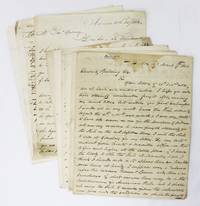
1824rif. 6529Bristol R.I.; Matanzas Cuba 1824. Good plus. Nine letters totaling 17pp. plus docketing. Some loss where previously sealed not affecting text. Otherwise old folds light wear at edges and some toning and dampstaining. Nine manuscript letters addressed to Edward Spalding a shipping agent in Havana and Matanzas with connections to trade out of Bristol and New England during the 1820s. The letters highlight the significant commercial networks between Cuba New England Europe and South America. The correspondence concerns shipments of sugar coffee molasses tobacco cotton and indigo and also reflects on the effects of European political tensions on Atlantic commerce. Several letters are from members of the notable DeWolf family who were major players in trade from Rhode Island to the Caribbean and also quite involved in the transatlantic slave trade that was a large part of the 19th-century Cuban economy. Spalding himself was active in the Cuban slave trade and in its many other facets until at least the end of the 1820s. A good group of correspondence with much firsthand information on trade between Cuba and the United States in the early 19th century. unknown books
1824rif. 6529Bristol R.I.; Matanzas Cuba 1824. Good plus. Nine letters totaling 17pp. plus docketing. Some loss where previously sealed not affecting text. Otherwise old folds light wear at edges and some toning and dampstaining. Nine manuscript letters addressed to Edward Spalding a shipping agent in Havana and Matanzas with connections to trade out of Bristol and New England during the 1820s. The letters highlight the significant commercial networks between Cuba New England Europe and South America. The correspondence concerns shipments of sugar coffee molasses tobacco cotton and indigo and also reflects on the effects of European political tensions on Atlantic commerce. Several letters are from members of the notable DeWolf family who were major players in trade from Rhode Island to the Caribbean and also quite involved in the transatlantic slave trade that was a large part of the 19th-century Cuban economy. Spalding himself was active in the Cuban slave trade and in its many other facets until at least the end of the 1820s. A good group of correspondence with much firsthand information on trade between Cuba and the United States in the early 19th century. unknown
Madrid, Librería General de Victoriano Suárez, 1902. 4to.; 290 pp., y una lámina con el retrato del autor. Cubiertas originales.
190218x12. 290p.
rif. 139173646X.Ghardcover. Good. Access codes and supplements are not guaranteed with used items. May be an ex-library book. hardcover
Málaga, Excma. Diputación, 1999, 30 x 24,5 cm., cartulina editorial, 307 págs. con profusión de láminas, la mayoría en colores.
195123x16. 238p. Cubierta algo deteriorada. Firma anterior poseedor. Fotogr. Ilstr.
1999EDITORI RIUNITI 1999. FONDO DI MAGAZZINO: BRUNITURE AI TAGLI, SEGNI DEL TEMPO, VOLUME INTONSO. La società statunitense si presenta come un universo complesso, del quale è difficile individuare caratteri di fondo e linee di tendenza. Questo volume analizza l'intreccio tra trasformazioni economiche, condizioni sociali e situazione politica negli Stati Uniti di questi anni, con un continuo riferimento alla dialettica tra politica interna e politica estera. La configurazione e l'evoluzione del capitalismo di quel paese sono viste sullo sfondo della situazione internazionale, nel tentativo di intravedere quali saranno gli sviluppi futuri tra gli Stati.
1969In 16° br. pp. 111, ben tenuto
1973In-8°, pp. 371, brossura editoriale.
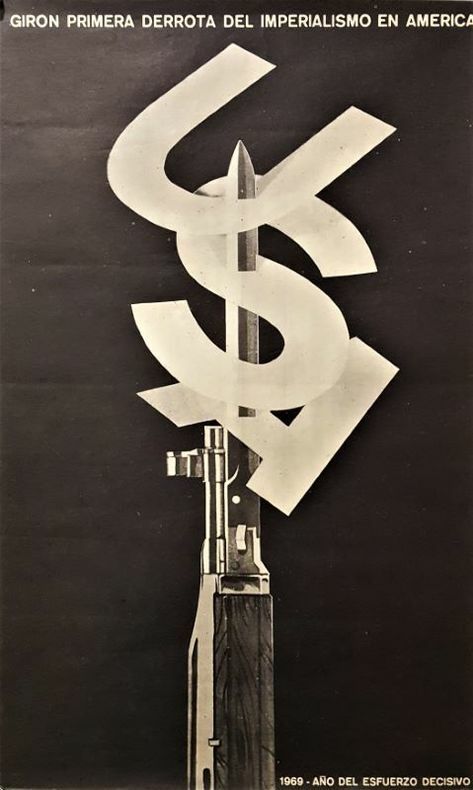
rif. 2092Sans mention d'éditeur. 1969. Impression offset.Dim : 52,5 x 32,5 cm
rif. 2092Sans mention d'éditeur. 1969. Impression offset.Dim : 52,5 x 32,5 cm
Madrid, La Novela Semanal, 1924. 8vo.; 63 pp. Cubiertas originales ilustradas por Benet.
Barcelona, Editorial Seix Barral, 1973. 4to.; 111 pp. Cubiertas originales.
196318x11. 140p. La sobrecubierta algo tocada. Primera Edición.
1889rif. V39836Stuttgart (J.G.Cotta'sche Buchhandlung ) 1889 (= Erste Auflage). 8°, 12 Bände in 9 Büchern in rotem Leinen der Zeit mit goldgeprägtem Rücken, marmoriertem Schnitt und Exlibris (Hardcover), 1 Portrait 1
1987rif. 7880Wilkes-Barre Penna: Sordoni Art Gallery 1987. Softbound. VG slight writing on title-page at top. Rust wraps French flaps 108 pp. 18 color 44 bw plates. Issued in conjunction with 1987-1988 exhibitions held in Wilkes-Barre PA: Sordoni Art Gallery Wilkes College May 3 to June 14 1987 three other locations. The exhibition features selected works of American realist painter George Luks 1867-1933. With three essays by Stanley L. Cuba Judith O'Toole and Nina Kasanof with 185 notes and an exhibition checklist of 32 oils and 30 works on paper. A very nice catalogue that takes a look beyond the clown pictures and illustrates some of his landscapes and portraiture. Very well illustrated. Sordoni Art Gallery paperback books
1889rif. ABE-1597873415144674 PAGES-12 CM X 18 CM-QUATRIEME EDITION-ILLUSTREE DE 190 GRAVURES SUR BOIS-AFRIQUE-ILES D'AFRIQUE-AMERIQUES-OCEANIE-RELIURE BORDEAUX-DOS CUIR A 4 FAUX NERFS-3 CAISSONS A FLEURONS DORES-TITRES DORES-PLATS PERCALINE BORDEAUX-3 TRANCHES DOREES-3 PETITES DECHIRURES SANS MANQUE EN MARGE INF-LEGER ACCROC EN CAISSON CENTRAL-(ETACA)
1997Small white octavo; 314 p; 21 cm. In Spanish. || Only 1,000 copies. || Cuba -- Relations -- United States; Economic conditions; Politics; Government.
La Habana, Casa de las Américas, 1962. 4to. menor; 110 pp., 1 h. Cubiertas originales.
1968Generale Bayo Alberto Generale Bayo Alberto. Teoria e pratica della guerra di guerriglia. Sugar Editore. 1968 - I. Milano, Sugar Editore 1968 - I italiano, in ottavo pp.120 13997 Generale Bayo Alberto. Teoria e pratica della guerra di guerriglia. Sugar Editore. 1968 - I ed. in 8. Brossura. pp. 120. Molto buono.
1485rif. 707591485. Mainz Peter Schöffer 28 März 1485 1 einspaltiges original Inkunabelblatt 239 x 169 mm; etwas fleckig. Erstdruck! Cap. 75: Balsamus - Balsambaum; Commiphora opobalsamum Engl. "Im Gegensatz zu den meisten Kräuterbuch-Inkunabeln lässt sich das Druckdatum des "Gart der Gesundheit genau auf den 28. März 1485 festlegen wie es am Ende des Werks vermerkt ist: "Disser Herbarius ist rzu mentz gedruckt und geendet uff dem XXVIII dage des mertz -Anno-M-CCCC-LXXXV". An gleicher Stelle wird Peter Schöffer als Drucker durch das Fust-Schöffersche Signet bestätigt. Der "Gart der Gesundheit gilt wie Muther 1884: 88: "als wichtigstes naturhistorisches Werk des Mittelalters" und Klebs/Becher 1925: 11: "The most important mediaeval work on natural history with illustrations Choulant the publication of which forms an important landmark in the history of botanical Illustration and marks perhaps the grea-test single Step ever made in that art" meinten als wichtigste bebilderte Arzneipflanzen-Inkunabel. Auch Keil 1982: 604 bestätigte später diese Aussage: "Zweifellos ist der "Gart das wichtigste naturhistorische Werk des Mittelalters". Auf 359 Seiten die in 435 Kapitel gegliedert sind wird der gesamte zur damaligen Zeit bekannte Arzneischatz abgehandelt und mit 382 Holzschnitten illustriert. Die wichtigsten 366 Heilpflanzen zwei Wiederholungen werden jeweils einzeln in den verschiedenen Kapiteln beschrieben und abgebildet. Der Text ist 42zeilig geordnet." B. Baumann & H. Baumann Die Mainzer Kräuterbuch-Inkunabeln 2010 p.111 Johann Wonnecke von Kaub um 1430 in Kaub am Rhein; gestorben 1503/04 in Frankfurt am Main auch Johannfes Dronnecke bzw. Johannes de Cuba er selbst nannte sich "Johan von Cube" war ein deutscher Arzt und Botaniker. Am Mainzer Hof wirkte er als Leibarzt. Kapitelende fehlt unknown
1485rif. 707501485. Mainz Peter Schöffer 28 März 1485 1 einspaltiges original Inkunabelblatt 239 x 169 mm; fleckig. Erstdruck! Cap. 135: Capparus - cappern; Capparis Spinose L. Cap. 136 : Calx - kalck ; Calx Kalk. "Im Gegensatz zu den meisten Kräuterbuch-Inkunabeln lässt sich das Druckdatum des "Gart der Gesundheit genau auf den 28. März 1485 festlegen wie es am Ende des Werks vermerkt ist: "Disser Herbarius ist rzu mentz gedruckt und geendet uff dem XXVIII dage des mertz -Anno-M-CCCC-LXXXV". An gleicher Stelle wird Peter Schöffer als Drucker durch das Fust-Schöffersche Signet bestätigt. Der "Gart der Gesundheit gilt wie Muther 1884: 88: "als wichtigstes naturhistorisches Werk des Mittelalters" und Klebs/Becher 1925: 11: "The most important mediaeval work on natural history with illustrations Choulant the publication of which forms an important landmark in the history of botanical Illustration and marks perhaps the grea-test single Step ever made in that art" meinten als wichtigste bebilderte Arzneipflanzen-Inkunabel. Auch Keil 1982: 604 bestätigte später diese Aussage: "Zweifellos ist der "Gart das wichtigste naturhistorische Werk des Mittelalters". Auf 359 Seiten die in 435 Kapitel gegliedert sind wird der gesamte zur damaligen Zeit bekannte Arzneischatz abgehandelt und mit 382 Holzschnitten illustriert. Die wichtigsten 366 Heilpflanzen zwei Wiederholungen werden jeweils einzeln in den verschiedenen Kapiteln beschrieben und abgebildet. Der Text ist 42zeilig geordnet." B. Baumann & H. Baumann Die Mainzer Kräuterbuch-Inkunabeln 2010 p.111 Johann Wonnecke von Kaub um 1430 in Kaub am Rhein; gestorben 1503/04 in Frankfurt am Main auch Johannfes Dronnecke bzw. Johannes de Cuba er selbst nannte sich "Johan von Cube" war ein deutscher Arzt und Botaniker. Am Mainzer Hof wirkte er als Leibarzt. unknown
1485rif. 707441485. Mainz Peter Schöffer 28 März 1485 1 einspaltiges original Inkunabelblatt 239 x 171 mm 1 alt color. Holzschnitt der Lenticula aque. Erstdruck! Cap. 230: Lilium convallium - meyblomen; Convallaria majalis L. Cap. 231: Labrum veneris wyß disteln; Dipsacus fullonum L. "Im Gegensatz zu den meisten Kräuterbuch-Inkunabeln lässt sich das Druckdatum des "Gart der Gesundheit genau auf den 28. März 1485 festlegen wie es am Ende des Werks vermerkt ist: "Disser Herbarius ist rzu mentz gedruckt und geendet uff dem XXVIII dage des mertz -Anno-M-CCCC-LXXXV". An gleicher Stelle wird Peter Schöffer als Drucker durch das Fust-Schöffersche Signet bestätigt. Der "Gart der Gesundheit gilt wie Muther 1884: 88: "als wichtigstes naturhistorisches Werk des Mittelalters" und Klebs/Becher 1925: 11: "The most important mediaeval work on natural history with illustrations Choulant the publication of which forms an important landmark in the history of botanical Illustration and marks perhaps the grea-test single Step ever made in that art" meinten als wichtigste bebilderte Arzneipflanzen-Inkunabel. Auch Keil 1982: 604 bestätigte später diese Aussage: "Zweifellos ist der "Gart das wichtigste naturhistorische Werk des Mittelalters". Auf 359 Seiten die in 435 Kapitel gegliedert sind wird der gesamte zur damaligen Zeit bekannte Arzneischatz abgehandelt und mit 382 Holzschnitten illustriert. Die wichtigsten 366 Heilpflanzen zwei Wiederholungen werden jeweils einzeln in den verschiedenen Kapiteln beschrieben und abgebildet. Der Text ist 42zeilig geordnet." B. Baumann & H. Baumann Die Mainzer Kräuterbuch-Inkunabeln 2010 p.111 Johann Wonnecke von Kaub um 1430 in Kaub am Rhein; gestorben 1503/04 in Frankfurt am Main auch Johannfes Dronnecke bzw. Johannes de Cuba er selbst nannte sich "Johan von Cube" war ein deutscher Arzt und Botaniker. Am Mainzer Hof wirkte er als Leibarzt. unknown
1485rif. 707781485. Mainz Peter Schöffer 28 März 1485 1 einspaltiges original Inkunabelblatt 239 x 164 mm 1 alt color. Holzschnitt; etwas fleckig. Erstdruck! Cap. 28: Auricula muris siueAnagallus - mußore. Anagallis arvensis L. Darstellung: naturgetreu. "Im Gegensatz zu den meisten Kräuterbuch-Inkunabeln lässt sich das Druckdatum des "Gart der Gesundheit genau auf den 28. März 1485 festlegen wie es am Ende des Werks vermerkt ist: "Disser Herbarius ist rzu mentz gedruckt und geendet uff dem XXVIII dage des mertz -Anno-M-CCCC-LXXXV". An gleicher Stelle wird Peter Schöffer als Drucker durch das Fust-Schöffersche Signet bestätigt. Der "Gart der Gesundheit gilt wie Muther 1884: 88: "als wichtigstes naturhistorisches Werk des Mittelalters" und Klebs/Becher 1925: 11: "The most important mediaeval work on natural history with illustrations Choulant the publication of which forms an important landmark in the history of botanical Illustration and marks perhaps the grea-test single Step ever made in that art" meinten als wichtigste bebilderte Arzneipflanzen-Inkunabel. Auch Keil 1982: 604 bestätigte später diese Aussage: "Zweifellos ist der "Gart das wichtigste naturhistorische Werk des Mittelalters". Auf 359 Seiten die in 435 Kapitel gegliedert sind wird der gesamte zur damaligen Zeit bekannte Arzneischatz abgehandelt und mit 382 Holzschnitten illustriert. Die wichtigsten 366 Heilpflanzen zwei Wiederholungen werden jeweils einzeln in den verschiedenen Kapiteln beschrieben und abgebildet. Der Text ist 42zeilig geordnet." B. Baumann & H. Baumann Die Mainzer Kräuterbuch-Inkunabeln 2010 p.111 Johann Wonnecke von Kaub um 1430 in Kaub am Rhein; gestorben 1503/04 in Frankfurt am Main auch Johannfes Dronnecke bzw. Johannes de Cuba er selbst nannte sich "Johan von Cube" war ein deutscher Arzt und Botaniker. Am Mainzer Hof wirkte er als Leibarzt. unknown