O.L.A.S.Livre Rare Book
1ère conférence de l'organisation latino-américaine de solidarité. (La Havane, août 1967).
1967Best.-Nr. 139905Couverture souple. Broché. 271 pages.

Librairie et Cætera · Belin-Beliet, Frankreich13,50 €
2.538 Ergebnisse
Best.-Nr. Frimodt, LisbethIn Pristine Condition. unknown
Best.-Nr. Suojoki, SaaraIn Pristine Condition. unknown
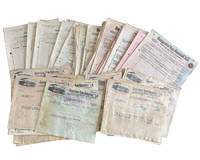
Best.-Nr. 163153 handwritten documents in ink regarding the sale of slave girls in Cuba. The documents are written in Spanish and include details such as purchase price age and names of the girls being sold. Documents are large: 12 ½ x 8 ¾ in. Some shadows from storage with other documents paper acidification from ink. Some losses from ink acidification and wormholes. Marks from previous binding along left edge. Sale documents are numbered at bottom of pages with signatures and all have stamp from Cuban government. Good condition. One of the documents includes the year 1875 dating some of these papers to the dwindling years of the slavery in Cuba which was officially outlawed in 1886. unknown books
1962Un volume (22,5 cm) di 191 pagine, con illustrazioni in nero. In lingua francese. Brossura editoriale con foto di Fidel.
1978Political edition. VG pbk. 15561. eng
1981Best.-Nr. 86364Havana Cuba: Political Publishers 1981. Presumed First Edition First printing. Hardcover. Good/Good. 116 4 pages. Index. Among the topics addressed in the Index are Socioeconomic Developments Revolutionary Armed Forces Social Organizations Ministry of the Interior Union of Young Communists Communist Party Ideological Struggle Foreign Policy and Economics. Fidel Alejandro Castro Ruz 13 August 1926 - 25 November 2016 was a Cuban revolutionary and politician who was the leader of Cuba from 1959 to 2008 serving as the prime minister of Cuba from 1959 to 1976 and president from 1976 to 2008. Ideologically a Marxist-Leninist and Cuban nationalist he also served as the first secretary of the Communist Party of Cuba from 1965 until 2011. Under his administration Cuba became a one-party communist state; industry and business were nationalized and socialist reforms were implemented throughout society. On January 20 1981 Fidel Castro gave the closing speech at the Communist Party of Cuba's second Congress held from January 17-20. He addressed almost 150 foreign delegations representing pro-Soviet communist parties liberation movements and even some social democratic parties of the Socialist international as well as more than a million Cubans. This fact alone is a measure of the prestige which the CPC has among many political trends and working people around the world. But the economic situation in Cuba brought to light during the congress and the path which Castro is proposing to the peoples struggling against imperialism give food for thought and should lead us to question the supposedly revolutionary path which Castro claims to be defending. One of the main concerns of the congress was the economic situation in Cuba. Despite an overall situation envied by many of the peoples dominated by U.S. imperialism the main report presented by Castro revealed that the objectives of the 5-year plan adopted at the First Congress in 1975 were not attained. Economic growth reached only 4% despite an objective of 6% and the industrialization plan met with difficulties. These results are of some importance since the objectives set at the last congress were consciously modest. Given this situation the Second Congress underlined the need for increased mobilization in production and stepped up plans to implement the new system to manage the economy which was first adopted at the First Congress. At the time this system was presented as an answer to the idealist errors of the 1965-70 period when it was claimed that all forms of market economy had abruptly been eliminated. The system clearly draws inspiration from the experience of the economic reforms introduced in the U.S.S.R. by Khrushchev in the early sixties which are judged as positive. These reforms underlined the importance of "the law of value the necessity that in all enterprises including State enterprises there are buy and sell relations and that within these relations the market categories function as indispensable instruments for measuring the use we make of our productive resources. in order to decide which investments are the most advisable and to know which enterprises.work the best.". Political Publishers hardcover
Best.-Nr. Cub7Hbk 421pp blue cloth boards with gilt titles no dj as issued now in custom acetate jacket an excellent clean tight unmarked copy as new Havana: Political Publishers, 1981, hardcover
1820Best.-Nr. 7589AHavana, Kuba, 1820. 21 x 29 cm. 3 Seiten.
1967Best.-Nr. 139905Couverture souple. Broché. 271 pages.
1967Maspero 1967, In-8 broché 271 p. Bon état.
1967Best.-Nr. 99947042Maspero Maspero, 1967. In-8 broché de 271 pages. Bon état.
1900AA.VV 1983. Numero especial. , Universad de La Habana 1900, Condizioni mediocri: copertina sporca con segni di usura ai margini, dorso con segni di usura, tagli ingialliti, pagine ingiallite, scritte a matita all'interno del libr Mediocre (Poor) . 238
1981Best.-Nr. 0012148Havana Cuba. Good with no dust jacket. 1981. Ephemera. On offer is a printed certificate issued in Cuba in 1981 by the Central de Trabajadores de Cuba CTC awarding recognition for fulfillment of the requirements of the state-sponsored Emulación Socialista program. The document is completed in manuscript to Tania Vilá identified as an employee of Tienda Internacional H. Vedado and affiliated with the Sindicato de Comercio y Gastronomía. It certifies her participation in the national emulation campaign held in connection with the 10th Congress of the Federación Sindical Mundial World Federation of Trade Unions. A prominent printed graphic incorporates the FSM insignia together with the declaration CUBA PRIMER PAÍS SOCIALISTA DE AMÉRICA linking individual workplace performance to national and international socialist identity. The certificate is signed by Roberto Veiga Menéndez Secretary General of the National CTC. Documents of this type formed part of the Cuban states system of labor organization and evaluation in which participation in structured emulation programs served to formalize performance recognition and ideological participation within the workplace. Condition: Single printed certificate completed in manuscript. Moderate toning staining and handling wear with edge wear and minor losses. Fully legible with strong printed graphics and intact signature. ; Manuscripts; 8vo 8" - 9" tall; 1 pages; Signed by Author . unknown
1976Best.-Nr. 0012148AHavana Cuba. Good with no dust jacket. 1976. Ephemera. On offer is an original printed and completed Cuban labor commendation certificate dated 1976 issued by the Central de Trabajadores de Cuba CTC recognizing an individual worker as a Trabajador de Avanzada Advanced Worker one of the regimes principal distinctions for exemplary socialist labor performance during the post-revolutionary consolidation period. The certificate is issued to M. Dolores Perera Corrales identified as working at the Combinado del vidrio within the Sindicato Químico energético confirming that she fulfilled the requirements established for selection as an advanced worker within Cubas state industrial labor system. The printed heading reads: TRABAJADOR DE AVANZADA EN EL AÑO DEL XX ANIVERSARIO DEL GRANMABelow in full: La Central de Trabajadores de Cuba otorga el presente certificado The Central Workers Union of Cuba grants this certificate Followed by: por haber cumplido los requisitos establecidos para la selección de trabajador de avanzada. for having fulfilled the established requirements for selection as an advanced worker. The document is signed in blue ballpoint ink by Roberto Veiga Menéndez Secretary General of the CTC 19741989 with printed name and title beneath and accompanied by the official union emblem. This certificate is tied to the XX Aniversario del Granma 20th Anniversary of the Granma dating it to 1976 twenty years after the December 1956 landing of Fidel Castro and his revolutionary forces aboard the yacht Granma a foundational event in the Cuban revolutionary narrative. Condition: Single printed certificate on cardstock square format with light toning and general handling wear. Minor creasing visible across the sheet. Small damp stain approx. 1 cm at bottom of the sheet not interfering with any words. No loss to text. The document remains fully intact and visually strong. Overall Good. ; Manuscripts; 8vo 8" - 9" tall; 1 pages; Signed by Author . unknown
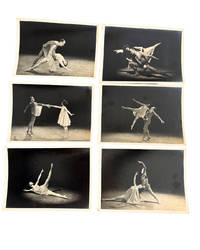
1964Best.-Nr. 0012155Havana Cuba. Good with no dust jacket. 1964. Non-Book. On offer is a cohesive series of six original 1964 Cuban television dance photographs showing Emilia Villamil and Raymond Ramon Iglesias in a staged dance sequence for a television showbroadcast on Canal 6 the Havana television channel associated with Cubavisión. Thephotographs appear to be publicity stills and all belong to the same production series and bearsthe professional studio/lab stamp OLIVIA FOTOS 9.1833 on the verso. On the verso of someof the photos are handwritten notes that provide information about the dancers TV channel andyear. Villamil and Iglesias were Tropicana-era Cuban performers here seen performing in a post-Revolution broadcast studio bridging Havanas pre-Revolution cabaret and theatrical culture with the new television environment of the 1960s. Cubavisións institutional history traces itsorigins to CMQ-TV Channel 6. Villamil was often referred to as La China and is sometimes known as China Villamil. AnEl Nuevo Herald profile of her son television journalist Camilo Egaña identifies her as labailarina Emilia Villamil fundadora de la televisión cubana the dancer Emilia Villamil founder/pioneer of Cuban television. A 1979 San Antonio Express-News profile identifies Raymond Iglesias as a Cuban refugee andformer Havana dancer-choreographer-singer who later became a fashion designer. The articleexplains that his given name was Ramon but that he used and preferred Raymond a usefulclarification for the present group because one verso notation gives his first name as Ramon. The same profile records that as a youth in Havana he studied dance with Alicia Alonso Ballet performed internationally with partner Elena del Cueto under the billing Clarissa andRaymond and toured as a dancer for ten years. This is a valuable archive from a comparatively under-documented area of Cuban culturalhistory: the movement of established theatrical cabaret and dance performers into early post-Revolution television. Original production stills from this period are not commonly encounteredin coherent identified groups. Notes on Canal 6 CMQ-TV Cubavisión Following the nationalization of Cuban broadcasting in 1960 theformer commercial station Canal 6 CMQ-TV was incorporatedinto the state system and became the principal outlet of what wasincreasingly identified as Cubavisión the national televisionservice centered in Havana. Contemporary scholarship andbroadcast histories note that early 1960s programming on Canal6/Cubavisión retained a strong continuity with pre-Revolutionformatsparticularly live studio variety music and dancewhile being reorganized under state cultural policy Rivero 2015; Chanan 2004. Surviving program references from theperiod include musical and variety broadcasts such as Ritmos deCuba a recurring dance-music revue format dramatizedliterary and theatrical adaptations newsreel-style current affairssegments and childrens programming blocks all of whichformed the backbone of early revolutionary televisionscheduling Rivero 2015; Chanan 2004; Pérez Jr. 1995. Condition: Expected light handling wear minor edge and corner wear and typical surface signsfrom age and use. The images remain strong with good contrast and clear detail. Verso stampsand notations are present as described. Overall Very Good. ; Photograph; 8vo 8" - 9" tall; 6 pages . unknown
Best.-Nr. 20CCUBALOTCIsrael Jerusalem Havana Cuba New York Usa. Fair with no dust jacket. Non-Book. On offer is a remarkable nine-document archive tracing nearly two decades of Zionist political cultural and financial correspondence linking Cubas Jewish leadership with the centers of world Jewry in Jerusalem New York and Latin America. Together these communications chart the transformation of Cuban Jewry from a peripheral supporter of the Yishuv to an active and recognized participant in the international Zionist networka Caribbean outpost engaged in fundraising education youth mobilization and ideological exchange. Mandatory-Era Migration and Bureaucratic RestraintThe earliest piece dated September 22 1937 comes from the Jewish Agency for Palestine in Jerusalem addressed to the Zionist Federation of Cuba in Havana regarding an individual immigration request the case of Rudzenewsky. The letter opens: - . We do not have any immigration certificates in our possession; therefore we cannot discuss your request regarding obtaining Aliyah certificates at all. Issued amid the tightening British immigration quotas of the Arab Revolt this restrained refusal captures the bureaucratic limits of Mandatory-era migration and the frustration of a community newly seeking direct participation in the Zionist project. Even a sympathetic outpost such as Havana remained outside the gates of the Yishuvs allocation system dependent on permissions that never came. As one of the earliest known correspondence between the Cuban Zionist Federation and Jerusalem it marks the beginning of a paper trail that would over the following two decades trace the communitys evolution from petitioners to recognized partners in global Zionist coordination. Fundraising for Settlement and DefenseBarely six weeks later the tone shifts from denial to mobilization. On 5 Kislev 5698 November 5 1937 Keren Hayesod Ltd. the Erez Israel Palestine Foundation Fund issued a Hebrew circular from Jerusalem to its global committees including Havana. Typed on vivid blue-and-white letterhead it announced the forthcoming fourth issue of HaMassad dedicated to the great enterprise of construction and security of Keren Hayesod this year. Inviting regional feedback to ensure the bulletin fulfills its task perfectly and reflects the creative work being done in Eretz Israel the circular unites the twin imperatives of binyan uvebitachon building and defense central to the Yishuvs ethos amid the Arab Revolt. For Cubas emerging Zionist Federation this stands as one of the earliest direct communications from Jerusalem confirming the islands inclusion in the pre-state fundraising and ideological network. Wartime Solidarity and Political ConscienceTwo vivid wartime items from 1944 illustrate how ideology culture and politics intertwined in Havana. The Unión Sionista de Cuba issued a bilingual flyer inviting the Jewish public of Havana to a lecture by Nathan Bistritzky on Moscow and Jerusalem An Analysis of Two Revolutions adding: En este Acto se homenajeará al heroico Ejército Rojo en ocasión de su 26º Aniversario. In this Act the heroic Red Army will be honored on the occasion of its 26th Anniversary. An accompanying invitation from the Patronato de Ayuda al Pueblo Español greets the President of Zionist Youth and invites him to a December meeting about the struggle of the Spanish people and the delivery of economic contributions for the Year-End Effort. These intertwined documents vividly position Jewish Havana within the broader antifascist and humanitarian currents of the Second World War. Youth Networks and Ideological PluralismA Hashomer Hatzair letter of April 17 1945 conveys the disciplined optimism of the socialist-Zionist youth movement as it rebuilt its trans-American network in the final months of war. Written from the North American headquarters in New York to the Cuban branch it reports on arrangements for Tova Levin a young Hebrew teacher in training at the movements Hightstown farm who would soon travel to Cuba to assist with education and leadership development. The circular further details plans for a Latin-American management camp in Mexico and urges an immediate reply with participant names. The writers lament the branchs silence since October and request news and photographs for The Young Guard anniversary issue. Closing with With the blessing of the movement. Strong and courageous! it perfectly fuses administration and inspiration. Its bilingual Hebrew-English letterhead / Hashomer Hatzairembodies the groups dual mission: Hebrew in content international in spirit linking Havana New York and Mexico in a single youth-driven Zionist network. From Jerusalem the Executive of the Zionist Organization issued a communiqué on July 15 1946 signed by Dr. A. L. Leuterbach in the aftermath of the British arrests and seizure of the Jewish Agencys offices during the Black Sabbath raids: The imprisonment of members of the Jewish Agency came as a heavy blow to us and greatly shocked the Yishuv and the entire Zionist world. The statement thanks Jewish communities abroad for solidarity vows to continue our work without hesitation and appeals to every Zionist body to spread the spirit of Zionism even more strongly in their respective places. Although the Agencys files had been seized the call radiates steadfastness and unity amid repression. A decade later this networks endurance is reaffirmed through two trans-Atlantic communications. On December 14 1955 The Jewish Agency Inc. 16 E. 66th Street New York wrote to Betar Calle 10 esq. 3 Vedado Havana enclosing a check for $150 representing allocation by the Youth and Hechalutz Department for the period October 1 1955 through March 31 1956.The letter explicitly notes that the payment was made pursuant to instructions received from Israel confirming that the directive to fund Havanas Betar chapter originated in Jerusalem. Signed by Fannie Speiser Assistant Treasurer the letter attests to the continuing New YorkHavana financial conduit and to Israels oversight of diaspora youth programming. Soon afterward Dr. Aron Weinberger of Midstream magazine wrote inviting the Havana community to help distribute the journal for free and frank discussion of all problems that face the contemporary Jew. final item dated November 12 1956 brings the narrative full circle. Issued by the Club Juvenil del Patronato de la Casa de la Comunidad Hebrea de Cuba it invites Hashomer Hatzair Prado 260 Ciudad to attend the installation ceremony of the Patronatos new youth board to be held on Tuesday 20 November at 9 p. M. In the Conference Hall of the Patronato. Signed by Rafael Kapuskin Secretary the letter is both social and symbolicaffirming that by the mid-1950s Zionist youth movements were no longer peripheral study circles but active civic partners within Havanas central Jewish institutions. The letters tone En la seguridad de vernos honrados con vuestra presencia In the certainty of being honored by your presence embodies the confidence of a mature interconnected Jewish community just before the political transformations of late-1950s Cuba. Together these communications trace Havanas evolving role in Israel-oriented and diasporic intellectual lifefrom the practical fundraising of Keren Hayesod to the ideological pluralism of Betar and Hashomer Hatzair. As a whole the archive captures the rhythm of Cuban Zionist life from supplication and bureaucracy to political maturity and cultural dialogue. It offers scholars a uniquely multilingual cross-section of Hebrew Yiddish Spanish and English voices negotiating identity loyalty and nationhood from the Caribbean periphery of world Zionism. Condition and Language: Nine documents spanning Hebrew Yiddish Spanish and English. Mixed paper stocks; significant folds generally minor stains and varying edge tears especially prominent on thinner stock. Heavy handling all text complete and legible. Age toning. Overall Fair to Good.; Manuscripts; 8vo 8" - 9" tall; 10 pages; Signed by Author . unknown
Best.-Nr. 0012156Havana Cuba Santiago DE Cuba. Very Good with no dust jacket. Non-Book. On offer is a substantial 1937–1959 Bacardi Cuba corporate operations archive comprising approximately 110 documents from Compañía "Ron Bacardí " S. A. And related Cuban rum-industry files. Centered chiefly on Santiago de Cuba and Havana the archive documents Bacardi's pre-nationalization business through export invoices checks purchase requests receiving forms supplier correspondence freight records label orders tax payments advertising records and banking endorsements. What makes the archive particularly strong is that many records are functionally connected. Purchase requests correspond to receiving forms supplier letters explain pricing and material changes export invoices trace named overseas shipments and checks document freight taxes advertising transport and government-related payments. Together they provide a detailed working record of Bacardi as a producer exporter taxpayer advertiser purchaser of printed packaging user of Cuban freight networks and participant in the country's banking and fiscal systems during the final decades of privately operated Bacardi production in Cuba. Many documents identify the company as Compañía "Ron Bacardí " S. A. Santiago de Cuba y Habana Sucesores de Bacardí y Cía. Establecidos en 1862. Others describe it as "Propietarios del Bacardí y la Cerveza Hatuey " directly linking the archive to both Bacardi rum and Hatuey beer. Among the most historically important records are 1959 Bacardi checks showing ordinary private commercial activity continuing after the January Revolution and before the confiscation of Bacardi's Cuban assets in October 1960. A January 26 1959 check to Agrupación de Transporte S. A. Pays for hauling performed during the second half of January. Another check that day to Porteadora Cubana de Carga S. A. References a waybill and carries banking and customs-related endorsements. A June 1959 check pays the Cámara de Comercio de Camagüey for advertising while an August 1959 Trust Company of Cuba check covers freight on packages and boxes containing promotional materials. Two additional January 1959 checks concern relief at Sagua de Tánamo Oriente including one issued "Para socorrer a los habitantes de Sagua de Tánamo" to assist the inhabitants of Sagua de Tánamo. These records capture Bacardi still conducting transport advertising banking freight and civic activities during Cuba's revolutionary transition. A major portion of the archive documents Bacardi's label packaging and lithographic supply chain particularly through Compañía Litográfica de la Habana S. A. 1957 purchase requests include orders for 1000000 Carta Blanca analysis labels 1000000 Ron Palmas labels 100000 Carta de Oro labels 70000 Bacardi Imports Carta Blanca labels 12000 Añejo Brand miniature labels and 6000 aluminum-paper Añejo bottle wrappers. Several have corresponding receiving forms showing delivery through Porteadora Cubana de Carga. The Hatuey beer records reveal even greater scale. One receiving form records 3000000 Hatuey Clara labels another records 1200000 additional oval labels while supplier invoices document runs of 4000000 and 2800000 Cerveza Hatuey Pilsener labels. Supplier correspondence adds unusually detailed operational context. A 1956 letter explains that an order for 33000 aluminum-paper Añejo wrappers could only be partly filled at the old price because existing stock was exhausted forcing the remainder to be produced from more expensive new material. Other records concern paper substitutions cancellation of 50000 lithographed Bacardi envelopes and quotations for 26000 holiday greeting cards and 26000 envelopes. The archive includes 1950s export records documenting shipments to the United States Canada and Newfoundland Holland Honduras El Salvador and Hong Kong. A 1953 invoice to Gande Price & Co. Ltd. Hong Kong records 25 cartons of Bacardí Carta Blanca marked "DOUBLE STEEL STRAPPED. " A related Bacardi letter identifies the shipment as Embarque No. 157 and discusses documentation required for a Cuban public-works charge. A 1953 invoice to The Board of Liquor Control St. John's Newfoundland shipped aboard the Canadian Observer via Halifax records 500 cartons of Bacardí Carta de Oro Rum marked "DOUBLE STEEL STRAPPED " "STRENGTH: 40.0 G. L. " and "NO FODDER USED. " The total including freight was $8145.50. Related Nova Scotia material further documents Bacardi's Canadian-Caribbean trade. Earlier correspondence documents Bacardi's American label and distribution system. A 1939 letter to H. B. Estrada at the Empire State Building concerns "Etiquetas U. S. A. " and records shipment of 1200 Bacardí Carta Blanca labels 400 Bacardí Carta de Oro labels and 2000 analysis foot-labels. A 1940 letter on José M. Bosch Agent for Compañía Ron Bacardi Empire State Building letterhead requests additional Carta Blanca and Carta Oro label sets to be sent by air. The archive also documents Bacardi's interaction with Cuba's fiscal and banking systems. A 1950 check for $26928.00 records the purchase of liquor-tax stamps. Other documents concern income taxes wage-tax matters public-works charges treasury payments and banking clearance. Many retain original endorsements and stamps from institutions including the Tesorería General de la República Cámara Nacional de Compensaciones The Bank of Nova Scotia and other Cuban banking and fiscal bodies. Advertising records include Bacardi-Hatuey newspaper advertising Chamber of Commerce advertising promotional freight and a 1957 Propaganda Department order for 26000 greeting cards and 26000 envelopes for the 1958 holiday season. One unusual letter from F. M. Hitchcock of Wichita Kansas thanks Bacardi for miniature labels and requests sets of its full-size labels and medal label showing that Bacardi packaging was already being collected as brand ephemera during the period. Also included is related Cuban rum-industry material notably a 1959 José Arechabala S. A. Check providing comparative documentation from another major Cuban liquor producer during the same revolutionary year. The archive documents Bacardi's continued private operations in 1959 rum exports across North America Europe Central America and Asia multi-million-unit production of Hatuey beer labels Bacardí Carta Blanca Carta de Oro Ron Palmas and Añejo packaging lithographic suppliers and packaging production freight transport banking taxes and customs-related processing prewar U. S. Distribution through New York advertising and promotional material local civic and relief activity in Oriente and related José Arechabala rum-industry material. Founded in Santiago de Cuba in 1862 Bacardi became one of Cuba's most internationally recognized brands. Its Cuban assets were confiscated by the revolutionary government on October 14 1960. This archive preserves a detailed paper trail of the company before that event including 1959 records showing Bacardi still operating as a private Cuban business during the revolutionary transition. More than a group of isolated invoices and checks the archive shows how Bacardi actually functioned: labels ordered by the million bottles and promotional materials packaged overseas shipments processed suppliers negotiated with taxes paid freight moved and banking transactions cleared. Approximately 110 documents are included consisting of checks export invoices supplier invoices purchase requests receiving forms letters freight records tax and fiscal records advertising records and related commercial correspondence. Condition varies as expected for working corporate records. Documents show folds handling wear filing holes edge wear creases stamps endorsements perforated cancellations annotations and occasional tears or staining. Many retain original fiscal stamps bank and treasury marks routing notes and cancellation perforations. Overall Fair to Good. ; Manuscripts; Oblong Small 4to 9" - 11" tall; 110 pages; Signed by Author .
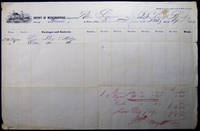
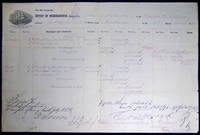
1864Best.-Nr. 029846Philadelphia PA: Not Published 1864. Bill of lading & Entry of Merchandise form completed in manuscript. Dated 23rd April 1864 for the Bark Speed; Bram master; sailing from Trinidad de Cuba & bringing in a small cargo of merchandise guava jelly longans & books. The goods were imported by Peter Lynn and are listed in the packages and contents section of the form. The quantities are calculated for customs duties and signed by the agents in charge in manuscript. The reverse with the District and Port of Philadelphia bill of lading affirmation printed information with receipted note of duties paid on the blank panel at the bottom of the sheet. Form with a small woodcut of ship at sea; printed and sold by Geo. W. Henry. Document approx. 11" x 16 3/4" size; with old fold lines little nicks closed edge-tears to the paper edges; in good condition. Manuscript. Not Bound. Good. Not Published paperback
1862Best.-Nr. 029376Philadelphia PA: Not Published 1862. Bill of lading & Entry of Merchandise form completed in manuscript. Dated 28th May 1862 for the Ship Charles H. Jordan; K.P. Bray master; sailing from Caibarien Cuba & bringing in a cargo of muscovado sugar. The goods were imported by S. Morris Waln & Co. and are listed in the packages and contents section of the form. The quantities are calculated for customs duties and signed by the agents in charge in manuscript. The reverse with the District and Port of Philadelphia bill of lading affirmation printed information partially filled-in and with receipted note of duties paid on the blank panel at the bottom of the sheet. Form with a small woodcut of ship-at-sea; printed and sold by John C. Clark & Son. Document approx. 11" x 16 3/4" size; with old fold lines little nicks closed edge-tears to the paper edges; in very good condition. Manuscript. Not Bound. Very Good. Not Published paperback
1810Best.-Nr. 25380New York City NY: Not Published 1810. One page letter dated New York 18th December 1810 and being given to James Thomson Grocer New York. ".Sir - As I am going to Havannah in the Brig Galen Capt. Annes it is My wish that if any accident Should happen to prevent me returning in the vessel you will See to and take possession of what property of mine may be in her and in case of My Death that by virtue of my power of attorney you collect my estate together as much as in your power and after paying my just and lawful debts remit the remainder to my brother John Gann Goodestone near Wingham County of Kent England. Yours William Gann" Approx. 8" x 13" size; ink handwriting very legible. Light wear dustiness split at one section at old fold lines; in very good condition and interesting early 19th century New York City business history law ephemera. . Manuscript. Not Bound. Good. Not Published paperback books
1966Best.-Nr. 42234ABHannover., Kestner Gesellschaft., 1966. 21 x 17 cm. 52 S., 8 Blatt. OKarton., 42234AB 1. Auflage. Gutes bis noch sehr gutes Exemplar.
1969Con num. tavv. b/n n.t. e f.t.; R. S2.
Best.-Nr. 777Édité par la Commission permanente de Cuba. 1978. Impression offset. Dimensions: 67,5 x 43.
Best.-Nr. 777Édité par la Commission permanente de Cuba. 1978. Impression offset. Dimensions: 67,5 x 43.