2 639 résultats
réf. 32307Ediciones Tabapress 1989 in 4 (28,5x24) 1 volume reliure toilée marron de l'éditeur sous jaquette illustrée en couleurs, 139 pages [1], avec de nombreuses reproductions en couleurs d'étiquettes lithographiées illustrées de boites de cigares. Bel exemplaire ( Photographies sur demande / We can send pictures of this book on simple request )
réf. 56996aafFribourg, Egloff, LUF, (Impr. d'Albert Kundig à Genève), 1944, in-4to, 22 p., non reliés, brochure originale. Ex. sur papier vélin du Marais num.
196172 pages. Features: One-page photo ad for the Vertol 107 helicopter; Rig Your Sword Right; One-page illustrated ad for the Grumman A2F-1 Intruder attack aircraft; JFK writes about para-military operations and guerilla warfare; Sticks, Stones & Atoms - interesting article describes how firepower is not the answer in a war of ideologies; Erwin Rommel - Fox or Fake? - interesting feature article; The Case for Jet CAS - jet close air support is here to stay, so the pro-driven AD and F4U are on the way out; La Guerra de Guerrillas - part 1 of 3; Waller of Samar (part 2) - Maj Littleton Waller Tazewell Waller fought natives and a court martial; Marine Corps Reserve; 1st Marine Division; Marine Air Reserve; That Direction's North - Capt. P.R. Clapper in Korea; Baseplate McGurk; Promotions and Transfers; Back cover color ad for the Kaman HU2K-1 Seassprite helicopter; and more. Average wear. Unmarked. A sound vintage copy. Magazine
196072 pages. Features: Camp Pendleton cover illustration; Bell Telephone ad features photo of award-winner Dr. James W. McRae; Democratic Control in a Totalitarian Age; Sovite Amphibious Analysis; Ready to Fight, Part I - report from the ready forces, The 1st (First) Marine Division (REINF); Part 2 - Programs to Improve Readiness; How Castro Won - the eyewitness story of small unit actions - excellent photo-illustrated article; The Marine Reserve; Someone Inspects You Every Day; The Salty Skipper Says....; Support by Fire - Part VIII - Targets; The Commandant's Policies; Unofficial digest of orders and news of Marine leaders; and more. Average wear. Unmarked. A sound vintage copy. Magazine
1959réf. ABE-1632662806207164 PAGES-26,5 CM X 35 CM-ANTONELLA LUALDI EN COUVERTURE, PHOTO YUREK-CES VEDETTES ONT PHOTOGRAPHIE POUR VOUS LES PLUS GRANDES VEDETTES DE LA SAISON PARISIENNE: LES FLEURS, PHILIPPE NICAUD ET MARIA MAUBAN, MARIE JOSEE NAT, JEANNE MOREAU, JUDITH MAGRE, NICOLE COURCEL 5 PAGES-LA LUNE DE MIEL DE DEUX REPORTERS CHEZ FIDEL CASTRO: DU PARADIS A L'ENFER, PAR MARIE HELENE CAMUS, 7 PAGES-MAILLOTS DE BAIN, 4P-NEES DES GRANDES COLLECTIONS LES ROBES LINGERIE-J JACQUELIN POUR PUBLICITE VITTEL DELICES-LA PLUIE SUR MARTEMORT, PAR GILBERT CESBRON-LES FEMMES DEVANT LA LOI, ROBERT BADINTER-LES ETOILES MARIE CLAIRE, MODE, 19 PAGES-ETE 59, POUR LA SILHOUETTE TYPE: LA CHEMISE VESTE-6 MILLIONS DANS CHACUNE DE SES FOSSETTES JACQUES CHARRIER LE BON JEUNE HOMME A DETRONE LES "TRICHEURS", PAR GEORGES BELMONT, 5 PAGES-FLEMING PENICILLINE, 4 PAGES-MYLENE DEMONGEOT POUR PUBLICITE LUX, 4 PHOTOS COULEURS
1933réf. ABE-169021776696816 PAGES-38 CM X 56 CM-PLAIDOYER POUR JACQUES BONHOMME, PAR GEORGES DUHAMEL-L'ARBITRAGE DE MUSSOLINI-LA REVOLUTION A CUBA, PAR ROBI DESNOS-CHANTIERS AMERICAINS, PAR ANDRE MAUROIS, 3 PHOTOS-ARNAUD DANDIEU EST MORT, PAR ROBERT ARON-LA CROISIERE INVRAISEMBLABLE, ROMAN INEDIT DE GEORGES SIMENON, 1 PAGE, 2 PHOTOS-JOCONDES VOLEES-PARIS SECRET, ROMAN INEDIT DE TRISTAN BERNARD-2000 KILOMETRES A BICYCLETTE, PHOTO-LA JEUNE FILLE EN SOIE ARTIFICIELLE, ROMAN INEDIT DE IRMGARD KEUN, TRADUIT DE L'ALLEMAND PAR CLARA MALRAUX, 1P, 4 PHOTOS-PERDRONS-NOUS RENE CLAIR?, PHOTO-PHOTO TALLULAH BANKHEAD-UNE PAGE POUR RIRE: JEAN EFFEL (2), MONIER (5), DUBOUT (DEMI PAGE, "LES ORIGINAUX")-LA FRANCE COMTE, PAR MARCEL AYME-EXPOSITIONS, PAR JEAN CASSOU: RETROSPECTIVE, PAUL GAUGUIN-JEAN-JACQUES ROUSSEAU A L'OPERA, PAR GUY DE POURTALES-EN DERNIERE PAGE: VACANCES 1933, 12 PHOTOS-(BC723)
1898294p., illus. Hardcover Very good condition
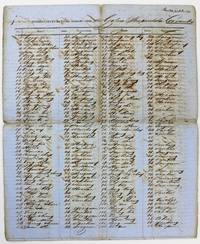
1867réf. 3978Macau: April 6 1867. Very good. 6pp. on large folio partially-printed forms printed in two columns completed in manuscript. Old folds with minor losses at a few spots along the horizontal fold. Five hundred and fifty Chinese laborers bound for Cuba aboard the Spanish galley "Cervantes" are listed by name with their age and town or city of origin given. The laborers hail from several different cities in China and their ages range from 18 to 36 with the majority of the men in their 20s. The end of the document is signed and dated on the final page by José de Aguilar the Spanish consul at Macau. The left side of the final page contains two separate lists one with five numbers and the other with four numbers keyed to the manifest. The list of five names has an "x" next to each number perhaps noting that these men did not in fact make the trip to Cuba; each "x" could also signal that these men died during the voyage from Macau to Cuba which was a common-enough occurrence that it is often noted on manifests of this kind. Chinese indentured servitude in 19th-century Cuba was an insidious practice tantamount to slavery which flourished in Cuba even after the abolition of the peculiar institution in the British West Indies. With their free source of labor no longer available plantation owners in Cuba looked elsewhere; and they looked east. From around 1848 to the mid-1870s over 100000 Chinese indentured servants made their way to Cuba often sailing to Cuba in large groups. Once they arrived Chinese laborers indentured themselves to Cuban masters for terms of at least five years. The treatment of Asian indentured servants in Cuba varied widely with reports of some particularly ill-treated laborers ending their lives by suicide. "Some contemporaries and later historians.have condemned the servitude of the Asians as a thinly disguised revival of slavery. These critics have pointed to a variety of abuses to which the Asians were subjected both legally - with severe laws governing absenteeism vagrancy and insufficient work - and illegally in the form of harassment by vicious masters. Yet other observers have defended the system as a boon to the Asian workers. Voluntary reindenture at the end of their terms was common among the migrants suggesting that many Asians judged the system to be beneficial to them" - Drescher. Seymour Drescher & Stanley L. Engerman editors A Historical Guide to World Slavery New York 1998 pp.239-42. April 6 unknown books
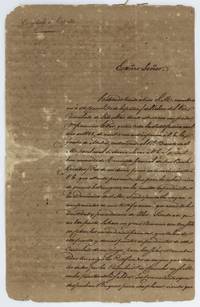
1828réf. 2401Gibraltar 1828. Good. 3pp. on a bifolium. Previously folded with separations. Tanned somewhat brittle. An interesting example of official communications concerning trade between colonial Cuba and the Spanish mainland. In this manuscript letter date March 14 1828 the new Spanish Vice Consul in Gibraltar writes to the Governor General of Cuba concerning several topics. These include the regulation of shipping to Cuba and by implication the rest of the Caribbean through Gibraltar particularly of French ships leaving Mediterranean ports. Also discussed is keeping track of individuals particularly merchants going to Cuba by means of identification papers and other documents. The consul also reminds the colonial government of the importance of documenting duties and tariffs paid for shipping cargo and goods. unknown books
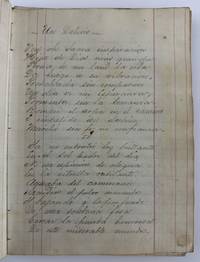
1889réf. 4403Havana Cuba 1889. Good. 69pp. of manuscript text plus 77pp. of newspaper extracts. Contemporary quarter calf and marbled paper-covered boards. Moderate scuffing and wear to boards and edges spine scuffed. Hinges broken with text block only nominally attached by threads with many leaves detached. Ownership ink stamp on front free endpaper "Manuel F. Barranco" with a gilt insignia affixed below reading "MB." A unique and personal manuscript journal and scrapbook composed and maintained by an important but obscure Cuban-American poet and author Manuel Francisco Barranco y Miranda 1843-1894. Barranco was born in Puerto Principe and lived about half of his life in Cuba before emigrating to Florida in 1875. He married Mercedes Fernández y Fernández-Mora and the couple raised a family in Cuba Florida and New York. Mentions of Barranco are rare in available records but he seems to have been a colleague of famed Cuban revolutionary figure Jose Marti. Barranco and Marti were involved with a Cuban revolutionary emigrant colony in Key West as well as Cuban literary and political societies in Havana and New York such as La Liga. Regarding the latter one of Barranco's poems in the present work composed in eleven parts is titled "Versos recitados en la sesion ordinaria de la Sociedad Literaria Hispano-Americana la noche del 17 de Maya de 1889." The Sociedad Literaria Hispano-Americana or Spanish American Literary Society provides a further connection to Jose Marti as Marti was one of the most prominent members of the club in the 1880s and '90s. Barranco presumably spent the remainder of his life between Cuba and the eastern coast of the United States where he passed away in Tampa Florida in 1894. The present material was written and compiled by Barranco over about a thirty year period in the mid-19th century before and after he emigrated to the United States. The chief feature of the present work is contained in almost seventy pages of manuscript poetry by Barranco. The poems which number around a couple dozen compositions include "Un Delirio" written in six parts "Versas improvisados en el Bautiro de mi hija Ana Maria el dia 1 de Enero de 1875" "Versos improvisados en comemora cion del Bautiro de mi hija Ana Maria el dio 1 de Enero del 1876" "Al congreso de la Paz" and various sonnets and other poems dated between 1875 and 1889. Barranco authored a few poems here about his wife Mercedes with titles such as "A Mercedes" "Improvisados a la orrilla del mon - A Mercedes" and "Al contemplar tu retrato." He also composed poems about his mother Ana Maria Sebastiana de Miranda. Several of the later poems from 1888-89 are datelined Havana next to the date of composition indicating Barranco moved back and forth between Cuba and America. The manuscript text is supplemented by almost eighty pages of newspaper extracts featuring various articles letters and printed poetry by Barranco published under his own name and a pen name "Leunam." The subject matter of these pieces include education women literature and various family members and other subjects in his own poetry. An example of the latter is a memorial poem for his granddaughter Margarita Barranco who died in Puerto Principe in 1866. Following the manuscript poems themselves is a single handwritten page of contents relating to these newspaper extracts. The extracts very likely come from Cuban newspapers and periodicals since they predate his move to Florida in 1875. A printed note laid into the book reads: "A Bound Journal Containing Published and Unpublished Handwritten Letters and Poems by My Grandfather Manuel Francisco Barranco y Miranda in Habana in the mid-19th Century Probably During the Period 1859-1869." Not much else is easily discovered about Barranco providing an excellent chance for original research into the work of this obscure but important 19th-century Cuban-American poet and writer. unknown books
1867réf. 3978Macau: April 6 1867. Very good. 6pp. on large folio partially-printed forms printed in two columns completed in manuscript. Old folds with minor losses at a few spots along the horizontal fold. Five hundred and fifty Chinese laborers bound for Cuba aboard the Spanish galley "Cervantes" are listed by name with their age and town or city of origin given. The laborers hail from several different cities in China and their ages range from 18 to 36 with the majority of the men in their 20s. The end of the document is signed and dated on the final page by José de Aguilar the Spanish consul at Macau. The left side of the final page contains two separate lists one with five numbers and the other with four numbers keyed to the manifest. The list of five names has an "x" next to each number perhaps noting that these men did not in fact make the trip to Cuba; each "x" could also signal that these men died during the voyage from Macau to Cuba which was a common-enough occurrence that it is often noted on manifests of this kind. Chinese indentured servitude in 19th-century Cuba was an insidious practice tantamount to slavery which flourished in Cuba even after the abolition of the peculiar institution in the British West Indies. With their free source of labor no longer available plantation owners in Cuba looked elsewhere; and they looked east. From around 1848 to the mid-1870s over 100000 Chinese indentured servants made their way to Cuba often sailing to Cuba in large groups. Once they arrived Chinese laborers indentured themselves to Cuban masters for terms of at least five years. The treatment of Asian indentured servants in Cuba varied widely with reports of some particularly ill-treated laborers ending their lives by suicide. "Some contemporaries and later historians.have condemned the servitude of the Asians as a thinly disguised revival of slavery. These critics have pointed to a variety of abuses to which the Asians were subjected both legally - with severe laws governing absenteeism vagrancy and insufficient work - and illegally in the form of harassment by vicious masters. Yet other observers have defended the system as a boon to the Asian workers. Voluntary reindenture at the end of their terms was common among the migrants suggesting that many Asians judged the system to be beneficial to them" - Drescher. Seymour Drescher & Stanley L. Engerman editors A Historical Guide to World Slavery New York 1998 pp.239-42. April 6 unknown
1828réf. 2401Gibraltar 1828. Good. 3pp. on a bifolium. Previously folded with separations. Tanned somewhat brittle. An interesting example of official communications concerning trade between colonial Cuba and the Spanish mainland. In this manuscript letter date March 14 1828 the new Spanish Vice Consul in Gibraltar writes to the Governor General of Cuba concerning several topics. These include the regulation of shipping to Cuba and by implication the rest of the Caribbean through Gibraltar particularly of French ships leaving Mediterranean ports. Also discussed is keeping track of individuals particularly merchants going to Cuba by means of identification papers and other documents. The consul also reminds the colonial government of the importance of documenting duties and tariffs paid for shipping cargo and goods. unknown
1889réf. 4403Havana Cuba 1889. Good. 69pp. of manuscript text plus 77pp. of newspaper extracts. Contemporary quarter calf and marbled paper-covered boards. Moderate scuffing and wear to boards and edges spine scuffed. Hinges broken with text block only nominally attached by threads with many leaves detached. Ownership ink stamp on front free endpaper "Manuel F. Barranco" with a gilt insignia affixed below reading "MB." A unique and personal manuscript journal and scrapbook composed and maintained by an important but obscure Cuban-American poet and author Manuel Francisco Barranco y Miranda 1843-1894. Barranco was born in Puerto Principe and lived about half of his life in Cuba before emigrating to Florida in 1875. He married Mercedes Fernández y Fernández-Mora and the couple raised a family in Cuba Florida and New York. Mentions of Barranco are rare in available records but he seems to have been a colleague of famed Cuban revolutionary figure Jose Marti. Barranco and Marti were involved with a Cuban revolutionary emigrant colony in Key West as well as Cuban literary and political societies in Havana and New York such as La Liga. Regarding the latter one of Barranco's poems in the present work composed in eleven parts is titled "Versos recitados en la sesion ordinaria de la Sociedad Literaria Hispano-Americana la noche del 17 de Maya de 1889." The Sociedad Literaria Hispano-Americana or Spanish American Literary Society provides a further connection to Jose Marti as Marti was one of the most prominent members of the club in the 1880s and '90s. Barranco presumably spent the remainder of his life between Cuba and the eastern coast of the United States where he passed away in Tampa Florida in 1894. The present material was written and compiled by Barranco over about a thirty year period in the mid-19th century before and after he emigrated to the United States. The chief feature of the present work is contained in almost seventy pages of manuscript poetry by Barranco. The poems which number around a couple dozen compositions include "Un Delirio" written in six parts "Versas improvisados en el Bautiro de mi hija Ana Maria el dia 1 de Enero de 1875" "Versos improvisados en comemora cion del Bautiro de mi hija Ana Maria el dio 1 de Enero del 1876" "Al congreso de la Paz" and various sonnets and other poems dated between 1875 and 1889. Barranco authored a few poems here about his wife Mercedes with titles such as "A Mercedes" "Improvisados a la orrilla del mon - A Mercedes" and "Al contemplar tu retrato." He also composed poems about his mother Ana Maria Sebastiana de Miranda. Several of the later poems from 1888-89 are datelined Havana next to the date of composition indicating Barranco moved back and forth between Cuba and America. The manuscript text is supplemented by almost eighty pages of newspaper extracts featuring various articles letters and printed poetry by Barranco published under his own name and a pen name "Leunam." The subject matter of these pieces include education women literature and various family members and other subjects in his own poetry. An example of the latter is a memorial poem for his granddaughter Margarita Barranco who died in Puerto Principe in 1866. Following the manuscript poems themselves is a single handwritten page of contents relating to these newspaper extracts. The extracts very likely come from Cuban newspapers and periodicals since they predate his move to Florida in 1875. A printed note laid into the book reads: "A Bound Journal Containing Published and Unpublished Handwritten Letters and Poems by My Grandfather Manuel Francisco Barranco y Miranda in Habana in the mid-19th Century Probably During the Period 1859-1869." Not much else is easily discovered about Barranco providing an excellent chance for original research into the work of this obscure but important 19th-century Cuban-American poet and writer. unknown
réf. ADV010M2002 / 243 pages. Broché. Editions Hachette.
1983Broché. 100 pages.
réf. PHO-2382Paris, Typographie Firmin Didot Frères, sd, 1 volume in-8 (25x16cm), xxvii-502pp., brochage éditeur, pas de page de titre, défauts d’usage, non coupé, non rogné, tel que paru.
réf. 0483755001.Ghardcover. Good. Access codes and supplements are not guaranteed with used items. May be an ex-library book. hardcover
1981Un volume (26,5 cm) di 336 pagine, con 303 figure e disegni nel testo. In lingua spagnola. Brossura editoriale illustrata, erosioni alla copertina posteriore e al dorso; ottimo l'interno. Il manuale della milizia castrista.
1985Un volume (23x30 cm) di 176 pagine, con il facsimile del documento manoscritto di Marti. Brossura editoriale illustrata (piega a un angolo).
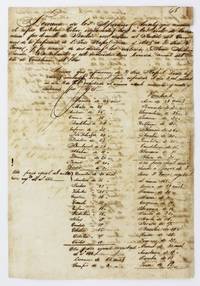
1866réf. 4747Havana: July 10 1866. Good. 3pp. on a bifolium. Separated at fold. Some wear to edge of first leaf cause some minor loss to text. A few scattered tape repairs and reattachments. Some offsetting. A colonial Spanish manuscript slave manifest for the steamship Cristobal Colon carrying dozens of enslaved Africans from Bailen to Partido del Cano both in Cuba. The text at the head reads as follows: "Nomina de los Africano bozales que conducten el vapor Cristobol Colon embarcado hoy a las siete de la mañana por el muelle de Bailen con destino al Partido del Cano unos de la propridad de D. José Rafael Diaz y otros de D. José Garcia y por encargo de sus dueños los custodia D. Juan Antonio Sanchez Bustamante y este individuo tiene biencia annal del Partido de Consolacion del Sur." Bailen is on the southern coast of Cuba north of the Isle of Pines; "El Cano" seems to have been a plantation outside of Havana while Consolacion del Sur is coastal town in the Pinar del Rio region of Cuba. The manifest lists 133 "Africanos bozales" that is slaves who could not speak Spanish in two or three columns separated between men "varones" and women "hembras" - their assigned names are given generally of Christian origin but with some range e.g "Ciforiana" "Liborio" and "Dionisia." Their ages are given one as young as nine several in their late thirties but most in their teens to early thirties. An additional leaf signed from Manila and dated July 10 1866 notes that although 133 people were sent only 115 survived the journey and lists the names of those who perished. July 10 books
1866réf. 4747Havana: July 10 1866. Good. 3pp. on a bifolium. Separated at fold. Some wear to edge of first leaf cause some minor loss to text. A few scattered tape repairs and reattachments. Some offsetting. A colonial Spanish manuscript slave manifest for the steamship Cristobal Colon carrying dozens of enslaved Africans from Bailen to Partido del Cano both in Cuba. The text at the head reads as follows: "Nomina de los Africano bozales que conducten el vapor Cristobol Colon embarcado hoy a las siete de la mañana por el muelle de Bailen con destino al Partido del Cano unos de la propridad de D. José Rafael Diaz y otros de D. José Garcia y por encargo de sus dueños los custodia D. Juan Antonio Sanchez Bustamante y este individuo tiene biencia annal del Partido de Consolacion del Sur." Bailen is on the southern coast of Cuba north of the Isle of Pines; "El Cano" seems to have been a plantation outside of Havana while Consolacion del Sur is coastal town in the Pinar del Rio region of Cuba. The manifest lists 133 "Africanos bozales" that is slaves who could not speak Spanish in two or three columns separated between men "varones" and women "hembras" - their assigned names are given generally of Christian origin but with some range e.g "Ciforiana" "Liborio" and "Dionisia." Their ages are given one as young as nine several in their late thirties but most in their teens to early thirties. An additional leaf signed from Manila and dated July 10 1866 notes that although 133 people were sent only 115 survived the journey and lists the names of those who perished. July 10
193122x16. 313p. Ilstr. SOUTO. Primera Edición.
1994réf. 06633Heilbronn, Distel, 1994. kt, 166S, gutes Exemplar
1978Barcelona, Seix Barral, 1978. 188 p. 2 h. 8º mayor. Cubiertas originales. Muy buen ejemplar. 1ª edición. Primera edición. 1st edition. First edition. Libro en español. Book in Spanish.