463 resultados
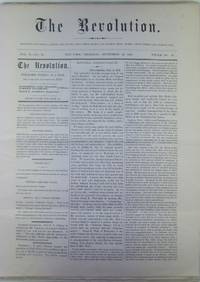
1868ref. 020147New York: Susan B. Anthony Proprietor; R.J. Johnson Publisher 1868. Wraps. Good. Side sewn journal. Approximately 12 ¼ by 9 inches. 16 pp. Early issue of the Revolution a groundbreaking and influential newspaper produced by Elizabeth Cady Stanton Susan B. Anthony and Parker Pillsbury. The paper was established to provide a voice to activists and suffragists such as Stanton and Anthony whose voices were marginalized by the mainstream press as well as many abolitionist publications with whom they had been previously allied. Anthony and Stanton advocated for an amendment giving suffrage to women along with the amendment sponsored by abolitionists that would give Black men the right to vote. Many abolitionists actively discouraged Stanton and Anthony from pursuing their amendment until the amendment enfranchising Black men passed creating a rift in the abolitionist movement as well as the women's suffrage movement. Feeling betrayed by abolitionists and Republicans who initially supported them they established the Revolution with financial help from George Francis Train a Democrat who supported women's rights but was openly racist. As the name indicates The Revolution adopted a combative radical tone with Stanton and others unafraid to take on critics. The paper openly discussed sexual and physical abuse in marriage and advocated better divorce laws that would offer women a way to escape abusive marriages. In 1869 the paper broke with Train who had supplied very little of the funding he initially offered. It published until 1872 struggling to make expenses along the way. This issue with a lengthy column editorial correspondence written by Elizabeth Cady Stanton on her travels in the US spanning almost two pages. Other pieces by Stanton discuss "National Labor Congress;" "Frank Blair on Woman's Suffrage;" and "Adah Isaacs Menken." Two lengthy pieces print quotes speaking from two meetings of the Workingwoman's Workingwomen's Association printing the discussion between Susan B. Anthony and others. GOOD condition. Several fold creases present with other general wrinkling. Minor toning and scattered soiling in the interior. Susan B. Anthony, Proprietor; R.J. Johnson, Publisher unknown
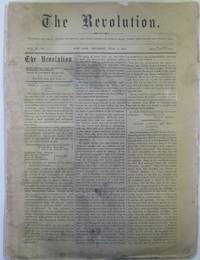
1868ref. 020317New York: Susan B. Anthony Proprietor; R.J. Johnson Publisher 1868. Wraps. Good. Side sewn journal. Approximately 12 ¼ by 9 inches. 16 pp. Early issue of the Revolution a groundbreaking and influential newspaper produced by Elizabeth Cady Stanton Susan B. Anthony and Parker Pillsbury. The paper was established to provide a voice to activists and suffragists such as Stanton and Anthony whose voices were marginalized by the mainstream press as well as many abolitionist publications with whom they had been previously allied. Anthony and Stanton advocated for an amendment giving suffrage to women along with the amendment sponsored by abolitionists that would give Black men the right to vote. Many abolitionists actively discouraged Stanton and Anthony from pursuing their amendment until the amendment enfranchising Black men passed creating a rift in the abolitionist movement as well as the women's suffrage movement. Feeling betrayed by abolitionists and Republicans who initially supported them they established the Revolution with financial help from George Francis Train a Democrat who supported women's rights but was openly racist. As the name indicates The Revolution adopted a combative radical tone with Stanton and others unafraid to take on critics. The paper openly discussed sexual and physical abuse in marriage and advocated better divorce laws that would offer women a way to escape abusive marriages. In 1869 the paper broke with Train who had supplied very little of the funding he initially offered. It published until 1872 struggling to make expenses along the way. This issue with a lengthy column editorial correspondence written by Elizabeth Cady Stanton on her travels in the US spanning almost two pages. Another piece by Stanton discusses on "Miss Becker and the Difference of the Sexes." A lengthy piece prints a meeting/public event by the Women's Council in Mount Vernon New York that brought together women taxpayers. This prints the discussion between Susan B. Anthony and others. GOOD condition. Small piece torn from the upper edge of one leaf and another from the bottom corner of the last leaf. Several fold creases present with other general wrinkling. Minor toning and scattered soiling in the interior. Susan B. Anthony, Proprietor; R.J. Johnson, Publisher unknown
1868ref. 020504New York: Susan B. Anthony Proprietor; R.J. Johnson Publisher 1868. Wraps. Poor. Side sewn journal. Approximately 12 ¼ by 9 inches. 16 pp. Early issue of the Revolution a groundbreaking and influential newspaper produced by Elizabeth Cady Stanton Susan B. Anthony and Parker Pillsbury. The paper was established to provide a voice to activists and suffragists such as Stanton and Anthony whose voices were marginalized by the mainstream press as well as many abolitionist publications with whom they had been previously allied. Anthony and Stanton advocated for an amendment giving suffrage to women along with the amendment sponsored by abolitionists that would give Black men the right to vote. Many abolitionists actively discouraged Stanton and Anthony from pursuing their amendment until the amendment enfranchising Black men passed creating a rift in the abolitionist movement as well as the women's suffrage movement. Feeling betrayed by abolitionists and Republicans who initially supported them they established the Revolution with financial help from George Francis Train a Democrat who supported women's rights but was openly racist. As the name indicates The Revolution adopted a combative radical tone with Stanton and others unafraid to take on critics. The paper openly discussed sexual and physical abuse in marriage and advocated better divorce laws that would offer women a way to escape abusive marriages. In 1869 the paper broke with Train who had supplied very little of the funding he initially offered. It published until 1872 struggling to make expenses along the way. This issue publishes an address by Susan B. Anthony at Tammany Hall; several articles by Elizabeth Cady Stanton including one on the Workingmen's Convention; a response to a letter from a subscriber complaining about the cost per issue where the paper points out the flaw in the writer's mathematics etc. POOR/FAIR condition. Front and rear page DETACHED from the rest. Heavy toning moderate soiling and some staining to the front page. Several fold creases present with other general wrinkling. Minor toning and scattered soiling in the interior. Susan B. Anthony, Proprietor; R.J. Johnson, Publisher unknown
1818ref. 001142Paris: F. Béchet 1818. First Edition. Paperback. Very Good . 6 267 1 p.; 22 cm. Original pink paper wrappers with printed paper spine label. Untrimmed. Verso of half title page contains list of booksellers in other cities selling books printed by Imprimerie de Poulet. Verso of table of contents contains list of other works by Pradt. First edition. This volume discusses independence movements in South America in particular developments in the second half of 1817 as well as the reactions of European powers. Pages 177-258 contain translations of documents concerning Haiti and other areas. In 1789 Pradt 1759-1837 was elected to the États Généraux; he fled to Germany after the beginning of the French Revolution. After he returned to France in 1800 Pradt supported Napoleon and became bishop of Poitiers 1805 and archbishop of Malines 1808. In Very Good Condition: much of paper spine label lacking; lower corner of front and back wrapper lacking; tear from lower edge of first leaf half title not touching text; occasional light foxing; otherwise a clean and bright copy in the original wrappers. F. Béchet paperback
1833ref. 022230Dover: J.T. Gibbs Publisher 1833. Cloth. Good. Folio. Quarter cloth with paper covered boards. Large folio. Bound volume of the Dover New Hampshire newspaper the Dover Gazette and Strafford Advertiser comprising of every weekly issue spanning from December 4 1832 to November 28 1833. Of particular note is a printing of Andrew Jackson's proclamation on Nullification asserting that states could not override or disregard federal law. This was issued in response to South Carolina's refusal to enforce tariffs. Also present is an article written by George Catlin on the Mandan tribe recalling customs ceremonies and dress among other subjects. The tribe had been decimated by small pox with an estimated 125 remaining by 1838. Also present is an article on the Native American leader Black Hawk written a little after his capture. A small paragraph describes a former Mormon displeasure with the faith. GOOD condition. Ex-library with exterior spine labels interior pastedowns and minor markings. First leaf DETACHED. Minor scuffing fading soiling to the covers. Years written on masking tape taped to the spine with some other tape repairs on the spine. Paper a bit browned and brittle. J.T. Gibbs, Publisher unknown
1853ref. 004531New York: P.T. Barnum and H.D. Beach Publishers 1853. Half-Leather. Fair/No Jacket. Marbled boards with leather binding.416 pages. A bound volume of this journal/newspaper founded and first published by P.T. Barnum. This work contains news and articles on items of interest from around the world and the United States. Of note is a four part reprint of Edgar Allan Poe's work on autography and the meanings behind signatures abridged and rearranged and a short poem by Horatio Alger Welcome to May. A map of Mecilla Valley a disputed territory around the area of New Mexico and of which the Gadsden Purchase centered around is present. This is accompanied by a short article relating details of the dispute p. 357. Also of interest are articles with illustrations on various ship and train wrecks Ericsson's caloric engine for use in ships articles on California gold the second Grinnell expedition in the Arctic the Baltimore and Ohio railway and Pettibone's tunnel the Naval Academy in Maryland Japan shad fishing clipper ships and Vanderbilt steam yacht Scuba divesr and apparatus p. 236 Arthur Spring the Philadelphia murderer Baltimore shot works p. 241 an African church in Cincinnati Parisian mantilla fashions as well as other Parisian fashions p. 308 and others The New York hippodrome p. 313 a railway calamity in Norwalk CT p. 333 Paterson railroad accident Parisian electric clock p. 341 Sicard's scuba apparatus p. 365 custom house in Charleston SC p. 373 a map of Central Park in New York p. 409. In FAIR condition. Binding very worn along the spines with the covers mostly detached and the leather backstrip torn and lifting away in several places. Moderate to heavy scuffing to the covers and extremities. Minor soiling and uneven fading. First two pages of the book very creased and wrinkled. Pages 173/4 269/70 and 401/2 are MISSING with pages 259/60 LOOSE and laid in. Pages 395-98 have a large horizontal tear at the center of the page. Large pencil scribbles on the first blank endpaper with a scribble to an illustration in the book. Text block solid but weakened with a few minor tears minor scattered dampstains and scattered minor soiling. P.T. Barnum and H.D. Beach, Publishers unknown
1829ref. BB1450London: Henry Colburn and Richard Bentley New Burlington-Street 1829. First Edition. Half-Calf. Fine. Scarce First Printing complete in three volumes of the "first anti-miscegenation novel in our literature Fiedler. 12mo: xiv2991; 23111; 2316pp. Contemporary pink half calf over marbled boards by Harrison of Belfast their ticket to front paste-down of vol. I; black morocco lettering pieces gilt; spines decorated in blind; marbled endpapers and edges. A truly excellent set occasional light foxing mostly marginal; spines rubbed and faded to tan. Spiller & Blackburn 11. BAL 3843. Sabin 16416. Fiedler quoted in Wallace James D. Race and Captivity in Cooper's the Wept of Wish-ton-wish American Literary History 7.2 1995: 189209. True First Edition of this historical novel published in London September and later in November in Philadelphia under the title The Wept of Wish-Ton-Wish: A Tale both from the same sheets printed in Florence by Molini. Written in Paris when Cooper was as the center of the small American expatriate community and set in the seventeenth century on frontier land later part of Connecticut. N. B. With few exceptions always identified we only stock books in exceptional condition carefully preserved in archival removable mylar sleeves. All orders are packaged with care and posted promptly. Satisfaction guaranteed. Fine Editions Ltd is a member of the Independent Online Booksellers Association and we subscribe to its codes of ethics. Henry Colburn and Richard Bentley, New Burlington-Street unknown
1825ref. 21618London 1825. Folio. 310pp. Bound in modern blue wrappers with copy of title on front wrapper. Fine. A wonderfully detailed report on the structure of the legal system in these colonies with explanations of the courts forms of action and remedies crimes punishments police forces slave codes manumission reform measures fees tables of cases tables with names and races of parties to legal proceedings. OCLC records nine locations under several accession numbers as of September 2024. unknown
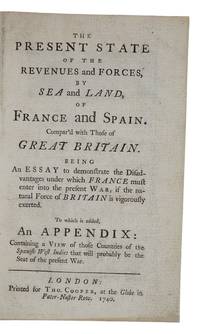
1740ref. AQ26617London: Printed for Tho. Cooper 1740. 2 v-viii 9-62pp. Without half-title. Recent marbled paper wrappers. Internally clean and crisp. An essay written during the early stages of the War of Jenkins' Ear 1739-1748 in which conflict between England and Spain mostly took place in the Caribbean sea. The author devotes a large portion of the essay to discussing the present military strength of France and Spain which he deems inferior to the English forces and argues that exerting English strength will be both profitable and inexpensive compared to the previous Anglo-Spanish war. Contains an appendix providing an interesting and detailed description of present Spanish territories in the Caribbean and Americas- including reference to the Spanish galleons and 'Mines of Gold the most famous of which is St Maria'. ESTC T711. First edition. 8vo. Printed for Tho. Cooper unknown
1849ref. 56698Madrid La Imprenta Nacional 1849. Small 4to. Contemp. hcalf. Richly gilt spine. Gilt lettering. Stamp on title-page. 4421 pp. 1 folded table. Internally clean and fine. This edition not in Sabin. Sabin 19679 for other editions. unknown
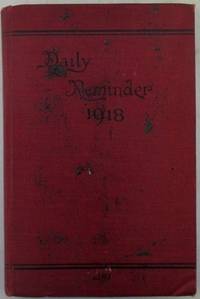
1918ref. 021403No Place: No publisher 1918. Cloth. Good. World War I Hospital/Medical Worker Diary. 1918 France. In a Daily Reminder Calendar for 1918. Red cloth. 365 pp. one for each day of the year. No name/author given. Some entries rather faded and most written in pencil. Handwriting is sometimes illegible. We speculate the author may have been an officer in the AEF as many of their entries refer to daily inspections and they reference an officer training drill in one entry. Many entries also refer to lieutenants majors and other officers although very rarely giving names instead using a single initial. It appears they were part of the AEF's hospital unit with mention of being at a frontline ambulance medical facility run by French forces and called Ambulance de Bois Roger see Feb. 12. First entry for January 1st indicates the author was in Langres France with the AEF American Expeditionary Force and mentions that school is out and he took a walk. They describe waiting for orders eventually being moved to Liffol-le-grand and Camp Hospital 18 for the month of January. By Early February entries are from Field Hospital 101. A hand drawn map/plan of Ambulance de Bois Roger appears on February 12. They describe setting up a triage with plan. On February 17 "considerable artillery to the east" is mentioned and the author as well as their going to an abandoned trench on the ridge. German biplanes are referred to using the French term avion boche. Boche was a derogatory term for Germans and the word appears off and on in entries going forward including March 8th where it states "Some boche in the air." They also mention that two were killed. By April the author is back at Camp Hospital 18 another map/plan of the facility appears and Field Hospital 101. Entries pretty much cease by April 23 with a few scattered entries short a few long" through the rest of the book. In general the diarist discusses basic day to day operations at the various medical facilities as well as planning interactions with others basic orders etc. GOOD condition. Residue/staining on the front cover. General fading. Minor soiling and edgewear. Some bumping. No publisher unknown
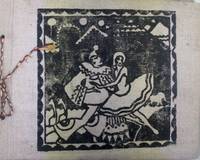
1926ref. 022001No Place: No publisher 1926. Cloth. Good. Clothbound scrapbook measuring 13 by 10 inches. String tied. Large ink block print of a man and woman dancing on the front cover with ink block print initials on the rear cover. Artwork presumably done by the owner. Thin paper stock in the interior. Approximately 57 photographs of various sizes including a few 8 by 10 inch photographs 5 by 7s and smaller as well as a few thumbnails. Many of the pages are empty. Other items in the interior include a program of camp exercises a few camp songs a homemade gypsy camp pennant two pages of notes from other campers to the owner a postcard of Gypsy Camp wrappers and labels etc. Photos consist of group photos or photos of individuals some depicting young women in Romani costumes some swimming horseback riding as well as photos of the Tree Top Inn main cabin etc. The owner and creator of this scrapbook was Dorothy Henderson who had an artistic touch in assembling this scrapbook as well as the art within. It appears she attended Gypsy Camp in 1926. Gypsy Camp originating in the early 1900s as an artist colony. The site 65 acres of land with some frontage along the Illinois River and located in Benton County Arkansas was purchased by Weesie and J.H. McAllister in 1921. Weesie McAllister envisioned turning the land into a summer camp for girls. The first building erected on the site was a three story structure that served as camp office residence for the McAllister family and dorm for the girls. Other structures were built in the late 1920s and eventually the camp could hold around 120 young women. The camp operated until 1978. It eventually fell into disrepair before being added to the National Register Historic District in 1988. Even so it was still empty until 2017. This scrapbook documents the early stages of Gypsy Camp as experienced by a young woman. GOOD condition. The scrapbook is generally solid. Some pages are loose and laid in with chipped and torn edges. Paper is rather brittle. No publisher unknown
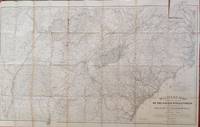
1865ref. 021368New York: Ferdinand Mayer Lithographer 1865. Unbound. Good. 47 by 30 inches. Black and white only. A large map apparently issued in 1865 that depicted the marches General William Tecumseh Sherman undertook during the Civil War. The map depicts railroads terrain etc. demonstrating the extraordinary lengths Sherman went to in order to dismantle the Confederacy's ability to resupply and fight. This edition was issued by Ferdinand Mayer with two other editions of this map published by two other firms. GOOD condition. Many fold creases present as issued. Large L shaped tear along one of the upper folds affecting the map in that area. Many other tiny tears along the folds fold edges or intersections present along with evidence of repair on the reverse to some of the tears. Map browned along the fold creases. Ferdinand Mayer, Lithographer unknown
1879ref. 005674Oneida NY: The American Socialist Publisher 1879. Wraps. Good. 104 issues spanning the years 1878 and 1879 being two complete years. Edited by John Humphrey Noyes the founder of a utopian community in Oneida and an advocate of communal style living including the controversial advocacy of men and women marrying multiple partners. Included are several articles on the short-lived Transcendentalist Utopian community Brook Farm including several articles containing excerpts from Charles Fourier's Harbinger as well as other topics related to the philosophy of Charles Fourier. Other topics include socialism in England the Workingmen's party Spiritualism and the necessity of Spiritualism Communism Communism in America Industrialization Krupp's Great Gun Factory-its cooperative phase 'The Father Land' by James Russell Lowell an illustration of the Shaker Village at Mount Lebanon Malthusian facts articles on the work studying population growth by Malthus The Marpingen miracles three views on the Origin of the Species Cook's marriage philosophy Utopian schemes labor and strikes Spirit rapping the Mennonites Paris under electric lights the Red Cross American Socialism the Atlantic Cable etc. Condition ranges from GOOD to VERY GOOD with most having light toning minor soiling creasing and edgewear. A few with minor chips and tears along the extremities. Vol IV. No. 52 with with moderate tearing along the extremities. A 4 inch triangular piece missing from the lower rear cover. Same sort of tearing to Vol III No. 52 with this number bearing heavy browning and staining to the rear cover affecting the last pages of this number. Vol. III no. 1 with moderate offsetting and soiling along the extremities. The American Socialist, Publisher unknown
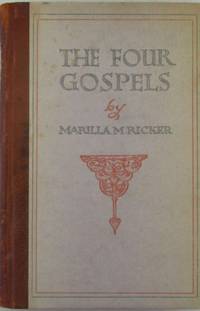
1911ref. 021486East Aurora NY: The Roycrofters 1911. First Edition. Quarter Leather. Very Good. Paper covered boards with a leather spine. 130 pp. SIGNED with a lengthy inscription by Marilla Ricker on the first endpaper. The inscription reads in part "So far as I've heard no Christian has arisen to state that the morals of the Rev. Clarence Richeson were contaminated by reading the works of Paine or Ingersoll. The Rev. claims to be a product of the Christian bible and he's still talking of his god and his bible." Ricker is referring to Clarence Richeson an on and off again minister for a variety of congregations who apparently suffered many bouts of insanity and was hospitalized several times. He also was engaged to many young women sometimes several at once. In 1911 he poisoned and murdered Avis Linnell and was sentenced to death. He was executed in early 1912. Given that the reverend was alive until early 1912 it is possible this was inscribed sometime in late 1911. A collection of four essays on four figures in history: Robert G. Ingersoll Thomas Paine John Calvin and Jonathan Edwards as well as an essay asking "What is Prayer" Ricker reflects on Robert G. Ingersoll his agnosticism and skill as an orator as well as his advocacy for freethought and questions Theodore Roosevelt's criticisms of Thomas Paine among other subjects. Marilla M. Ricker was the first woman admitted to the NH bar as well as being admitted to the bar in Washington DC in 1882. She pushed for prison reform and worked free of charge for many of her clients. Ricker was also a strong advocate for women's suffrage being the first woman to attempt to vote in New Hampshire arguing that she had a right to do so as a property owner in Dover NH. She also was a key figure in the freethought movement. VERY GOOD condition. Minor soiling and edgewear to the covers. Leather rather scuffed along the hinges. Minor toning in the interior. The Roycrofters unknown
1831ref. 022205Dover NH: J.T. Gibbs Publisher 1831. Quarter Leather. Good. Folio. Quarter cloth with marbled boards. Large folio. Bound volume of the Dover New Hampshire newspaper the Dover Gazette and Strafford Advertiser comprising of every weekly issue spanning from December 7 1830 to November 29 1831. Of particular note is an account of the Nat Turner Rebellion in the September 6 1831 issue. Several articles are printed recounting the events and immediate aftermath. One full page is devoted to a message from President Andrew Jackson in which he discusses the removal of Native Americans from lands they inhabited a plan which set in motion what would become known as the Trail of Tears. Also present is a lengthy article on the American pirate Charles Gibbs recounting the events of the mutiny where he tried to seize the Brig Vineyard. He and his accomplice Thomas J. Wansley were caught and Gibbs was executed. Gibbs alias of James Jeffers committed many acts of piracy in the early 1800s although the truth behind the accounts was often lacking. GOOD condition. Ex-library with exterior spine labels interior pastedowns and minor markings. Front endpaper DETACHED. Minor scuffing fading soiling to the covers. Years written on masking tape taped to the spine. Paper a bit browned and brittle. J.T. Gibbs, Publisher unknown
ref. 004001Oneida NY: The American Socialist. Original Wraps. Good. Oneida NY. Edited by John Humphrey Noyes the founder of a utopian community in Oneida and an advocate of communal style living including the controversial advocacy of men and women marrying multiple partners. These pieces are 8 page newspaper devoted to topics on communism and socialism as well as items on spiritualism and religion. Brook Farm is discussed in several issues. With a page of ads on the rear. Present are 12 issues from 1876 to 1879. All are in GOOD or slightly better condition with general minor darkening varying amounts of minor soiling some with some staining and varying degrees of chipping and tearing to the extremities as well as some creasing. Specific condition issues where noted. Vol I No 34. November 16 1876. Topics include the connection between socialism and spiritualism socialism and the state-from an 1844 lecture by Ralph Waldo Emerson science and spiritualism etc. Some soiling along the extremities. Minor chipping along the fore edge. Vol II No. 10. March 8 1877. Topics include socialism and positivism evolution of communities etc. Several 1-2 inch tears along the extremities. Vol II No 13. Marh 29 1877. Topics include communism among the pilgrims advantages of communism etc. Dampstaining along the fore egdge. Moderate chipping and tearing along the lower and fore edges. Several pages unopened. Vol II No. 21. May 24 1877. Topics include an in depth look at communism Icaria history of German socialism etc. A few tears and some creasing along the extremities. Vol II No. 23. June 7 1877. Topics include cooperation in Massachusetts a brief bio of Noyes Icaria etc. Minor chipping and tearing along the fore edge with a longer tear at the upper edge. Minor faint staining and a faint dampstain along the lower spine. Vol II No. 25. June 21 1877. Topics include co-operation in Massachusetts land tenure in various countries the abdication of John Humphrey Noyes etc. Smallish area of dark staining to the center pages. Vol II No. 38. September 20 1877. Topics include socialist clubs the condition of the Icarian community positivism and spiritualism etc. With many small tears and chips along the fore edge with a few tears along the other extremities. Minor darkening with very minor scattered soiling and foxing. Minor creasing. Vol II No. 39. September 27 1877. Topics include socialism in England the Mennonites and their government some aspects of socialism in America etc. Two small areas of dark spotting on the front page maybe from ash as one of the two areas has a small hole in it. The lower spot affects all the pages throughout. Area of heavy foxing/spotting to the rear page. Minor edgewear and darkening. Vol III No. 42. October 17 1878.Topics include socialism in England a free press home life of Brook Farm spiritualism etc. A small area of dark stippling/soiling. Several 1 inch or slightly larger tears along the extremities with a few other shorter tears. Minor darkening and scattered minor soiling. First pages unopened. Vol III No. 43. October 24 1878. Topics include socialism in England inventor of the phonograph communism. Two 1-2 inch tears along the extremities. Several pages unopened. Vol IV. No 3. January 16 1879. Topics include colonization of the northwest Gertie Barton's cure Spiritualistic notes pedigree of American socialism. Several large tears in the extremities. Chip missing from the lower left corner. Vol IV No. 47 November 20 1879. Topics include communism life among the shakers description of a new cable line race-culture. The American Socialist unknown
1835ref. 022270Dover NH: J.T. Gibbs Publisher 1835. Quarter Leather. Poor. Folio. Quarter leather with marbled paper covered boards. Large folio. Bound volume of the Dover New Hampshire newspaper the Dover Gazette and Strafford Advertiser comprising of every weekly issue spanning from December 2 1834 to November 24 1835. Of particular note is a printing of the Treaty of New Echota a treaty that a small minority of members of the Cherokee Indian Tribe signed and that sold their land east of the Mississippi River to the US government. This treaty led directly to the forced removal of the Cherokee people from their land infamously known as the Trail of Tears. Also present is a lengthy account of the trial of the Prophet Matthais for murder. This trial also accused Sojourner Truth who at the time worked as a servant for Matthais under the name Isabella of murder. Matthias alias of Robert Matthews was a pseudo-religious figure in the early to mid 1800s establishing a cult like following in New York. He even had a meeting with Joseph Smith at one point although both denounced each other as Satanic according to Wikipedia. Another notable articles is present discussing a racially integrated school established in Canaan New Hampshire the Noyes Academy. Established in 1835 by abolitionists the school educated African Americans and admitted women. This school aroused the racist ire of local residents and was destroyed by townspeople in August of 1835. The August 25th issue has an approving article documenting the destruction and writing as if scandalous that African American men and supposedly respectable white women had been seen walking arm in arm in town. Other articles on slavery antislavery and abolition are found throughout. POOR/FAIR condition. Ex-library with exterior spine labels interior pastedowns and minor markings. Both covers DETACHED along with the first several leaves. Last several leaves also detached. Binding essentially perished rendering the whole text block rather fragile. Minor scuffing fading soiling to the covers. Years written on masking tape taped to the spine. Paper a bit browned and brittle. J.T. Gibbs, Publisher unknown
1797ref. 1022408vo modern calf 407 pp. Lacks half title ex-library stamps on both sides of title front endpaper chipped on top expert repair to last page a little soiling normal aging and foxing; otherwise very good in a very nice modern binding. Before James Monroe 1758-1831 became president of the United States his political apprenticeship included serving as Minister to France. He was appointed by George Washington in 1794 to this post which proved disastrous from a political standpoint. He was recalled in 1796 and while he was an enthusiastic supporter of the French Revolution he was openly critical of the Jay Treaty with Britain which antagonized Washington's pro -British cabinet. This work was Monroe's attempt to justify his position. New Book of Knowledge. Evans 32491. Sabin 50020. Howes M727. Benj. Franklin Bache,
1797ref. 1022418vo contemporary calf spine and tips rebacked with original spine label laid down new endpapers includes half title 407 pp. Signature on front endpaper and title ink and pencil numbers on back of title extremity wear to binding corner mended dampstaining to the bottom third of book some soiling foxing and aging; otherwise in very good condition overall. Before James Monroe 1758-1831 became president of the United States his political apprenticeship included serving as Minister to France. He was appointed by George Washington in 1794 to this post which proved disastrous from a political standpoint. He was recalled in 1796 and while he was an enthusiastic supporter of the French Revolution he was openly critical of the Jay Treaty with Britain which antagonized Washington's pro-British cabinet. This work was Monroe's attempt to justify his position. New Book of Knowledge. Evans 32491. Sabin 50020. Howes M727. Benj. Franklin Bache,
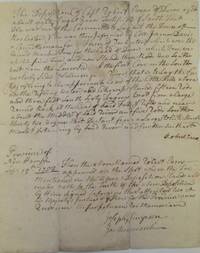
1753ref. 021222No Place: No publisher 1753. Unbound. Good. Single sheet. Handwritten deposition recalling the testimony of Captain Robert Evans describing the lay out of the town of Rochester mentioning a pine tree standing three rods due Southwest from the lower side of the first cove on the Southwesterly side of the Salmon Falls River and going on to mention other landmarks such as a round rock and a large white birch. We surmise that Captain Robert Evans was the same as that who died in 1753 in his eighties the deposition also mentions his age and who was described in his obituary as a rolling stone. Signed by a justice of the peace Joseph Simpson and stating Province of New Hampshire Sept. 19th 1753. Reverse notes this was recorded in Dover town records. GOOD condition. Old white tape repairs to the reverse. Horizontal and vertical fold creases present. Minor foxing and spotting. No publisher unknown
1859ref. 017039Washington DC: Gales and Seaton 1859. Tabloid. Good. Side folding large tabloid newspaper. A single issue of this long running newspaper published in Washington DC first published in 1800 and publishing until 1870 with an eventual bias toward conservative Whig policies. Besides the usual ads and political news this issue contains two "Was Committed" notices last page bottom right one pertaining to Mary Norris George Park and Sally King the other pertaining to Lewis West. All four were African-Americans with Mary Norris George Park and Lewis West being enslaved people from enslaver Robert E. Lee. According to the US National Park Service website devoted to Robert E. Lee's Arlington House Memorial Mary Norris George Parks and another man Wesley Norris believed they were free based on a provision in the will of George Washington Custis. Based on this knowledge the three emancipated themselves traveling to Pennsylvania. They were all captured in Maryland. According to contemporary newspaper accounts New York Tribune in June 1859 Lee had the re-captured African-Americans whipped. Wesley Norris himself wrote an article in the Anti-Slavery Standard in 1866 which provides his account of the whipping. Early historians and biographers dismissed both accounts considering them to be accounts used for anti-slavery propaganda. Lee himself was silent on the subject with many of his contemporaries and historians taking his silence as a denial. However modern research suggests the accounts of Wesley Norris and others were true dispelling the myth of Lee as benevolent enslaver perpetuated by earlier historians. The first notice states that Norris Park and West were committed to jail on May 26th and that "George and Mary say they belong to Col. Robert Lee of Fairfax County Virginia." The complexion and height of all three are given as well as descriptions of the clothing they wore. Sally King asserted that she was free living in Washington with a Mrs. D. Bread. According to the piece they all initially left Washington on May 22nd 1859. The second notice contains the same information as the first although it appears Lewis West was jailed on May 27th but also asserted he "belongs to Col. Robert Lee." Both notices request that the "owner or owners" come forward and pay all charges due. Also present is a notice of "young servants for sale" indicating the availability of several girls from ages 11 to 15 as well as young men from 21 to 25 years old. All were apparently located in Georgetown. The newspaper is in GOOD condition. Paper split chipped and deteriorating along the spine with very slight loss of letters to some of the "was committed" ads. Horizontal and vertical fold creases present. Moderate toning along the spine edge. Small hole worn through at the intersection of the fold creases. Some wrinkling and creasing to the paper. Several small tears along the extremities. Gales and Seaton unknown
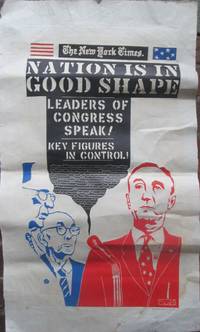
1964ref. 015841No Place: William Kent Publisher 1964. Unbound. Good. #2 of 20 printed. Signed by William Kent on the lower right corner below illustration. Printed on paper in black red and blue with ink set in relief on the plain background. 36 ½ by 21 ¼ inches. A slate relief print by artist and carver William Kent. Kent adapted newspaper headlines and imagery of political leaders to present a subtle satirical commentary on the United States and its leaders that undercuts the assertions of the leaders. William Kent is credited with the creation of the slate print technique. Considered an outsider artist by his contemporary critics Kent as a self taught artist adopted techniques used by artists in the Pop Art movement to his own ends in an effort to portray upheavals in American society during the 1960s. GOOD condition. Needs restoration/conservation. Faint large dampstain at the lower right corner. Faint foxing present to the whole piece. Paper is wrinkled with some large curls and faint creases presumably from being stored rolled at some point. A few small tears and chips present along the extremities. William Kent, Publisher unknown
1810ref. 55475Madrid La Imprenta Real 1810. Small 4to. Clothbacked marbled boards. Uncut. VIII455 pp. Internally clean and fine. First edition. - Sabin 19678. hardcover
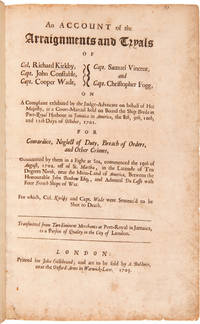
1703ref. 62765London: Printed for John Gellibrand; and are to be sold by A. Baldwin 1703. A Well-Known Early English Mutiny Kirkby and the other naval officers were court-martialed at Port Royal in Jamaica for their disgraceful behavior in Benbow's encounter with the French in August 1702. The whole action is detailed especially regarding the officers who refused to fight deserted the line of battle etc. A well-known mutiny cited as a precedent in other British naval cases. Later three-quarter calf and marbled boards spine gilt. Corners worn spine scuffed along the joints. Tanned and foxed. Good. SABIN 37982. EUROPEAN AMERICANA 703/84. CUNDALL 94. JCB 1III:29. DNB XI pp.207-8. hardcover