[Pauli, Broderus]Antiquariat.de
3 287 résultats
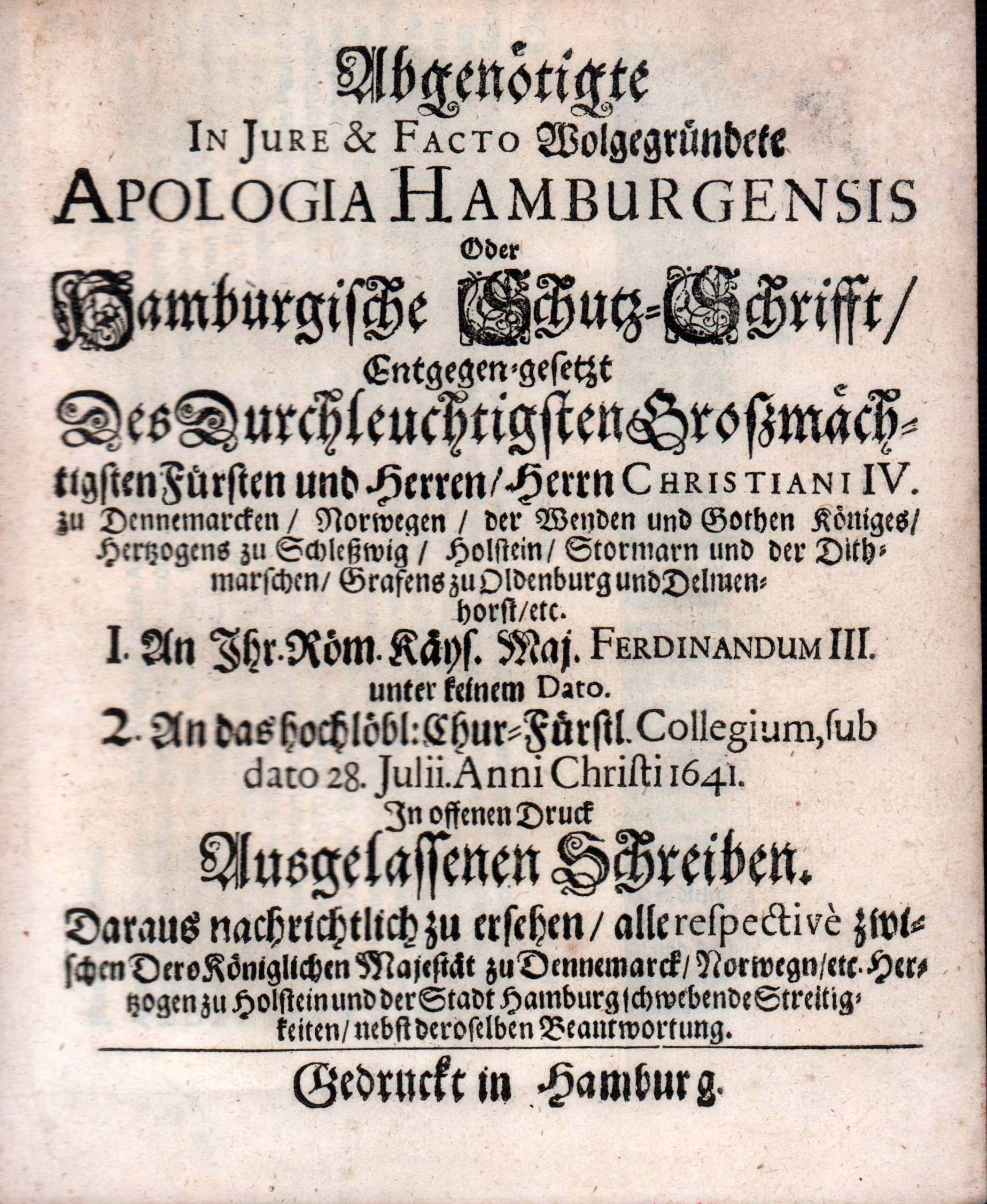
1641réf. 91432Gedruckt in Hamburg, ( 1641]. [4] Bl., 89 [1] S., [3] Bl., [72] Bl. Kl.-4to. 19,2 cm. Ohne Umschlag.
réf. 221917Leyde, Elzévir, 1629 in-16, [8] ff. n. ch. (titre-frontispice gravé - et réparé -, dédicace, table des traités), 510 pp., un f. n. ch. d'errata et de privilège, typographie en petit corps, vélin rigide à rabats (reliure de l'époque). Mouillures claires.
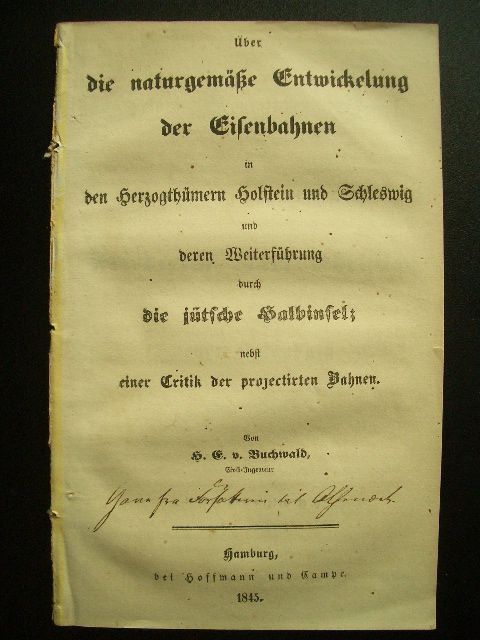
1845réf. 4738Hamburg, Hoffmann und Campe, 1845. 8vo. (19,7 x 12,5 cm). 2 Bl., 31 S. Hefstreifen (ausgebunden).
réf. 241550 Planche N°84, format 29 x 40 cm (toutes marges). Chromolithographie d'époque avec le timbre à sec de l'Imprimerie Chaix (Lugt 1777c). Notre exemplaire est une des très rares épreuves imprimées sur papier Japon, toute petite trace de punaisage dans l'extrémité de la marge supérieure droite (Our plate is one of the few copies printed on Japanese paper. Original plate in good condition). LES MAITRES DE L'AFFICHE, prestigieuse publication d'art, éditée par l'atelier de lithographie Chaix, dont la parution s'étala de décembre 1895 à novembre 1900. Chaque livraison comportait 4 planches de reproduction en chromolithographie d'une remarquable qualité d'impression des plus belles affiches illustrées des grands artistes français et étrangers (auxquelles il faut ajouter 16 planches de lithographies originales offertes en prime aux abonnés). Lors de l'Exposition universelle de 1889, fut organisée la première exposition rétrospective dévolue à l'affiche, celle-ci devait valider la reconnaissance officielle d'appartenance de l'affiche au monde de l'art. Jules Chéret (1836-1932) y sera sacré '' Maître de l'affiche '', c'est aussi à cette date que Seurat commencera à collectionner les affiches de Chéret. Bel exemplaire ( Photographies sur demande / We can send pictures of this book on simple request )
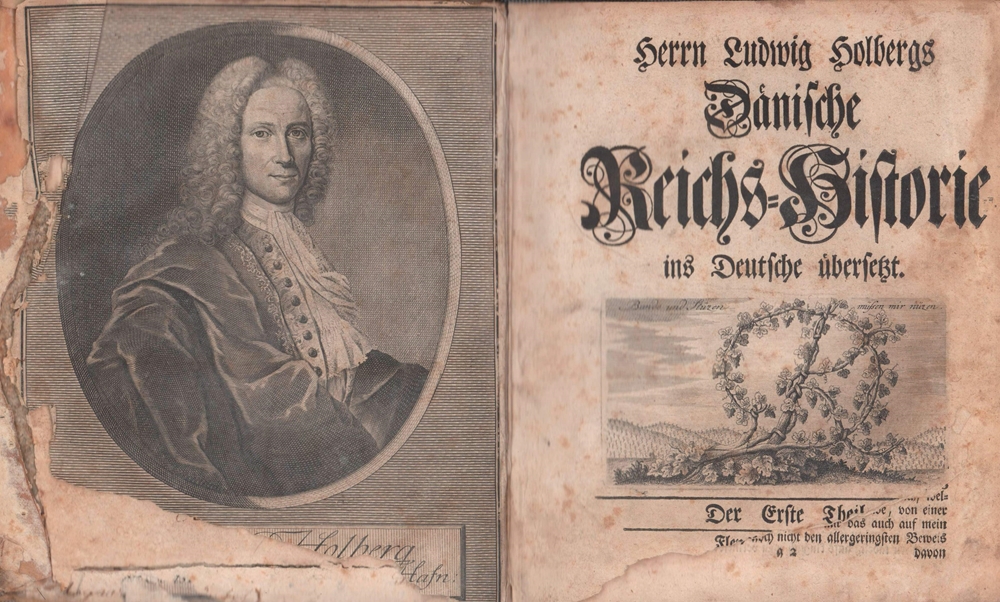
1743réf. 71686[Flensburg und Altona, Bey den Gebrüdern Korte in Vollmacht, 1743]. 12 Bl., 871 S. Mit Porträt-Tafel (Kupferstich) als Frontispiz u. gestoch. Titelvign. Kl.-4to (20 cm). Pgt d. Zeit.
2001réf. 1228976Arkitektens Forlag; (Kopenhagen), 2001. 559 Seiten; sehr sehr zahlr. Illustrationen (auch farbig); 30,5 cm; fadengeh. Orig.-Leinenband mit illustr. OUmschlag.
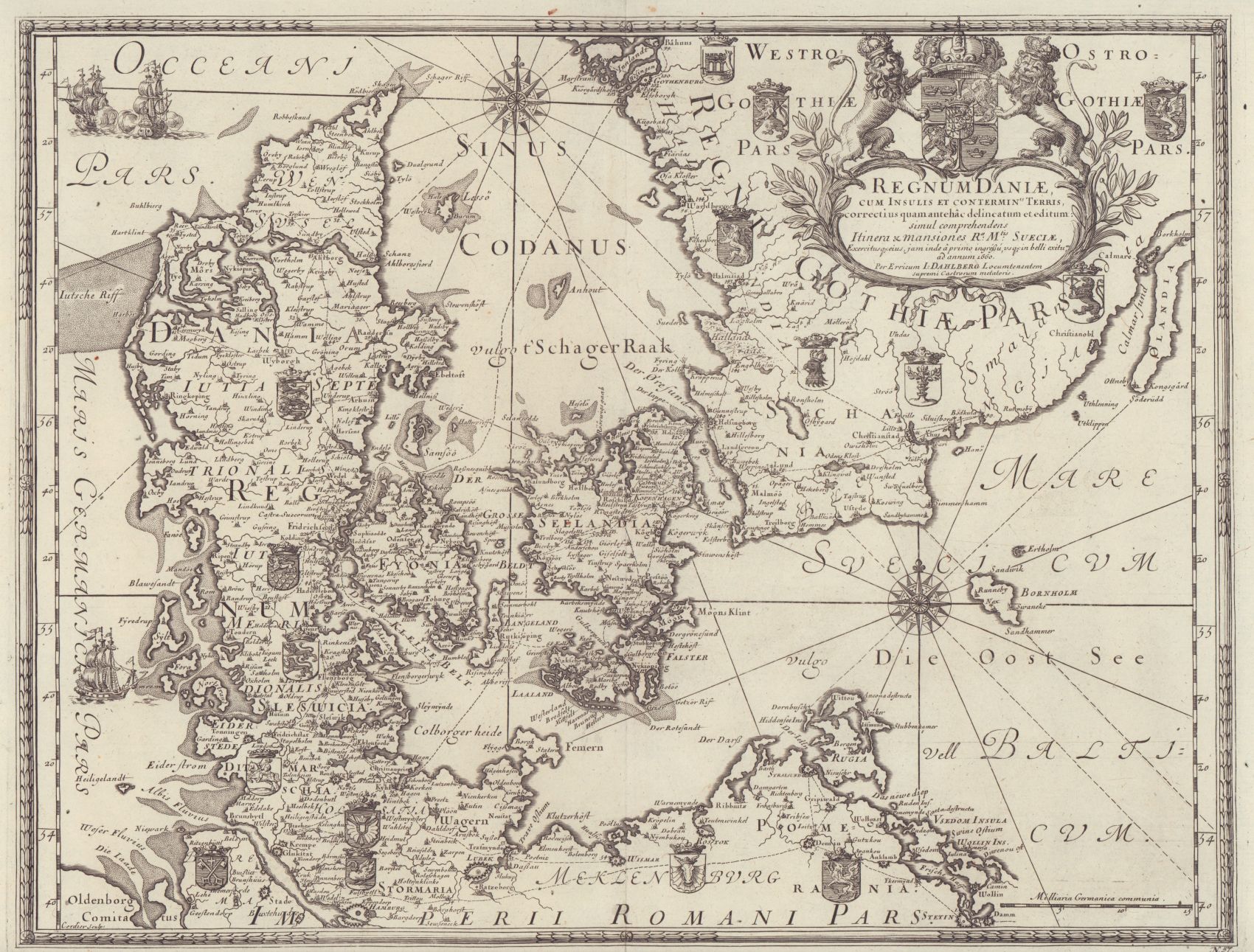
1760In folio (50x58 cm il foglio). Esemplare in fine coloritura coeva ed in ottime condizioni di conservazione. Magnifica e vivida tiratura di questa celeberrima carta del territorio della Danimarca e di parte della penisola scandinava. Edita per la prima volta intorno agli anni 30’ del settecento da Matthaus Seutter, la carta venne poi ripresa, aggiornata e corretta dal suo successore e cognato (sposò una delle figlie di Seutter), il cartografo, editore ed incisore Tobias Conrad Lotter (1717 - 1777). Lotter, si formò alla bottega di Matthaus Seutter per il quale lavorò. Alla morte di Seutter ne rilevò l’attività che portò avanti fino al 1777 anno della sua morte. L’attività passo poi al figlio, Matthias Albrecht Lotter. Tobias Conrad fu uno dei più apprezzati cartografi del settecento. La carta riproduce il territorio della penisola danese, del Ducatus Holsatia, delle isole danesi del mar baltico. Un bel cartiglio animato, collocato al margine alto destro della carta, descrive il contenuto della mappa. Il cartiglio è sormontato dallo stemma della corte danese. Bellissima tiratura in tiratura non comune.
1773réf. 29487Leipzig, s.e., 1773. 8vo. Mit je 1 gest. Portrait Stuensees u. Brandts. VIII, 294; 78 S. Hldr. d. Zt. auf 5 Bünden m. RSchild. u. Rückenvergoldung. Marmorierte Vorsatzpapiere, Rotschnitt.
1798réf. 14147P., F. Josse, 1798, 2 vol. in-8°, viii-320 et [4]-351 pp, reliures demi-veau à coins, pièces de titre et de tomaison chagrin carmin et noir, tranches jaunes (rel. de l'époque), reliures lég. frottées, annotations au crayon en marges, bon exemplaire
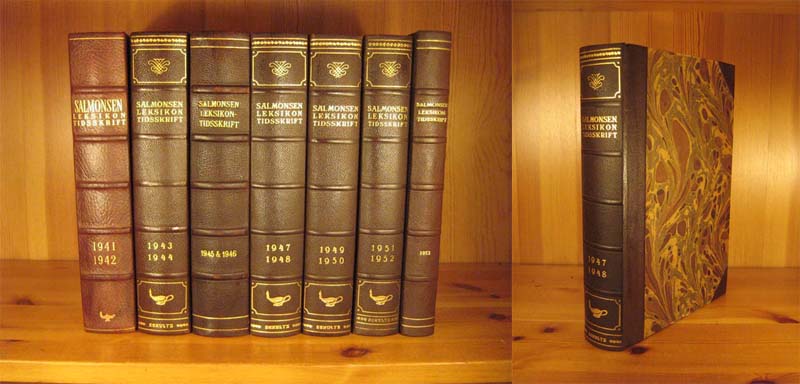
1954réf. SL-10177København, J. H. Schultz, 1943 - 1954. Jg. 1 (1941) bis 13 (1953), gebunden in 7 Bänden. Braune Original-Halblederbände (Jg. 1/2 eher rötlich) mit goldgeprägten Rückentiteln. Buchdecekl in sehr schöner mehrfarbiger Marmorierung und mit großen Lederecken. Farbig marmorierter Buchschnitt. Vorsätze in braunem Streifendesign. Die Bände in hübscher Einbandästhetik, in denen sich skandinavische Buchkunst widerspiegelt. Sehr seltene frühe Reihe dieses Lexikon-Jahrbuchs, mit dem die Lexikon-Formate Salmonsens (das große Konversations-Lexikon sowie "Den lille Salmonsen", der in 12 Bänden von 1937 bis 1940 erschien) ergänzt bzw. forgesetzt wurden. "Salmonsens Konversations-Leksikon" erschien erstmalig von 1893 bis 1911 in 19 Bänden und avancierte spätestens mit der zweiten Auflage in 26 Bänden (1915 - 1930) zum lexikalischen Standardwerk Dänemarks. Eine dritte Auflage folgte 1949. Die hier vorliegende "Tidsskrift" erschien ab 1941 unter den Bedingungen der deutschen Besatzung und Zensur. Entsprechend zahlreich und ausgiebig finden sich in den Kriegsbänden Artikel zur deutschen Militärrüstung sowie biographische Artikel zur Wehrmachtsführung. Gleichwohl sind die frühen Bände ein interessanter Zeitspiegel der Situation Dänemarks während des Zweiten Weltkriegs. Nicht weniger aufschlußreich sind die späteren Bände ab 1945, in denen sich die Nachkriegszeit widerspiegelt. Die Doppenbände jeweils im Umfang von ca. 1.500 Sp. Alle Bände mit separatem Register.
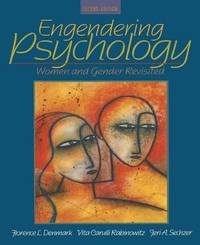
2009réf. x-0470436905Wiley-Interscience 2009. Hardcover. New. 1st edition. 608 pages. 9.25x6.25x1.25 inches. Wiley-Interscience hardcover
réf. 30930199-nnew. unknown
réf. 25809303-nnew. unknown
réf. 25809304-nnew. unknown
réf. 25809300-nnew. unknown
réf. 2126973like new. unknown
réf. 2126973-nnew. unknown
1935Very Good Turkish Paperback. 32mo. (9 x 6 cm). In Turkish. 25 original b/w gelatin silver photographs in 12 joined page plates. This extremely rare miniature souvenir album shows the stations, bridges and their constructions, the first moving trains, railways, opening celebrations and visits of the Turkish ministers, opening speech, etc. during the opening of the Irmak-Filyos railways on 12 November 1935 Irmak-Filyos line which was opened by Ali Çetinkaya (1878-1949), who was an Ottoman-born Turkish army officer and politician, who served eight terms in the Grand National Assembly of Turkey. Çetinkaya also can be seen in some photos of the album. "The Republic of Turkey, which tried to overcome the destructive effects of the war, took an important step toward reaching economic independence and transporting natural resources to the different regions of the country. The Grand National Assembly of Turkey approved the Law on the Ankara-Eregli Railway Line under the name 'The Railway Leading to Coal'. This important railway line, which the young Republic of Turkey wished to establish to face the future and move forward, was going to run between the coal city Zonguldak and Irmak station, near the capital Ankara. The construction of the railway started on 7th February 1927 and the 102-kilometer line, running between Irmak and Çankiri, became operative on the 23rd of April 1931. The railway between Irmak-Filyos, which had a total length of 391 kilometers, went into operation on 12th November 1935 with a ceremony held in Filyos. It comprised 27 stations, 1368 culverts, and bridges and 37 tunnels, and had a total length of 8800 kilometers.". (Source: Irmak Karabük Zonguldak Railway Line - UDHB). "Foto Birlik" was the most important photography studio in Zonguldak city which was an eyewitness in the early period of Republican Turkey. No copy in OCLC.; No copy in the Turkish National Library.
réf. 26411654like new. unknown
réf. 26411654-nnew. unknown
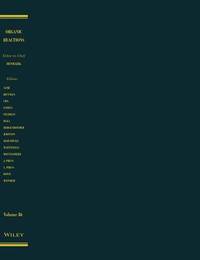
2015réf. BN172740Wiley 2015. 2015. Hardcover. Organic Reactions Volume 86 Organic Reactions Volume 86 Scott E. Denmark Wiley hardcover
1864réf. 7810ANew York, Miller, 1864. Kl. 8°. 2 Bände in 1 Bd. 156 S., S. 7 - 158. 10 S. illustr. Verlagsreklame. Mit 6 Holzschnitttafeln. Gold-geprägter OLeinenband.
1697réf. 910235CGNürnberg:, Riegel, 1697. Kupferstich 28,5 x 37,5 cm, Blattgröße 34,5 x 42 cm.
1897réf. 46994W.H. Kühl, Berlin 1897. 571 S. mit 31 Abbildungen im Text 9 (teils farbig lith.) Tafeln und 1 Karte (alle vorhanden!), 4°, Halbleder der Zeit mit Rückentitel und Zierbünden, Bibliotheks-Exemplar (ordnungsgemäß entwidmet) mit leichten Rückständen vom Rückenschild, Stempel auf Vorsatz, Titel und innen, Einband leicht berieben und bestoßen, Papier leicht randgebräunt (die Tafeln weiß), insgesamt gutes und innen sauberes Exemplar,
réf. 51-3931Larache Maroc: 1933. ALs 2 pages on literary and personal matters.Princess Françoise Isabelle Louise Marie d’Orléans was the second wife of Prince Christopher of Greece and Denmark. She was born in Paris on December 25 1902 the second child of Prince Jean of Orléans Duke of Guise an Orléanist pretender to the throne of France and Princess Isabelle of Orléans.In 1925 at the wedding of Princess Mafalda of Italy and Prince Philipp of Hesse-Kassel Françoise first met her future husband Prince Christopher of Greece. He was the youngest son of King George I of the Hellenes and Grand Duchess Olga Konstantinovna of Russia. Several years later at the encouragement of her aunt the Duchess of Aosta the two meet again and soon a romance begins. Although Christopher was 13 years older and widowed Françoise was attracted to his sense of humor and his artistic abilities. A few weeks later the couple decided to become engaged but first they had to address the issue of religion. Christopher was Greek Orthodox and Françoise was Catholic which meant they would need a dispensation from the Pope who was greatly opposed to the idea. Finally after lengthy negotiations they received permission and were able to marry.Included is a "Certificate d'exportation pour un bien cuturel" issued by by Ministère Culture of France. Expertise by Thierry BodinSyndicat Français desExperts Professionnels en Œuvres d’Art.Les Autographes45 rue de l’AbbeÌ GreÌgoire 75006 Paris Larache, Maroc: 1933 unknown