BROSSES (Charles de).Livre Rare Book
6.213 resultados
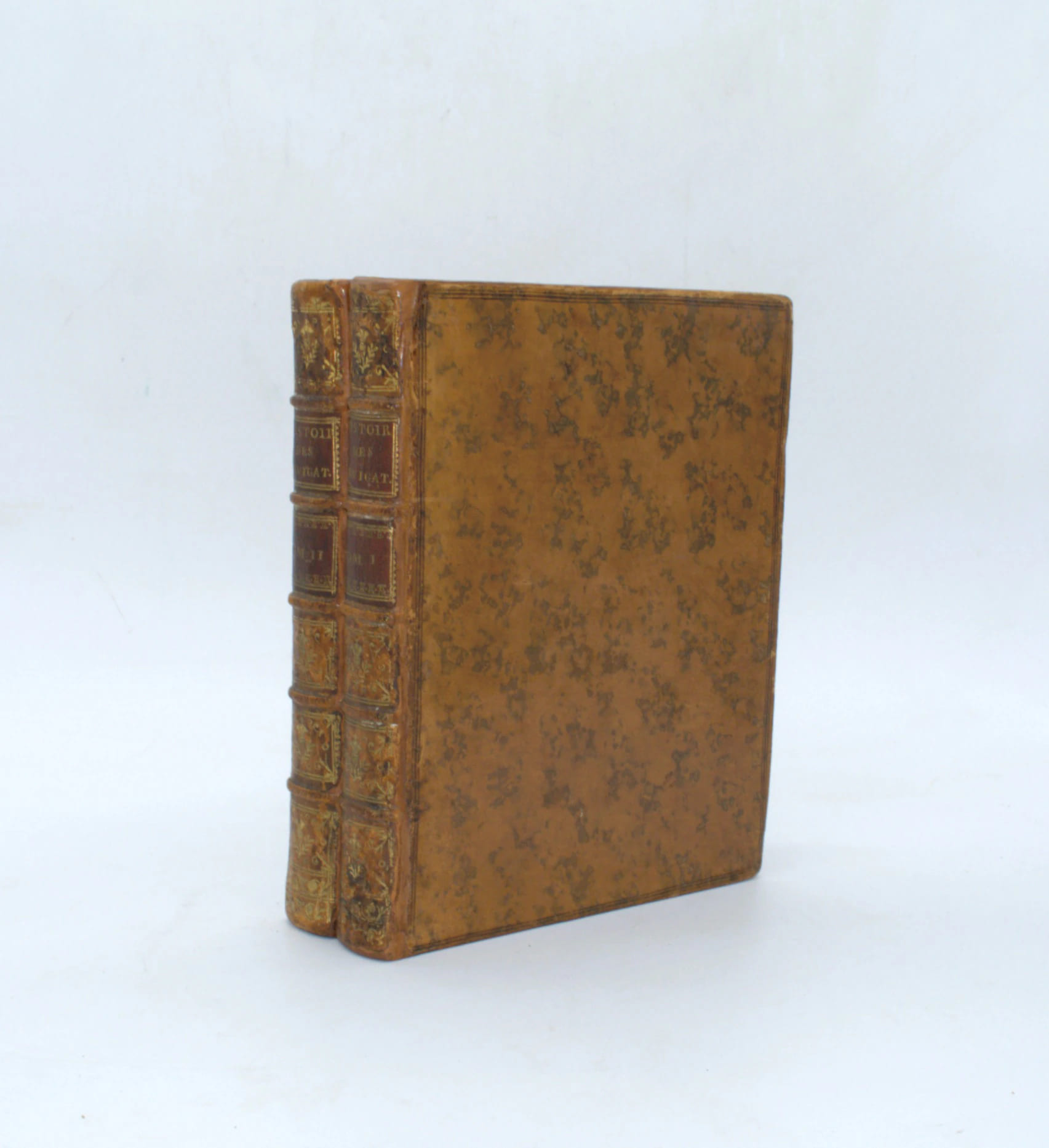
1756ref. PHO-2556Paris, Durand, 1756. 2 volumes in-4, veau marbré, dos à nerfs ornés, pièces de titre et de tomaison de maroquin rouge, tranches rouges (reliure de l'époque). Traces de réparations aux charnières, 1 feuillet (T1 p. 463) et titre T2 réparés en coin, frottements, quelques brunissures et petites rousseurs. Il manque les cartes qui n'ont pas été reliées à l'époque
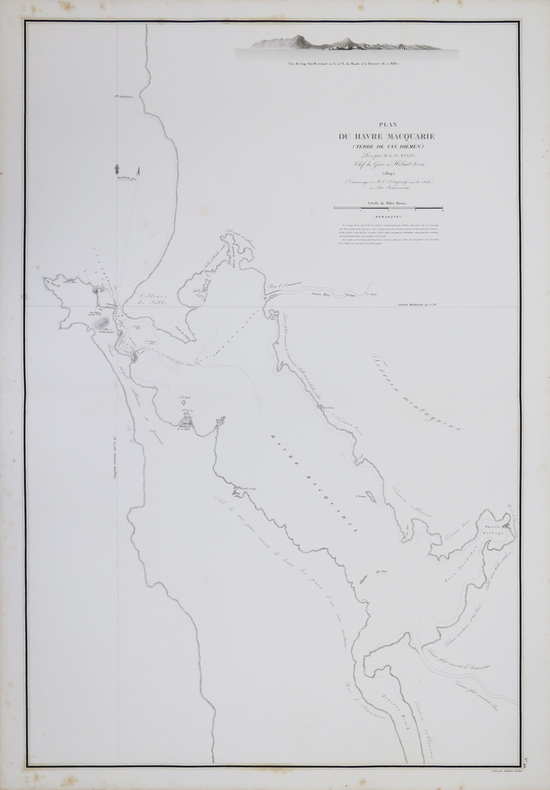
1827ref. LBW-4433[1827]. 756 x 501 mm.
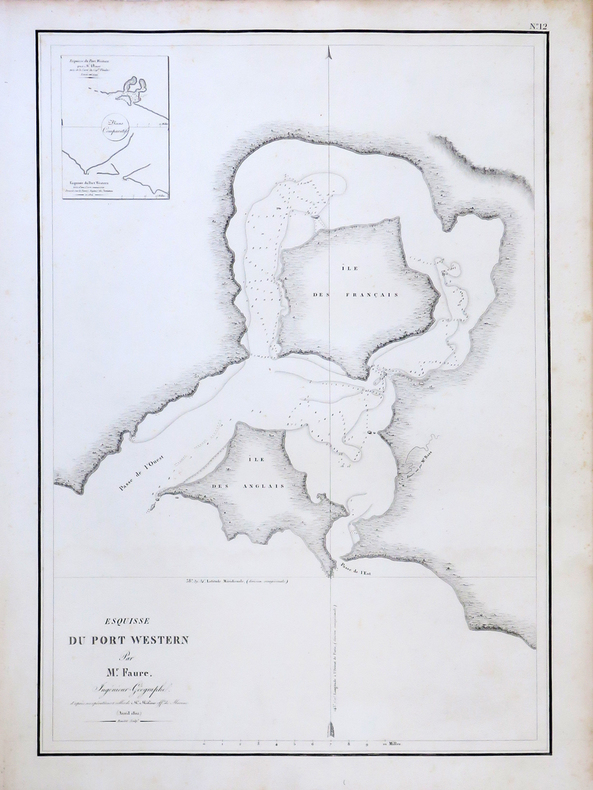
ref. LBW-3957[1812]. 492 x 344 mm.
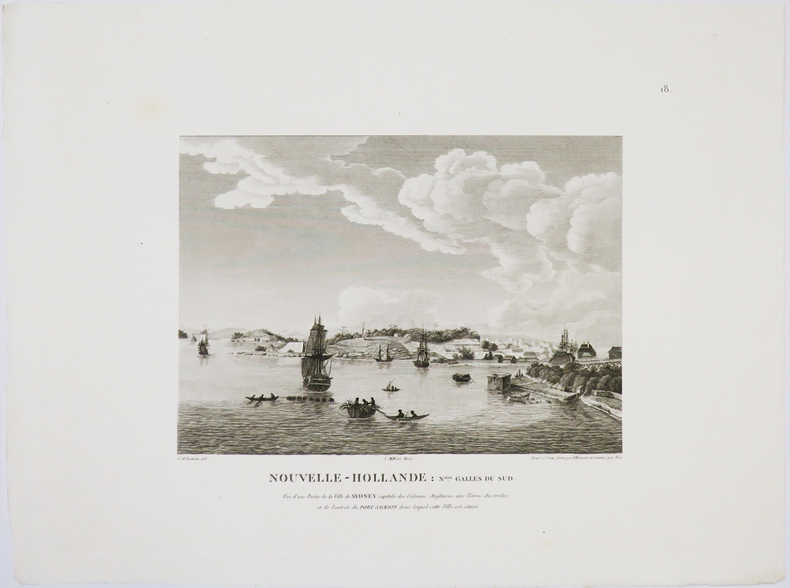
1824ref. LBW-1064[1824]. 182 x 212 mm.
1820ref. P1-22ATLASP1-4E-0AVEC L'ATLAS: LA HARPE (J.F). Abrégé de l'histoire générale des voyages, contenant ce qu'il y a de plus remarquable, de plus utile et de mieux avéré dans les pays où les voyageurs ont pénétré; les mœurs des habitants, la religion, les usages, arts et sciences, commerce et manufactures; par J.F. LAHARPE. Nouvelle édition, revue et corrigée avec le grand soin, et accompagnée d'un bel Atlas In-folio. Paris, Etienne Ledoux, 1820. 24 volumes in-8° (205x135) reliés demi-maroquin olive, dos ornés, tranches marbrées, belle série. 500pp. par volume, le dernier (XXIV) étant la table des matières. TARDIEU A., Atlas pour servir à l'intelligence de l'histoire générale des voyages de LA HARPE. In-folio (455x295mm), couverture éditeur, coins écornés. Paris, Ledentu, 1825. 15 cartes géographique (595x460mm), contours couleurs dressés par AMBROISE TARDIEU. Mappemonde, Afrique, Asie (2), Indes, Océanie, Chine, Japon, Sibérie, Golfe du Mexique, Mexique, Amérique Méridionale, Pérou, Brésil, Amérique Septentrionale, Europe.
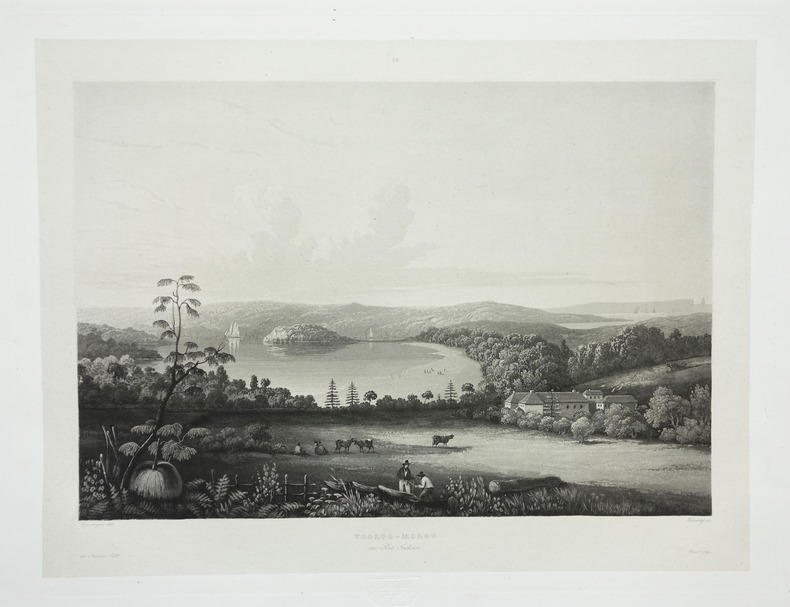
1833ref. LBW-1978Paris, 1833-1839. 268 x 358 mm.
1867ref. 80150Adelaide: David Gall 1867. First Edition. Hardcover. Very Good. Adelaide David Gall 1867. Duodecimo vi 82 52 'Chowla Advertiser' pages. Original flourescent green papered boards with expanded title page details repeated within a border on the front cover and with the contents listed on the rear; covers slightly marked and a little rubbed bumped and worn at the extremities with the hinges a little cracked; spine sunned lightly mottled and a little glue-stained; thin light tidemark to the top edge of the front endpaper; a very good copy of a scarce book rarely found with the spine intact and internally this copy is nothing short of fine. 'Storrie exhibits a keen sense of satire not only with regard to conventional tales whose perclivities are mercilessly ridiculed but also with regard to colonial society itself' Depasquale: A Critical History of South Australian Literature 1836-1930. Incidentally this is the first novel published in Adelaide. See Ferguson 16305 for confirmation of the Storrie/ McTavish connection. David Gall hardcover
2015ref. ASAP-9781626991323Studium Press India Pvt. Ltd. 2015. New. Studium Press (India) Pvt. Ltd. unknown
2015ref. ASAP-9781626991323Studium Press India Pvt. Ltd. 2015. New. Studium Press (India) Pvt. Ltd. unknown
19048vo [23 x 15 cm]; xxiv, 424 pp, frontis, 61 illustrations including many full-page, mostly from photos, 3 folding maps, some drawings, index. original pictorial cloth, gilt spine title lettering and gilt picture on front cover, top edge gilted, endpaper bookplate, no tears of maps, near fine and clean. A picture of this book is available upon request by email. An important book by one of the great botanical explorers and naturalists of the nineteenth century, the Italian botanist, spent time at Kew, where he met Charles Darwin, William Joseph Hooker and James Brooke, the Rajah of Sarawak. The latter lead him to spending 3 years from 1865 to 1868 undertaking research in Sarawak, Brunei and other islands off present-day Malaysia and New Guinea, where he discovered many new species of palms, and many other plants such as a phosphorescent fungus that was bright enough to read a newspaper placed by it. Beccari was in Sarawak during 1865-67 where he collected over 800 bird skins including 40 not previously discovered of unrecorded species. He describes nature, the people, Dyaks and their customs in some detail, prior to the major impacts of the twentieth century, and describes his return to Sarawak some 20 years later, where he formed a botanical garden. He discovered the titan arum, the plant with the largest unbranched inflorescence in the world, in Sumatra in 1878. This edition also contains the valuable and detailed appendix on the forests of Borneo, which are currently being logged to extinction. The preface is by naturalist F. H. H. Guillemard who also wrote a book of his travels in the area. The later reprint does not include the maps of the original.
18008vo [21.5 x 14 cm]; 2 volumes, xxxii, [33] - 487; 344, 105, [vi, ads] pp, 45 engraved plates including frontis's, large folding map (short tear at stub), tables. contemporary half calf, marbled boards, red leather title labels, joints split, one board just holding, worn at edges, corners, bookplate of George Knight, light foxing on some leaves, but overall clean, text blocks tight, a very good set. A picture of th Hill p. 168: "Labillardiere was aboard the expedition under d'Entrecasteaux which was sent out to search for the missing Laperouse. Although unsuccessful in the search, the voyage was of considerable importance due to the scientific observations made and also for surveys of the coasts of Tasmania, New Caledonia, the north coast of New Guinea, and the southwest coast of Australia. Labillardiere's account of the Tongans is among the best contributions to the ethnology of that people." Cox 69: "of considerable importance. . . Labillardiere gives the first scientific description of the New Zealand flax and brought back several New Zealand plants." The plates include plants, birds, native peoples.
ref. carte34t11Dimension du cadre : 52 x 61,5 cm. Cum adjacentibus insulis nova delineatione ob oculos pofita per Matthaeum Seutter. Cum gratia et Privil. S.R.I vicarcatus in partibus rheni, suevioe et juris franconici. Royaume de l'Inde. Magnifique carte, en très bon état général, dans un cadre sympathique.
1852ref. 57668New York: Cornish Lamport & Co. Publishers 1852. First edition. Handcoloured folding map at front. iv 5-154 2 ads pp. 1 vols. 8vo. Brown blind-stamped cloth. Spine ends chipped else Fine. Ex-library stamps on map and title page card pockets removed. First edition. Handcoloured folding map at front. iv 5-154 2 ads pp. 1 vols. 8vo. Ferguson: "At this time the author was conducting an 'Australian Emigration Office' at 120 Wall Street New York." Ferguson 10892 2 copies P.L. N.S.W. Cornish, Lamport & Co., Publishers unknown
1852ref. 57668New York: Cornish Lamport & Co. Publishers 1852. First edition. Handcoloured folding map at front. iv 5-154 2 ads pp. 1 vols. 8vo. Brown blind-stamped cloth. Spine ends chipped else Fine. Ex-library stamps on map and title page card pockets removed. First edition. Handcoloured folding map at front. iv 5-154 2 ads pp. 1 vols. 8vo. Ferguson: "At this time the author was conducting an 'Australian Emigration Office' at 120 Wall Street New York." Ferguson 10892 2 copies P.L. N.S.W. Cornish, Lamport & Co., Publishers unknown books
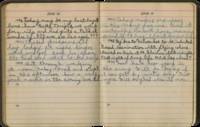
1944ref. List3749US Australia and New Guinea 1944. Diary measuring 4 ¼ x 5 ½ inches containing 735 entries. With three letters two of which are facsimiles. Diary boards with debossed text reading "ARMY DAYS" and lock; worn especially at corners excellent. Contents Fine. Letters Fine. Overall Near Fine. A diary belonging to Dale F. Damitz 1920-1944 Company A of the 738th Military Police Battalion covering the time between his last day before leaving for service and about a month before his death in October of 1944. The 738th MPB stationed in the South West Pacific Area during the Second World War is best known during that time for its role in the Battle of Brisbane a two-day riot between US servicemen and Australian servicemen and civilians in which an Australian Gunner was killed and hundreds on both sides were injured. Australia was a critical station for housing troops on duty in the Pacific Theater. The arrival of US military personnel in Australia-80000 in Brisbane alone-overtaxed the capacities of its cities increased crime and strained relations between US troops and Australians. Americans had access to better rations including luxuries such as cigarettes and ice cream; received higher pay than their Australian counterparts; and were often criticized for consorting with Australian women. Though it does not figure in this diary race likely also contributed to animosity between the groups. Despite fairly strict Australian laws around the sale of alcohol drunkenness was rampant. Military police from both countries were tasked with keeping the peace in the major cities. Damitz arrived in Brisbane with the 738th in August 1942 where "Lt. Craddock" informed his company that "where we're going we'll have a chance to catch 200 lb bombs in our pockets" August 30 and "Cpt. Forbes" that he would "get some honor and glory if it costs him the whole company" August 31. Damitz's diary is fairly sparse at this time including during the Battle of Brisbane though he mentions an "air raid" that made "the ground shake" December 1. In Australia-"this land of forgotten men" February 15 1943 consisting of "Just heat and rain day after day. And insects" February 5 1943-Damitz's duties mainly consisted of being what he called "prisoner chaser" patrolling for and guarding "the drunks" who "make you so sick and disgusted you never want a drink again" March 29 1943. Damitz's duties took him across central and southeastern Australia from Adelaide River outside Darwin to Birdum and Alice Springs to Adelaide via Terowie-these along the Stuart Highway a critical military transport route-to Melbourne and then to Brisbane via Sydney. The central Australian route through the Northern Territory and South Australia is "just waste land" February 23 1943 and "flat desert country . Saw a lot of camels and a few abo camps" March 5. Damitz's then went from Brisbane to Adelaide River outside Darwin to Melbourne and back to Brisbane. In Melbourne and Brisbane he is on "prisoner chaser" duty: "Was prisoner chaser today. Got through at five. Went out on town patrol at six thirty. All troops were restricted as there was a big drive on to pick up all AWOL's. got one fellow over the hill." April 21 1943 And: "Was working with the Civilian Police tonight after sly-grog sellers. Caught one. Sure is a lot of excitement and dangerous" June 13 1943. Bootlegging was a persistent issue in Australia exacerbated by the presence of American GIs who were unused to Australia's strict liquor laws. Damitz's company left Brisbane for Milne Bay in New Guinea in November of 1943. The camp is "worse than a pig pen" November 11 and the "bastard of a Col. of the 801st" takes away his tent's floorboards for his own use leaving Damitz in the mud December 17. In a somewhat more upbeat letter to friends back home Damitz reports water "clear as crystal and cold as ice" with "plenty of banana trees and pineapples" and "natives here . called fuzzy-wuzzies. We give them a cigarette to climb the coconut trees and knock down coconuts for us" November 17. They arrived in Oro Bay in March of 1944 where Damitz "Just lays around" March 15 deals with the mud and casts his ballot-"the first time in my life I have voted. Voted straight Republican" July 23-on the controversial absentee ballot. By far Damitz's most persistent topic for the entirety of the diary is his overwhelming boredom the constant feeling of preparing for "something big" October 24 1943 that never materializes and the totalizing apathy that this produces. Damitz had been a reluctant enlistment in the first place-for instance mentioning an award as "another pipe dream of the old man's" June 5 1943-and had not expected to be sent overseas so quickly "it was said no untrained men would leave the states. Some joke!"; June 30 1942. He "Sure is sick of this shit!!!" March 15 1944 and writes throughout 1943: "February 4: Doesn't take long for a guy to get so you don't give a dam for anything. Almost get so you don't care what happens next. February 12: Saw a good movie here in camp last night. Rest of the day was just like any other day here. Often wonder if I'll ever have the happiness I once had April 14: This all seems like a bad dream. Sure wish it was over with. April 30: The months slowly go by. You feel like a condemned man who is waiting for the chair. August 19: Today makes fourteen months in the army. Seems more like years tho. Hate it more every day. November 13: Is raining again today the mud is about a foot deep right inside of the tents. Don't have any kitchen yet. Don't care. December 21: Just laid around all day. Don't have any life or pep anymore. Don't have any ambition to do a dam thing." After nearly two and a half years of "all this B.S." July 30 1943 Damitz's company was sent to the Philippines where he was killed in action a few days into the Battle of Leyte. The diary provides a humanizing look-in Damitz's distinctively hard-boiled writing voice-at US-Australian relations and law enforcement and at everyday life outside of combat for a US battalion infamous in Australian history.
1944ref. List3749US Australia and New Guinea 1944. Diary measuring 4 ¼ x 5 ½ inches containing 735 entries. With three letters two of which are facsimiles. Diary boards with debossed text reading "ARMY DAYS" and lock; worn especially at corners excellent. Contents Fine. Letters Fine. Overall Near Fine. A diary belonging to Dale F. Damitz 1920-1944 Company A of the 738th Military Police Battalion covering the time between his last day before leaving for service and about a month before his death in October of 1944. The 738th MPB stationed in the South West Pacific Area during the Second World War is best known during that time for its role in the Battle of Brisbane a two-day riot between US servicemen and Australian servicemen and civilians in which an Australian Gunner was killed and hundreds on both sides were injured. Australia was a critical station for housing troops on duty in the Pacific Theater. The arrival of US military personnel in Australia-80000 in Brisbane alone-overtaxed the capacities of its cities increased crime and strained relations between US troops and Australians. Americans had access to better rations including luxuries such as cigarettes and ice cream; received higher pay than their Australian counterparts; and were often criticized for consorting with Australian women. Though it does not figure in this diary race likely also contributed to animosity between the groups. Despite fairly strict Australian laws around the sale of alcohol drunkenness was rampant. Military police from both countries were tasked with keeping the peace in the major cities. Damitz arrived in Brisbane with the 738th in August 1942 where "Lt. Craddock" informed his company that "where we're going we'll have a chance to catch 200 lb bombs in our pockets" August 30 and "Cpt. Forbes" that he would "get some honor and glory if it costs him the whole company" August 31. Damitz's diary is fairly sparse at this time including during the Battle of Brisbane though he mentions an "air raid" that made "the ground shake" December 1. In Australia-"this land of forgotten men" February 15 1943 consisting of "Just heat and rain day after day. And insects" February 5 1943-Damitz's duties mainly consisted of being what he called "prisoner chaser" patrolling for and guarding "the drunks" who "make you so sick and disgusted you never want a drink again" March 29 1943. Damitz's duties took him across central and southeastern Australia from Adelaide River outside Darwin to Birdum and Alice Springs to Adelaide via Terowie-these along the Stuart Highway a critical military transport route-to Melbourne and then to Brisbane via Sydney. The central Australian route through the Northern Territory and South Australia is "just waste land" February 23 1943 and "flat desert country . Saw a lot of camels and a few abo camps" March 5. Damitz's then went from Brisbane to Adelaide River outside Darwin to Melbourne and back to Brisbane. In Melbourne and Brisbane he is on "prisoner chaser" duty: "Was prisoner chaser today. Got through at five. Went out on town patrol at six thirty. All troops were restricted as there was a big drive on to pick up all AWOL's. got one fellow over the hill." April 21 1943 And: "Was working with the Civilian Police tonight after sly-grog sellers. Caught one. Sure is a lot of excitement and dangerous" June 13 1943. Bootlegging was a persistent issue in Australia exacerbated by the presence of American GIs who were unused to Australia's strict liquor laws. Damitz's company left Brisbane for Milne Bay in New Guinea in November of 1943. The camp is "worse than a pig pen" November 11 and the "bastard of a Col. of the 801st" takes away his tent's floorboards for his own use leaving Damitz in the mud December 17. In a somewhat more upbeat letter to friends back home Damitz reports water "clear as crystal and cold as ice" with "plenty of banana trees and pineapples" and "natives here . called fuzzy-wuzzies. We give them a cigarette to climb the coconut trees and knock down coconuts for us" November 17. They arrived in Oro Bay in March of 1944 where Damitz "Just lays around" March 15 deals with the mud and casts his ballot-"the first time in my life I have voted. Voted straight Republican" July 23-on the controversial absentee ballot. By far Damitz's most persistent topic for the entirety of the diary is his overwhelming boredom the constant feeling of preparing for "something big" October 24 1943 that never materializes and the totalizing apathy that this produces. Damitz had been a reluctant enlistment in the first place-for instance mentioning an award as "another pipe dream of the old man's" June 5 1943-and had not expected to be sent overseas so quickly "it was said no untrained men would leave the states. Some joke!"; June 30 1942. He "Sure is sick of this shit!!!" March 15 1944 and writes throughout 1943: "February 4: Doesn't take long for a guy to get so you don't give a dam for anything. Almost get so you don't care what happens next. February 12: Saw a good movie here in camp last night. Rest of the day was just like any other day here. Often wonder if I'll ever have the happiness I once had April 14: This all seems like a bad dream. Sure wish it was over with. April 30: The months slowly go by. You feel like a condemned man who is waiting for the chair. August 19: Today makes fourteen months in the army. Seems more like years tho. Hate it more every day. November 13: Is raining again today the mud is about a foot deep right inside of the tents. Don't have any kitchen yet. Don't care. December 21: Just laid around all day. Don't have any life or pep anymore. Don't have any ambition to do a dam thing." After nearly two and a half years of "all this B.S." July 30 1943 Damitz's company was sent to the Philippines where he was killed in action a few days into the Battle of Leyte. The diary provides a humanizing look-in Damitz's distinctively hard-boiled writing voice-at US-Australian relations and law enforcement and at everyday life outside of combat for a US battalion infamous in Australian history. books
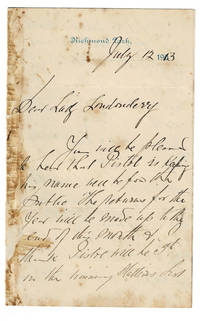
1913ref. 97593Richmond Park South Australia: July 12 1913. 1913. Good. - Approximately 300 words penned on 4 sides of a folded sheet of creamy white paper with each page measuring 8 inches high by 5 inches wide. "Richmond Park" is printed at the top of the cover page. Aldridge has altered the partially printed date from "1903" to "1913". Started on the cover page Aldridge has continued his letter on the last page to then conclude on the inner 2 leaves. Signed "J.H. Aldridge" on the inner leaf. Once apparently mounted along the inner edge with glue or tape there are heavy stains with remnants of glue to the inner edge of the first and last page. There is a tiny tear along the fold with some light brown stains or foxing to all four pages. Good. A RARE LETTER REPLETE WITH HORSE RACING ASSOCIATIONS. Aldridge writes to the Marchioness of Londonderry praising the horse he purchased from her and the Marquis of Londonderry. "You will be pleased to hear Pistol is keeping his name well before the public.I think Pistol will be 5th on the Winning.List in all Australia of course in this State 'South Australia' he is easily 1st.Londonderry by Pistol Antilles won the Broken Hill Cup a few days ago & the Chairman in presenting the cup to the winner referred to the fact that the horse got his name from his Breeder the Marchioness of Londonderry.Pistol is a most prolific father of winners & that is better than one good one & twenty duffers as some sires record. I believe there is only one sire in Australia which has produced more winners this year." He goes on to complain about the season as a whole mentions some "great loss" that she has had and he wishes the Marquis well and that "his illness worries will be settled ere long" Signed "J. H. Aldridge". James Henry "Jim" Aldridge 1849-1929 was a popular and highly respected Australian sportsman. he began his career as a hotelier in Adelaide. He managed the Globe Hotel in Rundle Street a hotel that was popular with sportsmen. He later took charge of the Grand Hotel Broken Hill and the Gresham Hotel. In 1890 with the intent of establishing a stud farm he purchased at a Sydney sale the Stallion Carlyon. Carlyon was to be the lord of the harem so to speak. In addition he purchased a richly bred brood of a half-dozen mares. Sometime between 1888 and 1890 Aldridge purchased Richmond Park in South Australia from its original owner John Chambers. With the Chester horse Carlyon and the stud established Aldridge rapidly became well-known as a breeder. Carlyon and the thoroughbreds he sired at the Richmond Park stud farm made Aldridge's name famous throughout Australian racing circles. Although still able to perform as a stud Carlyon was badly injured in 1905. As it happened however in 1904 Aldridge had purchased Pistol the son of the famous English sire Carbine. Pistol was foaled in 1899 and arrived in South Australia as a five year old. He was purchased from the Marquis of Londonderry for the large sum of 1250 pounds. As a stud Pistol performed into his 26th year and sired winners of more than 641 races out of 1423 competitions. Up until Aldredge's death in 1829 the Pistol progeny had won approximately 200000 pounds in stake money. In atribute after his death the Chairman of the S.A.J.C. South Australian Jockey Club Whitmore Blake Carr "Doc Carr" wrote: "For years Mr. Aldridge has been one of the best widely known and most popular identities of the turf in South Australia and one to whom the sport owed much of its maintenance and stability. When he ran horses he did so for the pure love of the sport and the applause which always attended the success of his colours was a fine tribute by the racing public to the popularity of the owner. He was an exceptionally fine judge of a horse. The gratifying results which have been achieved at Richmond Park making it stand today so high in the list of studs in the Commonwealth was due to his sound judgment and ripe experience." Richmond Park, [South Australia]: July 12, 1913. unknown
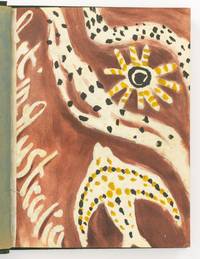
1941ref. 137250Sydney: 'Sydney Morning Herald' 1941. First Edition. Paperback. Very Good. Sydney 'Sydney Morning Herald' 1941 and 1942. Large quarto 84 to 88 pages each issue extensively illustrated in colour and black and white; bound-in in the first number is a small two-part perforated order-gift subscription form. Binder's cloth retaining the original colour-pictorial card covers with the rear cover now bound in immediately after the front cover in each case; cloth a little flecked; edges a little foxed; endpapers discoloured; light foxing to a few leaves adjacent to the boards; in excellent condition. The fourth and final series of 'Art in Australia' comprised only six quarterly numbers between March 1941 and August 1942. They were a marked departure in all respects from the previous 94 numbers of the journal which commenced publication in 1916: new editor new format new emphasis on international art. The editorial in the first issue spells this out succinctly: there will be 'a complete change in appearance and methods of production with a broadening of policy. In the past "Art in Australia" has been almost entirely devoted to the painting sculpture and architecture of this country. Luxurious productions from France England and other countries were available to inform the artist student and art-lover of the work and activities of the art world outside. But the barbarity unleashed in Europe is destroying much of the art of the past and present and has made it impossible for periodicals we prized so much to continue production. The countries of their origin have fallen under Hitler's yoke men responsible for their production - artists and writers - killed art galleries and elaborate printing and processing plants blown to bits. But Art cannot die and we in Australia can and will carry on our efforts to preserve encourage and foster the culture our enemies would destroy. In spite of paper shortages and many other difficulties "Art in Australia" will play its widened part by presenting the art of all countries all periods and all schools'. Peter Bellew modelled its visual excellence and intellectual content on 'Verve' and 'under his stewardship the art historian and director of London's National Gallery Sir Kenneth Clark declared it "unquestionably the best art magazine being published today anywhere in the world"' Harding and Morgan: 'Modern Love - The Lives of John and Sunday Reed' 2015. Notwithstanding the end came without warning: Series 4 Number 6 August 1942 the last one published with a strong and parochial editorial about the 'Need for War Artists' contained no hint of its fate. 'Sydney Morning Herald' paperback
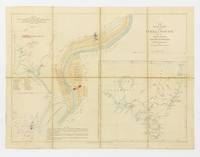
1842ref. 144203London: John Arrowsmith 1842. First Edition. Hardcover. Very Good. London John Arrowsmith Published 18 May 1842. A hand-coloured engraved map printed surface 402 × 551 mm external dimensions 446 × 591 mm cut into eight uniform panels mounted on linen as issued folding down to approximately 225 × 150 mm. When folded the two outside surfaces of linen are lined with plain purple textured cloth; a long sealed tear runs though the two top right-hand panels containing the printed title and a centimetre into the next-left panel but the only printed surface affected is the thin right-hand border: in spite of its length it is inoffensive and unobtrusive and may well be a production fault; in very good condition complete with the publisher's original slipcase in matching cloth lettered 'Wellington' in gilt on one thin side worn at the corners of the closed end and a little marked. John Arrowsmith 1790-1873 'was an important English cartographer especially for Australians. A member of a family of geographers his production focused on mapping British colonies around the world at a scale that surpassed that of any other contemporary map maker. Additionally he had access to the very latest despatches received at the Colonial Office and the British Admiralty which formed the source for many of his productions. His work covers the period 1832 to 1862'. His lasting contribution is his 'London Atlas of Universal Geography' which went through at least eight editions between 1834 and 1858 Dorothy Prescott: 'Arrowsmith's Australian Maps' online resource. We have previously sold uncut examples of this map on paper sourced from copies of the atlas. This cased example produced from the same plate used for the atlases shows the original allotments along the River Murray at Wellington and the upper entrance to Lake Alexandrina. This copy has three of these allotments additionally hand-coloured with initials added in black ink. They are blocks 8 blue FB 51 blue JB and 90 red FB. The two inset maps show the south-eastern portion of Australia and a 'Sketch of the Country between the Gulf of St. Vincent and the Great Bend of the River Murray shewing the Position of the Two Special Surveys of the Secondary Towns Association on the River Light'. Tooley 115 b uncut version. John Arrowsmith hardcover
1845ref. 036628London: T. And W. Boone 1845. xi 243pp 7 engraved plates map. Or cloth boards decorated in blind titled in gilt with gilt kangaroos to base of spine. Cloth splitting along rear spine edge front board starting to separate at top hinges starting. Ex- Mines Department library with usual stamps etc quite heavy foxing to map plates and title page. Corners bumped. Text pages generally clean. Scarce early account of the early settlement of Moreton Bay and New South Wales from Port Macquarie north. A great deal on the Aborigines. First Edition. Hard Cover. Good. 8vo. Ex-Library. T. And W. Boone Hardcover
1790ref. 0032791790 A Paris, Chez Letellier, 1789-1790. Deux ouvrages reliés en un volume in-8 (131 X 200) basane fauve, double filet doré en place des nerfs, pièce de titre maroquin ocre, tranches mouchetées en rouge (reliure de l'époque) ; (1) f. blanc, titre, (1) f. d'avis préliminaire, 213 pages ; (1) f. blanc, VIII pages (dont faux-titre et titre), 266 pages, (1) f. blanc. Cernes de mouillures claires à certains feuillets, plus marqués aux premiers feuillets du volume. Manque de papier à l'angle inférieur des feuillets 153/154 et 169/170 de l'ouvrage de Tench, avec perte d'une lettre ("e" final de "espac[e]") au second feuillet. Quelques rares rousseurs. Minimes restaurations à la reliure.
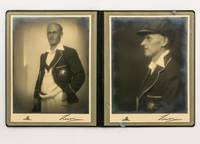
1934ref. 144537London 28 George Street Hanover Square W.1.: Lenare 1934. First Edition. Hardcover. Very Good. London 28 George Street Hanover Square W.1. Lenare 1934. Two large-format gelatin silver photographs each 351 × 264 mm signed by the photographer in the negative with his studio inkstamp and manuscript reference number on the versos. Some silvering-out mainly around the edges; tiny creases to the corners of the white margins of one print; overall in excellent condition loosely inserted in the original cloth portfolio lettered in gilt on the padded front panel in excellent condition albeit with a spot of surface wear near the middle of the spine. Clarrie Grimmett the NZ-born Australian Test cricketer was one of the finest leg-spinners of his time. He is photographed in two different poses: head-and-shoulders from the side wearing his cap and blazer; and three-quarter length from the front wearing pullover and blazer with cap in hand. Lenare was the professional name of Leonard George Green 1883-1946; he specialised in society portraits at his London studio. Provenance: Clarrie Grimmett originally purchased at the Christie's auction of the Clarrie Grimmett Collection sold in Melbourne on 13 May 1998. Grimmett played 37 Tests between 1924 and 1936 taking 216 wickets at an average of 24.21. His record for the fastest bowler to take 200 wickets in Tests achieved in his 36th match stood for 82 years and was broken only in 2018. His first-class record of 1424 wickets in 248 matches between 1911 and 1941 includes 513 wickets in his 79 Sheffield Shield matches. He was a Wisden Cricketer of the Year in 1931 along with Don Bradman. He was posthumously inducted into the Australian Cricket Hall of Fame in 1996 as one of the ten inaugural members and in 2009 he was inducted into the ICC Cricket Hall of Fame. 2 items. Lenare hardcover
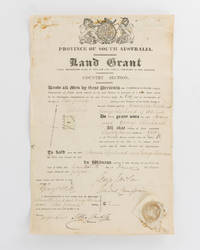
ref. 120374Folio approximately 353 × 232 mm a single leaf trimmed from a standard form a bifolium with the centrefold blank and the last page merely docketed now mounted on plain paper 360 × 228 mm with a small hand-coloured diagram of the block showing the orientation of the land and a paper-over-wax impressed seal signed by George Gawler as Resident Commissioner 19 January 1841. Other signatories are the Private Secretary George Hall; the Treasurer John Alexander Jackson; and Alfred Reynell brother of John patriarch of the eponymous wine family. The document has a few horizontal creases where originally folded; the mounted document has been rolled up at some stage and is a little curled; a short sealed tear to the right edge; a few minor blemishes near the top edge and the bottom portion of the seal and some light overall fading these are possibly a legacy from having been framed at some stage overall a very presentable example of a very rare colonial document. Land Grant Number 639 is for 'Eighty-two acres numbered "903" in the Provincial Survey' purchased by 'James Warland and George Warland of Adelaide' for the sum of £2. Elizabeth Warburton in 'The Paddocks Beneath. A History of Burnside from the Beginning' 1981 makes short work of locating the land in question in this leafy suburb about eight kilometres from the Adelaide GPO and paying the brothers Warland their due. 'There can hardly be a family with deeper roots in Burnside than the Warlands who settled there in 1838. James Warland 1796-1875 with his brothers from Wimborne in Dorset took assisted passages to South Australia in 1837. Their first leaseholding was on Section 904 Clifton; then in 1840 having paid two pounds down they were in nominal possession of Section 903 on the other side of Greenhill Road bounded on the west by today's Wyatt Road. After his retirement Henry Warland built here on land inherited from his father George a pleasant stone farmhouse named "Wimborne" which his grandson Eric Warland maintains at 6 Wyatt Road' page 24. George Gawler 1795-1869 was South Australia's second governor. 'Disputes between the first governor Captain Sir John Hindmarsh and the resident commissioner Sir James Fisher over their respective jurisdictions had retarded the colony's development so the two offices were combined in Gawler. Thus as governor he became representative of the Colonial Office in the province and as resident commissioner representative of the non-governmental Colonization Commission which was responsible for the control of land sales for applying the proceeds to the emigration of labourers and for raising loans until such time as the colony had sufficient revenue to support itself. On 12 October 1838 Gawler with his wife and five children arrived in Adelaide in the "Pestonjee Bomanjee" and found conditions far worse than he had been led to expect. The most urgent necessity he believed was to promote rural settlement. He persuaded Charles Sturt to accept the post of surveyor-general and until he could assume office Gawler himself took charge of the Survey Department reorganizing it and conducting preliminary explorations. He also hired every available surveyor including some of Light's former officers. In October 1839 to his dismay he was ordered to dismiss them. The commissioners had appointed Lieutenant Edward Frome as surveyor-general and sent him out with a party of sappers. Gawler solved the problem by amalgamating the two forces feeling justified by the increasing volume of land sales. In 1839 over 170000 acres 68797 ha were sold'. Gawler produced results: within twelve months 200000 acres had been surveyed and by May 1841 mapping of 7000 square miles had been completed and over 500000 acres divided into sections. This rare land grant is evidence of Gawler's energy and zeal. Unhappily for him history was about to repeat itself: his 'major weakness was his complete failure to understand political realities. His recall and his successor Captain Sir George Grey arrived together on 10 May 1841' 'Australian Dictionary of Biography'. unknown
1638ref. 110770Paris: Chez Rolet Boutonné 1638. 2nd Edition. Hardcover. Paris Chez Rolet Boutonné 1638 second edition/ 1630. Octavo 170 × 105 mm four parts bound as one volume xvi 280; 64 last blank; 63-106 12 index last three blank; and 39 1 blank pages with woodcut printer's devices on the four title pages and 84 illustrations throughout approximately 80 woodcut illustrations and a few type-set diagrams. There are five leaves missing from the 'Troisième Partie' F4 F5 G1 G4 and G5: pages 85-90 95-96 and 101-104. Nineteenth century half calf and marbled boards now lacking the leather corner-pieces revealing earlier full vellum boards underneath; covers a little worn; light tidemark to the bottom inner corner of the text block throughout; a little worming to the top blank margin of the first 25 leaves; insect damage to the bottom edge extending at most a few millimetres into the wide blank bottom margins; first title leaf dusty and a little soiled; the five missing leaves notwithstanding overall a very presentable copy. The second edition of Claude Mydorge's expanded edition and critique of this popular early work of recreational mathematics first published in 1624 and usually attributed to Jean Leurechon. Each of Leurechon's mathematical problems is reprinted here in roman type with Mydorge's explanatory notes and criticism following in italic. The third part albeit relatively insubstantial only 44 well-illustrated pages is devoted exclusively to fireworks and their construction which probably explains the few missing leaves. The subtitle is: 'Composée d'un receuil de plusieurs plaisantes & recreatives inventions de feux d'artifice plus la maniere de faire toutes sortes de fuzées tant simples que doubles avec leur composition le tout representé par figures sic' Comprising a collection of several pleasant and recreative inventions of fireworks plus the manner of making all sorts of rockets both single and double with their composition all represented in figures. This third part together with the second made its first appearance in a 1628 edition of 'Récréations Mathématiques' published by Charles Osmont at Rouen. Their authorship has not been established HEEFER Albrecht: 'Récréations Mathématiques 1624 A Study on its Authorship Sources and Influence' revised 7 October 2004. The fourth part 'Nottes sic sur les Recreations .' is by D.H.P.E.M. Denis Henrion Professeur ès Mathématiques. Claude Mydorge 1585-1647 French mathematician was a friend of René Descartes with whom he shared a strong interest in optics and the nature of vision. 'Mydorge's first major work was the "Examen du livre des Récréations mathématiques" published in 1630. As the title suggests it was a work on recreational mathematics and was effectively a critique of Laurechon's sic book on the theme 'Récréations mathématiques' by the French Jesuit Jean Leurechon writing under the pen name of van Etten first appeared in 1624. However it was through his work on conic sections that Mydorge made the greatest scientific impact' The Cambridge Descartes Lexicon online. Provenance: a 1713 signature on the first page; an early ownership inscription 'Michael Hutchins His Book' on a preliminary page; 'G.S. Kingston Sept 1834' on the front pastedown: Sir George Strickland Kingston 1807-1880 the South Australian pioneer engineer and politician deputy-surveyor-general under Colonel William Light co-discoverer of the River Torrens first Speaker in the House of Assembly. Chez Rolet Boutonné hardcover