6 218 résultats
1876réf. 2754Paris, Imprimerie Nationale, 1876. In-8 broché de 226 pp., couverture bleue imprimée.
1875réf. 2755Paris, Imprimerie Nationale, 1875. In-8 broché de 207 pp., couverture bleue imprimée.
1877réf. 2756Paris, Imprimerie Nationale, 1877. In-8 broché de 268 pp., couverture bleue imprimée.
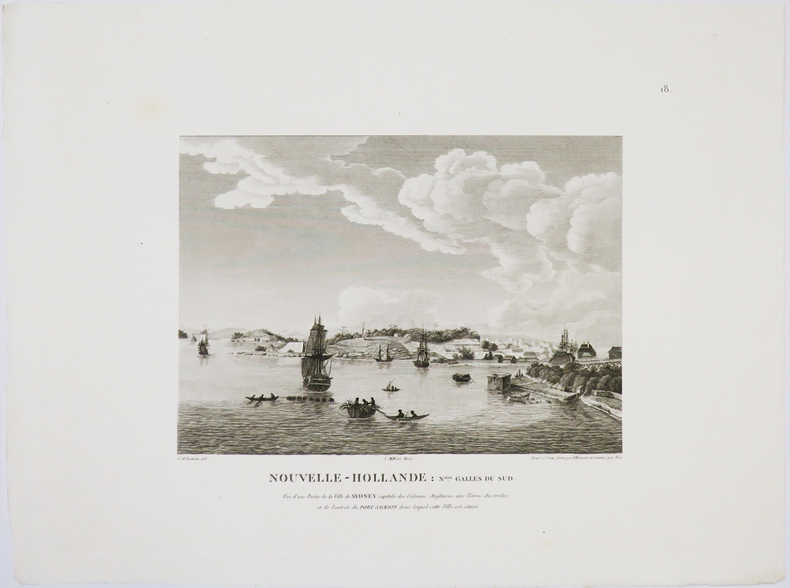
1844réf. 30734Nouvelle-Hollande 1844 40,5 x 26,5 cm environ marie-louise, sous-verre et encadrement moderne (48 x 41 cm)
1890réf. LBW-8601Paris, [1890]. 229 x 156 mm.
réf. 018813[Philippe Briet, Parallela geographiae veteris et novae] La division de nostre océan - Afrique, Europe, Asie, Australie. Gravure originale, 1649, environ 240*170mm. Gravure tirée de l'ouvrage du savant jésuite Philippe Briet (1601-1668) publié en 1648-1649. Texte au dos. [437]
réf. LBW-3948[1812]. 754 x 495 mm.
1824réf. LBW-4953[1824]. 213 x 170 mm.
1827réf. LBW-4433[1827]. 756 x 501 mm.
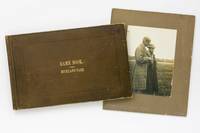
réf. 127784First Edition. Hardcover. Very Good. Oblong small folio 215 × 345 mm a bespoke shooters' register with each page ruled in blue with red columns headed 'Date' 'Place' 'No. of Guns' 'Names of Guns' 'Ducks' 'Swans' 'Plover' 'Stilts' 'Turkeys' 'Quail' 'Sand Piper' 'Hares' 'Rabbits' 'Snipe' blank 'Total' and 'Remarks'. The label of the manufacturer J.H. Sherring & Co. Adelaide is mounted on the front pastedown. On an early blank the following warning is written in ink: 'No shooter to have a drink after dinner until this book is entered up for the day. 9.11.97'. Full calf lettered in gilt on the front cover 'Game Book Buckland Park'; leather slightly marked and a little scuffed; in excellent condition. The gelatin silver portrait photograph 197 × 143 mm is on the original thick card mount 295 × 245 mm with the caption 'George V at Buckland Park' and the name of the photographer J. Gazard in white ink at the foot of the mount. Minor surface damage and creasing to the right-hand side of the mount; the photograph is in excellent condition. The Duke is pictured with Lord Richard Nevill private secretary to the Governor of South Australia. Buckland Park is a pastoral property near Port Gawler South Australia. George Frederick Ernest Albert The Duke of Cornwall and York and later King George V 1865-1936 was the second eldest son of King Edward VII who ascended the throne on Queen Victoria's death in January 1901. With the first Parliament of Australia set to open in early May the mourning King sent George now next in line to the throne to Australia as his representative. The Duke and his Duchess Mary 1867-1953 left England on 15 March aboard an Orient steamship specially chartered for the voyage. Two days after arriving in Melbourne on 9 May the royal couple drove through streets lined with cheering crowds to the Exhibition Building where the Duke declared the Parliament open before thousands of guests. 'The Duke and Duchess were kept busy with a program ranging from dinner and a University Commencement to the presentation of prizes to public schools. They also managed to visit briefly country Victoria. Nevertheless during their 10-day visit they still managed to fit in a day's shooting. The tour also included visits to other states New Zealand South Africa and Canada' Museums Victoria website. The official party made a short visit to South Australia 10-15 July not least to take up an invitation for another day's shooting . Alice Foster tells the story in the 'Salisbury and District Local History Newsletter' December 2019: 'Mr Leonard Browne the owner of Buckland Park and at the time in England invited the Royal party to a shooting excursion to his property. The Royal party consisted of HRH The Duke of Cornwall Prince Alexander of Teck Lord Wenlock Sir Charles Cust The Hon. Derek-Keppel Commodore Winsloe and Commander Faussett. On 3rd July 1901 a special meeting was held in the Salisbury Institute to make arrangements for welcoming their Royal Highnesses the Duke and Duchess of Cornwall who were to make a short stay on their journey to Buckland Park on Friday 12th July. There was a large attendance and Mr J.P. Swann was elected chairman on the motion of Dr E. Brookes seconded by the Rev. S. Moncrieff. It was decided to form a committee who were empowered to make the necessary arrangements. As Salisbury was the only town in South Australia to be visited by the Royal party there was great enthusiasm from the residents with suggestions for decorating the railway station. An orange arch consisting of branches blossoms and fruit would be formed and extended from the station gate to the spot where his Royal Highness's carriage would stand. The scholars of Salisbury and neighbouring schools would constitute a guard of honour to the Duke. The Royal train left North Terrace station a few minutes after 9 am driven by Mr Thomas Youll and sped swiftly on its way reaching Salisbury at 9.25 am. A crowd of townsfolk had assembled and church choirs and state school children united in singing the national anthem. The Hon. J. Stirling MLC drove His Royal Highness from Salisbury to Buckland Park arriving at 11 am. A good morning's sport was obtained in the swamps near the sea and luncheon was prepared in two marquees. A facsimile of the pigeongram sent by His Royal Highness follows: "We only got about 325 this should read 35 ducks this morning hope to get some peacocks this afternoon. G." . The special train left Salisbury at 6.08 pm and arrived in Adelaide at 6.20 pm' with all on board tired but happy. The game book saw little use with only the first three pages filled in. The first entry is dated 29 January 1898 and there are 20 separate entries in that year. There are ten parties in 1901 one in 1902 two in 1907 and the final one in 1936. However 1901 is the stellar year with numerous old South Australian names manning the guns: these include Baker Belt Hawker Jacob Matheson Phillipson Rounsevell and Stow. The names of the Duke's party are listed in a scribe's hand; only 40 peafowl were added to the aforementioned ducks and the remarks column has nothing remarkable to say 'One hour at ducks in morning only'. A fortnight later Messrs Hawker Phillipson Belt Belt Stow and Matheson had better luck bagging 41 ducks 2 stilts 1 avocet 1 sandpiper and 2 rabbits and reporting it was 'Cold & wet. Birds fairly plentiful but wary of new hides. Meat pies good'. 2 items. hardcover
2012réf. 133506Cheltenham: The Author 2012. First Edition. Hardcover. Very Good. Cheltenham The Author 2012. Quarto 242 pages with hundreds of illustrations from photographs many in colour. Pictorial papered boards; covers a little scuffed; an excellent copy. Inscribed and signed by the author on the front free endpaper 'For Airlie & Barry with appreciation and every good wish Ralph Holden 1.9.15'. The Author hardcover
réf. 244240Londres, chez l'auteur [Holborn press], in-4, xii pp., 88 pp., broché.
First edition, 4to, xii, 88pp., one of 525 copies, orig. printed wrappers.
2003réf. 113931Adelaide: Department for Environment and Heritage 2003. First Edition. Paperback. Fine. Adelaide Department for Environment and Heritage 2003. Laminated pictorial card covers; a fine copy. Department for Environment and Heritage paperback
1878réf. 124103Adelaide: mainly The Philosophical Society of Adelaide called the Royal Society of South Australia from 1880 1878. First Edition. Hardcover. Very Good. Adelaide mainly The Philosophical Society of Adelaide called the Royal Society of South Australia from 1880 1878 to 1881. Octavo 12 pamphlets pagination varies; plates appear in some of them. Contemporary binder's cloth lettered in gilt on the spine; in excellent condition. The papers are mainly on insects and native plants but also 'Cliffs and Rocks at Ardrossan' the 'Bay of Biscay' soil of SA and butterflies with two lithographs one with some hand-colouring. Loosely inserted is a related paper translated by him and three leaflets one each on ants bees and insects by him quarto or larger printed rectos only. Johann Gottlieb Otto Tepper 1841-1923 arrived in SA in 1847. He trained as a school teacher and 'taught at Two Wells 1869 Monarto 1872-73 Nuriootpa 1873-78 Ardrossan 1878-81 and Clarendon 1881-83. Between 1873 and 1883 he wrote a series of natural history papers about Nuriootpa "Notable Native Plants about Ardrossan"' and numerous others such as those present here. 'In March 1883 Tepper was appointed natural history collector at the South Australian Museum; in 1888 he was promoted to entomologist numismatist and librarian there. Many of his entomological papers were later to appear in the Garden and Field and in the Transactions of the Royal Society of South Australia which society he joined in 1878; he was an honorary fellow from 1912 and was sometime chairman of its field naturalists' section. In 1879 he became a fellow of the Linnean Society of London and a life member of the Society of Science Letters and Art London receiving their medal in 1898' 'Australian Dictionary of Biography'. [mainly] The Philosophical Society of Adelaide (called the Royal Society of South Australia from 1880) hardcover
1955réf. 127459Adelaide: RGSSA 1955. First Edition. Paperback. Fine. Adelaide RGSSA December 1955. Octavo pages 1-10 plus a frontispiece portrait. Original wrappers; a fine copy. The Presidential Address of George William Symes MC and Bar 1896-1980 sometime commander of 70th Division second-in-charge to Major General Orde Wingate's Special Force and commander of the South Burma District; and secretary to governors Sir Robert George and Sir Edric Bastyan 'Australian Dictionary of Biography'. This issue also contains EDWARDS Robert: St Mary's-on-the-Sturt pages 35-46 plus 2 plates; MARSHALL Ann: Climate and Housing pages 11-33 with a table 8 graphs and 10 floor plans plus a plate with 6 illustrations from photographs; and THOMSON Keith W.: The Changes in Function of Former Mining Settlements in the Wallaroo Copper Belt pages 47-58 with a map a graph and 2 tables plus a plate with 2 illustrations from photographs and a folding map. RGSSA paperback
réf. 46443611-nnew. unknown
1874réf. 121082Adelaide: William Kyffin Thomas Printer for The Author 1874. First Edition. Hardcover. Very Good. Adelaide William Kyffin Thomas Printer for The Author 1874. Octavo 53 pages. Flush-cut quarter green cloth and yellow papered limp boards with the full title page details repeated on the front cover; covers lightly marked; head of the spine slightly chipped; an excellent copy. 'These papers are written solely for private distribution amongst relatives and special friends; and as my family is rather numerous and dispersed the necessity arises of having them printed'. That being said copies of this original printing are now rare nearly a century and a half later. Marshall MacDermott 1791-1877 arrived in Adelaide in 1846 and after nearly three worthy and earnest decades here penned these memoirs decidedly brief when it comes to Australian content. Up until page 35 he reminiscences about his 22 years in the British army. He chose Western Australia as his future residence and arrived there in June 1830. Over the last eighteen pages he recounts his six years on the land and ten years in banking in WA then his eleven years 'as a bank manager three years as a merchant; four years in Parliament . and lastly over ten years administering the laws in Local Courts' in SA. William Kyffin Thomas, Printer [for The Author] hardcover
1874réf. 80075Adelaide: William Kyffin Thomas Printer for The Author 1874. First Edition. Hardcover. Fine. Adelaide William Kyffin Thomas Printer for The Author 1874. Octavo 53 pages. Flush-cut quarter green cloth and yellow papered boards with the full title page details repeated on the front cover; some discolouration to the front endpapers from a newspaper cutting; essentially a very fine copy. 'These papers are written solely for private distribution amongst relatives and special friends; and as my family is rather numerous and dispersed the necessity arises of having them printed'. This copy is inscribed to 'Percival Randolph Stow from his affectionate grandfather' and signed by the author. Stow a son of Judge Randolph Stow was the second husband of Catherine Stow Katie Langloh Parker. Loosely inserted is a 1941 newspaper clipping containing a brief biography of the author an 1829 pioneer of Western Australia before settling in South Australia in 1846; he died in 1877. William Kyffin Thomas, Printer [for The Author] hardcover
1874réf. 80623Adelaide: William Kyffin Thomas Printer for The Author 1874. First Edition. Hardcover. Very Good. Adelaide William Kyffin Thomas Printer for The Author 1874. Octavo 53 pages. Flush-cut quarter green cloth and yellow papered boards with the full title page details repeated on the front cover; covers slightly rubbed at the extremities and lightly marked; front flyleaf removed; an excellent copy. 'These papers are written solely for private distribution amongst relatives and special friends; and as my family is rather numerous and dispersed the necessity arises of having them printed'. This copy is inscribed on the verso of the title page to 'Charlotte de S. Dutton with kind regards' and signed by the author. MacDermott an 1829 pioneer of Western Australia before settling in South Australia in 1846 died in 1877. The provenance is most interesting: Charlotte de S. Dutton was the widow of William Hampden Dutton 1805-1849; her mother's maiden name was Da Silva. In 1849 William's brother Francis Stacker Dutton 1818-1877 married MacDermott's daughter Caroline. The Duttons and their pastoral property Anlaby were household names in South Australia for generations; to put them into context 'While working at Anlaby in 1842 Francis had discovered with Captain Charles Bagot the Kapunda copper mine' 'Australian Dictionary of Biography'. William Kyffin Thomas, Printer [for The Author] hardcover
1825réf. 80009London: William Darton 1825. First Edition. Hardcover. Very Good. London William Darton circa 1825. Octavo xii 64 pages plus 64 engraved portraits with tissue-guards. Early gilt-decorated half calf and marbled papered boards a little rubbed and bumped at the extremities; corners and the rear leading edge a little worn; 'Vol III' label missing from the spine; occasional scattered foxing and offsetting; a very good copy. Provenance: James Hurtle Fisher with his armorial bookplate on the pastedown and his signature in ink at the head of the engraved title page. Sir James Hurtle Fisher 1790-1875 'was one of the most important pioneers of South Australia' 'Australian Dictionary of Biography'. He commenced practice as a solicitor in London in 1816 and 'was drawn into the colonizing movement in 1835. He was selected as resident commissioner one of the most important offices under the South Australian Act . second only to the governor'. Fisher 'left England in July 1836 with the governor's party in the "Buffalo" arriving on 28 December 1836 at Holdfast Bay where the official oaths were administered a proclamation was read and a ceremony marked the beginning of settlement. In January 1837 Fisher erected his reed hut and Land Office near the survey camp of Colonel William Light at the north-western corner of the new capital site; the destruction of these temporary buildings by fire on 23 January 1839 caused both men serious loss. Fisher had been allowed to draft his own instructions which were not shown to Governor Sir John Hindmarsh. Disputes between the two men over their respective powers had begun on the voyage and were soon revived in the new Council of Government and more violently outside and led in February 1837 to the Resident Magistrate's Court binding the participants over to keep the peace towards each other. The new governor George Gawler was appointed both governor and resident commissioner a radical departure from the principles on which the colony had been founded'. Fisher returned to his profession and became a leader of the South Australian Bar. In October 1840 he was elected first mayor of Adelaide; in 1860 he became the first resident South Australian to be knighted. The destructive fire referred to above is described in detail in the biography of Light Dutton and Elder 1991. Light was living 'in the wood and reed surveyor's hut alongside Fisher's equally combustible house in the parklands on North Terrace. In his own account ". we discovered Fisher's house to be on fire. At the same time the breeze freshening up the destruction to both houses became inevitable. In less than ten minutes both houses were burnt to the ground mine catching fire at the roof by a lighted piece from Fisher's. We saved nothing of value"'. Accordingly personal mementoes such as this presumably brought by Fisher to South Australia on the 'Buffalo' must be of the utmost rarity. William Darton hardcover
1890réf. 108120Adelaide: Gresham Studio 1890. Very Good. Adelaide Gresham Studio 1890s. A gelatin silver photograph 135 × 93 mm including a facsimile signature of the subject mounted on textured card with the small inkstamp of 'Gresham Studio Adelaide' on the verso. Mount slightly marked at the foot of the recto; in excellent condition. 'The South Australian Register' 2 November 1891 featured a review of the recently published biography of George Fife Angas by Edwin Hodder London Hodder and Stoughton. It is described as having an 'etched portrait by H. Manesse'. We have identified several variant portraits used as the frontispiece; this unattributed one similar to Manesse's could well be another example. However this cabinet card was clearly produced as a stand-alone portrait. Gresham Studio unknown