ESTIENNE CHARLESABAA

153 résultats
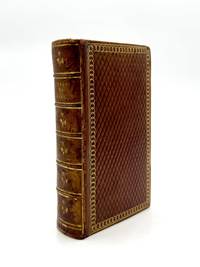
1566réf. 26380Geneva: Franciscus Perrinus 1566. 8vo ff. 2 341; title within woodcut border text in double column; title page defective with loss to bottom margin and top right corner causing loss to woodcut border but no letterpress; also with neat repair to corners of second leaf with loss to the ends of 3 lines and the third through the sixth leaf with minor loss in the upper corner; otherwise a nice crisp copy in 19th century full mottled calf black and red morocco labels on gilt decorated spine. A rare edition not found in Adams Schreiber the French BM-STC or NUC; OCLC finds the Harvard and Brigham Young copies only; see Renouard p. 104-05 for the first edition of 1553. The Preface by Charles Estienne in this edition does not appear in the 1553 first edition. Franciscus Perrinus unknown books
1574réf. 016807Venice / Vinetia/ Padovano: Girolamo Porro 1574. First Edition 1st Printing. Disbound. Very Good. Title Page And All Nine Full Page Portraits A Set Of These Plates Only Without The Pages Of The Book Trimmed Close To Plate Mark Each Approximately 8 1/4" X 6"; This Item Includes The Plates Only Excised From The Book Which Is Not Present. All Editions Of The Book Are Rare; These Detached Plates Were Part Of A Large Collection Of Original Antique Engravings Formed By A Southern California Artist In The Early To Middle Twentieth Century. Each Plate Has Small Glue Marks On Reverse Where They Were Tipped In To An Album. Very Short Tear At Left Edge Of Title Page Otherwise All Plates Well Preserved. Girolamo Porro unknown
1599réf. 007232London: Richard Field 1594 1599. Second English Edition . Quarter Calf. Good. 943 X. Quarter Calf. Second English Language Edition. Folio. Quarter Calf Over Marbled Boards. Pages 10 3/4" Tall All Three Edges Watered. Leather Is Quite Worn Joints Cracked Frayed At Corners With Small Losses Paper Covering The Boards Is Partly Worn Away At Edges. Lacks Initial Blank. Contemporary Gilt And Embossed Compartmented Spine. Signs Of Removed Bookplate On Front Pastedown. Hinges Cracked But Firm. Title Page With Complex "Anchora Spei" Ornamental Engraving Missing Lower Right Corner About One Square Inch Total With No Loss Of Text Or Ornament. Text Divided Into Twenty Books With Woodcut Ornaments And Initials For Each; Unpaginated Ten Page Table Index At End. Dedication To Queen Elizabeth I By Fenton. Small Waterstains Showing Irregularly At Bottom Of Some Pages Well Below Text Block. First Page Missing Lower Corner Adjacent To Spine With No Loss Of Text. Light 1/2" Ink Smear P. 8 With No Loss Of Text. Page 49 Mis-Numbered 53 Otherwise Correct. Page 57/58 With Two Inch Tear At Bottom Extending 1/2" Into Text Block With No Loss Of Text. Small Chip To Side Of Text Block On P. 135/136 Not Affecting Text. Page 161 Mis-Numbered 155 Otherwise Correct. One-Eighth-Inch Hole Through P. 209/210 Affecting One Letter. A Few Letters Near Bottom Of P. 212 Apparently Once Obliterated Or Misprinted Carefully Restored In Ink. About One And A Half Square Inches Of Lower Left Corner Of P. 235 Missing With No Loss Of Text Block But Loss Of Most Of Gloss Note At Bottom Of P. 235 X3. One-Eighth-Inch Hole At Top Margin Of P. 271/272 With Loss Of One Letter Of Gloss Note. One Eighth Inch Hole P. 327/328 With Loss Of A Letter On Each Page. There Are No Pages 460 Through 500; The Tenth Book Ends On Page 459 Rr As It So States In The Text And The Eleventh Book Begins On P. 500 P. 501 Is Rr2. One Quarter Inch Foxing Spot Pp 535-544 At Upper Left Margin At Edge Of Page Not Affecting Text. Page 584 Mis-Numbered 588 Otherwise Correct. Page 593 Mis-Numbered 597 Otherwise Correct. Pp599-603 Bbb3--Bbb4 Somewhat Browned. One Sixteenth Inch Spot Pages 641-643 Obscuring A Letter On Each Page. A One-Eighth-Inch Hole And Singed Margin Through Page 673/674 Causing Loss Of One Or Two Letters On Each Page 673-674. A Small Stain Spot Extending Through Pp713-721 Another Few Pp723-725 Without Obscuring Text. Small Stain P 736 Not Obscuring Text. There Is No Page 787-788; A Reading Of The Text On Pages 786 And 789 Indicates That The Text Is Complete Regardless. Page 798 Is Mis-Numbered 799 Otherwise Correct. Apparently A Former Water Stain Now Invisible Obscured A Few Letters On P. 802; These Have Been Re-Inked. De Sanctis Has Written " From The Point Of View Of Intellectual Power It Is The Most Important Work Ever To Come From An Italian Mind." A Printing And The Mind Of Man Title. First Published In 1561 Twenty One Years After Guicciardini's Death. Fenton's English Translation Was First Printed In London In 1579 And Went Through Three Editions In Fifty Years. The First Edition Of 1594 Is Rarely Seen. This Copy Is Still Quite Readable. London: Richard Field (1594) unknown
1600réf. 017131Circa 1600 1600. Original Antique Engraving . Single Sheet. Very Good. Original Antique Engraving On Laid Paper Mounted On Single Sheet Of White Paper. Plate Mark 4 1/2" X 5 1/2" With 1/2" To 3/.4" Margins. Text "Nomen Habent Acci Per Te Sebethides Unda Ut Per Sebethi Flumina Nomen Habes" Inear Bottom. Either From An Unidentified Book Or Possibly Published In A Set Of Similar Portraits In Similar Format. Not Signed By Artist; Numbered "I.Ll" At Lower Right. Part Of A Large Collection Of Original Antique Engravings Formed By A Southern California Artist In The Early To Middle Twentieth Century. Each Plate Has Small Glue Marks On Reverse Where They Were Tipped In To An Album. unknown
1590réf. 016809Paris Circa 1590: Tomas De Leu / Leuuw 1590. Original Engravings . Single Sheets. Very Good. Original Woodcuts. Seven Of Twelve Engravings One For Each Month Of The Year Approximately 7 12" X 5 1/2" Each. Tomas De Leu Or De Leeuw 1560 / 1562 - 1612 / 1620 Son-In-Law Of Antonio Caron Was An Engraver And Publisher Who Worked In Paris During The Years 1576-1612 Or 1614 In The Workshop Of Jean Rabel. This Set Includes Seven Of The Twelve Engravings. These Are Strong Impressions Trimmed Within The Plate Mark Including January March April July August October And December. April Has A Missing Piece At The Center About 6 Cm Long In A Narrow Band Up To 8Mm Wide. Remarkable In Fineness Of Design And Detail Resembling Little Paintings Rather Than Engravings; These Are Exquisite And Rare. Part Of A Large Collection Of Original Antique Engravings Formed By A Southern California Artist In The Early To Middle Twentieth Century. Each Plate Has Small Glue Marks On Reverse Where They Were Tipped In To An Album. Tomas De Leu / Leuuw unknown
1574réf. GT1274London: Henri Binneman for Lucas Harison and George Bishop 1574. 1st Edition . Hardback. Vg. Folio. English edition translated by Arthur Golding. Woodcut decorative initials throughout and final leaf with woodcut device to the foot. Lacking the illus. title-page. Original full calf panelled binding incomplete with worn covers. A rare copy in the original state. Sadly the illus. title-page lacking as often with early books. Spine missing and gatherings loose. Fine illus. rear page with 'Imprinted at London by Henri Binneman for Lucas Harison and Geoge Bishop Anno 1574 followed by complete 24pp index. Engraved illus. initials throughout the volume. ORIGINAL BINDING [Henri Binneman] for Lucas Harison and George Bishop hardcover
1520réf. 43079Folio Society 2015 2018. 8vo. with coloured frontispiece and 6 plates; grey cloth upper board and backstrip blocked and lettered in silver and red a fine copy in publisher's pictorial board slip-case. Folio Society, hardcover
1569réf. GT027Lugduni: apud Guliel. Rouillium sub scuto Veneto 1569. Hardback. Very Good. Folio. 37x23cms. BIBLIA SACRA ad vetustissima exemplaria castigata nécnon figuris & chorographicis descriptionibus illustrata : Quid autem in horum Bibliorum castigatione præstitum sit subsequens præfatio latius indicabit. Accesserunt prætereà Hebraicorum Chaldæorum & Græcorum nominum interpretationes cum indicibus copiosissmis LUDUNI Lyons. 1569 Title-page with fine large engraved dec. printer's device block 6 leaves plus 2 map leaves 39465 leaves. Full page maps facing p315 and p316 and full page plates of tabernacles. Woodcut blocks richly found throughout. Bound in the original full raised band vellum binding loss of the upper and lower sections ot the spine vellum. Some damp staining to the fore-edges but a sound and complete copy of a very rare book. A very early reprint of the 1547 'Louvain Bible' a Vulgate edition created by imperial edict and the authorised bible until 1590. Illustrateur Pierre Eskrich Paris c 1530-apres 1590. A RARE AND COMPLETE VOLUME IN THE ORIGINAL FULL VELLUM BINDING. apud Guliel. Rouillium sub scuto Veneto hardcover
1576réf. 006317London in Fleetestreet a little above the Conduit.: Ralphe Newberie 1576. 1st Edition . Hardcover. Very Good. 12mo - over 6¾ - 7¾" tall. LYNE Richard. The FIRST ENGLISH COUNTY HISTORY! The book documents the history geography and customs of Kent. Rare First Edition 1576 1 map. In early 19c diced russia gilt edge tooling. Re-spined gilt tooling & titles raised bands. 1 2-58 58-59 59-435 pp numerous pagination errors but complete & with the engraved map of the Heptarchy by Richard Lyne and the extra leaf H which lists the Kentish writers this is the variant S1244785 which omits Middleton's name to the colophon contemporary ownership name to tp Fuller Nich' possibly Nicholas Fuller MP 1543-1620 map trimmed at base text mainly in black letter with some Anglo-Saxon characters gilt tooling to board edges & turn ins a.e.g. 2 faint spots to upper board. Very clean and tight. Sigs: 1ff qii-qiiii A-Iii2. Folio 138181 mm. ESTC S2124785. Huth 814/5. Brackman-Anglo Saxon England p136. Editions published in 1576 ours 1596 & 1656. Lambarde antiquary and lawyer had an unparalleled reputation for learning piety civic virtue and trustworthiness. See ODNB. Ralphe Newberie hardcover
1585réf. W375Cambridge: Ex officina Thomæ Thomasii inclyta Academiæ Cantabrigiensis typographi 1585. Hardback. worn. 8vo. 16 867 1 pp. errata on reverse of last leaf Iii. Preface signed: S.G.S. i.e. Simon Goulart. FULL TITLE :'Doctrinæ christianæ compendium: seu commentarii catechetici ex ore D. Zacharias Ursini verè theologi qui Heydelbergæ catecheseos explicationem continuare solebat & iterare diuerso tempore ab ipsius discipulis excepti. Ad septem exemplaria diligenter inter se collata pluribus in locis emendati varijs quæstionibus thesibus & argumentis auctiores facti & nunc denuo non parua accessione eorum quæ in commentarijs desiderabantur quod ex indice facilè apparebit locupletati. Cum indice præcipuorum capitum' STC 24529. 2nd edition. Includes text of the Heidelberg catechism. 160x110mm. Thomas Thomas was the first Cambridge University printer appointed in 1583 and he printed 14 titles before his death in 1588. Henry VIII had granted the University a Letters Patent in 1534 but the London Stationers Company resisted for nearly fifty years the publishing of books despite the Royal grant. Cambridge is the worlds oldest publishing house in the wordl and the has the worlds oldest University Press. ORIGINAL FULL CALF with raised bands. Complete copy but usual staining wear and aging. Binding broken at page 282. Beautifully printed in a single column and with wood-cut initials fo chapter headings. Occasional worming but generally a worn and damp-stained copy of a rare item. NO auction records found. Worn blind stamped device impress to the centre of both front and back boards. IN A WORN CONDITION WITH BINDING BROKEN. Ex officina Thomæ Thomasii inclyta Academiæ Cantabrigiensis typographi hardcover
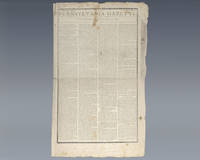
1518réf. 126803Philadelphia: Hall & Sellers January 15 1800. Exceedingly rare first appearance in print of Washington's Funeral Oration featured on the front page of the Wednesday January 15 1800 issue of the Pennsylvania Gazette. Folio four pages the headline reads "A Funeral Oration in Honor of the Memory of George Washington. Late General of the Armies of the United States. Prepared and Delivered at the Request of Congress at the German Lutheran Church on Thursday the 26th of December By Major-General Henry Lee One of the Representatives from the State of Virginia." Washington's eulogy was delivered by Major-General Henry Lee to both Houses of Congress and a crowd of 4000 at the first President's funeral on December 26 1799. This printing of the eulogy in the Pennsylvania Gazette precedes the first official Congressional printing Evans 37797 Sabin 39744. In very good condition. Exceedingly rare being one of two copies to have appeared in existing auction records the other in 1889. The father of his country" and the first president of the United States General George Washington died on December 14th 1799 and was buried at Mount Vernon in Virginia. In his Last Will and Testament written only months before his death Washington left explicit directions for the emancipation of each of his 123 slaves to be carried out after the death of his wife Martha. Legislature was passed in Virginia toward the end of the American Revolution in 1782 making it legal for slave holders to emancipate their slaves without an special action by the government. In his will Washington left a detailed slave census as well as stipulations regarding the treatment of the emancipated slaves who were sick and elderly orphaned children and the binding of children to masters and mistresses who would provide them with an education. Upon his death memorial processions were held in every major city and thousands wore mourning clothes for months; Martha Washington was known to have worn a mourning cloak for over a year. Hall & Sellers hardcover
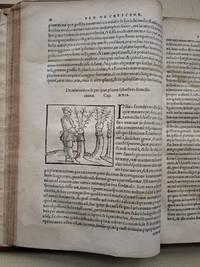
1548réf. 021454Basileae: Henrichum Petri 1548. LACKING ONE SIGNATURE. Latin text. Small quarto pp x - including an engraved bordered dedication page 385 lacking pages 197-208 rather age-toned a water stain throughout which is heavier and covering more of the early pages gradually fading after the first third of the book until almost imperceptible latterly a small hole in the title page leading to loss of one letter; with many attractive small square woodcuts throughout rebound in a twentieth century simple full calf by Theo Merrett the original front endpaper laid down and with the original spine laid down also. The Hartland Library copy with labels and manuscript notes attached to the front endpapers. RARE. The Library was formed by Edwin Sydney Hartland and was a diverse but major collection of herbals archaeology and anthropology. It was donated to Gloucestershire County Council in 1936 and was eventually dispersed around 2010. Crescenzi was born of a good family in Bologna Italy. He studied logic natural history medicine and law in the University of Bologna and became a lawyer and writer. Tired of law practice he decided to write about agricultural matters. His book entitled Ruralia Commoda contained much information relative to domestic plants and animals. The books is considered to be the best medieval treatise on agriculture about 1306. It was very popular in continental Europe was translated into several European languages and it exists in a large number of manuscripts. It was likewise printed many times. The book was composed with the purpose of providing the intelligent farmer with a practical account of all aspects of farming. It included material concerning plant growth extracted from the work of Albertus Magnus as well as the arrangement of farm buildings and water supply. Among the subjects treated were: Cultivation of cereals peas and beans. Cultivation of grapes and making of wines. Cultivation of fruit trees vegetables medicinal plants and flowers. Care of woods. His most original writing involved an elaborate presentation of grafting of grapes trees and the insect larvae destroying plants. he quoted Palladius Columella as well as other ancient authorities. Full-Leather. Good. Henrichum Petri Hardcover
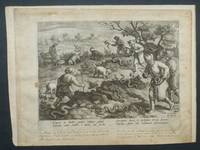
1590réf. 32521s. l.: S. n. 1590. Fine. S. n. s. l. fin XVIe début XVIIe 34 x 25.50 cm une feuille Authentic original engraving executed with burin after a 16th-century drawing by Johannes Stradanus. Impression on watermarked laid paper work from the late 16th or very early 17th century. Artists' signatures within the plate. Latin caption in the lower portion of the engraving. Manuscript translation in old handwriting below the plate mark: ""On dit que la Barbarie produit de très bons chameaux que chassent les soldats de la marine pressés par la faim. Cette viande quoique très dure les rassasie."" ""It is said that Barbary produces very good camels which are hunted by sailors pressed by hunger. This meat although very tough satisfies them."". Watermark visible by transparency. The margins of the engraving have been backed with small pieces of old laid paper pasted along the edges on the reverse otherwise fine condition for this very rare engraving. Johannes Stradanus called Giovanni Stradano or Jan van der Straet is a Flemish painter and engraver born in Bruges in 1523 and died in Florence on February 11 1605. After beginning to learn painting with his father and following the latter's death he continued his training in the workshop of Maximiliaan Frank from 1535 to 1537 then in that of Pieter Aertsen in Antwerp from 1537 to 1540. In 1545 he was admitted as master to the guild of Antwerp painters. He then began a journey across Europe: to France then to Italy where he first stayed in Venice before settling in Florence. There he worked for Cosimo I de' Medici and collaborated with Giorgio Vasari on the decoration of the Studiolo of Francesco I de' Medici and on that of the Clement VII room in the Palazzo Vecchio. In 1565 he was part of the teams of painters and sculptors charged under the direction of Giorgio Vasari with creating the gigantic decorations planned for the entry into Florence of Joanna of Austria on the occasion of her marriage to Francesco I de' Medici. Greatly influenced by the Mannerists including Michelangelo Johannes Stradanus contributed to the development of grand Italian history painting. He painted several altarpieces for Florentine churches. He also stayed in Rome from 1550 to 1553 and in Naples in 1576. After a stay in Antwerp in 1578 he devoted a large part of his activity to engraving. Philippe Galle born in Haarlem in 1537 and died in Antwerp in March 1612 is a Flemish engraver member of a famous family of engravers. He practiced copperplate engraving drawing print dealing publishing and writing. He trained with Hieronymus Cock in Antwerp where he engraved drawings by Pieter Bruegel the Elder notably the series of the Seven Deadly Sins. He then became the engraver of Maarten van Heemskerck. From 1557 he owned his own workshop which was frequented by his sons Theodore and Cornelius as well as by his son-in-law Adriaen Collaert the Wierix brothers Hendrick Goltzius Crispin de Passe the Elder and other members of the Collaert family. His workshop was at the center of Antwerp print production. Philippe Galle created some of his most admirable works based on designs by Pieter Bruegel the Elder The Alchemist 1558 by Jan van der Straet by Franz Floris The Daughters of Lot and by Gillis Congnet Aenevm Saecvlvm and the four ages of humanity 1575. Adrian Collaert born in Antwerp in 1565 and died in 1618 was part of a great family of engravers. Trained in the workshop of his father-in-law Philippe Galle he began with copperplate engraving before specializing in burin work. S. n. unknown
1590réf. 32525s. l.: S. n. 1590. Fine. S. n. s. l. fin XVIe début XVIIe 34 x 25.50 cm une feuille Authentic original engraving executed with burin after a 16th-century drawing by Johannes Stradanus. Proof on watermarked laid paper work from the late 16th or early 17th century. Artists' signatures in the plate. Latin legend in the lower portion of the engraving. Manuscript translation in old handwriting below the plate mark: ""En Italie les vipères se plaisent à se cacher dans les marais. Quand elles entendent un chien aboyer elles sortent des buissons. On les saisit alors avec une fourche et on les met dans un sac avec une pince. Elles sont préparées comme remède pharmaceutique"" ""In Italy vipers enjoy hiding in marshes. When they hear a dog barking they come out of the bushes. They are then seized with a fork and put in a bag with tongs. They are prepared as pharmaceutical remedy"". Watermark visible by transparency. The margins of the engraving have been reinforced with small pieces of old laid paper glued to the edges on the verso otherwise fine condition for this very rare engraving. Johannes Stradanus known as Giovanni Stradano or Jan van der Straet was a Flemish painter and engraver born in Bruges in 1523 and died in Florence on February 11 1605. After beginning to learn painting with his father and following his father's death he continued his training in the workshop of Maximiliaan Frank from 1535 to 1537 then in that of Pieter Aertsen in Antwerp from 1537 to 1540. In 1545 he was received as a master in the Antwerp painters' guild. He then began a journey across Europe: to France then to Italy where he first stayed in Venice before settling in Florence. There he worked for Cosimo I de' Medici and collaborated with Giorgio Vasari on the decoration of the Studiolo of Francesco I de' Medici and on that of the Clement VII hall in the Palazzo Vecchio. In 1565 he was part of the teams of painters and sculptors charged under Giorgio Vasari's direction with creating the gigantic decoration planned for the entry into Florence of Joanna of Austria on the occasion of her marriage to Francesco I de' Medici. Greatly influenced by the Mannerists including Michelangelo Johannes Stradanus contributed to the development of grand Italian history painting. He painted several altarpieces for Florentine churches. He also stayed in Rome from 1550 to 1553 and in Naples in 1576. After a stay in Antwerp in 1578 he devoted a large part of his activity to engraving. Philippe Galle born in Haarlem in 1537 and died in Antwerp in March 1612 was a Flemish engraver member of a famous family of engravers. He practiced copper engraving drawing the print trade publishing and writing. He trained with Hieronymus Cock in Antwerp where he engraved drawings by Pieter Bruegel the Elder notably the series of the Seven Deadly Sins. He then became the engraver of Maarten van Heemskerck. From 1557 he had his own workshop which would be frequented by his sons Theodoor and Cornelis as well as by his son-in-law Adriaen Collaert the Wierix brothers Hendrick Goltzius Crispijn de Passe the Elder and other members of the Collaert family. His workshop was at the center of Antwerp engraving production. Philippe Galle created some of his most admirable works on designs by Pieter Bruegel the Elder The Alchemist 1558 Jan van der Straet Frans Floris The Daughters of Lot and Gillis Congnet Aenevm Saecvlvm and the four ages of humanity 1575. S. n. unknown
1590réf. 32522s. l.: S. n. 1590. Fine. S. n. s. l. fin XVIe début XVIIe 34 x 25.50 cm une feuille Authentic original engraving executed with burin after a 16th-century drawing by Johannes Stradanus. Impression on watermarked laid paper work from the late 16th or very early 17th century. Artists' signatures within the plate. Latin caption in the lower portion of the engraving. Manuscript translation in old handwriting below the plate mark: ""Souvent un chasseur tombe sans prendre garde dans des cavernes ou des grottes couvertes d'herbes par dessus d'où ses compagnons ne peuvent le retirer mais il meurt malheureusement et demeure la pature des serpents qui y sont et des hydres"" ""Often a hunter falls unawares into caverns or grottoes covered with grass above from which his companions cannot retrieve him but he dies miserably and remains food for the serpents and hydras dwelling there"". Watermark visible by transparency. The margins of the engraving have been backed with small pieces of old laid paper pasted along the edges on the reverse otherwise fine condition for this very rare engraving. Johannes Stradanus called Giovanni Stradano or Jan van der Straet is a Flemish painter and engraver born in Bruges in 1523 and died in Florence on February 11 1605. After beginning to learn painting with his father and following the latter's death he continued his training in the workshop of Maximiliaan Frank from 1535 to 1537 then in that of Pieter Aertsen in Antwerp from 1537 to 1540. In 1545 he was admitted as master to the guild of Antwerp painters. He then began a journey across Europe: to France then to Italy where he first stayed in Venice before settling in Florence. There he worked for Cosimo I de' Medici and collaborated with Giorgio Vasari on the decoration of the Studiolo of Francesco I de' Medici and on that of the Clement VII room in the Palazzo Vecchio. In 1565 he was part of the teams of painters and sculptors charged under the direction of Giorgio Vasari with creating the gigantic decorations planned for the entry into Florence of Joanna of Austria on the occasion of her marriage to Francesco I de' Medici. Greatly influenced by the Mannerists including Michelangelo Johannes Stradanus contributed to the development of grand Italian history painting. He painted several altarpieces for Florentine churches. He also stayed in Rome from 1550 to 1553 and in Naples in 1576. After a stay in Antwerp in 1578 he devoted a large part of his activity to engraving. Philippe Galle born in Haarlem in 1537 and died in Antwerp in March 1612 is a Flemish engraver member of a famous family of engravers. He practiced copperplate engraving drawing print dealing publishing and writing. He trained with Hieronymus Cock in Antwerp where he engraved drawings by Pieter Bruegel the Elder notably the series of the Seven Deadly Sins. He then became the engraver of Maarten van Heemskerck. From 1557 he owned his own workshop which was frequented by his sons Theodore and Cornelius as well as by his son-in-law Adriaen Collaert the Wierix brothers Hendrick Goltzius Crispin de Passe the Elder and other members of the Collaert family. His workshop was at the center of Antwerp print production. Philippe Galle created some of his most admirable works based on designs by Pieter Bruegel the Elder The Alchemist 1558 by Jan van der Straet by Franz Floris The Daughters of Lot and by Gillis Congnet Aenevm Saecvlvm and the four ages of humanity 1575. Adrian Collaert born in Antwerp in 1565 and died in 1618 was part of a great family of engravers. Trained in the workshop of his father-in-law Philippe Galle he began with copperplate engraving before specializing in burin work. S. n. unknown
1590réf. 32502s. l.: S. n. 1590. Fine. S. n. s. l. fin XVIe début XVIIe 34 x 25.50 cm une feuille Authentic original engraving executed in burin after a 16th-century drawing by Johannes Stradanus. Proof on watermarked laid paper work from the late 16th or very early 17th century. Artists' signatures in the plate. Latin caption in the lower part of the engraving. Manuscript translation in old handwriting below the plate mark: ""Ceux qui s'occupent à surprendre les lions dans des filets portent une torche de la main gauche et un bouclier de la droite pour se garantir du feu: les lions fuyant les flammes se jettent dans les filets qu'on lui a tendu."" ""Those who busy themselves with surprising lions in nets carry a torch in the left hand and a shield in the right to protect themselves from fire: the lions fleeing the flames throw themselves into the nets that have been set for them."". Watermark visible by transparency. The margins of the engraving have been backed with small pieces of old laid paper glued to the edges on the verso otherwise fine condition for this very rare engraving. Johannes Stradanus known as Giovanni Stradano or Jan van der Straet was a Flemish painter and engraver born in Bruges in 1523 and died in Florence on February 11 1605. After beginning to learn painting with his father and following the latter's death he continued his training in the workshop of Maximiliaan Frank from 1535 to 1537 then in that of Pieter Aertsen in Antwerp from 1537 to 1540. In 1545 he was admitted as master to the Antwerp painters' guild. He then began a journey across Europe: to France then to Italy where he first stayed in Venice before settling in Florence. There he worked for Cosimo I de' Medici and collaborated with Giorgio Vasari on the decoration of the Studiolo of Francesco I de' Medici and on that of the hall of Clement VII in the Palazzo Vecchio. In 1565 he was part of the teams of painters and sculptors charged under the direction of Giorgio Vasari with creating the gigantic decoration planned for the entry into Florence of Joanna of Austria on the occasion of her marriage to Francesco I de' Medici. Greatly influenced by the Mannerists including Michelangelo Johannes Stradanus contributed to the development of grand Italian history painting. He painted several altarpieces for Florentine churches. He also stayed in Rome from 1550 to 1553 and in Naples in 1576. After a stay in Antwerp in 1578 he devoted a large part of his activity to engraving. Philippe Galle born in Haarlem in 1537 and died in Antwerp in March 1612 was a Flemish engraver member of a famous family of engravers. He practiced copperplate engraving drawing print dealing publishing and writing. He trained with Hieronymus Cock in Antwerp where he engraved drawings by Pieter Bruegel the Elder notably the series of the Seven Deadly Sins. He then became the engraver of Maarten van Heemskerck. From 1557 he owned his own workshop which was frequented by his sons Theodore and Cornelius as well as by his son-in-law Adriaen Collaert the Wierix brothers Hendrick Goltzius Crispijn de Passe the Elder and other members of the Collaert family. His workshop was at the center of Antwerp print production. Philippe Galle created some of his most admirable works on designs by Pieter Bruegel the Elder The Alchemist 1558 by Jan van der Straet by Franz Floris The Daughters of Lot and by Gillis Congnet Aenevm Saecvlvm and the four ages of humanity 1575. S. n. unknown
1590réf. 32501s. l.: S. n. 1590. Fine. S. n. s. l. fin XVIe début XVIIe 34 x 25.50 cm une feuille Authentic original engraving executed in burin after a 16th-century drawing by Johannes Stradanus. Proof on watermarked laid paper work from the late 16th or very early 17th century. Artists' signatures in the plate. Latin caption in the lower part of the engraving. Manuscript translation in old handwriting below the plate mark: ""Le bubale est une espèce de boeuf cruel et féroce. Les chasseurs pour le prendre le lassent en faisant courir et aboyer des chiens après lui qui le mordent jusqu'à ce qu'il tombe n'en pouvant plus"" ""The bubale is a species of cruel and ferocious ox. Hunters to catch it lasso it by making dogs run and bark after it which bite it until it falls exhausted"". Watermark visible by transparency. The margins of the engraving have been backed with small pieces of old laid paper glued to the edges on the verso otherwise fine condition for this very rare engraving. Johannes Stradanus known as Giovanni Stradano or Jan van der Straet was a Flemish painter and engraver born in Bruges in 1523 and died in Florence on February 11 1605. After beginning to learn painting with his father and following the latter's death he continued his training in the workshop of Maximiliaan Frank from 1535 to 1537 then in that of Pieter Aertsen in Antwerp from 1537 to 1540. In 1545 he was admitted as master to the Antwerp painters' guild. He then began a journey across Europe: to France then to Italy where he first stayed in Venice before settling in Florence. There he worked for Cosimo I de' Medici and collaborated with Giorgio Vasari on the decoration of the Studiolo of Francesco I de' Medici and on that of the hall of Clement VII in the Palazzo Vecchio. In 1565 he was part of the teams of painters and sculptors charged under the direction of Giorgio Vasari with creating the gigantic decoration planned for the entry into Florence of Joanna of Austria on the occasion of her marriage to Francesco I de' Medici. Greatly influenced by the Mannerists including Michelangelo Johannes Stradanus contributed to the development of grand Italian history painting. He painted several altarpieces for Florentine churches. He also stayed in Rome from 1550 to 1553 and in Naples in 1576. After a stay in Antwerp in 1578 he devoted a large part of his activity to engraving. Philippe Galle born in Haarlem in 1537 and died in Antwerp in March 1612 was a Flemish engraver member of a famous family of engravers. He practiced copperplate engraving drawing print dealing publishing and writing. He trained with Hieronymus Cock in Antwerp where he engraved drawings by Pieter Bruegel the Elder notably the series of the Seven Deadly Sins. He then became the engraver of Maarten van Heemskerck. From 1557 he owned his own workshop which was frequented by his sons Theodore and Cornelius as well as by his son-in-law Adriaen Collaert the Wierix brothers Hendrick Goltzius Crispijn de Passe the Elder and other members of the Collaert family. His workshop was at the center of Antwerp print production. Philippe Galle created some of his most admirable works on designs by Pieter Bruegel the Elder The Alchemist 1558 by Jan van der Straet by Franz Floris The Daughters of Lot and by Gillis Congnet Aenevm Saecvlvm and the four ages of humanity 1575. Adrian Collaert born in Antwerp in 1565 and died in 1618 was part of a great family of engravers. Trained in the workshop of his father-in-law Philippe Galle he began with copperplate engraving before specializing in burin. S. n. unknown
1590réf. 32532s. l.: S. n. 1590. Fine. S. n. s. l. fin XVIe début XVIIe 34 x 25.50 cm une feuille Authentic original engraving executed with burin after a 16th-century drawing by Johannes Stradanus. Proof on watermarked laid paper work from the end of the 16th or very beginning of the 17th century. Artists' signatures in the plate. Latin caption in the lower part of the engraving. Manuscript translation in an old hand beneath the plate mark: ""Le chasseur prend les petits du tigre et met dans des trappes des miroirs qui représentent les petits qu'il a enlevés. Cette bête stupide croyant les voir effectivement entre dans les filets et hurle étant prise."" ""The hunter takes the tiger cubs and places mirrors in traps that represent the cubs he has taken. This foolish beast believing it actually sees them enters the nets and howls being caught."". Watermark visible by transparency. The margins of the engraving have been backed with small pieces of old laid paper glued to the edges on the verso otherwise fine condition of preservation for this very rare engraving. Johannes Stradanus known as Giovanni Stradano or Jan van der Straet was a Flemish painter and engraver born in Bruges in 1523 and died in Florence on February 11 1605. After beginning to learn painting from his father and following his father's death he continued his training in the workshop of Maximiliaan Frank from 1535 to 1537 then in that of Pieter Aertsen in Antwerp from 1537 to 1540. In 1545 he was received as a master in the Antwerp painters' guild. He then began a journey across Europe: to France then to Italy where he first stayed in Venice before settling in Florence. There he worked for Cosimo I de' Medici and collaborated with Giorgio Vasari on the decoration of the Studiolo of Francesco I de' Medici and on that of the Clement VII room in the Palazzo Vecchio. In 1565 he was part of the teams of painters and sculptors charged under the direction of Giorgio Vasari with creating the gigantic decoration planned for the entry into Florence of Joanna of Austria on the occasion of her marriage to Francesco I de' Medici. Greatly influenced by the Mannerists including Michelangelo Johannes Stradanus contributed to the development of grand Italian history painting. He painted several altarpieces for Florentine churches. He also stayed in Rome from 1550 to 1553 and in Naples in 1576. After a stay in Antwerp in 1578 he devoted a large part of his activity to engraving. Philippe Galle born in Haarlem in 1537 and died in Antwerp in March 1612 was a Flemish engraver member of a famous family of engravers. He practiced copperplate engraving drawing the trade of engravings publishing and writing. He trained under Hieronymus Cock in Antwerp where he engraved drawings by Pieter Bruegel the Elder notably the series of the Seven Deadly Sins. He then became the engraver of Maarten van Heemskerck. From 1557 he owned his own workshop which would be frequented by his sons Theodore and Cornelius as well as by his son-in-law Adriaen Collaert the Wierix brothers Hendrick Goltzius Crispin de Passe the Elder and other members of the Collaert family. His workshop was at the center of Antwerp engraving production. Philippe Galle created some of his most admirable works on projects by Pieter Bruegel the Elder The Alchemist 1558 Jan van der Straet Franz Floris The Daughters of Lot and Gillis Congnet Aenevm Saecvlvm and the four ages of humanity 1575. Adrian Collaert born in Antwerp in 1565 and died in 1618 was part of a great family of engravers. Trained in the workshop of his father-in-law Philippe Galle he began with copperplate engraving before specializing in burin work. S. n. unknown
1590réf. 32520s. l.: S. n. 1590. Fine. S. n. s. l. fin XVIe début XVIIe 34 x 25.50 cm une feuille Authentic original engraving executed in burin after a 16th-century drawing by Johannes Stradanus. Proof on watermarked laid paper work from the late 16th or very early 17th century. Artists' signatures in the plate. Latin legend in the lower part of the engraving. Manuscript translation in old handwriting under the plate mark: ""Des chasseurs par le commandement du roi de France cherchent beaucoup de fientes de cerfs et donnent les crottes des jeunes cerfs aux chiens afin que par l'odeur ils apprennent à connaitre l'âge des cerfs."" ""Hunters by command of the king of France search for much deer dung and give the droppings of young deer to the dogs so that by scent they learn to know the age of the deer"". Watermark visible by transparency. The margins of the engraving have been backed with small pieces of old laid paper pasted to the edges on the reverse otherwise fine condition for this very rare engraving. Johannes Stradanus known as Giovanni Stradano or Jan van der Straet is a Flemish painter and engraver born in Bruges in 1523 and died in Florence on February 11 1605. After beginning to learn painting from his father and following his father's death he continued his training in the workshop of Maximiliaan Frank from 1535 to 1537 then in that of Pieter Aertsen in Antwerp from 1537 to 1540. In 1545 he was received as a free master in the guild of Antwerp painters. He then began a journey through Europe: in France then in Italy where he first stayed in Venice before settling in Florence. He worked there for Cosimo I de' Medici and collaborated with Giorgio Vasari for the decoration of the Studiolo of Francesco I de' Medici and for that of the Clement VII hall of the Palazzo Vecchio. In 1565 he was part of the teams of painters and sculptors charged under the direction of Giorgio Vasari with creating the gigantic decoration planned for the entry into Florence of Joanna of Austria on the occasion of her marriage to Francesco I de' Medici. Greatly influenced by the Mannerists including Michelangelo Johannes Stradanus contributed to the development of great Italian history painting. He painted several altarpieces for Florentine churches. He also stayed in Rome from 1550 to 1553 and in Naples in 1576. After a stay in Antwerp in 1578 he devoted a large part of his activity to engraving. Philippe Galle born in Haarlem in 1537 and died in Antwerp in March 1612 is a Flemish engraver member of a famous family of engravers. He practiced copper engraving drawing engraving commerce publishing and writing. He trained with Hieronymus Cock in Antwerp where he engraved drawings by Pieter Bruegel the Elder notably the series of the Seven Deadly Sins. He then became the engraver of Maarten van Heemskerck. From 1557 he owned his own workshop which was frequented by his sons Theodore and Cornelius as well as by his son-in-law Adriaen Collaert the Wierix brothers Hendrick Goltzius Crispin de Passe the Elder and other members of the Collaert family. His workshop was at the center of Antwerp engraving production. Philippe Galle created some of his most admirable works on projects by Pieter Bruegel the Elder The Alchemist 1558 Jan van der Straet Franz Floris Lot's Daughters and Gillis Congnet Aenevm Saecvlvm and the four ages of humanity 1575. S. n. unknown
1590réf. 32524s. l.: S. n. 1590. Fine. S. n. s. l. fin XVIe début XVIIe 34 x 25.50 cm une feuille Authentic original engraving executed with burin after a 16th-century drawing by Johannes Stradanus. Proof on watermarked laid paper work from the late 16th or early 17th century. Artists' signatures in the plate. Latin legend in the lower portion of the engraving. Manuscript translation in old handwriting below the plate mark: ""Le désert d'Appulie nourrit de couleuvres les grues et aussi les cigognes attaquent leurs nichées. Elles engagent le combat avec vigueur de leurs becs et les mordent. Le spectacle est très divertissant pour les colons"" ""The desert of Apulia feeds cranes with snakes and also storks attack their broods. They engage in combat vigorously with their beaks and bite them. The spectacle is very entertaining for the colonists"". Watermark visible by transparency. The margins of the engraving have been reinforced with small pieces of old laid paper glued to the edges on the verso otherwise fine condition for this very rare engraving. Johannes Stradanus known as Giovanni Stradano or Jan van der Straet was a Flemish painter and engraver born in Bruges in 1523 and died in Florence on February 11 1605. After beginning to learn painting with his father and following his father's death he continued his training in the workshop of Maximiliaan Frank from 1535 to 1537 then in that of Pieter Aertsen in Antwerp from 1537 to 1540. In 1545 he was received as a master in the Antwerp painters' guild. He then began a journey across Europe: to France then to Italy where he first stayed in Venice before settling in Florence. There he worked for Cosimo I de' Medici and collaborated with Giorgio Vasari on the decoration of the Studiolo of Francesco I de' Medici and on that of the Clement VII hall in the Palazzo Vecchio. In 1565 he was part of the teams of painters and sculptors charged under Giorgio Vasari's direction with creating the gigantic decoration planned for the entry into Florence of Joanna of Austria on the occasion of her marriage to Francesco I de' Medici. Greatly influenced by the Mannerists including Michelangelo Johannes Stradanus contributed to the development of grand Italian history painting. He painted several altarpieces for Florentine churches. He also stayed in Rome from 1550 to 1553 and in Naples in 1576. After a stay in Antwerp in 1578 he devoted a large part of his activity to engraving. Philippe Galle born in Haarlem in 1537 and died in Antwerp in March 1612 was a Flemish engraver member of a famous family of engravers. He practiced copper engraving drawing the print trade publishing and writing. He trained with Hieronymus Cock in Antwerp where he engraved drawings by Pieter Bruegel the Elder notably the series of the Seven Deadly Sins. He then became the engraver of Maarten van Heemskerck. From 1557 he had his own workshop which would be frequented by his sons Theodoor and Cornelis as well as by his son-in-law Adriaen Collaert the Wierix brothers Hendrick Goltzius Crispijn de Passe the Elder and other members of the Collaert family. His workshop was at the center of Antwerp engraving production. Philippe Galle created some of his most admirable works on designs by Pieter Bruegel the Elder The Alchemist 1558 Jan van der Straet Frans Floris The Daughters of Lot and Gillis Congnet Aenevm Saecvlvm and the four ages of humanity 1575. S. n. unknown
1590réf. 31035s. l.: S. n. 1590. Fine. S. n. s. l. s. d. circa 1590 34 x 25.50 cm une feuille Authentic original engraving executed in burin after a 16th-century painting by Johannes Stradanus. Proof on watermarked laid paper work from the late 16th or early 17th century. Artists' signatures in the plate. Latin caption in the lower part of the engraving. Manuscript translation in old handwriting below the plate mark: ""Ainsi les canards attachés sur le fleuve chantent pendant que ceux qui surviennent sont blessés d'un coup de feu et charpillent leurs plumes sur le fleuve"" ""Thus the ducks attached on the river sing while those that come are wounded by gunshot and scatter their feathers on the river"". Watermark visible by transparency. The engraving has been mounted and restored with small pieces of old laid paper glued to the edges on the reverse otherwise fine condition for this very rare engraving. Johannes Stradanus known as Giovanni Stradano or Jan van der Straet was a Flemish painter and engraver born in Bruges in 1523 and died in Florence on February 11 1605. After beginning to learn painting from his father and following the latter's death he continued his training in the workshop of Maximiliaan Frank from 1535 to 1537 then in that of Pieter Aertsen in Antwerp from 1537 to 1540. In 1545 he was received as a master in the Antwerp painters' guild. He then began a journey across Europe: in France then in Italy where he first stayed in Venice before settling in Florence. There he worked for Cosimo I de' Medici and collaborated with Giorgio Vasari for the decoration of the Studiolo of Francesco I de' Medici and for that of the hall of Clement VII in the Palazzo Vecchio. In 1565 he was part of the teams of painters and sculptors charged under the direction of Giorgio Vasari with creating the gigantic decoration planned for the entry into Florence of Joanna of Austria on the occasion of her marriage to Francesco I de' Medici. Greatly influenced by the Mannerists including Michelangelo Johannes Stradanus contributed to the development of the great Italian history painting. He painted several altarpieces for Florentine churches. He also stayed in Rome from 1550 to 1553 and in Naples in 1576. After a stay in Antwerp in 1578 he devoted a large part of his activity to engraving. Philippe Galle born in Haarlem in 1537 and died in Antwerp in March 1612 was a Flemish engraver member of a famous family of engravers. He practiced engraving on copper drawing the commerce of engravings publishing and writing. He trained under Hieronymus Cock in Antwerp where he engraved drawings by Pieter Bruegel the Elder notably the series of the Seven Deadly Sins. He then became the engraver of Maarten van Heemskerck. From 1557 he owned his own workshop which would be frequented by his sons Theodore and Cornelius as well as by his son-in-law Adriaen Collaert the Wierix brothers Hendrick Goltzius Crispin de Passe the Elder and other members of the Collaert family. His workshop was at the center of Antwerp engraving production. Philippe Galle created some of his most admirable works based on projects by Pieter Bruegel the Elder The Alchemist 1558 by Jan van der Straet by Franz Floris The Daughters of Lot and by Gillis Congnet Aenevm Saecvlvm and the four ages of humanity 1575. S. n. unknown
1587réf. 87613A Paris: Chez Mamert Patisson 1587. Fine. Chez Mamert Patisson A Paris 1587 8.50 x 15 cm relié New edition following the original of 1573. A handsome edition well printed in italics. It contains the Christian poetry absent from the 1600 edition. Copy enhanced with a portrait of the author from around 1820. Full glazed blonde calf Restoration binding signed at foot F. Bozérian jeune. Spine with raised bands decorated with 5 fleurons fillets and roulettes on the bands. Date at foot in blind. Boards ruled in blind with frame roulette composed of interlaced circles. Interior Greek key border. Edges gilt. A small fragment missing from head. Some traces of rubbing. Paper very fresh the engraving has caused slight uniform foxing on the title page. A handsome copy. The volume contains: Les amours de Diane; Les amours d'Hippolyte; Les dernières amours de Cléonice; Les Elégies; Les imitations de l'Arioste; Les meslanges contenant Les diverses amours les bergeries et masquarades les épitaphes les prières et oeuvres chrétiennes. Desportes' poetry was durably influenced and shaped by Italian literature. The author indeed returns to France after a journey to Italy where he underwent the influence of Petrarch - his first poems are moreover criticized as neo-Petrarchan. His first book appeared in a collective collection and gathered his poetry imitated from Ariosto. His clear frank mannerist and refined poetry court poetry eclipsed that of Ronsard at the court of Henri III. It was in turn criticized and replaced by that of Malherbe. Desportes' literature nonetheless constitutes an important aspect of Renaissance poetry. Chez Mamert Patisson hardcover
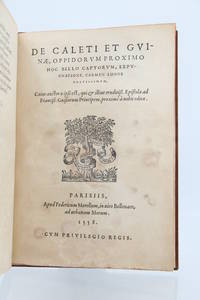
1558réf. 53486Parisiis Paris Paris: Apud Federicum Morellum 1558. Fine. Apud Federicum Morellum Parisiis Paris Paris 1558 - 1560 15 x 21 cm 4 parties en un volume relié Rare gathering of 4 pamphlets by Michel de L'Hôpital in first editions. Printer's device on title page. Contemporary monogram stamp on 3 title pages out of 4: four letters appear intertwined: B. E. L. J. Only the last text: De sacra Francisci II dates from 1560 all other titles being from 1558. Text in italics. Modern binding in full brown boards signed Boichot smooth spine decorated with a red morocco title-label in Chinese style framed by two double gilt fillets all edges red. Small wormholes in the lower part of the first text. Traces of pale dampstains at bottom of pages. One wormhole to the left of the printer's device and passing through the 4 leaves. Pale dampstains throughout. Similarly pale dampstains throughout the third text similarly on the last text more pronounced stains on the final leaves. Missing one blank leaf before the title De caleti et guinae the signature beginning with A2 with the title page. He who embodied according to Du Bellay ""The double honor of muses and laws"" represented for many the providential man when he was appointed Chancellor of France by Catherine de Medici. This humanist who was trained in law in Italy architect of religious tolerance between Protestants and Catholics and great jurist of his time had very early literary renown. The majority of his works are however in relation to his political role clearly marked by the wisdom of ancient writings Cicero and the teaching of Saint Paul for religion; one distinguishes there a sort of Christian stoicism. In his time his famous Epistles were compared to those of Horace and his satires were much appreciated at court. He was very early the protector of the poets of the Pléiade and particularly of Ronsard who addressed an ode to him in 1550: Ode à Michel de L'Hospital. The publication at Frédéric Morel of L'Hospital's works confirms his proximity with the poets of the time Morel was indeed the most renowned publisher of poets and humanists then in Paris. Monsieur de Sainte Marthe claimed that L'Hospital had imitated Horace more than any other poet that he had not only equaled him for the beauty of expression and gravity of sentences but that he had surpassed him by the sweetness of his versification. Monsieur de Thou shared this opinion on the neo-Latin poet. His writings were collected by Patisson in 1585. Apud Federicum Morellum hardcover
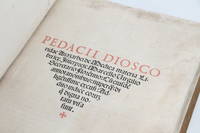
1518réf. 66812Florence: Filippo Giunta 1518. Fine. Filippo Giunta Florence 1518 21 x 32.50 cm relié First edition of the Marcello Virgilio translation in Latin dedicated to Leo X. The princeps edition was based on an old translation by Petrus de Abano ca. 1250-1316 and published in 1478 in Colle di Val d'Elsa. The original text was written in Greek around 60 AD. Title page in red and black. 45 lines per page. Colophon : ""Florentiæ per hæredes Philippi Iuntæ Florentini. Anno ab incarnatione Domini.1518. Idibus Octobris. Leone decimo Christianam Rempub. gerente."" Superb Filippo Giunta printer's mark on verso of last leaf. Bibliographical note in French opposite the title page. Full modern limp vellum binding all edges faintly bluish. A lack of a small piece of paper skillfully filled on the title page and the margins of the first endpapers have been restored. A few pages at the end of the volume show the discreet work of a few worms - without affecting the text. The copy has been thoroughly cleaned. We have not been able to find any copy of this important edition for sale except in the catalogue of a nineteenth-century German bookshop Ernest Heinemann Offenbach sur le Mein 1840. Provenance: Crowned monogram H.O. and library stamp of Prince Nicolas Petrovitch of Oldenburg 1840-1886 on the title page. He was the great-grandson of Emperor Paul I through his daughter Catherine Pavlovna 1788-1819 who married George of Oldenburg. His sister Alexandra married Grand Duke Nicholas son of Emperor Nicholas I. His nephew Peter of Oldenburg married Grand Duchess Olga daughter of Emperor Alexander III. The Traité de matière médicale made up of six books describes more than 800 substances of natural origin mostly plant-based but also animal and mineral giving their description how to harvest them and their medicinal properties. This veritable encyclopedia originally written by Dioscorides in the second half of the 1st century AD was from the first years of its diffusion praised by the greatest minds of the Roman Empire: Galen himself considered that Dioscorides' descriptions were unsurpassable and that it was no longer necessary to set about writing pharmacopoeial works. The text circulated throughout Antiquity and the Middle Ages through copies of the Greek text on papyrus parchment and paper and through translations into Latin Syriac Arabic Persian and European languages. However this massive transmission led to significant misinterpretations which were highlighted by the humanists of the Renaissance. « Humanism is another feature of the Renaissance that gave to the history of the biological sciences a very special aspect. Stricly speaking humanism is a voluntary and unreserved return to ancient science. The intellectual culture that prevailed in the 16th century was one of respect for tradition and the authority of the Elders. The literary and artistic movement which developed alongside the scientific movement was even more obvious in this respect. At the beginning of the Natural Sciences we find this tradition and authority firmer than anywhere else. Thus the work of scholars bears fruit that they had not always foreseen. Thanks to them editions and translations of the old works of Natural History began to flow in. Marcellus Vergilius again translated Dioscorides. The entire host of Italian German French and English humanists works to make ancient works better known which were in the middle of the 16th century as well understood as today. » Émile Callot La Renaissance des sciences de la vie au XVIe siècle A rare copy of this important pharmacological work emblematic of the determination of Renaissance humanists to rediscover the sources of the Ancients and ensure the survival of their texts. Filippo Giunta hardcover
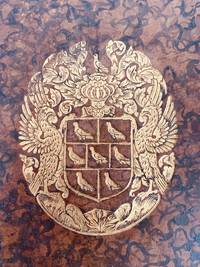
1555réf. 74303Lutetiae Parisiorum Paris Paris: Ex officina typographica Michaelis Vascosani Michel Vascosan 1555. Fine. Ex officina typographica Michaelis Vascosani Michel Vascosan Lutetiae Parisiorum Paris Paris 1555 10.50 x 16.50 cm relié Statement of third edition. Printed in italics. The first edition appears to be that of 1550 by the same publisher in folio and octavo format. A second edition appeared in 1553. Copy with the large arms of Michel II de Marcillac Lord of Ollainville Baron of Atichy; master of requests and state counsellor. Argent masoned sable of 7 pieces two three and two each charged with a blackbird sable. Olivier Pl. 2082. Full marbled and glazed calf binding of the 17th century. Spine with raised bands decorated with 5 compartmented fleurons roll-tooling on the bands. Brown calf title label. Large arms stamped on boards. Skilful and fine restoration to headcaps joints and corners. One tear to upper board. According to the signature of the gatherings there should be 2 blank leaves after the last printed leaf there is only one; the second has been placed before the title. Fine copy. Ex libris DF. 1902. History of the reigns of Charles VIII Louis XII and Francis I. This history was intended as a sequel to Paolo Emilio's History of France De rebus gestis francorum from Pharamond to Charles VIII published in 1520. Ex officina typographica Michaelis Vascosani( Michel Vascosan) hardcover