Braem GeorgesLivre Rare Book

1829 risultati
1956rif. TAB0000009Non Renseigné. 1956. In-12. Broché. Bon état, Couv. convenable, Dos satisfaisant, Intérieur frais. Huile sur carton. Dimensions : 46 x 38 cm. Oeuvre signée (BRAEM) et datée (1956) en bas à droite. Léger manque en coin inférieur droit.. . . . Classification : 920.4-Huile
rif. boz_001697D. Duvillé - Huile sur papier signée roulé (à redresser) - "Tourbillon montant des angelots" Dimensions de la feuille : 110 x 75 cm État : Voir photos pour plus de détails.
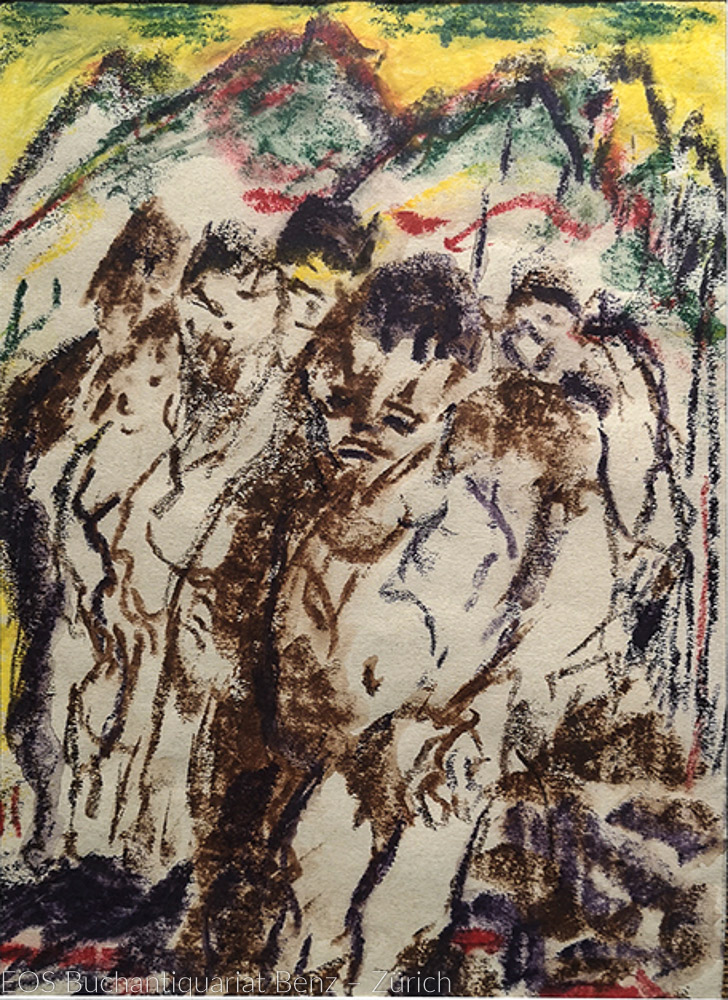
1928rif. 785DG1928. Farbige Ölkreidezeichnung. 25 x 18 cm. + Wichtig: Für unsere Kunden in der EU erfolgt der Versand alle 14 Tage verzollt ab Deutschland / Postbank-Konto in Deutschland vorhanden +, A
rif. 62291BBo.J. (Willy Flückiger, geboren 1912 in der Schweiz. Schweizer Maler).
rif. TAB0000096. Non daté.. In-12. Broché. Bon état, Couv. convenable, Dos satisfaisant, Intérieur frais. Huile sur toile encollée sur carton. Non encadrée. XXème siècle. Art moderne. Toile signée en bas à droite. Dimensions : 41x63cm. Quelques imperfections (voir photo - craquelures). Un manque en bas à gauche (voir photo).. . . . Classification : 920.4-Huile
1947rif. TAB0000025". 1947. In-12. Broché. Bon état, Couv. convenable, Dos satisfaisant, Intérieur frais. Huile sur toile. Dimensions : 39 x 58cm (avec cadre : 47 x 67cm). Datée et signée en haut à droite : Gonnet 47. Encadrement à refaire. Au dos : ""Au Docteur Rimand de la part d'Octave Gonnet et de ses parents en reconnaissance de ses bons soins et témoignage de fidèle amitié"". Mention du titre et signature au dos.. . . . Classification : 920.4-Huile"
1971rif. TAB0000112". 1971. In-12. Broché. Bon état, Couv. convenable, Dos satisfaisant, Intérieur frais. Huile sur toile montée sur chassis. Dimensions : 61x46cm. Toile datée et signée en bas à droite. Dédicace au dos : ""A mon ami Promagnami. Gino Milani... Paris 1971"".. . . . Classification : 920.4-Huile"
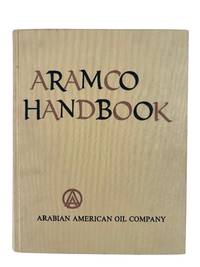
1968rif. 225501968. Lebkicher Roy George Rentz and Max Steineke. Aramco Handbook published in 1960 documents the information system through which the Arabian American Oil Company interpreted Saudi Arabia Middle Eastern petroleum and its own operations for company personnel and associated readers. Prepared by Aramco employees while the corporation was owned by four American oil companies the volume combines technical instruction company history regional geography religious and political narrative and guidance on social conduct. It reveals how Aramco presented industrial development as a coordinated process linking geological exploration refining transportation workforce management and cross-cultural training providing primary-source evidence for the study of United States-Saudi relations corporate communications petroleum infrastructure expatriate employment and the institutional production of knowledge about Saudi society. Aramco had transferred its headquarters from New York to Dhahran in 1952 but remained under American corporate ownership in 1960; Saudi equity participation did not begin until 1973. Lebkicher Roy George Rentz and Max Steineke with contributions by other Aramco employees. Aramco Handbook. Dhahran Saudi Arabia: Arabian American Oil Company 1960. First edition. Printed in the Netherlands. 324 pages. Profusely illustrated with black-and-white photographs diagrams and maps some printed in color. Original tan cloth lettered in black and brown with the Aramco emblem; no dust jacket noted. 4to. The five principal sections address the historical background of Saudi Arabia and the Middle East petroleum's place in modern industry the Aramco enterprise Saudi government and society and Arab culture and customs. A full-page photograph of the Kaaba accompanies a color map tracing seventh- and eighth-century Arab conquests while oil-production chapters explain hydrocarbons refining storage and distribution through diagrams and industrial photographs. An aerial view of the Ras Tanura refinery identifies such facilities as the "Catalytic Desulfurizer" "Bulk Plant" and "Crude Stabilizers" with an inset showing piers described as capable of accommodating ten tankers. Additional spreads interpret the pilgrimage to Mecca through photographs of the Station of Abraham the Well of Zamzam and pilgrims at ritual sites. The final section supplies transliterated greetings including as-salÄmu ʿalaykum and kayf ḥÄlak together with etiquette advice intended to regulate interactions between foreign employees and Saudi residents. Bibliographic records confirm the authors date publisher and internally produced character of this edition. The handbook's extensive visual and technical documentation is inseparable from the corporate framework that shaped it. Maps refinery plans photographs and process explanations preserve detailed evidence of Aramco's operations and of Saudi landscapes pilgrimage sites and public customs while the accompanying text repeatedly positions the company as the intermediary joining the Kingdom's resources to international industry. Its cultural chapters translate complex religious and social practices into generalized guidance for expatriate personnel demonstrating how corporate education supported the practical operation of the concession as surely as engineering manuals and infrastructure diagrams did. Light toning and faint soiling affect the cloth with a gentle bump to one corner; interior clean and binding sound. Very good. A substantial record of the technical cultural and administrative knowledge through which Aramco trained personnel and represented its authority in Saudi Arabia at the beginning of the 1960s. unknown
1968rif. 225501968. Lebkicher Roy George Rentz and Max Steineke. Aramco Handbook published in 1960 documents the information system through which the Arabian American Oil Company interpreted Saudi Arabia Middle Eastern petroleum and its own operations for company personnel and associated readers. Prepared by Aramco employees while the corporation was owned by four American oil companies the volume combines technical instruction company history regional geography religious and political narrative and guidance on social conduct. It reveals how Aramco presented industrial development as a coordinated process linking geological exploration refining transportation workforce management and cross-cultural training providing primary-source evidence for the study of United States-Saudi relations corporate communications petroleum infrastructure expatriate employment and the institutional production of knowledge about Saudi society. Aramco had transferred its headquarters from New York to Dhahran in 1952 but remained under American corporate ownership in 1960; Saudi equity participation did not begin until 1973. Lebkicher Roy George Rentz and Max Steineke with contributions by other Aramco employees. Aramco Handbook. Dhahran Saudi Arabia: Arabian American Oil Company 1960. First edition. Printed in the Netherlands. 324 pages. Profusely illustrated with black-and-white photographs diagrams and maps some printed in color. Original tan cloth lettered in black and brown with the Aramco emblem; no dust jacket noted. 4to. The five principal sections address the historical background of Saudi Arabia and the Middle East petroleum's place in modern industry the Aramco enterprise Saudi government and society and Arab culture and customs. A full-page photograph of the Kaaba accompanies a color map tracing seventh- and eighth-century Arab conquests while oil-production chapters explain hydrocarbons refining storage and distribution through diagrams and industrial photographs. An aerial view of the Ras Tanura refinery identifies such facilities as the "Catalytic Desulfurizer" "Bulk Plant" and "Crude Stabilizers" with an inset showing piers described as capable of accommodating ten tankers. Additional spreads interpret the pilgrimage to Mecca through photographs of the Station of Abraham the Well of Zamzam and pilgrims at ritual sites. The final section supplies transliterated greetings including as-salÄmu ʿalaykum and kayf ḥÄlak together with etiquette advice intended to regulate interactions between foreign employees and Saudi residents. Bibliographic records confirm the authors date publisher and internally produced character of this edition. The handbook's extensive visual and technical documentation is inseparable from the corporate framework that shaped it. Maps refinery plans photographs and process explanations preserve detailed evidence of Aramco's operations and of Saudi landscapes pilgrimage sites and public customs while the accompanying text repeatedly positions the company as the intermediary joining the Kingdom's resources to international industry. Its cultural chapters translate complex religious and social practices into generalized guidance for expatriate personnel demonstrating how corporate education supported the practical operation of the concession as surely as engineering manuals and infrastructure diagrams did. Light toning and faint soiling affect the cloth with a gentle bump to one corner; interior clean and binding sound. Very good. A substantial record of the technical cultural and administrative knowledge through which Aramco trained personnel and represented its authority in Saudi Arabia at the beginning of the 1960s. unknown books
1968rif. 225491968. Arabian American Oil Company. Aramco Handbook: Oil and the Middle East revised in 1968 documents the information system through which Aramco explained Saudi Arabia Middle Eastern petroleum and its own industrial operations to an English-language readership. Published while the company remained owned by four American oil corporations the handbook combines petroleum geology corporate history political geography and cultural instruction into a unified account of Saudi modernization under oil development. Its organization reveals how Aramco presented itself as both an industrial enterprise and an interpreter of Saudi society using maps photographs diagrams historical narratives and rules of social conduct to prepare foreign personnel for work in the Kingdom. The volume provides primary-source evidence for research into United States-Saudi relations corporate communication petroleum infrastructure expatriate labor and the production of cultural knowledge within a multinational oil concession. Saudi acquisition of Aramco began during the following decade and reached full government ownership in 1980 placing this edition before the company's transition to Saudi control. Arabian American Oil Company. Aramco Handbook: Oil and the Middle East. Dhahran Saudi Arabia: Arabian American Oil Company July 1 1968. Revised edition. Printed in Haarlem Netherlands by Joh. Enschedé en Zonen. 276 pages. Profusely illustrated with color maps black-and-white photographs and diagrams. Original red cloth stamped in gilt and black; no dust jacket noted. 4to. The handbook is divided into five principal sections addressing the historical background of Saudi Arabia and the Middle East the development of the regional petroleum industry the Aramco venture Saudi government and society and Arab culture and customs. A tribal map identifies numerous communities across the Arabian Peninsula including al-Mutair and al-Murrah while a diagrammatic map of the "Conquest of Najd" traces Ibn Saud's military expansion through arrows and battle annotations. Petroleum sections explain drilling refining transportation and export infrastructure including the Trans-Arabian Pipeline illustrated by parallel lengths of pipe extending across open terrain and accompanied by discussion of the decision to construct substantial portions above ground. Photographic essays show communal dining urban and industrial environments and other aspects of public life. The "Social Etiquette" section introduces such greetings as as-salÄmu ʿalaykum and kayf ḥÄlak presenting cultural instruction as part of the company's management of encounters between expatriate employees and Saudi residents. Bibliographic records confirm the 1968 Dhahran edition as an extensively illustrated corporate reference work on petroleum and the Middle East. The handbook's research value lies partly in the tension between the breadth of its documentation and the institutional perspective governing its interpretation. Its maps and photographs preserve substantial information about infrastructure geography labor social practice and the physical expansion of the Saudi petroleum industry while its text consistently casts Aramco as the principal agent joining Saudi Arabia to global markets. Cultural sections reduce complex regional and social differences to practical guidance for foreign employees and historical narratives place political consolidation and oil development within a corporate account of orderly progress. The volume should therefore be read both as a reference source and as evidence of how an American-owned concession represented its authority during a consequential phase of Saudi economic transformation. Light rubbing affects the boards with slight fraying at the spine ends and minor handling wear to the text-block edges; interior clean and binding sound. Very good. A detailed corporate record of the maps infrastructure historical narratives and cultural instruction through which Aramco explained-and justified-its place in Saudi Arabia's petroleum economy. unknown
1968rif. 225491968. Arabian American Oil Company. Aramco Handbook: Oil and the Middle East revised in 1968 documents the information system through which Aramco explained Saudi Arabia Middle Eastern petroleum and its own industrial operations to an English-language readership. Published while the company remained owned by four American oil corporations the handbook combines petroleum geology corporate history political geography and cultural instruction into a unified account of Saudi modernization under oil development. Its organization reveals how Aramco presented itself as both an industrial enterprise and an interpreter of Saudi society using maps photographs diagrams historical narratives and rules of social conduct to prepare foreign personnel for work in the Kingdom. The volume provides primary-source evidence for research into United States-Saudi relations corporate communication petroleum infrastructure expatriate labor and the production of cultural knowledge within a multinational oil concession. Saudi acquisition of Aramco began during the following decade and reached full government ownership in 1980 placing this edition before the company's transition to Saudi control. Arabian American Oil Company. Aramco Handbook: Oil and the Middle East. Dhahran Saudi Arabia: Arabian American Oil Company July 1 1968. Revised edition. Printed in Haarlem Netherlands by Joh. Enschedé en Zonen. 276 pages. Profusely illustrated with color maps black-and-white photographs and diagrams. Original red cloth stamped in gilt and black; no dust jacket noted. 4to. The handbook is divided into five principal sections addressing the historical background of Saudi Arabia and the Middle East the development of the regional petroleum industry the Aramco venture Saudi government and society and Arab culture and customs. A tribal map identifies numerous communities across the Arabian Peninsula including al-Mutair and al-Murrah while a diagrammatic map of the "Conquest of Najd" traces Ibn Saud's military expansion through arrows and battle annotations. Petroleum sections explain drilling refining transportation and export infrastructure including the Trans-Arabian Pipeline illustrated by parallel lengths of pipe extending across open terrain and accompanied by discussion of the decision to construct substantial portions above ground. Photographic essays show communal dining urban and industrial environments and other aspects of public life. The "Social Etiquette" section introduces such greetings as as-salÄmu ʿalaykum and kayf ḥÄlak presenting cultural instruction as part of the company's management of encounters between expatriate employees and Saudi residents. Bibliographic records confirm the 1968 Dhahran edition as an extensively illustrated corporate reference work on petroleum and the Middle East. The handbook's research value lies partly in the tension between the breadth of its documentation and the institutional perspective governing its interpretation. Its maps and photographs preserve substantial information about infrastructure geography labor social practice and the physical expansion of the Saudi petroleum industry while its text consistently casts Aramco as the principal agent joining Saudi Arabia to global markets. Cultural sections reduce complex regional and social differences to practical guidance for foreign employees and historical narratives place political consolidation and oil development within a corporate account of orderly progress. The volume should therefore be read both as a reference source and as evidence of how an American-owned concession represented its authority during a consequential phase of Saudi economic transformation. Light rubbing affects the boards with slight fraying at the spine ends and minor handling wear to the text-block edges; interior clean and binding sound. Very good. A detailed corporate record of the maps infrastructure historical narratives and cultural instruction through which Aramco explained-and justified-its place in Saudi Arabia's petroleum economy. unknown books
1983rif. 32175Chapman & Hall 1983 1984. hardback. about very good condition in paper covered boards. Chapman & Hall hardcover
1940rif. 282751940. Wooden Framed oil Painting 13 X 16 inchesVG AS-IS NOT A BOOK 1940'S. Signed by Illustrator. 1st Edition. Unbound. Illus. by B. Hanley California Artist.
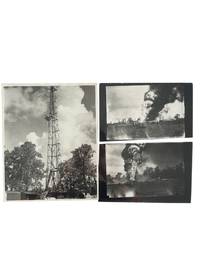
1952rif. 217461952. Oil Extraction and Oil Well Fires in South Texas. Three silver gelatin black-and-white photographic prints including one gelatin silver press photo 8 x 10 in. and two photo prints from negatives 5 x 7 in. Dated 1952 and 1954. Content includes an image of a wildcat rig in Lavaca County Texas and dramatic scenes of oil well fires. All photos with extensive manuscript notations on verso including references to press filing. This small but gripping photo archive documents the volatility and danger of oil drilling operations in mid-century South Texas including one catastrophic blowout and fire. The 8 x 10 inch silver gelatin press photograph dated June 1954 and stamped "RETURN TO CHRONICLE FILES" shows a towering oil derrick rising above dense trees. The reverse identifies the location as Lavaca County and describes a wildcat operation in Hallettsville Texas where drilling reached 8000 feet. A hand-written note reads "Field Drilling Co. Ext. Exterior - cementing protective casing 10240 down to 8000 ft - Lavaca County 2 1/2 mi. N. Hallettsville." The two smaller prints-captioned in manuscript as "Oil Well Fires"-capture the momentous force of an uncontrolled eruption. One image shows a roiling column of black smoke and flame rising from a well site surrounded by distant silhouettes of onlookers. Another more closely framed emphasizes the explosive power as the plume expands over nearby treetops. A note on the verso dates one of these prints to October 1952 stating it is a "Print from Studio of late Cecil Thomson." Cecil Thomson 1881-1953 was a prolific Houston-based commercial photographer and photojournalist who operated Thomson Studio a major supplier of images to regional newspapers including the Houston Post and Houston Chronicle. His studio active from 1909 until his death in 1963 continued producing prints posthumously from its extensive negative archive making it likely these fire images were developed and distributed under the studio's imprint even if not taken by Thomson personally. All three photos are from the Houston Chronicle archives with two stamped or inscribed "Return to Chronicle Morgue." One image includes the notation "Sunday Oil - Lavaca County Wildcat." These images preserve both the ambition and peril of mid-century oil operations in Texas a period when wildcat drilling fueled economic speculation and technological innovation often with great human and environmental risk. Surface creases and light wear to edges; verso of each image shows editorial markings and annotations in grease pencil and ink. Overall very good condition. A vivid visual record of the oil industry's volatility in 1950s Texas with provenance from the Houston Chronicle press files. unknown
1952rif. 217461952. Oil Extraction and Oil Well Fires in South Texas. Three silver gelatin black-and-white photographic prints including one gelatin silver press photo 8 x 10 in. and two photo prints from negatives 5 x 7 in. Dated 1952 and 1954. Content includes an image of a wildcat rig in Lavaca County Texas and dramatic scenes of oil well fires. All photos with extensive manuscript notations on verso including references to press filing. This small but gripping photo archive documents the volatility and danger of oil drilling operations in mid-century South Texas including one catastrophic blowout and fire. The 8 x 10 inch silver gelatin press photograph dated June 1954 and stamped "RETURN TO CHRONICLE FILES" shows a towering oil derrick rising above dense trees. The reverse identifies the location as Lavaca County and describes a wildcat operation in Hallettsville Texas where drilling reached 8000 feet. A hand-written note reads "Field Drilling Co. Ext. Exterior - cementing protective casing 10240 down to 8000 ft - Lavaca County 2 1/2 mi. N. Hallettsville." The two smaller prints-captioned in manuscript as "Oil Well Fires"-capture the momentous force of an uncontrolled eruption. One image shows a roiling column of black smoke and flame rising from a well site surrounded by distant silhouettes of onlookers. Another more closely framed emphasizes the explosive power as the plume expands over nearby treetops. A note on the verso dates one of these prints to October 1952 stating it is a "Print from Studio of late Cecil Thomson." Cecil Thomson 1881-1953 was a prolific Houston-based commercial photographer and photojournalist who operated Thomson Studio a major supplier of images to regional newspapers including the Houston Post and Houston Chronicle. His studio active from 1909 until his death in 1963 continued producing prints posthumously from its extensive negative archive making it likely these fire images were developed and distributed under the studio's imprint even if not taken by Thomson personally. All three photos are from the Houston Chronicle archives with two stamped or inscribed "Return to Chronicle Morgue." One image includes the notation "Sunday Oil - Lavaca County Wildcat." These images preserve both the ambition and peril of mid-century oil operations in Texas a period when wildcat drilling fueled economic speculation and technological innovation often with great human and environmental risk. Surface creases and light wear to edges; verso of each image shows editorial markings and annotations in grease pencil and ink. Overall very good condition. A vivid visual record of the oil industry's volatility in 1950s Texas with provenance from the Houston Chronicle press files. unknown books
rif. 26774101-nnew. unknown
rif. SONG0824792564Used: Good unknown
rif. DADAX0306448726New unknown
1928rif. 1139DG1928. Farbige Kreidezeichnung. Monogrammiert und datiert. Zusätzlich unten auf Passe-Partout signiert und datiert. 26 x 18 cm.
1930rif. 1108DGca. 1930. Öl auf Leinen. 49 x 39 cm.
1935rif. 379BGLeipzig, Otto Börner, um 1935. Farblithographie auf festem Papier. Bildgrösse: 71 x 99 cm.
rif. DADAX0128157925New unknown
rif. DADAX0128172363New unknown
rif. DADAX0128499060New unknown
rif. SONG3642100961Used: Good unknown