[bookplate of Luigi Palma Di Cesnola]Biblio.com

16,871 results
1887ref. 024456New York: D. Appleton & Co. 1886 1887. First Edition . Blue Cloth Gilt. Fine. 9 1/8" Tall. Frontispiece. 63 Pp. Blue Cloth Gilt. Frontispiece Is A Reproduction Of The Engraved Invitation To The Inauguration Ceremony. Contains An Account Of The Proceedings The Addresses In Full And A Brief History Of The Statue. Bookplate Of U S Medal Of Honor Winner Palma Di Cesnola Who Later Became U S Consul In Cyprus 1865 - 1877. He Undertook Excavations There And His Archaeological Collection Formed The Basis Of The Metropolitan Museum's Large Collection Of Greek Antiquities. Book Is Near Fine Gilt Still Brilliant Covers Clean Light Chipping To Front Free Endpaper Contents Fine. D. Appleton & Co. (1886) hardcover
1805ref. 86618Boston: E. Lincoln Water Street 1805. First Edition. Octavo 23cm. Sewn wrappers; 622pp final page a blank. Moderate foxing and discoloration to title page; text quite fresh with sewing intact - Very Good. Documentary account of the controversy surrounding the construction of the South Street Toll Bridge aka the Dover Street Bridge connecting Boston to Dorchester in the years 1803-05. The case was an early example in America of publicly-supported private development involving the annexation of much of what is now South Boston and the destruction of substantial existing property on the South Street side. Various petitions for and against the project are presented in the current pamphlet; these are signed in type by some of the principal players in the scheme including William Tudor and Gardner Greene for and multiple citizens under the signature of Edward Tuckerman opposing. The bridge was constructed later in 1805. S&S 8207. RINK 2618. SABIN 6598. E. Lincoln, Water Street unknown
1805ref. 86618Boston: E. Lincoln Water Street 1805. First Edition. Octavo 23cm. Sewn wrappers; 622pp final page a blank. Moderate foxing and discoloration to title page; text quite fresh with sewing intact - Very Good. Documentary account of the controversy surrounding the construction of the South Street Toll Bridge aka the Dover Street Bridge connecting Boston to Dorchester in the years 1803-05. The case was an early example in America of publicly-supported private development involving the annexation of much of what is now South Boston and the destruction of substantial existing property on the South Street side. Various petitions for and against the project are presented in the current pamphlet; these are signed in type by some of the principal players in the scheme including William Tudor and Gardner Greene for and multiple citizens under the signature of Edward Tuckerman opposing. The bridge was constructed later in 1805. S&S 8207. RINK 2618. SABIN 6598. E. Lincoln, Water Street unknown books
1931ref. 111275Toronto, Canada, Specification Data , Limited 1931 In-4 29 x 23,5 cm. Cartonnage éditeur souple percaline verte, dos lisse, titre doré sur le premier plat, XXXVI-305-74 pp., abondamment illustré. Exemplaire en bon état.
ref. 25118Hardcover. 4to. 27.5cm printed in double column format several thousand illustrations plates diagrams drawing etc from engravings in contemporary half sheep double red and black leather labels gilt titles standard french marbled boards hinges cracked or shaken some spines chipped needs re-backing internally fine very rare cnds. hardcover
4to. LXXVIII, (2), 416, (84) pp., including 27 letterpress tables. With engraved armorial title vignette and 9 (instead of 10) engraved folding plates. Contemporary half vellum over marbled boards with giltstamped calf spine label. First edition of the pioneering regulations for two Florence hospitals, marking "the first appearance in print of [Chiarugi's] landmark reforms in the humane treatment of the mentally ill" (Garrison/M.). - In 1774 Grand Duke Peter Leopold of Tuscany (later Emperor Leopold II) promulgated Europe's first law concerning the hospitalization of persons recognized as being insane, and several years later he undertook to build a new hospital for the mentally ill. In 1875 the young physician Vincenzo Chiarugi, who had studied at the University of Pisa and then at the hospital of Santa Maria Novella in Florence, was given responsibility to plan the new hospital of San Bonifacio, which opened in 1788. The following year the regulations of the hospital were published, together with the statutes of the hospital of Santa Maria Nuova. The regulations reflect Chiarugi's pioneering attitude towards the treatment of the insane: "A detailed history was required for each patient admitted to the hospital. The hospital was built to meet high hygienic standards, men were separated from women, and the rooms and furniture offered full protection to the patients [...] under no circumstances could force be used on patients, and the only methods of restriction allowed were strait jackets and strips of reinforced cotton, in order to prevent impairment in the patient's circulation" (Mora). - The fine plates, carried out by G. Cecchi, G. Salvetti and others, include plans of the premises of both hospitals, images of the kitchen and heating system, and views of the facade, as well as an organisational chart for both hospitals combined. - Lacks the engraved frontispiece. Extremities and spine-label slightly rubbed; small defect to vellum at lower spine. Front view of the Bonifazio hospital with a larger tear; several plates show small tears, occasionally affecting image. Occasional light foxing throughout. A good copy of this landmark work. Garrison/M. 4920.2. Norman 474. G. Mora, "Vincenzo Chiarugi", in: Journal of the History of Medicine 14 (1959), p. 431.
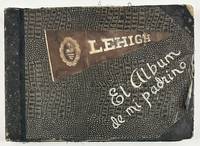
ref. 12844Various locations in Cuba and Pennsylvania: contents ca 1973. 25 leaves totaling 40pp. illustrated with thirty black-and-white and sepia-toned photographs with detailed manuscript captions plus seven large clippings from school publications and six additional ephemeral items. Oblong folio. Black cloth with alligator-patterned cloth on front board with manuscript title below a drawn representation of a small pennant for Lehigh University. Covers worn frayed and chipped alligator-style cloth curling a bit along fore edge. A few items loose from adhesive and a few with small tears scattered spotting and soiling. Overall very good condition with fascinating materiality. A lovingly-compiled photograph album and memorial book created by a young woman named Magdalena Sofia Guitart in tribute to her godfather Rafael Genó a Cuban engineer who studied at Lehigh University in Pennsylvania. Juan Rafael Genó Rizo was born in Santiago de Cuba in 1883. A doctoral thesis on Cuban architecture found online deems him one of the premiere Art Deco architects of Santiago and the only one to obtain a degree abroad. Genó graduated with a degree in Civil Engineering from Lehigh in 1909 and from the University of Havana in 1913. He died in Miami Florida in 1973. This doting scrapbook was compiled and heavily captioned in Spanish which we hereafter present in translation as a "Memorial which with love and pride I dedicate to my godfather and some of his works; a pale reflection of all the good he has done in his life" by Magdalena Sofia Guitart who was born in 1936 in Santiago and arrived in Miami in 1958. She includes photos of Genó as a baby and a boy of 11 "From a very young age as you can see here my godfather was a little gentleman" as well as in uniform alongside Mexican and Costa Rican comrades at Pennsylvania's Wayne Field. She lauds his "triumphs" and "genius" in "thousands of battles." Genó likely came to the United States following the Spanish-American War during the growth of Cuban immigration resulting from increased American attention of the island country. All of the content in the album is artfully presented within decorative rules or floral borders providing an unusual flair to the presentation. The book displays not only the hand-drawn Lehigh pennant on the cover but also large artistic renditions of the campus and an internal shot of its library clipped from school publications and comparing views from 1873 1909 and 1933 the relevance of Lehigh at the later date is unclear. Additional photographs and decorative designs share the story as "our engineer" returns to Cuba and "begins to demonstrate his knowledge" in the mines of Ponupo. Soon "his hard work integrity and honesty led him to be chosen" for other feats of engineering including "la Iglesia church Los Desamparados constructed by my godfather 1932" and a train terminal in Guantánamo. Images and a photographic clipping laud his renovations of "Colegio La Salle" in 1937. There are also six photos and a clipping showing Genó's work on the altar for the Eucharistic Congress held in Santiago in 1936 during which the original statue of Our Lady of Charity of El Cobre Patroness of Cuba was granted a canonical coronation by Pope Pius XI. The album also holds a clipping naming Genó as president of the Board of Directors of Santiago's Urban Property Center an inauguration ribbon and brochure for the Municipal Food Market in 1950 with which he was also involved and photos of the celebrated engineer later in life. A captivating and carefully-assembled homage created by a Cuban immigrant to the United States honoring a loved one who was educated in Pennsylvania and then returned to his home country to serve as a noted engineer during the first half of the 20th century. contents ca unknown
ref. 12844Various locations in Cuba and Pennsylvania: contents ca 1973. 25 leaves totaling 40pp. illustrated with thirty black-and-white and sepia-toned photographs with detailed manuscript captions plus seven large clippings from school publications and six additional ephemeral items. Oblong folio. Black cloth with alligator-patterned cloth on front board with manuscript title below a drawn representation of a small pennant for Lehigh University. Covers worn frayed and chipped alligator-style cloth curling a bit along fore edge. A few items loose from adhesive and a few with small tears scattered spotting and soiling. Overall very good condition with fascinating materiality. A lovingly-compiled photograph album and memorial book created by a young woman named Magdalena Sofia Guitart in tribute to her godfather Rafael Genó a Cuban engineer who studied at Lehigh University in Pennsylvania. Juan Rafael Genó Rizo was born in Santiago de Cuba in 1883. A doctoral thesis on Cuban architecture found online deems him one of the premiere Art Deco architects of Santiago and the only one to obtain a degree abroad. Genó graduated with a degree in Civil Engineering from Lehigh in 1909 and from the University of Havana in 1913. He died in Miami Florida in 1973. This doting scrapbook was compiled and heavily captioned in Spanish which we hereafter present in translation as a "Memorial which with love and pride I dedicate to my godfather and some of his works; a pale reflection of all the good he has done in his life" by Magdalena Sofia Guitart who was born in 1936 in Santiago and arrived in Miami in 1958. She includes photos of Genó as a baby and a boy of 11 "From a very young age as you can see here my godfather was a little gentleman" as well as in uniform alongside Mexican and Costa Rican comrades at Pennsylvania's Wayne Field. She lauds his "triumphs" and "genius" in "thousands of battles." Genó likely came to the United States following the Spanish-American War during the growth of Cuban immigration resulting from increased American attention of the island country. All of the content in the album is artfully presented within decorative rules or floral borders providing an unusual flair to the presentation. The book displays not only the hand-drawn Lehigh pennant on the cover but also large artistic renditions of the campus and an internal shot of its library clipped from school publications and comparing views from 1873 1909 and 1933 the relevance of Lehigh at the later date is unclear. Additional photographs and decorative designs share the story as "our engineer" returns to Cuba and "begins to demonstrate his knowledge" in the mines of Ponupo. Soon "his hard work integrity and honesty led him to be chosen" for other feats of engineering including "la Iglesia church Los Desamparados constructed by my godfather 1932" and a train terminal in Guantánamo. Images and a photographic clipping laud his renovations of "Colegio La Salle" in 1937. There are also six photos and a clipping showing Genó's work on the altar for the Eucharistic Congress held in Santiago in 1936 during which the original statue of Our Lady of Charity of El Cobre Patroness of Cuba was granted a canonical coronation by Pope Pius XI. The album also holds a clipping naming Genó as president of the Board of Directors of Santiago's Urban Property Center an inauguration ribbon and brochure for the Municipal Food Market in 1950 with which he was also involved and photos of the celebrated engineer later in life. A captivating and carefully-assembled homage created by a Cuban immigrant to the United States honoring a loved one who was educated in Pennsylvania and then returned to his home country to serve as a noted engineer during the first half of the 20th century. contents ca unknown books
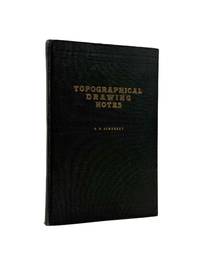
1926ref. 1236Houghton Michigan: G. P. Schubert 1926. Third Printed Edition. Publisher's Green Cloth Gilt Detailing. Very Good. A Very Good Book Presumed Issued without a Dust Jacket. Book is bumped and rubbed to extremities. Cloth is a toned and a bit scuffed. Front pastedown and flyleaf have some pencil notations. Text is unmarked. All plates present as are instructional materials included in envelope at rear paste down. Gutter is visible for last few leaves binding is otherwise tight and square. Hardcover. Slim Octavo. ii 3-82pp. Laid-In Supplemental Material. G. P. Schubert unknown
176525 SS. Mit zus. 62 (statt 64) gest. Tafeln. Halblederband der Zeit mit goldgepr. rotem Rückenschildchen sowie Rückenfileten. Folio. Die Tafeln zur Uhrmacherkunst aus der Erstausgabe von Diderots und d'Alemberts "Encyclopédie" (Tafelband IV, "troisième livraison"). Es fehlen die letzten beiden Tafeln II B (m) und III B (n). - Zu Beginn stärkerer Wasserschaden (im Index auch den Text betreffend; die Tafeln nur im Rand betroffen). Remboîtage: Das Rückenschildchen weist den Einband als urspürunglich für Vesalius' "Tabulae ossium humanorum" aus. Lough 10.
4to (180 x 256 mm). 5 issues, 222 pp. altogether. Extracts bound together in a single volume without original wrappers. Modern red cloth with giltstamped cover title. All the five issues of "Nature" in which, between February and October 1953, the crucial papers were published that revealed to the world the double-helix structure of DNA. Some of the various authors were collaborators, others competitors, and while the credit for the discovery is today almost entirely attached to the names of Crick and Watson, their breakthrough depended on experimental work done by all the other scientists whose relevant papers were published in the same journal and are also here included. - The papers comprise, individually: - a) Pauling, L. and Corey, R. B. Structure of the Nucleic Acids (Nature 171, No. 4347, 21 Feb. 1953, p. 346). - b) Watson, J. D. and Crick, F. H. C. Molecular Structure of Nucleic Acids: A Structure for Deoxyribose Nucleic Acid (No. 4356, 25 April 1953; p. 737f.). - c) Wilkins, M. H. F., Stokes, A. R. and Wilson, H. R. Molecular Structure of Deoxypentose Nucleic Acids (p. 738-740). - d) Franklin, R. E. and Gosling, R. E. Molecular Configuration in Sodium Thymonucleate (p. 740f.). - e) Watson, J. D. and Crick, F. H. C. Genetical Implications of the Structure of Deoxyribonucleic Acid (No. 4361, 30 May 1953, p. 964-967). - f) Franklin, R. E. and Gosling, R. G. Evidence for 2-Chain Helix in Crystalline Structure of Sodium Deoxyribonucleate (Vol. 172, No. 4369, 25 July 1953, p. 156f.). - g) Wilkins, M. H. F., Seeds, W. E., Stokes, A. R. and Wilson, H. R. Helical Structure of Crystalline Deoxypentose Nucleic Acid (No. 4382, 24 Oct. 1953, p. 759-762). - Together these papers provide the single most important advance in biology since Darwin's theory. The first, by America's leading chemist of his age, Linus Pauling, ultimately contributed least because Pauling's theory erroneously suggested a triple-helix structure. "Instead, victory fell to an unlikely quartet of scientists in England who didn't work as a team, often weren't on speaking terms, and were for the most part novices in the field" (Bryson, A Short History of Nearly Everything, p. 487f.). These were the American wunderkind James Watson and his older colleage Francis Crick at Cambridge; the brilliant but often overlooked Rosalind Franklin (with her student Raymond Gosling), working at King's College London; and the New Zealand-born Maurice Wilkins, also at King's but who communicated to the competition at Cambridge Franklin's key findings - particularly, an X-ray photograph showing the DNA molecule's basic shape and dimensions, which provided Watson and Crick with the crucial clue. It was by then known that "DNA had four chemical components - called adenine, guanine, cytosine and thiamine - and that these paired up in particular ways. By playing with pieces of cardboard cut into the shapes of molecules, Watson and Crick were able to work out how the pieces fit together. From this they made a Meccano-like model - perhaps the most famous in modern science - consisting of metal plates bolted together in a spiral, and invited Wilkins, Franklin and the rest of the world to have a look. Any informed person could see at once that they had solved the problem. It was without question a brilliant piece of detective work" (Bryson, p. 491f.). Less than two months later, their paper, "Molecular Structure of Nucleic Acids: A Structure for Deoxyribose Nucleic Acid", appeared in "Nature". Franklin's own paper, in the same issue, shows the now-famous X-ray diffraction image of DNA fiber and pointedly concedes that "our general ideas are not inconsistent with the model proposed by Watson and Crick in the preceding communication" (vol. 171, p. 741). - For the discovery of the DNA double helix, Crick, Watson, and Wilkins shared the 1962 Nobel Prize in Physiology. Franklin had passed away four year earlier at the age of 37, a victim of the X-rays to which she had over-exposed herself in her work. - Tightly bound and in excellent condition throughout.
1909ref. 53577Evansville IN: A.L. Swanson Electrical & Manufacturing Co. ca. 1909-1925. Oblong 4to. 62 original silver gelatin photos nearly all backed in linen some w/ embossed photographer’s stamp in lower right corner or photographer’s logo in negative several marked in pencil or ink on versos occasional fraying and dustsoiling to fore-edges of linen. Recent black post-binder original brass split pin posts at gutter margin gilt lettering stamped on front cover VG exemplar. This factory sales photo album for the Swanson Electrical & Manufacturing Co. offers an important visual record of the growth of a Midwestern American manufacturing firm after World War I through the Jazz Age. Founded originally in 1900 by Albert Swanson 1876-1949 in Evansville IN this firm became one of the largest Midwestern companies engaged in electrical engineering construction repair maintenance and retail sales. These photos show how the company built and sold washing machines electric motors radios lighting systems industrial fans installed lighting displays for department stores repaired electric motors rewound generators and installed massive electric generating steam plants for factories. These include photos of the new mill built after 1909 for Swans Down Flour showing the exterior stack for steam the control panels and more; followed by images of the electrical conduits and sea of electric motors for the spinning mill machinery of the Cannelton Cotton Mill in Indiana for the Rumble & Wensel Company; a Heinz plant near Indianapolis IN; and of special interest are the photos of the generating plant installed for the Mead Johnson Co. infant formula plant built in Evansville IN in the wake of World War I. These photos also show the repair shops the massive electrical machines the winding of coils the oil and grease-soaked workers amidst a sea of electrical machine parts work benches metal lathes and more. In addition there are a number of photos of the interior of the new Monitor Furniture Co. Plant on East Virginia St. in Evansville IN finished at the end of 1920. Swanson began repairing and installing electrical equipment in a small downtown shop before the end of the 19th century and by 1915 was refurbishing and selling giant Westinghouse and General Electric motors and generators. In 1919 the Company was incorporated and began quickly expanding finally changing its name to the Swanson-Nunn Co. which continued to install and sell equipment out of their building on 8th street much of the 20th Century. Mason 1886-1944 was a commercial photographer who specialized in architectural and advertising photography in Evansville IN throughout his career. See: Evansville Electrical Concern Re-organzied In: Electrical Review August 2 1919 pp. 209-210. A.L. Swanson Electrical & Manufacturing Co., unknown
1935ref. 52151Walton-on-Thames: Hewittic Electric Co. Ltd. ca. 1935. 4to. 5 leaves unnumbered thick paper stock eath with 5 original photographs mounted of Hewittic Transformers with inventory number and typed explanation below sized 6 x 8 in. Original blue textured softcover split-pin binder black lettering on front cover yapp edges slight sunning to fore-edges still VG copy. First edition of this scarce salesman’s sample catalogue of Hewittic Transformers installed in the at the Tir John Power Station. The Tir John Power Station near Swansea was a super coal-fired power station producing electricity for the newly-created National grid and was built by the Swansea Corporation to help relieve massive unemployment resulting from the impact of the Great Depression. At the time it was the largest engineering project in Wales and the largest power station in Britain operating until 1976. Hewittic Electric Co., Ltd., paperback
1935ref. 52150Aix-les-Bains France: Societe Savoisienne de constructions electriques ca. 1935. 4to. 7 leaves unnumbered thick paper stock with 7 original silver gelatin photographs tipped-in sized 7 x 9.5 in. with explanatory text dittoed on verso of leaf. Textured brown softcover split-pin binder embossed & raised decorative blue lettering & company logo on front cover yapp edges minor creasing to corners shelfwear still a NF copy. First edition of this scarce photographic salesman’s sample catalogue including the transformers and electrical transmission equipment produced by Savoisienne the largest French manufacturer of such equipment at the time. The photographs show one of their large Three-Phase Transformers installed at a substation in the Netherlands at Kembs France on the Rhine below Strasbourg a large Single phase transformer installed in The Hague the Netherlands another Three-Phase Transformer installed in Rotterdam as well as other industrial electrical transformers. Three phase electrical transformers are a necessary requirement for large industrial production because they handle the heavy electrical loads more smoothly and efficiently and can provide 173% more power than the two conductors of a a single-phase system. Savoisienne Societe de constructions electriques was founded in 1921 by Leon Egger and Claudius Forest two French electrical engineers whose company quickly expanded into specializing in transformer and electrical generating equipment for heavy industry between the World Wars. By the mid-1930s their massive production plant at Aix-les-Bains covered over 12500 square meters and would continue to grow into the 21st century as the Alstom Company and then Areva T. No copies located in Worldcat; See: Yves Bouvier Without and with the State: the French Electrical Manufacturers in a Global Economy Session D4. Societe Savoisienne de constructions electriques, paperback
1935ref. 52149Aix-les-Bains France: Societe Savoisienne de constructions electriques ca. 1935. 4to. 7 leaves unnumbered thick paper stock with 7 original silver gelatin photographs tipped-in sized 7 x 9.5 in. with explanatory text dittoed on verso of leaf. Textured brown softcover split-pin binder embossed & raised decorative blue lettering & company logo on front cover yapp edges minor creasing to corners shelfwear still a NF copy. First edition of this scarce photographic salesman’s sample catalogue including the transformers and electrical transmission equipment produced by Savoisienne the largest French manufacturer of such equipment at the time. The photographs show one of their large Three-Phase Transformers installed at a substation in the Netherlands at Kembs France on the Rhine below Strasbourg a large Single phase transformer installed in The Hague the Netherlands another Three-Phase Transformer installed in Rotterdam as well as other industrial electrical transformers. Three phase electrical transformers are a necessary requirement for large industrial production because they handle the heavy electrical loads more smoothly and efficiently and can provide 173% more power than the two conductors of a a single-phase system. Savoisienne Societe de constructions electriques was founded in 1921 by Leon Egger and Claudius Forest two French electrical engineers whose company quickly expanded into specializing in transformer and electrical generating equipment for heavy industry between the World Wars. By the mid-1930s their massive production plant at Aix-les-Bains covered over 12500 square meters and would continue to grow into the 21st century as the Alstom Company and then Areva T. No copies located in Worldcat; See: Yves Bouvier Without and with the State: the French Electrical Manufacturers in a Global Economy Session D4. Societe Savoisienne de constructions electriques, paperback
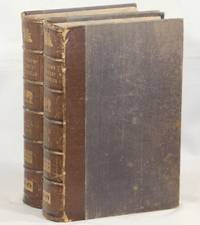
1852ref. 000013458New York / Philadelphia: D. Appleton & Co. / Geo. S. Appleton 1852. Early Printing. Hardcover. Very Good. 2 vol. Large 8vo. 3 10-960 2; 3 4-960 2 pp. Quarter contemporary brown sheep over brown publisher's cloth with the spines in six compartments gilt lettering and decorations on the spines; all edges marbled. Marbled endpapers and pastedowns. Volume one likely lacking the publisher's advertisements. Both volumes illustrated with numerous in-text and full-page engravings: diagrams of steam engines trains gears mills architecture and other aspects of industrialization. The title page states four thousand engravings on wood. First published in 1850 these are early reprints of Appleton's informative and copious engineering references. Two hinges neatly repaired some foxing to the boards and the versos of the endpapers. D. Appleton & Co. / Geo. S. Appleton hardcover
1950ref. 51105New York McGraw-Hill 1950. 8vo. In the original full cloth with the original dust-jacket. Dust-jacket with light miscolouring to spine and and a tear to capitals. Small tear to upper part of the back to dust-jacket. A very fine and clean copy. XIII 1 451 pp. First edition in the rare original dust-jacket of the first textbook on digital computers. It constitutes "the first genuine textbook on computing techniques and computer hardware was a pioneering book that influenced both American and foreign computer developments." Tomash-Erwin E14. "The first treatise on how to build an electronic digital computer" OOC"High-Speed Computing Devices was written to satisfy a perceived need following the end of World War II for a compendium of technologies applicable to the emerging field of the electronic digital computer. Because published technical information was scarce in the US there can be little question that the book was an important contribution to the computer literature of the 1950s. For today's student of computer history whether a professional historian or a history buff the book with its state-of-the-art picture of the period 1947 through 1949 establishes a well-documented baseline for tracking and evaluating subsequent technological progress" A.A. Cohen "Introduction" Charles Babbage Institute Reprint Series Edition of the ERA Report 1983."It provides the best picture of the state of the industry in its infancy. Ostensibly written as a report to the Office of Naval Research the work was really undertaken on behalf of the Naval cryptographic establishment. Engineering Research Associates ERA was a group formed primarily from demobilized World War II naval cryptographers. It presents a discussion of the mechanical and electrical both analog and digital devices that could be usefully incorporated into computing machines. Although it does not survey the computer projects then underway it does occasionally discuss individual machines in the context of integrating devices into complete systems. Engineering Research Associates ERA later became a division of Remington Rand and then of Sperry Rand." Tomash-Erwin E14Tomash-Erwin E14.Origins of Cyberspace 584. hardcover
1915ref. 46618Liverpool England: Meccano Ltd. ca. 1915. One oblong 8vo. instruction book 10 x 7 in. 98 pp. Over 150 text woodcut illustrations diagrams & charts. Recent black cloth colour plate mounted front cover some interior tears edgewear chipping to corners still a G copy; together with two Meccano engineering education outfits which appear to have 90% of the necessary pieces distributed between the two including 25 hole angle strips Sector Plates Axles Cranks Pulleys brass nuts & bolts in Box 3a spring original tool screwdriver tool angle rods clips and much more. Both kits with wooden boxes covered in black paper colour plates on upper cover of lids lid to kit 3a lacking back piece colour plate on inner side of lid of first kit minor edgewear some chipping rubbing still a G set. A fascinating pair of original pre-World War I Meccano mechanical engineering kits which were developed and invented by Frank Hornby in 1898. He developed the original kits to teach his sons how to build the cranes that fascinated them when watching ships being unloaded in Liverpool. The first Meccano factory opened in 1907 and in 1910 Hornby published his first book on using the pieces of education Hornby System of Mechanical Demonstration. The instruction book with these kits explains how to build cranes the Eiffel Tower Ferris Wheels Bridges Lighthouses many of them requiring substantial accessory kits which were marketed and sold by the Meccano Company. The company continues to operate until this day in France from their factory in Calais and in 2000 they bought the Erector brand. Meccano, Ltd., hardcover
2002ref. S7968Kansas City:: Linda Hall Library 2002. 2002. Sq. 8vo. 12 pp. Photos illus. Pictorial wrappers. FINE. Linda Hall Library, 2002. unknown books
ref. 201764Paris, Imprimerie nationale, 1791 in-8, 18 pp., dérelié.
1893ref. 115808Paris, E. Bernard & Cie 1893 In-4 27,5 x 17,5 cm. Reliure demi-basne havane, dos lisse orné de roulettes dorées, 476 pp., notes en bas de page, 322 figures dans le texte, table des matières, index alphabétique.
4to (167 x 215 mm). Persian illuminated manuscript on paper. 31 ff., written on both sides, 11 lines per extensum. Black ink with rubricated titles, written in a thin and very cursive Indian nastaliq style tending already to perform the "shorthand" writing infractions of the shekasteh ("broken") variety. With a coloured headpiece and 10 full-page coloured illustrations. Blindstamped red leather with reinforced spine. A prose work of anecdotal moral tales, most likely from North-Western India (now Pakistan) from the mid or third quarter of the 19th century. Untitled and without a colophon or marginalia, beginning abruptly, it appears to be incomplete, despite the conventional presence of an - apparently overpainted - headpiece of the sarlawh type. - Unlike similar Persian allegorical prose works, whose tales revolve mostly around allegorical animal characters, this narrative, oriented towards moral and spiritual instruction, appears to be inspired on the one hand by Saadi’s gently ironic works such as "Gulestan". Divided into several chapters, or "abvab", it focuses on the moral analysis of human deeds and intentions, informed by Indian Sufi spiritual tradition. - The scene is set in an exquisitely Indian historical context: the text mentions a "raj" (Hindu king), and the Mughal Empire also make an appearance with the protagonist of the final tale, Alamgir Padshah (the "World-Seizing Emperor", likely the Mughal ruler Awrangzeb, who reigned 1658-1707), encountering a certain Mard-i murtaz (a spiritually well-versed man). The manuscript is embellished by full-page miniatures, one depicting a hunting scene, another illustrating a valiant horseman slaying a dragon-like monster. The illustrations are colourful and lively, if conventional in their disposition of the human figures and landscape before a background without depth.
76 volumes, mostly offprints or articles removed from journals, bound in private wrappers or in the original printed wrappers. Mostly 8vo but including a few specimens in small folio. An ensemble of 82 works from the library of Sigmund Freud, comprising roughly half of the known corpus now in private hands. In his census, the medical historian Gerhard Fichtner established the number of works from Freud's former library now in private ownership at only 166 works, or some 4 percent of his former collection of 3725 titles, the vast majority of which (more than 3,400 books) are today preserved by the Freud Museum in London and the Health Sciences Library in New York. Regarding the privately owned works, "it is noteworthy that Freud (during both the Viennese and London time) bestowed upon Eva Rosenfeld, a friend of Anna Freud, 25 important early items from his library. Amongst the privately owned volumes are also some that surfaced in recent years in the second-hand market. They are predominantly offprints, whose dedications show they once belonged to Freud's library and, as a rule, carry the partially erased stamp of the Psychoanalytic Ambulatorium Vienna. They must have arrived long before Freud's emigration in this library, which was seized and destroyed by the Nazis. Did the erasure of the stamp help to save these items, or did it disguise unauthorized possession? They come from the estate of a German analyst" (Davies/Fichtner, pp. 17f.). Indeed, the nature of some of these erasures - rather constituting overpastings with near-contemporary typed transcriptions of those parts of the text obscured by the stamp (as in David Baumgart's article on Spinoza's image in German and Jewish thought) - would strongly suggest the former reason: such an overpasting would arguably have sufficed to conceal the items' provenance from a cursory examination in 1938, but would not at all be helpful to a collector wishing to obscure a third party's title. - The present ensemble includes articles by 40 different authors from a range of disciplines, including Hugo Bergmann, Eugen Bleuler, Carl Clemen, Josef Friedjung, Heinrich Gomperz, Gustav Hans Graber, Jakob Kläsi, Otto Pötzl, and Isidor Sadger. Two specimens preserve the author's inscription to Freud (by Pötzl); others contain autograph corrections by the author (Sadger). Eighteen items show traces of a removed stamp or inscription. Paper often brittle; some wrappers a little rubbed or chipped, but on the whole very well preserved. Acquired from a Belgian private collection. Detailed list available on request. Cf. Davies/Fichtner (eds.), Freud's Library. A Comprehensive Catalogue (Tübingen/London, 2006).
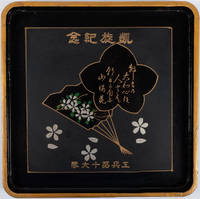
ref. 180651Pre-World War II. Japanese lacquer tray 21.2 x 21.2cm. Few small chips along one join overall in very good condition. A black lacquered tray decorated with a pattern fan and cherry blossom and in Japanese bearing the inscription "Commemorating the Victorious Return: Tenth Engineering Division" and a haiku verse celebrating the mountain cherry trees. Although undated it is clear this tray must be pre-1945 as the Tenth Engineering division participated in several conflicts from the Russo-Japanese War onward but the tray does not indicate which victory is being celebrated. . unknown
ref. 203598Cologne Evergreen 1994. 2vols. xx790798pp. 4to. Original boards lightly rubbed. Previous owners name in ink to ffe. A very good copy. Cologne, Evergreen, 1994. hardcover